教育科技人才一体发展

Search documents
三个视角 看教育科技人才一体发展(深聚焦)
Ren Min Ri Bao· 2026-01-10 22:03
Group 1: Education Technology Talent Development - The topic of "education technology talent" has become a focal point, with practical examples showing how education, technology, and talent can support and advance each other [1] - Shanghai Jiao Tong University has established a unique "Huawei Class" to cultivate software talent, connecting academic research with industry needs [2][3] - The "Huawei Class" features a three-stage training path, emphasizing collaboration between academic and industry mentors [3] Group 2: Successful Case Studies - A professor at Nanjing Medical University successfully transitioned a new drug to commercialization, aided by the Jiangsu Regional Technology Transfer Center [5][6] - The Jiangsu center provides comprehensive support for technology transfer, including funding and risk management strategies [7][9] - The center has facilitated numerous collaborations between universities and companies, resulting in significant technology transfers and innovations [9] Group 3: Industry-Academic Collaboration in Shenzhen - Shenzhen Polytechnic University emphasizes practical experience, allowing students to engage in real-world projects from their first year [11][12] - The university aligns its curriculum with Shenzhen's industrial needs, fostering a sustainable innovation ecosystem [12][13] - Shenzhen's rapid establishment of new universities aims to address the gap in high-quality educational resources compared to other major cities [12][14] Group 4: Government Support and Future Plans - The Shenzhen government has invested significantly in research funding and infrastructure to support higher education and innovation [14] - Future plans include comprehensive reforms in educational methods and management to enhance collaboration between universities and industries [14]
山东政商要情(12.29—1.4)
Jing Ji Guan Cha Bao· 2026-01-05 05:07
Group 1: Economic Policies - Shandong Province has released a policy list for 2026 aimed at promoting economic stability and quality improvement, consisting of 28 measures, with 20 being reward and subsidy policies to support quality enterprises and project construction [1][2] - The policy emphasizes the importance of the service industry, allocating 50 million yuan to support new and "quasi-standard" enterprises, and 150 million yuan for modern service projects, including 90 million yuan for key areas like artificial intelligence and industrial internet [1][2] Group 2: Private Economy Regulation - The "Shandong Province Private Economy Promotion Regulations" will take effect on January 1, providing legal protection for over 14.4 million private market entities, clarifying rules against unfair competition in public resource transactions [3] - The regulations focus on fair competition, resource support, and rights protection, aiming to eliminate market barriers for private capital [3] Group 3: Elderly Care Services - Shandong has approved measures to enhance community-based elderly care services, aiming to establish a network of service facilities and improve service quality by 2029, including the construction of regional elderly service centers [4] - The measures promote market-oriented, integrated, and smart elderly care services to meet diverse and high-quality demands [4] Group 4: Carbon Footprint Management - An action plan for establishing a carbon footprint management system has been issued, focusing on green transformation and carbon emission control, with pilot projects in cities like Qingdao and Yantai [5] - The plan aims to complete carbon footprint accounting for 300 products by 2027 and 600 by 2030, enhancing the green competitiveness of enterprises [5] Group 5: Education, Technology, and Talent Development - Shandong has introduced 30 fiscal measures to support the integrated development of education, technology, and talent, becoming the first province to strengthen coordination from a fiscal perspective [6] - The measures include establishing a resource coordination mechanism and promoting the transformation of technological achievements to enhance the synergy between education, technology, and talent [6]
让扎根一线的工程师有奔头有舞台
Bei Jing Ri Bao Ke Hu Duan· 2026-01-05 04:52
Core Viewpoint - The Beijing High-Level Innovation and Entrepreneurship Talent Symposium aims to promote the integration of education, technology, and talent development, aligning with the spirit of the 20th National Congress of the Communist Party of China [1][3]. Group 1: High-Level Talent Support Plan - The 2025 Beijing High-Level Innovation and Entrepreneurship Talent Support Plan (referred to as "High Talent Plan") was introduced, focusing on the implementation of measures to support high-level talent [1][2]. - The plan includes a video release of "Several Measures to Strengthen the Construction of an Excellent Engineer Team," which outlines 18 specific initiatives to provide comprehensive support for the development of engineers [3][4]. Group 2: Education and Industry Integration - The "Several Measures" emphasize the establishment of industry-education integration platforms in key sectors such as integrated circuits, artificial intelligence, biomedicine, and new energy, creating a collaborative mechanism among enterprises, universities, and research institutions [4][6]. - A "project-based" training model is promoted to align engineering education with industry needs, enhancing the practical skills of students through real-world projects [5][6]. Group 3: Evaluation and Career Development - The plan aims to break away from traditional evaluation methods that focus solely on papers, titles, and degrees, establishing a performance-based evaluation system to facilitate career development for engineers [6][7]. - A green channel for title evaluation will be created for high-level talents with unique skills and contributions, ensuring a smoother career progression [7]. Group 4: Talent Attraction and Retention - The "Several Measures" propose to enhance the political guidance and service connection for engineers, fostering a culture that values and respects talent through various initiatives [8]. - The plan includes a dedicated section for excellent engineers in the municipal talent program, innovating a "full-time + flexible" talent recruitment mechanism to attract high-level professionals to Beijing [8].
巴中“新年第一会”,为何选择人才“打头阵”?
Xin Lang Cai Jing· 2026-01-04 12:49
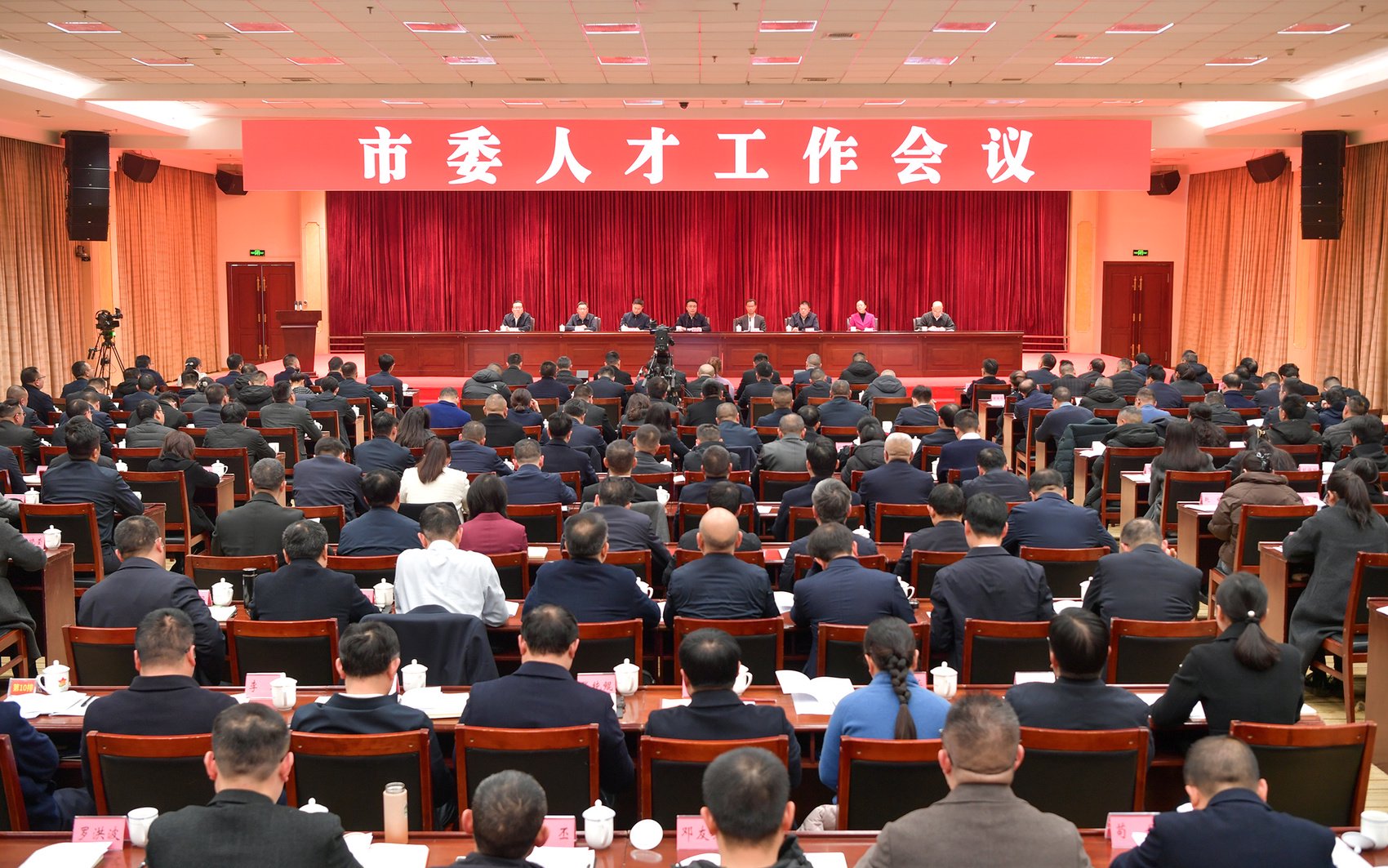
Core Viewpoint - The article emphasizes the importance of talent development in the city of Bazhong as a strategic focus for the new year, highlighting recent achievements in talent acquisition and the need for a comprehensive approach to enhance the local talent ecosystem [3][4][5]. Group 1: Talent Acquisition and Development - In the past two years, Bazhong has successfully introduced 432 non-local talents, marking an 18.5% increase year-on-year [1]. - As of October 2025, the total talent pool in Bazhong reached 390,200, accounting for 14.9% of the resident population, which is higher than the economic total ranking [4]. - The city aims to establish itself as a "talent innovation gathering place" as part of its development strategy [3][4]. Group 2: Strategic Focus for 2026 - The first meeting of the year focused on talent, reflecting the city's commitment to integrating education, technology, and talent development as part of a broader strategy [3][5]. - Bazhong plans to implement the "Bashan Excellent Talent Plan" to promote a systematic approach to talent development over the next five years [8]. - The city will focus on five major actions: enhancing party and government talent, cultivating leading talents, developing industry talents, training skilled workers, and revitalizing rural talents [8]. Group 3: Challenges and Solutions - Despite its advantages, Bazhong faces challenges such as an imbalanced talent structure and underutilization of talent [7]. - The city aims to optimize its talent work system, effectively utilize existing talents, and attract urgently needed talents through targeted policies [9][10]. - A new leadership group will be established to streamline responsibilities and enhance collaboration among various sectors [9].

统筹推进科技创新产业创新和金融服务,培育发展新质生产力
Shan Xi Ri Bao· 2025-12-31 00:49
Core Viewpoint - The articles collectively emphasize the importance of high-quality development in Shaanxi province, focusing on technological innovation, industrial transformation, and financial services as key drivers for economic growth and modernization. Group 1: Economic Development Strategy - The provincial economic work conference outlines a blueprint for economic and social development in Shaanxi by 2026, emphasizing the integration of technological and industrial innovation with financial services [1] - The "14th Five-Year Plan" is highlighted as a critical period for achieving substantial progress in various sectors, including solar energy, new displays, commercial aerospace, and biomedicine [1][2] Group 2: Innovation and Talent Development - The integration of education, technology, and talent development is crucial for strengthening high-quality technological supply, with initiatives aimed at creating innovation hubs and enhancing research capabilities [3] - The focus is on collaborative innovation between universities, research institutions, and enterprises to produce original research outcomes and foster a robust talent development ecosystem [3] Group 3: Reform and Financial Support - The synergy between "three reforms" and technological financial reforms is essential for overcoming systemic barriers and energizing innovation, thereby supporting industrial upgrades and high-quality development [4] - Establishing a comprehensive service network for the transformation of technological achievements is prioritized, along with enhancing the effectiveness of technology transfer from universities and state-owned enterprises [4] Group 4: Industrial Optimization and Future Industries - The strategy includes optimizing and upgrading the industrial system to solidify the foundation of the real economy, with a focus on developing trillion-level industrial clusters in modern energy, advanced manufacturing, and strategic emerging industries [5] - Emphasis is placed on seizing opportunities in artificial intelligence and other future industries to drive digital transformation and high-end development in traditional sectors [5]

山东财政多向发力支持教育科技人才一体发展
Xin Hua Wang· 2025-12-30 06:56
Group 1 - Shandong Province has introduced 30 support policies to enhance the interaction and collaboration between education, technology, and talent, aiming to create a unified development framework [1] - The budget for 2026 allocates 81% of funding in the education, technology, and talent sectors to strategic and foundational areas, emphasizing financial coordination [1] - The province encourages the establishment of innovation platforms by enterprises and educational institutions, providing a one-time subsidy of 10 million yuan for newly upgraded national-level platforms without funding requirements from the state [1] Group 2 - Shandong's policy development is guided by industrial demand, integrating education, technology, and talent policies to achieve synergistic effects [2] - The "Peak Building Plan" supports key talent with up to 5 million yuan in provincial project funding, promoting collaboration between leading enterprises and educational institutions [2] - A mechanism called "Guarantee, Supplement, Adjustment, and Deduction" is implemented to increase support for regions with weak educational resources, including training programs for public service students [2]
一体推进教育科技人才发展:超常布局急需学科专业,加强拔尖人才培养
Xin Lang Cai Jing· 2025-12-29 08:55
Core Viewpoint - The article emphasizes the urgent need for integrated development of education, technology, and talent in China to achieve high-quality development and self-reliance in technology, particularly in strategic fields and innovative talent cultivation [2][4]. Group 1: Integrated Development Initiatives - The Chinese Academy of Sciences (CAS) is leading the establishment of demonstration zones for integrated education, technology, and talent development, with a focus on strategic planning and collaboration with universities [4]. - The CAS has highlighted the importance of deep cooperation between universities and research institutes, particularly in the context of the China University of Science and Technology (USTC), which has produced a significant number of academicians [4]. - The "14th Five-Year Plan" emphasizes the need for a coordinated approach to education, technology, and talent development, with specific tasks outlined for 2026 [2][6]. Group 2: Regional Development Examples - The Xi'an Xixian New Area is set to establish an integrated development demonstration zone by 2024, aiming to attract 30,000 research talents and establish several national-level innovation platforms by 2027 [5]. - Beijing is also promoting integrated development through the Huairou Science City initiative, which focuses on creating a collaborative environment for education and technology [5]. Group 3: Mechanism Improvement - The article discusses the necessity of establishing a coordinated mechanism for integrated development, addressing past issues of independent operation in education, technology, and talent sectors [6][7]. - Local governments are forming leadership groups to facilitate the integration of education and technology, which is seen as a key measure for advancing this initiative [7]. Group 4: Strategic Talent Development - The Ministry of Science and Technology is adjusting higher education disciplines to align with national strategic needs, having updated over 20% of academic programs since 2023 [8][10]. - There is a focus on developing urgent disciplines and enhancing collaboration between educational institutions and industries to meet the demands of emerging fields [9][10]. Group 5: Evaluation and Incentives - The article highlights the importance of reforming talent evaluation and incentive systems to support integrated development, including long-term evaluations for researchers and competitive salaries for overseas talents [11][12].

一体推进教育科技人才发展,有大动作
2 1 Shi Ji Jing Ji Bao Dao· 2025-12-26 12:03
Core Viewpoint - The article emphasizes the urgent need for China to transition from factor-driven growth to innovation-driven development, highlighting the importance of integrating education, technology, and talent development to achieve high-quality growth and national strength [2][3]. Group 1: Integration of Education, Technology, and Talent Development - The Ministry of Science and Technology has called for a comprehensive approach to advance education, technology, and talent development, particularly in strategic fields requiring top-tier innovative talent [2][4]. - The Chinese Academy of Sciences has initiated a development meeting focused on building a demonstration zone for integrated education and technology talent development, marking a significant strategic discussion since 2004 [2][4]. - The "14th Five-Year Plan" suggests establishing a coordinated mechanism for integrated development, emphasizing the need for policy collaboration and resource integration [7][8]. Group 2: Development Demonstration Zones - Various regions are announcing the establishment of demonstration zones for integrated education and technology talent development, with the Chinese University of Science and Technology (USTC) being a key player in this initiative [4][5]. - The Innovation Port Education Technology Talent Integration Development Demonstration Zone in Xi'an aims to attract 30,000 research talents and establish three national-level innovation platforms by 2027 [5]. - The Beijing Huairou Science City is also set to become a demonstration zone, focusing on integrating education and technology through innovative platforms [6]. Group 3: Mechanism Improvement for Integration - The article discusses the need to break down barriers to integrated development by establishing a robust coordination mechanism that aligns planning, policies, and resources [7][8]. - Local governments are forming leadership groups to facilitate the integration of education, technology, and talent, addressing historical operational silos in these sectors [8][9]. - The Ministry of Science and Technology emphasizes the importance of political leadership in guiding the integration process [7]. Group 4: Strategic Professional Layout - The government is adjusting higher education disciplines to align with national strategic needs, having updated over 20% of academic programs since 2023 [9][10]. - The establishment of new degree programs in urgent fields, such as low-altitude technology, reflects a proactive approach to meet emerging industry demands [9][10]. - The article highlights the importance of interdisciplinary centers and innovative research platforms to foster talent development and scientific advancement [10][11]. Group 5: Evaluation and Incentive Mechanisms - The article stresses the need for effective evaluation and incentive systems to support integrated development, advocating for long-term assessments for researchers engaged in significant projects [11][12]. - The introduction of competitive salaries and special positions for high-level talents from abroad is aimed at attracting essential expertise to support national goals [12].

国务院关于财政高等教育资金分配和使用情况的报告
Xin Lang Cai Jing· 2025-12-25 10:11
Group 1 - The core viewpoint of the report emphasizes the importance of higher education funding as a critical factor for national development and modernization, highlighting the government's commitment to increasing investment and optimizing expenditure structures to support high-quality development in higher education [2][12][16] Group 2 - The basic situation of fiscal higher education funding shows a steady increase in investment, with a total of 3.78 trillion yuan allocated through general public budgets and 210.2 billion yuan through government fund budgets from 2021 to 2024 [3] - The central and local fiscal responsibilities are clearly defined, with the central government allocating 1.02 trillion yuan and local governments 2.76 trillion yuan for higher education from 2021 to 2024, aimed at improving the quality of higher education and reducing regional disparities [3][4] Group 3 - The funding distribution framework has been optimized, allowing universities greater autonomy in fund usage, with a focus on basic and project expenditures, including special funds for "Double First-Class" initiatives [4] - Management measures for fiscal higher education funding include enhancing collaboration among various departments, improving budget management, and strengthening asset management to ensure efficient use of funds [5][6] Group 4 - Key areas of funding usage include significant investments in improving higher education accessibility, with a projected gross enrollment rate of 60.8% by 2024, an increase of 6.4 percentage points since 2020 [7] - Support for the development of world-class universities and disciplines has been prioritized, with a total of 181 billion yuan allocated from 2021 to 2025, alongside local government contributions exceeding 110 billion yuan [8] Group 5 - The integration of education, technology, and talent development is emphasized, with initiatives to adjust academic programs and enhance research capabilities, supporting over 80% of national natural science fund projects [9] - Vocational education is also a focus, with plans to improve conditions and support for high-level vocational schools, aiming to produce approximately 25 million skilled workers during the 14th Five-Year Plan period [10] Group 6 - The report outlines future considerations for improving the efficiency of fiscal higher education funding, addressing issues such as resource allocation, collaboration in funding mechanisms, and enhancing support for vocational education [12][13] - The commitment to a multi-source funding model for higher education is reinforced, with plans to optimize financial structures and encourage private sector involvement in educational funding [13][14]
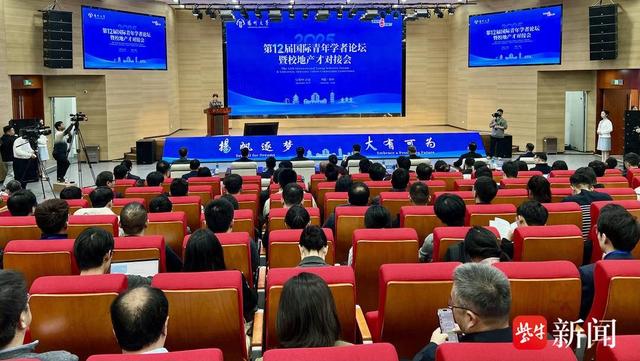
从“引才聚智”迈向“产教融合、协同共育”,扬大携手扬州举办国际青年学者论坛暨校地产才对接会
Xin Lang Cai Jing· 2025-12-20 08:46
Core Insights - The 12th International Youth Scholars Forum and Talent Matching Conference was held at Yangzhou University, attracting 110 young talents from 22 countries and regions, marking a significant step in the university's talent acquisition strategy [1][4] - The event signifies a transition from "talent attraction and intelligence gathering" to "industry-education integration and collaborative cultivation" in the university's talent work [1] Group 1: Economic Development and Talent Policies - Yangzhou's GDP is projected to reach 780.9 billion yuan in 2024, ranking 37th among cities in China, with a per capita GDP expected to be around 25,000 USD [3] - The city offers 53,500 talent apartments for young professionals, with monthly living subsidies of at least 1,000 yuan for undergraduates and 1,500 yuan for master's graduates, along with housing vouchers of at least 70,000 yuan and 150,000 yuan respectively [3] - Yangzhou has established six major industrial clusters and 13 emerging industrial chains, with the new materials and high-end equipment clusters exceeding 200 billion yuan [3] Group 2: Innovation and Research Environment - The city hosts 15 national manufacturing champions and 119 "little giant" enterprises, with over 3,000 high-tech companies and a yearly growth rate of over 15% for technology-based SMEs [3] - Yangzhou University is part of a collaborative network with eight universities and several national research institutes, enhancing the region's research and innovation capabilities [3] - The city has invested 1.548 billion yuan in the "Green Yang Golden Phoenix Plan" over 16 years to attract high-level talents, including academicians [3] Group 3: Forum and Collaboration Initiatives - The forum included a talent matching session with Yangzhou's "613" key enterprises, focusing on research collaboration, industry-academia cooperation, and technology transfer [5] - Yangzhou University aims to prioritize talent work and implement a talent-strengthening strategy, emphasizing the importance of attracting and nurturing talent [5] - The event featured the launch of a "High-level Talent Sharing Program" and the appointment of nine young scholars as "International Youth Talent Ambassadors" for the university [5]