汽车新四化

Search documents
“玻璃大王” 时隔七年 再次中期分红!
Zhong Guo Ji Jin Bao· 2025-08-19 15:01
Core Insights - Fuyao Glass reported a significant increase in net profit by 37.33% for the first half of the year, achieving a net asset return rate of 13.18% [2] - The company has consistently delivered double-digit growth in its interim financial reports for five consecutive years [2] Financial Performance - The total operating revenue for the first half of the year reached 21.45 billion yuan, marking a year-on-year growth of 16.94% [3] - The total profit amounted to 5.79 billion yuan, reflecting a 40.46% increase compared to the same period last year [3] - The net profit attributable to shareholders was 4.80 billion yuan, up 37.33% year-on-year, while the net profit after deducting non-recurring gains was 4.71 billion yuan, an increase of 31.61% [3] - The net cash flow from operating activities was 5.35 billion yuan, with a remarkable growth rate of 61.02% [3] Dividend Distribution - Fuyao Glass plans to distribute a cash dividend of 0.9 yuan per share, totaling 2.35 billion yuan, which represents 48.88% of the net profit attributable to shareholders [4] Employment and Future Outlook - The company employed 39,050 people by the end of the reporting period, an increase of 1,140 employees compared to the end of 2024 [4] - Fuyao Glass expressed confidence in future growth, citing the significant potential for automobile consumption in China compared to developed countries [4] - The company highlighted the ongoing trends of electrification, connectivity, intelligence, and sharing in the automotive industry, which present new opportunities for the glass sector [5] Company Background - Established in 1987, Fuyao Glass is a large multinational group specializing in automotive safety glass and was listed on the Shanghai Stock Exchange in 1993 and the Hong Kong Stock Exchange in 2015 [5] - The company is led by its founder, Cao Dewang, who is known as the "Glass King," and his son, Cao Hui, serves as vice chairman [5]


“玻璃大王”,时隔七年,再次中期分红!
中国基金报· 2025-08-19 14:52
Core Viewpoint - Fuyao Glass reported a significant increase in net profit by 37.33% in the first half of the year, achieving a net asset return rate of 13.18% [2] Financial Performance - The company achieved an operating income of 21.447 billion yuan, a year-on-year increase of 16.94% [3] - The total profit reached 5.794 billion yuan, up 40.46% compared to the same period last year [3] - The net profit attributable to shareholders was 4.805 billion yuan, reflecting a growth of 37.33% [3] - The net cash flow from operating activities was 5.354 billion yuan, with a remarkable increase of 61.02% [3] Dividend Distribution - Fuyao Glass plans to distribute a cash dividend of 0.9 yuan per share, totaling 2.349 billion yuan, which accounts for 48.88% of the net profit attributable to shareholders [4] Employment and Workforce - The company employed 39,050 people by the end of the reporting period, an increase of 1,140 from the end of 2024 [4] Market Potential and Future Outlook - Fuyao Glass highlighted the significant potential for automobile consumption in China, with a car ownership rate of approximately 25 vehicles per 100 people compared to over 50 in developed countries [5] - The company noted that the trend of "electrification, connectivity, intelligence, and sharing" in the automotive industry presents new opportunities for the glass sector, with high-value products gaining a larger market share [5] - Fuyao Glass emphasized its technological leadership in the industry, which provides structural opportunities for its automotive glass sales [5] Company Background - Established in 1987, Fuyao Glass is a large multinational group focused on automotive safety glass, listed on the Shanghai Stock Exchange in 1993 and on the Hong Kong Stock Exchange in 2015 [6] - The company is controlled by Cao Dewang, known as the "Glass King," who remains the chairman at the age of 79 [6] - Fuyao Glass's stock saw a significant increase of 77% last year, but has experienced a decline of about 8% this year, with a market capitalization of 145.5 billion yuan as of August 19 [6]

福耀玻璃(03606) - 2025年半年度报告
2025-08-19 09:48
香港交易及結算所有限公司及香港聯合交易所有限公司對本公告的內容概不負責,對 其準確性或完整性亦不發表任何聲明,並明確表示,概不對因本公告全部或任何部份 內容而產生或因倚賴該等內容而引致的任何損失承擔任何責任。 (於中華人民共和國註冊成立的股份有限公司) (股份代號:3606) 海外監管公告 本公告乃根據香港聯合交易所有限公司證券上市規則第 13.10B 條刊發。 茲載列福耀玻璃工業集團股份有限公司(「本公司」)在上海證券交易所網站 (http://www.sse.com.cn) 刊發的《2025 年半年度報告》,僅供參閱。 承董事局命 福耀玻璃工業集團股份有限公司 曹德旺 董事長 中國福建省福州市,2025 年 8 月 19 日 於本公告日期,本公司董事局成員包括執行董事曹德旺先生、曹暉先生、葉舒先 生及陳向明先生;非執行董事吳世農先生及朱德貞女士;獨立非執行董事劉京先 生、薛祖雲先生及達正浩先生。 福耀玻璃工业集团股份有限公司2025 年半年度报告 公司代码:600660 公司简称:福耀玻璃 福耀玻璃工业集团股份有限公司 2025 年半年度报告 1 / 136 福耀玻璃工业集团股份有限公司2025 年半年度 ...
光弘科技(300735.SZ)收购AC公司落拓展全球化布局 汽车电子业务再进阶
Xin Lang Cai Jing· 2025-08-18 06:06
Group 1 - The domestic demand potential for new energy vehicles (NEVs) has been further stimulated by policies such as consumption promotion initiatives and expansion of "two new" measures, with July production and sales reaching 1.243 million and 1.262 million units, respectively, representing year-on-year growth of 26.3% and 27.4% [1] - NEVs accounted for 48.7% of total new car sales in July, and exports reached 225,000 units, showing a month-on-month increase of 10% and a year-on-year increase of 120% [1] - QFII's holdings in the automotive sector exceeded 1.3 billion yuan by the end of the first half of the year, indicating strong market interest in the automotive industry [1] Group 2 - Guanghong Technology (300735) has made significant strides in the automotive electronics sector, achieving revenue of 1.592 billion yuan in 2024, a substantial year-on-year increase of 126.47%, with this segment now accounting for 23.13% of total revenue [2] - The company has established itself as a key player in the automotive electronics supply chain, partnering with renowned brands such as BMW, Audi, and Huawei, and providing a wide range of automotive electronic components [2][3] - The recent acquisition of French EMS leader AC Company enhances Guanghong Technology's global manufacturing network, allowing for a more integrated approach to production and customer service across multiple continents [3] Group 3 - The acquisition of AC Company is expected to create synergies in production technology, service operations, and customer resource integration, thereby accelerating Guanghong Technology's expansion in the automotive electronics field [3] - The company is committed to increasing its investment in automotive electronics, driven by the dual forces of technological innovation and market demand, which are reshaping the industry landscape [4]
“A+H”模式双轮驱动 吉利汽车冲刺科创板
Zheng Quan Ri Bao Wang· 2025-08-13 23:12
分析人士表示,吉利汽车如果在A股和香港同时上市,有利于凸显公司的独特地位和优势,充分对接国 内、国际两个资本市场,助力公司科技转型和高质量、可持续发展,构建国内国际双循环发展格局。同 时进一步提升品牌知名度和市场占有率,让中国内地投资者有机会分享公司发展红利。这对于公司未来 的产品开发、技术研发,以及潜在的外延扩张,有着相当积极的促进作用。 9月1日晚间,上交所官网信息显示,吉利汽车控股有限公司(简称"吉利汽车")科创板IPO审核状态变更 为"已受理"。 招股书中显示,本次发行股票种类为人民币普通股,每股面值0.02港元,发行股份数为不超过17.32亿股 (行使超额配售选择权之前),占发行后股份总数不超过15%。 对于硬科技企业集中的科创板而言,吉利汽车有望成为科创板第一个整车上市公司。 政策催化吉利汽车冲刺科创板 记者通过梳理发现,2020年4月30日,证监会发布《关于创新试点红筹企业在境内上市相关安排的公 告》。《公告》显示,已境外上市的红筹企业,若要申请在境内发行股票或存托凭证,其市值须满足两 类标准之一:一是市值不低于2000亿元人民币;二是市值在200亿元人民币以上,且拥有自主研发、国际 领先技术, ...

陷“水军攻击”疑云、下调i8价格 理想汽车的挑战和应变
Zhong Guo Jing Ying Bao· 2025-08-08 14:43
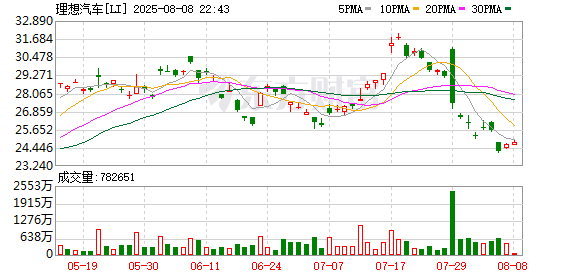
Core Viewpoint - Li Auto is adjusting the configuration and pricing of its i8 model in response to market feedback, indicating a shift in strategy to align with user expectations and sales goals [1][4][5]. Group 1: Product Strategy Adjustment - 98% of orders for the i8 are concentrated in the Max/Ultra versions, while the Pro version has been neglected due to insufficient features [1]. - The i8 will now have a unified configuration based on the Max version, with a price reduction from 349,800 yuan to 339,800 yuan, and additional features offered as optional [2][4]. - Li Auto's founder, Li Xiang, acknowledged the company's previous "inertia" in configuration thinking and emphasized the importance of aligning with the value definition of the Li ONE model [1][5]. Group 2: Market Context and Sales Pressure - The i8 is a critical model for Li Auto's transition to a pure electric vehicle strategy, especially as competition in the electric SUV market intensifies [6]. - From January to July, Li Auto delivered 234,700 vehicles, a year-on-year decline of 2.2%, with July deliveries dropping nearly 40% compared to the previous year [6]. - The company has revised its annual sales target from 700,000 to 640,000 units, achieving only 36.67% of this target in the first seven months [6]. Group 3: Legal Actions Against Negative Campaigns - Following the i8's launch, Li Auto reported organized attacks from "black water army" groups, which are believed to be spreading negative information about the brand [8][9]. - The company has gathered evidence of these organized attacks and plans to pursue legal action to protect its reputation and the interests of its users [9].

法士特向“新”加速冲
Zhong Guo Qi Che Bao Wang· 2025-07-22 01:37
Group 1 - The core achievement of the Chinese automotive industry in the first half of the year is the production and sales exceeding 15 million units for the first time, with new energy vehicles (NEVs) reaching 6.968 million and 6.937 million units respectively, marking year-on-year growth of 41.4% and 40.3% [2] - The successful rollout of the 100,000th new energy electric drive assembly by Fawer Group represents a significant milestone in the company's innovation journey and reflects the progress of China's automotive industry towards electrification [2][5] Group 2 - Fawer Group has evolved from a third-tier enterprise to a national brand, emphasizing innovation and adapting to industry changes, with a focus on high-end positioning, intelligent layout, international expansion, and green development [3] - The company has established itself as the largest research and manufacturing base for commercial vehicle transmissions globally, with over 12 million transmission units sold and a leading market share in China [4] Group 3 - Fawer Group has launched several intelligent and high-end products across eight key sectors, including automotive transmission and new energy, and has built 15 core industrial parks and manufacturing bases [4] - The company has successfully developed the Fawer·Lanch EV330-6E240 electric drive system, which integrates advanced technologies and has been recognized for its high performance and low emissions [9][10] Group 4 - Fawer Group's strategic focus on new energy began in 2015, leading to the establishment of a dedicated research institute and partnerships to enhance its product offerings in the electric vehicle market [7][8] - The Fawer·Lanch brand has introduced innovative solutions that improve charging speed and driving range, achieving significant operational milestones with over 100 million kilometers driven by its products [8][10] Group 5 - The company views the production of the 100,000th unit as a starting point for further innovation and market leadership, emphasizing the importance of core technology breakthroughs and system integration in the evolving automotive landscape [11][12] - Fawer Group aims to become a globally recognized brand in the new energy sector, focusing on customer-centric strategies and continuous improvement in product and service quality [12]

汽车链向“智”重塑造
Bei Jing Shang Bao· 2025-07-17 08:12
Core Insights - The third China International Supply Chain Promotion Expo (Chain Expo) highlighted the rapid transformation of the smart automotive supply chain, with a focus on collaboration and innovation among various stakeholders in the industry [1][6][12] Group 1: Smart Automotive Supply Chain - NVIDIA CEO Jensen Huang's presence at the Chain Expo emphasized the importance of smart automotive technology and the growing interest in Chinese automotive brands like BYD and "Wei Xiaoli" [1] - The Chain Expo showcased a comprehensive view of the smart automotive supply chain, presenting key technologies and products from chips to electric drive systems [1][3] - The collaboration among various companies in the supply chain is crucial, as each component plays a significant role in the overall manufacturing process of smart vehicles [3] Group 2: Tesla's Innovations - Tesla's booth featured the Model "3Y" combination, which attracted significant attention, showcasing its advanced charging solutions and manufacturing capabilities [4] - As of June this year, Tesla has produced over 8 million vehicles globally, with half of that production coming from its Shanghai Gigafactory, which has an annual capacity exceeding 950,000 vehicles and a localization rate of over 95% for components [4][6] - Tesla aims to deepen its relationship with Chinese suppliers to establish global green supply chain standards and explore AI applications in various sectors [6] Group 3: Domestic Innovations - Dongfeng Motor is actively involving suppliers in its research and development efforts, particularly in the area of domestic chip development, showcasing self-developed chips at the Chain Expo [6] - The establishment of a technology innovation consortium for automotive-grade chips in Hubei province aims to streamline the process from demand definition to mass production [6] Group 4: Material Innovations - Battery materials are a focal point, with companies like BetterRay introducing innovative solutions to enhance the lifespan and performance of electric vehicle batteries [7] - CATL showcased its sodium-ion batteries, which promise to reduce reliance on lithium resources and lower costs significantly compared to traditional lead-acid batteries [8] Group 5: AI Integration - The integration of AI technologies in the automotive supply chain is transforming manufacturing processes, with companies like BMW implementing AI applications to enhance quality control and efficiency [11] - The emergence of new players in the automotive supply chain, driven by advancements in AI and technology, is reshaping traditional supplier dynamics [12]

在汽车标准化创新国际治理中彰显“全球青年担当”
Zhong Guo Qi Che Bao Wang· 2025-07-14 08:38
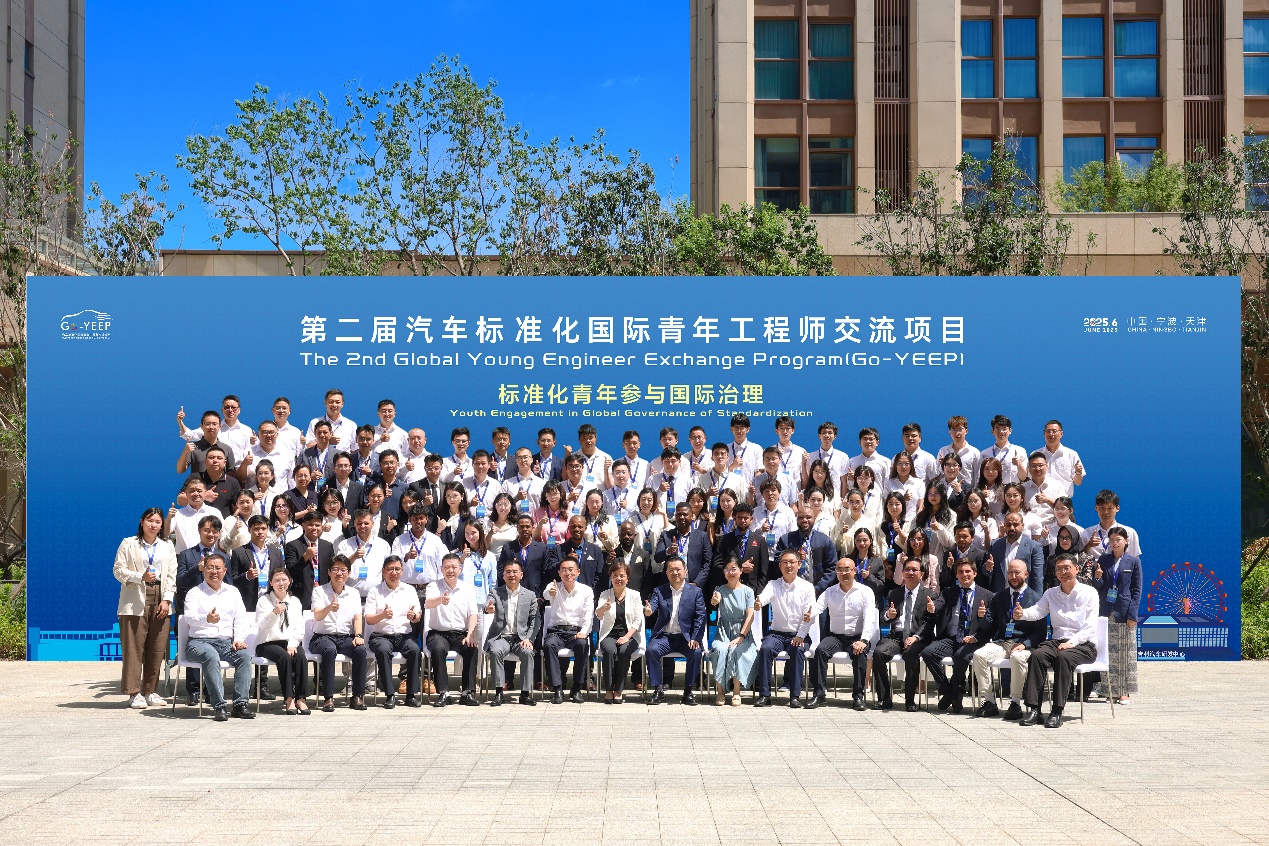
Core Viewpoint - The importance of a robust standardization system is emphasized as a key driver for innovation, competitiveness, and integration of the automotive industry in the global market [1][4][5]. Group 1: Standardization and Innovation - A well-established standardization framework is crucial for the sustainable and high-quality development of the automotive industry, facilitating trade, ensuring safety, and promoting technological innovation [4][5]. - The automotive industry is undergoing rapid transformation driven by electrification, intelligence, connectivity, and sharing, necessitating the evolution of standards to support these changes [5][7]. Group 2: International Collaboration - The second International Youth Engineer Exchange Conference was held in Ningbo and Tianjin, gathering nearly 30 young engineers from international standardization organizations and over 100 domestic representatives to discuss advanced automotive standards [2][15]. - China has made significant progress in promoting the internationalization of automotive standards, with over 83% of international standards being adopted domestically and more than 14,000 Chinese experts participating in international standardization efforts [1][8]. Group 3: Youth Engagement in Standardization - Young engineers are increasingly becoming core contributors to standard-setting processes, with their representation in international standardization organizations rising from 15% to 32% over the past decade [10]. - The automotive standardization international youth engineer exchange project aims to enhance understanding and cooperation among young engineers from diverse cultural backgrounds, fostering innovation and high-quality development in the automotive sector [13][22]. Group 4: Regional and Global Impact - The project encourages collaboration among automotive standardization institutions across regions, including RCEP countries and BRICS nations, to stimulate regional synergy and innovation [8][22]. - The importance of a unified technical standard is highlighted as it accelerates technological iteration and reduces industry costs, with young engineers playing a pivotal role in driving standard innovation [14][21].
华为出手,能否助力一汽奥迪补齐智能化短板?
Zhong Guo Jing Ying Bao· 2025-07-02 15:02
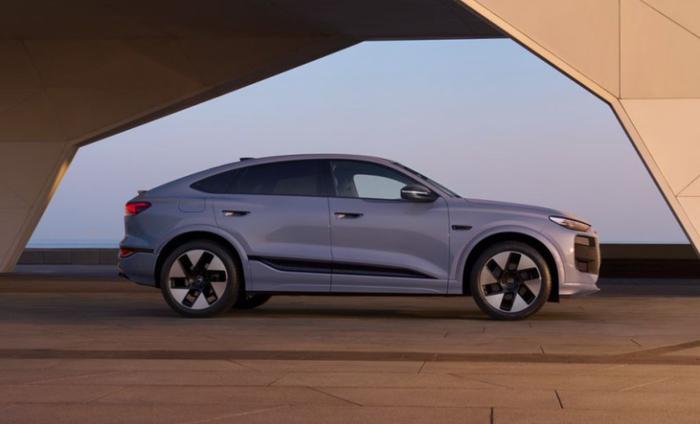
Core Insights - Audi's first model produced at the Audi FAW Super Intelligent Eco Factory, the Audi Q6L e-tron family, has begun pre-sales, featuring Huawei's customized Qian Kun intelligent driving technology [1][3][4] - The factory showcases a high level of automation, with 824 robots achieving a 100% automation rate in welding, completing 1-2 welds per second with a precision of 0.1 mm [1][9] - Audi aims to launch at least two new electric models annually starting in 2025, while upgrading existing fuel vehicle configurations with intelligent features [3][5] Automation and Technology - The Audi FAW Super Intelligent Eco Factory consists of five main workshops: stamping, welding, painting, battery, and assembly, producing customized high-voltage battery packs for the Chinese market [5][6] - The factory employs digital twin technology, utilizing BIM and 3D scanning to synchronize virtual and physical operations, enhancing engineering efficiency [6] - Advanced AI technologies are being implemented to create a more efficient and cost-effective production environment, meeting high-quality standards [6][8] Production Efficiency - The factory features a "wedding assembly station" with 100% automation, where 11 robots work collaboratively without human intervention, achieving a precision of 0.2 mm [9] - A total of 56 intelligent vehicles handle 90% of parts transportation within the factory, improving efficiency by 90% through advanced recognition and 3D imaging [9] - The factory is set to have nearly 1,000 robots in core process workshops, integrating smart and lean manufacturing concepts for high synergy between humans, machines, and materials [9] Environmental Sustainability - The Audi FAW Super Intelligent Eco Factory is committed to achieving "near-zero carbon emissions," utilizing 100% green energy and recycling all production waste [10][11] - The factory has installed approximately 320,000 square meters of photovoltaic facilities, expected to generate over 35 million kWh annually, covering a quarter of its energy needs [10] - A comprehensive resource recycling system is in place, including closed-loop recycling of aluminum materials and 100% recycling of solid waste, significantly reducing landfill impact [10][11]