汽车智能化转型

Search documents
新股消息 | 博泰车联网通过港交所聆讯 智能座舱解决方案为第一大营收来源
智通财经网· 2025-09-14 22:58
Core Insights - The company, Botai Vehicle Networking, is a supplier of smart cockpit solutions in China, primarily generating revenue from these solutions, which have shown consistent growth in both absolute amounts and as a percentage of total revenue [2][3] - According to Zhaoshang Consulting, the company ranks as the third-largest supplier of passenger car smart cockpit domain controller solutions in China, holding a market share of 7.3% as of 2024 [2][3] - The smart cockpit solutions are essential for the automotive industry's digital transformation, providing users with a tangible experience of automotive smart technologies, driven by increasing consumer demand for enhanced in-car experiences [2] Industry Overview - The market for passenger car smart cockpit solutions in China is expected to grow from RMB 129 billion in 2024 to RMB 299.5 billion by 2029, representing a compound annual growth rate (CAGR) of 18.4% [3] - Chinese OEMs are capturing a larger market share in the automotive industry and are shifting towards developing high-end vehicles with advanced smart automotive features, which is anticipated to increase demand for smart cockpit solutions [3] Financial Performance - The company's revenue for the years 2022, 2023, 2024, and the first five months of 2025 was approximately RMB 1.218 billion, RMB 1.496 billion, RMB 2.557 billion, and RMB 754 million respectively [5][6] - The company recorded losses of approximately RMB 452 million, RMB 284 million, RMB 541 million, and RMB 220 million for the same periods [5][6] - The gross profit margins for the years 2022, 2023, and 2024 were 14.1%, 15.4%, and 11.8% respectively, indicating fluctuations in profitability [6]


东风柳汽200亿投资背后:华为大疆将落地 柳州系车企集体补短板
Jing Ji Guan Cha Wang· 2025-08-27 01:28
Core Insights - Huawei and other leading companies in the smart automotive industry are set to establish manufacturing bases in Liuzhou, aiming to enhance the local automotive sector's capabilities in smart technology and accelerate its transformation [2][3][4] - The collaboration between Dongfeng Liuzhou Motor and Huawei is part of a broader strategy to address the challenges faced by Liuzhou's automotive industry, which has been slow to transition to new energy vehicles and smart technologies [3][4] - The "Dragon Action Project," with an investment plan of 20 billion to 30 billion yuan, aims to significantly boost Dongfeng Liuzhou Motor's annual sales of passenger vehicles to over 500,000 units within five years [6][8] Company Developments - Dongfeng Liuzhou Motor, a state-owned enterprise, is actively engaging with Huawei and other tech companies to integrate smart technologies into its vehicle offerings [5][6] - The company plans to launch new models, including a smart vehicle developed in collaboration with Huawei, by the end of the year [4][5] - The strategic focus includes enhancing the product lineup, particularly in the MPV segment, with plans to introduce multiple new models in the coming years [7][8] Market Positioning - The entry of Huawei into Liuzhou is seen as a potential turning point for the local automotive industry, which has faced declining competitiveness due to a lack of smart technology resources [3][4] - Dongfeng Liuzhou Motor's export strategy is robust, with a target to achieve a balance between domestic and international sales, aiming for exports to account for 50-60% of total sales in the future [8][9] - The company has set ambitious goals for its export operations, including entering over 100 countries and increasing its overseas sales significantly in the next few years [8][9]
我国建成全球最大的电动汽车充电网络;零跑与中创新航成立合资公司丨汽车早参
Mei Ri Jing Ji Xin Wen· 2025-08-26 23:01
Group 1 - BYD's Thailand factory has exported over 900 electric vehicles to Europe, marking a significant breakthrough in its global strategy [1] - This development enhances investor confidence in BYD's overseas production capacity and supply chain capabilities, solidifying its international image in the new energy vehicle sector [1] - The export reflects the increasing recognition of Chinese manufacturing technology in the electric vehicle field, injecting international development momentum into the A-share new energy sector [1] Group 2 - BMW Group announced the introduction of the "Night Package" for its X family models at the Chengdu Auto Show, including the BMW X1, X3 long-wheelbase version, and X5 [2] - The integration of the DeepSeek AI feature into the BMW intelligent personal assistant is expected to enhance the appeal of the X1, X3, and X5 series, strengthening the brand's competitive edge in the high-end SUV market [2] - This move highlights the acceleration of traditional luxury brands towards localization and digital transformation in response to the growing digital demands of the Chinese market [2] Group 3 - Leap Motor and Zhongchuang Innovation have jointly established a new energy company with a registered capital of 1 billion yuan, focusing on new materials, battery manufacturing, and electric vehicle charging facilities [3] - The partnership reflects a deep collaboration in the new energy sector, emphasizing the importance of electric infrastructure [3] - This initiative is expected to drive technological innovation and market expansion, positively influencing investment enthusiasm and confidence in the new energy industry [3] Group 4 - China has built the world's largest electric vehicle charging network during the 14th Five-Year Plan, with a ratio of two charging piles for every five vehicles [4] - The country has also established the largest and fastest-growing renewable energy system globally, with the share of renewable energy generation capacity increasing from 40% to approximately 60% [4] - These advancements are beneficial for the new energy industry chain, particularly for charging facility manufacturing and operation companies, enhancing market confidence in related technologies and services [4]
海南省调整汽车置换更新补贴政策;全新问界M7首搭“舱内激光视觉” | 汽车早参
Mei Ri Jing Ji Xin Wen· 2025-08-24 23:34
Group 1 - Hainan Province adjusts the automobile replacement subsidy policy to stimulate local consumption and enhance market activity, requiring new cars to be registered in Hainan for subsidy eligibility [1] - The adjustment aims to support local economic growth and boost automobile sales in the region, providing a positive impact on related industry sectors [1] Group 2 - As of July 2025, China's private charging facilities have increased by 58.8%, indicating a growing acceptance of electric vehicles among consumers [2] - The total number of electric vehicle charging infrastructure reached 16.696 million, with public charging facilities at 4.202 million, showing a stable growth that enhances the convenience of the charging network [2] - Continuous improvement in charging infrastructure is expected to promote the adoption of electric vehicles, positively impacting the new energy vehicle industry [2] Group 3 - BYD announces the establishment of a CKD assembly plant in Malaysia, expected to commence production in 2026, marking a significant milestone in its market expansion [3] - The opening of the 36th BYD Wing Hin store brings the total to 43 stores in Malaysia, reinforcing BYD's commitment to global and local strategies [3] - This expansion is anticipated to inject new momentum into BYD's global sales performance [3] Group 4 - The new Wuling M7, set to launch on August 25, features an innovative "in-cabin laser vision" system, enhancing vehicle design and sensor efficiency [4] - This technology aims to attract more potential customers and solidify market position, reflecting the automotive industry's shift towards intelligent transformation [4] - The development of such breakthrough technologies is crucial for monitoring future market responses [4]

都市车界|履新11天急赴华为!长安新帅朱华荣拜访任正非深化合作
Sou Hu Cai Jing· 2025-08-11 08:52
Core Insights - The visit of Zhu Huarong, the newly appointed chairman of China Changan Automobile Group, to Huawei's headquarters signifies a strategic partnership aimed at addressing the challenges of the automotive industry's transformation towards intelligence [1][4][6] - Changan aims to launch over 50 new energy products in the next five years and achieve annual sales of 5 million vehicles by 2030, with 60% being new energy vehicles [2][6] Group 1: Strategic Partnership - The meeting highlighted the collaboration between Changan and Huawei, particularly focusing on the Avita brand, which has adopted a unique "CHN" model involving Changan, Huawei, and CATL [5][9] - Avita has invested 11.5 billion yuan to acquire a 10% stake in a Huawei-controlled smart driving company, indicating a deepening of their partnership [5][9] - The first jointly developed product is expected to launch in the second half of 2026, with Avita's sales reaching 10,062 units in July 2025, a 178% year-on-year increase [5][10] Group 2: Industry Transformation - The automotive industry is undergoing a significant transformation, with traditional manufacturing advantages being restructured due to the rise of smart driving technologies [6][10] - Changan plans to invest 200 billion yuan in the "new automotive" sector over the next decade, recognizing the need for technological acceleration through partnerships with companies like Huawei [6][9] - Huawei's comprehensive technology capabilities, including a high domestic production rate of key components, are seen as crucial for Changan's success in the smart vehicle market [6][9] Group 3: Global Expansion - Changan aims for over 30% of its sales to come from overseas markets by 2030, leveraging Huawei's global network to facilitate this expansion [9][10] - The collaboration between state-owned enterprises and technology firms is seen as a new paradigm for the Chinese automotive industry, potentially setting global standards [9][10] - The integration of Changan's manufacturing expertise with Huawei's innovation capabilities is expected to create a new automotive industry model known as the "Chinese model" [10][11]

汽车零部件巨头上半年业绩分化:关税、智驾、需求三重角力
Jing Ji Guan Cha Wang· 2025-08-05 09:07
Core Insights - The global automotive parts industry is experiencing significant performance divergence due to U.S. tariff policy fluctuations, accelerated automotive intelligence transformation, and the reshaping of the Chinese market landscape [2] Group 1: Impact of U.S. Tariff Policy - U.S. tariff adjustments have become a core variable affecting the performance of multinational parts companies in the first half of the year, with varying responses leading to performance disparities [2] - Companies like Autoliv successfully transferred tariff costs to automakers, achieving record high net sales and operating profit margins, with a 14% increase in adjusted operating profit to $251 million [3] - Faurecia managed to mitigate tariff impacts through strict cost management, reporting a 7.8% increase in adjusted EBITDA to €1.76 billion [3] - NXP Semiconductors faced a 6% revenue decline and a 23% drop in operating profit due to U.S. import tariffs and ongoing chip inventory issues [4] - Brembo's net profit fell by 37.4% and revenue decreased by 6.2%, attributed to geopolitical instability and a sluggish automotive market [5] Group 2: Chinese Market Dynamics - The Chinese market presents both opportunities and challenges for multinational parts companies, characterized by high demand for new energy vehicles and rapid market changes [2] - ZF Friedrichshafen's sales in China dropped significantly, with a 10.3% decline in sales and a 42% drop in EBIT, primarily due to weakened competitiveness in smart driving and electric products [6][7] - Local competitors like Huawei and Momenta are gaining market share in the smart driving sector, intensifying competition for foreign suppliers [7] - Texas Instruments reported a 32% revenue growth in China, but acknowledged the fierce competition from local semiconductor manufacturers [7] - STMicroelectronics experienced a 14% revenue decline, with automotive chip sales slightly below expectations, indicating potential challenges for European chip manufacturers [8] Group 3: Industry Transformation and Future Outlook - The performance divergence among multinational parts companies highlights the ongoing transition in the global automotive parts industry, balancing short-term risk management with long-term transformation investments [8] - Companies must accurately grasp demand changes in core markets like China to determine their positioning in the industry restructuring [8]
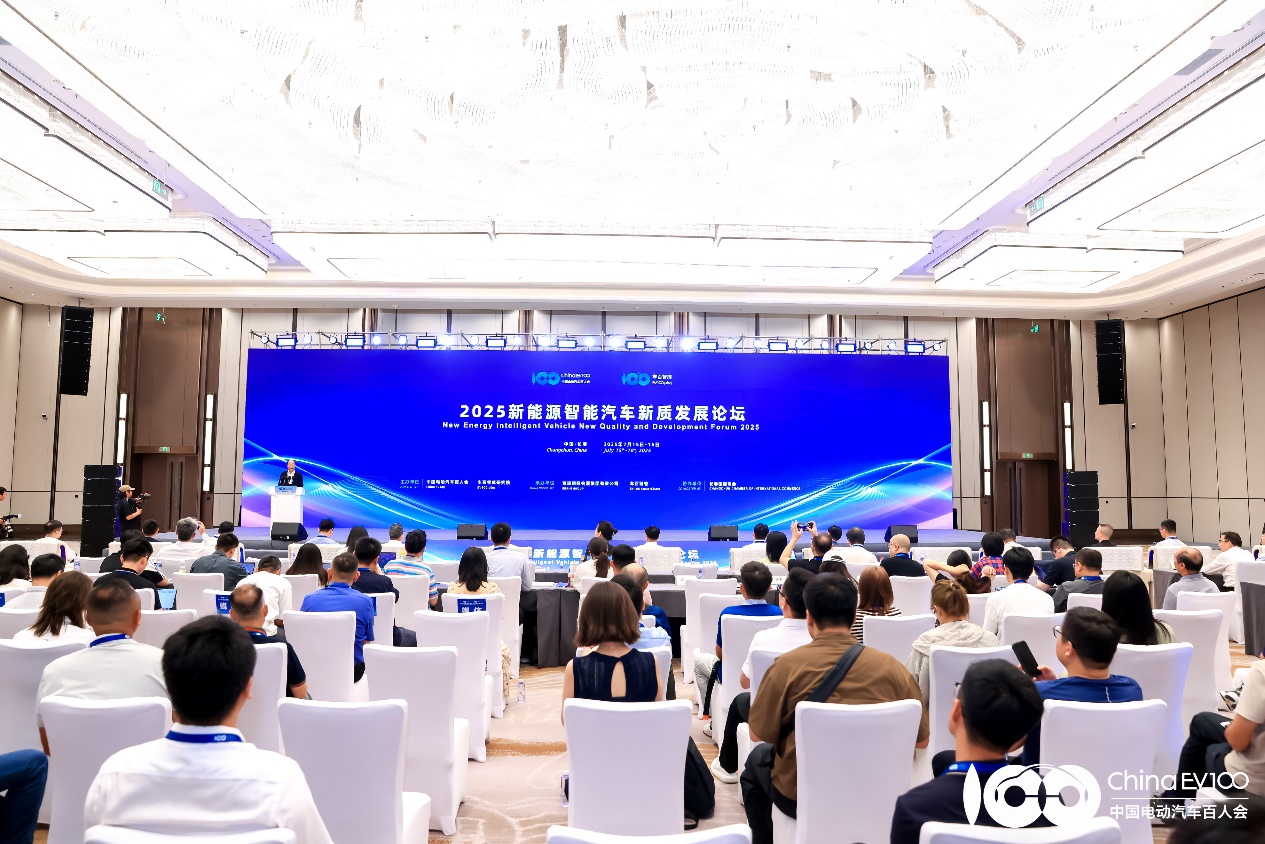
融合创新 共筑生态 走好中国汽车高质量发展之路——2025新能源智能汽车新质发展论坛成功举办
Zhong Guo Qi Che Bao Wang· 2025-07-16 02:21
Core Insights - China's automotive production and sales exceeded 15 million units in the first half of the year, highlighting the industry's robust development vitality. However, issues such as "involution" competition and exaggerated marketing have emerged, raising the question of how to achieve high-quality development in the automotive sector [1] - The 2025 New Energy Intelligent Vehicle Development Forum was held during the China (Changchun) International Automobile Expo, focusing on key technology breakthroughs, industrial ecosystem construction, and collaborative innovation for the intelligent transformation of the automotive industry [1] Group 1: Technological Development - China's new energy intelligent vehicle industry is in a rapid development phase, leading global automotive transformation. The penetration rate of L2 assisted driving has surpassed 50%, with over 20% for automatic parking technologies, positioning China at the forefront globally [3] - To achieve the goal of accelerating the popularization of assisted driving and commercializing L3 and above autonomous driving by 2030, technological breakthroughs are essential. Current autonomous driving systems are lagging behind expectations, particularly in advancing from L3 to L4 and L5 [5][6] - The development of autonomous driving technology will progress through three stages: rule-driven, data-driven, and cognitive-driven, each with increasing complexity and capability [6] Group 2: Industry Collaboration - The relationship between traditional automotive manufacturers and component suppliers is evolving into a deep binding model, forming strategic alliances to enhance AI competitiveness and support technology companies [15] - Successful examples include Jianghuai Automobile's collaboration with Huawei, which has led to significant sales of their luxury intelligent new energy vehicle [15] - The automotive industry is becoming a "gym" for global automotive technology, with Chinese companies increasingly engaging in reverse technology transfer through joint ventures and investments [17] Group 3: Global Expansion - In the first half of the year, China's new energy vehicle exports reached 1.06 million units, a year-on-year increase of 75.2%, indicating a strong global presence [20] - The current window for intelligent vehicle exports is accompanied by challenges such as cybersecurity and data privacy, which must be addressed to enhance competitiveness [22] - Companies like Lantu are shifting from simple product exports to local operations, integrating service and brand culture into overseas markets [22] Group 4: Localized Development - Valeo emphasizes the importance of comprehensive localization in China, with a significant number of R&D engineers and factories established locally, enhancing development efficiency [24] - The automotive industry's advancement is expected to drive the rapid development of related sectors such as robotics and low-altitude technology, creating a synergistic intelligent industrial chain [24]
近40年深耕,恩智浦与中国车企共筑智能化转型新样本
Huan Qiu Wang· 2025-07-04 07:41
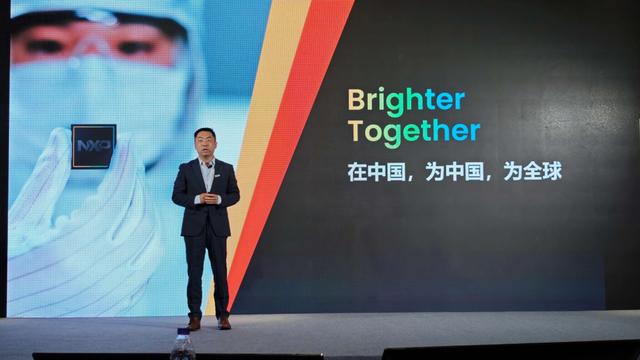
Core Insights - NXP Semiconductors has announced its strategic upgrade in China, focusing on "local innovation" and "intelligent technology implementation" in the automotive sector [1][8] - The establishment of the "China Division" signifies a further enhancement of NXP's localization strategy, emphasizing local product definition, design, and manufacturing [2][4] - NXP aims to leverage its global resources to create differentiated advantages in supply chain flexibility, cost competitiveness, and service responsiveness [4] Localization Strategy - NXP has built a comprehensive localized system in China over nearly 40 years, with over 6,000 employees, 14 offices, 6 R&D centers, and a team of more than 1,600 engineers [1] - The China Division's core mission is to respond to market demands through localized solutions and establish a local supply chain network in collaboration with domestic partners [2] Technological Innovations - NXP has introduced various technological solutions to address the unique challenges of the Chinese automotive market, characterized by rapid iteration and cost sensitivity [4] - Key products include the S32R47 radar processor for L4 autonomous driving, Ranger 5 UWB for multiple applications, and the eIQ toolkit for AI model optimization [4][5] Ecosystem Collaboration - NXP has announced partnerships with several Chinese automakers, including Geely, Leap Motor, and Great Wall Motors, to co-develop intelligent automotive solutions [5][7] - The collaboration with Leap Motor involves the integration of NXP's S32K388 chip into their new central electronic architecture, supporting the development of software-defined vehicles [5][7] Future Outlook - NXP aims to transform "Chinese wisdom" into global automotive innovation through strategic integration, continuous technology iteration, and deep partnerships with local automakers [7][8] - The company's dual strategy of "technology + ecosystem" positions it as a core chip partner in China's automotive industry, driving new momentum for global automotive electronics development [8]

日产全球裁员15%,新能源布局遇冷,何以破局? 其最新回应来了
Xi Niu Cai Jing· 2025-05-15 08:17
Group 1 - Nissan plans to cut approximately 20,000 jobs globally between fiscal years 2024 and 2027, representing 15% of its total workforce, affecting various roles including production, sales, and R&D [2] - The company has initiated voluntary departure programs in markets like the U.S. and is assessing the feasibility of expanding these programs to other regions, with no clear decision on job cuts in China yet [2] - In the electric vehicle sector, despite a strong order for the N7 model, overall sales of new energy vehicles accounted for less than 5% in April, indicating potential disconnects between market acceptance and promotional efforts [2] Group 2 - The Nissan Sylphy series saw a 12% year-on-year decline in sales in April, prompting the company to introduce a "one price for fuel and electricity" policy to alleviate consumer price concerns [3] - Nissan is collaborating with Huawei to promote the intelligent transformation of fuel vehicles, indicating a strategic shift to adapt to market changes and consumer demands [3] - The company is addressing after-sales service issues, including battery range discrepancies reported on consumer platforms, by emphasizing compliance with testing standards and expanding its retail network [3]