
港产城融合

Search documents
行进的海岸线|闽东“世界不冻良港”蔚蓝梦 迈向太平洋现代海湾城市
Yang Guang Wang· 2025-12-26 07:44
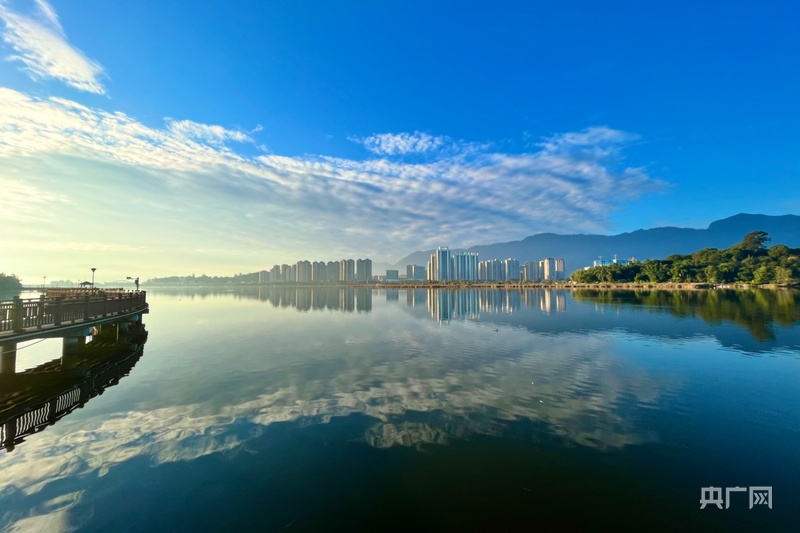
Core Viewpoint - The development of the San Diao Ao area in Ningde has transformed it from an underdeveloped coastline into a thriving modern port city, driven by strategic initiatives to integrate port, industry, and urban development [2][15]. Group 1: Port Development - The San Diao Ao port is recognized as a unique natural deep-water harbor, with main channel depths ranging from 30 to 115 meters, allowing for the docking of large vessels at any tide level [4][9]. - The port has seen significant growth, with cargo throughput increasing from 5 million tons 20 years ago to 85.24 million tons in the first ten months of this year, representing a year-on-year growth of 28.1% [7][12]. - By the end of the year, Ningde is expected to become the fourth city in Fujian Province to have a port with an annual throughput exceeding 100 million tons, enhancing its global market connectivity [9][12]. Group 2: Industrial Development - Ningde has successfully developed four leading industrial clusters: lithium battery new energy, new energy vehicles, stainless steel new materials, and copper materials, leveraging the port for efficient logistics [10][12]. - The proximity of production facilities to the port has reduced logistics costs by over 30%, significantly benefiting companies like Zhongtong Southeast Copper Industry [12][13]. - The integration of port and industry has fostered a "port + manufacturing" development model, enhancing the competitiveness of Ningde's industries on a global scale [13][14]. Group 3: Urban Development - The urban development in Ningde has evolved from a fishing village to a modern city with comprehensive facilities, improving the quality of life for residents and attracting talent [14][15]. - The city's planning has expanded significantly, with the built-up area increasing from 23.39 square kilometers to 47.78 square kilometers, and the resident population growing from 430,000 to 654,000 [15][17]. - Future plans include the construction of a world-class lithium battery new materials industry cluster and a competitive new energy vehicle industry base, further enhancing Ningde's urban and economic landscape [15][17].


安全“零事故”、业务量翻番,潍坊激活小清河“黄金水道”
Qi Lu Wan Bao· 2025-12-24 14:03
Core Viewpoint - The Weifang Maritime Bureau is implementing innovative services to enhance the quality of shipping along the Xiao Qing River, aiming to double the shipping volume by 2025 and reduce logistics costs by approximately 15% [1][2]. Group 1: Shipping Volume and Cost Reduction - By 2025, the shipping volume on the Xiao Qing River is expected to double compared to the previous year, with logistics costs reduced by about 15% [1]. - The Weifang Maritime Bureau has introduced the "non-stop operation and certification" service, which reduces downtime for each vessel by over 7 days, facilitating rapid capacity replenishment and efficient conversion [1][2]. - In the first 11 months of 2025, the Xiao Qing River completed over 1,200 transshipment operations and 180 direct operations, transporting over 120,000 tons of goods and more than 10,000 standard containers, marking a significant increase in business volume compared to 2024 [1]. Group 2: Safety Measures and Innovations - The Weifang Maritime Bureau has developed a "wind circle early warning" platform and created easy-to-understand navigation guidelines, achieving a record of "zero incidents and zero accidents" since the resumption of navigation [2]. - A comprehensive safety management system has been established, utilizing modern monitoring technologies such as VTS, drones, and CCTV to ensure effective oversight of shipping activities [3][4]. - The Bureau has implemented a proactive safety inspection mechanism, collaborating with various stakeholders to ensure comprehensive safety checks on operational vessels [4]. Group 3: Policy and Infrastructure Development - The Weifang Maritime Bureau is advocating for policy improvements to optimize the shipping environment, including proposals for the construction of a transit port and the establishment of a special provincial policy to support high-quality development of Xiao Qing River shipping [5]. - A new 12-kilometer extension of the shipping route has been planned to enhance operational capacity and efficiency, addressing previous bottlenecks [6]. - The Bureau is also focusing on the development of new ship types and the application of advanced technologies, with plans for 10 new vessels, including the first three conventional power ships already launched [6]. Group 4: Future Outlook - The Weifang Maritime Bureau aims to continue enhancing the safety, efficiency, cost-effectiveness, and environmental sustainability of Xiao Qing River shipping, contributing significantly to regional economic development and the construction of a strong transportation nation [7].
福建宁德港口货物吞吐量突破1亿吨 迈入“亿吨大港”行列
Zhong Guo Xin Wen Wang· 2025-12-24 13:41
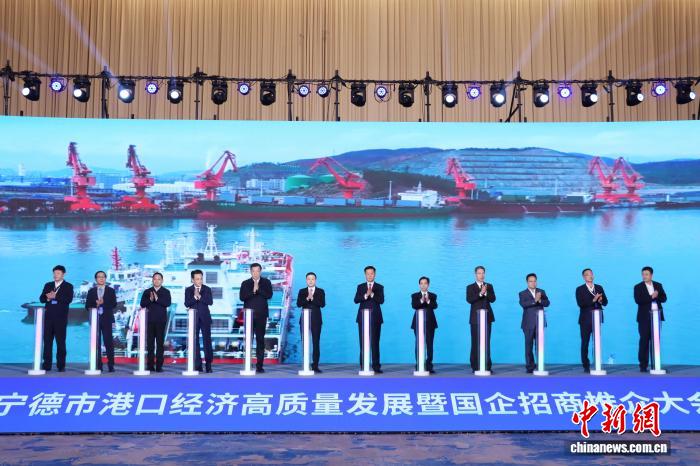
Core Insights - Ningde Port has successfully surpassed a cargo throughput of 100 million tons, marking its entry into the "billion-ton port" category, which is expected to drive economic growth and development in the region [1][3]. Group 1: Port Development and Capacity - The port's cargo throughput increased from 49.53 million tons at the beginning of the 14th Five-Year Plan to 100 million tons this year, representing a growth rate that has consistently ranked among the top in Fujian Province [3]. - By the end of 2024, Ningde will have 62 coastal production berths, including 19 berths capable of handling over 10,000 tons, significantly enhancing its operational capacity [3]. Group 2: Economic Impact - The port's growth is expected to support the logistics needs of four major industries: lithium battery new energy, new energy vehicles, stainless steel new materials, and copper materials, with an estimated 29.3 million tons of goods and 48,500 TEUs transported through the port in 2024 [5]. - The port's economic contribution is projected to reach 79.2 billion yuan, accounting for over 20% of the city's GDP, making it a crucial engine for high-quality development [5]. Group 3: Strategic Initiatives and Collaborations - A total of 35 key projects in areas such as port logistics, coastal industry, green energy, and marine economy were signed during the conference, with a total investment exceeding 21.5 billion yuan [7]. - The city is actively promoting cooperation in port development, construction, operation, and services, inviting stakeholders to explore opportunities in Ningde [7].
日照五年完成综合交通基础设施投资580亿元
Da Zhong Ri Bao· 2025-12-23 03:13
Core Viewpoint - The city of Rizhao has made significant investments in transportation infrastructure, totaling 58 billion yuan over the past five years, enhancing its transportation network and supporting economic and social development [1][2]. Group 1: Transportation Infrastructure Development - Rizhao has completed the construction of the Rizhao Station and several railway projects, forming a "four vertical and three horizontal" railway network, with ongoing projects like the Weifang-Suzhou High-speed Railway and the Qingdao connection line [1]. - The highway network has been expanded with the capacity enhancement of the Shenyang-Haikou Expressway and the opening of the Lianshan Port area expressway, creating a "three vertical, three horizontal, and three connected" expressway network [1]. - In civil aviation, Rizhao's airport has maintained over 100,000 flights annually for six consecutive years, supporting a comprehensive aviation development strategy [1]. Group 2: Port Development - The Rizhao Port has launched its fourth 300,000-ton crude oil terminal and added 15 new production berths, increasing its throughput capacity to 354 million tons [2]. - The port's cargo throughput is projected to reach 620 million tons in 2024, ranking sixth nationally, with container throughput expected to reach 6.71 million TEUs, ranking ninth among coastal ports [2]. - The "Rizhao Inland River Port Overall Plan (2025-2035)" has been approved, initiating a new model for sea-river combined transport [2]. Group 3: Public Services and Rural Development - The city has optimized and launched 124 new urban bus routes, including 71 specialized services, resulting in a 22.4% increase in average operational mileage compared to the previous five years [2]. - Significant improvements in rural transportation include the reconstruction of 859 kilometers of rural roads and the renovation of 89 dangerous bridges, achieving a 90% standard rate for rural roads [2]. - The implementation of 43 transportation services that can be processed online has improved accessibility for rural logistics and travel, addressing the "last mile" issue [2]. Group 4: Innovation and Development - The city has introduced over 40 innovative measures, with more than 20 receiving national and provincial recognition, including the "Four Good Rural Roads" management model [3]. - Initiatives such as drone test flights and integrated driver training models have been recognized as national exemplary cases [3]. - Policies to support container development and differentiated tolls on highways have been implemented to reduce logistics costs and promote integrated urban and industrial development [3].
北方内河首破亿吨!济宁港“百货通江”以港产城融合绘就运河盛景
Qi Lu Wan Bao· 2025-12-22 06:55
Core Insights - Jining Port has achieved a historic milestone by surpassing a cargo throughput of 100 million tons, marking it as the first inland port in northern China to reach this level, with a year-on-year growth of 18.5% [1][2] - The transformation of Jining from a "coal transportation" hub to a "diversified logistics" center is driven by the integration of port and industry, creating new development momentum [1][2] Infrastructure Development - Jining Port's growth is supported by decades of investment in port and shipping infrastructure, with 210 kilometers of the main waterway accounting for 24% of the total length of the Grand Canal [2] - The port features 103 berths for 1,000-ton vessels, facilitating a multi-modal transport model that includes rail and water transport, significantly enhancing logistics efficiency [2][3] - The efficiency of coal loading at Liangshan Port has improved, with average loading rates exceeding 780 tons per hour, and container throughput has increased by over 40% year-on-year [2][3] Cargo Diversification - The cargo composition at Jining Port has evolved from over 70% coal five years ago to a more diverse mix including steel, machinery, and food products [5][6] - The introduction of a cold chain facility at Longgong Port has enabled rapid delivery of agricultural products, such as garlic, to international markets [5][6] Economic Impact - The integration of port and industry has led to the establishment of seven hundred billion-level industrial parks, enhancing regional economic development [8][10] - Jining Port's logistics network now covers 20 provinces and 152 cities, with international logistics extending to 19 countries, contributing to a projected revenue of nearly 100 billion yuan for the port industry this year [10] Future Prospects - The ongoing development of the second phase of Liangshan Port is expected to increase its cargo handling capacity to 80 million tons and container throughput to over 400,000 TEUs, further solidifying its role as a key inland port [3][4] - Jining is committed to enhancing its position as a northern inland shipping center through strategic projects aimed at upgrading waterways and manufacturing new energy vessels [10]
江苏连云港:向海图强,“蓝色引擎”动力澎湃
Xin Lang Cai Jing· 2025-12-21 19:39
Core Insights - The successful docking of the 400,000-ton vessel "Yuan Shi Hai" at Lianyungang Port marks a significant milestone, enabling night-time operations and enhancing the port's shipping efficiency and competitiveness [1] - Lianyungang is transforming from a traditional port to an international hub, facilitating trade and logistics for Central Asian countries, with a notable increase in cargo throughput and container volume [2] - The marine industry in Lianyungang is experiencing rapid growth, driven by technological innovations and the emergence of new strategic industries, including advanced aquaculture and renewable energy projects [3] - The development of coastal tourism is flourishing, with a significant increase in visitor numbers, supported by ecological protection and restoration efforts that enhance the region's natural resources [4] Group 1: Port Operations - Lianyungang Port achieved its first-ever night-time docking of a fully loaded 400,000-ton vessel, enhancing operational efficiency [1] - The port's total throughput increased from 252 million tons and 4.8 million TEUs at the end of the 13th Five-Year Plan to 346 million tons and 6.69 million TEUs projected for 2024, with a year-on-year growth of 6.89% in the first ten months of this year [2] Group 2: Marine Industry Development - The marine industry is evolving with significant advancements, including the launch of the "Deep Blue" Antarctic krill fishing vessel and the world's first self-propelled closed salmon farming vessel [3] - Lianyungang has established 39 provincial-level marine innovation platforms, supporting technological advancements in the marine sector [3] Group 3: Tourism and Ecological Development - Coastal tourism has seen a dramatic rise, with visitor numbers increasing from 400,000 in 2022 to 1.9 million in the current year [4] - Ecological protection initiatives have led to the recognition of Lianyungang as a city with dual 5A scenic areas, enhancing its appeal as a tourist destination [4]

交通网越织越密,港口能级持续跃升!“十四五”日照交通答卷亮眼
Qi Lu Wan Bao· 2025-12-19 07:40
Core Insights - The article discusses the progress of transportation development in Rizhao City during the "14th Five-Year Plan" period, highlighting significant investments and improvements in various transportation sectors, including railways, highways, ports, and civil aviation [1][2][4]. Transportation Infrastructure Investment - Rizhao City has completed a total investment of 58 billion yuan in comprehensive transportation infrastructure, enhancing the integrated transportation network to support high-quality economic and social development [1]. Railway Development - During the "14th Five-Year Plan," Rizhao has planned and implemented 16 railway projects with a total investment exceeding 35.5 billion yuan, establishing a "four horizontal and three vertical" railway network with a total length of 337.97 kilometers and a railway density of 6.29 kilometers per 100 square kilometers [2]. Highway Network Enhancement - The highway network has been improved with the completion of major projects, including the expansion of the Shenhail Highway and the construction of the Lianshan Port area expressway, resulting in a total highway mileage of 235.8 kilometers [2]. Port Development - A total investment of approximately 23 billion yuan has been made in port construction, adding 13 new production berths and upgrading 9, with a total throughput capacity exceeding 350 million tons [4]. Civil Aviation and Inland Waterway Shipping - Rizhao Airport has maintained over 100,000 flight operations annually for six consecutive years, and the approval of the "Rizhao Inland Port Overall Planning (2025-2035)" aims to enhance the synergy between ports and inland waterways [3]. Smart and Green Port Initiatives - Rizhao has established the world's first fully automated container terminal and is recognized as a leading green port, with ongoing projects to enhance operational efficiency and service quality [4]. Public Transportation and Community Services - The city has optimized its public transportation network, launching 124 new or optimized routes, and has implemented various community service measures to improve logistics and transportation accessibility [5].

锚定一流港口,天津“十五五”打造智慧绿色枢纽
Zhong Guo Xin Wen Wang· 2025-12-12 11:24
Core Viewpoint - Tianjin Port aims to transform into a world-class smart and green hub port during the 14th Five-Year Plan period, shifting focus from scale expansion to capability enhancement [1][6]. Group 1: Smart Transformation - The competition among ports has evolved from merely berth and loading capacity to refined production organization, efficient scheduling, and timely responses [2]. - Tianjin Port is implementing a comprehensive smart development strategy that integrates planning, operations, and services across the entire process [2]. - The world's first "smart zero-carbon" terminal has set records for automated container terminal operations, showcasing the port's technological advancements [2]. Group 2: Green Transition - The development of Tianjin Port emphasizes green initiatives, with specific goals for "zero-carbon terminals" and "low-carbon port areas" [3]. - The port is focusing on renewable energy sources, such as wind and solar power, to achieve zero-carbon operations across all roll-on/roll-off terminals [3]. - Efforts to optimize transportation methods and enhance clean transport ratios are underway to alleviate environmental pressures [3]. Group 3: Port-City Integration - The integration of port and city development is crucial for driving regional economic growth, linking logistics, trade, and industry [4]. - Tianjin is promoting the development of free trade zones and bonded areas in conjunction with the port to attract high-end manufacturing and international trade [4]. - Projects like cruise home ports and port industrial tourism are diversifying the port's functions, enhancing its role in urban culture and tourism [5]. Group 4: Strategic Role in Development - The positioning of Tianjin Port in the 15th Five-Year Plan reflects a shift from focusing solely on throughput to emphasizing its role in supply chains and as a strategic hub in the new development landscape [5][6]. - The dual focus on "smart" and "green" initiatives is seen as key to elevating the port's capabilities and providing a model for regional low-carbon transitions [5].

博兴港港产融合高质量发展推介会成功举办
Qi Lu Wan Bao· 2025-12-11 07:37
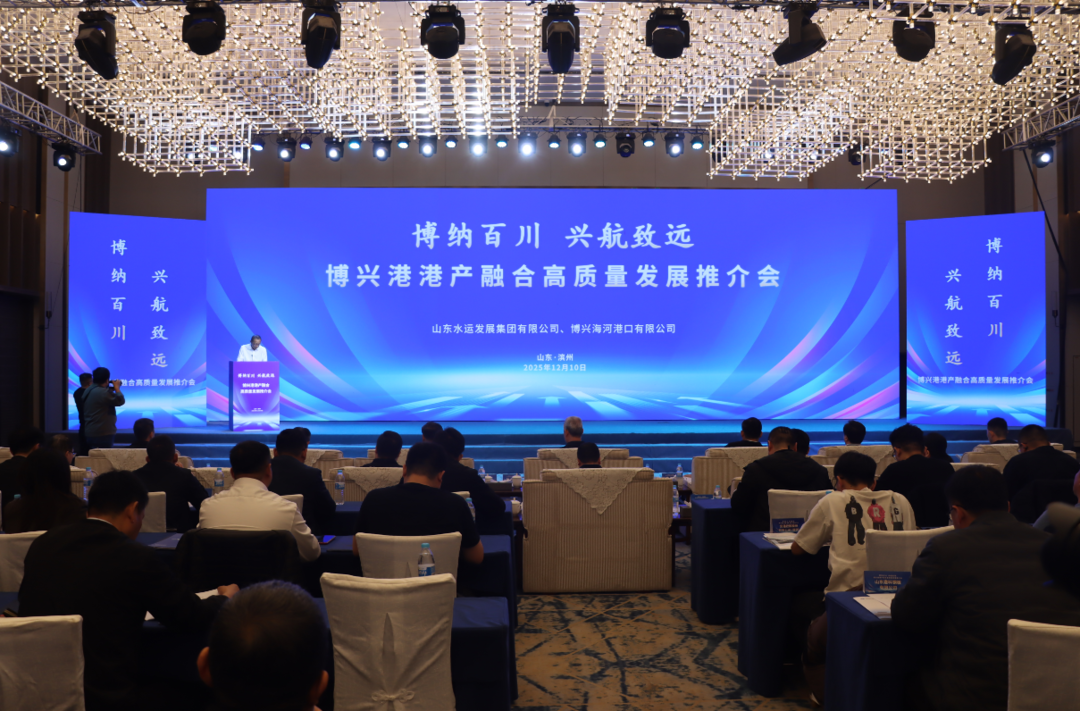
Core Insights - The event "Bona Baichuan (301667) Xinghang Zhiyuan" was held in Boxing County, Shandong Province, celebrating the port's cargo throughput surpassing 1 million tons for the first time [3] - The event aimed to showcase the achievements of the Xiaoqing River's reopening and the operational development of Boxing Port, promoting investment opportunities and discussing high-quality development of port-industry-city integration [3] Group 1: Port Development - Xiaoqing River, a vital waterway connecting the provincial capital and facilitating river-sea transport, has significantly boosted industrial clustering and high-level openness since its full reopening in 2023 [3] - Boxing Port, one of four ports along the Xiaoqing River, has a strategic geographical position, connecting to Bohai Bay, Qingdao Port, Yantai Port, and the Yellow River basin, indicating substantial development potential [3] Group 2: Operational Achievements - With support from the Shandong Provincial Transportation Department and various enterprises, Boxing Port has launched five river-sea transport routes, creating a seamless connection between overseas, coastal ports, inland ports, and industrial parks [3] - As of now, Boxing Port has established eight thousand-ton berths and has completed over 900 waterway transport trips this year, achieving a cargo throughput of 1.206 million tons, positioning it as a strong engine for regional economic development [3]
省级“十五五”规划建议密集出炉,天津有何“与众不同”?
Zhong Guo Xin Wen Wang· 2025-12-08 12:11
Core Viewpoint - The article discusses Tianjin's unique approach in its "14th Five-Year Plan" as it aims to establish itself as a modern socialist metropolis while focusing on specific industrial layouts and open measures to find its unique positioning in the new round of regional competition [1] Group 1: Regional Collaboration - Tianjin's "15th Five-Year Plan" emphasizes the strategic importance of the Beijing-Tianjin-Hebei collaborative development, aiming for deep functional integration rather than passive acceptance [2] - The plan includes specific platforms for innovation and collaboration, such as the Tianjin Binhai-Zhongguancun Science Park and the Tianjin-Jingjin Cooperation Demonstration Zone, promoting a shared benefits and collaborative growth model [2] Group 2: Advanced Manufacturing - The plan outlines a "6+6" strategy for advanced manufacturing, identifying six pillar industries: information technology, biomedicine, new energy, new materials, aerospace, and circular economy [3] - Additionally, it targets six new growth points in future industries, including biomanufacturing and hydrogen energy, reflecting Tianjin's ambition to transition from traditional heavy industries to a modern, high-tech industrial system [3] Group 3: Financial Innovation - Tianjin aims to differentiate itself in financial reforms by establishing itself as a national hub for commercial factoring and a center for aircraft and ship leasing [4] - The plan highlights the integration of finance with the entire industrial chain, promoting a collaborative approach to financial services [5] Group 4: Port Development - The port's role in Tianjin's strategy is evolving from merely a throughput focus to enhancing its capabilities and intelligence, aiming to become a world-class smart green hub port [6] - The plan emphasizes the integration of port, logistics, trade, and industry, positioning Tianjin as a strategic node in domestic and international circulation [6] Group 5: Green Development - Tianjin is tasked with a national mission to develop a resource recycling platform and promote green low-carbon circular development [7] - The plan aims to establish a circular economy industrial cluster and a "waste-free city," positioning Tianjin as a leader in resource recycling and green development in northern China [7] Group 6: Overall Strategy - The "15th Five-Year Plan" represents not just growth in metrics but a redefinition of Tianjin's development approach, focusing on practical and distinctive strategies to meet future challenges [8] - The plan is seen as a critical period for Tianjin to establish itself as a modern socialist metropolis and contribute to China's modernization narrative [8]