生态重构

Search documents
上市对保险中介品牌价值的影响与提升
Sou Hu Cai Jing· 2025-06-11 05:56
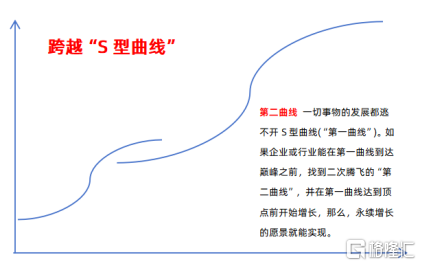
Group 1 - The core viewpoint of the article highlights the value enhancement driven by capital empowerment and governance upgrades in the insurance intermediary sector, particularly through the experiences of companies like Fanhua Holdings, Huize Insurance, and Waterdrop Inc [1][4][5] Group 2 - Fanhua Holdings reported a net profit attributable to shareholders of 170 million yuan in Q3 2023, a year-on-year increase of 382.6%, with total premium income exceeding 12.4 billion yuan, up 35% year-on-year [1] - The company raised over 1.5 billion yuan through targeted placements and convertible bonds, with 60% allocated to digital platform development and mergers [1] - Fanhua's market coverage increased by 87% through acquisitions, expanding its branches from 15 to 28 provinces [1] - Huize Insurance's listing on NASDAQ in 2020 achieved a price-to-sales ratio of 3.7, significantly higher than the traditional intermediary average of 1.2 [2] - The company has a long-term insurance renewal rate of 65%, which is 25 percentage points higher than the industry average, and customized products contributed 62% to its revenue [2] - Huize accumulated 6.3 million user data points, supporting the development of 1,967 customized products, with a total underwriting scale exceeding 8 billion yuan for its "Darwin" series critical illness insurance [2] - Waterdrop Inc's listing in 2021 included a market value driven by three premium factors: user traffic value, technology empowerment, and ecological synergy [3] - The insurance segment's revenue contribution decreased from 89% to 75%, while profit margins increased from 12% to 21% [3] - Waterdrop's net profit for 2024 is projected to be 368 million yuan, reflecting a year-on-year growth of 119.8% [3] Group 3 - The common patterns of value enhancement among the three companies include capital empowerment multiplier effects, brand premium gradient effects, and governance premium multiplier effects [4] - The average R&D investment intensity of listed institutions is 3.2 times that of non-listed institutions [4] - The article notes challenges faced by smaller listed companies, such as over-reliance on commission income, which led to a 294.26% drop in net profit for Huakai Insurance [4] - Strategies to address these challenges include transitioning to risk management services and developing second growth curves, as demonstrated by Fanhua and Waterdrop [4][5] Group 4 - The article concludes that the value enhancement for insurance intermediaries has evolved into a multi-dimensional project encompassing capital empowerment, technological drive, and ecological reconstruction [5] - Listed institutions can achieve valuation premiums of 3-5 times compared to non-listed institutions, primarily by converting capital advantages into technological and ecological barriers [5] - Future trends indicate that technology investment proportions will exceed 40%, and the contribution rate of "insurance + services" ecosystems will surpass 50% [5]

鸿蒙电脑下了“双黄蛋” 将如何“给世界多一个选择”?
Guang Zhou Ri Bao· 2025-05-19 16:14
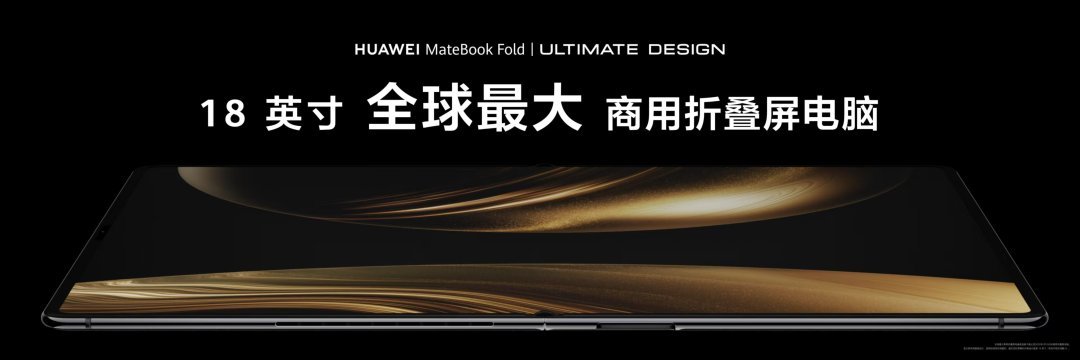
Core Viewpoint - Huawei's launch of the nova 14 series and HarmonyOS computers marks a significant step in breaking the dominance of Windows and macOS in the PC operating system market, introducing innovative products like the world's first HarmonyOS foldable computer, the Huawei MateBook Fold [1][5] Group 1: Product Innovation - The Huawei MateBook Fold is the world's lightest and largest commercial foldable screen computer, offering a new experience with its dual-screen functionality and innovative design [2][5] - The MateBook Pro also showcases advancements in lightweight design, weighing only 970 grams, and provides a smoother user experience with HarmonyOS 5 [2][3] Group 2: Strategic Importance - The introduction of HarmonyOS on PCs signifies a breakthrough for domestic operating systems in China, aiming to reshape the global operating system ecosystem [1][5] - Huawei emphasizes the need for a self-controlled domestic operating system in the PC sector, which has been a long-standing goal for China's electronic information industry [5][7] Group 3: Market Context - As of April 2023, Windows holds a 71.06% market share, while macOS accounts for 15.64%, indicating a highly concentrated global PC operating system market [5][7] - The launch of HarmonyOS computers is seen as a strategic move to disrupt this concentration and promote a more diverse software ecosystem [5][7] Group 4: Ecosystem Development - Over 1,000 applications have been adapted for HarmonyOS computers, with a target of over 2,000 by the end of the year, but this is still insufficient for a mature ecosystem [7] - Huawei aims to have 100,000 applications by 2025 as a key milestone for ecosystem maturity, highlighting the need for ongoing developer engagement and user habit formation [7]
【高工锂电云看展】直播预告:技术突围与全球化破局之路
高工锂电· 2025-05-10 07:04
Core Viewpoint - The global lithium battery market is expected to undergo structural changes in 2025, driven by the acceleration of new energy scenarios, safety standards, and technological innovations in materials and AI, pushing energy density beyond 500Wh/kg and nearing the commercialization of solid-state batteries [3]. Group 1: Event Overview - The "2025 High-tech Sodium Battery Industry Summit" will be held on June 9 at the Shangri-La Hotel in Suzhou, organized by GGII and sponsored by Zhongna Energy [2]. - The "2025 High-tech Solid-State Battery Technology and Application Summit" will take place on June 10 at the same venue, organized by GGII and sponsored by Liyuanheng [2]. Group 2: Industry Trends - The lithium battery market is facing dual challenges of "technological breakthroughs" and "ecological restructuring" due to increasing global trade barriers [3]. - The new national standard for power batteries emphasizes safety, compelling continuous upgrades in product safety [3]. Group 3: Live Broadcast Events - The live broadcast event "2025 High-tech Lithium Battery Cloud Exhibition" will occur on May 15-16, featuring 37 companies from the lithium battery and solid-state battery supply chain, focusing on technological frontiers and market trends [3]. - The first session on May 15 will discuss the full-scenario technology matrix and global service strategies, featuring companies like EVE Energy and Guoxuan High-Tech [5]. - The second session will focus on multi-dimensional innovations in scenarios, technology, and ecology, with participation from companies such as Jiatuo Intelligent and Xian Dao Intelligent [6]. - The third session will address next-generation battery manufacturing upgrades, emphasizing efficiency and energy-saving solutions [8]. Group 4: Roundtable Discussions - The first roundtable on May 16 will explore the material revolution and performance breakthroughs in power batteries, discussing achieving 500Wh/kg energy density and the challenges of solid-state battery materials [10]. - The second roundtable will analyze the globalization strategies of material companies, addressing challenges in breaking into the European and American markets and the evolution of the market post-2025 [11].
智能驾驶2025:从技术平权到生态重构的产业跃迁
3 6 Ke· 2025-04-30 12:00
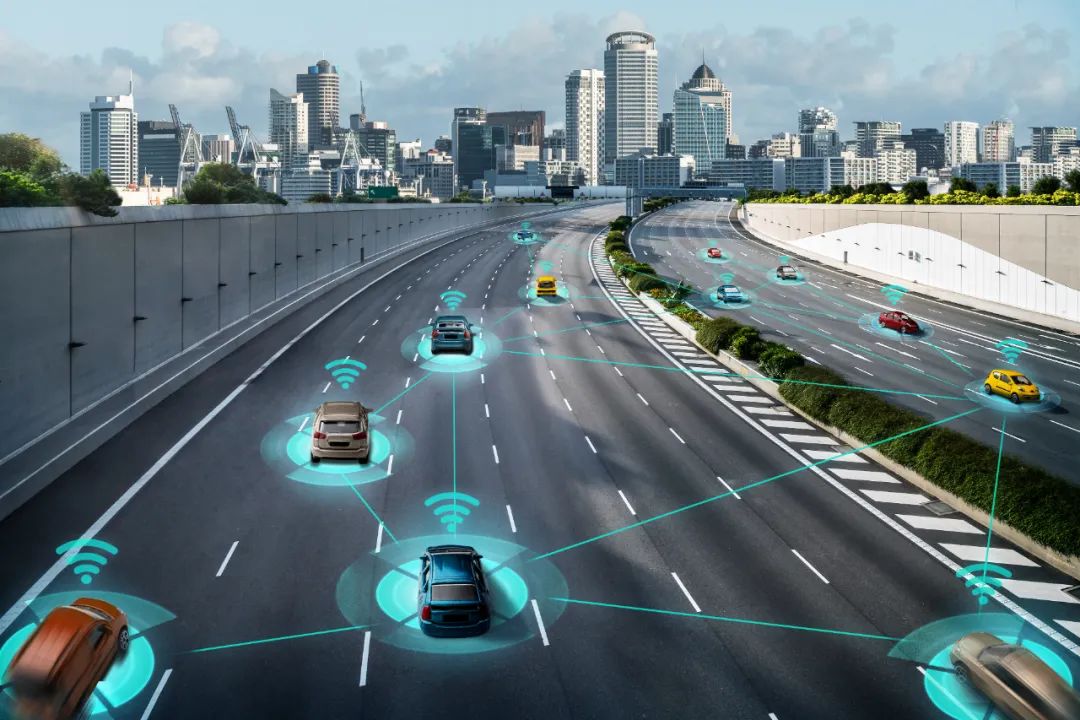
Group 1 - The core concept of the articles revolves around the rapid advancement and widespread adoption of intelligent driving technology in the Chinese automotive industry, with a significant focus on the transition from luxury to mainstream vehicles [1][10][15] - By 2025, the penetration rate of Level 2 and above intelligent driving is expected to reach 21.4%, indicating a shift towards more accessible technology for entry-level models [1][10] - Chinese intelligent driving companies are predicted to capture 33% of the global market by 2030, with technology exports potentially exceeding $100 billion, showcasing their competitive edge in sensor technology, algorithms, and cost control [2][10] Group 2 - The market for automotive electronics and intelligent systems is expected to grow rapidly, with the domain controller market seeing significant increases due to the dual drivers of hardware affordability and software evolution [4][6] - The global market for L2+ systems is projected to reach $4 billion by 2042, with advanced driver-assistance systems (ADAS) becoming standard in new vehicles [6][10] - The integration of robotics and intelligent driving technology is emerging as a new frontier, with companies like Zhixing Technology exploring applications in various sectors, including low-altitude logistics and industrial automation [8][12][15] Group 3 - The trend of "technology democratization" is evident as intelligent driving technology transitions from being a luxury feature to a standard offering in vehicles, driven by cost reductions in hardware and advancements in software [10][12] - Companies are increasingly diversifying their business models by incorporating robotics into their portfolios, positioning themselves as "smart mobility solution providers" [15][17] - The competition in the intelligent driving sector is intensifying, with leading companies focusing on building ecosystems that integrate both automotive and robotic technologies, indicating a shift towards a more collaborative and innovative industry landscape [17]
美的集团(000333.SZ/00300.HK):藏在Q1业绩里的"三重奏",持续演绎价值长青之路
Ge Long Hui· 2025-04-30 03:18
Core Viewpoint - The domestic home appliance industry is entering a deep value battle characterized by technology and efficiency, as traditional growth models fade and companies must innovate to maintain competitive advantages [1][2]. Financial Performance - Midea Group reported a revenue of 128.4 billion yuan in Q1 2025, a year-on-year increase of 21%, and a net profit of 12.4 billion yuan, up 38% year-on-year, showcasing strong growth momentum [1]. - The company also announced a cash dividend of 26.7 billion yuan and a share buyback plan of 50-100 billion yuan, followed by an additional buyback of 15-30 billion yuan in April [1]. Industry Trends - The Chinese home appliance market is transitioning from a growth phase driven by population and urbanization to a stage focused on replacement and upgrading, with a significant increase in the demand for smart and high-end appliances [4][9]. - The retail scale of the home appliance market (excluding 3C) in Q1 2025 was 179.8 billion yuan, with a modest growth of 2.1% [4]. Technological Innovation - Midea is breaking the traditional "price for volume" model by investing in R&D and innovation, establishing a "patent barrier + scenario innovation + intelligent manufacturing" strategy [9][10]. - The company has made significant advancements in various technology sectors, including the establishment of a joint laboratory for compressor international standards and the launch of innovative products in smart home technology [10][11]. Global Expansion - Midea's globalization strategy has shifted from traditional OEM to a model that emphasizes localized R&D, high-end brand expansion, and regional supply chain development [12][14]. - The company's overseas self-owned brand (OBM) business has rapidly grown, accounting for 43% of its smart home business revenue in 2024 [14]. Ecosystem Reconstruction - Midea is diversifying its business beyond traditional home appliances into sectors like renewable energy, industrial technology, and healthcare, enhancing its resilience against market fluctuations [16][17]. - The company's ToB business revenue has increased from 18.5% in 2020 to 25.5% in 2024, indicating a growing second engine for sustained growth [17][19]. Future Outlook - Midea's strategy of combining hard technology with soft services positions it well for future growth, particularly in the context of AI and green revolutions [20][21]. - The company is expected to continue expanding its market share and profitability, especially in smart home and high-end product lines, while also exploring new growth opportunities in B2B and overseas markets [20][21].

中资出海四十年:从学徒到全球玩家的进化之路
远川研究所· 2025-04-03 14:01
Core Viewpoint - The article discusses the evolution of Chinese enterprises from passive learners to active players in the global market, highlighting their journey through management awakening, technological innovation, and ecological reconstruction in globalization 3.0 [1][12]. Group 1: Historical Context - In 1988, Procter & Gamble's entry into China marked a significant shift in the local business landscape, introducing advanced brand management and supply chain systems [1]. - The 1990s saw multinational companies like IBM and Microsoft bringing not only technology but also management practices to China, which significantly influenced local companies like Huawei [3]. - After joining the WTO in 2001, Chinese companies began to expand internationally, with early examples like TCL facing challenges due to cultural clashes and management integration issues [4]. Group 2: New Business Models - The internet wave post-2010 led to new business paradigms, with companies like ByteDance and SHEIN leveraging technology and flexible supply chains to achieve rapid growth [6]. - Companies such as 运去哪物流 (Yunquna Logistics) and 联影医疗 (United Imaging Healthcare) have emerged as leaders in their respective fields, showcasing the potential of Chinese innovation on the global stage [7]. Group 3: Future Trends - Current trends indicate a diversification in the internationalization of Chinese enterprises, with companies like 追觅 (Trifo) and 闪极科技 (Shanji Technology) achieving significant market shares in Europe and the U.S. [9][10]. - The article emphasizes the shift from product output to ecological co-construction, with companies like 阿里国际站 (Alibaba International) and 法奥意威 (Fao Yiwei) leading the way in innovative solutions and global collaboration [12]. - The 临港新片区 (Lingang New Area) is highlighted as a strategic hub for Chinese enterprises, focusing on cutting-edge industries and fostering international talent [12][13].