科技驱动

Search documents
中粮家佳康20260323
2026-03-24 01:27
Summary of the Conference Call for COFCO Jiajia Kang Company Overview - **Company**: COFCO Jiajia Kang - **Industry**: Livestock and Meat Processing Key Points and Arguments Financial Performance - **2025 Revenue**: CNY 18.579 billion, an increase of 13.8% year-on-year, primarily driven by growth in the livestock business [2][12] - **Net Profit**: Loss of CNY 292 million after fair value adjustments, a significant decline due to a 17.9% drop in pig prices [2][12] - **Average Selling Price of Pigs**: CNY 13.39 per kg, down 19% year-on-year [2][5] Cost Management and Efficiency - **Cost Reduction Initiatives**: Focus on optimizing feed formulas, leveraging bulk purchasing advantages, and enhancing management practices to significantly lower breeding costs [3][6] - **Quality Improvement**: Proportion of high-quality breeding pigs increased to 94%, with PSY (Pigs Weaned per Sow per Year) exceeding 28 [2][3][6] - **Collaborative Breeding**: 25% of breeding output from cooperative farming, which is more cost-effective compared to self-breeding [2][6] Brand Development and Sales Growth - **Fresh Meat Sales**: Sales volume of fresh pork increased by 30.3%, with brand revenue accounting for 32.1% of total income [2][3][10] - **E-commerce Growth**: E-commerce channel revenue surged over 200%, indicating strong online sales performance [2][10] - **Product Innovation**: Launched new products like flaxseed pork slices and collaborated with major retailers to enhance market presence [10][11][16] Production Capacity Expansion - **Meat Processing Capacity**: Increased annual processing capacity from 23,000 tons to 52,000 tons with new factories in Dongtai and Pinghu [2][11] - **Strategic Partnerships**: Collaborated with major restaurant chains to develop new products, enhancing B2B sales [11] Technological Advancements - **Research and Development**: Established COFCO Jiajia Kang Research Institute focusing on breeding innovation and digital applications [8][17] - **Data Utilization**: Collected over 70 million data points daily to improve production efficiency through AI-driven smart farming [9][17] Market Challenges and Strategic Focus for 2026 - **Market Conditions**: Acknowledgment of ongoing challenges in the industry, with a focus on cost reduction, brand expansion, and foundational strengthening [13][22] - **Future Strategies**: Emphasis on 20 cost reduction projects, enhancing brand presence, and accelerating the application of technological advancements [13][22] Supply Chain and Procurement Strategy - **Raw Material Pricing**: Monitoring of corn and soybean meal prices, with a focus on stabilizing procurement costs through group advantages [19][20] - **Synergy Between Feed and Breeding**: Enhanced collaboration post-acquisition of COFCO Feed, leading to cost savings and improved product quality [20] Future Outlook - **Brand Development Philosophy**: Commitment to a differentiated functional approach, focusing on consumer brand management and long-term investment in branding [14][15] - **Expansion Plans**: Continued focus on the Hong Kong market with plans for increased advertising and product development tailored to local preferences [18][19] Conclusion - **Overall Strategy**: The company aims to balance cost management with brand development and technological innovation to navigate market challenges and enhance long-term value [13][15][22]
稳健经营下的“进攻性”姿态:李宁2025财报的增量逻辑
Zhong Guo Ji Jin Bao· 2026-03-22 12:04
Core Viewpoint - Li Ning's 2025 annual performance report reflects a "steady progress" approach amidst an uncertain consumer environment, with a slight revenue growth and a focus on transitioning from "steady operation" to "strengthening foundations and actively expanding" [2][3] Financial Performance - For the fiscal year ending December 31, 2025, Li Ning reported a revenue of 29.598 billion yuan, a year-on-year increase of 3.2% - Gross profit reached 14.489 billion yuan, up 2.4% year-on-year, with an overall gross margin of 49.0% - The profit attributable to equity holders was 2.936 billion yuan, a slight decrease of 2.56% year-on-year, while the net profit margin stood at 9.9%, exceeding market expectations [2] Strategic Shift - Li Ning's management emphasized that "steady operation" does not equate to conservatism, indicating a more aggressive approach in areas where growth is possible [3] - The company plans to amplify its offensive strategy across more product categories and channels [4] Product Categories and Channels - Li Ning's core strategy involves "single brand, multiple categories, and multiple channels," with future growth expected from both product categories and distribution channels [5] - The outdoor category, which began in 2024, is projected to double its revenue in 2025, with positive market feedback on products like the "万龙甲" series [5] - The "荣耀金标" series, launched in collaboration with the Chinese Olympic Committee, aims to differentiate itself from the main brand and has shown promising results in market testing [5] Performance in Specific Categories - The badminton category saw a revenue increase of 30%, leading the industry, with annual sales of badminton rackets exceeding 5.5 million units, marking a historical high [6] - A significant shift in revenue structure was noted, with the proportion of core equipment (rackets, strings, shoes) rising to 85% from 60%-70% in previous years [6] Technological Innovation - Li Ning's growth in the running category is attributed to continuous technological advancements, including the introduction of the "超胶囊" midsole technology, enhancing performance and consumer recognition [7] - The company aims to establish itself as the leading running brand in consumers' minds, supported by its technology platform [7] Store Expansion and Management Strategy - As of December 31, 2025, Li Ning had 7,609 sales points, with a net increase of 24 stores, while the core brand saw a slight decrease in store count [8] - The focus is on improving single-store efficiency rather than merely increasing the number of stores, with new store formats being explored [8][9] - A "trial and error" mechanism is being implemented for new channels, allowing for adjustments based on long-term growth potential rather than short-term performance [9]


因地制宜发展新质生产力|重庆永川:“光影流量”何以变“产业留量”
Xin Lang Cai Jing· 2026-02-12 11:17
Core Viewpoint - The Chongqing Yongchuan District has rapidly developed a leading technology film and television industry platform, transforming "light and shadow flow" into "industrial retention" through technological innovation and a complete industrial chain [1][10][13]. Group 1: Technological Advancements - Yongchuan features a 3,000 square meter virtual shooting studio and a 5,000 square meter real scene construction studio, the largest in Western China [2]. - The integration of advanced technologies such as real-time rendering and camera tracking allows directors to visualize the final scene during shooting, enhancing efficiency [2]. - Over 110 well-known films, including "The Battle at Lake Changjin" and "Ne Zha," have utilized Yongchuan's facilities, with a projected 90% usage rate for over 60 film projects by 2025 [2][5]. Group 2: Service Platform and Ecosystem - The "Light and Shadow Chongqing" one-stop film shooting service platform has streamlined the process, reducing preparation time by 60% [6][7]. - Yongchuan has adopted a "platform-led, cluster development" model, improving shooting efficiency by 55% and reducing production costs by 90% [7]. - The establishment of various educational institutions and training programs has created a talent pool of approximately 5,000 graduates annually, supporting the industry's growth [8][9]. Group 3: Economic Impact and Future Goals - The integration of film projects has significantly boosted local tourism, with over 830,000 visitors and 1.5 billion yuan in consumption during the Shanghai Cooperation Organization Film Festival [12]. - Yongchuan aims to attract 100 new film enterprises and produce 300 film projects annually by 2027, targeting the creation of a 10 billion yuan film industry cluster [9][13]. - The district is also developing an e-commerce industry park to enhance the synergy between film and agriculture, promoting a sustainable economic cycle [10][12].

科技赋能 智能温室里绽放“致富花”
Xin Lang Cai Jing· 2026-02-08 11:22
Core Viewpoint - The establishment of the Tangshan Lutai Modern Flower Demonstration Base represents a significant advancement in the local horticultural industry, providing new income opportunities for villagers through modern technology and training programs [3][5]. Group 1: Project Overview - The flower base covers an area of 2,000 square meters and includes 50,000 plants such as butterfly orchids and potted osmanthus, filling a gap in the local horticultural market [3]. - The base utilizes an intelligent glass greenhouse equipped with a comprehensive information control system that automates environmental adjustments, enhancing the growth conditions for flowers [5]. Group 2: Economic Impact - The implementation of precise environmental controls has led to a 30% increase in flower yield and a significant improvement in the quality of the products [5]. - The project is expected to generate an annual income exceeding 2.2 million yuan, contributing to local economic development and rural revitalization [7]. Group 3: Community Engagement and Training - The base plans to train 80 farmers annually, sharing advanced techniques from seed selection to pest control, thereby promoting local agricultural skills [5][7]. - The initiative aims to integrate tourism with agriculture by developing flower viewing areas and interactive experiences for visitors, enhancing the overall economic model [7].

业绩短期承压 天马科技布局鳗鱼全产业链筑牢核心竞争力
Zheng Quan Ri Bao Zhi Sheng· 2026-01-31 02:06
Core Viewpoint - Tianma Technology Group Co., Ltd. is expected to report a net profit loss of 120 million to 180 million yuan for 2025 due to macroeconomic fluctuations, industry cyclical adjustments, and intensified market competition [1] Group 1: Financial Performance - The company's performance is significantly impacted by macroeconomic fluctuations, industry cyclical adjustments, and increased market competition, leading to a downward trend in sales prices for live and grilled eel [1] - The eel industry is currently in a downturn, with losses reported in both the farming and grilled eel food sectors [1] - The feed segment has experienced a decline in gross profit due to market structural adjustments and intensified competition, compounded by increased period expenses and asset impairment provisions [1] Group 2: Industry Position and Strategy - Despite the temporary fluctuations in annual performance, Tianma Technology has established a comprehensive industrial chain from seedling to food, which solidifies its leading position in the eel industry and enhances its core competitiveness [1] - The eel industry is undergoing a critical phase of structural optimization and value reassessment, where the company's full industrial chain synergy advantages will gradually become apparent [1] - Tianma Technology has built large-scale industrial clusters and two major breeding bases across eight provinces, forming a complete industrial ecosystem covering seedlings, feed, farming, processing, sales, and brand operation [1] Group 3: Market Expansion and Innovation - The company is advancing a "dual circulation" strategy in response to changes in the global eel trade landscape, having obtained direct export qualifications for live eels to Japan and South Korea, and successfully air-freighting live eels to Japan [2] - Tianma's eel products are now sold in over 70 countries and regions globally, with a continued diversification of export markets [2] - Domestically, brands such as "Eel Hall" and "Little Eel Hall" have successfully penetrated supermarkets, restaurants, e-commerce, and new retail channels, while also developing innovative products like hot pot eel slices and grilled eel skewers to meet domestic consumption scenarios [2] - The eel industry is experiencing a profound transformation from "resource dependence" to "technology-driven," from "export-led" to "balanced domestic and international," and from "raw material export" to "brand management" [2] - The company aims to optimize strategic layouts, expand sales channels for farming and processing products, explore innovative business models, and drive technological innovation to build new competitive advantages for future recovery and growth [2]

韩束经历考验,上美谋求战略转型
3 6 Ke· 2026-01-19 13:05
Core Insights - The domestic beauty brand Han Shu is currently facing challenges, including a controversy over product ingredients and executive turnover, which reflects broader scrutiny in the beauty industry [1][3][4] Group 1: Ingredient Controversy - Han Shu's two facial mask products were reported by CCTV to contain epidermal growth factor (EGF), leading to public concern despite the company's claims of compliance [4][6] - EGF is primarily used in medical applications, and its use in cosmetics is prohibited in China due to safety concerns, prompting Han Shu to withdraw the affected products and issue a statement asserting no EGF was added [6][9] - The discrepancy between testing results from CCTV and Han Shu's own tests raises questions about the detection methods used, highlighting the lack of standardized testing for EGF in cosmetics [7][8] Group 2: Business Performance and Strategy - Han Shu has experienced significant growth, with revenue reaching 5.591 billion yuan in 2024, marking over a threefold increase in two years, making it a key driver for its parent company, Shangmei [10][11] - The brand's strategy of focusing on single products and leveraging platforms like Douyin has led to its dominance in the beauty sector, achieving a GMV of 33.4 billion yuan in 2023 [11][13] - However, the company's reliance on Han Shu, which accounted for 82.3% of revenue in 2024, poses risks, as any issues with the brand could directly impact overall performance [15][16] Group 3: Market Challenges and Future Directions - The growth rate of Han Shu has begun to slow, with a 14.3% increase in revenue for the first half of 2025, indicating a need for transformation and diversification [17][18] - To reduce dependency on Han Shu, Shangmei is accelerating the development of multiple brands, with new brand Newpage achieving a revenue of 397 million yuan in the first half of 2025, growing by 146.5% [18][20] - The company is also pursuing globalization, entering Southeast Asian markets with tailored products, but faces challenges in brand recognition and local market adaptation [20][21] Group 4: Innovation and Long-term Goals - The shift from a marketing-driven approach to a technology-driven strategy is crucial for Han Shu to enhance its product offerings and address consumer skepticism regarding domestic brands [21][22] - The company aims to achieve a revenue target of 10 billion yuan by 2025, with ongoing investments in research and development to support this goal [21][22]
顺丰同城斩获香港市务学会PowerBrand权威品牌大奖
Zheng Quan Ri Bao Wang· 2026-01-17 02:41
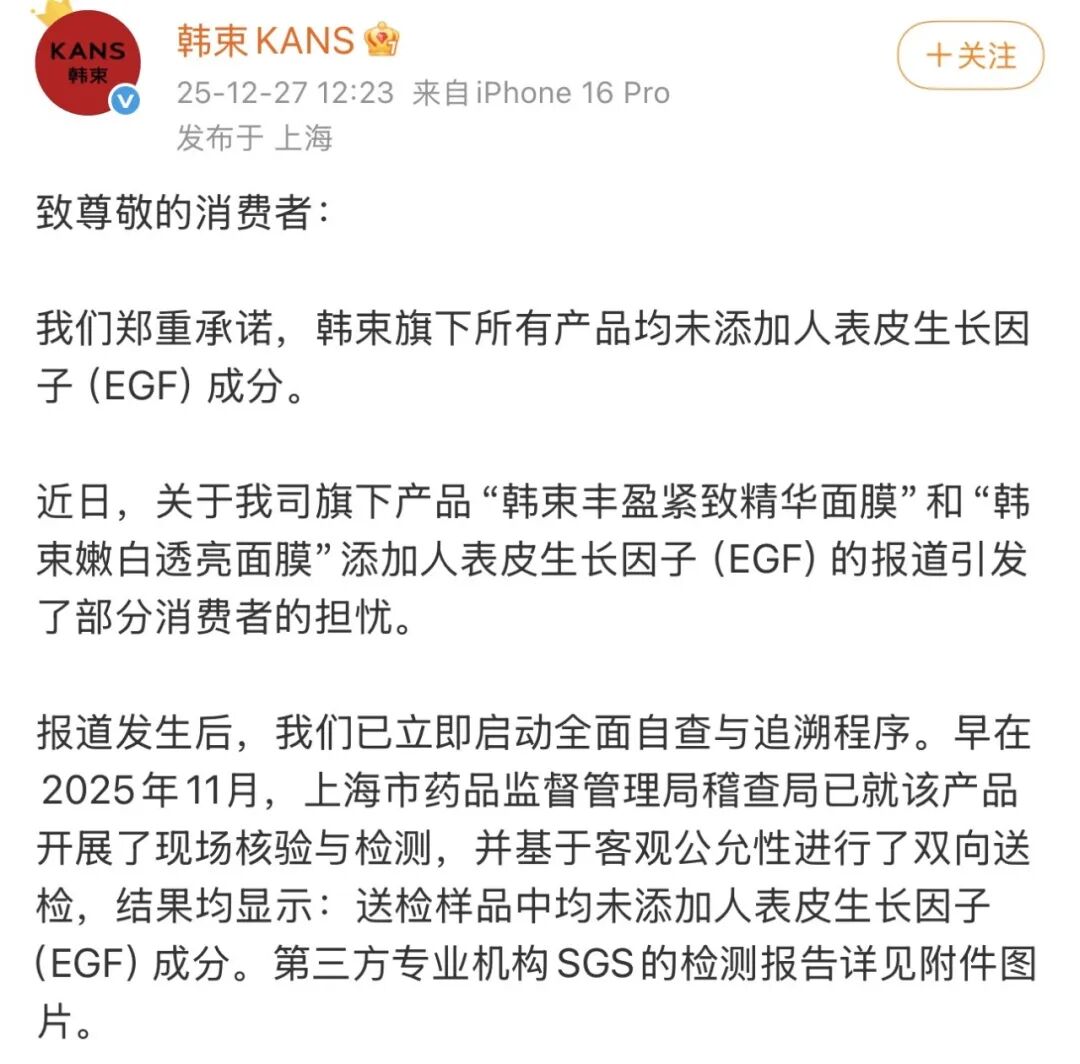
Core Insights - SF Express City, a leading third-party instant delivery platform in China, won the "China PowerBrand in Delivery Services" award at the 9th PowerBrand Authority Awards 2024/2025 in Hong Kong, recognizing its service quality and technological innovation [1][2] - The company has established a comprehensive service matrix covering food delivery, local retail, near-field e-commerce, and local services, enhancing its brand competitiveness [1] Financial Performance - In the first half of 2023, SF Express City achieved profitability ahead of the industry, with net profits doubling in subsequent financial periods, making it one of the few companies in the instant delivery sector to maintain high growth in both revenue and net profit [2] - For the first half of 2025, the company's revenue surpassed 10.236 billion yuan, a year-on-year increase of 48.8%, while adjusted net profit reached 160 million yuan, up 139%, marking a historical high [2] Strategic Expansion - From 2024 to 2025, SF Express City plans to deepen its business layout in the Hong Kong and Macau regions, launching the SoFast brand to provide all-scenario, round-the-clock services for local merchants and users [2] - The company aims to enhance its local service network and brand localization impact while collaborating with SF Group to develop integrated supply chain solutions [2] Brand Recognition and Future Outlook - The recent award signifies the authoritative recognition of SF Express City's brand influence and showcases its development path driven by technology and customer-centricity [2] - Looking ahead, the company is expected to continue enhancing urban living quality and commercial efficiency through its focus on the third-party instant delivery infrastructure value chain, entering a new phase of brand development [2]
科技驱动、用户为本:顺丰同城荣膺香港市务学会PowerBrand权威品牌大奖
Zhong Jin Zai Xian· 2026-01-16 09:22
Core Insights - SF Express City has been awarded the "China PowerBrand in Delivery Services" for its outstanding service quality and technological innovation in the instant delivery sector [1] Group 1: Award and Recognition - The award was presented at the 9th PowerBrand Authority Brand Awards 2024/2025 organized by the Hong Kong Institute of Marketing (HKIM) [1] - The HKIM, established in 1982, is a prominent marketing organization in Hong Kong that promotes industry standards and recognizes outstanding brands through various awards [3] Group 2: Company Strengths - SF Express City excels in emotional connection with consumers, leveraging technology for innovative applications, and focusing on customer experience [3] - The company is the largest third-party instant delivery platform in China, covering a wide range of services including food delivery, local retail, and near-field e-commerce [3][4] Group 3: Business Strategy - SF Express City provides comprehensive services to major clients, enhancing their private channels and ensuring efficient order fulfillment across platforms [4] - The company has introduced unique services in the cultural tourism sector, such as luggage delivery and traditional clothing rental, to create differentiated experiences [5] Group 4: Financial Performance - SF Express City achieved profitability in the first half of 2023, with net profits doubling in subsequent financial periods, making it one of the few companies in the instant delivery sector to maintain high growth in both revenue and net profit [5] - In the first half of 2025, the company’s revenue surpassed 10.236 billion, marking a 48.8% year-on-year increase, while adjusted net profit reached 160 million, up 139.0% year-on-year [5] Group 5: Future Outlook - The company plans to deepen its business presence in Hong Kong and Macau, launching the SoFast brand to provide all-scenario, round-the-clock services [5] - SF Express City aims to enhance its local service network and brand localization, contributing to the evolution of the industry towards quality and refinement [5]
顺丰同城:已投放超800台无人车至105个城市
Zhong Zheng Wang· 2026-01-06 09:13
Core Insights - The core viewpoint of the article highlights the transformation of the instant delivery industry towards a "technology-driven" model by 2025, with SF Express City actively investing in autonomous delivery vehicles and AI tools to enhance operational efficiency and service quality [1] Group 1: Technology and Innovation - By the end of 2025, SF Express City plans to deploy over 800 autonomous vehicles across 105 cities, focusing on "last mile" delivery and short-distance logistics, achieving an average of approximately 20,000 active trips per month [1] - The company has developed proprietary AI tools for rider management, station services, intelligent customer service, and merchant operations, which facilitate communication, information collection, operational analysis, and anomaly detection [1] Group 2: Market Position and Growth - As an independent third-party delivery platform, SF Express City is committed to providing comprehensive services, helping merchants integrate orders from multiple platforms, and experiencing simultaneous growth in both "food" and "non-food" sectors [1] - The company has established deep partnerships with several leading brands, driving the instant retail sector towards a new phase characterized by efficiency and quality [1] - Industry experts indicate that in 2025, SF Express City will act as both a promoter and beneficiary of the instant retail market, supporting new consumption trends and capitalizing on the expanding market opportunities driven by rising national consumption [1]
当美妆以科技定价,华熙生物被低估了?
FBeauty未来迹· 2025-12-22 10:53
Core Viewpoint - The beauty industry is transitioning from a "traffic-driven" growth model to a "technology-driven" endurance model, necessitating a reevaluation of value assessment based on technological innovation and manufacturing capabilities [6][10]. Group 1: Policy and Industry Trends - The National Medical Products Administration released two significant documents emphasizing "raw material innovation" and the establishment of internal raw material incubators in leading companies, marking a long-term strategic direction for the beauty industry [4]. - The focus on biomanufacturing as a key future industry has been reiterated in government reports, indicating a systemic push from research to industry regulation [8]. Group 2: Company Strategy and Positioning - Companies like Huaxi Biological, which have built biotechnological and manufacturing capabilities over the past two decades, are now being reassessed for their strategic significance in the new industry landscape [5]. - Huaxi Biological's consistent investment in R&D, exceeding 2.2 billion yuan since its listing in 2019, positions it among the industry leaders in innovation [12]. Group 3: Technological Advancements - Huaxi Biological is pioneering the synthetic biology approach to PDRN production, addressing traditional issues related to safety and efficacy through innovative methods [17][18]. - The establishment of a large-scale synthetic biology pilot transformation platform, with over 3 billion yuan invested, enables the systematic conversion of research outcomes into scalable products [21]. Group 4: Market Dynamics and Valuation Logic - The market is shifting its focus from immediate sales performance to long-term capabilities, emphasizing the importance of a company's ability to anchor itself for the next five to ten years [9][10]. - Huaxi Biological's ability to maintain a stable cash flow from its raw materials and medical terminal businesses supports its ongoing R&D efforts, allowing it to navigate industry fluctuations without sacrificing long-term goals [28]. Group 5: Future Outlook - The beauty industry's core competitiveness is increasingly centered on biotechnological and biomanufacturing capabilities, as evidenced by international giants investing in similar technologies [22]. - Huaxi Biological's comprehensive biotechnological and manufacturing system is seen as a "ticket" to navigate through industry cycles, with its true value beginning to be recognized by the market [31].