
科技创新和产业创新融合发展

Search documents
二〇二五江苏产学研合作对接大会十一日开幕 首设三千多平方米对接洽谈区
Nan Jing Ri Bao· 2025-09-02 02:40
Group 1 - The 2025 Jiangsu Industry-University-Research Cooperation Conference will be held from September 11 to 12 in Nanjing, focusing on the release of over 4,100 technological achievements from universities and research institutions, and 3,600 technology demands from enterprises [1][2] - The conference aims to promote the deep integration of technological innovation and industrial innovation, accelerating the transformation and application of scientific and technological achievements [1][2] - This year's conference will showcase over 200 landmark achievements in various fields such as artificial intelligence, biomedicine, integrated circuits, new energy, and new materials, including three achievements selected for the "Top Ten Scientific Advances in China 2024" [2][3] Group 2 - A dedicated negotiation area of over 3,000 square meters will be set up to facilitate domestic and international cooperation, featuring four specialized events focused on major technological achievements and technology finance services [2][3] - The conference will be conducted in two phases, with the first phase focusing on major achievement releases and project matchmaking, while the second phase will involve expert visits to over 500 enterprises for technical consultations and negotiations [3]
吴清:充分发挥多层次资本市场枢纽功能 推动科技创新和产业创新融合发展
Jin Rong Shi Bao· 2025-08-08 07:57
Group 1 - The core viewpoint emphasizes the importance of enhancing the financial service system to better support technological innovation and industrial transformation, highlighting the capital market's role in providing comprehensive services for companies at various stages of development [1] - The China Securities Regulatory Commission (CSRC) aims to improve the inclusiveness and adaptability of regulations, focusing on deepening reforms in the Sci-Tech Innovation Board and the Growth Enterprise Market to create a more attractive and competitive market system [1][2] - The CSRC plans to implement a series of reforms, including the introduction of a growth layer in the Sci-Tech Innovation Board and the resumption of listing standards for unprofitable companies, to better serve high-quality technology enterprises [2] Group 2 - The CSRC is committed to strengthening the linkage between equity and debt financing to support technological innovation, promoting the development of Sci-Tech bonds and related financial products [3] - The initiative includes the approval of the first two data center REITs in China, aiming to support technology companies in utilizing new asset types for financing [3] - The focus is on cultivating patient and long-term capital by enhancing the participation of social security funds, insurance funds, and industrial capital in private equity investments [3] Group 3 - The CSRC emphasizes the need for listed technology companies to enhance their competitiveness and operational performance, ensuring that listing is viewed as a starting point rather than an end goal [4] - Regulatory measures will be improved to facilitate mergers and acquisitions, and to enhance the flexibility of stock incentive programs for listed companies [4] - The CSRC aims to create a more open and inclusive capital market ecosystem, encouraging foreign investment and participation in the Chinese capital market [5] Group 4 - Upcoming measures include optimizing the Qualified Foreign Institutional Investor (QFII) system and expanding the range of products available for foreign investors [5] - The CSRC plans to enhance the convenience for global investors to participate in the Chinese capital market, allowing them to share in the opportunities presented by China's innovation and development [5]


上海市十六届人大常委会第二十三次会议举行扩大会议,陈吉宁出席,龚正报告上半年全市经济社会发展情况和下半年工作重点
Di Yi Cai Jing· 2025-07-31 12:54
Core Points - The Shanghai government is focused on enhancing technological innovation and high-end industry leadership to achieve economic and social development goals for 2025 [1][4] - The government aims to stabilize economic growth through various measures, including promoting consumption and improving the business environment [6][8] - There is a strong emphasis on integrating technological and industrial innovation to foster new productive forces [11][12] Economic Stability - Shanghai plans to stabilize employment, businesses, and market expectations while expanding effective demand to solidify economic recovery [6] - The city has implemented a special action plan to boost consumption, focusing on increasing service consumption and enhancing the quality of service supply [6][7] - The government aims to enhance inbound tourism and optimize the tax refund environment for departing travelers, with a target of over 3,000 tax refund stores by 2027 [7] Technological and Industrial Innovation - The government is committed to increasing high-quality technological supply and supporting basic research and key technology breakthroughs [11] - There is a focus on strengthening the role of enterprises in technological innovation and fostering a gradient cultivation system for specialized and innovative small and medium-sized enterprises [12] - The city aims to deepen the integration of technological and industrial innovation, particularly in the Yangtze River Delta region [11] Reform and Opening Up - Shanghai is implementing reforms in customs special supervision areas to adapt to changing international trade rules and enhance competitiveness [13] - The government is establishing a unified service platform for enterprises going global, integrating various service channels for better support [15] Social Welfare and Public Services - The government is prioritizing employment stability and expanding job opportunities, especially for recent graduates [16][17] - There are plans to improve community health services by enhancing the capabilities of community health service centers and ensuring better access to quality medical care [18]
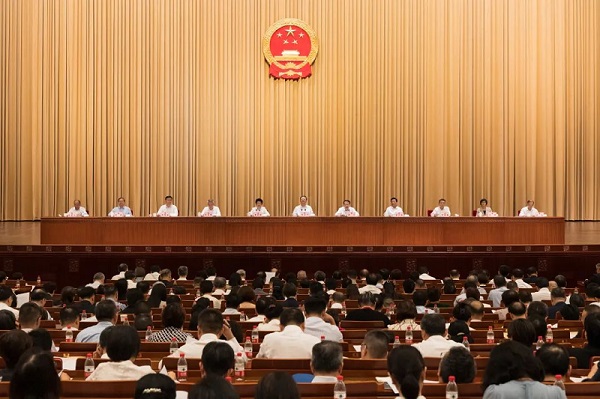
热点追踪|上半年工业经济发展向稳、向新、向优
Ke Ji Ri Bao· 2025-07-28 05:38
Group 1 - The industrial and information technology sectors in China showed a positive development trend in the first half of 2025, characterized by stability, innovation, and quality improvement [1][2] - The total industrial added value increased by 6.4% year-on-year, with the manufacturing added value accounting for 25.7% of GDP, indicating strong resilience [1] - The number of large-scale industrial enterprises reached 520,000, an increase of over 8,000 compared to the end of last year, and profits in the manufacturing sector grew by 5.4% year-on-year [1] Group 2 - The integration of technological and industrial innovation accelerated, with industrial robot production increasing by 35.6% and service robot production by 25.5% year-on-year [1] - Nearly 410,000 technology contracts were registered nationwide, with a transaction value exceeding 3 trillion yuan, reflecting a 14.2% year-on-year growth [1] - The construction of industrial innovation platforms continued, with 33 national manufacturing innovation centers established by the end of June [1] Group 3 - The pace of industrial transformation and upgrading accelerated, with the added value of large-scale equipment manufacturing contributing 3.4 percentage points to overall industrial growth, accounting for 35.5% of total industrial output [2] - The added value of high-tech manufacturing increased by 9.5% year-on-year, contributing 23.3% to overall industrial growth [2] - Green factories accounted for over 20% of total manufacturing output, and energy consumption per unit of industrial added value continued to decline [2] Group 4 - Digital transformation efforts were enhanced, with 26 pilot cities identified for new manufacturing technology upgrades and support for 35 additional cities for small and medium-sized enterprise digital transformation [2] - The penetration rate of digital R&D tools in large-scale light industry enterprises reached 86.2%, while the digital management penetration rate was 82.3% [2]
省政府党组会议暨理论学习中心组学习会召开推动科技创新和产业创新深度融合 更好扛起“打头阵”的使命担当许昆林主持并讲话
Xin Hua Ri Bao· 2025-07-25 23:49
Group 1 - The core viewpoint emphasizes the integration of technological innovation and industrial innovation as a critical task for Jiangsu, aligning with the directives from Xi Jinping and the central government [1] - The meeting highlighted the need for Jiangsu to take the lead in promoting the deep integration of technology and industry to achieve high-level self-reliance in technology and reshape development models [1] - The provincial government aims to leverage technological breakthroughs to create new productive forces and explore new fields and tracks for future development [1] Group 2 - Continuous strengthening of strategic scientific and technological capabilities is emphasized, including the establishment of high-level laboratory matrices and the operationalization of three major basic science centers [2] - The focus is on modernizing the industrial system, advancing a new round of intelligent transformation in manufacturing, and creating internationally competitive strategic emerging industry clusters [2] - The government aims to enhance the innovation ecosystem by building more concept verification centers, pilot bases, and hard technology incubators to facilitate resource flow among universities, research institutes, and enterprises [2]
上半年24省份经济“中考”交卷:区域增速分化 动能加速向“新”丨时报经济眼
证券时报· 2025-07-24 00:00
Core Viewpoint - The article highlights that as of July 23, 24 provinces in China have reported their economic performance, showing a stable economic growth with a shift towards new productive forces, while also indicating the need for further regional collaboration and ongoing attention to real estate risks [1]. Economic Growth Analysis - The national GDP grew by 5.3% year-on-year in the first half of the year, slightly above last year's 5.0% and better than the 2025 government target of around 5% [3]. - Among the provinces that have reported, 19 achieved GDP growth at or above the national average, indicating a generally positive economic trend across most regions [3]. - Eastern provinces showed steady growth, with Guangdong, Jiangsu, Shandong, and Zhejiang leading in total economic output, with GDP figures of 6.87 trillion, 6.70 trillion, 5 trillion, and 4.5 trillion yuan respectively, and growth rates of 4.2%, 5.7%, 5.6%, and 5.8% [4][3]. Regional Performance - The central provinces, except for Shanxi, exhibited GDP growth rates significantly above the national average, with Hubei at 6.2% and others like Henan, Hunan, and Anhui in the 5.6%-5.7% range [5]. - Western provinces showed a clear divergence in growth rates, with Tibet at 7.2% and Qinghai at 4.0% [6]. - The economic performance of major provinces has been crucial in stabilizing the national economy, with Jiangsu narrowing the gap with Guangdong in terms of economic output [6]. Quality of Economic Growth - There is a notable shift towards new economic drivers, with a focus on boosting consumption and investment efficiency as key tasks for 2025 [8]. - The "old for new" policy has significantly impacted consumption, with retail sales in categories like home appliances and communication devices increasing by over 30% in many provinces, and wearable smart device sales in Henan soaring by 95.3% [8][9]. - High-tech industry investments surged, with Beijing's high-tech sector growing by 72.9%, and other provinces like Henan, Anhui, and Jiangxi also showing double-digit growth in high-tech manufacturing investments [9]. Challenges Ahead - Despite a robust economic performance in the first half, challenges remain for the second half, including external tariff uncertainties and ongoing geopolitical conflicts [11]. - Key factors influencing the economic outlook include real estate, foreign trade, consumption, and prices, with a notable decline in real estate investment across most provinces [11]. - The need for quality land supply to stimulate the real estate market is emphasized, as declining investment could lead to reduced new supply [11][12].

中经评论:中国制造向新提质不停步
Zhong Guo Jing Ji Wang· 2025-07-17 01:32
Core Viewpoint - China's manufacturing sector is transitioning towards high-quality development, emphasizing technological self-reliance and innovation to enhance industrial capabilities [2][4]. Group 1: Economic Performance - In the first half of the year, the added value of China's manufacturing industry increased by 7.0%, with equipment manufacturing and high-tech manufacturing growing by 10.2% and 9.5% respectively [4]. - The production of 3D printing equipment, new energy vehicles, and industrial robots saw significant increases of 43.1%, 36.2%, and 35.6% respectively [4]. Group 2: Innovation and Development - China is moving from being a global manufacturing hub to a global innovation center, with R&D expenditure expected to reach 2.68% of GDP by 2024, surpassing the EU average [4]. - Corporate investment in R&D accounts for over 77% of total R&D spending, highlighting the role of enterprises in driving innovation [4]. Group 3: Strategic Focus - The focus on technological innovation and industrial upgrading is crucial for economic transformation, with an emphasis on integrating technology and industry to foster new productive forces [5][6]. - The government is implementing reforms to stimulate the economy and enhance innovation, including the introduction of the Private Economy Promotion Law and the establishment of a unified national market [6].
2025高校技术转移转化大会暨第二届苏州国际科创大会、第十七届国际精英创业周系列活动今天开幕
Su Zhou Ri Bao· 2025-07-10 00:36
Core Points - The 2025 High Education Technology Transfer and Transformation Conference and the Second Suzhou International Science and Technology Innovation Conference have commenced, aiming to integrate technology innovation with industrial development [1][2] - The conference will feature over 1,700 domestic and international guests, with significant policy measures and technological achievements being announced [1][2] Group 1 - The conference theme is "Gathering Global Wisdom, Creating an Entrepreneurial Paradise," focusing on high-level talent introduction, high-quality project implementation, and high-level achievement transformation [1] - The main venue will host various activities including an opening ceremony, thematic events, and project signings, with live broadcasts from multiple countries [1][2] Group 2 - Notable attendees include the 2016 Nobel Prize winner in Physics, John Michael Kosterlitz, over 100 academicians, and representatives from major universities and research institutions [2] - The conference will release significant policy measures to support technology transfer centers in Jiangsu and showcase major case studies in technology transformation [2] Group 3 - A total of 45 key technology demands will be published globally, with a total investment of 5.412 billion yuan and project funding of up to 10 million yuan [2] - Suzhou aims to create a talent-friendly city, launching a "100 Billion Talent Fund" and a "Major Industry Development Fund" to support top talents and innovation teams [2]

政策高频 | 2025陆家嘴论坛召开(申万宏观·赵伟团队)
赵伟宏观探索· 2025-06-24 14:17
Group 1 - The article emphasizes the importance of integrating technological innovation with industrial needs to drive transformation and upgrade in various sectors, particularly in engineering machinery [3] - The People's Bank of China announced eight policy measures aimed at enhancing Shanghai's international financial center status, including the establishment of a digital RMB international operation center and improvements in cross-border payment systems [4][5] - The National Financial Regulatory Administration highlighted the need for open cooperation in financial reform, supporting foreign investment in green finance, and enhancing the multi-tiered pension insurance system [6][7] Group 2 - The China Securities Regulatory Commission aims to promote the integration of technological and industrial innovation, introducing measures to enhance the role of the Sci-Tech Innovation Board as a testing ground for reforms [8][9] - The State Administration of Foreign Exchange plans to establish a more convenient and open foreign exchange management system, focusing on enhancing the service quality for the real economy and deepening reforms in direct investment foreign exchange management [10][11] - The Central Financial Committee and the Shanghai Municipal Government issued opinions to accelerate the construction of Shanghai as an international financial center, focusing on financial market development and enhancing service quality for the real economy [12][13] Group 3 - The signing of the "Shanghai-Hong Kong International Financial Center Collaborative Development Action Plan" aims to enhance cooperation between the two regions in areas such as cross-border clearing and digital RMB applications [14][15]
2025年陆家嘴论坛解读:更开放,更包容性
Minmetals Securities· 2025-06-23 03:24
Investment Rating - The investment rating for the non-bank financial sector is "Positive" [6] Core Insights - The 2025 Lujiazui Forum emphasized the importance of expanding financial openness and enhancing the capital market's inclusivity for technology-driven enterprises, particularly in the context of "de-dollarization" and the internationalization of the RMB [3][4][14] - Key focus areas include promoting technology innovation through the STAR Market, enhancing the internationalization of the RMB, and fostering patient capital to improve the efficiency of innovation capital formation [5][16] Summary by Sections Event Description - The Lujiazui Forum took place from June 18 to 19, 2025, in Shanghai, focusing on "Financial Openness and Cooperation in the Global Economic Landscape" [2][13] Event Commentary - The forum highlighted the need for a multi-tiered capital market to support the integration of technology and industry innovation, with significant reforms proposed for the STAR Market [3][14] - The introduction of a "1+6" reform measure aims to include unprofitable companies in the STAR Market's growth layer, expanding the scope of the fifth listing standard to cover more advanced technology sectors [3][14] Promotion of Dual Opening - The forum discussed the establishment of a digital RMB international operation center and the optimization of the Qualified Foreign Institutional Investor (QFII) system to enhance the attractiveness of RMB assets [4][15] - It was noted that the Shanghai International Financial Center's development will draw lessons from Hong Kong's experience, focusing on legal and infrastructure improvements [4][15] Cultivation of Patient Capital - The forum identified the need to cultivate patient capital to address the short-term nature of current financial supply, proposing measures to broaden the sources of patient capital and improve exit channels for investments [5][16] - Specific strategies include promoting social security funds and insurance capital to participate in private equity investments and developing more technology innovation indices [5][16]