粉丝经济

Search documents
为什么全网都在“针对”小米雷军?
首席商业评论· 2026-01-09 04:51
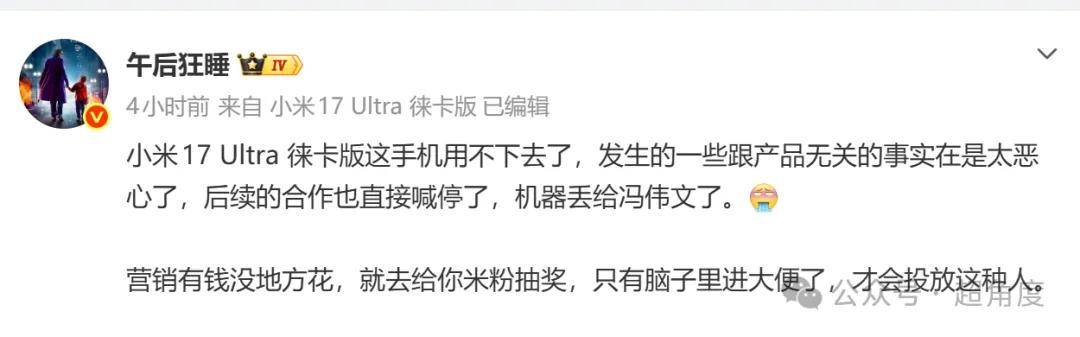
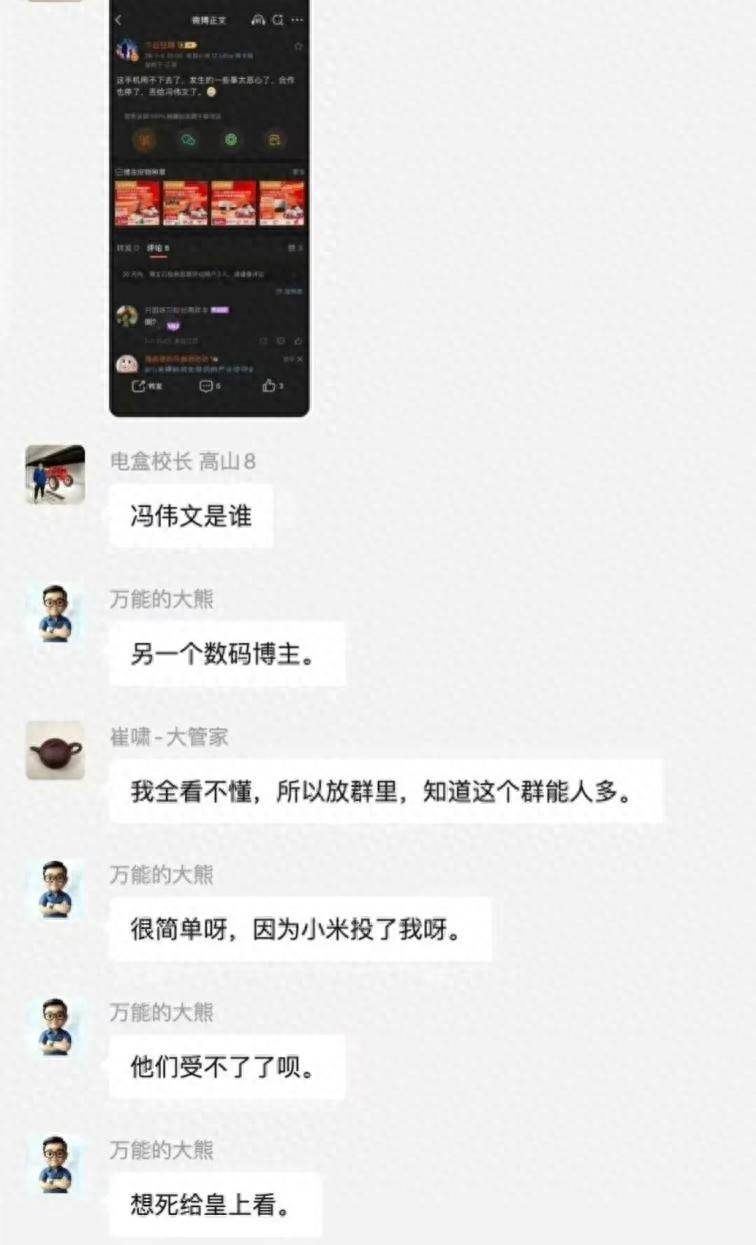
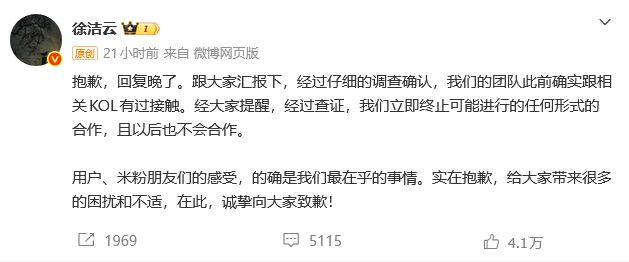
雷军创办小米已经15年了,也经历过不少低谷期,但恐怕没有哪一年像这两年会让他如此困惑不解。 小米怎么就成了"营销最成功的公司",黑小米的声音为何会 越来越多?把事情推向高潮的还得是"米黑KOL被投放事件"。 在1月5日,网传米黑系博主"万能的大熊"在群聊中透露"小米投了我",消息迅速在米粉社群发酵;有个叫"午后狂睡"的米系大V,直接宣布停掉跟小米的合作,把 手里的小米手机换成了一加,还在微博上艾特了雷军和小米公关负责人徐洁云。雷军的微博评论区沦陷了,徐洁云的微博评论区也沦陷了。"大熊 小米"四个字冲 上热搜,科技榜第一。 图源:网络 当日晚,小米公关部总经理徐洁云发文致歉,承认团队曾与该KOL接触,立即终止所有合作并承诺"永不合作";1月6日,小米发布正式调查结果,认定事件"严重 违背公司原则、伤害米粉感情",对涉事经办人员予以辞退,对集团副总裁兼CMO许斐、公关部总经理徐洁云通报批评并扣除2025年绩效及年度奖金(网传百万级 奖金);1月7日,雷军在直播中回应,雷军在直播中明确回应:这件事的严重性不在于KOL批评小米或得罪米粉,而是"这个KOL一直在攻击贬低米粉、诅咒米 粉"。他强调,小米要站出来保护用户, ...



主播说丨小米开年冰火两重天:汽车销量冲上41万,股价舆论却齐翻车
Xin Lang Cai Jing· 2026-01-08 11:59
Core Insights - Xiaomi's automotive division experienced a tumultuous start to 2026, with CEO Lei Jun announcing the sale of 410,000 vehicles last year and achieving a quarterly profit of 700 million [1] - Despite these achievements, the company's stock price fell, leading to a market capitalization drop below 1 trillion, primarily due to a controversial marketing decision that angered core fans [1] Group 1: Company Performance - Xiaomi sold 410,000 vehicles last year, marking a significant milestone for the automotive division [1] - The company reported its first quarterly profit of 700 million, indicating a positive financial trend [1] Group 2: Market Reaction - Following a controversial marketing campaign targeting a critic of Xiaomi, the company's stock price declined, resulting in a market cap drop below 1 trillion [1] - The backlash from fans led to a swift response from Xiaomi, including an apology, the dismissal of the involved employee, and the withholding of bonuses for two executives [1] Group 3: Internal Challenges - The incident highlighted Xiaomi's underlying anxiety in managing public perception and negative press, suggesting that the company may be struggling to maintain its brand image amidst increasing competition [1] - The need for a more solid approach to brand management was emphasized, indicating that reliance on fan support alone may not be sufficient for the company's success [1]
非法出版自制画册被罚的丝芭传媒:子公司曾违反演出管理条例
Nan Fang Du Shi Bao· 2026-01-08 09:50
Group 1 - Shanghai Siba Cultural Media Group, the parent company of SNH48, was fined 10,000 yuan for violating the Publishing Management Regulations by producing and selling unauthorized publications without a publishing license [2] - The company produced two volumes of a travel diary, "Overseas Travel Diary 15" and "Overseas Travel Diary 17," printing 20 copies of each and selling them as part of a package on their official online store for 288 yuan per set [2] - The publications were deemed illegal as they were published by a non-publishing entity without approval, leading to the confiscation of one copy of each diary by the authorities [2] Group 2 - Siba Media is headquartered in Shanghai and focuses on the idol culture and fan economy in the internet and social media era, aiming to create a star-making platform that integrates online and offline operations [3] - In November 2024, Siba Media's wholly-owned subsidiary, Shanghai Siba Performing Arts Management Co., Ltd., was fined 1,500 yuan for failing to supervise and record live performances as required by the regulations [3] - The violation occurred during a performance on August 10, 2024, where the company did not assign personnel to monitor the singing and playing activities, breaching the implementation rules of the Business Performance Management Regulations [3]
牙膏2025年社媒热度趋势及驱动因素分析
数说故事· 2026-01-08 07:49
Investment Rating - The report indicates a strong growth trend and significant structural changes in the toothpaste category on social media in China for 2025, suggesting a positive investment outlook for the industry. Core Insights - The core driving forces behind social media heat include celebrity endorsements and consumer feedback, with a notable increase in social media volume and interaction rates for toothpaste products, particularly driven by marketing events featuring popular celebrities [3][5][12]. Summary by Sections 1. Research Background - The report aims to analyze the social media trends and consumer feedback for toothpaste products in 2025, reflecting the increasing awareness of oral health and the shift towards professional and personalized needs in the market [6][7]. 2. Overall Heat Trend Analysis - The social media volume for toothpaste peaked in August 2025, with over 1.45 million discussions, primarily driven by major celebrity endorsement events [12][25]. - Interaction volume reached its highest in September 2025, exceeding 21.31 million interactions, largely due to a single event featuring a top celebrity [15][25]. 3. Peak Heat Analysis - Key peaks in social media heat for toothpaste occurred in May, August, and September 2025, driven by celebrity endorsement activities [23][25]. - Celebrity endorsements are identified as the primary driver of heat peaks, effectively leveraging the fan economy to boost brand visibility and interaction [24][25]. 4. Consumer Feedback Analysis - The emotional sentiment analysis shows that neutral sentiment dominates (82.2%), followed by positive sentiment (16.1%), indicating that most discussions are informational rather than emotionally charged [33][36]. - Consumers are increasingly focused on product efficacy and ingredient safety, with a notable rise in discussions around specific ingredients like Sodium Lauryl Sulfate (SLS) [38][39]. 5. Conclusion and Recommendations - The report concludes that the toothpaste category's social media landscape in 2025 is characterized by marketing-driven heat and a focus on efficacy and safety to win consumer trust [43]. - Recommendations for brands include adopting a combination strategy of celebrity endorsements and content development, embracing ingredient transparency, and focusing on niche markets to build competitive advantages [45].


小米公关部点燃了小米
3 6 Ke· 2026-01-07 09:29
Core Viewpoint - Xiaomi's recent public relations misstep, involving a failed collaboration with a controversial influencer, has led to significant internal repercussions, including the forfeiture of bonuses by top executives, highlighting the tension between its core fanbase and new target demographics [1][2][9]. Group 1: Public Relations and Brand Management - The attempt to engage a polarizing influencer backfired, resulting in a backlash from Xiaomi's dedicated fanbase, which has historically been a crucial support system for the brand [1][4]. - The public relations strategy appears outdated, relying on traditional methods that do not resonate with the current digital landscape, leading to a disconnect with both core fans and potential new customers [10][12]. - The internal conflict between the 40% of extreme fans and the 60% of middle-class consumers seeking a more refined brand image is creating a challenging environment for Xiaomi's brand evolution [5][7]. Group 2: Market Reaction and Investor Sentiment - The market has reacted negatively to Xiaomi's public relations blunders, leading to increased volatility in its stock price, which is now heavily influenced by public sentiment rather than just financial performance [14][15]. - Investors are concerned about the company's management capabilities, particularly in handling public relations crises, which could affect long-term valuation and trust in the brand [16][17]. - The loss of trust and the perception of insincerity in Xiaomi's brand messaging are causing a reevaluation of its market position, potentially shifting it from a high-growth tech brand to a more traditional electronics manufacturer [16][18]. Group 3: Future Brand Strategy - Xiaomi needs to diversify its engagement strategy beyond its core fanbase, incorporating voices from outside its traditional circles to appeal to a broader audience [20][21]. - The company should focus on creating authentic content that resonates with ordinary users, rather than relying solely on influencer partnerships that may not align with its brand values [19][22]. - A balanced approach that respects the legacy of its fan culture while also appealing to non-fans is essential for Xiaomi's sustainable growth and brand perception in the future [23][24].
米黑摇身一变成乙方,雷军怒了
Sou Hu Cai Jing· 2026-01-07 07:14
文:谈擎说AI 这几天的走向堪称魔幻——一场毫无征兆的 KOL 合作风波,竟让米粉集体体验了一把"背后中刀"的错愕。 米黑成正规军,米粉控诉 1月3日的拆车直播里,雷军还当众放话,法务部将会重击小米黑粉;结果镜头一转,小米却悄悄跟头号"黑米"KOL商量,把对方写进合作投放名单。 最戏剧的是,这段暗度陈仓的戏码,还是由当事人亲自截图爆料,自己锤自己。 万能的大熊作为头号反米粉一份子,曾经在微博直接表态"小米不会死,死的会是米粉"。 那用词叫做一个犀利,这种针对米粉发表极端言论的博主,自然而然上到了米粉的"追杀名单"。 合作计划一自曝,瞬间点燃舆情,雷军、徐洁云的微博秒变抗议海洋——死忠粉们觉得自己在前线冲锋,总部却暗地给"敌军"送弹药,品牌人设分裂,信任 大厦一朝开裂。 过去,他们逐条反击黑稿,@法务部 求援;如今高管亲手递刀,信仰瞬间塌方,只剩"臣等死战,陛下何故先降"的苍凉。 眼看怒火燎原,雷军这次真生气了:1 月 6 日 22:55,官方通报——涉事员工直接走人,集团 CMO 许斐、公关一把手徐洁云通报批评、扣绩效、年终奖, 一场内部处刑才勉强按下暂停键 小米再次强调"因为米粉,所以小米"的核心原则,直言 ...
出行观|“米粉”还是“米黑”?小米营销选择需回归本心
Guan Cha Zhe Wang· 2026-01-07 05:49
【文/观察者网 潘昱辰 编辑/高莘】日前,小米拟与曾多次发表争议言论、伤害"米粉"情感的网络博主签 订年度合作框架协议的消息不胫而走,旋即招来"米粉"群体及多位核心合作意见领袖(KOL)的集体反 对。尽管小米集团董事长特别助理、战略市场部副总经理徐洁云迅速致歉并终止相关合作,小米集团也 对徐洁云和副总裁兼CMO许斐等高管作出扣除2025年相关绩效成绩、取消年度奖金的严厉处罚,但此 次风波已对小米赖以立足的粉丝信任基石形成冲击。 因为这一事件不仅折射出小米在营销合作筛选机制上存在的疏漏,更在深层次上反映出在监管持续收 紧、用户意识日益觉醒的当下,小米过去以"流量至上"为底层逻辑的品牌营销,正在经历根本性转变。 徐洁云向"米粉"致歉并宣布终止与相关KOL合作 @徐洁云 此次风波之所以引发"米粉"强烈反弹,关键在于它动摇了雷军所创立的小米品牌理念的核心——"与用 户交朋友"。自创立以来,小米凭借与"米粉"的情感联结与价值共鸣,构建了独特的粉丝经济生态。对 小米而言,"米粉"不仅是消费者,更是产品共创的参与者、品牌叙事的传播者。无论是手机领域的创业 还是跨界造车的探索,这份信任都是小米应对诸多挑战的重要缓冲。 小米对 ...
米粉是小米的负资产吗?
3 6 Ke· 2026-01-06 23:50
Core Viewpoint - The article discusses the complex relationship between Xiaomi and its fanbase, highlighting how extreme fan loyalty can both support and challenge the company's decision-making process. Group 1: Fan Dynamics - Xiaomi's recent marketing misstep involving a controversial KOL led to a swift backlash from its fanbase, resulting in the company terminating its partnership with the KOL [1][3] - The loyalty and organization of Xiaomi's fans are seen as a double-edged sword, providing strong support but also creating pressure that can influence corporate decisions [4][7] - The article emphasizes that Xiaomi's fanbase has evolved from mere consumers to a powerful collective that can impact company strategies [6][9] Group 2: Business Strategy and Risks - Xiaomi's reliance on fan-driven marketing has been a key factor in its rapid growth, but this strategy may also lead to vulnerabilities as the company faces increasing competition [10][18] - The shift from a "fan economy" to a "fandom economy" has implications for brand perception, as extreme fan behavior can alienate potential customers [14][15] - The article warns that excessive reliance on fan loyalty can create a feedback loop that distorts the company's understanding of market realities, potentially leading to misjudgments [14][20] Group 3: Future Considerations - The article raises questions about whether a business model that relies heavily on fan engagement can maintain decision-making autonomy in the long run [24] - It suggests that while Xiaomi has benefited from its fanbase, the company must navigate the challenges posed by extreme loyalty to avoid potential pitfalls [25][26] - The narrative concludes with a reflection on the broader implications for companies that choose to engage deeply with their fan communities, questioning the sustainability of such a model [24][25]
米粉终于赢了一次
3 6 Ke· 2026-01-06 12:31
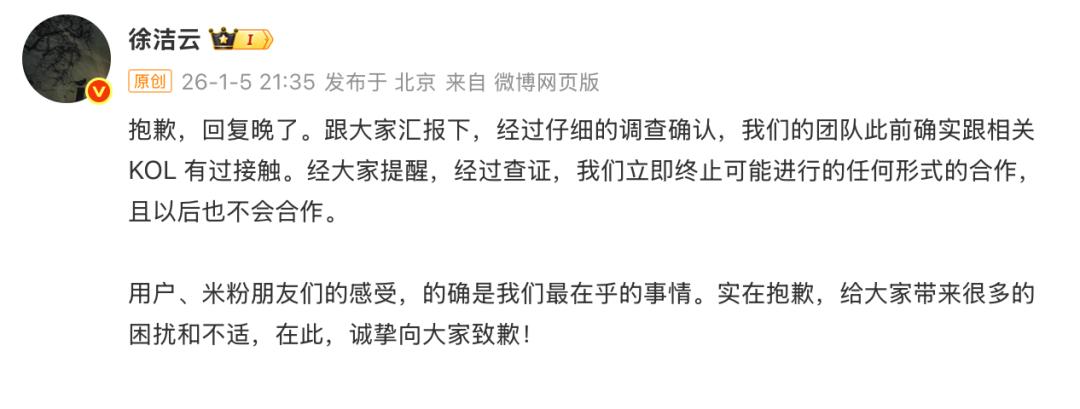
米粉们终于赢了一次。在经过一整天的评论区喊话、脱粉抵制以及热搜施压之后,小米新任公关负责人徐洁云昨日(1 月 5 日)晚 9 时 35 分公开对外致 歉,表示将立即终止与相关 KOL "可能进行的任何形式的合作","且以后也不会合作。" 01 事件起因并不复杂。前几日,社交媒体上盛传小米正在接洽投放一位数码博主,但该博主被米粉认为是"米黑"的代表人物,米粉们认为其多次发表涉及小 米的争议言论且长期贬低米粉群体,比如广为流传的"负资产"言论。 在得知小米即将与该博主合作之后,米粉们或许感受到了一丝背叛。部分米粉们开始组织起来在雷军及公关负责人徐洁云微博评论区表达不满,"这种米 黑博主你们也投放,请他们来黑小米用户吗?" 昨日晚 9 时 35 分,徐洁云终于对外公开回应,承认公司此前曾与相关 KOL 接触,"经大家提醒,经过查证,我们立即终止可能进行的任何形式的合作, 且以后也不会合作。"他同时强调,用户及米粉朋友们感受是小米最在乎的事情。 徐洁云致歉微博 过去一年,对于那些深爱着小米的米粉们来说或许并不算轻松。 从年初的辅助驾驶高速事故、SU7 Ultra 的碳纤维双风道前舱盖争议,到年底持续至今的小字营销风波 ...
雷军徐洁云评论区被冲,米系KOL破防,只因小米投放了大熊?
Sou Hu Cai Jing· 2026-01-05 12:25
Core Viewpoint - The recent controversy surrounding Xiaomi's collaboration with influencer "万能的大熊" has led to significant backlash from its loyal fanbase, resulting in a potential shift in brand perception and loyalty among its users [10][20]. Group 1: Fan Reactions - Influencer "午后狂睡" expressed dissatisfaction with Xiaomi's marketing decisions, stating that the collaboration with "万能的大熊" was unacceptable and has led to a halt in his use of Xiaomi products [2][8]. - Many fans, particularly those identifying as "米粉," have voiced their disappointment and threatened to stop supporting the brand due to its association with influencers perceived as critical of Xiaomi [14][19]. - The backlash has resulted in trending topics on social media, indicating a strong emotional response from the fanbase, with calls for accountability from Xiaomi's leadership [13][17]. Group 2: Marketing Strategy Implications - The incident highlights a conflict between Xiaomi's strategy of engaging various influencers and the emotional loyalty of its core fans, who feel betrayed by the brand's choices [20][21]. - Xiaomi's public relations team is reportedly aware of the negative sentiment and is attempting to manage the situation, indicating a need for better alignment between marketing strategies and fan expectations [10][18]. - The brand's approach to influencer partnerships may require reevaluation to avoid alienating its dedicated customer base, as the emotional ties between fans and the brand are significant [21].