细胞与基因治疗

Search documents
广东培育形成8个千亿级、17个百亿级现代农业产业集群
Zhong Guo Xin Wen Wang· 2026-01-26 10:49
Core Insights - Guangdong has developed 8 trillion-level and 17 hundred-billion-level modern agricultural industry clusters, leading the nation in total aquatic product output, marine fish farming output, and marine fish seedling output [1] - During the 14th Five-Year Plan period, Guangdong is advancing the construction of a modern industrial system, achieving breakthroughs in traditional, emerging, and future industries [1] - Major industrial projects such as BASF's core facility, ExxonMobil's first phase, and China Resources Microelectronics' 12-inch production line have been completed, with industries like electronic information, new energy vehicles, and low-altitude economy flourishing [1] Industry Development - Guangdong aims to elevate traditional industries such as electronics, machinery, chemicals, light industry, building materials, textiles, metallurgy, mining, and shipbuilding to mid-to-high-end levels, while strengthening brands in home appliances, food, clothing, furniture, jewelry, toys, and footwear [2] - The province will promote innovation infrastructure, technology R&D, and product upgrades, focusing on emerging industries like new energy, new materials, smart connected vehicles, robotics, pharmaceuticals, aerospace, integrated circuits, low-altitude economy, and biomanufacturing [2] - Guangdong will establish a long-term mechanism for rapid identification and precise policy implementation for new industry tracks, supported by a multi-level, systematic pilot service network and venture capital funds [2]
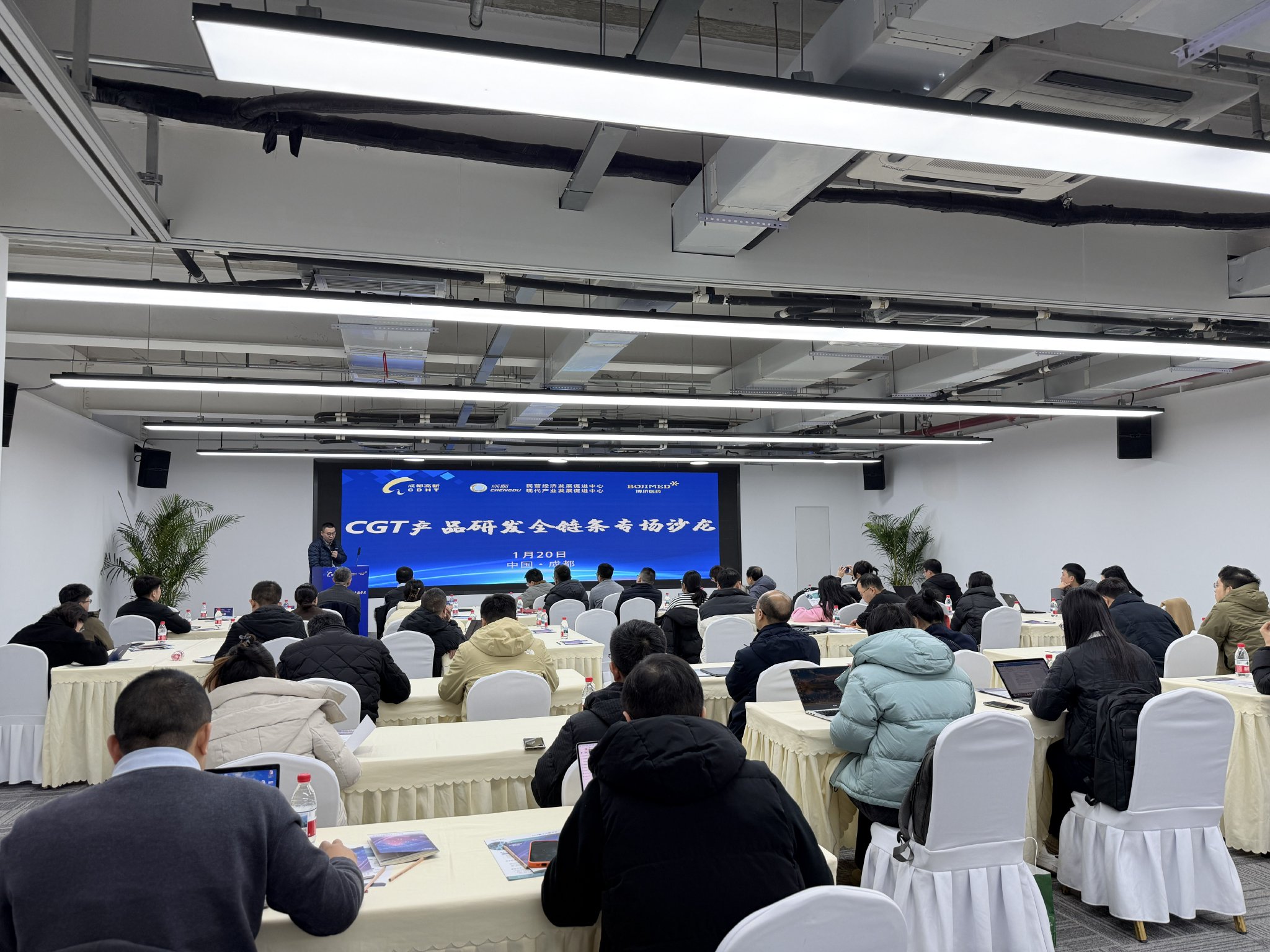
成都举办CGT全链条主题沙龙 推动细胞与基因治疗产业高质量发展
Xin Lang Cai Jing· 2026-01-20 09:42
Core Insights - The event "CGT Drug Development Full Chain" held in Chengdu aims to gather various stakeholders to discuss the innovation pathways in the cell and gene therapy (CGT) industry, contributing to the establishment of Chengdu as a significant biopharmaceutical hub in China [1][2] Group 1: Industry Context - The cell and gene therapy sector is experiencing dual opportunities from technological breakthroughs and policy support, as highlighted in China's "14th Five-Year Plan" for biopharmaceutical development [2] - The salon focuses on key issues across the entire CGT chain, providing a platform for local industry exchange and contributing to the high-quality development of the national CGT industry [2] Group 2: Expert Insights - Experts from various fields shared insights on regulatory review, clinical trial efficiency, commercialization management, international market access strategies, and innovative payment models, identifying pain points and challenges in the industry [3] - The consensus among experts is that achieving synergy across the entire chain from research and development to payment is crucial for the sustainable development of the CGT industry [3] Group 3: Collaborative Efforts - The event facilitated in-depth discussions among industry representatives, researchers, and experts on topics such as CGT technology iteration, clinical translation challenges, cost control, and payment model innovation, reflecting the active collaboration within Chengdu's CGT ecosystem [3] - The salon's comprehensive agenda covering "research-clinical-operation-export-payment" established a multi-perspective dialogue platform, enhancing ecological collaboration and resource integration in Chengdu's CGT industry [3]

我国科研人员在细胞与基因治疗领域取得新突破
Xin Hua She· 2026-01-16 01:09
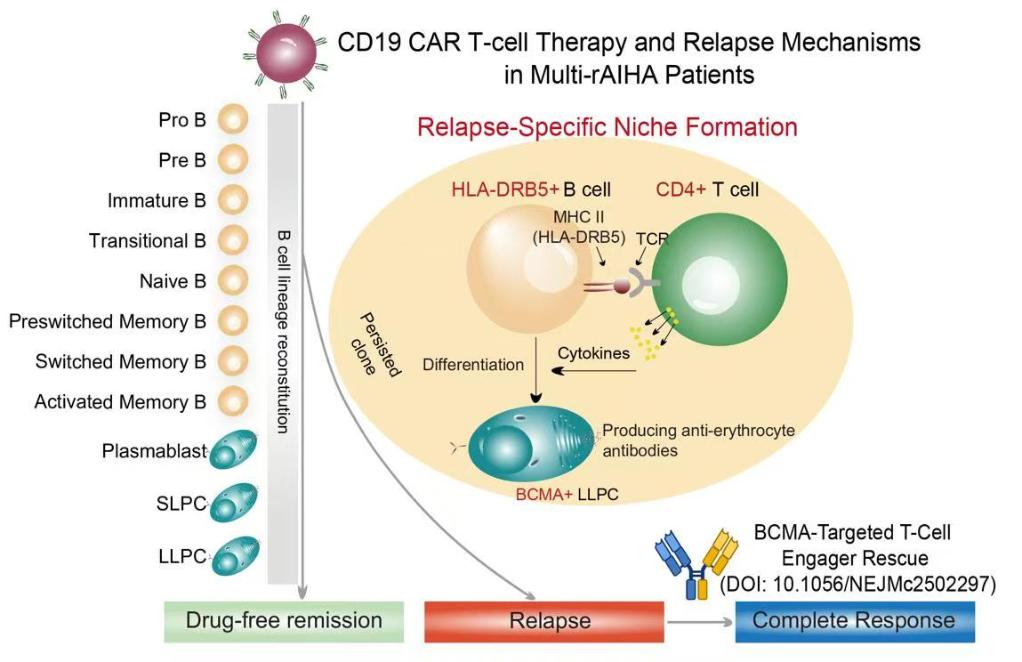
Core Insights - A Chinese research team has successfully treated patients with refractory autoimmune hemolytic anemia (AIHA) using self-developed CD19 CAR T cells, providing a new therapeutic option for patients who have failed conventional treatments [1][2] Group 1: Treatment Breakthrough - The research team established a new cell immunotherapy system specifically for patients with refractory or relapsed AIHA, achieving significant efficacy and safety, with patients experiencing long-term remission without medication [2] - For patients who relapsed after CAR T treatment, the team utilized BCMA×CD3 bispecific antibodies for targeted secondary rescue therapy, which also yielded successful outcomes [2] Group 2: Mechanism and Future Implications - The research provided a clear immunological explanation for disease relapse after CAR T cell therapy, advancing cell immunotherapy from empirical exploration to mechanism-guided precision intervention [2] - The findings suggest that relapse is not the endpoint of treatment failure, and targeted cell immunotherapy strategies can be implemented based on defined immunological mechanisms, paving the way for a sustainable model of sequential cell immunotherapy [2] Group 3: Research Support and Contributors - The study was led by Dr. Shi Jun and researcher Xiong Haiqing from the Chinese Academy of Medical Sciences Blood Disease Hospital, with contributions from several co-authors and support from various national and local funding programs [3]
美迪西助推多款创新药物出海,设立波士顿研发中心扩展全球化版图
Huan Qiu Wang· 2026-01-15 04:45
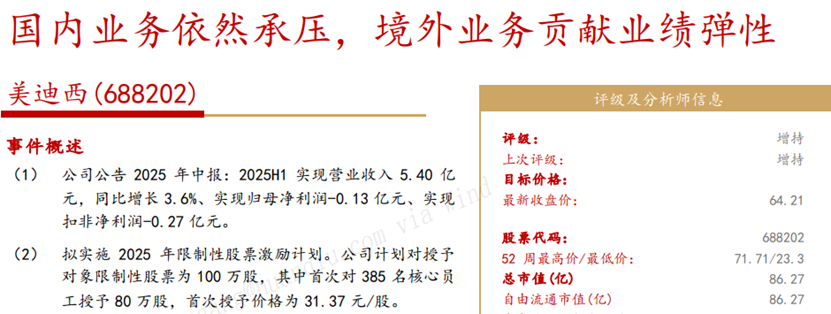
Group 1 - The core viewpoint of the article is that the Chinese CRO industry is transitioning from being mere service providers to becoming innovative ecosystem builders, as highlighted by Dr. Duan Maosheng at the ACCESS ASIA forum [1] - The forum discussed cutting-edge topics such as antibody-drug conjugates (ADC), cell and gene therapy (CGT), and AI-driven drug discovery, reflecting global capital's interest in innovation [1] - China is increasingly important in the global pharmaceutical innovation landscape due to its regulatory alignment with international standards, talent return, and technological accumulation [1] Group 2 - Mediso, a leading one-stop drug R&D service platform, has invested approximately 2,000 square meters in a research office in Boston to support its globalization strategy and meet the growing demands of overseas clients [2] - The company emphasizes its role as a partner alongside clients, not just a service provider, and aims to help clients navigate asset valuation, development planning, and international negotiations [2] - Mediso has supported the successful internationalization of multiple innovative drugs and is focused on aiding emerging pharmaceutical companies in their global strategies [3] Group 3 - As of now, Mediso has participated in the development of 588 new drug projects that have received clinical trial approvals from regulatory bodies such as China's NMPA, the US FDA, and Australia's TGA from 2015 to June 2025 [3] - The company has averaged about 100 IND approvals annually in the past three years, accelerating the drug development process [3] Group 4 - Huaxi Securities has raised its earnings forecast for Mediso, anticipating that the company will benefit from improving domestic market conditions and has maintained a "buy" rating [5]

《南沙方案》实施三年来 新落户享惠企业创造营收超500亿元
Nan Fang Ri Bao Wang Luo Ban· 2026-01-12 09:45
Group 1 - The core viewpoint of the articles highlights the successful implementation of the "Nansha Plan," which has led to significant policy benefits and tax incentives for businesses in Nansha, contributing to economic growth and attracting investment [1][2] - Nansha has achieved a cumulative tax reduction of 2.1 billion yuan for enterprises and 150 million yuan in individual income tax relief for Hong Kong and Macau residents, resulting in an average tax burden reduction of over 50% [1] - New enterprises benefiting from the tax incentives have contributed over 1.9 billion yuan in taxes and generated over 50 billion yuan in revenue, indicating a strong economic impact across various industries [1] Group 2 - Nansha has become a leading area for cell and gene therapy, achieving the first national cases of Mediterranean anemia cell and gene therapy and other significant medical breakthroughs [2] - The region has attracted over 40 well-known companies in the cell and gene therapy field, positioning itself as a "pilot zone" for these advanced medical treatments [2] - Nansha has also pioneered innovative financial products in climate financing, including the first "climate financing guarantee" loan and "green climate loan," enhancing its role in sustainable development [2]
研判2025!中国细胞计数仪行业产业链、市场现状、企业格局及未来趋势分析:技术迭代加速传统手动设备淘汰,前沿领域需求推动多功能智能分析仪发展[图]
Chan Ye Xin Xi Wang· 2026-01-09 01:57
Core Insights - The cell counter industry in China is projected to reach a market size of approximately 11.24 billion yuan in 2024, with a year-on-year growth of 6.30% [1][6][8] - Traditional manual or semi-automatic counting devices are being rapidly phased out in favor of multifunctional intelligent cell analyzers that can monitor live cells and possess fluorescence analysis capabilities [1][6][8] Industry Overview - Cell counters are laboratory devices used to accurately measure the number of cells in liquid samples and analyze cell characteristics such as viability, size, morphology, and fluorescence labeling [2] - They are widely applied in fields such as biology, medicine, pharmaceuticals, cell culture, clinical diagnostics, drug screening, and cell therapy, characterized by efficiency, precision, and reduced human error [2] Industry Chain - The upstream of the cell counter industry includes raw materials and components such as lenses, filters, lasers, LED light sources, sensors, chips, and precision mechanical parts [4] - The midstream involves the production and manufacturing of cell counters, while the downstream applications span clinical diagnostics, scientific research, biopharmaceuticals, and environmental monitoring [4] Market Size - The cell counter market is a fundamental tool in the in vitro diagnostics (IVD) sector, which is expected to reach a market size of approximately 120 billion yuan in 2024, growing by 1.27% year-on-year [6] - The demand for fully automated cell counters is increasing due to the push for laboratory automation upgrades, particularly in the context of new healthcare projects [7] Key Companies - The market is characterized by a concentration of leading companies, with products from companies like Ruiwo De and Highpoint Bio being highly recognized [8] - Shenzhen Mindray Biomedical Electronics Co., Ltd. has made significant technological advancements in flow cytometry, enhancing its market position [10] Industry Development Trends 1. The technology is moving towards high integration and intelligence, evolving from mere counting tools to comprehensive intelligent analysis systems [12] 2. Market demand is shifting from general-purpose instruments to specialized solutions tailored for specific applications, leading to a more segmented market [13] 3. The industry is undergoing structural adjustments, with a focus on high-quality products and domestic alternatives gaining traction in the mid-to-high-end market [14]


力生制药张平:守正破局并行 “三鱼”游新潮
Shang Hai Zheng Quan Bao· 2026-01-07 17:51
Core Viewpoint - The article highlights the evolution and modernization of Lisheng Pharmaceutical, emphasizing its commitment to public health and innovation while maintaining its historical roots through the "Three Fish" brand established in 1930 [1][2]. Group 1: Company History and Philosophy - Lisheng Pharmaceutical was founded in 1930 to address the lack of affordable medicine for the public, with the "Three Fish" trademark symbolizing its commitment to making medicine accessible [2]. - The company's philosophy of "for the people" has been a guiding principle, focusing on the integration of raw materials and formulations to ensure affordability and availability of medications [2]. Group 2: Innovation and Product Development - Lisheng has increased its R&D investment, with over 8% of its budget allocated to research in the first half of 2025, resulting in the approval of key products and multiple patent applications [3]. - The company is focusing on high-end generic drugs, modified new drugs for specific populations, and original innovations in critical areas such as synthetic biology and gene therapy [3]. Group 3: Brand Modernization and Marketing Strategy - The "Three Fish" brand has been revitalized to resonate with younger consumers, incorporating cultural narratives and modern marketing strategies such as short online dramas to enhance brand visibility [4][6]. - Lisheng has developed a multi-channel marketing network, utilizing OTC, medical, and online platforms to reach diverse consumer groups effectively [6][7]. - The "Shoubi Mountain" brand is transitioning from a single product to a comprehensive series of antihypertensive medications, with plans to expand its product range significantly [7].

生物医药行业融资活跃 呈现“投早、投小”特征
Zheng Quan Ri Bao Wang· 2025-12-30 13:55
Group 1 - The financing activities in the biopharmaceutical sector are experiencing a resurgence, indicating an improvement in the investment environment as multiple companies disclose financing progress [1] - Beijing Ruifen Biotechnology Co., Ltd. completed a C round financing of over 100 million yuan, aimed at commercial expansion and capacity construction [1] - Shanghai Xinguang Biopharmaceutical Co., Ltd. secured A1 round financing of several tens of millions of yuan, focusing on regenerative peritoneal dialysis products [1] Group 2 - The biopharmaceutical industry saw a significant drop in financing from 200 billion yuan in 2020 to an expected 20 billion yuan in 2024, suggesting a transition out of the "capital winter" into a rational development phase [1] - Professor Tian Lihui from Nankai University noted that the ongoing financing trend represents a rational recovery cycle for China's biopharmaceutical primary market, with a focus on core areas like AI drug development and gene therapy [2] - The value realization path in the industry has undergone a historic shift, with licensing-out transactions surpassing primary market financing as the main channel for validating the value of Chinese innovative drugs [2] Group 3 - Current investment trends show a preference for companies with strong original technologies, as evidenced by Xinguang Biopharmaceutical's rapid financing rounds due to its leading dialysis liquid regeneration technology [3] - The investment environment is in a recovery and structural optimization phase, with a shift away from valuation bubbles towards focusing on clinical data validation and clear commercialization paths [3] - The resurgence in financing activity is seen as a positive signal for the industry, promoting the completion of key clinical trials and capacity construction for quality projects [3]
跨国药企迎战略重构
2 1 Shi Ji Jing Ji Bao Dao· 2025-12-29 08:11
Core Insights - The pharmaceutical industry is experiencing significant performance divergence among major multinational companies in 2025, with some companies thriving while others face substantial challenges [1][2][3][4]. Financial Performance - Novo Nordisk reported Q3 2025 revenues of 74.976 billion Danish Krone (approximately $11.276 billion), a year-on-year increase of 11%, with total revenues for the first three quarters reaching 229.92 billion Danish Krone (approximately $34.58 billion), up 15% [1]. - Key products such as Ozempic, Rybelsus, and Wegovy contributed significantly to Novo Nordisk's revenue, with Wegovy showing a remarkable growth of 54% [1]. - Merck's pharmaceutical revenue for the first three quarters of 2025 was $43.299 billion, with a 68% decline in revenue from China, dropping to $1.452 billion [2]. - Eli Lilly achieved a remarkable turnaround with Q3 revenues of $17.6 billion, a 54% increase year-on-year, driven by the success of its GLP-1 drug [3]. - Pfizer was the only company in the top 10 to experience a decline in both revenue and profit, with Q3 revenues of $16.654 billion, down 6% year-on-year [4]. Strategic Adjustments - Major pharmaceutical companies are actively seeking solutions to address strategic challenges, including layoffs and business divestitures, with 190 layoffs reported in the first three quarters of 2025 [2][9]. - Companies like Merck and Novo Nordisk are implementing significant cost-cutting measures, with Merck aiming to save $3 billion by 2027 and Novo Nordisk planning to cut approximately 9,000 jobs [2][9]. - The trend of divesting mature assets is becoming common, with companies opting to sell off non-core or underperforming business units to focus on innovation [7][9]. Market Dynamics - The Chinese market is no longer a guaranteed success for multinational pharmaceutical companies, with significant performance disparities emerging [5][12]. - The ongoing "patent cliff" is a critical concern, with many companies facing over 20% of their revenue at risk due to expiring patents [5]. - The competitive landscape is shifting, with local investment firms increasingly acquiring mature products from multinational companies, allowing for more localized management and decision-making [8][9]. Future Outlook - The future of multinational pharmaceutical companies will depend on their ability to innovate rapidly, adapt to local market policies, and manage patent expirations effectively [12][14]. - Companies that can successfully transition to innovation-driven models and integrate into China's biopharmaceutical ecosystem are likely to thrive [12][14]. - The restructuring of global pharmaceutical companies is creating both challenges and opportunities for local firms, as they may benefit from the divestiture of mature products and increased collaboration on early-stage innovations [14].


华富医疗创新生不逢时,基金经理廖庆阳能力引质疑
Xin Lang Cai Jing· 2025-12-29 03:39
Core Insights - The public fund industry is nearing a total scale of approximately 36 trillion yuan, with active equity funds regaining prominence as the year-end rankings approach [9] - The newly established fund, Huafu Medical Innovation, is projected to be the worst performer of the year, with a net value of approximately 0.7665 yuan and a decline of about 23.35% since inception [3][11] - Fund manager Liao Qingyang has a mixed performance record, managing another fund, Huafu Health and Entertainment Flexible Allocation, which has a modest net value growth of around 25% this year [3][11] Fund Performance Analysis - Huafu Medical Innovation was launched in late July 2025, focusing on investments in quality listed companies related to medical innovation, with a performance benchmark significantly underperforming the CSI Medical Index [4][12] - The fund's performance has been hindered by a lack of market momentum in innovative pharmaceuticals since August and possibly due to rapid portfolio construction by the fund manager [4][12] - The other fund managed by Liao, Huafu Health and Entertainment, has also shown disappointing results, with all top ten holdings experiencing declines, including a major stock that fell approximately 27% [5][13] Managerial Changes - Chen Qi, a mid-level manager with over six years of experience, has resigned from all managed products, with his most successful fund achieving a return of 176.89% [6][14] - Chen's funds often had small asset sizes, indicating potential limitations in platform visibility, with one fund's size being only about 0.15 billion yuan [7][15] - Recent changes in the company's executive team include the appointment of Li Hongsheng as deputy general manager and financial officer, and the departure of veteran executive Chen Qiming [8][16]