绿色可持续发展

Search documents
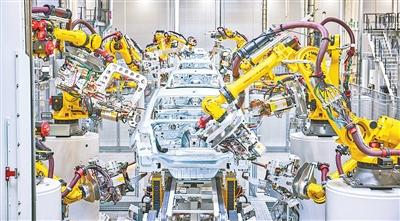
制造型外企扎根辽宁沈阳——“我们始终看好中国市场前景”
Xin Hua Wang· 2026-01-14 23:37
Group 1: Investment and Development in Shenyang - German companies are increasingly investing in Shenyang, with projects becoming industry benchmarks, including Michelin, BeKaert, and BMW [2][7][11] - Michelin's Shenyang factory has an annual production capacity of 17.1 million passenger car tires and has produced a cumulative total of 100 million tires since its establishment [7] - BeKaert's Shenyang factory has implemented a full industrial chain and benefits from local vocational schools producing skilled workers, enhancing its operational efficiency [8][9] Group 2: Technological Advancements and Production Efficiency - BMW's Shenyang plant has integrated approximately 200 AI applications, significantly improving production efficiency [10] - The introduction of advanced production lines and automation in factories is a common trend among foreign enterprises in Shenyang, aligning with China's push for high-tech and sustainable manufacturing [10][12] - The establishment of a local R&D capability has allowed companies like Austrian Voestalpine to reduce procurement costs and enhance profitability [9] Group 3: Government Support and Business Environment - Shenyang has implemented positive incentive mechanisms to attract foreign investment, including measures to optimize the investment environment [9][14] - The city has established a business service system for key foreign-invested enterprises, enhancing the efficiency of administrative processes [14] - Continuous improvements in infrastructure and a stable policy environment have made Shenyang an attractive destination for foreign companies [12][13]

制造型外企扎根辽宁沈阳——“我们始终看好中国市场前景”(见证·中国机遇)
Ren Min Ri Bao· 2026-01-14 21:57
Core Viewpoint - The article highlights the significant growth and investment of foreign enterprises in Shenyang, China, particularly in the automotive and manufacturing sectors, showcasing successful collaborations and advancements in technology and production efficiency [1][2][3]. Group 1: Foreign Investment and Development - Michelin established a joint venture in 1995, recognizing China's market potential, and has since developed a production capacity of 17.1 million passenger car tires annually at its Shenyang plant [2]. - The BeKaert Group has expanded its operations in Shenyang, benefiting from a skilled workforce and a complete industrial chain, which enhances resource sharing and collaborative development [3]. - The Austrian company voestalpine has five hot forming production lines in Shenyang, significantly reducing procurement costs and projecting a sales revenue of 1 billion RMB in 2024 [4]. Group 2: Technological Advancements and Production Efficiency - BMW's Shenyang plant has integrated approximately 200 artificial intelligence applications, enhancing production efficiency and aligning with China's push for high-end, intelligent, and green manufacturing [6]. - The Spanish company Gestamp has invested in expanding its automotive components project in Shenyang, increasing production capacity by 20% to meet client demands [9]. Group 3: Supportive Business Environment - Shenyang has implemented positive incentive mechanisms to attract foreign investment, including measures to optimize the investment environment and support for foreign enterprises [4][10]. - The establishment of the first German center in Shenyang aims to promote Sino-German industrial interaction and attract more German SMEs to invest [7]. - Continuous improvements in the business environment, such as streamlined administrative processes and enhanced infrastructure, have reinforced foreign companies' confidence in long-term operations in Shenyang [8][10].
鄂尔多斯总经理张磊:用时尚与能源“温暖全世界”
Shang Hai Zheng Quan Bao· 2026-01-14 17:51
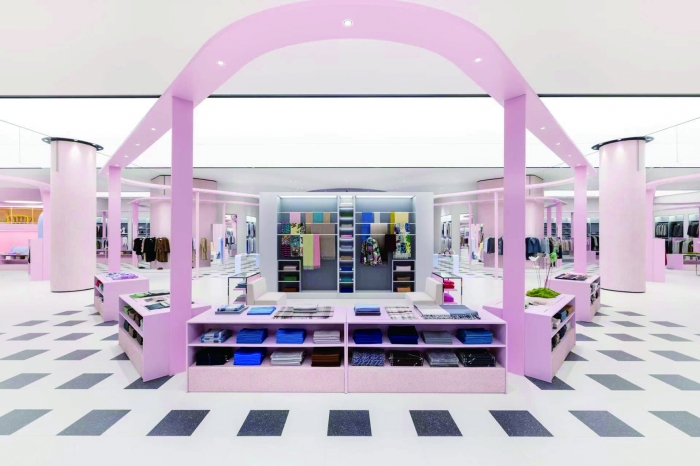
Core Viewpoint - The company, Ordos Resources Co., Ltd., is leveraging its regional resource endowment through technological innovation and ESG practices to achieve synergistic value and a path of high-quality development [2]. Group 1: Business Segments - The company operates two main business segments: cashmere clothing and power metallurgy, which are deeply integrated into the strategic framework of Inner Mongolia's "two bases" construction, forming a natural moat for the company's development [2]. - The cashmere clothing segment utilizes local resources from the Albas cashmere goats to create a globally leading green industrial ecosystem from "pasture to market" [2]. - The power metallurgy segment capitalizes on abundant local resources such as coal, limestone, and quartzite to establish a "coal-electricity-metallurgy-chemical" integrated circular economy industrial cluster, enhancing the company's industrial advantages, cost advantages, and market resilience [2]. Group 2: Technological Innovation - The company employs a "three workshops" theory to modernize the cashmere industry, with the first workshop located on the pasture, where standardized breeding and quality pricing mechanisms are implemented to improve cashmere quality and benefit local herders [3]. - The second workshop is in the factory, focusing on green and intelligent manufacturing, which has significantly improved efficiency and quality through the use of smart production lines and a new multi-energy complementary power system [3]. - The third workshop is in the market, where offline stores, online platforms, and brand live streaming work together to promote a green and sustainable lifestyle through various technological services [4]. Group 3: ESG Commitment - The company views ESG and sustainable development not merely as costs or investments but as a responsibility and commitment, serving as a stabilizing force for long-term corporate growth [4]. - The company's mission, "Warm the World," reflects its commitment to ecological protection and community building with herders, ensuring a win-win path for industrial revitalization and ecological conservation [4]. - The company aims to continue protecting the Albas cashmere goat species and enhancing its role in the international market while promoting ecological sustainability [4].

消毒供应中心市场洞察,全球生产商排名及市场份额
QYResearch· 2026-01-13 02:44
Core Viewpoint - The article emphasizes the growing importance of sterilization supply centers in ensuring medical safety and controlling hospital infections, driven by advancements in medical technology and increasing demands for efficiency and safety in healthcare settings [2]. Industry Background - Sterilization supply centers are critical in the global healthcare system, evolving towards professionalization and centralization due to rising standards and regulations [2]. - The post-pandemic era has heightened the focus on infection control, creating opportunities for the development of sterilization supply centers, especially in grassroots medical institutions [2]. Current Development Status - The global market for sterilization supply centers is undergoing a transformation towards specialization and scale, with a shift from decentralized to centralized and standardized operations [3]. - The demand for new or renovated sterilization centers in large hospitals is steadily increasing, while regional sterilization centers are providing specialized solutions for grassroots medical institutions [3]. - Market competition is consolidating, with suppliers and service providers capable of offering comprehensive solutions gaining market share [3]. Future Trends - The integration of smart and digital technologies will drive industry upgrades, enabling full-process digital management of sterilization supply centers [4]. - A regionalized and centralized service model is expected to proliferate, enhancing resource utilization and improving sterilization quality through standardized processes [4]. - The focus on green and sustainable development will influence technology paths and equipment selection, promoting environmentally friendly sterilization technologies [4]. SWOT Analysis - **Strengths**: Leading sterilization supply companies possess robust international service networks and standardized operational systems, which enhance service quality and reduce costs [5]. - **Weaknesses**: High fixed asset depreciation and complex cross-regional management increase operational costs and compliance challenges [5]. - **Opportunities**: The growing number of surgeries and increased awareness of infection control post-pandemic create significant market expansion opportunities [5]. - **Threats**: Regulatory changes and rising costs pose challenges, while local competitors may create market barriers [6]. Market Size and Industry Landscape - According to QYResearch, the global sterilization supply center market is projected to reach $40.086 billion by 2024, with a compound annual growth rate (CAGR) of 8.12% [7]. - The majority of the market share, approximately 80.57%, is held by hospital-owned sterilization supply centers, which are essential for internal sterilization management [12]. - Hard instruments account for about 75.70% of the demand in the sterilization supply market, highlighting the focus on reusable surgical instruments [15]. Service Models - Hospitals primarily utilize in-house sterilization supply centers and third-party services, with the latter providing cost optimization and efficiency improvements [17]. - Third-party sterilization centers are increasingly important for large hospitals facing capacity and technical upgrade challenges, while they also offer affordable solutions for smaller institutions [17][18].
智研咨询发布:2026年中国甲基异丁基酮行业市场全景调查及发展趋势预测报告
Sou Hu Cai Jing· 2026-01-07 02:30
Core Insights - The article discusses the growth and development of the methyl isobutyl ketone (MIBK) industry in China, highlighting its increasing domestic production capacity and decreasing reliance on imports due to technological advancements and rising demand [4][7]. Industry Overview - MIBK, also known as 4-methyl-2-pentanone, is a colorless liquid organic compound with a camphor-like odor, soluble in most organic solvents and slightly soluble in water. It is biodegradable, has low volatility, and is chemically stable, making it suitable for applications in organic synthesis, rubber manufacturing, and coatings [6][9]. - The upstream raw materials for MIBK production include acetone, hydrogen, and catalysts, with acetone being the primary raw material that directly impacts production costs and supply [6][9]. Market Dynamics - China's MIBK production capacity is projected to grow from 75,000 tons in 2016 to 150,000 tons by 2024, while production volume is expected to increase from 54,000 tons to 120,000 tons during the same period [7][11]. - The demand for MIBK is significantly driven by its application in the production of anti-aging agents, coatings, electronics, pharmaceuticals, inks, and lubricants, with the anti-aging agent 4020 accounting for 60% of the market share [6][7]. Competitive Landscape - Major global producers of MIBK include Sasol (South Africa), Kumho Petrochemical (South Korea), Shell Chemicals (Netherlands), Mitsui Chemicals (Japan), and Mitsubishi Chemical (Japan). Domestically, companies like Juhua Chemical, Ruibai New Materials, Wanhua Chemical, Hengxing New Materials, Jilin Petrochemical, and Santo Chemical are key players in the MIBK market [7][11]. Future Trends - The MIBK industry is expected to evolve towards greener and more sustainable practices due to stricter environmental regulations. Additionally, the demand for high-purity and low-impurity MIBK will increase with the rapid development of the new energy vehicle sector, high-end electronics, and eco-friendly coatings [7][11].
研判2025!中国甲基异丁基酮行业发展历程、产业链、产量、进出口、竞争格局和未来趋势分析:国内供应量增加,进口规模逐渐下降[图]
Chan Ye Xin Xi Wang· 2026-01-07 01:05
Core Viewpoint - The domestic market for methyl isobutyl ketone (MIBK) in China is experiencing significant growth due to technological advancements and increasing application demands, leading to a reduction in import dependency and an increase in production capacity and output [1][5]. Industry Overview - MIBK, also known as 4-methyl-2-pentanone, is a colorless liquid with a camphor-like odor, soluble in most organic solvents and slightly soluble in water. It has applications in organic synthesis, rubber manufacturing, and coatings [1]. - The production methods for MIBK include the acetone method and the isopropanol method, with the acetone method being more efficient for continuous production [2][3]. Production Capacity and Output - From 2016 to 2024, China's MIBK production capacity is projected to grow from 75,000 tons to 150,000 tons, while output is expected to increase from 54,000 tons to 120,000 tons [1][5]. - The industry is expected to continue its growth trend due to the intensive commissioning of MIBK projects in the future [1]. Import and Export Dynamics - In 2024, China's MIBK imports are expected to be 9,167.5 tons with an import value of $12.51 million, while exports are projected at 3,654.21 tons valued at $5.68 million. By 2025, exports are anticipated to significantly exceed imports [5][6]. Competitive Landscape - Major global producers of MIBK include South Africa's Sasol, Korea's Kumho Petrochemical, and Japan's Mitsui Chemicals. Domestically, companies like Juhua Chemical, Ruibai New Materials, and Wanhua Chemical are key players in the market [7]. - Wanhua Chemical is expanding its MIBK production capacity, with a new project in Yantai expected to enhance its market position [7][8]. Industry Development Trends 1. **Green Development**: The MIBK industry is moving towards sustainable practices, focusing on reducing waste and emissions through advanced catalyst systems and resource recycling [9]. 2. **High-end Product Demand**: There is a growing demand for high-purity MIBK in sectors like new energy vehicles and high-end electronics, prompting companies to invest in R&D for better quality products [10]. 3. **International Expansion**: The industry is looking to expand into international markets, particularly in Southeast Asia and the Middle East, to tap into the rising demand in manufacturing sectors [11].


日供水量4万立方米 海淀北部温泉水厂正式通水
Xin Lang Cai Jing· 2025-12-29 11:02
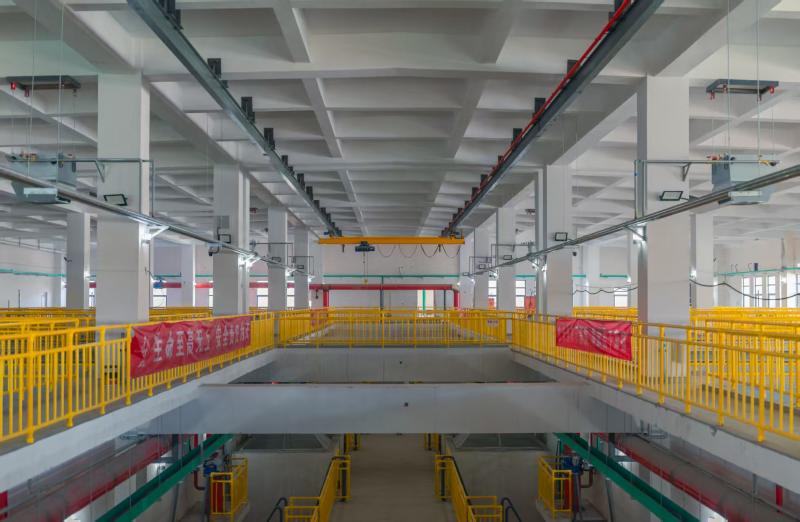
Core Viewpoint - The completion of the Wenshuan Water Plant in Beijing enhances water supply security in the northern Haidian area, addressing the long-standing water supply-demand imbalance and supporting regional economic development [1][7]. Group 1: Project Overview - The Wenshuan Water Plant has a designed daily water supply capacity of 240,000 cubic meters and fills the gap of surface water plants in northern Haidian [1]. - The project is part of Beijing's "3 100" key projects and is the final piece of the nine major water plants outlined in the 14th Five-Year Plan for central urban areas [1]. - Construction began in December 2022 and was completed on schedule after three years of efforts, with water supply operations expected to start by the end of 2025 [1]. Group 2: Technical Features - The water plant covers approximately 10 hectares and includes over twenty core structures such as screening rooms, pump stations, and ozone contact tanks [3]. - It employs advanced ozone disinfection technology, which effectively decomposes organic matter in water and minimizes harmful by-products [3][5]. - The plant is the first in the city to use low-pressure high-intensity ultraviolet disinfection, ensuring no chemical residues and low energy consumption [5]. Group 3: Water Source and Treatment Process - The primary water source for the plant is from the South-to-North Water Diversion Project, with the Miyun Reservoir as a backup [5]. - The treatment process includes 13 steps, such as ozone oxidation, activated carbon adsorption, ultrafiltration, and ultraviolet disinfection, ensuring water quality exceeds national standards [5]. Group 4: Regional Impact - The establishment of the Wenshuan Water Plant will fundamentally resolve the water supply-demand conflict in northern Haidian, providing a stable water supply for residents and supporting high-quality regional economic development [7]. - The project will also facilitate the replacement of local private wells, improving water quality and promoting sustainable groundwater resource management [7].
从紫金山到世界舞台,紫金矿业以ESG铸就全球竞争力
Huan Qiu Wang· 2025-12-27 11:42
Core Insights - The article highlights the transformation of Zijin Mining from a local enterprise to a global mining giant, emphasizing its commitment to sustainable and intelligent mining practices [2][14]. Group 1: Company Transformation and Strategy - Zijin Mining has evolved from a county-level enterprise to a global mining leader, showcasing a shift from traditional resource extraction to a focus on green, intelligent, and sustainable development [2]. - The company has implemented a "resource-first" strategy, achieving a gold resource volume of nearly 4,000 tons by 2024, ranking sixth globally in both gold resource volume and production [4]. - Zijin Mining's innovative management model, "Five Rings of Ore Flow Integration," enhances the utilization of low-grade gold resources, resulting in an all-in sustaining cost (AISC) that is better than 80% of global peers [4][5]. Group 2: Global Expansion and Market Position - Since its international expansion began in 2005, Zijin Mining has established significant mining investments in 17 countries, with overseas gold resources and profits surpassing domestic figures [6]. - The company aims to become a "first-class international mining group" by 2028, targeting a gold production goal of 110 tons [6][10]. Group 3: ESG Commitment and Achievements - Zijin Mining integrates ESG (Environmental, Social, Governance) principles into its corporate strategy, establishing a governance structure that ensures ESG objectives are met at all levels [8][9]. - The company has achieved a 34.9% reduction in carbon emissions per unit of industrial added value compared to 2020, with a water resource recycling rate of 93.46% [10][11]. - Zijin Mining's ESG practices have received global recognition, with high ratings from various ESG assessment organizations, placing it in the top 1.7% of its industry [11]. Group 4: Technological Innovation and Sustainability - The company has made significant investments in clean energy, with a total installed capacity of 767 MW and a renewable energy generation of 565 GWh, marking a 48% year-on-year increase [10]. - Zijin Mining has developed smart mining technologies, including autonomous vehicles and intelligent scheduling systems, which enhance operational efficiency and set new industry standards [10][15]. Group 5: Community Engagement and Local Impact - The company actively participates in community development, employing nearly 4,000 local workers and engaging in various social responsibility projects [10][13]. - In its international projects, Zijin Mining respects local cultures and promotes sustainable development, achieving a local employment rate of 96% in overseas operations [13][14].


柬埔寨下调多项进口商品税率 助力产业升级与民生改善
Shang Wu Bu Wang Zhan· 2025-12-24 12:30
Core Insights - Cambodia's government is implementing strategic adjustments to import tariffs and special taxes on certain goods, effective January 1, 2026, aimed at reducing import costs for key materials and enhancing the business environment [1] Group 1: Tax Adjustments - Multiple goods will see a "zero tariff" policy, including live poultry, computers and related peripherals, antenna equipment, laboratory instruments, and related testing equipment, with tariffs reduced from 15% or 7% to 0% [1] - Significant reductions in tariffs for daily consumer and industrial goods, such as sanitary napkins, diapers, rice cookers, fruit blenders, and luxury cars, with tariffs dropping from 15% to 7% and from 35% to 7% respectively [1] Group 2: Green Energy and Technology Incentives - Special tax reductions for electric vehicle (EV) components, with the special tax rate for electric vehicle motors, vacuum cleaners, and audio equipment reduced from 10% to 0%, and for electric vehicle batteries from 10% to 5% [1] Group 3: Economic Impact - The tax reforms reflect the Cambodian government's policy direction of benefiting the public, promoting production, and advocating for environmental protection, which is expected to lower retail prices, alleviate inflation, and improve living standards [2] - The zero tariff policy on computers and laboratory equipment will significantly lower the barriers for corporate research and digital transformation [2] - The reduction in tax rates for core components of electric vehicles will accelerate the green transition of transportation in Cambodia and attract more investments in the new energy sector [2]
巴斯夫,50万吨/年的大项目投产
DT新材料· 2025-12-23 16:05
Core Viewpoint - The article highlights the successful operation of BASF's polyethylene plant in Guangdong, marking a significant milestone in the company's investment and production capabilities in China [1][2]. Group 1: BASF's Investment and Production - BASF's integrated base in Zhanjiang represents the company's largest single investment project to date, with a total investment of approximately €10 billion [2]. - The facility will become BASF's third-largest production base globally, following Ludwigshafen in Germany and Antwerp in Belgium [2]. - The core production units include a steam cracker with an annual capacity of 1 million tons of ethylene and various downstream facilities serving multiple industries such as automotive, construction, and pharmaceuticals [2][3]. Group 2: Technological Innovations - The project incorporates a lightweight hydrocarbon recovery system that significantly reduces nitrogen gas consumption and enhances hydrocarbon recovery rates [2]. - It features an energy recovery unit to maximize waste heat utilization and addresses emissions monitoring challenges, achieving pollution control at an internationally leading level [2]. - The facility utilizes seawater for cooling, resulting in minimal freshwater consumption, aligning with sustainable development principles [2]. Group 3: Future Industry Exhibition - The 2026 Future Industry New Materials Expo will focus on common needs in future industries such as robotics, automotive, drones, and AI [1]. - The exhibition will include six major areas, emphasizing lightweight, high-strength, and sustainable materials [1][5]. - Over 800 enterprises and research institutions are expected to participate, showcasing innovations in various sectors including quantum technology, 6G, and new energy equipment [6][8].