Workflow
美联储加息
icon
Search documents
【环球财经】美元指数重返100关口,本次“剧本”有何不同?
Xin Hua Cai Jing· 2025-11-06 08:29
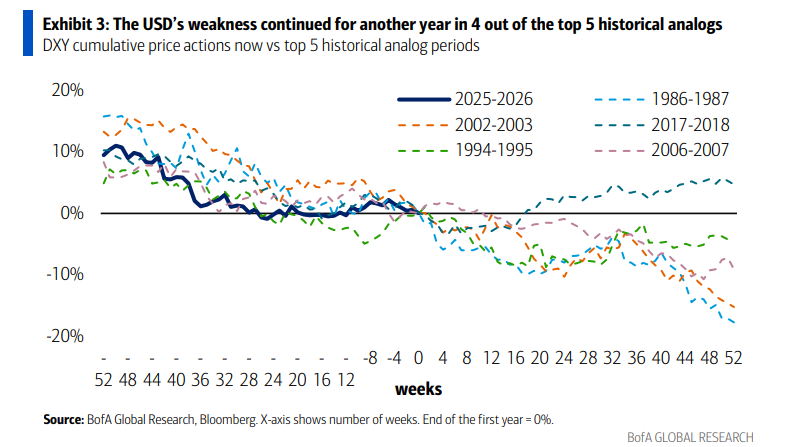
Core Viewpoint - The recent strengthening of the US dollar index, surpassing the 100 mark, is attributed to a combination of hawkish signals from the Federal Reserve and external factors such as tightening dollar liquidity and the depreciation of non-US currencies, particularly the Japanese yen [1][2]. Group 1: Economic Indicators and Federal Reserve Actions - The dollar index's rise since mid-September is linked to the Federal Reserve's hawkish stance during the October meeting, which emphasized economic resilience and persistent inflation risks, leading to a decline in rate cut expectations [1][2]. - Analysts note that the current economic environment differs significantly from previous periods, with a lack of clear economic data making the market more susceptible to the Fed's hawkish comments [2][3]. Group 2: Currency Movements and External Influences - The depreciation of the Japanese yen, influenced by the election of Fumio Kishida as Japan's Prime Minister and subsequent fiscal and monetary easing, has contributed to the dollar's strength [2]. - The widening yield spread between US and Japanese bonds following the Fed's meeting has also facilitated carry trades, further supporting the dollar's rise [2]. Group 3: Future Outlook for the Dollar - Analysts suggest that while the dollar may have short-term upward potential, the current situation does not indicate a new long-term appreciation cycle for the dollar [3]. - Market expectations for the Fed's December meeting indicate a probability of maintaining interest rates, which could influence the dollar's performance depending on employment data and inflation trends [3]. - The potential for increased dollar supply due to the Fed's decision to halt balance sheet reduction could weaken the dollar's upward momentum [3]. Group 4: External Economic Conditions - Japan's high core inflation may provide the Bank of Japan with room to raise interest rates, which could limit the extent of the dollar's strength [4].
有色分化,铝强铜弱
Bao Cheng Qi Huo· 2025-10-31 11:32
Report Summary 1. Investment Rating The report does not provide an investment rating for the non-ferrous metals industry. 2. Core Views - **Copper**: Copper prices oscillated in the morning and weakened in the afternoon. After the October FOMC meeting, the Fed's hawkish stance reduced market expectations of a December rate cut, leading to a rebound in the US dollar index and putting pressure on copper prices. Technically, copper is at a historical high, facing significant pressure, and short - term long - position closing intentions are rising. On the industrial side, the social inventory of electrolytic copper increased slightly on Thursday, and downstream buyers showed a strong wait - and - see attitude. Attention should be paid to the support at the 10 - day moving average [6]. - **Aluminum**: Aluminum prices rose and then fell. They increased with rising positions in the morning, reaching a high of 21,400 yuan/ton, breaking the Monday high, and then declined with falling positions in the afternoon. Aluminum is more affected by domestic macro factors. Recently, the domestic anti - involution expectations have risen again, which is positive for aluminum prices. On the industrial side, the social inventory of electrolytic aluminum decreased slightly on Thursday, providing support for aluminum prices. Technically, attention should be paid to the support at the 5 - day moving average [7]. - **Nickel**: Shanghai nickel fluctuated within a narrow range. The non - ferrous metal market showed differentiation, and nickel lacked driving forces. The weakness in the industrial aspect made funds more inclined to short nickel to hedge long positions in non - ferrous metals. Technically, attention should be paid to the technical support at the 120,000 - yuan mark [8]. 3. Summary by Directory 3.1 Industry Dynamics - **Copper**: In the copper cable industry, automotive wiring harness orders are stable, and State Grid orders are mainly for essential needs, while new orders in other industries are under pressure. In terms of inventory, enterprises are cautious in procurement, and both raw material and finished product inventory ratios have decreased [10]. - **Aluminum**: Duan Shaofu, Deputy Secretary - General of the China Non - Ferrous Metals Industry Association, stated that the processing fees in the non - ferrous metal smelting industry are currently low, and "anti - involution" is crucial for high - quality development. The association proposed three measures: setting a production capacity "ceiling" for bulk metals like copper, lead, and zinc; enhancing concentration through mergers and acquisitions for strategic metals; and guiding enterprises to transform towards personalized and high - value - added products [11]. - **Nickel**: On October 31, the price of SMM1 electrolytic nickel was 120,500 - 123,400 yuan/ton, with an average price of 121,950 yuan/ton, a decrease of 250 yuan/ton from the previous trading day. The mainstream spot premium of Jinchuan 1 electrolytic nickel was 2,500 - 2,600 yuan/ton, with an average premium of 2,550 yuan/ton, an increase of 100 yuan/ton from the previous trading day. The spot premium of domestic mainstream brand electrowon nickel was - 200 - 300 yuan/ton [12]. 3.2 Related Charts - **Copper**: The report provides charts on copper basis, copper monthly spread, domestic visible inventory of electrolytic copper, overseas copper exchange inventory, LME copper cancelled warrant ratio, and SHFE warrant inventory [13][14][15]. - **Aluminum**: Charts include aluminum monthly spread, average aluminum premium, domestic social inventory of electrolytic aluminum, overseas exchange inventory of electrolytic aluminum, alumina inventory, and aluminum rod inventory [25][26][28]. - **Nickel**: Charts cover nickel basis, LME nickel inventory and cancelled warrant ratio, LME nickel trend, SHFE inventory, and nickel ore port inventory [37][39][40].
通胀数据姗姗来迟,美联储本月降息板上钉钉?
Guo Ji Jin Rong Bao· 2025-10-24 14:22
Core Points - The U.S. federal government has been in a shutdown for 23 days, marking the second-longest shutdown in history, impacting economic data availability and federal employees [1][2] - The Consumer Price Index (CPI) for September was released on October 24, showing a year-on-year increase of 3%, which is below the expected 3.1% and higher than the previous month's 2.9% [1][5] - The delay in key economic data due to the government shutdown has forced the market to rely on alternative indicators, such as the ADP employment report [2][3] Economic Data Impact - The Senate rejected a temporary funding bill, leading to continued government shutdown and affecting the release of critical economic data [2] - The Labor Statistics Bureau has suspended data collection and reporting, delaying the September non-farm payroll report and CPI data [2][4] - The absence of official data is complicating monetary policy decisions for the Federal Reserve, as highlighted by Fed officials [4][7] Inflation and Monetary Policy - The CPI report indicated a 0.3% month-on-month increase, lower than the expected 0.4%, with core CPI rising 0.2% month-on-month [5] - The market is anticipating a 98.9% probability of a 25 basis point rate cut by the Federal Reserve in the upcoming meeting due to lower-than-expected inflation data [7] - Fed Chair Powell's comments suggest a shift in focus from inflation control to balancing growth and employment, indicating a potential for further rate cuts [7][8]
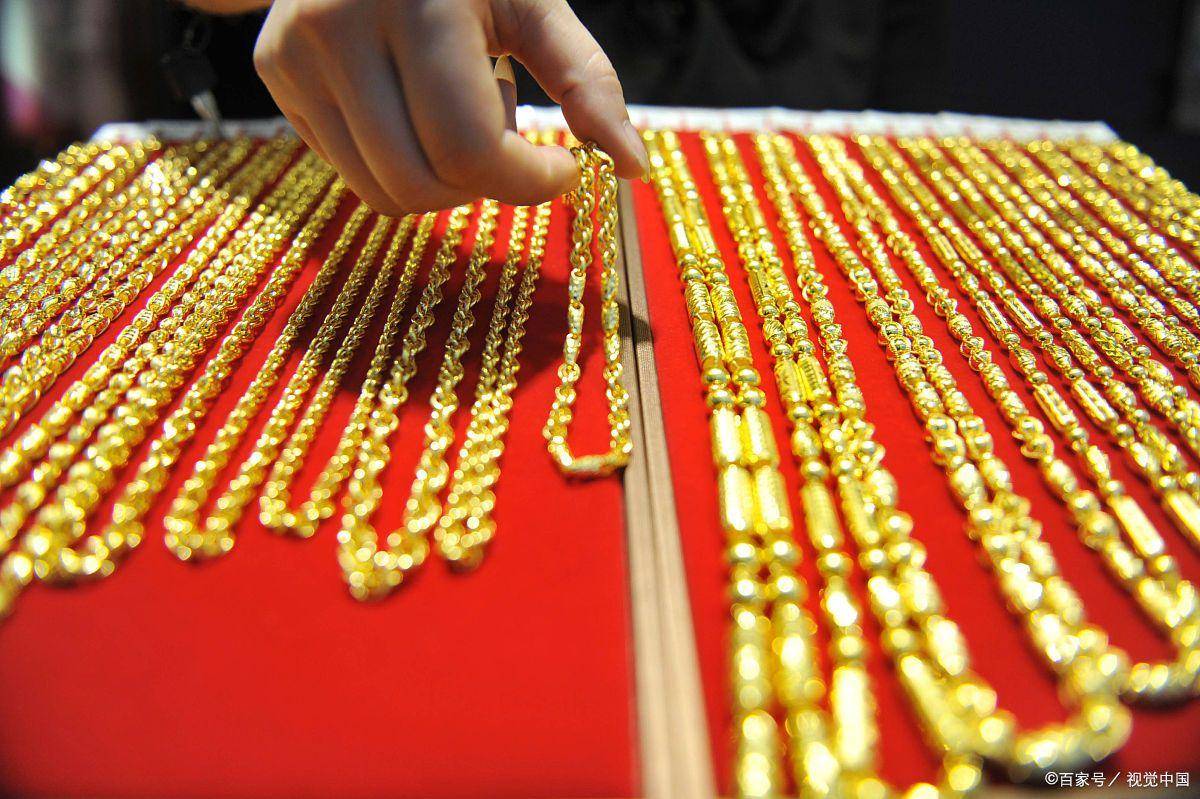
国际金价突然跳水 6%,创下近十二年最大跌幅,到底咋了?
Sou Hu Cai Jing· 2025-10-22 01:32
Core Viewpoint - The international gold price experienced a significant drop of 6%, marking the largest decline in nearly twelve years, with prices falling from over $2400 per ounce to around $2250 in just one day [2][3]. Market Dynamics - The primary reason for the gold price drop is the recent statements from the Federal Reserve indicating that interest rate cuts are not imminent and that there may be further rate hikes, leading to a stronger dollar, which inversely affects gold prices [3][4]. - The reduction in market risk appetite has also contributed to the decline, as easing international tensions have led to decreased demand for gold as a safe-haven asset [3][4]. Investment Behavior - Investors previously flocked to gold due to poor performance in stock and bond markets, but as the stock market shows signs of recovery, some funds are shifting back to equities [4]. - Long-term investors are less concerned about the short-term price drop, viewing gold as a hedge against risk rather than a quick profit opportunity [4][5]. - The current lower gold prices present a buying opportunity for those looking to purchase gold jewelry, as prices have become more favorable [4]. Future Outlook - Predictions regarding the future of gold prices are uncertain, with some believing the recent drop is temporary while others anticipate further declines if the Federal Reserve continues to raise interest rates [5]. - Investors are advised to make decisions based on their individual financial situations and risk tolerance, rather than following market trends impulsively [5].
平静还是风暴?10月19日或触发金价历史性重现
Sou Hu Cai Jing· 2025-10-19 17:58
Core Insights - Recent fluctuations in gold prices have mirrored past events, particularly the 2015 Federal Reserve interest rate hike, leading to significant price drops after reaching historical highs [1][3] - Market sentiment has shifted dramatically, with a 97% probability of interest rate cuts, yet any hesitation from the Federal Reserve could trigger sharp declines in gold prices [3] - The total market value of gold has surpassed $30 trillion, indicating a concentration of investment that could lead to severe sell-offs [3] Group 1 - Gold prices recently hit a historical high of $4,379 before plummeting below $4,200, with a single-day drop exceeding 3% [1] - Domestic gold prices followed suit, with a notable decrease of 17 yuan per gram for Lao Miao gold, leading to public discontent among recent buyers [1] - The Relative Strength Index (RSI) has reached 78, indicating an overbought condition similar to the pre-2015 interest rate hike scenario [3] Group 2 - Current gold prices are struggling around $4,250, with critical support levels at $4,200 and potential further declines to $3,887 if these levels are breached [3] - The domestic futures market shows signs of weakness, with MACD indicating divergence and reduced trading volume, suggesting insufficient bullish momentum [3] - Despite ongoing purchases by global central banks, including China, which has increased its gold holdings for ten consecutive months, short-term trading conditions are becoming riskier for retail investors [4]
行情变了,新的财富机会来了
大胡子说房· 2025-10-16 11:23
Core Viewpoint - The current bull market in the domestic capital market is characterized by a lack of clear initiation signals and a slow upward movement, indicating a unique underlying logic compared to previous bull markets [1][3]. Group 1: Market Characteristics - The bull market has not been triggered by any significant events, unlike past bull markets which had clear catalysts [1]. - The index has risen slowly from 3300 points in June to 3800 points over nearly three months, contrasting with previous rapid increases [1]. Group 2: Underlying Logic - The fundamental logic behind the current market rally is valuation repair and asset repricing, as current valuations are deemed too low and detached from true value [3][4]. - The disparity between asset price and value is influenced by various factors, including monetary policy and economic conditions [3][4]. Group 3: Valuation Context - As of August 2025, the average price-to-earnings (P/E) ratio of major A-share indices is around 15 times, significantly lower than the over 30 times P/E ratio of European and American markets [4]. - The market capitalization to GDP ratio for A-shares is only 74%, much lower than the over 200% ratio for U.S. stocks and 150% for Japanese stocks [4][5]. Group 4: Market Dynamics - The capital market in the region has lagged behind economic growth and global capital market expansion, indicating a significant undervaluation [5]. - The recent potential for U.S. interest rate cuts has provided the region with the opportunity to adjust its monetary policy and encourage capital inflow into the market [6]. Group 5: Policy Support - Recent policy measures, such as lowering fund subscription fees and restarting government bond trading, aim to attract social capital into the market and facilitate asset price recovery [6][7]. - The expansion of base money through central bank bond purchases is seen as a means to indirectly support asset price recovery [8]. Group 6: Future Outlook - The current market rally, driven by valuation repair, is viewed as a necessary step for economic recovery, with expectations for continued asset price increases in the coming year [9]. - The potential for significant wealth opportunities is highlighted, encouraging investors to participate in the ongoing price recovery [9].
Markets Start Week Green, Government Shutdown & Jobs Picture Stay Uncertain
Youtube· 2025-09-29 13:30
Market Overview - Futures are higher, indicating a positive market sentiment as the week begins, with potential market-moving events anticipated [1] - The market is resuming its upward movement despite comments from Jerome Powell that initially dampened sentiment [2] - The upcoming non-farm payroll data on Friday is highlighted as the most significant data point of the week, with Nike's earnings report also being a key focus [2] Economic Indicators - The looming government shutdown, expected to occur in about 39 hours, raises concerns about its impact on the market and economic data releases [4][6] - If the government shuts down, the Bureau of Labor Statistics may halt operations, potentially delaying the jobs report [5][6] - Historical trends suggest that while the market may initially react negatively to shutdown concerns, these worries often subside [7] Federal Reserve Insights - There is ongoing discussion among Federal Reserve speakers regarding interest rate policies, with some advocating for maintaining a restrictive stance while others suggest potential rate cuts [8][9] - Current expectations lean towards two rate cuts this year, with a high probability of an October rate cut [9][10] - Recent trends show a decrease in 10-year yields from approximately 4.8% to around 4.16%, which could support stock market performance [10]
Tame inflation and stronger real growth are good signs for stock market: WisdomTree's Jeremy Siegel
Youtube· 2025-09-26 19:58
Economic Overview - Year-over-year inflation is reported at 2.9%, which remains above the Federal Reserve's target rate, indicating ongoing inflationary pressures [1] - Recent economic data shows a decrease in the trade deficit and strong durable goods reports, leading forecasters to raise GDP estimates for the third quarter [2] Inflation Insights - Inflation is considered tame based on month-over-month data, although tariffs are expected to create a temporary increase in inflation [3][4] - The Federal Reserve is advised to look beyond tariff-induced price increases, as these do not reflect genuine demand in the economy [4] GDP Projections - The Atlanta Fed has increased its GDP estimate for the third quarter to the high 3% range, while Goldman Sachs projects mid-2% growth, indicating decent but not excessive growth [9] - The first half of the year saw GDP growth under 2%, with the first quarter being negative [9] Retail and Consumer Spending - The upcoming fourth quarter is critical for assessing the impact of tariffs on consumer spending, particularly during the holiday season when retail firms typically generate significant profits [10] Federal Reserve Actions - The Federal Reserve is expected to implement interest rate cuts, with a 25 basis point cut anticipated in the next two meetings [11][13] - Payroll growth has significantly decreased, with estimates for the upcoming employment report suggesting only 50,000 new jobs, compared to previous estimates of 150,000 to 300,000 [12]
供需端双增,铅价高位震荡
Group 1: Report Industry Investment Rating - No relevant content provided Group 2: Core Views of the Report - The market's optimistic sentiment has cooled as the positive impact of the Fed's rate cut has materialized. The fundamentals are expected to show a situation of both supply and demand increasing. Primary lead smelters will resume production in the second half of the month, and some secondary lead smelters will resume production due to profit recovery, leading to an expected increase in supply. At the same time, the pre - holiday stocking demand of downstream enterprises has improved, and purchases have increased. With multiple factors at play, it is expected that lead prices will remain volatile at high levels in the short term, and there may be a slight adjustment after the downstream stocking ends [3][7] Group 3: Summary by Directory Transaction Data - From September 12th to September 19th, the SHFE lead price rose from 17,040 yuan/ton to 17,150 yuan/ton, an increase of 110 yuan/ton; the LME lead price fell from 2,019 dollars/ton to 2,003 dollars/ton, a decrease of 16 dollars/ton; the Shanghai - London ratio increased from 8.44 to 8.56, an increase of 0.12; the SHFE inventory decreased by 9,229 tons to 57,332 tons; the LME inventory decreased by 9,275 tons to 220,300 tons; the social inventory increased by 0.35 million tons to 3.94 million tons; the spot premium increased by 10 yuan/ton to - 115 yuan/ton [4] Market Review - Last week, the main contract of SHFE lead switched to PB2511, and the futures price fluctuated narrowly at a high level, closing at 17,180 yuan/ton, a weekly increase of 0.76%. LME lead fluctuated sideways around 2,000 dollars/ton, closing at 2,003 dollars/ton, a weekly decrease of 0.79%. In the spot market, the supply of goods was limited, and holders held firm on prices. Downstream enterprises mainly made purchases based on rigid demand and preferred to buy directly from smelters [5] Industry News - In the week of September 12th, the average domestic lead concentrate processing fee remained unchanged at 350 yuan/metal ton compared with the previous week, while the average imported lead concentrate processing fee decreased by 10 dollars/dry ton to - 100 dollars/dry ton [8] Related Charts - The report includes multiple charts showing the trends of SHFE and LME lead prices, Shanghai - London ratio, inventory, lead ingot premium, price difference between primary and secondary lead, waste battery prices, secondary lead enterprise profits, lead ore processing fees, electrolytic lead and secondary refined lead production, lead ingot social inventory, and refined lead import profit and loss [10][13][17][20][21]
这一次美国失算了,沉寂六天的蒙古终于签字,中蒙结合美再没机会
Sou Hu Cai Jing· 2025-09-21 07:47
Core Viewpoint - The U.S. debt crisis is exacerbated by political divisions between the Republican and Democratic parties, leading to a precarious financial situation and increasing risks of default [2][5][13]. Group 1: U.S. Debt Situation - As of early 2023, the U.S. national debt reached $31.4 trillion, prompting the Treasury to implement temporary measures to maintain operations [2]. - Interest payments on the debt amounted to $659 billion in 2023, a record high, primarily due to pandemic-related stimulus and military aid to Ukraine [2][4]. - The debt ceiling was temporarily suspended until January 1, 2025, following multiple delays and political negotiations [2][4]. Group 2: Political Dynamics - The ongoing conflict between the two parties has led to repeated adjustments of the debt ceiling, with nearly 80 adjustments since its establishment in 1917 [5]. - Treasury Secretary Janet Yellen has repeatedly warned Congress about the risks of default, emphasizing the potential chaos in financial markets [4][13]. - The political stalemate has resulted in significant public discontent, with protests against rising prices and demands for wage increases [4][7][13]. Group 3: Economic Implications - The Federal Reserve's interest rate hikes, aimed at controlling inflation, have led to a stronger dollar and capital outflows from emerging markets, increasing their economic pressures [4][7]. - The U.S. debt has surpassed $33 trillion, with interest payments consuming a larger portion of the budget, raising concerns about long-term fiscal sustainability [7][15]. - The rising debt levels and interest rates could potentially trigger a global financial crisis, affecting countries reliant on foreign investment and international borrowing [7][9][15]. Group 4: International Relations and Trade - The U.S. has been providing substantial aid to Ukraine, which has strained its internal resources and led to decreased public trust in the government [7][13]. - Mongolia's decision to renew a currency swap agreement with China reflects a strategic move to reduce reliance on the U.S. dollar amid rising economic instability [9][11][15]. - The U.S. faces challenges in maintaining its influence in global trade as countries like Mongolia prioritize financial stability and partnerships with China [11][15].