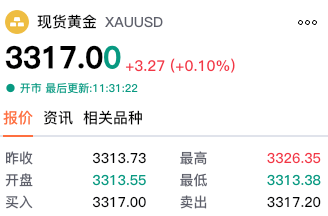
美联储政策不确定性

Search documents
美联储,降息大消息!美股集体走低,黄金直线跳水
Sou Hu Cai Jing· 2025-11-07 18:33
Core Viewpoint - The statement by Chicago Fed President Goolsbee regarding the unease of premature rate cuts in the absence of inflation data has significantly impacted global markets, leading to a sharp decline in gold prices and a drop in major U.S. stock indices [1][3]. Group 1: Federal Reserve Dynamics - The internal division within the Federal Reserve has become public, with contrasting views on interest rate cuts among its members, creating confusion in market expectations [3]. - The absence of key economic data due to the government shutdown complicates the Fed's decision-making process, increasing market uncertainty [3][10]. - The cautious stance of Goolsbee contrasts sharply with the aggressive rate cut proposal from Fed Governor Milan, highlighting the mixed signals from the Fed [3][10]. Group 2: Market Reactions - Gold prices experienced a significant drop after Goolsbee's comments, despite a report showing a net inflow of $8.2 billion into global gold ETFs in October, reaching a total AUM of $503 billion [3][8]. - The divergence in the gold market is evident, with a decline in non-commercial net long positions in COMEX gold futures to the lowest level since 2019, indicating extreme caution among professional investors [5][8]. - U.S. tech stocks faced substantial losses, with major companies like AMD and Oracle seeing declines of nearly 6% and 4% respectively, due to their high valuations and sensitivity to interest rate changes [5][10]. Group 3: Employment and Economic Signals - The labor market shows signs of weakness, with October layoffs reaching a seven-month high, yet these signals are being overlooked in light of inflation concerns [6][10]. - The market's reaction to economic data has shifted, with traditionally negative data no longer leading to positive market responses, indicating a period of skepticism regarding rate cuts [10][11]. Group 4: Global Asset Trends - Emerging market assets, particularly Chinese stocks, have shown resilience, with the Nasdaq China Golden Dragon Index rising nearly 2%, suggesting a shift of funds from overvalued U.S. tech stocks [6][10]. - The global demand for gold remains strong, with a record high of 1,313 tons in Q3, despite a 21% year-on-year decline in net purchases by central banks [13][15]. - The changing dynamics in the gold market reflect a broader transformation in global asset allocation, as traditional safe-haven assets face challenges from digital currencies and new forms of investment [15].



获利了结叠加美联储鹰派,日本投资者大举抛售海外股债!
Sou Hu Cai Jing· 2025-11-07 10:19
Core Viewpoint - Japanese investors have significantly withdrawn from overseas equity and bond markets in response to hawkish signals from the Federal Reserve, opting to lock in profits from previous market gains [1][2] Group 1: Market Reactions - For the week ending November 1, Japanese investors net sold 581.1 billion yen (approximately 3.85 billion USD) in foreign stocks, marking the largest weekly sell-off since October 4 [1] - Additionally, they reduced holdings in long-term foreign bonds by 354.4 billion yen and short-term bonds by 798.7 billion yen, indicating a cautious stance towards overseas fixed-income assets [1][5] - The MSCI World Index has declined by 1.6% this week, poised for its first weekly drop in four weeks [1] Group 2: Federal Reserve Influence - The hawkish comments from Dallas Fed President Lorie Logan, emphasizing a balanced labor market and sustained inflation above the 2% target, dampened expectations for rate cuts in December [2][3] - This shift in sentiment has prompted Japanese investors to reassess the risk-reward profile of their overseas asset allocations [3] Group 3: Contrasting Trends - In contrast to the sell-off in foreign assets, foreign investors have net bought Japanese stocks for the fifth consecutive week, purchasing approximately 690.1 billion yen in local shares, reflecting ongoing confidence in the Japanese market [5] - Despite this, the Nikkei 225 index has seen a decline of about 5% this week, with significant losses in technology stocks, highlighting the global market's impact on Japan [5] - Japanese long-term bonds experienced a net inflow of approximately 280.6 billion yen after two weeks of foreign capital outflow, while foreign investors also acquired short-term debt instruments valued at 1.83 trillion yen, indicating a preference for yen-denominated assets [5]
QCP:BTC 跌至 10 万美元关键支撑,ETF 连续净流出令短线承压
Sou Hu Cai Jing· 2025-11-05 11:27
Core Insights - Bitcoin has dropped to a critical support level of $100,000, influenced by a stronger dollar and uncertainty surrounding Federal Reserve policies [1] - The U.S. spot Bitcoin ETF has seen a net outflow of approximately $1.3 billion over the past four days, compounded by over $1 billion in long liquidations and increased volatility due to options hedging [1] - Analysts suggest that if ETF fund flows stabilize and no new macroeconomic negatives emerge, market sentiment may improve [1]
分析师:FOMC成员分歧导致不确定性加剧
Sou Hu Cai Jing· 2025-09-18 11:21
Core Viewpoint - The Federal Reserve's dot plot shows significant divergence among policymakers regarding the future interest rates, leading to increased uncertainty in the market [1] Summary by Relevant Categories Federal Reserve Interest Rate Predictions - One policymaker predicts an interest rate of 4.4% by the end of the year, which is above the range of 4.00%-4.25% [1] - Another policymaker has lowered the end-of-year policy rate forecast to 2.9% [1] Market Reactions and Analyst Insights - Vanguard's senior U.S. analyst, Josh Hirt, notes that the market is struggling to digest the information provided by the Federal Reserve [1] - The significant disagreement among committee members is contributing to heightened uncertainty, which may lead to increased volatility in the market [1]
金晟富:8.28黄金慢牛上行3400多空之争!晚间黄金分析参考
Sou Hu Cai Jing· 2025-08-28 09:52
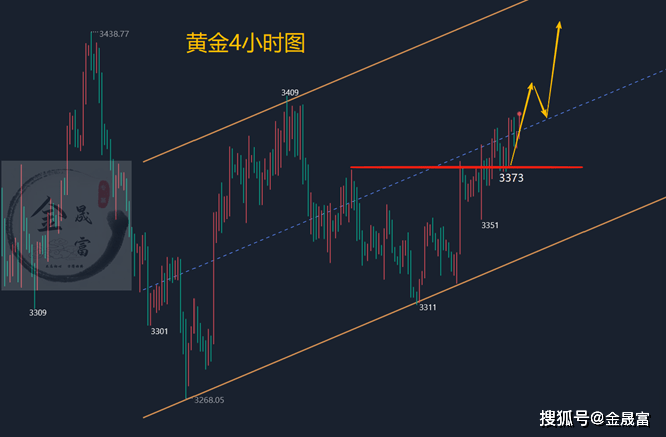
Group 1 - The article discusses the impact of various factors on gold and oil prices, particularly focusing on the upcoming US GDP data and its potential to trigger market volatility [2][3] - The uncertainty surrounding the Federal Reserve's policy, especially President Trump's attempts to influence the Fed, has heightened gold's appeal as a safe-haven asset [2][3] - The market anticipates the Personal Consumption Expenditures (PCE) data, which is expected to remain at a 2.6% increase for July, influencing gold prices based on whether the data shows rising inflation pressures [2][3] Group 2 - Technical analysis indicates that gold is currently experiencing a strong upward trend, with key support levels around 3385 and resistance levels at 3410 and 3425 [4][6] - The article emphasizes the importance of monitoring specific price levels for trading strategies, suggesting a cautious approach to trading around the 3400 mark due to previous volatility [6] - The analysis provides specific trading strategies for both long and short positions, highlighting the need for strict risk management and stop-loss measures [6]
金价亚盘大幅高位走低,下方支撑位多单布局方案
Sou Hu Cai Jing· 2025-08-28 04:08
Core Viewpoint - The gold market is experiencing volatility due to uncertainties surrounding Federal Reserve policies and geopolitical risks, particularly influenced by President Trump's attempts to dismiss Fed Governor Cook, raising concerns about the Fed's independence [1][4]. Group 1: Market Reactions - On Wednesday, gold prices showed a slight increase of 0.1% to $3,397.18 per ounce, reflecting a cautious market ahead of significant data releases [3]. - Gold prices surged to a two-week high following news of Trump's attempt to fire a Fed official, indicating that political uncertainty is a key catalyst for gold price movements [4]. Group 2: Economic Indicators - Investors are closely monitoring the upcoming Personal Consumption Expenditures (PCE) data, which is expected to maintain a 2.6% increase for July, as this will influence market expectations regarding potential Fed rate cuts [3][5]. - The probability of a 25 basis point rate cut at the Fed's September meeting is currently over 87%, supporting gold's resilience in the market [5]. Group 3: Federal Reserve Dynamics - Trump's pressure on the Fed for quicker rate cuts and his criticism of Chairman Powell's actions have led to increased volatility in the gold market, as well as a steepening of the U.S. Treasury yield curve [5]. - The independence of the Federal Reserve is facing unprecedented challenges, with potential legal disputes arising from Trump's actions, which could further complicate the Fed's policy decisions [4][5].

多空拉锯金价逼近3400关口,关注初请和GDP修正数据
Sou Hu Cai Jing· 2025-08-28 02:14
Core Viewpoint - Gold prices are experiencing relative stability amid uncertainties surrounding Federal Reserve policies and geopolitical risks, with potential volatility lurking beneath the surface [1][2][4] Federal Reserve Policy Uncertainty - President Trump’s attempt to dismiss Federal Reserve Governor Cook has raised concerns about the independence of the Fed, impacting market confidence and increasing gold's short-term appeal [1][3] - The market anticipates an 87% probability of a 25 basis point rate cut at the Fed's September meeting, which supports gold's resilience [5] - Fed officials emphasize that any rate cut will depend on upcoming economic data, adding to the uncertainty surrounding gold prices [5][6] Inflation Data Impact - The upcoming Personal Consumption Expenditures (PCE) data is crucial, with expectations of a 2.6% increase for July, which could influence rate cut expectations and gold prices [2][6] - If PCE data shows stronger inflation, it may challenge the Fed's rate cut path, enhancing gold's appeal as a safe-haven asset [2][6][10] Market Dynamics: Dollar and Bond Market - The dollar's fluctuations and bond market dynamics are closely linked to gold prices, with recent movements indicating cautious investor sentiment [7][8] - The yield curve has steepened, suggesting economic recovery expectations, but also hints at potential for more accommodative policies, indirectly benefiting gold [7][8] Summary - The gold market is at a crossroads influenced by multiple factors, including Fed internal conflicts, inflation data, and market dynamics, with the PCE data being a decisive variable for short-term price movements [9][10]
金晟富:8.28黄金上涨遇阻谨防变盘!日内黄金行情分析参考
Sou Hu Cai Jing· 2025-08-28 02:08
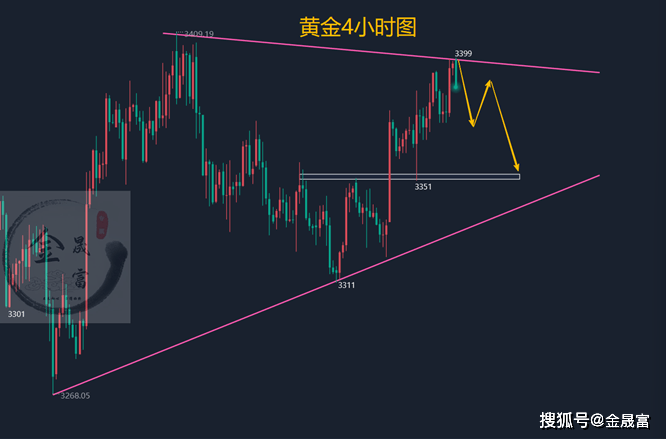
Core Viewpoint - The article discusses the current state of the gold market, highlighting the influence of U.S. Federal Reserve policies, geopolitical risks, and upcoming economic data on gold prices. The market is at a crossroads, with various factors shaping its future trajectory. Group 1: Market Influences - Gold prices are currently trading around $3,390.47 per ounce, showing stability amid uncertainties from the Federal Reserve's policies and geopolitical risks [1] - The market anticipates the U.S. Personal Consumption Expenditures (PCE) data, which is expected to maintain a 2.6% increase for July, influencing gold's price movements [1][2] - The probability of a 25 basis point rate cut by the Federal Reserve in September is over 87%, providing some support for gold prices [2] Group 2: Economic Data Impact - If the PCE data shows stronger inflationary pressures, it could challenge the market's expectations for a rate cut, potentially leading to significant fluctuations in gold prices [1][2] - The Federal Reserve's stance on interest rates is heavily dependent on upcoming economic data, which adds uncertainty to gold price forecasts [2] Group 3: Technical Analysis - Recent trading strategies suggest a focus on short positions around $3,393, with potential targets set at $3,375 to $3,365 [3][5] - The article emphasizes the importance of monitoring key support and resistance levels, with $3,373 identified as a critical support point for potential rebounds [5]
张津镭:鲍威尔讲话前夕 黄金多空谁主沉浮
Sou Hu Cai Jing· 2025-08-21 09:00
Group 1 - Gold prices experienced a rebound, closing at $3347 after reaching an intraday high of $3349 [1] - The market is currently in a wait-and-see mode ahead of the Jackson Hole symposium, with participants looking for clearer policy signals [1][2] - The recent FOMC minutes indicate that only two policymakers supported a rate cut in July, raising concerns that Powell may downplay the prospect of further cuts [1] Group 2 - Technically, gold is in a high-level consolidation pattern, with a slight downward bias and key resistance at $3350-60 [2] - The market is at a critical turning point, suggesting that traders should remain patient and wait for clear directional signals before making significant moves [2] - Suggested trading strategy includes shorting gold at $3350-3352 with a stop loss at $3360, targeting $3320-3300 [3] Group 3 - Key economic data to watch includes initial jobless claims, Philadelphia Fed manufacturing index, and various PMI readings scheduled for August 21 [3]
巨富金业:亚盘避险情绪回暖,美债收益率回落托底,金价止跌反弹
Sou Hu Cai Jing· 2025-07-10 07:07
Core Viewpoint - The current gold market is influenced by multiple factors including geopolitical risks, trade policy uncertainties, and central bank activities, leading to increased demand for gold as a safe-haven asset. Group 1: Fundamental Analysis - Trade policy uncertainties have escalated as the Trump administration announced tariffs of 25%-40% on imports from 14 countries, impacting global supply chains, particularly in electronics and automotive sectors, which boosts market risk aversion and supports gold prices [3] - Ongoing geopolitical risks are highlighted by recent attacks on commercial vessels in the Red Sea, leading to a surge in war insurance premiums and potential GDP declines, further enhancing gold's appeal as a safe-haven asset [4] - Diverging expectations regarding Federal Reserve policies are noted, with market anticipation of interest rate cuts despite the Fed's current stance, creating a complex environment for the dollar and providing potential support for gold [5] Group 2: Technical Analysis - The gold price is currently fluctuating within the range of $3280 to $3345 per ounce, with key resistance at $3345 and support at $3280, indicating a potential for upward movement if resistance is broken [9] - Short-term bullish momentum is indicated by the hourly chart, where gold has returned above moving averages, suggesting a possible upward trend if it maintains above $3310 [11] Group 3: Market Sentiment and Fund Flows - Short-term trading is dominated by risk aversion driven by trade tensions, geopolitical conflicts, and uncertainties surrounding Federal Reserve policies, leading to increased safe-haven buying of gold [13] - Institutional investment continues to flow into gold, with central banks increasing their gold reserves, indicating a shift from short-term hedging to long-term strategic allocation [15]