
美联储政策不确定性

Search documents
新浪财经资讯AI速递:昨夜今晨财经热点一览 丨2026年2月27日
Xin Lang Cai Jing· 2026-02-27 00:12
Group 1: Currency and Investment Risks - After the Spring Festival, the Chinese yuan rapidly appreciated, leading to losses for investors who bought US dollar deposits due to exchange rate fluctuations. Interest earnings could not cover the losses from currency depreciation, and some investors even faced a reduction in principal [1][11] - The core risk of US dollar deposits lies in exchange rate volatility, with the interest rate advantage diminishing as the yuan appreciates and US dollar rates decline. Experts suggest that such products are more suitable for investors with genuine foreign currency needs or those diversifying assets, rather than for those seeking to exploit interest rate differentials [1][11] Group 2: Corporate Transactions and Strategic Moves - The Li Ka-shing family sold its core UK power network assets, UK Power Networks, for approximately HKD 110 billion. This decision was influenced by multiple strategic considerations, including avoiding regulatory tightening post-Brexit and rising sovereign risks in infrastructure [2][12] - The sale allowed the family to lock in over HKD 50 billion in book profits before significant capital expenditures related to the green transition in the power sector. The proceeds will be redirected towards global asset reallocation, focusing on Southeast Asian infrastructure and green technology, reflecting a philosophy of prioritizing cash flow safety [2][12] Group 3: Market Reactions and Performance - Nvidia's Q4 2025 financial results exceeded expectations, with data center revenue growing 75% year-on-year to USD 62.3 billion. However, the stock price fell over 5% due to market concerns about revenue concentration among a few large customers, raising worries about demand concentration and potential cyclical trading [3][13] - The Nasdaq Composite Index fell nearly 1%, with significant declines in chip stocks. Nvidia's stock dropped over 3.7%, while Broadcom fell nearly 4.7%. Other major semiconductor companies, including TSMC and Micron Technology, also experienced declines ranging from 2.8% to 4.3%, indicating market apprehension towards the sector [3][14] Group 4: Cryptocurrency Market Impact - American Bitcoin, supported by the Trump family, reported a net loss of USD 59.45 million in Q4 due to a significant downturn in the cryptocurrency market, with Bitcoin prices plummeting nearly 23% during the quarter. This decline adversely affected revenue and operational metrics [4][15] - Despite increasing Bitcoin holdings and favorable mining costs, the continuous drop in stock price may hinder future financing and expansion capabilities for the company [4][16] Group 5: Regulatory and Fiscal Developments - The People's Bank of China announced support for domestic banks to conduct cross-border RMB interbank financing in compliance with market demands, aiming to develop offshore markets and improve cross-border capital flow management. The notice outlines business definitions, participant scope, management requirements, and risk control principles [5][20] - As of February 25, the issuance of local government bonds has surpassed RMB 2 trillion this year, with a year-on-year increase of approximately 22%. The funds from new and refinancing bonds are expected to support major projects and alleviate risks associated with existing debts [5][21]

分析师:美国就业强劲展现经济韧性,但美联储仍面临高度不确定性
Sou Hu Cai Jing· 2026-02-11 17:07
Core Insights - The U.S. added more jobs than expected in January, reaffirming the economy's resilience, but it does not provide clearer guidance for policymakers [1] - Despite a more predictable economic situation compared to early last year, uncertainty for the Federal Reserve remains higher than for many other central banks [1] - For fixed-income investors, the conclusion is that "credit fundamentals are decent, and macroeconomic conditions are acceptable" [1] Credit Market Analysis - Concerns about corporate bond valuations being high compared to a year ago have diminished [1] - It is believed that credit spreads may remain at current levels or even slightly narrow further [1]
2026开年开门红藏隐忧?美联储博弈+存款搬家,6类核心资产走向已定
Sou Hu Cai Jing· 2026-02-10 02:24
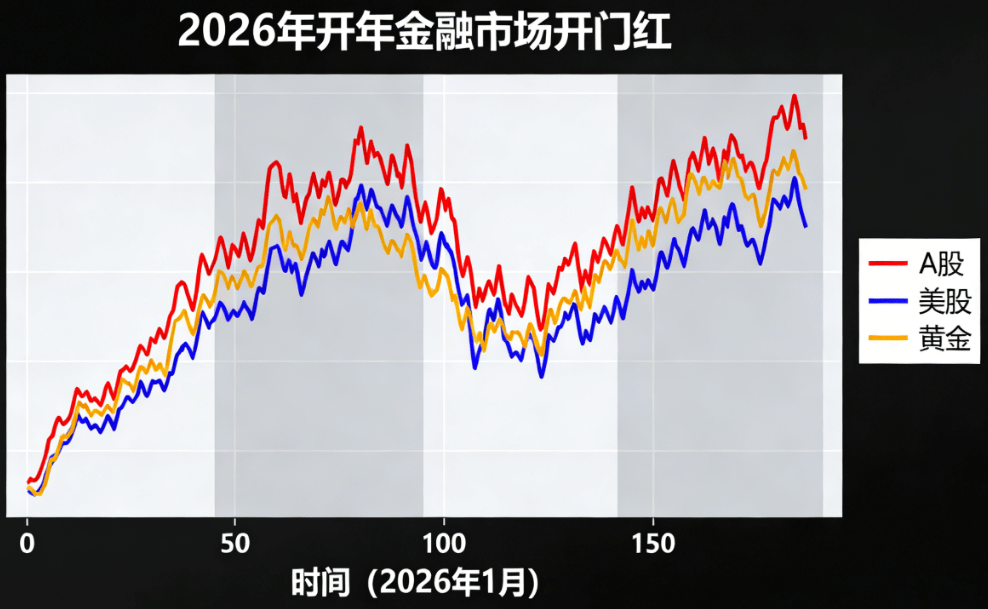
Group 1 - The global financial market has started 2026 with a strong performance, with A-shares rising over 3% and the Dow Jones Industrial Average reaching a high of 49,000 points [1][3] - Gold prices have surged, with London gold reaching $5,042.11 per ounce and domestic gold prices exceeding 1,500 yuan per gram, reflecting both safe-haven and value appreciation attributes [1][3] - The "deposit migration" trend in China is driving liquidity, with approximately 75 trillion yuan of household time deposits maturing in 2026, significantly higher than market expectations [3][4] Group 2 - The ongoing conflict between Trump and the Federal Reserve raises concerns about the independence of monetary policy, with a criminal investigation into Fed Chair Powell adding to market uncertainty [4][6] - The rise of "shadow banking" is amplifying liquidity risks in the global market, as funds flow into this sector seeking higher returns amid traditional bank credit contraction [6][9] - The outlook for six core assets is influenced by three main variables: uncertainty in Federal Reserve policy, risks from shadow banking, and the structured nature of deposit migration [9][10] Group 3 - Gold is expected to maintain a long-term bullish trend, driven by a shift in the pricing anchor from interest-bearing assets to physical currency, despite short-term price volatility [9] - The U.S. dollar is anticipated to exhibit a "weak trend with high volatility" due to uncertainties surrounding Federal Reserve policy and the conflict between the White House and the Fed [9] - The domestic bond market is likely to benefit from low-risk fund inflows due to deposit migration, while the U.S. bond market faces increased yield volatility amid Fed policy uncertainties [9]

申万期货品种策略日报——股指-20260203
Shen Yin Wan Guo Qi Huo· 2026-02-03 02:29
1. Report Industry Investment Rating - Not provided in the report 2. Core Viewpoints of the Report - The stock market has been continuously improving since 2026, driven by the resonance of the technology cycle, the release of policy dividends, the recovery of the economy, and the return of overseas funds. In February, the market is expected to continue its phased upward trend, benefiting from the "Spring Market" window period, the release of policy dividends in the "14th Five - Year Plan", clear profit expectations for AI and overseas expansion themes, and the seasonal recovery of the consumer sector and the implementation of investment projects. However, potential disturbances from overseas capital market fluctuations during the Spring Festival holiday, especially geopolitical risks, should be watched out for [2] 3. Summary by Relevant Catalogs 3.1 Stock Index Futures Market - **IF Contracts**: The previous day's closing prices were 4582.20 (current month), 4577.40 (next month), 4540.00 (next quarter), and 4491.80 (next - to - next quarter), with declines of 136.20, 142.20, 167.60, and 170.60 respectively, and volume - weighted average price (VWAP) declines of 2.89%, 3.01%, 3.56%, and 3.66%. The trading volumes were 34422.00, 110802.00, 33589.00, and 12595.00, and the open interests were 37542.00, 174613.00, 75115.00, and 26611.00, with changes of - 2648.00, - 11760.00, - 4210.00, and - 145.00 respectively [1] - **IH Contracts**: The previous day's closing prices were 3003.60 (current month), 3004.20 (next month), 2986.00 (next quarter), and 2963.60 (next - to - next quarter), with declines of 70.40, 71.60, 92.40, and 90.20 respectively, and VWAP declines of 2.29%, 2.33%, 3.00%, and 2.95%. The trading volumes were 16229.00, 53829.00, 13294.00, and 5931.00, and the open interests were 16983.00, 66246.00, 25931.00, and 10144.00, with changes of 829.00, - 4197.00, - 695.00, and 1001.00 respectively [1] - **IC Contracts**: The previous day's closing prices were 7951.00 (current month), 7903.20 (next month), 7765.20 (next quarter), and 7647.00 (next - to - next quarter), with declines of 434.60, 475.20, 558.00, and 593.00 respectively, and VWAP declines of 5.18%, 5.67%, 6.70%, and 7.20%. The trading volumes were 43997.00, 151002.00, 69294.00, and 24711.00, and the open interests were 43403.00, 153481.00, 93095.00, and 38790.00, with changes of - 3591.00, - 10216.00, - 7752.00, and 869.00 respectively [1] - **IM Contracts**: The previous day's closing prices were 7910.00 (current month), 7871.80 (next month), 7701.60 (next quarter), and 7548.60 (next - to - next quarter), with declines of 367.80, 387.60, 434.80, and 444.40 respectively, and VWAP declines of 4.44%, 4.69%, 5.34%, and 5.56%. The trading volumes were 46878.00, 173821.00, 60249.00, and 26152.00, and the open interests were 61033.00, 194848.00, 107833.00, and 50536.00, with changes of 2761.00, 3050.00, - 3441.00, and 3040.00 respectively [1] - **Inter - month Spreads**: The current inter - month spreads of IF (next month - current month), IH (next month - current month), IC (next month - current month), and IM (next month - current month) were - 4.80, 0.60, - 47.80, and - 38.20 respectively, compared with the previous values of 1.00, 5.80, - 14.80, and - 21.80 [1] 3.2 Stock Index Spot Market - **Major Indexes**: The previous day's closing values of the CSI 300, SSE 50, CSI 500, and CSI 1000 were 4605.98, 3003.14, 8037.05, and 7975.43 respectively, with declines of 2.13%, 2.07%, 3.98%, and 3.39%. The trading volumes (in billions of lots) were 304.77, 80.80, 299.65, and 308.32, and the total trading amounts (in billions of yuan) were 7259.20, 2081.53, 5460.56, and 4989.41 [1] - **Industry Indexes**: Among different industries, the energy, raw materials, industrial, and optional consumer sectors had declines of 4.44%, 7.74%, 0.96%, and 1.14% respectively. The major consumer sector had an increase of 1.12%, while the pharmaceutical, real - estate and finance, information technology, telecommunications, and public utility sectors had declines of 2.05%, 0.53%, 2.85%, 3.36%, and 0.81% respectively [1] 3.3 Futures - Spot Basis - The previous day's basis values of IF (current month - CSI 300), IF (next month - CSI 300), IF (next quarter - CSI 300), and IF (next - to - next quarter - CSI 300) were - 23.78, - 28.58, - 65.98, and - 114.18 respectively, compared with the previous two - day values of 3.66, 4.66, - 6.54, and - 51.34 [1] - The previous day's basis values of IH (current month - SSE 50), IH (next month - SSE 50), IH (next quarter - SSE 50), and IH (next - to - next quarter - SSE 50) were 0.46, 1.06, - 17.14, and - 39.54 respectively, compared with the previous two - day values of 1.70, 7.50, 13.50, and - 13.30 [1] - The previous day's basis values of IC (current month - CSI 500), IC (next month - CSI 500), IC (next quarter - CSI 500), and IC (next - to - next quarter - CSI 500) were - 86.05, - 133.85, - 271.85, and - 390.05 respectively, compared with the previous two - day values of 6.68, - 8.12, - 70.52, and - 160.52 [1] - The previous day's basis values of IM (current month - CSI 1000), IM (next month - CSI 1000), IM (next quarter - CSI 1000), and IM (next - to - next quarter - CSI 1000) were - 65.43, - 103.63, - 273.83, and - 426.83 respectively, compared with the previous two - day values of 27.54, 5.74, - 111.06, and - 258.26 [1] 3.4 Other Domestic and Overseas Indexes - **Domestic Indexes**: The previous day's closing values of the Shanghai Composite Index, Shenzhen Component Index, Small and Medium - Sized Board Index, and ChiNext Index were 4015.75, 13824.35, 8344.38, and 3264.11 respectively, with declines of 2.48%, 2.69%, 2.37%, and 2.46% [1] - **Overseas Indexes**: The previous day's closing values of the Hang Seng Index, Nikkei 225, S&P 500, and DAX Index were 26775.57, 52655.18, 6976.44, and 24806.10 respectively, with changes of - 2.23%, - 1.25%, 0.54%, and 1.09% [1] 3.5 Macro Information - The Asia - Pacific financial markets experienced a "Black Monday" due to the uncertainty of the Fed's policy, leading to sell - offs. The South Korean Composite Index fell 5.26%, the Indonesian Composite Index fell 4.88%, and both triggered circuit breakers during the session. A - shares and Hong Kong stocks' three major indexes all fell more than 2%. Resource stocks were severely hit, and more than 10 commodity futures in the domestic market hit the daily limit down. Thailand's gold online futures trading was temporarily suspended [2] - On February 2, after the resumption of trading, the net asset value of SDIC Silver LOF was adjusted to 2.2494 yuan, with a single - day decline of 31.5%, setting a record for the largest single - day decline in public funds. The current secondary - market price premium rate is 109.92% [2] - Shanghai launched a program to purchase second - hand housing for affordable rental housing, with Pudong New Area, Jing'an District, and Xuhui District as the first - batch pilot areas [2] - The CPC Central Committee and the State Council approved the "Spatial Coordination Plan for the Modern Capital Metropolitan Area (2023 - 2035)", aiming to build a world - class metropolitan area centered around the capital and a leading area for demonstrating Chinese - style modernization [2] - Nine government departments, including the Ministry of Commerce, launched the "Happy Shopping for Chinese New Year" special event in 2026, which will run from February 15 to 23 and cover six aspects: "delicious food", "good accommodation", "convenient travel", "pleasant tourism", "satisfactory shopping", and "fun entertainment" [2] 3.6 Industry Information - In January, the second - hand housing markets in several key cities recovered. Beijing and Shanghai had 15,000 and 23,000 second - hand housing transactions respectively, both with year - on - year growth of over 20%. Shenzhen had 5,000 transactions, with a month - on - month increase of 16% and a year - on - year increase of 7%. Hangzhou also saw a significant increase in transactions both month - on - month and year - on - year. The new - housing markets in key cities were relatively dull due to factors such as the market supply rhythm [2] - Ten government departments issued a document to promote the construction of a standard system for the low - altitude economy, aiming to establish a "four - dimensional integrated" standard supply system by 2027, focusing on five core areas: low - altitude aircraft, low - altitude infrastructure, low - altitude air traffic management, safety supervision, and application scenarios [2] - The National Healthcare Security Administration announced that this year's medical insurance fund supervision will conduct on - site inspections across all provinces in China, focusing on key areas such as orthopedics, oncology, laboratory tests, ophthalmology, stomatology, general surgery, and neurology [2] - The mandatory national standard "Safety Technical Requirements for Automobile Door Handles" will be implemented next year, requiring each door (excluding the rear door) to be equipped with a mechanical external door handle and a mechanical internal door handle, which will bring major changes to the popular hidden - door - handle design [2]
中泰期货晨会纪要-20260203
Zhong Tai Qi Huo· 2026-02-03 01:23
1. Report Industry Investment Rating No relevant content provided in the given text. 2. Core Views of the Report - **Overall Market**: The A - share market experienced a deep adjustment on Monday, with resource stocks such as gold, non - ferrous metals, chemicals, and oil and gas hitting the limit down, and the semiconductor industry chain weakening significantly. However, power grid equipment, liquor stocks, and CPO concepts showed strong performance. The overall market was affected by factors such as the uncertainty of the Fed's policy, Trump's nomination of Wash, and the change of the Iranian situation [11][14]. - **Commodities**: Different commodities showed various trends. For example, crude oil prices are expected to decline in the short term due to geopolitical cooling, concerns about Wash's policies, and the US government shutdown. Some commodities like coal and iron ore are expected to fluctuate in the short term, while others have their own supply - demand - driven trends [40][17]. 3. Summary by Related Catalogs 3.1 Macro - financial - **Stock Index Futures**: The strategy suggests that the index style may shift, and short - term weights may be dominant. The recent sharp decline in the market is mainly a negative feedback of over - crowded trading, and the nomination of Wash by Trump and the change of the Iranian situation may not be the main factors. The market may continue to decline due to inertia, but the probability of a large - scale spread is limited [14][15]. - **Treasury Bond Futures**: The sentiment in the bond market has improved, and the short - term rebound trend may continue. The capital market is in a balanced and loose state, and the capital interest rate is stable. Although the PMI index in January has dropped significantly, the increase in South Korea's exports may imply the resilience of China's electromechanical exports. There is a certain game value and odds in observing whether the capital interest rate can decline after the Spring Festival [16]. 3.2 Black Commodities - **Steel and Iron Ore**: In the short term, steel and iron ore are expected to fluctuate and consolidate. Iron ore is recommended to be sold short on rallies in the medium term. The current order situation of steel is acceptable, but the downstream processing fees are inverted, and the inventory is high, which suppresses the price rebound. The iron ore supply is abundant, and the demand for iron - making has a slight reduction. The future replenishment space is limited [16][17]. - **Coking Coal and Coke**: The prices of coking coal and coke are expected to fluctuate and consolidate in the short term. In the medium term, the domestic mine production rate will face a theoretical upper limit. In the short term, the contradiction of coking coal surplus intensifies, but the supply - demand contradiction may improve during the Spring Festival, which may support the spot price [19][20][21]. - **Ferroalloys**: In the short term, attention should be paid to the settlement electricity fee in Inner Mongolia in January and the inventory changes of manganese ore at ports. In general, the long - term allocation idea of ferrosilicon remains unchanged, manganese silicon is recommended to be on the sidelines, and the spread between ferrosilicon and manganese silicon is recommended to go long at low levels [22]. - **Soda Ash and Glass**: The soda ash - glass industry chain follows the market atmosphere. Currently, it is recommended to wait and see. For soda ash, the supply side has no clear exit path, and the focus is on the supply stability of leading enterprises and the progress of new capacity reaching production. For glass, the market has expectations of production line resumption, and the follow - up changes in production lines need to be observed [23]. 3.3 Non - ferrous and New Materials - **Lithium Carbonate**: In the short term, the market sentiment has cooled down, and the price has declined, but the long - term upward driving factors still exist. Before the Spring Festival, the price is supported by stocking, and it is mainly expected to fluctuate widely. Buying opportunities on dips can be considered [25]. - **Industrial Silicon and Polysilicon**: Industrial silicon is expected to fluctuate, with limited short - term adjustment space but pressure on the upper limit due to pessimistic expectations. Polysilicon is expected to fluctuate weakly, and cautious operation is recommended [26][27][28]. 3.4 Agricultural Products - **Cotton**: The short - term supply is loose, but the long - term supply is expected to shrink. The contradiction between pre - festival replenishment and the decline in production during the holiday makes Zhengzhou cotton enter a high - level consolidation state. Short - term trading is recommended [28]. - **Sugar**: Domestic sugar is under great supply pressure, and the pre - Spring Festival stocking is coming to an end. Zhengzhou sugar is under pressure from external and domestic supply factors. Short - term trading in the low - level range is recommended [31]. - **Eggs**: Before the Spring Festival, as the stocking intensity weakens, the egg spot price may gradually weaken. The current in - production inventory level is still high, and the probability of "off - season not being off" after the Spring Festival is not high. The main 03 contract of egg futures is under pressure, but the downward space should not be overestimated. The futures contracts may turn into a near - weak and far - strong pattern [34]. - **Apples**: High - quality apple supplies may continue to be strong, and the futures price may run strongly. Currently, the apple market has a good trading atmosphere during the pre - Spring Festival stocking period, and the price of high - quality apples remains firm [36]. - **Corn**: Attention should be paid to the port - collection situation, and short - term trading is recommended. Before the Spring Festival, the probability of a concentrated sell - off is low, and the price is expected to fluctuate at a high level. In the future, attention should be paid to the concentrated release of grain sales in March and the opportunity to buy on dips in the far - month contracts [37]. - **Jujubes**: The current view is that jujubes will fluctuate weakly. The market needs to closely monitor the performance of the consumer market during the peak season. In the short term, the jujube market is expected to fluctuate, and attention should be paid to the sales rhythm in the sales area and the mentality of purchasers [38][39]. - **Pigs**: The supply and demand are both increasing, and the spot market is in a fierce game. It is expected that the spot price will not rise significantly. Short - selling the near - month contracts is recommended [40]. 3.5 Energy and Chemicals - **Crude Oil**: Crude oil prices have dropped significantly due to geopolitical cooling, concerns about Wash's policies, and the US government shutdown. The geopolitical premium is expected to weaken, and the price is expected to decline in the short term [40]. - **Fuel Oil**: The price of fuel oil is mainly affected by geopolitical and macro factors and will follow the trend of crude oil prices. The supply - demand situation has marginally improved, and the current inventory is at a high level [42]. - **Plastic**: Polyolefins are under great supply pressure and are expected to be weak in terms of supply and demand. The market sentiment has turned negative recently, and there is a risk of further correction [43]. - **Synthetic Rubber**: In the short term, it is affected by negative feedback and the overall weakness of commodities and has declined. Opportunities to go long on dips after the Spring Festival can be considered, and attention should be paid to the weakening of the RU - BR spread [45]. - **Methanol**: The actual supply - demand situation of methanol has slightly improved, but there is still a risk of inventory accumulation. The current price is slightly high, and there may be a correction risk if the geopolitical conflict eases. It is recommended to reduce long positions temporarily [46]. - **Caustic Soda**: The start - up rate of caustic soda is high, the inventory of liquid caustic soda is high, and the comprehensive profit of chlor - alkali is poor. The futures price is expected to fluctuate widely in the short term [47]. - **Asphalt**: Asphalt follows the trend of crude oil prices and is stronger than crude oil. The future focus is on the discount change of Venezuelan crude oil [48][49]. - **PVC**: The core supply - demand contradiction of PVC has not been improved. Although there is support from exports in the short term, there is a risk of correction if the price remains at the current level [50]. - **Polyester Industry Chain**: The near - end fundamentals of the polyester industry chain are weak, and it is expected to continue to adjust weakly in the short term. Positive spreads between May and September contracts of PX, PTA, or MEG can be considered [51]. - **Liquefied Petroleum Gas (LPG)**: The price support logic of LPG has weakened, and the futures price is expected to turn from strong to weak. Short - selling on rallies is recommended [52]. - **Pulp**: Pulp prices have declined due to the negative sentiment in the non - ferrous and precious metal sectors. The short - term downside space is limited due to the support from the supply side, pre - Spring Festival replenishment expectations, and the strong overseas prices in the long term. It is recommended to wait and see [53]. - **Log**: The fundamentals of logs have weakened, and the spot price has slightly decreased. In the short term, it may fluctuate due to the game between long and short positions. Risk prevention should be noted [55]. - **Urea**: The overall futures market is weak, and it is recommended to maintain a short - term bearish view on urea futures [56].
贵金属上演“流动性踩踏”,德银、小摩却坚守多头阵地!
Jin Shi Shu Ju· 2026-02-02 15:18
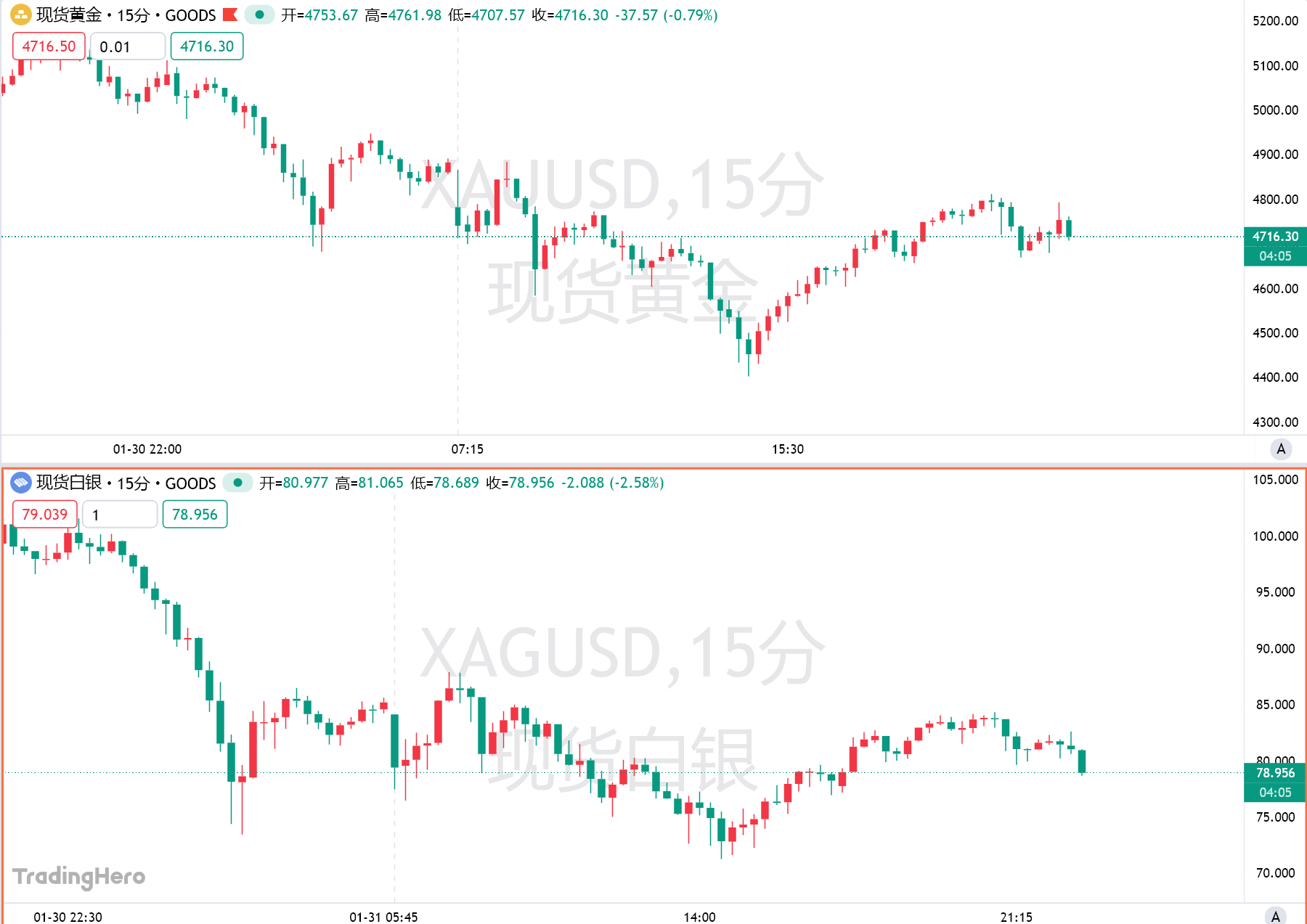
Core Viewpoint - The decline in precious metal prices is primarily driven by the nomination of Kevin Warsh to replace Jerome Powell as the Federal Reserve Chairman, which has led to market uncertainty and a reevaluation of trading strategies [1][5]. Precious Metals Market - As of the latest report, international spot gold prices have dropped over 3.5%, hovering around $4,700 per ounce, following a historic decline of over 9% last Friday, marking the largest single-day drop since 1983 [1]. - International spot silver prices fell by 7.6%, dropping below the $80 mark, with a significant plunge of 36% last Friday, setting a record for the largest single-day decline [1]. - Analysts suggest that the recent sell-off in precious metals began at the end of January, driven by concerns over the Federal Reserve's independence and the potential for a declining dollar [4]. Market Reactions and Strategies - The nomination of Warsh, perceived as a hawkish figure, has prompted investors to reassess their previous trading strategies, which included long positions in commodities and precious metals [5]. - Market participants are particularly concerned about Warsh's advocacy for reducing the Fed's balance sheet, which could tighten liquidity—a critical factor for market stability [5]. - Despite the current downturn, some analysts view the sell-off as a "healthy correction" rather than a signal of a long-term trend reversal, predicting that gold could reach $5,020 per ounce and silver around $88 by year-end [7][8]. Future Outlook - Deutsche Bank analysts maintain their forecast for gold prices to rise to $6,000 per ounce by year-end, indicating that the fundamental drivers for higher prices remain intact [8]. - JPMorgan Private Bank suggests that gold's allocation in investment portfolios could increase from the current level of just over 3% to between 5% and 10%, driven by geopolitical risks and central bank purchases [9][11]. - HSBC's chief multi-asset strategist argues that the recent price declines should be viewed as a position liquidation rather than a panic signal, emphasizing that these adjustments are unlikely to significantly impact stock and credit markets [11].
黄金5111遇阻走调整,今日行情走势要点分析(2026.1.27)
Sou Hu Cai Jing· 2026-01-27 01:01
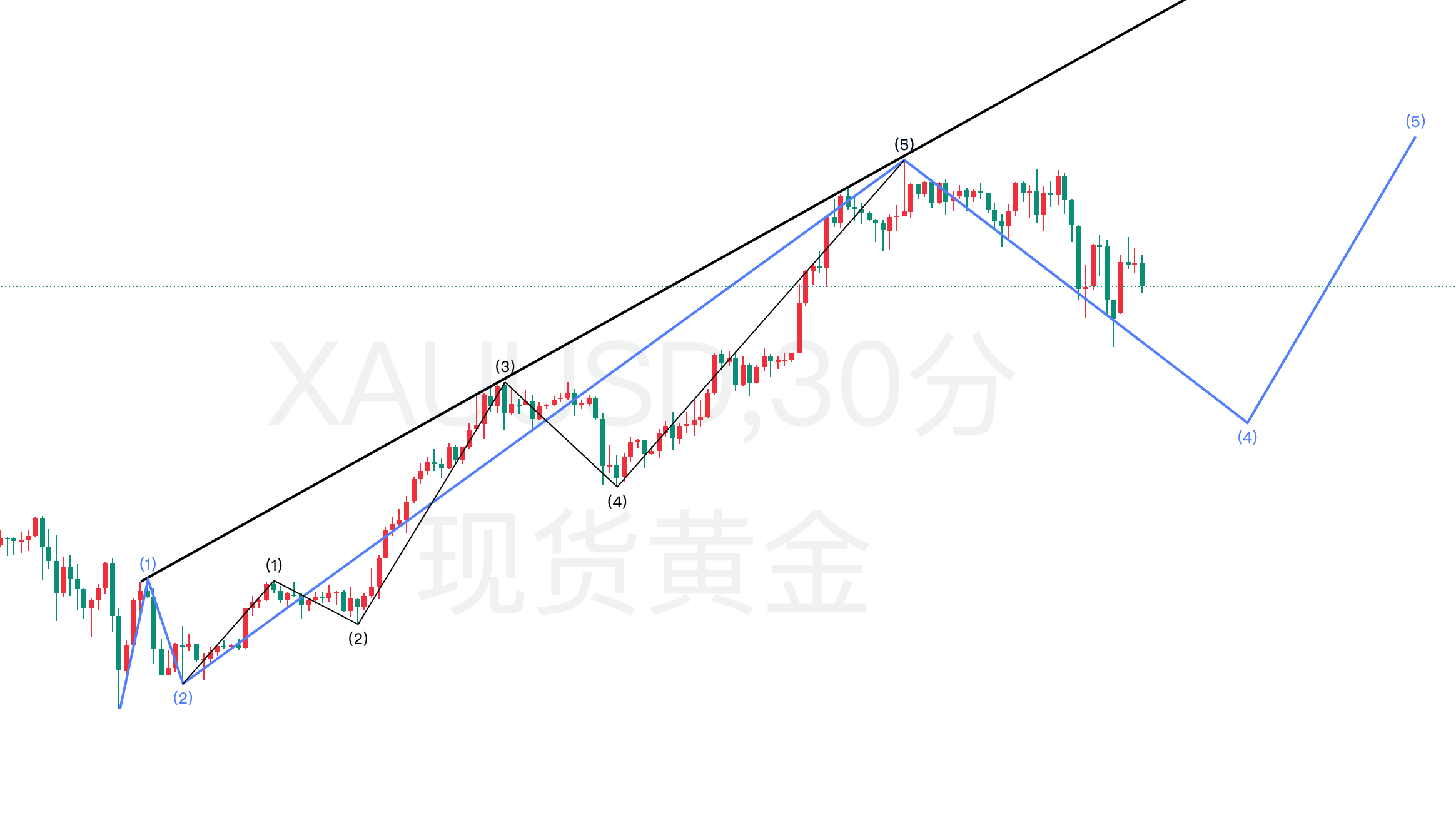
Core Viewpoint - The current geopolitical tensions and market conditions are driving increased demand for gold as a safe-haven asset, supported by institutional buying and uncertainty in U.S. Federal Reserve policies [2][3]. Group 1: Fundamental Analysis - Geopolitical tensions, particularly in the Middle East and ongoing conflicts like the Russia-Ukraine situation, are escalating demand for gold as a safe-haven asset [2]. - Central banks are diversifying their foreign exchange reserves and reducing reliance on the U.S. dollar, making them significant buyers of gold; physical gold ETF holdings have increased by approximately 20% year-on-year [2]. - Market expectations suggest the Federal Reserve will maintain interest rates between 3.50% and 3.75%, but political pressures and uncertainty regarding the Fed's leadership are contributing to a decline in U.S. Treasury yields and the attractiveness of dollar-denominated assets, thereby boosting gold prices [2]. Group 2: Technical Analysis - On the daily chart, gold has formed a six-day upward trend, with a strong bullish alignment in moving averages; the 5-day moving average is a critical support level located between 4960 and 4950 [4]. - The four-hour analysis indicates that gold is in the fifth wave of an upward trend that began at 4756, with significant resistance at the 5100-5110 range and support at 4990-4980 [4][6]. - Short-term analysis suggests that the price at 5111 may represent a peak in the current upward movement, with potential for a corrective phase; monitoring the price action around this level is crucial for future trading strategies [6][8].
威廉博莱:金价上涨并非短期投机 而是建立在合理基本面之上
Xin Lang Cai Jing· 2026-01-26 06:40
Core Viewpoint - Gold prices have surged, surpassing the $5,000 per ounce mark, driven by increasing geopolitical risks and the demand for portfolio diversification [1][2] Group 1: Geopolitical Risks and Economic Uncertainty - Geopolitical risks have re-emerged as a market focus, significantly impacting gold prices, particularly influenced by news from Venezuela and Greenland [1] - The uncertainty surrounding the macroeconomic environment, including unclear Federal Reserve policy and doubts about the U.S. economic outlook, has intensified market volatility [1] - Recent developments regarding Federal Reserve leadership have further exacerbated overall market uncertainty [1] Group 2: Central Bank Demand and Gold's Strategic Value - Central banks are expected to continue being significant net buyers of gold, with a notable emphasis on the People's Bank of China, which is likely to increase its gold holdings while reducing U.S. dollar assets [1][2] - The structural demand from central bank purchases is becoming a crucial pillar for the long-term rise in gold prices, reflecting a reassessment of the dollar's dominance [2] - The dual resonance of gold's safe-haven function and reserve allocation needs, amid geopolitical tensions and ambiguous monetary policy, is driving prices to new highs [2] Group 3: Market Dynamics and Future Outlook - The current rise in gold prices is viewed as based on sound fundamentals rather than short-term speculation, driven by geopolitical risks, Federal Reserve uncertainty, and expectations of a weak dollar [2] - As gold prices approach the $5,000 threshold, market attention towards gold is increasing, necessitating close monitoring of geopolitical developments and central bank purchasing trends to assess the sustainability of future price movements [2]
startrader:1月未过半黄金涨7%白银涨23% 贵金属牛市再刷屏?
Sou Hu Cai Jing· 2026-01-14 04:08
Core Viewpoint - The precious metals market experienced a significant surge in January 2026, with gold and silver prices reaching historical highs due to a combination of policy uncertainty, geopolitical risks, and industrial demand [1][3][4]. Group 1: Market Performance - As of January 14, 2026, gold prices increased by 7%, surpassing $4629.94 per ounce, while silver prices surged by 23%, reaching a new high of $86.22 per ounce [1]. - In the domestic market, the Shanghai silver futures contract hit the daily limit multiple times, and the Shanghai gold contract rose over 5%, with A-share precious metal stocks collectively strengthening, including companies like Xiaocheng Technology and Shengda Resources, which saw gains exceeding 8% [1]. Group 2: Drivers of Price Increase - The core driver of the precious metals' rise is the escalating uncertainty surrounding Federal Reserve policies, highlighted by an ongoing criminal investigation into Fed Chairman Jerome Powell regarding potential misuse of funds related to office renovations [3]. - The division within the Federal Reserve regarding interest rate decisions has intensified, with a record split of 9-3 in favor of rate cuts during the December meeting, further raising expectations for future rate cuts [3]. - The December core CPI data, which fell short of expectations, has also contributed to heightened rate cut anticipations, with the probability of a rate cut in April increasing from 38% to 42% [3]. Group 3: Geopolitical Factors - The beginning of 2026 has seen a concentration of geopolitical risks, including U.S. military actions in Venezuela, unrest in Iran, and ongoing tensions from the Russia-Ukraine conflict, which have collectively diminished market risk appetite [4]. - Central banks worldwide have continued to increase their gold purchases, with the People's Bank of China adding gold reserves for 14 consecutive months, indicating sustained demand that supports gold prices in the medium to long term [4]. Group 4: Silver Demand Dynamics - Silver's exceptional price increase is attributed to a surge in industrial demand, with 75% of silver demand coming from industrial applications, particularly in the photovoltaic sector, which accounts for 35% of silver usage [4]. - The global photovoltaic installation is expected to grow by 30% in 2025, leading to an additional demand of 6000 tons of silver, while the rapid development of electric vehicles and AI servers further exacerbates the demand gap [4]. - Supply-side challenges, including an 8% year-on-year decline in silver production from major South American producers like Peru and Chile, have contributed to the supply-demand imbalance, making it a key factor in silver's price surge [5]. Group 5: Market Sentiment and Future Outlook - There is a notable divergence in market sentiment regarding the sustainability of the precious metals rally, with optimistic views suggesting that ongoing Federal Reserve uncertainty and industrial demand growth will continue to drive prices higher [5]. - Morgan Stanley predicts that gold prices could reach $4800 per ounce by Q4 2026, while Bank of America has set a target range for silver between $135 and $309 per ounce [5]. - Conversely, cautious perspectives highlight potential short-term correction risks and the influence of evolving variables, such as the outcome of Powell's investigation and subsequent U.S. economic data, which could reshape market expectations [6].
格林大华期货早盘提示-20260114
Ge Lin Qi Huo· 2026-01-13 23:30
1. Report Industry Investment Rating - No information provided 2. Core Viewpoints - The global economy has passed its peak and is starting to decline due to the consecutive wrong policies of the United States [4] - The U.S. return to the Monroe Doctrine and its global contraction will have a profound and subversive impact on major asset classes such as the global economy, U.S. bonds, U.S. stocks, the U.S. dollar, precious metals, and industrial metals [3] 3. Summary by Related Catalogs 3.1 Morning Session Notice - Three former Fed chairs and four former U.S. Treasury Secretaries strongly condemned the U.S. Department of Justice's investigation into Fed Chair Powell, saying it would undermine the Fed's independence [1] - Trump expressed concerns about the high - court tariff ruling, warning of potential compensation of thousands of billions of dollars if the ruling is unfavorable to the U.S. [1] - CME will change the margin setting method for gold, silver, platinum, and palladium contracts from a fixed - amount basis to a percentage of the contract's nominal value [1] - Citi Group aggressively raised the short - term outlook for precious metals, predicting gold to reach $5000/ounce and silver to reach $100/ounce in the next 3 months under a bullish scenario [1] - DeepSeek opened a new front in sparsification - "conditional memory" in addition to "conditional computing", which may lead to an explosive growth in AI's reasoning ability [1] - UBS warned of a severe copper shortage in 2026/27, while Goldman Sachs and Citi thought the current copper price was overheated in the short - term [1] - Musk praised China's power - generation capacity and said xAI's competition with Google would ultimately be with China [1] - Trump announced a 25% tariff on countries having business with Iran when they conduct business with the U.S. [1] 3.2 Global Economic Logic - The U.S. actions in seizing Venezuelan oil and other geopolitical moves have brought great uncertainty to the global economy [2] - The uncertainty of the Fed is expected to peak from July to November 2026, with a possible "flight from U.S. assets" trend [2] - The Fed will cut interest rates by 25 basis points in December and buy $40 billion in short - term bonds monthly, restarting the expansion of its balance sheet [2] - Goldman Sachs warned that the decline in Las Vegas gambling revenue is similar to the early warning signal before the 2008 financial crisis [2] - The U.S. will adjust its economic relations with China and try to revive its economic autonomy [2] - The Fed's Beige Book shows a K - shaped consumer spending pattern with high - income consumers remaining resilient and middle - and low - income families tightening their belts [2] - The Bank of Japan raised interest rates by 25 basis points, and the 10 - year Japanese government bond yield rose to 2.1% [2] - Google plans to double its AI computing power every 6 months and achieve a 1000 - fold increase in the next 4 - 5 years [2] - JPMorgan strategists believe that the construction boom of AI data centers will require at least $5 trillion in the next five years [2] - NVIDIA's Huang Renxun said China will win the AI competition due to a more favorable regulatory environment and lower energy costs [2] - The U.S. unemployment rate rose to 4.6%, and economists are worried about large - scale corporate layoffs as an economic warning signal [2]