规模效应

Search documents
老乡鸡IPO背后的价格密码:全产业链+规模效应稳守亲民定价
Sou Hu Cai Jing· 2026-02-10 07:47
老乡鸡推进港股IPO的进程中,始终坚守的大众化价格策略,并非单纯的市场选择,而是建立在全产业链布局、规模效应与IPO募资赋能的三重支撑之上。 从束从轩奠基的产业根基,到束小龙主导的规模化扩张,老乡鸡通过IPO募资进一步夯实成本控制能力,让亲民价格成为其品牌渗透与加盟扩张的竞争力之 一。 IPO募资的精准投入,进一步强化了价格稳定的底层能力。根据招股书披露,老乡鸡本次上市募集资金将重点投向供应链优化,包括升级养殖基地、中央厨 房及冷链物流网络。这些投入将进一步扩大规模效应,降低食材采购、加工与配送的单位成本,让老乡鸡在维持菜品品质的前提下,持续守住大众化价格定 位。同时,募资支持的门店网络拓展(含加盟门店)将进一步提升市场覆盖率,形成"规模扩张—成本降低—价格稳定"的正向循环,既让消费者受益,也为 加盟商提供了更稳健的盈利空间,推动加盟模式的持续扩张。 "直营+加盟"的双轮驱动模式,让价格优势实现全国化复制。束小龙主导推广的加盟模式,之所以能快速渗透,核心原因之一便是老乡鸡成熟且稳定的价格 体系。总部通过全周期标准化支持,确保加盟店与直营店保持同质同价,避免了行业常见的"加盟即调价"问题。亲民的价格定位降低了加 ...

如何把规模效应量化?这轮工程机械的利润空间有多大?
2026-02-10 03:24
Summary of Conference Call on Construction Machinery Industry Company/Industry Involved - The conference call focuses on the construction machinery industry, specifically discussing the performance and outlook of major companies such as SANY, XCMG, Zoomlion, and LiuGong. Core Points and Arguments Domestic Market Outlook - The construction machinery market in China is expected to see a positive trend, with excavator sales projected to turn positive starting March 2024, continuing to rise thereafter. Other machinery types like cranes and concrete equipment are also expected to follow this upward trend [1][2]. - The domestic market is characterized as having a "bottoming out" phase, driven by equipment replacement and the export of second-hand machinery, which provides space for domestic upgrades [2]. Overseas Market Potential - The overseas market is showing strong growth potential, particularly in regions such as South America, Africa, India, Indonesia, and Russia. North America and Europe are also expected to see positive trends, with North America projected to grow by around 20% starting June 2024 [2][3]. - Chinese manufacturers currently hold a 30% market share in non-U.S. markets, with significant potential for growth, especially in Indonesia where market share exceeds 65% [3]. Profitability and Market Dynamics - Concerns about declining profitability as market share increases are addressed. Examples from other industries (solar, lithium batteries, and new energy vehicles) indicate that Chinese companies can achieve high profitability in overseas markets, with leading firms in Indonesia achieving net profit margins above 16% [4]. - The profitability in overseas markets is expected to remain high due to the upward cycle and productivity improvements, with sustainable growth anticipated [4]. Profit Contribution Factors - The analysis emphasizes the importance of quantifying scale effects, operational leverage, and the impact of increasing overseas market share on profitability. It is suggested that profit elasticity will significantly exceed revenue elasticity due to the scale effects inherent in the construction machinery industry [5][6]. - Key factors contributing to profit include: - **Operational Leverage**: Cost increases (like depreciation) are expected to be lower than revenue increases, enhancing profit margins [6][7]. - **Employee Costs**: The need for additional hiring is minimized due to the use of local distributors in overseas markets [8]. - **Export Contribution**: Higher gross and net profit margins in overseas markets compared to domestic markets are expected to enhance overall profitability [8]. Financial Projections - For SANY, domestic revenue is projected to recover to two-thirds of 2020 levels, with overseas revenue expected to double, leading to a total revenue range of 500 billion to 1.6 trillion [15][16]. - Profit projections for SANY suggest a potential profit of around 250 billion, indicating a significant opportunity for investment [17]. - XCMG is also expected to see a doubling of revenue, with profit projections around 200 billion, aligning with its growth strategy in the mining machinery sector [19][20]. Market Valuation - SANY's market valuation could reach 3 trillion based on projected profits, while XCMG could also see substantial growth, with a target market cap of 3 trillion based on its performance in mining machinery [24][26]. - The overall sentiment is positive for the construction machinery sector, with expectations of sustained growth and profitability in the coming years [28]. Other Important but Possibly Overlooked Content - The cyclical nature of the construction machinery market is highlighted, with historical data showing that every year around March, there is a surge in performance due to earnings reports [28]. - The call concludes with a strong recommendation for investment in companies with solid earnings, particularly in the construction machinery sector, as both domestic and international markets are expected to experience upward trends in the coming years [28].


微信,给元宝“纠偏”
Sou Hu Cai Jing· 2026-02-05 22:46
Core Viewpoint - WeChat's decision to restrict the "Yuanbao" red envelope feature has sparked significant discussion on social media, highlighting the platform's commitment to user experience and its evolving business strategy [1][3][9] Group 1: WeChat's Strategy - WeChat is undergoing a transformation from a "technology-driven" model to a "user-driven" model, emphasizing user experience as a core principle [7][8] - The platform's evolution includes the integration of various features such as public accounts, mini-programs, and video accounts, which have created a complex ecosystem [7] - The restriction on Yuanbao links may serve as a strategic move to maintain user engagement and prevent the dilution of user experience [9][10] Group 2: Market Dynamics - The competitive landscape suggests that simply investing heavily in marketing, as seen with various tech companies, does not guarantee user retention or loyalty [11][12] - Historical context indicates that WeChat's success with the red envelope feature was rooted in its already strong user engagement, rather than just financial incentives [13][14] - The platform's ability to connect with 1.4 billion global users positions it as a fertile ground for AI development, requiring patience and strategic focus [15][17] Group 3: Future Outlook - The potential for AI within WeChat's ecosystem is significant, but it necessitates a strong commitment to enhancing user experience and product quality [14][18] - The narrative suggests that once the Yuanbao feature is adequately prepared, the value of WeChat as an AI platform will be fully realized [18]


零跑,可算有点工厂直销的样子了
3 6 Ke· 2026-02-05 09:37
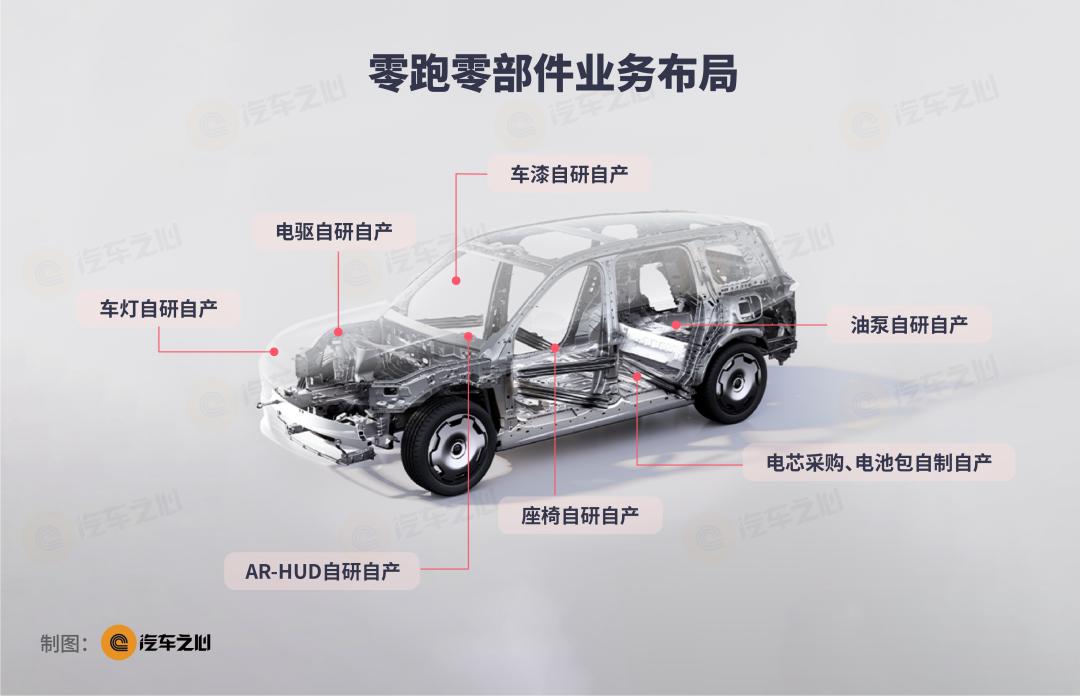
Core Viewpoint - The consensus among investors in the domestic automotive industry is that car manufacturers that cannot produce their own components are not considered good companies [1] Group 1: Supply Chain Management - In the current market competition, every car manufacturer needs to find a delicate balance between cost and profit [2] - Car manufacturers manage suppliers in three layers: direct purchase, cooperative development, and self-manufacturing of key components [3][7] - The first layer involves a direct buying-selling model where each manufacturer typically works with thousands of suppliers, undergoing multiple assessments of price, quality, and stability [5][6] - The second layer is a cooperative model where manufacturers deeply participate in technology development, as seen with Li Auto and its partnership with Aisin [8] - The third layer involves manufacturers self-developing and self-manufacturing key components, which allows them to extract profits from the supply chain [9] Group 2: Vertical Integration - Vertical integration is driven by necessity, with electric vehicle hardware costs divided into five parts: battery (40%), electric drive system (12%-13%), automotive electronics (13%-14%), body and chassis (14%-15%), and interior/exterior trim (17%) [10] - Only two players currently cover all R&D and manufacturing: Leap Motor and BYD [11] - Leap Motor focuses on rationalism in self-manufacturing components, while BYD emphasizes practical integration of its supply chain [12][18] - BYD has over 100 component factories and has built a vertically integrated supply chain from mining lithium to selling cars [18] - Leap Motor's self-manufactured components cover 70% of its vehicle costs, providing a competitive edge [9] Group 3: Profitability and Cost Management - Vertical integration allows manufacturers to eliminate middlemen, potentially leading to significant profit margins [21] - BYD's internal production of batteries is 20% cheaper than external sourcing, contributing to an increase in gross margin from 17.4% in 2021 to 22.3% in 2024 [21] - Leap Motor's gross margin turned positive for the first time after eight years, reaching 14.1% in the first half of 2025 [23] - Cost management strategies include achieving a production capacity utilization rate of over 70% and maximizing the commonality of components [27][28] Group 4: Supplier Dynamics - Car manufacturers are increasingly acting as suppliers, with BYD providing 15.6 GWh of batteries to new car manufacturers, earning an additional 1 billion yuan in net profit [33] - Leap Motor is also diversifying its revenue by supplying components to other manufacturers, projecting over 2 billion yuan in income from external supply by 2025 [39] - The competitive landscape requires manufacturers to either enhance internal component commonality or rely on external supply channels [31][32] Group 5: Future Outlook - The automotive industry is undergoing a reshuffle, with a focus on supply chain restructuring [40] - Leap Motor aims to achieve over 80% self-manufactured components, surpassing BYD's current 75% [52] - The goal is to increase production scale while reducing costs, leveraging the principle of economies of scale [54]

【华创汽车】比亚迪:批发销量节奏调整,静待后续产品周期
Xin Lang Cai Jing· 2026-02-04 12:25
根据《证券期货投资者适当性管理办法》及配套指引,本资料仅面向华创证券客户中的金融机构专业投资者,请勿对本资料进行任何形式的转发。若您不 是华创证券客户中的金融机构专业投资者,请勿订阅、接收或使用本资料中的信息。 本资料难以设置访问权限,若给您造成不便,敬请谅解。感谢您的理解与配合。 公司发布2025年1月销量快报: 1月批发销量大幅调整,海外销量维持高位。1月批发总销量21.0万辆,同比-30%、环比-50%。分品牌看,王朝+海洋系列17.8万辆、方程豹2.2万辆、腾势 0.6万辆、仰望413辆。海外销量约10.0万辆,同比+51%(快报口径)、环比-25%(季节性),仍然维持同比高速增长状态。 批发节奏调整主要为控制终端库存与生产节奏。以旧换新政策以及新能源购置税政策落地后,并未拉动消费情绪,1月终端需求较低迷。公司2026年新品 周期有望在2月春节后逐步开启,新品上市前需要清理旧车库存,当下公司批发节奏调整主要为终端清库留足时间和空间。此外,上游碳酸锂、铝、铜等 基本原材料近期波动幅度加剧,对生产节奏或有影响。 市场担心需求及成本负面影响,看好行业龙头公司的应变能力。政策退坡后,终端需求表现较差,叠加上游 ...

锅圈(02517.HK):25Q4旺季开店如期加速
Ge Long Hui· 2026-02-03 06:14
机构:华安证券 研究员:邓欣 公司发布2025 年业绩预告: 25H2 验证公司下沉门店模型优秀,加盟商合作意愿维持高位。未来展望看,下沉市场低渗透率下,公 司有望加速开店,规模效应持续释放带动盈利能力提升贡献业绩弹性,同时公司存在锅圈小炒新店型、 出海扩张等看涨期权。 盈利预测:我们维持前期盈利预测,预计公司25-27 年实现营业总收入76.46/90.31/106.19 亿元,同比 +18.2%/18.1%/17.6%;实现归母净利润4.29/5.81/7.49 亿元,同比+86.2%/35.3%/29.0%;当前股价对应PE 分别为24/18/14 倍,维持"买入"评级。 单店改善:我们测算公司25Q4 单店约6.4 万/月,同比增长8.7%,延续改善趋势,25H1/25Q2 公司单店 各同比增长7.8%/3.0%,预计主因质价比引流+品类拓展+新零售扩张+会员体系建设持续见效,推动门 店客单量与复购率提升。 盈利:规模效应+运营提效 25Q4 公司核心经营利润率中枢7.7%,同比增长1.2pct,我们预计毛利率端贡献有限,期间费率在规模 效应+运营提效下优化更多。 投资建议:维持"买入" 我们的观点: ...
瑞浦兰钧:规模效应 + 集成化转型,2025 年实现扭亏为盈;维持买入-20260203
BOCOM International· 2026-02-03 05:20
Investment Rating - The report maintains a "Buy" rating for the company 瑞浦兰钧 (666 HK) with a target price of HKD 15.46, indicating a potential upside of 33.9% from the current closing price of HKD 11.54 [1][2][8]. Core Insights - The company is expected to achieve profitability in 2025, with a projected net profit of RMB 632 million, a significant turnaround from a loss of RMB 1.353 billion in 2024. This improvement is attributed to economies of scale and refined operational management [5]. - The global energy transition is anticipated to sustain high demand in the energy storage sector, with global energy storage battery shipments expected to reach 640 GWh in 2025, a year-on-year increase of 82.9% [5]. - The company plans to expand its production capacity to 90 GWh by 2025 and further to approximately 120 GWh and 150 GWh in 2026 and 2027, respectively, which is expected to enhance its economies of scale [5]. Financial Projections - Revenue projections for 2025 are set at RMB 22.372 billion, a 3% decrease from previous estimates, while 2026 revenue is expected to rise by 12% to RMB 30.502 billion [4]. - Gross profit for 2025 is forecasted at RMB 2.169 billion, with a gross margin of 9.7%, and is expected to improve to RMB 3.267 billion and a gross margin of 10.7% in 2026 [4]. - The net profit margin is projected to improve significantly, with a net profit of RMB 1.039 billion in 2026, translating to a net profit margin of 3.4% [4][5]. Market Position and Strategy - The company is strategically positioned in the household energy storage market, with a strong focus on high-value projects and a shift towards system integration products, which is expected to enhance the overall gross margin of the storage segment [5]. - The report highlights the importance of dynamic pricing mechanisms to mitigate the impact of rising raw material costs, particularly lithium carbonate, which has affected battery cell costs [5]. Valuation - Based on a DCF model, the company's equity value is estimated at RMB 36.444 billion, translating to a per-share value of HKD 17.33, with the target price set at HKD 15.46 corresponding to a 1.0x sales multiple for 2026 [6].
江苏最小地级市,正在成为“创新强者”
3 6 Ke· 2026-02-02 08:05
Core Insights - The article highlights the remarkable industrial development of Zhenjiang, a small city in Jiangsu Province, which has achieved significant technological and manufacturing milestones despite its limited size and population [2][5][12]. Group 1: Economic Performance - Zhenjiang has a GDP of 554 billion yuan in 2024, ranking 57th nationally, surpassing larger cities like Taiyuan and Urumqi [7]. - The city ranks 22nd among Chinese cities in the Global Innovation Index, indicating a high level of technological innovation relative to its economic size [8][11]. Group 2: Manufacturing Strength - Zhenjiang's manufacturing sector is robust, with a reported sales revenue of over 368.4 billion yuan in 2024, growing at a rate of 13.2%, which is above the provincial average [14][21]. - The city is home to significant manufacturing clusters, including high-end equipment and new materials, with several companies recognized as "hidden champions" in their respective fields [19][21]. Group 3: Innovation and Technology - Zhenjiang has been recognized for its innovation capabilities, ranking 41st in the National Innovation City Capability Evaluation Report, which assesses cities based on various innovation metrics [9][11]. - The city has a high number of patents, with 29.71 high-value invention patents per ten thousand people, ranking 4th in Jiangsu Province [21]. Group 4: Strategic Development Approach - Zhenjiang has adopted a focused approach to industrial development, concentrating on emerging sectors such as artificial intelligence, low-altitude economy, and new energy storage [24][29]. - The city leverages its geographical position within the Yangtze River Delta to enhance resource sharing and collaboration with larger cities like Shanghai and Nanjing [28][30].




Model S/X停产,这次真是资本做局
3 6 Ke· 2026-02-02 00:22
Core Viewpoint - Tesla's flagship models, Model S and Model X, will cease production by the end of Q2, with the Fremont production line being repurposed for the Optimus robot factory, aiming for an annual capacity of 1 million units [1]. Group 1: Production and Sales - Model S was released in 2012, followed by Model X in 2015, establishing Tesla's dominance in the electric vehicle market [1]. - Sales of Model S/X have been low, categorized under "other models" in Tesla's financial reports, with a projected total of fewer than 50,000 units for all four models by 2025, compared to 1,585,300 units for Model 3/Y [2]. - The peak sales year for Model S/X was 2017, contributing 99% of Tesla's total deliveries and over $10 billion in revenue, but they have since been overshadowed by Model 3 and Model Y [7]. Group 2: Business Strategy - Elon Musk's philosophy emphasizes reducing production costs to sell vehicles at lower prices, contrasting with traditional automakers that cover various price segments [6]. - The initial high pricing of Model S/X was intended to open market space and foster supply chain growth, paving the way for more affordable models [7]. - Tesla's long-term strategy involves shifting value from hardware to software, particularly in autonomous driving, necessitating high sales volumes to dilute development costs [10]. Group 3: Market Response and Future Plans - The decision to stop production of Model S/X is influenced by a significant shift in capital market sentiment, where investors are more focused on Tesla's AI and robotics initiatives than its automotive business [15][19]. - Following disappointing sales and financial metrics, Tesla's stock has paradoxically risen, driven by optimism around AI developments and future projects like Cybercab and Optimus [18][19]. - Analysts have adjusted Tesla's stock price targets based on AI-related expectations, with some firms raising targets due to positive developments in Robotaxi and FSD services, while others express concerns over high capital expenditures [22][19].

Model S/X停产,这次真是资本做局
远川研究所· 2026-02-01 13:14
Core Viewpoint - Tesla's annual revenue has declined for the first time, with a 10% year-over-year drop, and the delivery volume of its automotive business has decreased for the second consecutive year [5][6][21]. Group 1: Financial Performance - Tesla's Model S/X will cease production by the end of Q2, with the Fremont production line being repurposed for the Optimus robot factory, aiming for an annual capacity of 1 million units [5][10]. - The sales of Model S/X have been low, with projections indicating that by 2025, the combined sales of these models will be less than 50,000 units, significantly overshadowed by Model 3/Y's sales of 1.5853 million units [6][11]. - In 2017, Model S/X accounted for 99% of Tesla's total deliveries, contributing over $10 billion in revenue, but since then, their importance has diminished as Model 3 and Model Y have taken the lead [11][15]. Group 2: Strategic Shift - Elon Musk's strategy focuses on reducing production costs and making vehicles more affordable, contrasting with traditional automakers that cover various price segments [10][14]. - The original goal of Tesla's Master Plan was to use profits from high-end models to fund the production of cheaper vehicles, which has now evolved into a focus on producing low-cost, high-volume models like Cybercab [10][17]. - The Cybercab is designed to optimize autonomous driving costs, with a target manufacturing cost below $30,000, featuring a simplified design that reduces component count by approximately 50% compared to Model 3 [17][18]. Group 3: Market Perception - The capital market has shifted its focus away from Tesla's automotive performance, with stock prices rising despite declining vehicle sales and revenue [21][22]. - Analysts have adjusted their price targets based on Tesla's AI initiatives rather than its automotive business, with optimistic views on Robotaxi and FSD services driving price increases [21][22]. - Concerns about the high capital expenditure of $20 billion for AI and other projects have led to some analysts lowering their price targets, indicating a growing skepticism about the sustainability of Tesla's automotive business [22][23].