
超低排放改造

Search documents
格林大华期货早盘提示:钢材-20251127
Ge Lin Qi Huo· 2025-11-27 02:13
Report Industry Investment Rating - The investment rating for the steel industry in the black building materials sector is "volatile" [1] Core View of the Report - The current market is dominated by the industrial level. It is expected that steel coils will continue to show a volatile trend. The first pressure level for the main螺纹 contract is 3150, and the 3000 level remains a strong support. Short - term operations or staying in a cash position are recommended [1] Summary by Relevant Directory Market Conditions - On Wednesday, rebar and hot - rolled coils closed down, and continued to decline during the night session [1] Important Information - In mid - November 2025, the steel inventory of key steel enterprises was 15.61 million tons, a 0.8% increase from the previous ten - day period, a 26.3% increase from the beginning of the year, a 5.9% decrease from the same ten - day period last month, a 0.4% increase from the same ten - day period last year, and a 1.8% increase from the same ten - day period the year before last [1] - As of November 26, 5 steel enterprises carried out public announcements on the progress of ultra - low emission transformation and assessment and monitoring, and 230 steel enterprises have been publicly announced on the website of the China Iron and Steel Association [1] - Six departments jointly issued an implementation plan to promote consumption, aiming to significantly optimize the consumer goods supply structure by 2027, forming 3 trillion - level consumption areas and 100 billion - level consumption hotspots [1] - From November 1 - 23, the retail sales of the national passenger car market were 1.384 million vehicles, a 11% year - on - year decrease compared with the same period last November and a 2% decrease compared with the same period last month. The cumulative retail sales this year reached 20.64 million vehicles, a 6% year - on - year increase [1] Market Logic - On Wednesday, most steel coil spot prices remained stable, with a few declining. During the macro - policy vacuum period, attention is focused on the policy expectations brought by the Central Economic Work Conference in December. The current market trend depends on the industrial level. This week, the production and apparent demand of steel coils and five major steel products both changed from increasing to decreasing, and inventory continued to be depleted, but the depletion rate slowed down. Overall, supply and demand are both weak [1] Trading Strategy - The industrial level currently dominates the market. It is maintained that steel coils are expected to continue the volatile trend. The first pressure level for the main螺纹 contract is 3150, and the 3000 level remains a strong support. Short - term operations or staying in a cash position are recommended [1]
湖南钢铁产业加快绿色转型 八成粗钢产能完成全流程超低排放改造
Ge Long Hui· 2025-11-05 04:57
Core Insights - Hunan Province's Hualing Lianyuan Steel Co., Ltd. and Hualing Xiangtan Steel Co., Ltd. have completed the assessment and monitoring of ultra-low emission transformation, as publicly announced on the China Iron and Steel Industry Association's official website [1] - All four steel enterprises in the province have completed key projects for ultra-low emission transformation, with 80% of crude steel production capacity undergoing full-process ultra-low emission transformation [1]

方大集团达州钢铁:以“绿色革命”书写“十四五”环保新答卷
Si Chuan Ri Bao· 2025-10-28 21:25
Core Viewpoint - Dazhou Steel has undergone a transformative "green revolution," transitioning from an "industrial rust belt" to an "ecological embroidery belt" through ultra-low emissions upgrades, relocation, and increased energy self-sufficiency [1] Group 1: Relocation and Upgrading - The old Dazhou Steel plant, established in 1958 with an annual production capacity of 3 million tons, faced conflicts with urban development, necessitating its relocation [2] - Dazhou Steel joined Fangda Group in May 2020, leading to a strategic cooperation agreement with the Dazhou municipal government to facilitate the relocation and transformation [2] - The relocation project commenced in April 2023, focusing on both the construction of a new plant and the environmental upgrades of the old facility, implementing over 40 environmental projects [2] Group 2: Ultra-Low Emissions - The new Dazhou Steel plant features 20 sets of online environmental monitoring devices, achieving particulate matter emissions below 10 mg/m³, meeting ultra-low emission standards [3] - The plant employs advanced technologies such as "SDS sodium-based dry desulfurization + membrane bag dust removal + SCR denitrification," significantly reducing emissions compared to national standards [3] - Emission reductions from the new plant include a 75.86% decrease in particulate matter, 65.28% in sulfur dioxide, and 67.79% in nitrogen oxides, with a 19.7% reduction in fresh water consumption per ton of crude steel [3] Group 3: Energy Self-Sufficiency - Dazhou Steel has established a closed-loop system for energy management, with a total installed capacity of 200 MW, a 130% increase from the old plant [4] - The plant's self-generated electricity rate exceeds 95%, with a 40% improvement in power generation efficiency due to the recovery of various gases [4] - The implementation of an intelligent control system has optimized energy supply and demand, resulting in a 140% increase in average daily power generation compared to the previous year [4] Group 4: Economic and Ecological Impact - The relocation and upgrades have not only improved environmental performance but also stimulated regional economic development, leading to the establishment of new enterprises within a 20 km radius [5] - Dazhou Steel is developing high-strength seismic-resistant steel, increasing product value by 35% and expanding its market reach [5] - The company's transformation demonstrates that traditional industries can achieve both ecological and economic value through technological innovation [5]

国泰海通:钢铁需求继续回升 库存继续环降
智通财经网· 2025-10-27 02:50
Core Viewpoint - The steel industry is rated "overweight" by Guotai Junan, with a long-term trend towards increased industry concentration and high-quality development, benefiting companies with product structure and cost advantages [1] Group 1: Demand and Supply Dynamics - Steel consumption for the week of October 20-24, 2025, reached 8.9273 million tons, an increase of 173,200 tons from the previous week, with construction steel consumption at 3.1526 million tons and plate steel consumption at 5.7747 million tons [2] - Total steel production for the same week was 8.6532 million tons, up 83,700 tons, while total inventory decreased by 274,100 tons to 15.5485 million tons, maintaining a low level [2] - The operating rate of blast furnaces in 247 steel mills was 84.71%, an increase of 0.44 percentage points, while electric furnace operating rates remained stable at 60.9% [2] Group 2: Profitability Trends - The average gross profit for rebar was 126.1 CNY/ton, up 14.5 CNY/ton, while hot-rolled coil gross profit decreased by 5.5 CNY/ton to 16.1 CNY/ton [3] - The profitability rate for 247 steel companies was 47.62%, a decrease of 7.79% [3] - Expectations indicate that iron ore production will accelerate, leading to a gradual easing of iron ore prices, which may improve cost constraints in the steel industry [3] Group 3: Future Outlook - Demand is expected to stabilize, with a reduction in the negative impact of the real estate sector on steel demand, while construction and manufacturing sectors are anticipated to see steady growth [4] - The steel export volume from January to September maintained a year-on-year increase [4] - The government has implemented policies to reduce production, supporting advanced enterprises and phasing out inefficient capacities, which is expected to lead to a gradual recovery in the steel market [4]

酒钢宏兴:榆钢公司已完成全流程改造,清洁运输已通过评估公示
Mei Ri Jing Ji Xin Wen· 2025-10-16 09:00
(记者 王瀚黎) 每经AI快讯,有投资者在投资者互动平台提问:请问贵司什么时候可以完成超低排放改造并在钢协网 站公示? 酒钢宏兴(600307.SH)10月16日在投资者互动平台表示,截至目前公司本部已完成清洁运输改造,评 估报告已上报中钢协审核;榆钢公司已完成全流程改造,清洁运输已通过评估公示,有组织、无组织评 估报告均已上报中钢协审核,其他相关工作正有序推进。 ...

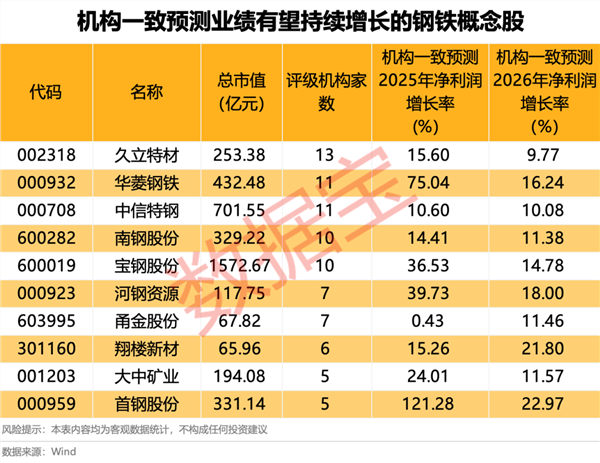
这一需求有望温和反弹,业绩持续增长股仅10只
Zheng Quan Shi Bao Wang· 2025-10-15 01:03
Group 1 - The China Securities Regulatory Commission has initiated an investigation into Ru Yi Group (002193) for suspected violations of information disclosure, but the company states that its operations remain normal and the investigation will not have a significant impact [1] - Ru Yi Group reported a revenue of approximately 154 million yuan for the first half of 2025, a year-on-year decrease of 32.25%, and a net loss of about 95.73 million yuan [1] - The global steel demand is expected to rebound moderately in 2026, with a projected increase of 1.3% to 1.772 billion tons, driven by trends in various regions including a slowdown in the decline of demand in China and strong growth in developing economies [2] Group 2 - The average stock price of steel concept stocks has increased by 29.62% this year, outperforming the Shanghai Composite Index, with Wu Jin Bu Niu leading with a 103.9% increase [3] - Ten steel concept stocks have received institutional research, with Linggang Co. actively expanding its international market presence and aiming for certification in various countries [3] - Shandong Steel is expected to turn a profit with a projected net profit of approximately 140 million yuan, benefiting from cost control measures and improved procurement strategies [4] Group 3 - Ten steel concept stocks are predicted to see continued growth in performance, with at least five institutions providing ratings for these stocks [4] - Guangdong Mingzhu is expected to report a net profit of approximately 215 million to 263 million yuan, representing a year-on-year increase of 858.45% to 1071.44% [3]


冠通期货早盘速递-20250923
Guan Tong Qi Huo· 2025-09-23 01:11
Group 1: Hot News - As of the end of June this year, China's banking industry's total assets are nearly 470 trillion yuan, ranking first in the world; the stock and bond market sizes rank second in the world; and the foreign exchange reserve scale has ranked first in the world for 20 consecutive years. The total assets of the banking and insurance industries currently exceed 500 trillion yuan, with an average annual growth of 9% in the past five years; trust, wealth management, and insurance asset management institutions manage nearly 100 trillion yuan in assets; "white - list" project loans exceed 7 trillion yuan, supporting the construction and delivery of nearly 20 million housing units [2] - The People's Bank of China kept the one - year and five - year loan prime rates (LPR) unchanged at 3% and 3.5% respectively [2] - The cobalt export ban in the Democratic Republic of the Congo, which has been in effect since February this year, will end on October 15, and a new export quota policy will be implemented. The annual export quota ceiling is set at 96,600 tons in 2026 and 2027 [2] - The Ministry of Industry and Information Technology and other departments jointly issued the "Steel Industry Steady Growth Work Plan (2025 - 2026)", setting the average annual growth target of the steel industry's added value at about 4% in the next two years. By the end of 2025, more than 80% of steel production capacity should complete ultra - low emission transformation [3] - As of the week ending September 21, the good - to - excellent rate of US soybeans was 61%, lower than the market expectation of 62%, the previous week was 63%, and the same period last year was 64%. The soybean harvest rate was 9%, lower than the market expectation of 12%, the previous week was 5%, and the same period last year was 12% [3] Group 2: Key Focus and Night - Session Performance - Key commodities to focus on are urea, Shanghai copper, silver, crude oil, and PVC [4] - Night - session performance by sectors: Non - metallic building materials 2.58%, precious metals 31.73%, oilseeds and oils 10.70%, soft commodities 2.46%, non - ferrous metals 19.14%, coal, coke, steel, and minerals 14.23%, energy 2.93%, chemicals 11.93%, grains 1.05%, and agricultural and sideline products 3.25% [4] Group 3: Large - Class Asset Performance - Equity: The Shanghai Composite Index rose 0.22%, the CSI 300 rose 0.46%, the SSE 50 rose 0.43%, the CSI 500 rose 0.76%, the S&P 500 rose 0.44%, the Hang Seng Index fell 0.76%, the German DAX fell 0.48%, the Nikkei 225 rose 0.99%, and the UK FTSE 100 rose 0.11% [7] - Fixed - income: The 10 - year treasury bond futures rose 0.20%, the 5 - year treasury bond futures rose 0.13%, and the 2 - year treasury bond futures rose 0.04% [7] - Commodities: The CRB commodity index fell 0.41%, WTI crude oil fell 0.05%, London spot gold rose 1.66%, LME copper rose 0.13%, and the Wind commodity index rose 3.06% [7] - Others: The US dollar index fell 0.35%, and the CBOE volatility index was unchanged [7]
钢铁行业未来两年目标明确:严禁新增产能
Yang Shi Xin Wen Ke Hu Duan· 2025-09-22 07:02
Core Viewpoint - The Ministry of Industry and Information Technology, along with other departments, has issued the "Steel Industry Growth Stabilization Work Plan (2025-2026)", setting an average annual growth target of around 4% for the steel industry's added value over the next two years [1] Group 1: Policy Objectives - The plan emphasizes "stabilizing growth and preventing internal competition" as its core focus, guiding structural adjustments and high-quality development in China's steel industry [1] - It proposes precise control of capacity and output, promotes graded and classified management of steel enterprises, and prohibits the addition of new capacity [1] Group 2: Implementation Strategies - The plan aims to guide resource allocation towards competitive enterprises, facilitating a survival of the fittest approach through output regulation to achieve dynamic supply-demand balance [1] - Experts highlight that "equipment upgrading" and "low-carbon transition" will be the two core competitive issues in the future [1] Group 3: Environmental Standards - Steel enterprises are required to accelerate the elimination of outdated equipment, particularly old blast furnaces and converters that are restrictive in production [1] - The plan specifies that by the end of 2025, over 80% of steel production capacity must complete ultra-low emission transformations [1]
五部门:2025年底前全面完成超低排放改造目标任务
Di Yi Cai Jing· 2025-09-22 02:53
Core Viewpoint - The Ministry of Industry and Information Technology, along with four other departments, has issued the "Steel Industry Growth Stabilization Work Plan (2025-2026)", emphasizing the need for low-emission transformation and energy efficiency improvements in the steel sector [1] Group 1: Emission Reduction and Energy Efficiency - The plan aims to fully complete the ultra-low emission transformation targets by the end of 2025 [1] - Support will be provided for steel enterprises to implement energy efficiency enhancement modifications and promote the substitution of clean energy [1] - The industry will conduct research on collaborative pollution reduction and carbon reduction technology pathways [1] Group 2: Low-Carbon Technologies - The plan supports research and development of low-carbon common technologies such as hydrogen metallurgy [1] - It emphasizes accelerating the pilot verification and industrialization of integrated processes and equipment for green electricity, green hydrogen, and pure hydrogen metallurgy [1] Group 3: Digitalization and Carbon Management - The industry is encouraged to establish digital carbon management centers [1] - There will be a focus on developing a carbon footprint accounting standard system for steel products and enhancing carbon measurement management [1] - The plan aims to improve the quality of carbon accounting data and ensure proper quota trading and settlement after inclusion in the national carbon emission trading market [1]
利好预期发酵,钢矿震荡走高:钢材&铁矿石日报-20250919
Bao Cheng Qi Huo· 2025-09-19 10:41
Report Industry Investment Rating No relevant content provided. Core Viewpoints of the Report - The main contract price of rebar fluctuated higher with a daily increase of 0.73%, and the volume and open interest contracted. The supply - demand pattern has improved, but downstream demand concerns remain. With cost increases and policy expectations as positives, steel prices are expected to continue to fluctuate. Attention should be paid to demand performance [4]. - The main contract price of hot - rolled coil fluctuated with a daily increase of 0.18%, volume decreased and open interest increased. Demand resilience is weakening, supply remains high, the supply - demand pattern has weakened, inventory has increased again, and coil prices are under pressure. With cost increases and production restrictions as positives, the subsequent trend is expected to be weakly fluctuating. Attention should be paid to demand performance [4]. - The main contract price of iron ore was strongly fluctuating with a daily increase of 0.81%, and the volume and open interest expanded. Pre - holiday ore demand is okay, supporting high - level prices, but demand resilience will weaken, supply is rising, and the fundamentals are expected to weaken. High - valued ore prices have limited upward momentum, and the trend is expected to continue high - level fluctuations. Be wary of intensified industrial contradictions [4]. Summary by Relevant Catalogs Industry Dynamics - The Chinese Ministry of Commerce hopes that the EU will not weaponize tariffs, eliminate market barriers, and encourage fair competition, and jointly create a fair market environment for the industry [6]. - Shanghai has optimized and adjusted policies on the pilot personal housing property tax. Eligible homebuyers for the first - set home are exempt from property tax [7]. - Ningxia has released a draft plan for air pollution prevention and control in the winter - spring of 2025 - 2026, requiring 3 steel enterprises to complete key project renovations by the end of December 2025 [8]. Spot Market - Rebar: Shanghai price is 3,230, Tianjin price is 3,210, and the national average is 3,298 [9]. - Hot - rolled coil: Shanghai price is 3,420, Tianjin price is 3,320, and the national average is 3,444 [9]. - Other: The price of 61.5% PB powder at Shandong ports is 799, and the price of Tangshan iron concentrate powder is 798 [9]. Futures Market | Variety | Closing Price | Increase/Decrease (%) | Volume | Open Interest | | --- | --- | --- | --- | --- | | Rebar | 3,172 | 0.73 | 1,250,591 | 1,970,510 | | Hot - rolled coil | 3,374 | 0.18 | 459,672 | 1,413,153 | | Iron ore | 807.5 | 0.81 | 379,811 | 574,521 | [13] Related Charts - Include charts on steel and iron ore inventories (rebar, hot - rolled coil, national 45 - port iron ore, etc.), production conditions (247 - sample steel mill blast furnace start - up rate, etc.) [15][20][30]. 后市研判 - Rebar: Supply has decreased due to losses, demand has improved but is still at a low level in recent years. With cost and policy as positives, steel prices are expected to fluctuate. Attention should be paid to demand [39]. - Hot - rolled coil: Supply has increased, demand has weakened, and the supply - demand pattern has deteriorated. With cost and production restrictions as positives, the price is expected to be weakly fluctuating. Attention should be paid to demand [39]. - Iron ore: Demand is okay before the holiday but will weaken, supply is rising, and the fundamentals are expected to weaken. High - valued ore prices are expected to fluctuate at a high level. Be wary of contradictions [40].