
软硬一体

Search documents
讯飞星火X1.5发布,讯飞办公本X5焕新升级:软硬一体让AI更懂你
Xin Lang Cai Jing· 2025-11-10 06:39
Core Insights - The release of iFlytek's upgraded AI model, Spark X1.5, marks a significant transition in the AI industry from potential benefits to actual realization of those benefits, highlighting four key aspects: autonomy, integrated hardware and software, industry depth, and personalization [1] Group 1: AI Model and Technology - Spark X1.5 utilizes the MoE architecture, achieving a revolutionary 100% improvement in inference efficiency compared to its predecessor, Spark X1, and aligns its capabilities with international mainstream models in six areas: language understanding, text generation, knowledge Q&A, logical reasoning, mathematics, and coding [3] - The integration of hardware and software is emphasized as crucial for AI's real-world application, with iFlytek introducing various solutions such as AI microphone arrays, speaker arrays, and camera arrays, enabling AI to understand communication and expression better [3] Group 2: Product Features and Innovations - The iFlytek Office Book X5 features a unique 4+4 microphone array with 360° sound source localization and intelligent noise reduction, outperforming the iPhone 17 Pro in recognizing and transcribing speech in high-decibel environments at varying distances [4] - The X5 leverages Spark X1.5's capabilities to automatically distinguish speakers, identify meeting topics, extract key points, and generate structured AI summaries and to-do lists, creating an intelligent feedback loop from understanding to action [4] Group 3: Strategic Vision and Market Expansion - The X5 is the world's first ink screen office terminal equipped with a local large model, featuring an 8-core CPU and 9 TOPS NPU, achieving over 50% performance improvement and ensuring privacy with all computations and storage occurring locally [6] - iFlytek's global outreach is exemplified by products like AINOTE2, which have gained traction in markets such as the US, Japan, South Korea, Singapore, and the Middle East, setting sales records on crowdfunding platforms [7] Group 4: Future Aspirations - iFlytek aims to transform AI from a mere assistant to a partner that understands users deeply, enhancing efficiency and human connection in the workplace [9] - The company's mission is to leverage the Spark engine to collaborate with global users and developers, ensuring that each evolution of AI contributes to a more efficient and liberated work and creative environment for humanity [9]


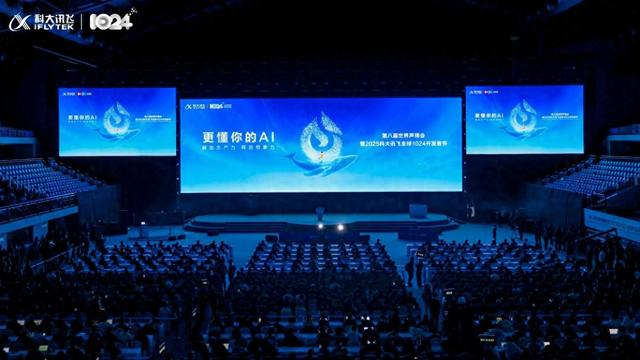
「AI新世代」国内生成式AI用户规模超5亿,科大讯飞董事长刘庆峰谈如何兑现AI红利
Hua Xia Shi Bao· 2025-11-07 13:12
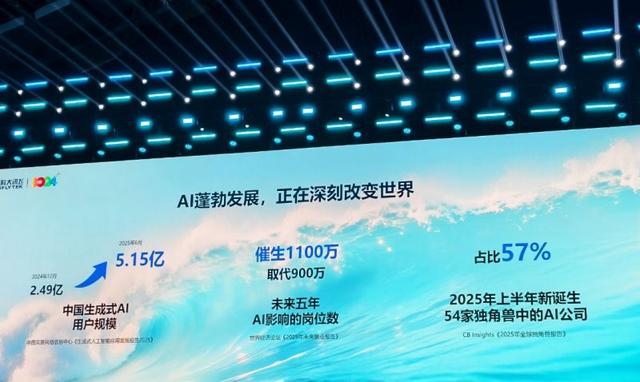
Core Insights - The core viewpoint of the articles emphasizes the importance of converting growth in the AI model market into tangible commercial benefits for companies in the industry, with a focus on four key areas: self-control, integrated hardware and software, industry depth, and personalization [2][3]. Group 1: AI Market Growth and Company Performance - The generative AI user base in China is projected to reach 515 million by June 2025, up from 249 million in December last year, indicating rapid growth in the market [3]. - iFlytek ranks first in the industry for the number and amount of bids won for large model projects in the first three quarters of this year, with a third-quarter bid amount of 545 million yuan, which is 1.88 times that of the combined total of the second to fifth places [7]. - iFlytek's third-quarter revenue reached 6.078 billion yuan, a year-on-year increase of 10.02%, while net profit attributable to shareholders was 172 million yuan, up 202.4% year-on-year [7]. Group 2: Key Strategies for AI Dividend Realization - The first key point for realizing AI dividends is "self-control," with iFlytek launching the fully self-controlled deep reasoning model, iFlytek Spark X1.5, which achieves 95% of the performance of GPT-5 with half the model parameters [3][4]. - The second key point is the integrated hardware and software product strategy, which differentiates iFlytek from other large model manufacturers, as seen in the launch of solutions that combine AI with various hardware arrays [5][6]. - The third key point is industry depth, showcasing AI applications in education, healthcare, automotive, office, and emotional companionship [6]. Group 3: Financial Challenges and Management - iFlytek's financial reports exhibit significant seasonal characteristics, with losses in the first half of the year and profits in the second half, attributed to the nature of government and institutional projects [8]. - High accounts receivable, reaching 15.913 billion yuan by the end of the third quarter, poses cash flow pressure on the company [8]. - Recommendations for iFlytek include strengthening project lifecycle management and optimizing management processes to control costs and improve delivery efficiency [8].
全国产算力托底、告别 AI 内卷,科大讯飞如何让每个人站在 AI 肩膀上?
AI前线· 2025-11-07 06:41
Core Viewpoint - The rapid development of AI has created significant opportunities and challenges, with a notable increase in AI user applications in China, reaching 515 million by mid-2023, up from 249 million at the end of 2022 [2][3]. Group 1: AI Development and Impact - AI is projected to replace 9 million jobs while creating 11 million new ones over the next five years, highlighting the transformative impact of AI on the job market [2]. - In the bidding market, leading companies have adopted AI solutions, such as iFlytek's "Bidding Assistant," which processed approximately 180,000 projects with a 97% accuracy rate, saving direct costs of 170 million yuan [3]. - iFlytek's AI model, "Xinghuo Industry Analyst," achieved a score of 92 in a national exam, surpassing 85% of human candidates, indicating the growing capabilities of AI in specialized fields [3]. Group 2: AI Integration Challenges - The integration of AI into robotics and real-world applications faces challenges, particularly in achieving natural interaction and deep understanding of industry-specific contexts [4]. - iFlytek emphasizes the need for AI to transition from virtual capabilities to real-world applications, requiring advancements in AI account systems and industry comprehension [4]. Group 3: Core Breakthrough Directions - iFlytek identifies four key areas for realizing AI industry benefits: autonomy and control, integration of software and hardware, industry understanding, and personalized adaptation [5]. Group 4: Domestic Computing Power and Model Development - iFlytek has initiated the construction of China's first domestic computing power platform, achieving an adaptation rate of 84% and increasing the domestic technology replacement rate from 30% to 93% [7][9]. - The newly released iFlytek Xinghuo X1.5 model features a total parameter count of 293 billion and is designed for deployment on a single standard server, achieving performance comparable to international models like GPT-5 [10]. Group 5: Sector-Specific AI Applications - In healthcare, iFlytek's medical model has reached a level equivalent to senior hospital physicians, improving diagnostic accuracy from 87% to 96% and halving medical record writing time [12]. - In education, iFlytek's intelligent grading technology has advanced to analyze student errors with a precision surpassing that of ordinary teachers, creating a seamless connection between detailed grading and personalized teaching [13]. Group 6: Hardware and Real-World Integration - iFlytek has developed hardware solutions that enhance AI's performance in noisy environments, achieving recognition rates of 97.1% in complex settings [15][17]. - The integration of AI with hardware aims to create natural human-computer interactions, making AI more accessible in everyday life [14]. Group 7: Personalized AI Experience - iFlytek's AI aims to provide personalized experiences by understanding individual user needs and preferences, including the ability to replicate voices and create customized content [19][25]. - The launch of the "AI Star Friend" emphasizes the goal of creating an AI that serves as a growth partner, capable of understanding and adapting to user preferences [25]. Group 8: Developer Engagement and Community - The 2025 iFlytek AI Developer Competition attracted 36,898 teams from 17 countries, showcasing the growing interest and participation in AI development [22]. - As of October 2023, the number of developers on iFlytek's open platform reached 9.68 million, with a significant increase in developers focused on large models [22].

千里智驾的软硬一体
自动驾驶之心· 2025-10-17 00:03
Core Insights - The article discusses the collaboration between Qianli Zhijia and Aixin Yuanzhi in the autonomous driving chip sector, highlighting the importance of integrating hardware and software for advanced driving algorithms [7][9] - It emphasizes the shift from L2+ to L3 and Robotaxi as the main battleground for autonomous driving companies, with L3 and Robotaxi expected to unlock significant commercial value [8] - The need for higher computing power in the next generation of autonomous driving chips is noted, with expectations of reaching several thousand TOPS, which will increase costs and necessitate cost-reduction strategies [8] Group 1 - Qianli Zhijia is merging its algorithm capabilities with Aixin Yuanzhi's chip technology to enhance its autonomous driving solutions [7] - The collaboration is seen as crucial for Qianli Zhijia to achieve its ambitious technical goals, which include L2+, L3, and Robotaxi [7] - The article mentions that major players in the industry, including Tesla and domestic new forces, are preparing for a significant hardware and software iteration [7][8] Group 2 - L2+ is described as a preliminary stage, while L3 and Robotaxi represent the future of autonomous driving, with the potential for companies to achieve valuations in the billions [8] - The article suggests that the next generation of chips will require tighter collaboration between algorithms and chip manufacturers, moving away from reliance on generic chips [8][9] - Aixin Yuanzhi has established a foothold in the mid-to-low tier autonomous driving market and stands to gain significantly from this partnership with Qianli Zhijia [9]

Altman与iPhone之父的神秘AI设备陷入瓶颈:算力、人格设计成最大难题
Hua Er Jie Jian Wen· 2025-10-05 11:14
Core Insights - OpenAI CEO Sam Altman and former Apple designer Jony Ive are attempting to create a "screenless AI device" aimed at transforming human-computer interaction, but the project is currently facing multiple challenges [1][3] - The device is intended to be a portable, always-on AI companion that can perceive the world through cameras and microphones, aiming to surpass existing voice assistants like Echo and Siri [2][3] Technical Challenges - A significant hurdle for the project is the lack of computational power, as OpenAI struggles to meet the demands of ChatGPT, let alone support a consumer-grade AI device that operates continuously [3][5] - Another challenge is defining the AI's "personality," balancing between being friendly and not overly intrusive, which has proven difficult for previous attempts at similar devices [3][4] Market Context - Previous attempts to create AI companion devices, such as Humane's AI pin and the Friend AI pendant, have faced criticism for performance issues and awkward interactions, leading to market skepticism [4][5] - Despite these challenges, OpenAI's valuation has soared to $500 billion, surpassing Elon Musk's SpaceX, indicating strong investor confidence in its potential to expand beyond software into a complete AI ecosystem [5] Strategic Moves - OpenAI has acquired a subsidiary of Jony Ive's design firm and is actively recruiting hardware talent from Apple and Meta, signaling a commitment to a "soft-hard integration" approach similar to Apple's strategy [5]
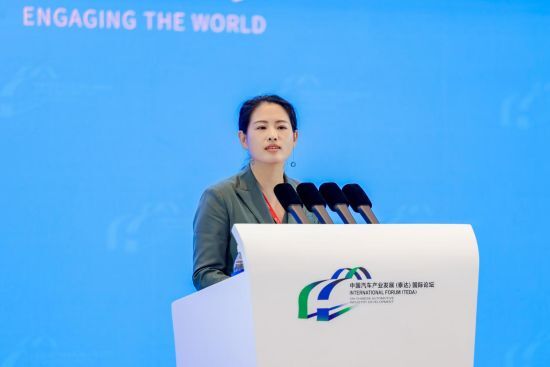
2025泰达汽车论坛|吴会肖:“十五五”是中国汽车品牌成为世界品牌的关键期
Zhong Guo Jing Ji Wang· 2025-09-15 02:44
Group 1 - The core viewpoint emphasizes that the "14th Five-Year Plan" period is crucial for Chinese automotive brands to become global brands, requiring a comprehensive layout in R&D, production, supply chain, and brand building [1][3] - The Chinese automotive industry has transitioned from policy-driven to market-driven, achieving a historic leap from following to leading in certain areas, with new energy vehicle penetration exceeding 50% [3] - There are concerns about resource misallocation and increased competition within the industry, which negatively impacts the credibility of the Chinese automotive sector [3] Group 2 - The next five years are expected to see the industry enter a phase of steady improvement, focusing on the essence of vehicle manufacturing and long-term systemic capability enhancement [3][4] - Future innovation will shift from single-point technological breakthroughs to integrated system innovations, with a focus on the deep integration of energy, intelligence, and connectivity technologies [3][4] - The automotive industry has inherent globalization traits, and enhancing international competitiveness requires global resource allocation, brand management, and user service [4] Group 3 - The company advocates for an ecological outbound strategy, focusing on localization in technology, service, management, and cross-cultural branding to elevate from market globalization to corporate globalization [4] - Future competition in the global automotive industry will hinge on technological innovation, industrial collaboration, and comprehensive national strength [4] - The call for collaboration among industry stakeholders to share foundational R&D results and establish a symbiotic ecosystem for reasonable profit distribution across the entire industry chain [4]

软通动力:2025年上半年营收稳步攀升,全栈智能战略点亮发展新局
Zheng Quan Shi Bao Wang· 2025-08-28 02:08
Core Viewpoint - The company has demonstrated significant growth in revenue and profit, driven by its integrated hardware and software strategy, and has achieved notable industry recognition and project wins. Group 1: Financial Performance - The company reported a total revenue of 15.781 billion yuan for the first half of 2025, representing a year-on-year increase of 25.99% [1] - The net profit attributable to the parent company showed improvement, with a second-quarter revenue of 8.770 billion yuan, up 23.93% year-on-year and 25.10% quarter-on-quarter [1] - The operating cash flow for the second quarter reached 1.358 billion yuan, reflecting a quarter-on-quarter increase of 173.92% [1] Group 2: Business Strategy and Achievements - The company is implementing a "Four Modernizations" strategy to enhance its full-stack intelligent layout, focusing on software and digital technology services [2] - The company has launched over 20 new products in the computing sector and has established itself as a leader in the domestic gaming PC market [2] - The company has successfully secured major projects, including a 4.27 billion yuan AI equipment procurement for China Mobile and a large-scale procurement for China Unicom [3] Group 3: International Expansion - The company has initiated its "Overseas 2.0" strategy with the launch of the "iSoftStone Digital" brand and the establishment of a global delivery center in Malaysia [3] - Strategic partnerships have been formed with local partners in the Middle East, resulting in significant project wins, including a contract for 100,000 laptops for the Pakistani government [3] - The company is focusing on expanding its services across more than ten key industries, showcasing its commitment to global technology enterprise development [3]
地平线HSD量产在即:国内最像特斯拉FSD的辅助驾驶系统,定义行业新高度
IPO早知道· 2025-08-25 03:39
Core Viewpoint - Horizon has launched its most significant upgrade of the high-performance urban auxiliary driving product HSD, which is recognized as the "most Tesla-like FSD system" in China, enhancing safety, efficiency, and comfort in driving [3][5]. Group 1: Product Development and Features - HSD is built on the Journey 6P platform, achieving ultra-low latency from "photon input to trajectory output" and introducing reinforcement learning for maximizing model potential [8]. - The product covers various driving scenarios, including urban areas, highways, rural roads, and parking lots, and can handle complex driving tasks without relying on memory mapping [3][5]. - Horizon has established cooperation intentions with nearly 10 global automotive brands, with the first mass production set to be launched on Chery's Exeed Star Era E05 [3][5]. Group 2: Market Trends and Growth - The high-level auxiliary driving technology is transitioning from validation to large-scale adoption, with 902,200 new cars equipped with urban NOA delivered in China in the first five months of the year, marking a 152.5% year-on-year increase [5]. - Horizon has achieved over 8 million sets of front-mounted mass production shipments and over 200 mass-produced vehicle models as of the end of Q1 this year [16]. Group 3: Strategic Vision and Competitive Edge - The founder and CEO of Horizon emphasizes the importance of continuous technological iteration and the launch of high-performance products to maintain market leadership [16]. - Horizon's strategy of "soft and hard integration" has allowed it to achieve over 1000 times improvement in computing performance over the past decade, supporting the mass production of over 10 computing solutions [19][21]. - The company aims to become a leading player in the high-level auxiliary driving market, leveraging its unique position as a "full-stack soft and hard technology enterprise" with extensive practical experience [23].

一颗芯片,颠覆智驾江湖
半导体芯闻· 2025-08-22 11:28
Core Viewpoint - The emergence of Momenta's self-developed driving chip marks a significant shift in the domestic intelligent driving industry, transitioning from a software-only company to a full-stack supplier, posing new competitive challenges to existing players in the market [1][2][20]. Company Overview - Momenta, established in 2016, focuses on high-performance intelligent driving solutions, targeting both L2 and L4 markets, and has partnerships with major global automakers, including SAIC, BYD, and Toyota [2][3]. - The company holds the largest market share in urban NOA technology at 60.1%, with cumulative sales of 114,000 vehicles equipped with its technology [3][19]. Self-Developed Chip Significance - Momenta's self-developed chip is positioned for the mid-range market, offering cost advantages and compatibility with existing products, which enhances its competitive edge [6][19]. - The strategy of "downward integration" is expected to create stronger competitive barriers and higher value capture capabilities for the company [6][10]. Impact on Competitors - The introduction of Momenta's chip poses significant challenges to NVIDIA and Qualcomm, as it allows automakers to transition smoothly from their solutions, increasing competitive pressure on these established players [8][10]. - Domestic chip manufacturers like Horizon Robotics and Black Sesame are also facing heightened competition, as Momenta's software expertise may overshadow their advantages [10][11]. Implications for Automakers - Automakers are reevaluating the necessity and cost-effectiveness of in-house chip development in light of Momenta's competitive offerings, particularly for resource-constrained new entrants [12][14]. - The shift towards Momenta's integrated solutions may lead to a reassessment of self-research strategies among automakers, balancing differentiation with cost advantages [15][21]. Strategic Challenges Ahead - Momenta faces challenges in achieving large-scale production and meeting stringent automotive safety standards, which are critical for its long-term success [20][21]. - The competitive landscape is expected to intensify as established players like NVIDIA and Qualcomm may respond with price cuts or enhanced technology to counter Momenta's market entry [20][21].



硬件传闻叠出 字节的AI版图怎么样了
3 6 Ke· 2025-08-22 06:00
Core Viewpoint - ByteDance is reportedly planning to launch an AI phone, tentatively named "Doubao Phone," by the end of this year or early next year, with ZTE as the ODM manufacturer for production. However, ByteDance has denied any plans to release its own phone products, focusing instead on exploring AI capabilities for various hardware manufacturers [1][3]. Group 1: AI Hardware Developments - ByteDance has previously ventured into hardware, launching educational products like the Dali Smart Learning Lamp in 2020, but faced regulatory challenges leading to a reduction in its education business [3]. - In 2021, ByteDance acquired Pico, marking a significant step in its hardware strategy. Pico expanded its team and released new products, achieving a leading position in the domestic VR market, but has since faced business contraction and staff reductions starting in 2023 [3][4]. - ByteDance has made recent acquisitions, including the headphone brand Oladance, and is reportedly developing lightweight mixed reality (XR) glasses to compete with similar products from Meta [3][4]. Group 2: AI Ecosystem and Strategy - ByteDance has established a comprehensive layout in the AI hardware sector, integrating various devices such as phones, headphones, and glasses to create a closed-loop experience that combines software and hardware [4]. - The company has made significant advancements in AI models, recently open-sourcing the M3-Agent framework, which outperforms models like GPT-4o in various tests [4]. - ByteDance's AI applications, including products like Gauth and Cici, have rapidly gained traction both domestically and internationally, with Gauth reportedly serving educational resources to 300 million users globally [4]. Group 3: Future Directions - ByteDance appears to be moving towards a "soft and hard integration" ecosystem, similar to international competitors like Apple and Meta, as a strategic choice and a necessary response to competition [5].