通用智能体

Search documents
BUTTONS SOLEMATE发布 特斯联构建新“智能体生态”
Zhong Zheng Wang· 2025-10-19 07:03
Group 1 - The core viewpoint of the articles highlights the launch of the BUTTONS SOLEMATE, an intelligent audio-visual robot powered by the HALI universal intelligent agent developed by Teslian, marking a significant upgrade from smart products to immersive intelligent experiences [1] - HALI has evolved from a highly anthropomorphized intelligent agent to a "life collaborator" with spatial cognition and physical interaction capabilities, enabling it to operate as a general agent in the physical world [1] - The BUTTONS SOLEMATE can perform integrated functions such as spatial obstacle navigation, visual target recognition, and intelligent strategy generation, thanks to the capabilities of Teslian's cloud-based large model [1] Group 2 - To address the challenges of heterogeneous chip fusion computing, Teslian's AIoT intelligent computing cloud platform has established a unified abstraction layer based on a multi-architecture chip operator library, significantly enhancing inference and training efficiency [2] - The global president and chief AI officer of Teslian emphasized that specialized AI agents are limited to their specific domains and lack the ability for cross-domain transfer learning or interaction with the physical world, which is essential for the evolution of general intelligence [2] - A true general intelligent agent must possess the complete capability loop of perception, reasoning, and action in a physical environment, understanding spatial relationships and physical laws to effectively execute tasks in the real world [2]
微软全面升级Windows 11,语音成为核心交互方式
3 6 Ke· 2025-10-17 09:39
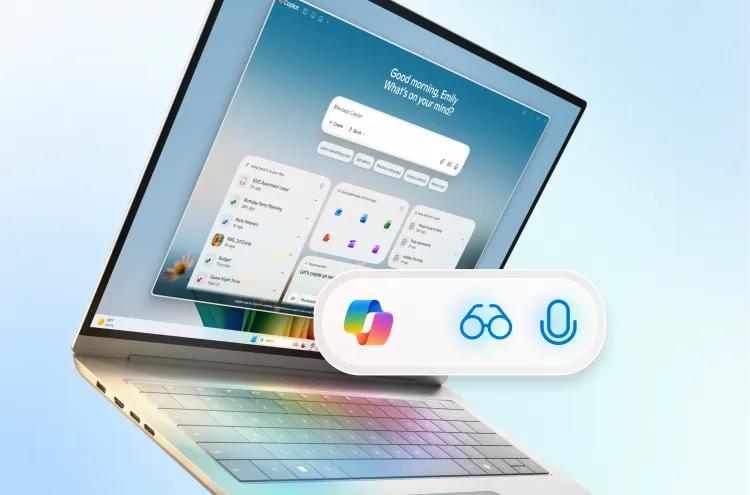
Core Insights - Microsoft aims to transform every Windows 11 PC into a "true AI PC" by enhancing the Copilot feature, focusing on creating a more natural human-computer interaction and smarter AI performance [2] Group 1: Voice Interaction - Microsoft is promoting voice as the core interaction method for PCs, allowing users to activate AI by simply saying "Hey, Copilot" without needing to click icons [3] - The design aims to eliminate barriers to using voice assistants, with internal data showing that voice interactions with Copilot occur twice as frequently as text inputs [3][4] Group 2: Visual Understanding - The newly launched Copilot Vision enables AI to "see" and understand screen content, providing contextual assistance across applications [6] - Unlike the previous Recall feature, which faced privacy concerns, Vision has a more cautious privacy approach, requiring user authorization to activate screen sharing [6][9] - Vision can analyze screen content in real-time, offering step-by-step guidance and troubleshooting assistance [6][7] Group 3: Intelligent Agent Evolution - Copilot Actions allows AI to perform multi-step tasks directly on the user's PC, marking a shift from a passive assistant to an active intelligent agent [10] - Users can describe tasks in natural language, and the AI will interact with desktop and web applications to complete them [10][12] Group 4: Gaming Integration - Microsoft is exploring AI's role in enhancing entertainment experiences, integrating AI with portable gaming devices like ROG Xbox Ally [13] - The Gaming Copilot can provide real-time game strategies and tips without interrupting gameplay [15] Group 5: Overall Vision - Microsoft envisions its AI PC as a trusted assistant and partner, aiming for users to experience a PC that is more than just a tool [16]


外滩大会一线投资人热议Agent投资路径:通用与垂类智能体的路径权衡
Huan Qiu Wang· 2025-09-13 02:43
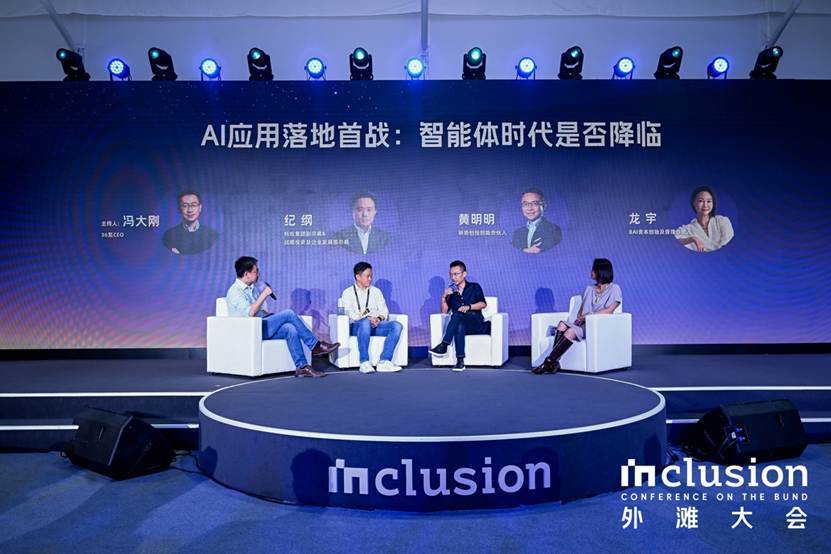
Group 1 - The core viewpoint of the articles revolves around the rapid development and potential of AI agents in various sectors such as finance, healthcare, and education, with a focus on their transition from digital to physical realms [1][3][4] - The expectation for AI agents has significantly surpassed previous generations, with the possibility of AI exceeding human intelligence, particularly in high-tolerance scenarios like emotional companionship [3][4] - China is leading in AI applications, with many of the world's first AI agents emerging from Chinese startups, attributed to the country's strong product management capabilities and rapid technological advancements [3][4] Group 2 - The current landscape of AI agents is characterized by a lack of established valuations and early-stage commercialization, with two main categories: general-purpose and vertical-specific agents, each with distinct risk and return profiles [5][7] - Investment strategies are diversifying, with a focus on vertical AI agents that have large market potential and strong willingness to pay, while also considering foundational infrastructure like computing power [7][8] - A "dumbbell strategy" is suggested for investments, balancing between high-risk general-purpose applications and more stable, workflow-integrated business-to-business (B2B) applications to mitigate technological iteration risks [7][8]
姚顺雨离职OpenAI,开启下半场
量子位· 2025-09-12 00:59
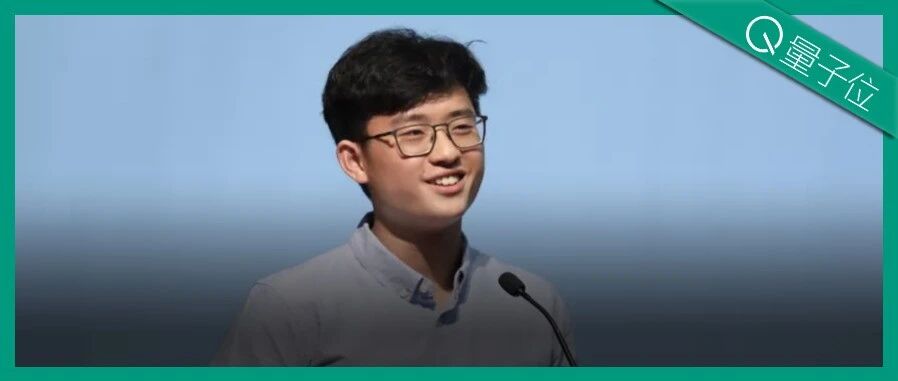
Core Viewpoint - The article discusses the career transition of Shunyu Yao, a prominent researcher from OpenAI, as he embarks on a new phase in the AI field, focusing on personal AI and the evolving landscape of AI development, which is now entering its "second half" [2][47]. Group 1: Background and Achievements - Shunyu Yao, a 29-year-old researcher, has an impressive academic background, including graduating from Tsinghua University and obtaining a PhD from Princeton, where he focused on natural language processing and reinforcement learning [4][22]. - His notable contributions to AI include the development of frameworks like Tree of Thoughts, SWE-bench, and ReAct, which enhance the reasoning and decision-making capabilities of language models [6][36]. Group 2: Career Transition - Yao's departure from OpenAI has been confirmed through various channels, and he is rumored to be considering entrepreneurship or joining another tech giant [3][51]. - His recent work emphasizes the shift in AI development from model-centric approaches to defining meaningful tasks and evaluating AI systems' performance in real-world scenarios [47][48]. Group 3: Philosophical Insights - Yao's approach to research is characterized by a cross-disciplinary perspective, drawing inspiration from various fields, which he believes is essential for innovation in AI [9][20]. - He advocates for the importance of language as a medium for reasoning and decision-making in AI, highlighting its role in enabling agents to generalize across different contexts [28][30].
“专家团”齐上阵,全球首个全端通用智能体发布
Bei Jing Ri Bao Ke Hu Duan· 2025-08-19 00:45
Core Insights - The article discusses the launch of GenFlow2.0 by Baidu Wenku and Baidu Wangpan, which is the world's first all-end universal intelligent agent capable of completing multiple complex tasks simultaneously [1][2] - GenFlow2.0 can operate over 100 expert intelligent agents at once, completing more than five complex tasks in just three minutes, with the ability for users to intervene and track memory throughout the process [1][2] Group 1 - GenFlow2.0 addresses issues from its predecessor, GenFlow1.0, such as difficulty in agent description, long wait times, poor delivery, and lack of editability [1] - The system can autonomously understand user intent and switch between different collaboration modes, allowing for real-time intervention and modifications based on user needs [1][2] Group 2 - GenFlow2.0 enhances personalization by recording and utilizing user history, including communication records and file uploads, to provide tailored content results [2] - The multi-agent collaboration trend is becoming a competitive focus among major tech companies, with challenges in task allocation, parameter transfer, and context management being critical for effective teamwork [2]

面对AI业务的困境,苹果选择了吃“回头草”
3 6 Ke· 2025-08-07 11:51
Core Viewpoint - Apple is reportedly reviving its interest in AI chatbots, specifically developing a new internal team called "Answers, Knowledge and Information" (AKI) to create a ChatGPT-like experience, despite previous denials about chatbot development [1][3]. Group 1: AI Development and Team Structure - The AKI team is led by former Siri development head Robbie Walker, who has previously criticized the delays in personalized Siri features [3]. - Apple is now potentially adopting an internal competition model for AI development, with both personalized Siri and AKI being developed simultaneously [3]. - The company is under pressure to catch up in the AI field, as it has been perceived as lagging behind competitors [3]. Group 2: Financial Performance and Market Reaction - Since the beginning of 2025, Apple's stock price has dropped approximately 16%, making it one of the worst performers among the "Magnificent Seven" tech stocks [5]. - Despite the stock decline, Apple's latest financial report showed that core business lines, including iPhone and Mac, exceeded expectations [5][6]. - Analysts believe that Apple's struggles in the AI race have contributed to its stock price decline [6]. Group 3: Talent Retention and Challenges - The departure of key AI researchers, including AFM team leader Pang Ruoming, who left for Meta with a reported $200 million deal, has raised concerns about Apple's AI capabilities [6][8]. - The loss of critical personnel poses significant challenges for Apple's foundational AI models, which are essential for its AI initiatives [8]. - The complexity of developing a personalized Siri, which aims to be a general intelligence agent, has led to delays, while the development of an AI chatbot like "Apple GPT" is seen as less challenging [8][12]. Group 4: Market Position and Future Outlook - The AI chatbot's development is viewed as a necessary response to competitors' advancements in AI, as Apple risks disappointing its loyal customer base if it fails to deliver new innovations [12]. - The AKI team is perceived as a stopgap measure to address the growing demand for AI solutions amid increasing competition in the sector [12].


沙龙| 未可知 x 杭州滨江: "科学家+企业家"AI+应用发展沙龙, 共话AI产业新未来
未可知人工智能研究院· 2025-08-05 03:02
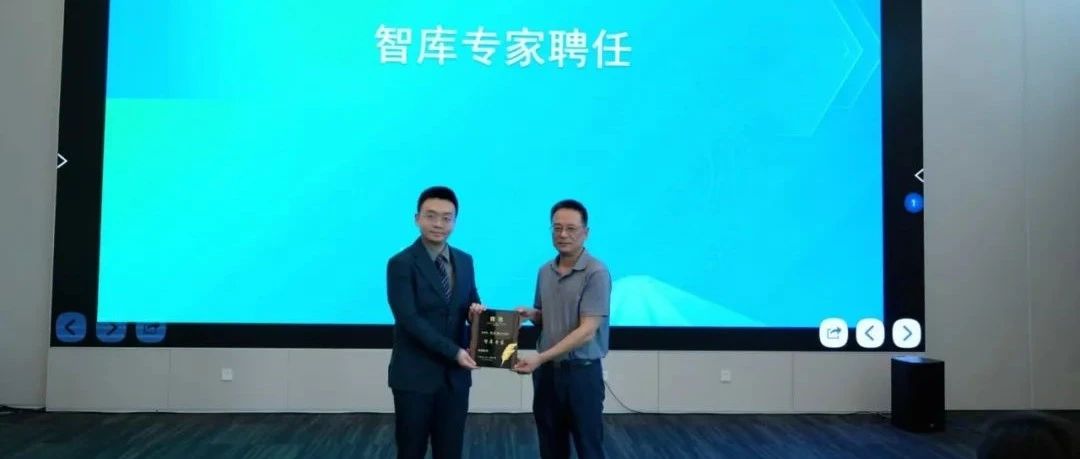
Core Insights - The event aimed to create a high-level communication platform to promote the integration of scientists and entrepreneurs, driving the deep connection between AI technology and industrial applications [1][3]. Group 1: AI Industry Trends - Zhang Ziming, Vice President of the Unforeseen AI Research Institute, presented insights on the global AI industry development trends, discussing key challenges such as financing constraints and computing power bottlenecks faced by the Chinese AI industry [3]. - The presentation highlighted the impact of innovative companies like DeepSeek on the industrial landscape [3]. Group 2: Future AI Directions - Zhang Ziming introduced noteworthy AI sub-sectors to watch for in 2025, including general intelligence, embodied intelligence, and humanoid robots, providing valuable industry references and commercialization pathways for entrepreneurs and investors [5]. Group 3: Institutional Recognition - A formal appointment ceremony for think tank experts was held, where Zhang Ziming received a certificate from Yuan Haifeng, reflecting the recognition of the Unforeseen AI Research Institute by the Binjiang District Committee and associations [5]. - The Unforeseen AI Research Institute aims to contribute to technological innovation and industrial upgrading in Binjiang District [5].
“人工智能+”战略提速,AI Agent时代正加速到来
AVIC Securities· 2025-08-03 14:45
Investment Rating - The industry investment rating is "Accumulate," indicating that the growth level of the industry is expected to be higher than that of the CSI 300 index over the next six months [3][27]. Core Insights - The national-level promotion of the "Artificial Intelligence +" strategy is accelerating, with the domestic general model GLM-4.5 speeding up its open-source commercialization. The State Council's meeting on July 31 approved the "Opinions on Deepening the Implementation of the 'Artificial Intelligence +' Action," emphasizing the large-scale and commercial application of AI across various sectors [2][18]. - The release of GLM-4.5 marks a significant leap in the capabilities of domestic large models, achieving leading performance in reasoning, coding, and agent interaction. Its architecture features 355 billion total parameters and 32 billion active parameters, ranking among the top three in international evaluations [19][20]. - The report anticipates that the second half of 2025 will be the "year of AI application landing," with general-purpose intelligent tools maturing and high-frequency usage scenarios emerging in enterprise AI assistants, automated workflows, and intelligent content generation [22]. Summary by Sections Market Review - The social service sector index experienced a weekly change of +0.10%, ranking 5th among 31 first-level industries in the Shenwan classification. The performance of sub-industries varied, with education and tourism sectors showing positive growth [5][7]. Core Insights - The report highlights two main investment lines: 1) Large model development and AI agent capability providers such as Kunlun Wanwei and iFLYTEK; 2) AI application scenarios such as Focus Technology, Aofei Entertainment, and others [6][22]. Industry News Dynamics - Various initiatives are being launched to enhance the AI ecosystem, including the "AI Industry Accelerator Plan" in Zhejiang to support the digital transformation of small and medium-sized enterprises [23].
AI“新基建”,打通算力到应用最后一公里
2 1 Shi Ji Jing Ji Bao Dao· 2025-08-01 09:24
Group 1: AI Industry Overview - The core focus of the AI industry is on large models and embodied intelligence, with China leading globally by having released 1,509 large models out of 3,755 total [1] - The AI industry in China is projected to exceed 700 billion yuan in 2024, maintaining a growth rate of over 20% for several consecutive years [1] - The next generation of large models, such as GPT-5, is expected to be a key variable influencing the future of the AI industry, particularly in complex industry applications [1] Group 2: Market Trends and Projections - The market for industry-specific large models in China reached 10.5 billion yuan in 2023, with an anticipated growth to 16.5 billion yuan in 2024, representing a 57% year-on-year increase [2] - By 2028, the market size for industry-specific large models is expected to reach 62.4 billion yuan [2] - The highest penetration rates of large models are observed in finance, government, film and gaming, and education, each exceeding 50% [2] Group 3: Challenges and Opportunities - Current limitations in large models include issues with computing power, data parameters, and mismatches between results and user needs [1][3] - The transformation from general large models to specialized industry models is seen as essential for creating real value, particularly for small and medium enterprises [3] - The integration of unique internal data and the ability to consolidate data ecosystems are critical for driving AI implementation and innovation [4] Group 4: Talent and Skills Development - There is an increasing demand for composite talents across various fields, including language, law, psychology, and philosophy, to support the AI industry [8] - Educational institutions are encouraged to adjust their training models to better prepare students for real-world applications of AI technology [8] - The need for interdisciplinary skills is emphasized, as AI applications require a blend of technical and domain-specific knowledge [6][8]
实现 Agent 能力的泛化 ,是否一定需要对世界表征?
机器之心· 2025-07-27 01:30
Group 1 - The article discusses the necessity of world representation for achieving generalized agent capabilities, highlighting the ongoing debate between model-free and model-based paradigms in AI [4][5][8] - It emphasizes that modern AI agents are expected to perform complex tasks autonomously, distinguishing them from simple bots through their ability to generalize [5] - The model-free paradigm suggests that intelligent behavior can emerge from direct perception-action loops without explicit internal representations, while the model-based paradigm argues for the need of a rich internal predictive representation of the world [6][7] Group 2 - The article references recent research by DeepMind that formalizes the debate between model-free and model-based approaches, demonstrating that agents with generalization capabilities inherently internalize world representations [6][7] - It outlines a core theorem indicating that any generalized agent must have a high-quality world model to achieve long-term capabilities, contradicting the notion that one can bypass representation [7] - The discussion shifts from whether representation is needed to how it should be constructed, noting that existing world model paradigms are not without flaws and there is a lack of consensus in the field [8]