镜像世界

Search documents
心智观察所| 对话凯文·凯利:对芯片禁运只会加速中国发展
Guan Cha Zhe Wang· 2025-07-14 01:38
Core Viewpoint - The article discusses Kevin Kelly's new book "2049: The Possibilities of the Next 10,000 Days," which presents a long-term vision for humanity and emphasizes the importance of adapting to uncertainty in the future [1] Group 1: Future Predictions and Concepts - Kevin Kelly highlights that most predictions about the future, including his own, have often been incorrect, yet he emphasizes the value of detailed thinking about future scenarios [4][5] - The concept of the "Mirror World" is introduced, which is an upgraded version of the internet, integrating digital and real-world experiences through technologies like digital twins and augmented reality [6][7] Group 2: Technology and Education - Kelly advocates for the use of AI to promote personalized learning, suggesting that traditional classroom settings have limitations [1] - He encourages a minimalist approach to technology, suggesting that individuals should adopt new technologies selectively [1] Group 3: Global Perspectives - Kelly expresses a vision of "Cool China," where China can reshape its global image by providing innovative technology, culture, and art [1] - He believes that the future will be a period of global prosperity, despite the challenges that lie ahead, due to humanity's ability to solve problems [8]


对话凯文·凯利:对芯片禁运只会加速中国发展
Guan Cha Zhe Wang· 2025-07-14 01:31
Core Viewpoint - Kevin Kelly's new book "2049: The Possibilities of the Next 10,000 Days" serves as a guide to navigate the uncertainties of the future, emphasizing the importance of adapting to technological changes and the evolving landscape of human civilization [1][3]. Group 1: Technology and Future Predictions - Kelly highlights the concept of a "mirror world," which integrates digital and physical realities, suggesting that technologies like augmented reality will play a significant role in future interactions [6][7]. - He expresses a strong belief in "radical optimism," asserting that despite challenges, human problem-solving capabilities will surpass the complexities of future issues [8][9]. - The cyclical nature of technology is emphasized, where new technologies solve old problems, leading to new challenges, thus creating a dynamic balance of opportunities [8][9]. Group 2: Education and Learning - Kelly critiques traditional education systems, arguing that many students learn more from platforms like YouTube than from formal education, indicating a shift in how knowledge is acquired [15][17]. - He believes that AI will revolutionize education by enabling personalized learning experiences and breaking down traditional subject boundaries [15][16]. - The necessity of mastering skills to collaborate with AI is highlighted as a new dimension of capability in the evolving educational landscape [15][16]. Group 3: AI and Employment - Kelly asserts that AI will not replace most jobs, particularly in creative fields like writing and editing, where human oversight remains crucial [11][12]. - He notes that AI is currently used as a tool to assist rather than replace human workers, with professionals adapting their roles to manage AI effectively [12][13]. - The importance of human responsibility and trust in the outcomes produced by AI is emphasized, as AI cannot be held accountable for its outputs [13]. Group 4: Global Relations and Cultural Perception - Kelly discusses the current state of U.S.-China relations, likening it to a marriage that requires mutual understanding and adaptation [21][22]. - He proposes the idea of "Cool China," suggesting that China can reshape its global image by producing desirable technology and culture, similar to Japan's transformation in the past [22][23]. - The need for the U.S. to recognize the detrimental effects of its current policies on its own interests is highlighted, advocating for collaboration rather than conflict [22][23].

“硅谷精神之父”的2049预言
Hu Xiu· 2025-07-11 09:19
Core Insights - Kevin Kelly, known as K.K., discusses his new book "2049: The Possibilities of the Next 10,000 Days," which envisions a hopeful future 25 years from now, covering various aspects such as technology, society, and the role of China in the world [4][5][7][8]. Group 1: Future Scenarios and Predictions - K.K. emphasizes that the book is not about making predictions but constructing scenarios that explore optimistic futures, including advancements in AI and technology [10][11]. - The book aims to inspire readers to actively imagine and work towards a desirable future rather than passively waiting for it to happen [12][13]. - K.K. believes that technology is a double-edged sword, and while it can bring positive changes, it also poses challenges that need to be addressed [7][15]. Group 2: Education and Workforce - K.K. argues that education systems must adapt to a future where lifelong learning and AI assistance are the norms, emphasizing the importance of teaching students how to learn effectively [18][19]. - He suggests that the focus should be on developing the ability to ask good questions and optimize learning processes rather than acquiring specific knowledge or skills [19][21]. - K.K. reassures that AI will not replace jobs but will change the nature of work, encouraging graduates to pursue their passions rather than solely focusing on financial rewards [22][24]. Group 3: Media and Content Creation - K.K. asserts that the media industry will still require human journalists to manage AI-generated content and ensure accountability [26][30]. - He predicts that new forms of content creation will emerge, including immersive experiences that enhance the way news is reported [27][28]. - K.K. advises content creators to remain adaptable and willing to experiment with new formats and technologies to stay relevant in the evolving landscape [30][31]. Group 4: Technological Advancements - K.K. identifies five key technologies that will shape the future: robotics, autonomous driving, space exploration, life sciences, and brain-computer interfaces [49]. - He expresses skepticism about the widespread adoption of humanoid robots in households, suggesting they will first be used in controlled environments like warehouses [51][55]. - K.K. believes that while autonomous vehicles will become more prevalent, the need for human drivers will still exist, albeit in a more specialized capacity [57][58]. Group 5: The "Mirror World" Concept - K.K. introduces the idea of a "mirror world," where augmented reality will blend the physical and digital realms, facilitated by smart glasses [32][34]. - He outlines four layers of this mirror world, including virtual reality experiences, spatial digital avatars, and enhanced environments for AI interactions [35][36][39]. - K.K. predicts that the development of this mirror world will depend on the affordability and efficiency of AI technology [37][40]. Group 6: Future of Smart Glasses - K.K. anticipates that the competition in the smart glasses market will be fierce, with potential for Chinese companies to emerge as leaders due to their manufacturing advantages [42][46]. - He highlights the significant technical challenges that need to be overcome for smart glasses to become mainstream, including battery life and user experience [43][45]. - K.K. believes that the timeline for achieving widely accepted smart glasses could extend to 10-25 years [46]. Group 7: Societal Implications of AI and Longevity - K.K. discusses the potential for AI to contribute to longer, healthier lives, while also acknowledging the societal challenges posed by an aging population [70][71]. - He emphasizes the need for innovative solutions to address the demographic shifts, particularly in cultures with a high proportion of elderly individuals [72][73]. - K.K. expresses cautious optimism about advancements in life sciences, suggesting that breakthroughs in health technology could lead to significant improvements in quality of life [68][69].
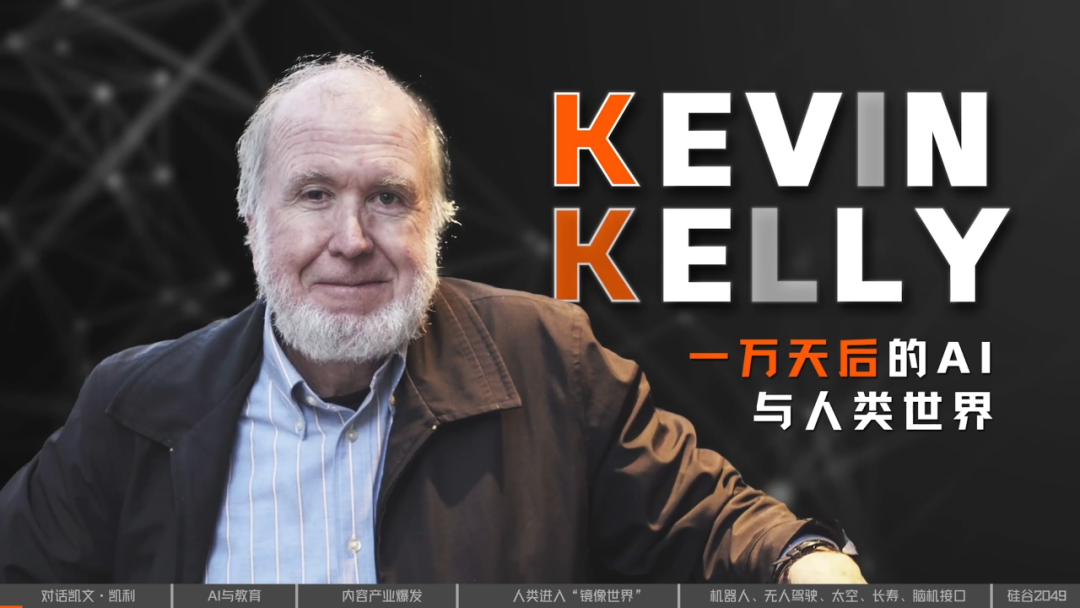
AI发展的三种可能性与重新被定义的真实
Xin Lang Cai Jing· 2025-07-08 06:28
Group 1: Core Concepts and Future Outlook - The book "2049: The Possibilities of the Next 10,000 Days" by Kevin Kelly explores how advanced technologies like AI, mirror worlds, brain-computer interfaces, and life sciences will shape future society, economy, and culture [1] - Five core concepts are identified: mirror world, humanoid intelligence, AI assistants, intervisibility, and content explosion, along with ten development areas including AI, digital governance, organizational change, education, healthcare, robotics, autonomous driving, aerospace, life sciences, and brain-computer interfaces [1][2] - The evolution of technology over the next 25 years is expected to follow a clear logic, starting with foundational AI, digital governance, and organizational change, followed by survival aspects like healthcare and education, and application areas such as robotics and space exploration [2] Group 2: AI Development Scenarios - Three potential scenarios for AI development over the next 25 years are proposed: continued scale expansion leading to significant gains, a plateau where scale expansion becomes ineffective, and a stagnation phase similar to an "AI winter" [3][4] - The first scenario suggests that AI can achieve continuous growth through increased data and advanced chips, akin to a business principle like Moore's Law, with companies like Nvidia accelerating chip architecture updates to meet market demands [3][4] - The second scenario posits that AI may reach a bottleneck, requiring new types of models beyond current neural networks, such as structured models or those based on deductive reasoning [4][5] Group 3: Redefining Reality and Trust - The widespread use of AI necessitates a redefinition of truth, as deep fakes and other AI-generated content challenge traditional standards of verification, leading to a need for new methods to assess the authenticity of information [6][7] - The demand for verification will likely drive the development of AI "lie detectors" and industry consensus on marking AI-generated content to distinguish it from authentic material [6][7] Group 4: Global AI Landscape and Competition - The AI sector is increasingly dominated by major tech companies, requiring significant investment (at least $1 billion) to participate, indicating a trend where a few dominant players will emerge [8][9] - The competition in AI is expected to be most intense between the US and China, with potential for non-US leaders to emerge, as countries like China and India move beyond imitation to genuine innovation [9][10] - The most promising areas for investment will be those empowered by AI, particularly in coding and software programming, where AI is already enhancing productivity and creating new AI solutions [10]


智能眼镜将是下一个iphone!凯文·凯利最新对话:如果让我下注,我可能会押中国公司胜出,而不是苹果……
聪明投资者· 2025-07-07 06:54
Core Viewpoints - The future will require humans to take responsibility, as AI cannot assume accountability for its actions [2][35] - Kevin Kelly predicts that by 2049, smart glasses will replace smartphones, with a strong belief that Chinese companies will lead this innovation [2][70] - The book "2049: The Possibilities of the Next 10,000 Days" aims to inspire imagination about a better future rather than making definitive predictions [8][10] Group 1: Future of Technology - AI will not replace jobs but will change the nature of work, requiring humans to adapt to new roles [28][29] - The emergence of smart glasses faces significant technological challenges, including power supply and field of view, which may take 5 to 25 years to overcome [59][63] - The concept of a "mirror world" will emerge, where AI and smart glasses create a digital twin of the real world, enhancing interaction and experience [47][49] Group 2: Education and Skills - Future education should focus on teaching students how to learn effectively, ask good questions, and manage their own learning pace [25][27] - The ability to ask insightful questions will become more valuable than simply finding answers, as AI can provide information readily [27][29] Group 3: Media and Content Creation - The role of journalists will remain crucial, as they will be responsible for verifying information generated by AI [33][34] - YouTube is expected to become a dominant platform for media, especially as immersive technologies develop [43][45] Group 4: Robotics and Automation - Human-like robots are likely to be used in industrial settings before entering households, due to the complexity of home environments [80][81] - The widespread adoption of humanoid robots in homes is not expected within the next 25 years [81][87] Group 5: Space Exploration - The idea of colonizing Mars is viewed skeptically, with a belief that the primary value lies in technological advancements rather than establishing cities [97][101] - Space exploration will focus more on learning and technology development rather than direct economic benefits [99][100] Group 6: Future of Silicon Valley - New startups are expected to emerge, potentially changing the landscape of Silicon Valley, but the fundamental dynamics of the ecosystem may remain [126][130] - AI could transform the way startups are funded and developed, possibly leading to more crowdfunding models [131]

未来25年,凯文·凯利的85个预言|大家谈
高毅资产管理· 2025-07-03 05:33
Core Viewpoint - The article emphasizes the transformative impact of artificial intelligence (AI) and related technologies on global society, suggesting that a proactive approach to shaping the future is essential for creating a better world. Group 1: Mirror World - By 2049, most smartphones will be replaced by smart glasses, creating a "mirror world" where reality and virtuality overlap [7] - The mirror world will represent the next generation of the internet, enabling immersive experiences powered by AI [7] - Companies providing data support for the mirror world will become the largest and wealthiest globally [7] - Immersive experiences will become commonplace, leading to an explosion of content and unique experiences shared by users [7] - Real experiences will become more precious as virtual experiences become more accessible [7] - Individuals will need to balance personalization and privacy in the mirror world [8] Group 2: Human-Machine Interaction - The relationship between humans and AI will be collaborative, with humans participating in AI operations rather than AI acting independently [9] - AI will not think like humans, and interactions with AI should not be based on human standards [10] - AI will take time to permeate various industries, requiring a decade or more for significant changes [11] - By 2049, everyone will have AI assistants akin to personal secretaries, integrated into smart glasses or wearables [12] - AI assistants will function similarly to operating systems, facilitating B2B interactions through bots [10] Group 3: Workplace Challenges - The future will see a "human + machine" model where machines enhance efficiency, allowing humans to focus on less efficient, innovative tasks [15] - Many blue-collar jobs requiring technical skills will still need human workers, potentially with higher wages [16] - Middle management will be most affected by AI, as their roles can be easily replaced by AI systems [18] - Organizational structures will become flatter, with AI taking over tasks like reporting and budgeting [18] - AI will enhance performance transparency, making peer evaluations more common [20] Group 4: Business Opportunities - The next 25 years will see significant advancements in AI, digital governance, and organizational change [28] - AI will be dominated by major players, with entry barriers for startups being high [29] - The most promising sectors will be those that deeply integrate with cutting-edge technologies [33] - Customization and personalization will be key trends, driven by comprehensive data collection [34] Group 5: Content Explosion - The next 25 years will witness a content explosion, continuing the trend of information proliferation and personalized creation [41] - AI will significantly impact the publishing industry, enabling personalized content recommendations [42] - Future books will be interconnected, forming a comprehensive repository of human knowledge [43] - The film industry will be disrupted, allowing individuals to create their own films easily [44] Group 6: Education Development - Personalized education will become widespread due to AI, transforming traditional educational models [50] - Experience-based learning will gain importance, utilizing VR/AR technologies [52] - Non-linear, highly virtualized learning experiences will become common in universities [53] - Lifelong learning will be essential, with a focus on effective learning methods [56] Group 7: Customized Healthcare - The mirror world will drive the growth of personalized medicine through digital twins [62] - Quantifying personal health data will be fundamental to customized healthcare [63] - 3D pill machines will enable the creation of tailored medications for individuals [64] - AI doctors will assist human doctors in diagnosing and treating patients [68] Group 8: Technological Explosions - Five key areas will experience significant breakthroughs: robotics, autonomous driving, space exploration, life sciences, and brain-computer interfaces [72] - The future will see the rise of unmanned factories, transforming traditional manufacturing [73] - Electric vehicles will dominate the market, with China emerging as a leading manufacturer [75] - Space exploration will focus on Mars, with potential human habitation [81]

美国《连线》杂志创始主编凯文·凯利接受《环球时报》专访:2049,“酷中国”将是全世界模仿对象
Huan Qiu Shi Bao· 2025-06-25 22:41
Group 1 - Kevin Kelly, a renowned technology prophet, predicts that by 2049, China will emerge as a leading global power, particularly in technology and culture [1][2] - The concept of "Cool China" envisions a future where Chinese cities are models for urban planning, attracting global talent and showcasing advanced innovations [4][7] - China is expected to excel in electric vehicle manufacturing, potentially producing the best electric cars in the world, surpassing even Tesla [3][6] Group 2 - The integration of AI, brain-computer interfaces, and other technologies is anticipated to disrupt industries such as retail, with giants like Walmart and Amazon facing significant challenges [5][6] - China is recognized for its advancements in robotics and life sciences, moving beyond imitation to develop innovative pharmaceuticals and technologies [7][8] - The cultivation of "Cool Power" requires a diverse ecosystem that supports cultural and technological innovation, emphasizing the importance of high-quality cultural products alongside technological advancements [8]
关于2049年,凯文·凯利的85个预言
腾讯研究院· 2025-06-25 08:46
Core Concepts - Kevin Kelly's new book "2049" presents five core concepts about the future: Mirror World, Human-like Intelligence, AI Assistants, Intervisibility, and Content Explosion [2] Group 1: Mirror World - By 2049, most smartphones will be replaced by smart glasses, creating a "Mirror World" where reality and virtuality overlap [7] - The Mirror World will be the next generation of the internet, providing immersive experiences powered by AI [7][8] - Companies providing data support for the Mirror World will become the largest and wealthiest globally [8] - As virtual experiences become more accessible, real experiences will become more precious and rare [8] - Data collection in the Mirror World will require a balance between personalization and privacy [8] Group 2: Human-AI Interaction - The relationship between humans and AI will be collaborative, with humans participating in AI operations rather than AI acting independently [10] - AI will not possess human-like understanding; thus, interactions with AI should not be interpreted through human standards [11] - By 2049, everyone will have AI assistants akin to personal secretaries, integrated into smart glasses or wearable devices [12][13] Group 3: Workplace Transformation - The "human + machine" model will lead to increased efficiency from machines while humans focus on less efficient, innovative tasks [13] - Middle management will be most affected by AI, as their roles can be automated [14] - Organizations will become flatter, with AI taking over tasks like reporting and evaluation [14][15] Group 4: Business Opportunities - The next 25 years will see significant growth in sectors benefiting from AI, including healthcare and education [18][20] - The AI field will likely be dominated by a few major players, with high entry costs for new startups [29] - Customization and personalization will be key trends, driven by comprehensive understanding of individuals [20] Group 5: Content Explosion - The next 25 years will witness a content explosion, with AI significantly impacting the publishing industry [24] - AI will enable personalized recommendations, transforming how knowledge is shared and consumed [24] - The film industry will be disrupted, allowing more individuals to create content [24] Group 6: Education Evolution - Personalized education will become widespread due to AI, transforming traditional educational structures [27] - New types of universities focused on job market needs may emerge, ensuring better alignment between graduates and employment opportunities [55] - Lifelong learning will become essential, with a focus on effective learning methods [59] Group 7: Healthcare Innovations - Digital twins will drive the development of personalized medicine, utilizing individual data for tailored healthcare solutions [62] - AI doctors will assist human doctors, improving healthcare access and efficiency [70] - Remote healthcare will help bridge the gap in medical resource distribution [70] Group 8: Technological Advancements - Five key areas will experience explosive growth: robotics, autonomous driving, space exploration, life sciences, and brain-computer interfaces [72] - The automotive industry will see a significant shift towards electric vehicles, with China emerging as a leader [75] - Space exploration will focus on Mars, with potential human habitation and research stations established [81]

下一个25年,AI可以为人类做什么?
首席商业评论· 2025-06-19 04:02
Core Viewpoint - The article discusses the evolution of AI assistants and their potential impact on daily life by 2049, emphasizing the transition from smartphones to smart glasses and the emergence of a "mirror world" where virtual and real experiences blend seamlessly [2][18]. Group 1: AI Assistants - AI assistants are expected to evolve from specialized tools to general-purpose assistants, similar to how Swiss Army knives emerged from single-use tools [7]. - In the next five years, practical AI assistants will likely appear, initially as retail assistants on e-commerce platforms, eventually evolving into comprehensive personal assistants [7][12]. - The future AI assistants will be interconnected through APIs, leading to a B2B (bot to bot) era where they can collaborate without human intervention [11][12]. Group 2: Smart Glasses - By 2049, most smartphones are predicted to be replaced by smart glasses, which will facilitate more natural human-machine interactions [8]. - Smart glasses will enable users to interact with the virtual world using gestures, voice commands, and eye movements, marking a significant shift from traditional input methods [8][9]. - The development of transparent and image-displaying smart glasses is crucial for realizing this future, as current technology is not yet fully mature [8]. Group 3: Mirror World - The "mirror world" concept refers to a reality where digital information overlays the physical environment, enhancing user experiences through augmented reality (AR) [15][18]. - Smart glasses will collect vast amounts of personal data, allowing for tailored experiences and interactions in the mirror world [16][17]. - The mirror world is anticipated to become the next generation of the internet, providing immersive experiences that reduce reliance on traditional screens [18][19].

关于2049年,“硅谷精神之父”凯文·凯利的85个预言
点拾投资· 2025-06-14 09:54
Core Concepts - Kevin Kelly believes that AI and related technologies will become the core force shaping global society in the near future, emphasizing the importance of a positive vision for building a better world [1][3] Group 1: Mirror World - By 2049, most smartphones will be replaced by smart glasses, creating a "mirror world" where reality and virtuality overlap [7] - The mirror world will be the next generation of the internet, providing immersive experiences powered by AI, shifting human-computer interaction from traditional methods to voice, gestures, and eye movements [7][8] - Companies providing data support for the mirror world will become the wealthiest globally, and immersive experiences will become commonplace, leading to an explosion of content and experiences [8][9] Group 2: Human-Machine Interaction - The relationship between humans and AI will be collaborative, with humans participating in AI operations rather than AI acting independently [13][14] - AI assistants will become ubiquitous, akin to GPS systems, and will likely be integrated into smart glasses or wearable devices [16][17] - The workplace will see a shift where machines enhance efficiency, allowing humans to focus on innovative tasks, while blue-collar jobs requiring technical skills will still need human involvement [19][20] Group 3: Business Opportunities - The next 25 years will see significant advancements in five key areas: robotics, autonomous driving, space exploration, life sciences, and brain-computer interfaces [67] - AI will drive the emergence of new business models, with a focus on personalized products and services based on comprehensive individual data [35][36] - The space economy will evolve, with near-Earth orbit becoming a lucrative sector for satellite communication and monitoring, while space debris management will emerge as a new industry [39][40] Group 4: Education and Healthcare - AI will enable personalized education, transforming traditional learning methods and making lifelong learning a necessity [48][56] - The healthcare sector will benefit from digital twins and personalized medicine, with advancements in 3D printing of customized medications and AI-assisted diagnostics [62][63] Group 5: Future of Work - The future workplace will be characterized by a flatter organizational structure, with AI taking over many middle management functions [22][24] - The rise of AI will lead to greater transparency in performance evaluations and peer assessments, fostering a competitive yet collaborative environment [23][24] Group 6: Content Creation - The next 25 years will witness a content explosion, with AI significantly impacting the publishing industry and enabling personalized content delivery [41][42] - The concept of a "meta text" will emerge, connecting knowledge across various works, while digital avatars will become commonplace [44][48] Group 7: Technological Integration - The integration of AI into various sectors will redefine traditional business practices, with a focus on adaptability and innovation [75][76] - Companies will need to embrace this technological transformation to remain competitive and relevant in the evolving landscape [75][76]