长期投资理念

Search documents
化工领域再下重注!伯克希尔哈撒韦拟百亿美元收购西方石油化工部门
Huan Qiu Wang Zi Xun· 2025-10-01 03:23
Group 1 - Berkshire Hathaway, led by Warren Buffett, is in advanced talks to acquire Occidental Petroleum's chemical subsidiary OxyChem for approximately $10 billion, marking the largest acquisition since the $13.7 billion purchase of Alleghany Corp. in 2022 [1] - Occidental Petroleum's decision to sell OxyChem is driven by the need to alleviate its debt burden, which has reached $23.34 billion as of June 2025, following aggressive expansions through acquisitions [3] - OxyChem generated $2.42 billion in revenue in the first two quarters of 2025, focusing on chemical products for healthcare, food safety, and construction, but its capital-intensive nature conflicts with Occidental's strategic focus on energy [3] Group 2 - The acquisition aligns with Buffett's investment philosophy of "buying quality assets at low prices" and continues Berkshire's strategy in the chemical sector, following a previous $10 billion acquisition of Lubrizol in 2011 [4] - OxyChem's applications complement Berkshire's other businesses, and the acquisition could deepen the collaboration between Berkshire and Occidental, which currently holds 28.2% of Occidental's shares valued at over $11 billion [4] - The deal signifies a shift in Berkshire's strategy from a conservative approach to a more aggressive stance in energy and industrial sectors, as indicated by recent investments and acquisitions [4] Group 3 - Following the announcement, Occidental's stock price fell by 1.81% to $47.25 but showed a slight recovery in after-hours trading, reflecting cautious optimism in the market regarding the deal [5] - Berkshire Hathaway's cash reserves are at a historical peak of $344 billion, providing ample resources for the $10 billion transaction [5] - Buffett's recent activities, including a $1.6 billion investment in UnitedHealth Group and increased stakes in Japanese trading companies, are interpreted as a final push before his expected retirement as CEO by the end of 2025 [5]



布局发起式基金:中邮基金权益投资布局的深层逻辑
Xin Lang Ji Jin· 2025-09-30 02:18
Core Viewpoint - The article discusses the launch of a series of activities aimed at promoting the high-quality development of public funds in Beijing, emphasizing the importance of investor education and protection in line with the regulatory framework established by the China Securities Regulatory Commission [1] Group 1: Industry Transformation - The public fund industry is transitioning from a "scale-oriented" approach to a "value-oriented" one, with the emergence of initiated funds as a key vehicle for high-quality development [2] - Initiated funds have seen significant growth, with over 2,000 funds and a total scale exceeding 3.3 trillion yuan, of which equity initiated funds account for 49%, an increase of 38 percentage points since 2020 [2] Group 2: Zhongyou Fund's Initiated Fund Strategy - Zhongyou Fund has been exploring the initiated fund model since 2018, creating a matrix of equity initiated funds that focus on long-term value and investor needs [3] - The fund's strategy includes investing in sectors aligned with national priorities, such as new energy and high-end manufacturing, while also catering to diverse risk preferences among investors [3] Group 3: Value Creation Framework - Zhongyou Fund's approach to initiated funds is based on a threefold value creation framework: interest binding, long-term investment, and value creation [4] - The interest binding mechanism links the earnings of fund managers and research teams directly to investor returns, fostering trust and aligning interests [5] - Long-term investment strategies allow the fund to focus on the growth of quality companies, minimizing the impact of short-term market fluctuations [7] - A robust research and risk management system supports the fund's ability to create value, ensuring thorough industry analysis and stock selection [8] Group 4: Promoting Inclusive Finance and Investor Education - Zhongyou Fund actively promotes inclusive finance and investor education through various outreach initiatives, helping investors understand the significance of long-term investment and the mechanics of the initiated fund model [9] Group 5: Commitment to High-Quality Development - The ongoing development of initiated funds by Zhongyou Fund aligns with the regulatory emphasis on prioritizing investor interests and reflects a commitment to the core principles of public funds [10]
你的个人养老金赚钱了吗?
Zhong Guo Jing Ying Bao· 2025-09-29 09:53
Core Insights - The recent performance of major broad-based indices has improved significantly, leading to increased interest in personal pension investments among investors [1] - By the end of 2024, personal pension accounts have shown returns exceeding 10% through investments in broad-based index funds [1] - The investment returns from personal pensions depend on two main factors: tax benefits and actual investment returns [1] Investment Opportunities - The China Securities Regulatory Commission has introduced the first batch of 85 equity index funds for personal pension investments, with 78 tracking broad-based indices [2] - The A-share market has experienced structural adjustments, providing a favorable window for long-term investments in broad-based index funds [2] - The current valuation of the CSI 300 index is at a historical median (PE around 12 times), indicating significant long-term investment value [2] Market Stability - The personal pension system has positively influenced the stability and development of the capital market by guiding long-term funds into the market [3] - The influx of long-term capital through personal pension accounts is expected to improve the overall funding structure of the capital market [3] Long-term Investment Strategy - Since the implementation of the personal pension system in 2022, participation has steadily increased, emphasizing the importance of asset allocation and long-term investment strategies [4] - Investors are advised to follow a principle of "long-term, stable, and equity assets as the core growth engine" in their personal pension allocations [4][5] - It is recommended that investors avoid frequent trading based on short-term market fluctuations and focus on fundamental analysis for sustainable growth [5] Recommendations for Investors - Investors should dynamically adjust their stock-bond ratios based on age and risk tolerance, and regularly rebalance their portfolios [5] - In a declining risk-free interest rate environment, the long-term appeal of equity assets is highlighted, suggesting a strategy of dollar-cost averaging or phased investments [5] - Financial institutions are encouraged to offer more tailored products to meet investor needs and enhance their willingness to invest [6]
国元证券关于开展2025年“金融教育宣传周”活动情况的报告
Xin Lang Ji Jin· 2025-09-25 08:38
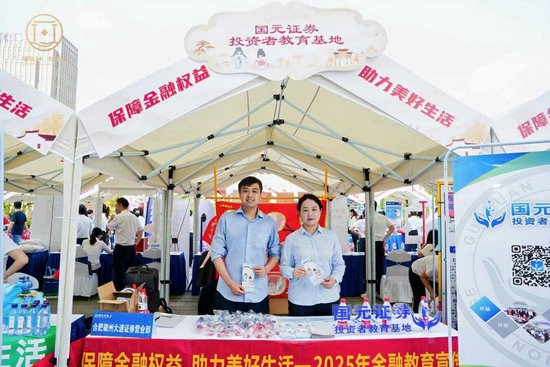
Core Viewpoint - The company actively participates in the 2025 Financial Education Promotion Week, focusing on safeguarding financial rights and enhancing public financial literacy through various educational activities [1][40]. Group 1: Organization and Implementation - The company promptly organized and detailed the implementation of the financial education activities, assigning responsibilities to various departments and emphasizing the importance of effective activity plans [1]. - Each branch is required to conduct various promotional activities, including online and offline events, to educate the public on financial knowledge and prevent illegal financial activities [1][20]. Group 2: Activities and Participation - The company hosted four unique events at its investor education base during the promotion week, attracting over 1,000 participants [2]. - The launch ceremony for the financial education week in Anhui Province took place on September 15, with the company actively participating and providing detailed explanations of common financial risks [3]. - A joint investor education event with the Shanghai Stock Exchange was held on September 12, focusing on rational investment and investor protection [5]. - On September 17, the company organized an event called "I Am a Shareholder," allowing investors to engage directly with listed companies and understand their investment value [8]. Group 3: Outreach and Communication - The company utilized its website and social media platforms to promote the financial education week, providing links and resources for the public to access financial knowledge [14][16]. - Various branches employed diverse promotional methods, including outdoor advertising and community outreach, to raise awareness about illegal financial activities and educate the public [20][37]. Group 4: Results and Impact - The financial education activities resulted in a total of 290 events, with over 3,000 participants in offline activities and nearly 5,000 in online events, effectively reaching over 20 million investors [40][41]. - The company aims to continue expanding its investor education efforts, introducing new formats and content to enhance public financial literacy [41].

创新投资者陪伴模式 汇安基金在行动
Cai Fu Zai Xian· 2025-09-24 02:48
Group 1 - The core idea emphasizes the importance of investor education and protection, particularly for small and medium investors, as a fundamental theme in the capital market [1] - Hui'an Fund has been committed to enhancing national financial literacy and has developed a comprehensive investor education mechanism covering the entire investment lifecycle [1] - The company has responded to regulatory calls by implementing various online and offline educational activities to promote rational, value-based, and long-term investment concepts [1] Group 2 - Hui'an Fund focuses on making complex investment terminology accessible and understandable for investors, enhancing their investment skills and experience [2] - The company has launched several educational programs, such as "Hui'an Anti-Fraud Decoder" and "Hot Concept Pocket Book," to help investors recognize scams and understand market trends [2] - These initiatives aim to improve the overall investment experience and increase investor satisfaction [2] Group 3 - Hui'an Fund actively engages with investors through in-person events, enhancing the quality of investor support and understanding of asset allocation [3] - The company participates in community outreach programs, such as "Financial Knowledge into Thousands of Homes," to educate residents on financial literacy and risk prevention [3] - Hui'an Fund aims to create a multi-dimensional support system for investors, contributing to the high-quality development of the industry [3]
公募销售费用新规有望重塑行业生态
Shang Hai Zheng Quan Bao· 2025-09-14 22:30
Core Viewpoint - The public fund sales industry in China is undergoing significant changes due to the new regulations issued by the China Securities Regulatory Commission, which aim to reshape the industry ecosystem and promote high-quality development [1][3]. Summary by Relevant Sections New Regulations - The new regulations include lowering subscription fees, optimizing redemption fee arrangements, and standardizing sales service fees, marking the third phase of fee reform in the public fund sector [1]. - Specific changes to redemption fees include a minimum of 1.5% for holdings less than 7 days, 1% for holdings between 7 and 30 days, and 0.5% for holdings between 30 days and 6 months for non-money market funds [1][2]. Impact on Fund Sales Institutions - Fund distribution institutions that previously relied on high subscription and service fees will face revenue limitations, necessitating a reevaluation of their business models and an increase in service capabilities to provide professional investment advice [3]. - The new regulations may lead to a reduction in market share for institutions that do not adapt to the changing landscape [3]. Effects on Fund Companies - Fund companies will need to shift focus from short-term scale growth driven by fee discounts to enhancing professional service capabilities and investment management quality [3]. - The regulations are expected to suppress unreasonable practices in the industry, encouraging companies to invest more in research and development and improve investor education [3]. Long-term Industry Development - The industry is encouraged to adapt proactively and prioritize investor interests, which is essential for achieving high-quality development in the long run [4].
北京公募基金高质量发展在行动|国联基金解读基金销售费用管理新规,洞见行业新方向
Xin Lang Ji Jin· 2025-09-12 01:28
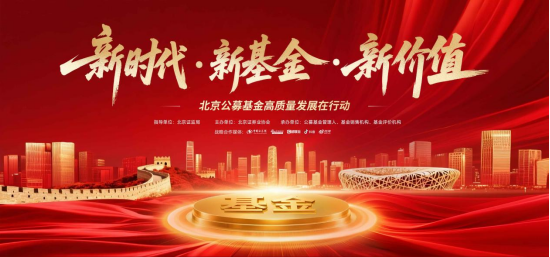
Group 1: Core Themes of the News - The event "New Era, New Fund, New Value" aims to promote high-quality development in the public fund industry, guided by the Beijing Securities Regulatory Bureau and involving various stakeholders [1] - The new regulations proposed by the China Securities Regulatory Commission (CSRC) focus on reducing investor costs, standardizing the public fund sales market, and protecting investor rights [3] Group 2: Key Regulatory Changes - The new regulations consist of 6 chapters and 28 articles, with feedback due by October 5, 2025 [3] - Fund managers are prohibited from charging subscription and sales service fees when selling their own funds directly, which will lower costs for investors [3] - The maximum subscription fee rates for different fund types have been significantly reduced compared to current market levels, which may impact traditional revenue structures of sales institutions [3][4] Group 3: Fee Structures and Investor Impact - The new rules introduce flexibility in fee structures, allowing for both front-end and back-end charging models based on investment amounts and holding periods [4] - The adjustment of redemption fees, particularly the cancellation of the "7-day holding exemption," may influence investor behavior, especially for those preferring short-term bond products [4][5] - Sales service fees are capped for various product types, and no fees can be charged for funds held for over a year, affecting sales institutions' revenues [5] Group 4: Fairness and Compliance - The regulations require fair treatment of all investors in the same fund, preventing differential fee structures [6] - Fund managers must ensure that interest generated from sales settlement funds benefits investors directly, protecting their rights [6] - Existing funds must adjust their fee structures within 6 months of the regulations taking effect, with a possible extension to 12 months for those needing system upgrades [6]
百亿私募阵营洗牌 深圳红筹投资管理规模重回百亿以上
Xi Niu Cai Jing· 2025-08-25 10:10
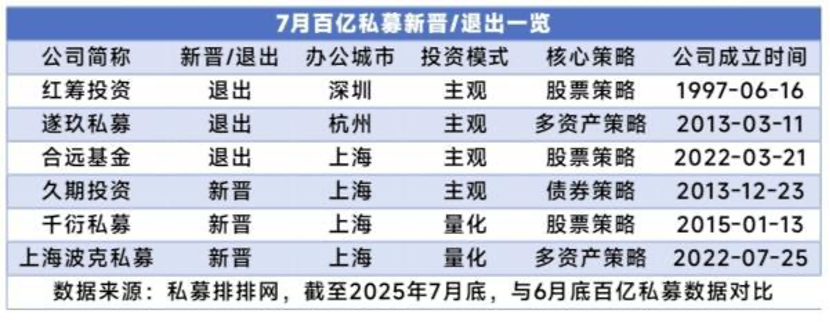
Core Insights - The article provides an overview of the new entrants and exits among billion-yuan private equity firms as of July, highlighting changes in investment strategies and company statuses [1] Group 1: Company Changes - Shenzhen Hongchou Investment exited the billion-yuan private equity list, focusing on stock strategies since its establishment in June 1997 [1] - Suijiu Private Equity from Hangzhou also exited, employing a multi-asset strategy since March 2013 [1] - Huyuan Fund from Shanghai exited, utilizing stock strategies since March 2022 [1] - Jiuqi Investment from Shanghai entered the list, focusing on bond strategies since December 2013 [1] - Qianyan Private Equity from Shanghai entered the list, employing quantitative stock strategies since January 2015 [1] - Shanghai Boke Private Equity entered the list, utilizing a multi-asset strategy since July 2022 [1] Group 2: Company Performance - Shenzhen Hongchou Investment reported stable operational conditions since Q1 2025, with asset management scale remaining above 10 billion yuan despite minor fluctuations due to investor activities [1][2] - The company emphasizes a long-term investment philosophy aimed at achieving absolute returns over the medium to long term, refraining from commenting on short-term market phenomena [2]
侃股:中期分红是上市公司的加分项
Bei Jing Shang Bao· 2025-08-21 12:57
Core Viewpoint - The surge in mid-term dividends among A-share companies reflects a significant improvement in the awareness of returning value to investors, driven by regulatory policies, enhancing both investment value and investor satisfaction [1][2]. Group 1: Mid-term Dividends and Market Dynamics - A total of 140 A-share companies distributed over 100 billion yuan in mid-term dividends, indicating a shift towards more frequent returns to investors [1]. - Regulatory guidance has made mid-term dividends a preferred choice for companies, contrasting with the traditional focus on annual dividends, thus reducing the waiting time for investors [1][2]. - Mid-term dividends signal strong company performance and cash flow, which can stabilize stock prices and attract long-term investors, fostering a favorable market environment [1][2]. Group 2: Corporate Governance and Decision-Making - The implementation of mid-term dividends reflects an improvement in corporate governance, requiring management to balance strategic planning, funding needs, and shareholder interests [2]. - By optimizing capital structure and enhancing fund utilization, mid-term dividends lay a solid foundation for long-term corporate development [2]. Group 3: Investor Relations and Market Stability - Mid-term dividends provide tangible returns to investors, enhancing liquidity and attractiveness, especially for income-dependent investors [2]. - The practice encourages a long-term investment mindset among investors, promoting a collaborative growth approach rather than short-term speculation [2]. - The positive interaction between companies and investors contributes to a more stable and healthy capital market ecosystem, optimizing resource allocation [2][3]. Group 4: International Competitiveness - A market that offers stable returns through mid-term dividends can attract more international capital, enhancing the competitiveness of China's capital market [3].
启动报名!第九届海外基金金牛奖,新设这个奖项
Zhong Guo Zheng Quan Bao· 2025-08-17 23:24
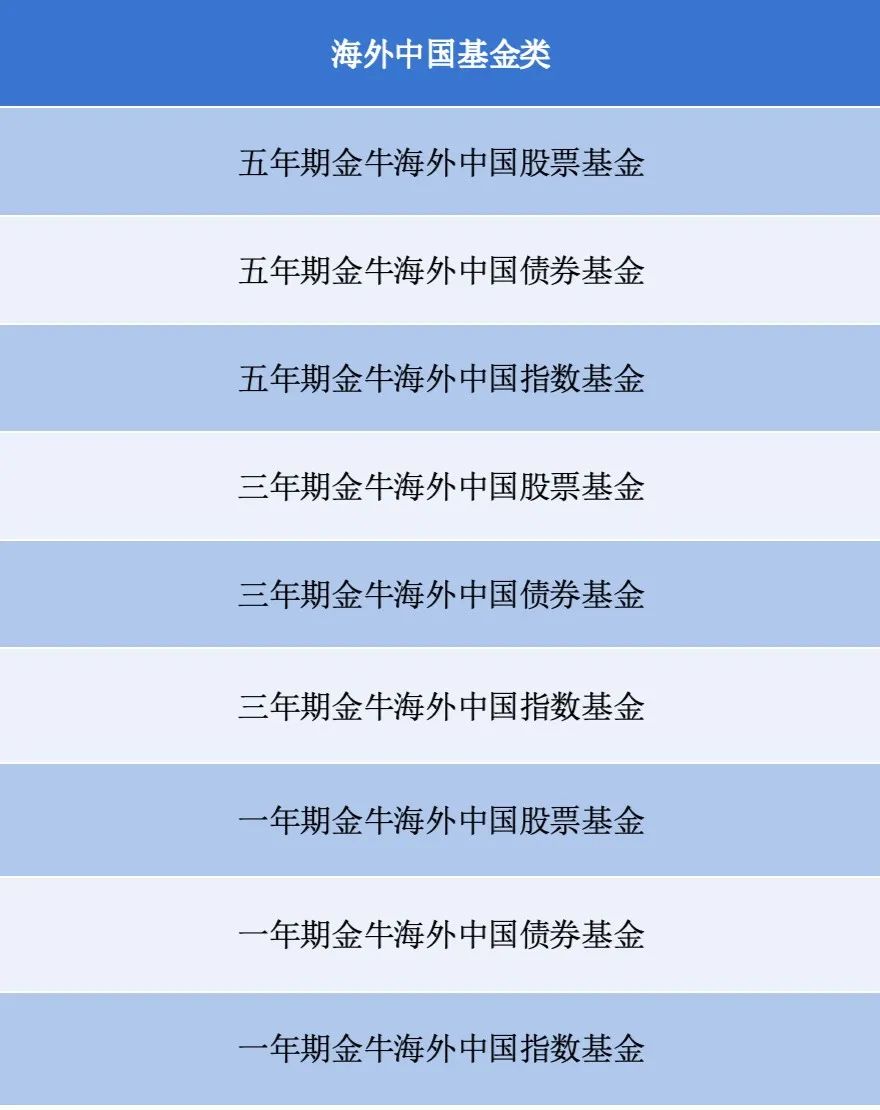
Core Viewpoint - The 9th Overseas Fund Golden Bull Award aims to establish a scientific evaluation system for overseas securities investment funds and managers, promoting excellent management institutions and advanced investment concepts in the industry [5]. Group 1: Award Overview - The award has introduced a new five-year evaluation dimension, focusing on long-term value creation and identifying top overseas asset management institutions that consistently generate excess returns [1][3]. - Categories for the awards include five-year and three-year awards for overseas private equity management companies and investment managers, as well as awards for overseas Chinese stock, bond, and index funds [3][8]. Group 2: Evaluation Criteria - The evaluation will guide long-term investment philosophies and help investors seize certain opportunities amid global market fluctuations [4]. - The awards are divided into three main categories: Overseas Chinese Fund Category, Overseas Private Equity Fund Category, and Mutual Recognition Fund Category, each with specific criteria and classifications [6][9][10]. Group 3: Registration and Submission - Institutions can register for the awards from August 18 to August 31, 2025, through the official website [2][13]. - First-time registrants must provide relevant licenses and complete data submissions for all participating funds to ensure eligibility [14][15].