需求不足

Search documents
光大期货金融期货日报-20250625
Guang Da Qi Huo· 2025-06-25 05:16
Report Industry Investment Rating - No industry investment rating is provided in the report. Core Viewpoints - The A-share market rose rapidly yesterday, with the Wind All A index up 1.56% and a trading volume of 1.45 trillion yuan. The conflict between Iran and Israel has limited direct impact on the A-share market. Given the current credit contraction and insufficient demand, the index is unlikely to break through the central level and rise significantly. However, with the improvement in corporate earnings in H1 2025 compared to 2024 and the support of allocation funds, the A-share index will not experience a sharp decline in the short term. It is expected that the index will mainly fluctuate in the future [1]. - Treasury bond futures closed lower, with the 30-year main contract down 0.27%, the 10-year main contract down 0.11%, the 5-year main contract down 0.07%, and the 2-year main contract down 0.02%. The central bank conducted 4065 billion yuan of 7-day reverse repurchase operations, with a net injection of 2092 billion yuan. The bond market lacks the momentum to strengthen significantly and is likely to remain in a range-bound pattern [1][2]. Summary by Directory Research Viewpoints - **Stock Index Futures**: The A-share market showed a significant upward trend, with multiple sectors rising. The conflict between Iran and Israel had limited direct impact on the A-share market. The domestic economy faces challenges such as credit contraction and insufficient demand, but corporate earnings have improved, leading to an expected volatile trend for the index [1]. - **Treasury Bond Futures**: Treasury bond futures closed lower. The central bank's open market operations led to a slight tightening of the capital market. Given the economic resilience and the approaching half-year end, the bond market is likely to remain range-bound [1][2]. Price Changes in Futures Contracts - **Stock Index Futures**: On June 24, 2025, IH rose 1.10%, IF rose 1.45%, IC rose 1.79%, and IM rose 2.46% compared to the previous day [3]. - **Stock Indexes**: The Shanghai Composite 50 Index rose 1.16%, the CSI 300 Index rose 1.20%, the CSI 500 Index rose 1.62%, and the CSI 1000 Index rose 1.92% [3]. - **Treasury Bond Futures**: TS fell 0.03%, TF fell 0.08%, T fell 0.12%, and TL fell 0.30% [3]. Market News - An event to commemorate the 80th anniversary of the victory of the Chinese People's War of Resistance against Japanese Aggression and the World Anti-Fascist War will be held on September 3, including a military parade, and President Xi Jinping will deliver an important speech [4]. Chart Analysis - **Stock Index Futures**: The report presents the trends and basis trends of IH, IF, IC, and IM main contracts, providing a visual reference for the performance of stock index futures [6][7][9]. - **Treasury Bond Futures**: The report includes the trends of treasury bond futures main contracts, treasury bond spot yields, basis, inter - period spreads, cross - variety spreads, and capital interest rates, helping to analyze the treasury bond futures market [13][15][17]. - **Exchange Rates**: The report shows the exchange rate trends of the US dollar against the RMB, the euro against the RMB, and other currency pairs, as well as the trends of forward exchange rates, offering insights into the foreign exchange market [20][21][22].
金信期货日刊-20250623
Jin Xin Qi Huo· 2025-06-22 23:41
1. Core View on Urea - On June 20, 2025, the urea price plummeted due to multiple factors [3] - The domestic urea production capacity has been continuously expanding, with an expected new capacity (including replacement) of 6.6 million tons/year in 2025. The total production capacity may exceed 75 million tons/year by the end of the year, with a stable daily output of over 200,000 tons and an operating rate of around 87% [4] - The demand is weak. In agriculture, during the summer top - dressing season, grass - roots procurement is cautious, and the procurement volume is only 70% of previous years. Industrial demand is also poor, with the operating rate of compound fertilizer enterprises dropping significantly to around 37% [4] - As of June 11, the national urea enterprise inventory reached 1.1771 million tons, an increase of 141,700 tons from the previous week, a growth rate of 13.7%. Urea exports are strictly controlled, and the port - gathering speed is slow, with an export expectation of less than 2 million tons this year, which is difficult to relieve the domestic inventory pressure [5] - The decline in raw material coal prices weakens the cost support, and the production costs of coal - based and gas - based enterprises have decreased simultaneously, giving enterprises more room to cut prices [5] 2. Technical Analysis of Different Futures 2.1 Stock Index Futures - Rumors that Trump will decide whether to attack Iran within two weeks have led to a decline in international oil prices. The market is expected to continue to fluctuate next week [8] 2.2 Gold - The Fed's decision not to cut interest rates in the meeting has reduced the expectation of an interest rate cut this year, causing an adjustment in gold prices. However, the general upward trend remains unchanged, and it is only a matter of time to reach a new high. A low - buying strategy is recommended [12][13] 2.3 Iron Ore - The supply has increased month - on - month, the pig iron output has weakened seasonally, and the ports have returned to inventory accumulation. The weak reality has increased the over - valuation risk of iron ore. Technically, pay attention to the important support below and view it with a fluctuating perspective [15][16] 2.4 Glass - The supply side has not experienced a major loss - induced cold repair situation, the factory inventory is still at a high level, the downstream deep - processing orders have weak restocking motivation, and the demand has not continued to increase significantly. It still depends on the effect of real - estate stimulus or the introduction of major policies. Technically, it rebounded slightly today, and a fluctuating view is adopted [19][20] 2.5 Soybean Oil - Due to the long - term expectation of the US biodiesel policy and the uncertain Middle East situation, the short - term trend of oils and fats may be fluctuating or slightly stronger. However, the current supply - demand situation is not tight, and it is in the period of medium - term seasonal production and inventory increase. When the price reaches the previous high pressure area of 8280 - 8300, take profit on long positions and take short positions with a light position [21]
印度央行委员辛格:多项指标显示出需求不足的局面。
news flash· 2025-06-20 11:42
Group 1 - The core viewpoint indicates that multiple indicators are showing a situation of insufficient demand in the Indian economy [1] Group 2 - The comments from the Reserve Bank of India committee member Singh highlight concerns regarding economic activity and consumer spending [1] - The analysis suggests that the current economic conditions may lead to challenges in achieving growth targets [1] - There is an emphasis on the need for policy measures to stimulate demand and support economic recovery [1]
光大期货金融期货日报-20250620
Guang Da Qi Huo· 2025-06-20 05:57
Report Investment Rating - Not provided in the document Core Viewpoints - The stock index is expected to fluctuate. Overseas geopolitical conflicts have led to significant fluctuations in commodity prices, but the correlation with China's capital market is lower than in 2022. The recent weakness in the index is due to selling pressure after the rally in early June. Although the current economic situation shows credit contraction and insufficient demand, the improvement in corporate earnings in the first half of 2025 and the support of allocation funds will prevent the A-share index from falling sharply [1]. - The bond market is also expected to fluctuate. The central bank's open market operations have maintained a loose liquidity situation, which has slightly strengthened the bond market in June. However, the strong economic resilience driven by policies and the "front-loading exports" effect mean that the bond market lacks the momentum to rise significantly, and the volatile pattern is difficult to change in the short term [1][2]. Summary by Directory 1. Research Views - **Stock Index**: The index is expected to fluctuate. Overseas geopolitical conflicts have increased uncertainty, but the impact on the A-share market is limited. The recent weakness is due to short-term selling pressure, and the long - term trend is affected by economic fundamentals such as PPI decline and credit contraction, as well as the improvement in corporate earnings [1]. - **Treasury Bonds**: The bond market is expected to fluctuate. The central bank's open - market operations maintain loose liquidity, but the strong economic resilience restricts the upward movement of bond prices [1][2]. 2. Daily Price Changes - **Stock Index Futures**: On June 19, 2025, compared with the previous day, the prices of IH, IF, IC, and IM all declined, with decreases of 0.68%, 0.82%, 1.05%, and 1.21% respectively [3]. - **Stock Indexes**: The Shanghai Composite 50, CSI 300, CSI 500, and CSI 1000 all declined, with decreases of 0.54%, 0.82%, 1.20%, and 1.42% respectively [3]. - **Treasury Bond Futures**: The 30 - year main contract rose 0.16%, while the 5 - year and 2 - year main contracts fell 0.02% and 0.01% respectively, and the 10 - year main contract remained stable [1][3]. 3. Market News - On June 19, the Chinese Foreign Ministry stated that it opposes any actions that violate the purposes and principles of the UN Charter and the use or threat of force in international relations. It called on major powers to promote cease - fires and return to dialogue [5]. 4. Chart Analysis - **Stock Index Futures**: The document provides trend charts of IH, IF, IM, and IC main contracts, as well as the basis trend charts of each index futures [7][8][9]. - **Treasury Bond Futures**: The document provides trend charts of treasury bond futures main contracts, treasury bond spot yields, basis, inter - period spreads, inter - variety spreads, and capital interest rates [14][15][17]. - **Exchange Rates**: The document provides charts of the central parity rates of the US dollar, euro against the RMB, forward exchange rates, the US dollar index, and cross - exchange rates such as euro - US dollar, pound - US dollar, and US dollar - yen [21][22][23]
纯碱:成本下移驱动难寻,延续探底
Zhong Hui Qi Huo· 2025-05-30 14:27
Report Information - Analyst: He Hui, Energy and Chemical Team, including Guo Jianfeng, Guo Yanpeng, and Li Qian [2] - Company: Zhonghui Futures Co., Ltd. - Date: May 30, 2025 [2] Investment Rating - Not provided in the report Core Viewpoints - In May, the domestic and overseas macroeconomic situation did not improve significantly, and the commodity market was weak. The soda ash futures market was also in a downward trend, searching for a bottom. [3] - Soda ash is facing a situation of over - capacity, insufficient demand, and cost collapse. In the short term, it is difficult to find supply - demand drivers, while in the long - term, it is anchored to natural soda ash cost and demand growth rate. [3] Market Review Futures Market - As of May 30, the SA2509 contract closed at 1,190 yuan/ton, with a monthly change of - 12% (a decrease of 165 yuan) [6] 现货市场 - In May, the prices of heavy soda ash were differentiated, with most prices decreasing by 50 yuan/ton, a change ranging from - 5.1% to 3.2% [6] Basis - In May, the spot price of soda ash was weak, while the futures price was even weaker, resulting in a stronger basis. The basis of the main SA509 contract (against Shahe heavy soda ash) was 40 points, with a basis rate of 3.3% [8] Inter - month Spread - The SA09 - 01 contract spread was 2 points, changing from negative to positive, showing a flat - water structure. The SA01 - 05 contract spread was - 52 points, indicating a weaker expectation for the far - month contract [11] Term Structure and Inter - commodity Spread - The soda ash futures market changed from a contango structure to a near - month back flat - water structure, compressing the downward space. The FG - SA09 contract spread was about - 200, and the long - glass short - soda ash spread had a profit of 100 points from - 300 [13] Supply Analysis Device Maintenance and New Capacity - Currently, the maintenance devices of soda ash plants are gradually restarting, and new capacities are being put into production one after another. In 2025, the total planned new capacity is 590 tons/year [17][18] Operating Rate - In May, the comprehensive operating rate of soda ash decreased significantly. Currently, the national operating rate is 78.57% (a month - on - month decrease of 10.87%), with the ammonia - soda process operating rate at 71.41% (a month - on - month decrease of 15.71%) and the combined - soda process operating rate at 76.54% (a month - on - month decrease of 10.58%) [20] Production - In May, the weekly average production of soda ash was 70.32 tons, with the estimated monthly production at 311.41 tons, a month - on - month decrease of 1.9% and a year - on - year decrease of 1.1%. The weekly average production of heavy soda ash was 38.38 tons, with the estimated monthly production at 170 tons, a month - on - month decrease of 2.4% and a year - on - year decrease of 5.1% [31][34] Demand Analysis Glass Melting Volume - Currently, the daily melting volume of float glass is 15.77 tons, a month - on - month increase of 0.32% and a year - on - year decrease of 8.25%. The daily melting volume of photovoltaic glass is 9.88 tons, a month - on - month increase of 0.61% and a year - on - year decrease of 13% [39] Total Melting Volume - In May, the average daily total production of float glass and photovoltaic glass was 25.55 tons, a month - on - month increase of 0.5% and a year - on - year decrease of 9.9% [42] Supply - demand Gap of Heavy Soda Ash - In May, the estimated monthly demand for heavy soda ash was 158.4 tons, and the supply - demand surplus was 11.55 tons, still in a state of oversupply [43] Inventory Analysis Total Inventory - Currently, the total inventory of domestic soda ash manufacturers is 162.43 tons, a month - on - month decrease of 3.94% and a year - on - year increase of 98.52%. The available inventory days are 13.47 days, a month - on - month decrease of 0.43 days and a year - on - year increase of 6.6 days [51] Inventory of Heavy and Light Soda Ash - Currently, the inventory of heavy soda ash is 80.6 tons, a month - on - month decrease of 4.1% and a year - on - year increase of 76.95%. The inventory of light soda ash is 81.83 tons, a month - on - month decrease of 3.79% and a year - on - year increase of 125.6% [54] Cost and Profit Analysis Cost - Currently, the production cost of the ammonia - soda process is 1,283 yuan/ton, a month - on - month decrease of 7.23% and a year - on - year decrease of 26.39%. The production cost of the combined - soda process (double - ton) is 1,610 yuan/ton (75% single - ton cost is 1,208 yuan), a month - on - month decrease of 2.1% and a year - on - year decrease of 19.1% [58] Profit - Currently, the production profit of the ammonia - soda process is 67.2 yuan/ton, a month - on - month increase of 49.7 yuan/ton and a year - on - year decrease of 85.28%. The production profit of the combined - soda process is 215 yuan/ton, a month - on - month decrease of 40.5 yuan/ton and a year - on - year decrease of 78.49% [60] Trading Strategies Single - side Strategy - Currently, the main 09 contract has fallen below the combined - soda process cost of 1,200 yuan/ton. Technically, it shows a short - position arrangement of moving averages. Maintain a bearish view, dynamically track the pressure level of the 20 - day moving average, with a reference range of 1,050 - 1,250 [4] Arbitrage Strategy - Currently, the 9 - 1 spread of soda ash is near 0, almost at par. Considering the seasonal maintenance in summer and the planned new natural soda ash capacity at the end of the year, participate in the 9 - 1 positive spread. In terms of inter - commodity spreads, the FG - SA09 contract spread is about - 200, and the long - glass short - soda ash spread can still be held in the short term, and stop profit when the spread narrows to - 150 [4] Hedging Strategy - Currently, the inventory of soda ash plants is at an absolute high level. Upstream enterprises can pay attention to the short - hedging opportunities of the 09 contract when the futures price is at a premium or at par with the spot price, around 1,200 - 1,250. Downstream glass enterprises can conduct long - hedging when the futures price is lower than the spot delivery cost [4]
中金:需求不足问题仍较突出——2025年4月物价数据点评
中金点睛· 2025-05-13 23:39
Group 1 - The core viewpoint of the article indicates that while the CPI in April showed a month-on-month increase driven by gold, travel, and imported beef prices, the year-on-year figure remains negative for the third consecutive month, highlighting persistent demand weakness [3][4][8]. - The April CPI increased by 0.1% month-on-month, outperforming the seasonal average of -0.1% over the past decade, primarily due to a 10.1% rise in gold jewelry prices, a 3.9% increase in beef prices, and a 3.1% rise in travel-related costs [4][10]. - The year-on-year CPI remained at -0.1% in April, with several price categories showing weakness, including a continued decline in pork prices and stagnant or falling prices in various consumer goods and services [4][6]. Group 2 - The PPI in April saw a year-on-year decline from -2.5% to -2.7%, with a month-on-month decrease of 0.4%, marking the fifth consecutive month of decline [5][6]. - A total of 22 out of 30 categories in the PPI showed no month-on-month growth, indicating widespread price weakness across industries [6][7]. - The article notes that the decline in international oil prices, influenced by tariffs and global economic conditions, has led to decreased prices in domestic oil and gas extraction and processing [7]. Group 3 - The article emphasizes that improving domestic demand is crucial for restoring price levels, as the central bank continues to focus on promoting reasonable price recovery through monetary policy [9][8]. - The transition to a demand-driven growth model is highlighted as essential, with a call for coordinated fiscal, monetary, and social policies to expand effective demand, particularly in consumption [9][8].


对当前中美债市交易逻辑和货币政策不同点的分析与展望
2025-05-07 15:20
Summary of Key Points from the Conference Call Industry or Company Involved - The analysis focuses on the monetary policies and economic conditions of the United States and China, particularly in relation to their bond markets and inflation dynamics. Core Insights and Arguments - **Divergent Monetary Policy Goals**: Both the US and China have aligned on the timing of monetary easing, but their objectives differ significantly. The US aims to reduce high inflation (with a core CPI reaching 6% in 2023), while China seeks to boost demand and escape negative CPI growth. The core CPI differential has narrowed to 2.3% but remains high, indicating a clear demand disparity [1][2][3]. - **Policy Focus**: The US Federal Reserve prioritizes inflation and employment, making decisions based on economic conditions. In contrast, the People's Bank of China (PBOC) pursues multiple goals, including stable growth, stable exchange rates, and risk prevention, emphasizing cross-cycle adjustments [1][4]. - **Market Expectations vs. Official Predictions**: Market expectations for the Federal Reserve to cut rates by 75 basis points starting in July are more optimistic than the Fed's own forecast of 50 basis points. The impact of tariffs on inflation is anticipated to manifest in the coming months, but the recession effects may take longer to materialize [1][5][8]. - **Inflation vs. Employment Conflict**: Fed Chair Powell indicated that in cases of conflict between inflation and employment targets, controlling inflation takes precedence. This suggests a current focus on the inflationary effects of tariffs rather than immediate recession risks [6][7]. - **Supply and Demand Issues**: The US faces supply shortages and aims to enhance domestic production through manufacturing return and tariff policies. Conversely, China is grappling with insufficient demand and is looking to stabilize expectations and increase consumer income to boost consumption [3][9]. - **Chinese Bond Market Outlook**: The Chinese bond market is expected to experience limited interest rate fluctuations in the short term, with no significant policy changes anticipated following the April Politburo meeting. The impact of US tariffs on Chinese exports is becoming evident, but economic data may not provide further clarity until later in the year [10][13]. - **Liquidity Environment**: The current liquidity environment is relatively tight compared to the previous year, which may hinder a smooth downward trend in bond yields. The market is characterized by high prices and limited debt relief for major banks [11]. - **Potential for Coordinated Rate Cuts**: There is little likelihood of coordinated rate cuts between the US and China in the near term, as the PBOC is not expected to lower rates ahead of the Fed's actions [12]. - **Future Predictions for Bond Markets**: The Chinese bond market is expected to show narrow fluctuations without significant adjustments, even if US-China negotiations progress positively. The pricing of government bonds is not entirely market-driven, which may lead to slower adjustments [13][14]. Other Important but Possibly Overlooked Content - **Economic Data Limitations**: The PMI data and other economic indicators may not fully reflect the underlying economic conditions due to their subjective nature, and significant changes may not be evident until later in the year [10]. - **Market Sentiment**: The current market sentiment is more influenced by confidence factors rather than actual data, indicating a potential disconnect between market expectations and economic realities [8].
社科院金融所剖析2025一季度经济:“开门红”下的破局之策
2 1 Shi Ji Jing Ji Bao Dao· 2025-04-30 09:16
Group 1 - The core viewpoint of the report indicates that China's economy achieved a "good start" in Q1 2025, with a GDP growth of 5.4% year-on-year, supported by macro policies [1] - The report highlights three main drivers of economic performance: proactive fiscal policy with special bonds boosting infrastructure investment, a continuous rise in PMI with the construction sector reaching a 9-month high, and financial data exceeding expectations with M2, RMB loans, and social financing growth rates surpassing nominal GDP growth [1] - The report identifies two major contradictions: insufficient demand leading to a decline in prices, with Q1 CPI down 0.1% and PPI still in negative growth, and uncertainties in future exports despite a 6.9% growth in Q1 exports [1] Group 2 - In response to the complex economic situation, the Chinese Academy of Social Sciences proposed targeted strategies, including accelerating the issuance of special bonds and suggesting an additional 2-3 trillion yuan in special bonds to stimulate the economy [2] - For consumption stimulation, short-term measures include issuing consumption vouchers and developing a comprehensive policy to support service consumption, while mid-term focus is on enhancing the vitality of the private economy and long-term strategies involve revitalizing existing assets to support sustainable consumption growth [2] - To stabilize the market, recommendations include developing a "dual rental and purchase" model in the housing market, introducing long-term funds to stabilize the stock market, maintaining a reasonable range for RMB exchange rates, and providing financial support for foreign trade enterprises to explore new markets and assist struggling companies with tax reductions [2]
高培勇:宏观调控要在病灶和病源两个层面同时着力,标本兼治
Xin Jing Bao· 2025-04-23 02:08
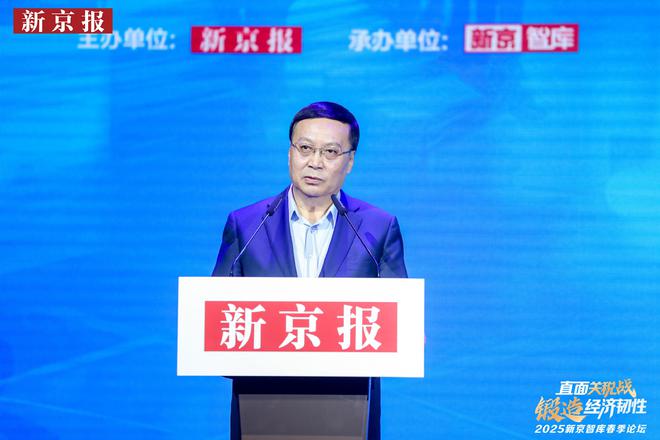
新京报讯(记者柯锐)4月22日,在新京报主办的主题为"直面关税战,锻造经济韧性——2025新京智库 春季论坛"上,中国社会科学院学部委员、中国社会科学院原副院长高培勇表示,当下宏观调控所需解 决的问题至少是双重的,既有需求不足的"老"问题,也有预期偏弱的"新"问题,宏观调控要在病灶和病 源两个层面同时着力,既着眼于治标,又着重于治本,标本兼治。 高培勇表示,以往经济运行当中面对的困难和挑战多可归结于因社会总供求失衡而导致的经济波动,而 当前我们面对的经济运行当中的困难和挑战,则相对复杂得多。 虽然同样表现为经济波动,虽然同样可以从中发现社会总供求失衡的身影,但顺藤摸瓜,透过经济波动 和社会总供求失衡而深入到其本质,仔细比对之后,会发现其背后的深层原因在于预期偏弱,故而当下 宏观调控所需解决的问题便不那么单一了。 在高培勇看来,如果将有效需求不足视作病灶,那么其背后的深层病源则是预期偏弱,因预期偏弱而导 致有效需求不足,进而导致社会总供求失衡,是当下宏观调控所需解决的问题的复杂性之所在。"这意 味着当前中国宏观经济运行中的突出矛盾,较之于以往在发生变化,这就是由社会总供求失衡引致的经 济波动,延伸为由预期和信心 ...
彭文生:应对需求不足要求宏观政策机制转型|宏观经济
清华金融评论· 2025-03-22 10:30
面向家庭部门的财政扩张应该是当前逆周期调节的主要载体。不同于货币政策,财政政策可以通过政府 与家庭部门直接发生经济与交易行为(转移支付、税收等)而快速有效地作用于消费。把提振消费作为 第一重点任务,必然意味财政政策是逆周期调节的第一有效工具。具体而言,完善社会保障体系,尤其 是改善弱势群体的保障,促进中低收入群体增收减负,是结合民生与消费的有效抓手。综合来看,面向 家庭部门的财政扩张可以兼顾稳增长、扎实推进共同富裕以及应对地缘经济挑战,达到一举多得的效 果。 现阶段面向家庭部门的财政扩张,尤其改善社会保障机制,既促进当前消费需求,也促进未来的财政自 动稳定器功能,是兼顾逆周期和跨周期(调整结构)的有效手段。短期来看,面向家庭的财政扩张可能 带来一定的财政收支缺口,因而要辅之以融资端增加国债发行。长远来看,则需要推动财税体制改革, 比如增加具有累进属性的直接税有利于调节收入差距、增强财政的自动稳定器功能。党的二十届三中全 会《中共中央关于进一步全面深化改革、推进中国式现代化的决定》提出"健全直接税体系""规范经营 所得、资本所得、财产所得税收政策,实行劳动性所得统一征税""研究同新业态相适应的税收制 度"等,是 ...