
风险防范

Search documents
中国农业银行信用卡中心副总裁佟春雨:三个维度赋能汽车产业高质量发展
Zheng Quan Ri Bao Wang· 2025-11-29 03:53
Core Insights - Automotive finance is a crucial component of the automotive industry ecosystem, serving as a key "lubricant" that supports the entire production to consumption chain [1] - The China Agricultural Bank is committed to enhancing collaboration across three dimensions to empower high-quality development in the automotive industry [1] Group 1 - Automotive finance provides essential funding for both vehicle manufacturers and consumers, facilitating the transition from scale expansion to structural upgrades in the industry [1] - Financial institutions are innovating differentiated products in response to changing consumer demands and government policies, effectively lowering the barriers to vehicle purchases [1] - The China Agricultural Bank aims to align with national strategies, enhance bank-enterprise integration, and deepen inter-industry collaboration to meet the diverse financial needs of the automotive sector [1] Group 2 - The China Agricultural Bank will play a significant bridging role by collaborating with industry peers in areas such as financial technology, product innovation, and risk prevention [2] - The bank seeks to establish a regular cooperation mechanism to break down industry barriers and data silos, promoting resource sharing and complementary advantages [2] - The goal is to create a more dynamic consumer finance ecosystem that offers timely, convenient, and precise financial services [2]

业界探讨中介机构角色定位与责任界定
Jin Rong Shi Bao· 2025-11-28 00:51
Core Viewpoint - The recent ruling in the "Huaxin Bond" false statement case has sparked ongoing discussions in the market regarding the responsibilities of intermediary institutions and the need for a balanced approach to due diligence and penalties in financial fraud cases [1][2]. Group 1: Responsibilities of Intermediary Institutions - The ruling indicates a trend towards limiting the liability of intermediary institutions, with law firms found to have no fault and other institutions bearing only 0.5% to 5% of joint liability [1]. - Experts suggest that intermediary institutions should collaborate effectively and not evade due diligence responsibilities due to low fees [1]. - There is a call for a more reasonable liability distribution system that includes fair liability and caps on responsibilities in bond false statement cases [1]. Group 2: Rating Agencies' Responsibilities - There is a divergence in judicial practice regarding the boundary of rating agencies' duty of care, with some courts holding them to a higher standard than others [2]. - The cancellation of mandatory ratings for bond issuances in 2021 has altered the legal responsibility framework for rating agencies, making ratings optional rather than essential [2]. - Experts emphasize the need for rating agencies to enhance their credibility and differentiation to effectively serve as risk assessors in the market [3]. Group 3: Institutional Investors' Due Diligence - Institutional investors in the bond market should also bear some due diligence responsibilities to avoid over-reliance on ratings [5]. - The unique composition of bond market investors, primarily professional institutions, necessitates a tailored approach to liability and evidence requirements in disputes [5]. - Enhancing due diligence capabilities is crucial for preventing bond fraud, and there is a high expectation for intermediary institutions to provide professional support during this process [5]. Group 4: Compliance and Legal Awareness - There is an increasing expectation for intermediary institutions to enhance their compliance awareness and risk management practices [6]. - The legal effectiveness of disclaimers used by rating agencies may be challenged in judicial practice, suggesting a need for clearer liability limits [6]. - A comprehensive approach to criminal compliance is necessary, as intermediary institutions may face criminal liability even if they did not lead fraudulent activities [6].
保障金融权益 助力美好生活——建行盐城分行深入企业开展金融宣教
Sou Hu Cai Jing· 2025-11-24 05:11
Core Insights - The event organized by the Bank of China Yancheng Branch aimed to deepen cooperation between banks and enterprises while enhancing employees' financial literacy and risk awareness [1][2] - The financial knowledge promotion activity focused on educating employees about the latest trends in telecom network fraud and common scams, providing practical advice on how to avoid them [1] - The initiative reflects the bank's commitment to the "finance for the people" philosophy and aims to provide diversified and precise financial support to enterprises and their employees [2] Summary by Sections - **Event Overview** - The Bank of China Yancheng Branch's financial service team conducted a financial knowledge promotion event at Guolao Polygonum Multiflorum Technology Co., Ltd. [1] - The theme of the event was "Protecting Financial Rights and Supporting a Better Life" [1] - **Content of the Activity** - The event included face-to-face interactions and a consultation desk, where promotional materials were distributed [1] - Topics covered included new characteristics of telecom fraud, fake loans, rebate scams, fake shopping, and online dating scams [1] - Employees were educated on the principles of fraud prevention: "Do not trust easily, do not disclose information, do not transfer money, and verify multiple times" [1] - **Employee Engagement** - The atmosphere was interactive and lively, with employees expressing newfound understanding of financial knowledge and its relevance to their daily lives [1] - Personalized financial consulting services were provided, covering areas such as pension allocation, consumer loans, and credit card usage, which received positive feedback from employees [1] - **Future Directions** - The bank plans to continue innovating service formats and expanding financial service coverage to support the healthy development of the real economy [2]

证券结算风险基金计收范围和交纳比例迎调整
Shang Hai Zheng Quan Bao· 2025-11-07 19:10
Group 1 - The revised regulations optimize the investment, storage, and usage of risk funds, expanding the investment scope from only bank deposits to include key term government bonds and other approved forms of fund utilization [1] - The requirement for risk funds to maintain a bank deposit balance of no less than 70% of the total net assets at the end of the previous month has been established [1] - The process for utilizing risk funds has been simplified, shifting from prior approval to post-reporting in line with the State Council's directive to eliminate administrative approval items [1] Group 2 - The regulations enhance risk prevention and internal management provisions, mandating settlement participants to establish comprehensive risk prevention and internal control systems [2] - Securities registration and settlement institutions are required to develop internal management systems that clarify the collection, management, and usage of risk funds, along with annual reporting to the CSRC and the Ministry of Finance [2] - The regulations detail the recovery and accountability arrangements for utilizing risk funds in cases of advance payments, compensation for default settlement losses, technical failures, and operational errors [2] - Currently, the total net assets of the risk fund exceed 3 billion, and settlement participants who have paid the risk fund for over a year will not be required to make additional payments due to this revision [2]
开展“金融知识进景区”宣传活动
Qi Lu Wan Bao· 2025-10-24 09:32
Core Points - The article highlights a financial literacy campaign organized by the Bank of China in Le Ling, aimed at enhancing financial safety awareness among local farmers and tourists [1] - The initiative includes on-site activities such as setting up information booths, distributing brochures, and providing real-time Q&A sessions to educate participants about financial risks and safe banking practices [1] - The campaign specifically addresses concerns related to agricultural loans and safe payment methods, while also warning against common financial traps like low-cost tourism and fraudulent investments [1] Summary by Categories - **Financial Literacy Campaign** - The Bank of China Le Ling branch organized a "Financial Knowledge into Scenic Areas" campaign to improve financial safety awareness among the elderly and local farmers [1] - The campaign was well-received, with participants expressing appreciation for the information provided [1] - **Educational Activities** - Activities included setting up promotional points, distributing illustrated manuals, and answering questions on-site [1] - Topics covered included prevention of telecom and online fraud, safe use of mobile banking, and personal credit protection [1] - **Focus on Local Needs** - The campaign tailored its content to the specific needs of local farmers, addressing issues like agricultural loan applications and the safe use of payment codes [1] - The initiative aims to integrate financial services with local industries and public needs, contributing to economic development and a secure financial environment [1]

系统施策提升基层治理效能
Zhong Yang Ji Wei Guo Jia Jian Wei Wang Zhan· 2025-10-22 00:56
Group 1 - The grassroots supervision system is essential for ensuring the implementation of party and state policies, acting as the "last mile" of governance [1] - Sichuan Province's Ren Shou County is enhancing grassroots supervision by integrating various supervisory responsibilities and promoting a collaborative supervision framework [1] - The county is focusing on comprehensive supervision, specialized supervision, and coordination among different types of supervision to create an effective grassroots supervision network [1] Group 2 - The county is categorizing and addressing issues identified during supervision checks, ensuring that every problem is resolved and feedback is provided [2] - Common issues are being addressed through feedback to relevant departments, while a "廉情监督员" team is established for follow-up evaluations to gauge public satisfaction [2] - For significant issues, the county is implementing a "guarantee" approach, where department heads are responsible for creating and tracking rectification plans [2] Group 3 - The approach emphasizes both immediate and long-term solutions, combining punitive measures with preventive education to address disciplinary violations [3] - The county is focusing on early detection and correction of issues by establishing a risk assessment mechanism that operates both online and offline [3] - Educational initiatives are being implemented to raise awareness among party members and officials about compliance and ethical standards through case studies and discussions [3]
周一或反弹
Sou Hu Cai Jing· 2025-10-20 01:46
Core Viewpoint - The stock market faces challenges due to human psychological weaknesses, particularly fear and greed, which influence investor behavior during market fluctuations [1] Group 1: Market Sentiment - Over the past three years, investors had to overcome fear when the market was below 3000 points, specifically at 2635 and 2689 points, where pessimism and despair were prevalent [1] - As the market rose above 3900 points, excitement surged among investors, leading to a disregard for risk management [1] Group 2: Investor Behavior - Many investors entered the market with high leverage, even borrowing all their funds, and some went as far as resigning from jobs or dropping out of school to trade stocks [1] - This behavior reflects a phenomenon of wealth illusion, causing a significant loss of risk awareness among investors [1]
黄金突然急跌
2 1 Shi Ji Jing Ji Bao Dao· 2025-10-17 03:24
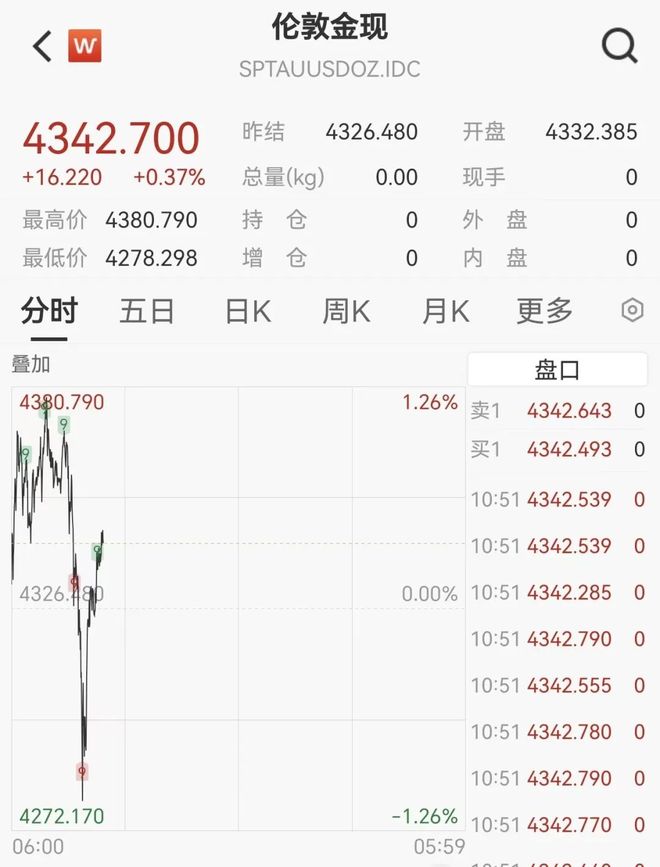
Core Viewpoint - International gold prices have reached a historic high, surpassing $4,380 per ounce, with a year-to-date increase of approximately 60% [1]. Group 1: Gold Price Movements - Spot gold prices rose to a record high of $4,380.79 per ounce during Asian trading, marking a significant increase [1]. - The current gold price in China is approaching 1,300 RMB per gram, with notable daily increases from various jewelers [2]. - The Shanghai Gold Exchange has issued warnings regarding the volatility of precious metal prices, urging members to enhance risk awareness [5]. Group 2: Investment Strategies - Experts recommend that ordinary investors consider dollar-cost averaging (regular investment) in gold to mitigate risks associated with price volatility [9]. - It is advised that investors maintain a gold allocation of 5% to 10% of their total assets, emphasizing the importance of a diversified investment approach [9]. - The strategy of purchasing gold in smaller, incremental amounts is highlighted as a way to average costs and reduce the impact of market fluctuations [10].

4392美元!黄金又新高了,美股跳水,防风险时刻到来?
Sou Hu Cai Jing· 2025-10-17 02:19
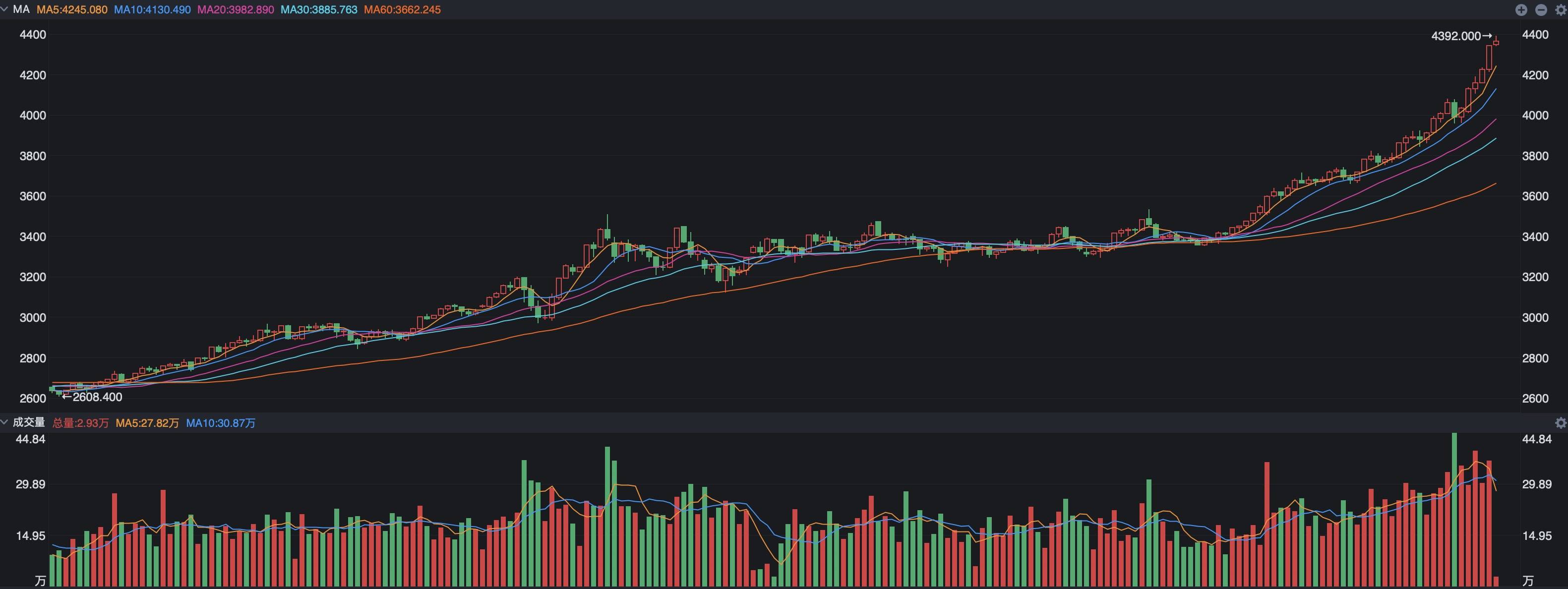
Group 1: U.S. Stock Market - The U.S. stock market experienced a significant pullback after an initial rise, with the Nasdaq index nearly gaining 1% before a sharp decline [1] - Regional bank stocks faced a severe drop, with the regional bank index falling over 6%, marking the largest decline since April [1] - The recent trend of three consecutive large bearish candles in the regional bank index raises concerns about potential negative developments in the U.S. financial sector [1] Group 2: Gold Market - Gold prices surged, surpassing $4,300 per ounce, with intraday highs reaching $4,392, indicating a potential approach to $4,500 [3] - The acceleration in gold prices is attributed to heightened global risk aversion and a scarcity effect, rather than just Federal Reserve interest rate cuts or global inflation [3] - Recent notifications from the Shanghai Gold Exchange and Shanghai Futures Exchange highlight the need for increased risk awareness due to significant market volatility [3] Group 3: Hong Kong Stock Market - The Hang Seng Index closed flat after narrowing its decline, while the Hang Seng Tech Index fell by 1.13% [4] - Both indices are hovering near the 60-day moving average, which is seen as a critical support level that may be tested [4] - The sensitivity of the Hong Kong market to external factors suggests that further adjustments may be necessary, potentially impacting the A-share market due to their high correlation [4]
黄金疯牛让人高攀不起 或已严重超买
Di Yi Cai Jing· 2025-10-14 22:52
Core Viewpoint - Recent gold price increases are driven by three main "strong buyers": rising Western ETF positions, potential acceleration of central bank purchases, and increased speculative positions. Goldman Sachs has raised its gold price forecast for December 2026 from $4,300 to $4,900 per ounce [1] Group 1: Gold Price Trends - International gold prices reached new highs on October 14, with futures and spot prices hitting $4,190 and $4,179 per ounce respectively [1] - Since September, gold prices have increased by over 19%, while silver has risen by 23% [1] - Year-to-date, spot gold has risen over $1,500, a gain of over 58% [5] Group 2: Investor Behavior - Many investors express a fear of missing out (FOMO) on the rising gold prices, leading to indecision in their buying strategies [2] - A significant increase in interest in gold investment has been noted, with over a million users accessing gold accumulation products on the Ant Financial platform on October 14 [2] Group 3: Institutional Insights - Bank of America has raised its gold price target for 2026 to $5,000 per ounce and silver to $65 per ounce, indicating further upside potential of 22% and 25% respectively [5] - Analysts suggest that the current gold price reflects strong demand from central banks accumulating gold as a reserve asset, with expectations of continued purchases [6] Group 4: Market Risks and Volatility - Despite bullish sentiments, there are warnings about potential price corrections due to profit-taking by investors after rapid price increases [7] - Analysts have noted that the precious metals market is showing signs of being overbought, which could lead to a period of stagnation or correction [7] - The current market environment is characterized by high volatility, with significant price fluctuations observed in gold, silver, and platinum [8]


