
反垄断

Search documents
打破垄断壁垒 保障民生权益
Ren Min Ri Bao· 2026-01-08 01:03
Core Viewpoint - The National Market Supervision Administration has reported significant achievements in antitrust enforcement in the livelihood sector over the past three years, highlighting the importance of maintaining fair market competition to protect consumer welfare and reduce living costs [1][2]. Group 1: Antitrust Achievements - A total of 35 cases of monopoly agreements and 25 cases of abuse of market dominance have been investigated, resulting in fines totaling 2.93 billion yuan [1]. - Antitrust measures have led to a price reduction of over 95% for certain essential medications, significantly alleviating the financial burden on patients and their families [1]. Group 2: Importance of Antitrust in Livelihood Sector - Antitrust actions are crucial for eliminating monopolistic behaviors that increase living costs and restrict consumer welfare, thereby safeguarding the public's financial well-being [1][2]. - The enforcement of antitrust laws is positioned as a key strategy to ensure fair competition and protect the interests of consumers in essential services like utilities [2]. Group 3: Systematic Governance and Challenges - A comprehensive governance framework is necessary for effective antitrust enforcement, including the implementation of fair competition review systems to prevent anti-competitive regulations from being enacted [2]. - The challenges of identifying and addressing hidden monopolistic agreements and the misuse of market dominance require innovative regulatory approaches and a strong commitment to reform [2].
金融时报:美政府反垄断大案接连受挫 正输掉拆分科技巨头之战
Feng Huang Wang· 2026-01-05 07:13
Core Viewpoint - The U.S. government's efforts to break up major tech giants are facing significant challenges, with recent antitrust cases against companies like Google and Meta encountering judicial resistance [2][3]. Group 1: Judicial Challenges - U.S. federal enforcement agencies have struggled to convince judges to order the divestiture of core business segments from tech giants, such as Google's Chrome browser and Meta's Instagram [2]. - Despite some landmark rulings recognizing illegal monopolistic practices, judges are often reluctant to impose the most severe remedies, such as forced breakups or annulments of mergers long after they have been completed [3]. - The ongoing antitrust cases against Apple and Amazon remain unresolved, raising questions about the government's approach to curbing the power of tech giants [3]. Group 2: Impact of AI and Market Dynamics - The rapid pace of technological change, particularly in AI, has created higher barriers for antitrust regulators, complicating their efforts to challenge large tech companies [5]. - In a notable ruling, a judge determined that Google's substantial investments in exclusive agreements maintained its illegal monopoly in the internet search market, but rejected the request to divest Chrome or Android, citing the threat posed by AI advancements [5]. - The judge's decision was influenced by the emergence of generative AI, which he noted could significantly impact Google's $200 billion annual revenue from search [5]. Group 3: Judicial Caution and Complexity - Courts exhibit caution regarding structural remedies for companies valued in the trillions, preferring to mandate behavioral corrections rather than enforce breakups [7]. - Judges emphasize the need for moderation in crafting remedies, referencing the complexities involved in reviewing intricate business arrangements [7]. - Concerns about the practicality of enforcing forced divestitures have been raised, with judges questioning the feasibility of such measures [7].



分析师质疑英伟达与Groq的交易规避监管,交易细节待披露
Ge Long Hui A P P· 2025-12-26 23:13
Core Viewpoint - Nvidia and Groq have announced a $20 billion non-exclusive licensing agreement, which analysts suggest is a strategic move to navigate antitrust scrutiny while maintaining a competitive facade in the AI market [1] Group 1: Strategic Implications - The non-exclusive licensing agreement is seen as a common strategy among tech giants to avoid regulatory challenges, particularly antitrust risks [1] - Analysts from Bernstein highlight that structuring the deal as a non-exclusive license helps to maintain the appearance of competition in the market [1] - Cantor analysts describe the agreement as both an offensive and defensive strategy, aiding Nvidia in expanding its complete system technology stack and solidifying its leadership in the AI market [1] Group 2: Market Significance - Bank of America characterizes the deal as "surprising, expensive but strategically significant," emphasizing Nvidia's focus on the future growth of AI inference chips [1]

《制止滥用行政权力排除、限制竞争行为规定》发布 一图读懂
Yang Shi Xin Wen· 2025-12-26 17:34
Core Viewpoint - The article discusses the necessity of revising regulations to enhance fair competition and strengthen anti-monopoly enforcement in response to the directives from the 20th National Congress of the Communist Party of China and subsequent plenary sessions [6][10]. Group 1: Revision Necessity - The revision is essential to implement the spirit of the 20th National Congress and the third and fourth plenary sessions, which emphasize improving the foundational systems of market economy and reinforcing anti-monopoly measures [6]. - There is a need to refine the legal responsibilities related to the anti-monopoly law, enhance enforcement authority, and improve the operability of relevant rules to better serve the overall objectives of the market [7]. Group 2: Fair Competition and Administrative Power - It is crucial to integrate fair competition review with the enforcement against the abuse of administrative power to effectively prevent and stop behaviors that exclude or restrict competition [10]. - The article highlights the evolution of new types of market intervention, such as using local performance and tax contributions as credit evaluation criteria, which complicates the identification of illegal activities by anti-monopoly enforcement agencies [12]. Group 3: Enforcement Measures - The revision aims to enrich the forms of illegal behavior and improve enforcement transparency and visibility, particularly addressing new typical local "small loops" that improperly interfere with market competition [14]. - New provisions state that if an investigated entity has regulations that contain exclusionary or restrictive competition content and has not conducted fair competition reviews as required, anti-monopoly enforcement agencies should initiate legal proceedings [18]. Group 4: Investigation and Accountability - The article specifies that anti-monopoly enforcement agencies can legally require relevant entities and individuals to provide necessary materials and information within a specified timeframe to support their investigations [21]. - It emphasizes that investigations cannot be concluded through rectification if the investigated entity falls under specific conditions, thereby strengthening constraints on enforcement agencies and the entities being investigated [25].

8点1氪:官方回应吸毒记录封存相关问题;强生爽身粉致癌案判赔女子约110亿元;俞敏洪敲定东方甄选接班人
36氪· 2025-12-25 00:26
Group 1 - The revised Public Security Administration Punishment Law will take effect on January 1, 2026, and has garnered significant attention from media and the public regarding Article 136 [4][5] - The law's revision process included public consultations during its initial and second readings in August 2023 and June 2024, respectively, with specific provisions for sealing records of minor offenders [5][6] Group 2 - The law's provisions for sealing public security violation records apply to minors, covering various types of violations [5] - The law aims to address public concerns and clarify the implications of sealing records for individuals involved in minor offenses [4][5] Group 3 - The law's revisions reflect a broader trend in legal reforms aimed at balancing public safety with the rehabilitation of young offenders [5][6] - The law's implementation is expected to influence public perception and legal practices surrounding juvenile offenses in China [4][5]




俞敏洪确定东方甄选接班人,19年老将孙进担任;英伟达放风春节前向中国客户交付H200;造谣“B站全面付费观看”之人被行拘丨邦早报
创业邦· 2025-12-25 00:12
Group 1 - Yu Minhong has selected a successor for Dongfang Zhenxuan, with Sun Jin, the vice president of New Oriental Education Technology Group, expected to take over as CEO [3] - ZTE has received several collaboration invitations from major AI model manufacturers, indicating a potential expansion of its AI ecosystem beyond its partnership with ByteDance [5] - Li Auto is merging its first and second product lines following the departure of Zhang Xiao, who is reportedly leaving to pursue entrepreneurial ventures [5] Group 2 - Nvidia plans to deliver its H200 AI chips to Chinese customers before the Lunar New Year, with an estimated shipment of 5,000 to 10,000 chip modules [5] - Mercedes-Benz has officially acquired a stake in Qianli Technology, potentially appointing a board member to enhance collaboration in AI and smart driving technologies [7] - Bilibili has denied rumors of a shift to a fully paid viewing model, leading to the arrest of individuals spreading false information [7] Group 3 - The BMW electric M3 is undergoing road testing, expected to feature 700 horsepower and a four-motor drive system [15] - ByteDance has launched a formal mathematical reasoning model, Seed Prover 1.5, achieving a score that meets gold medal standards in international mathematics competitions [17] - Alibaba has upgraded its voice model Qwen3-TTS, allowing for advanced voice design and imitation capabilities [20] Group 4 - Tesla's new car registrations in Europe have dropped by 28% year-on-year, with a significant decline in the EU market [21] - The number of new AI applications launched in China in the second half of the year reached 205, with a notable focus on in-app AI features [21] - Global smartwatch shipments are projected to grow by 7% by the end of 2025, led by brands like Huawei and Apple [21]

Meta(META.US)面临意大利反垄断压力,WhatsApp条款或被限制
智通财经网· 2025-12-24 11:28
Core Viewpoint - The Italian antitrust authority (AGCM) has ordered Meta Platforms (META.US) to suspend certain contractual terms that may exclude competitors' AI chatbots from WhatsApp, amid an investigation into potential abuse of market dominance [1] Group 1: Regulatory Actions - AGCM is investigating Meta for allegedly abusing its market power related to WhatsApp, with a focus on contract terms that may limit competition in the AI chatbot service market [1] - The investigation was initiated in July last year and expanded in November to include updated service terms of the messaging platform [1] - The European Union is also conducting a parallel investigation into similar allegations against Meta [1] Group 2: Company Response - A spokesperson for Meta described the AGCM's decision as fundamentally flawed and indicated that the emergence of AI chatbots has put unprecedented pressure on their systems [1] - Meta plans to appeal the decision made by the Italian regulatory authority [1] Group 3: Industry Context - The regulatory stance in Europe contrasts sharply with the more lenient approach in the United States, leading to resistance from the tech industry, particularly among American giants [2] - The Italian regulator is coordinating with the European Commission to address Meta's actions in the most effective manner [3]
苹果摇钱树再被砍,多米诺骨牌要倒下了?
创业邦· 2025-12-24 10:10
Core Viewpoint - Apple is facing significant challenges to its App Store monopoly as Japan implements the "Mobile Software Competition Law," allowing third-party app stores and payment methods, marking a critical shift in its business model [5][10][11]. Group 1: Impact of Regulatory Changes - Japan's new law requires Apple to permit developers to use third-party app stores and payment methods, which is a major loss of control for the company [10]. - The law will take effect on December 18, 2024, and Apple has already begun supporting third-party app stores in Japan [10]. - The adjustments to Apple's commission structure in Japan represent a substantial concession, with fees reduced to 5% for third-party app stores compared to the previous standard of 30% [11]. Group 2: Financial Performance and Service Revenue - In the current fiscal year, Apple reported total revenue of $313.8 billion, with service revenue reaching $79.6 billion, accounting for over 25% of total revenue [9]. - Service business gross margins are significantly higher at 75%, compared to 40% for iPhone hardware, making it a crucial profit driver for Apple [9]. - The App Store generated total sales of $1.29 trillion last year, with an estimated commission revenue of around $30 billion [9]. Group 3: Global Regulatory Landscape - The European Union's Digital Markets Act (DMA) has already forced Apple to lower its commission rates and open its platform to third-party app stores [12][15]. - Apple faces potential fines of up to 10% of global annual revenue for non-compliance with the DMA, which could amount to billions of euros [15]. - Other countries, including the UK, South Korea, Turkey, Brazil, and Colombia, are also initiating antitrust investigations against Apple, indicating a global trend towards regulatory scrutiny [32]. Group 4: Ongoing Legal Challenges - Apple is involved in ongoing litigation with Epic Games, which has challenged the company's payment practices and commission rates [27][29]. - A recent ruling allowed Apple to charge a "reasonable" commission based on actual costs, rather than the previously high rates, indicating a shift in the legal landscape [28]. - The U.S. Department of Justice is also pursuing antitrust litigation against Apple, which could further impact its business model and market practices [30][31].

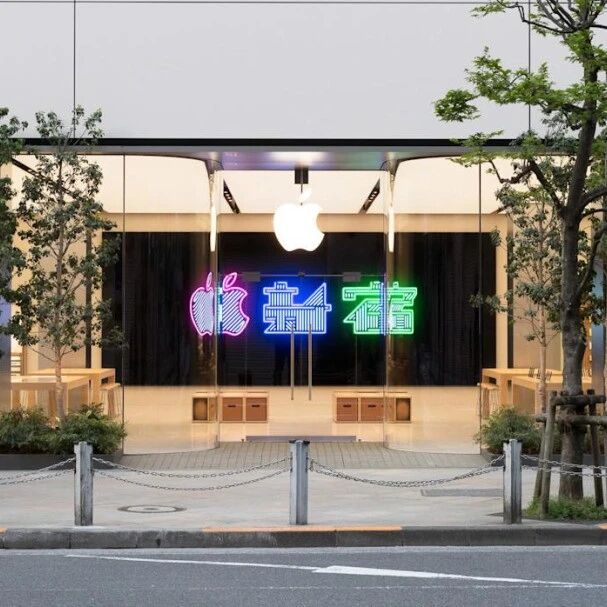
苹果同意在巴西开放第三方应用商店与支付系统,三年反垄断诉讼落幕
Huan Qiu Wang Zi Xun· 2025-12-24 08:15
Core Viewpoint - Apple has reached a settlement with Brazil's antitrust regulator CADE, ending a three-year legal dispute, allowing third-party app stores and alternative payment systems on iOS devices in Brazil [1][2] Group 1: Settlement Details - The agreement allows Brazilian users to use third-party app stores and supports in-app purchases through non-Apple payment systems or links to external websites [1] - The settlement is effective for three years, with Apple required to implement technical adjustments within 105 days [1] Group 2: Background and Implications - The investigation began in 2022 after a complaint from MercadoLibre, accusing Apple of abusing its dominant position in the iOS ecosystem and restricting competition [1] - CADE had previously issued preventive measures in 2024, requiring Apple to adjust its policies, leading to a final review phase [1] Group 3: Legal and Financial Consequences - As part of the settlement, Apple will withdraw its lawsuit against CADE's 2024 preventive measures and could face a fine of up to 150 million Brazilian Reais (approximately 27.09 million USD) for serious violations of the agreement [2] - Apple acknowledged that the changes are made to comply with CADE's requirements but warned of potential privacy and security risks for users [2] Group 4: Reactions - MercadoLibre recognized CADE's efforts in addressing competition challenges posed by the iOS platform in Brazil but noted that the current agreement only partially meets the need for a fairer regulatory framework [2]
反垄断监管再下一城!苹果(AAPL.US)与巴西CADE达成和解,被迫开放iOS第三方商店并允许站外支付
智通财经网· 2025-12-24 06:44
Core Viewpoint - Apple has reached an agreement with Brazil's antitrust regulator CADE to allow third-party app stores and payment methods on its iOS platform in Brazil, concluding a three-year antitrust lawsuit [1][2] Group 1: Agreement Details - The agreement permits the operation of third-party app stores in Brazil, alongside Apple's own app store [1] - Apple is required to allow third-party payment processing options for in-app purchases and links to external websites for transactions [1] - The agreement will last for three years from the date the new terms take effect for app developers [2] Group 2: Compliance and Penalties - Apple has 105 days to implement the required adjustments to comply with CADE's demands [2] - If Apple fully violates the agreement, it could face a fine of up to 150 million Brazilian Reais (approximately 27.09 million USD) [2] - Apple has agreed to withdraw its judicial appeal against CADE's preventive measures from 2024 as part of the agreement [2] Group 3: Background and Implications - The investigation was initiated following a complaint from MercadoLibre in 2022, alleging that Apple restricted the distribution of digital goods and in-app purchases [1] - CADE's technical department recommended an unfavorable ruling against Apple earlier this year, leading to the final decision by the internal tribunal [1]