碳中和

Search documents
怎样理解推动煤炭和石油消费达峰
Xin Hua She· 2026-02-04 03:40
新华社北京2月4日电 《中共中央关于制定国民经济和社会发展第十五个五年规划的建议》提出:"推动 煤炭和石油消费达峰。"党的十八大以来,党中央将应对气候变化摆在国家治理更加突出的位置,作出 实现碳达峰碳中和的重大战略决策,加快能源等重点领域结构调整,推动经济社会发展全面绿色转型取 得显著成效。"十五五"时期是实现碳达峰的收官期,作为能源供应的主体,煤炭、石油等化石能源仍是 推进碳达峰的重点领域。同时,在这一时期,煤炭、石油消费呈现达峰趋势,有必要顺应这一趋势,推 动煤炭、石油等消费达峰顺利实现,为能源结构调整和节能降碳深入推进打下更好基础。 ...
氢能行业2026年度投资策略
2026-02-04 02:27
Summary of Hydrogen Energy Industry Conference Call Industry Overview - The conference focused on the hydrogen energy industry, particularly investment strategies for 2026, which marks the beginning of a new five-year plan. The industry has seen a significant increase in maturity over the past five years, with expectations for systematic cost reductions across the entire supply chain due to technological advancements and economies of scale [1][2]. Key Points Current Supply and Demand - China is the largest hydrogen producer globally, with a projected production of 36.5 million tons in 2024, accounting for over 36% of the world's total production of approximately 100 million tons. The production structure shows that coal-based hydrogen constitutes 56.7%, natural gas 20.8%, and industrial by-product hydrogen 21%, while electrolysis accounts for only 1.4% [2][3]. - The primary applications of hydrogen are in industrial sectors, with ammonia synthesis (26%), methanol synthesis (27%), and liquefaction (17%) being the major uses. Future growth is expected in transportation and building sectors [3]. Policy Developments - Recent policies have elevated hydrogen energy to a key position in national energy management, alongside oil, coal, natural gas, nuclear, and hydropower. The Energy Law of 2024 officially includes hydrogen energy in this category [4][5]. - The government aims for clean hydrogen to achieve large-scale applications in metallurgy, ammonia synthesis, and refining by 2027, with a focus on promoting green hydrogen [5]. Cost Reduction Strategies - Systematic cost reductions are essential for the commercial viability of hydrogen energy. Key strategies include: - Reducing electricity prices, which currently account for 60-80% of hydrogen production costs. - Implementing supportive policies and subsidies for green hydrogen production [6][7]. - The development of carbon credit trading (CCER) for projects that demonstrate carbon reduction effects, potentially shortening investment recovery periods [8][9]. Technological Advancements - The cost of electrolyzers has been decreasing, with average prices dropping significantly from 2023 to 2025. For instance, alkaline electrolyzers saw price reductions of 11% and 13% in 2024 and 2025, respectively [9][10]. - Fuel cell vehicle costs have also decreased by approximately 15% annually due to technological advancements [10]. Infrastructure Development - The number of hydrogen refueling stations is expected to grow from 138 in 2020 to 493 by 2025, reflecting a 2.6 times increase. However, the high construction costs and low utilization rates of these stations pose challenges [15][16]. - A trend towards integrated energy stations combining hydrogen, gas, and electric refueling is emerging to improve economic viability [16]. Market Opportunities - The green methanol market is gaining attention, with significant government support for projects aimed at producing green methanol, which is seen as a viable alternative in the shipping industry [18][19]. - The potential for green methanol to achieve cost parity with traditional methods hinges on carbon pricing and the cost of green hydrogen production [20][21]. Investment Recommendations - Companies with strong shareholder backing and those focused on pure hydrogen energy, such as Yihua Tong, Reshaping Energy, and Guohong Hydrogen Energy, are recommended for investment [22][23]. - Additionally, firms involved in green methanol production and those with stable core businesses that can leverage hydrogen as a growth area should be considered [23]. Conclusion - The hydrogen energy industry is poised for significant growth over the next five years, driven by technological advancements, cost reductions, and supportive government policies. Investors are encouraged to explore a diversified portfolio of companies within the hydrogen sector to capitalize on emerging opportunities [22].
大越期货沪铝早报-20260204
Da Yue Qi Huo· 2026-02-04 02:00
沪铝早报- 交易咨询业务资格:证监许可【2012】1091号 大越期货投资咨询部 :祝森林 从业资格证号:F3023048 投资咨询证号:Z0013626 联系方式:0575-85226759 重要提示:本报告非期货交易咨询业务项下服务,其中的观点和信息仅作参考之用,不构成对任何人的投资建议。 我司不会因为关注、收到或阅读本报告内容而视相关人员为客户;市场有风险,投资需谨慎。 每日观点 铝: 1、基本面:碳中和控制产能扩张,国内供应即将到达天花板,下游需求不强劲,房地产延续疲软,宏 观短期情绪多变;中性。 2、基差:现货23290,基差-520,贴水期货,偏空。 3、库存:上期所铝库存较上周涨19718吨至216771吨;中性。 4、盘面:收盘价收于20均线下,20均线向下运行;偏空。 5、主力持仓:主力净持仓多,多减;偏多。 6、预期:碳中和催发铝行业变革,长期利多铝价,宏观情绪多变,铝价震荡向上运行 近期利多利空分析 利多: 利空: 每日汇总 | 类型 | 地方 地方 现货 昨日现货 | 中间价 中间价 | 涨跌 涨跌 | | 类型 | 总量(吨) 总量(吨) | 增减 增减 | | --- | --- ...
研判2026!中国低碳经济行业发展历程、相关政策、市场规模、重点企业及未来展望:低碳经济加速崛起,引领绿色发展新范式[图]
Chan Ye Xin Xi Wang· 2026-02-04 01:24
Core Viewpoint - China, as the largest developing country and greenhouse gas emitter, has made significant progress in low-carbon economic development, aiming to peak carbon emissions by 2030 and achieve carbon neutrality by 2060 through green energy and clean technology initiatives [1][12]. Low-Carbon Economy Overview - The low-carbon economy is based on low energy consumption, low emissions, and low pollution, focusing on technological innovation, institutional reform, industrial transformation, and renewable energy development [3][4]. Industry Development History - The concept of a low-carbon economy emerged in the UK in 2003, with significant milestones including the 2006 Stern Report advocating for global transition to low-carbon economies and China's first national climate change assessment report [4][6]. Industry Policies - A series of policies have been implemented to promote low-carbon economic development, including the 2025 government work report emphasizing the acceleration of green low-carbon economy development and the establishment of a national carbon market [7][8]. Industry Chain - The low-carbon economy industry chain includes upstream low-carbon energy supply and technology research, midstream low-carbon enterprises, and downstream applications such as green buildings and renewable energy generation [8]. Current Industry Status - The national carbon trading market is a key component of the low-carbon economy, with significant growth in trading volume and value, reaching a cumulative transaction volume of 865 million tons and a transaction value of 57.663 billion yuan by the end of 2025 [9][10]. Key Enterprises - Major companies in China's low-carbon economy include Dongjiang Environmental Protection, Ningde Times, BYD, and others, each focusing on various aspects of environmental services, clean energy, and technology innovation [14][15]. Industry Development Trends - Technological innovation is crucial for low-carbon economic growth, with advancements in renewable energy and storage technologies driving down costs and improving efficiency [17]. - Government support through policies and funding will continue to encourage research and development in low-carbon technologies [18]. - Increasing market demand for low-carbon products, driven by consumer awareness and global climate governance, will further stimulate growth in the low-carbon economy [18].






德国开放电动车补引来合作新机
Jing Ji Ri Bao· 2026-02-03 22:15
Group 1 - The German government plans to invest €3 billion to restart the electric vehicle (EV) purchase subsidy program, which will last until 2029 and is expected to cover approximately 800,000 new vehicles. Notably, this subsidy includes Chinese electric vehicle brands without regional restrictions, contrasting with the protectionist tendencies seen in some other European EV policies [1] - The German electric vehicle market has significantly cooled since the last subsidy program ended in late 2023, with an expected registration of about 380,000 pure electric vehicles in 2024, a year-on-year decrease of 27.4%. The subsidy aims to boost the market in the short term and reflects Germany's pragmatic approach to accelerate its green transition by leveraging external high-quality production capacity [1] - Germany's Environment Minister emphasized that market data does not support claims of a "mass influx" of Chinese car manufacturers and highlighted that German manufacturers will respond positively to competition, indicating a rational correction to protectionism [1] Group 2 - Chinese electric vehicles' entry into the German and European markets relies on continuous innovation in core technologies, improved product quality, and brand value. For instance, BYD's "megawatt flash charging" technology showcased at the 2025 Munich Auto Show addresses European users' charging anxieties and has attracted collaboration interest from several local European companies [2] - The collaboration between China and Europe in the electric vehicle sector has evolved from mere trade to deep industrial integration, demonstrating that open cooperation can accelerate local green transitions and industrial upgrades. Companies like Xpeng and Leapmotor are partnering with Volkswagen and Stellantis to enhance technological innovation and localization [2] - The recent open approach of Germany's subsidy policy is expected to encourage deeper participation of Chinese car manufacturers in the German electric vehicle industry and aligns with recent positive developments in the China-Europe electric vehicle trade dispute, which may lead to deeper cooperation in the supply chain [3]
ADM(ADM) - 2025 Q4 - Earnings Call Transcript
2026-02-03 14:30
Financial Data and Key Metrics Changes - The company reported fourth quarter adjusted earnings per share (EPS) of $0.87 and full year adjusted EPS of $3.43, with total segment operating profit of $821 million for the fourth quarter and $3.2 billion for the full year [4] - The trailing fourth quarter adjusted return on invested capital (ROIC) was 6.3%, and cash flow from operations before working capital changes was $2.7 billion for 2025, with a $1.5 billion cash flow benefit from inventory reduction [4][19] Business Line Data and Key Metrics Changes - The Ag Services and Oilseeds (AS&O) segment operating profit for the fourth quarter was $444 million, down 31% year-over-year, and for the full year, it was $1.6 billion, a 34% decrease compared to 2024 [11] - The Carbohydrate Solutions segment operating profit for the fourth quarter was $299 million, down 6% year-over-year, and for the full year, it was $1.2 billion, down 12% compared to 2024 [14] - The Nutrition segment revenues were $1.8 billion for the fourth quarter, remaining flat year-over-year, with human nutrition revenue increasing by 5% and animal nutrition revenue decreasing by 4% [16] Market Data and Key Metrics Changes - The operating environment throughout 2025 was challenging, with lower export activity from North America impacting the Ag Services subsegment [11] - The company expects positive economic opportunities for the industry and American farmers to materialize, which should drive additional long-term investments [9] Company Strategy and Development Direction - The company is focusing on five key growth areas: enhanced nutrition, biotics, biosolutions, precision fermentation, and decarbonization, with each presenting potential for compelling returns [7] - The company executed over 20 projects as part of portfolio optimization and simplification initiatives, achieving approximately $200 million in cost savings [6] Management's Comments on Operating Environment and Future Outlook - Management expressed optimism about the future, anticipating a more constructive operating environment in 2026, driven by improved trade relations and expected clarity in U.S. biofuel policy [9][10] - The current outlook for adjusted EPS in 2026 is projected to be between $3.60 and $4.25, reflecting growth over 2025 [20] Other Important Information - The company paid its 376th consecutive quarterly dividend during the fourth quarter [5] - The joint venture with Alltech has commenced operations, although it is not expected to have a material impact on nutrition operating profit in 2026 [22] Q&A Session Summary Question: Congratulations on closing the case with the SEC and DOJ. What are the expectations for operating rates and processing rates of biodiesel and renewable diesel facilities once the RVO arrives? - Management acknowledged the difficulty in providing guidance due to external factors but expressed optimism about positive impacts once clarity is received on policies [30][31] Question: Can you provide an update on the Nutrition segment and the recovery of customers lost during the Decatur East downtime? - Management indicated that while there was a strong performance in flavors, recovery of customer demand is ongoing and will take time [39][40] Question: What are the expectations for crush margins and the impact of RVO policy on future earnings? - Management stated that the timing and adoption of RVO policy will significantly influence crush margins and overall earnings, with a cautious outlook provided [58][60] Question: What is driving the weakness in Starches and Sweeteners demand? - Management noted that consumer behavior changes, including the adoption of GLP-1 medications, have contributed to reduced demand, alongside pricing pressures [64][66]

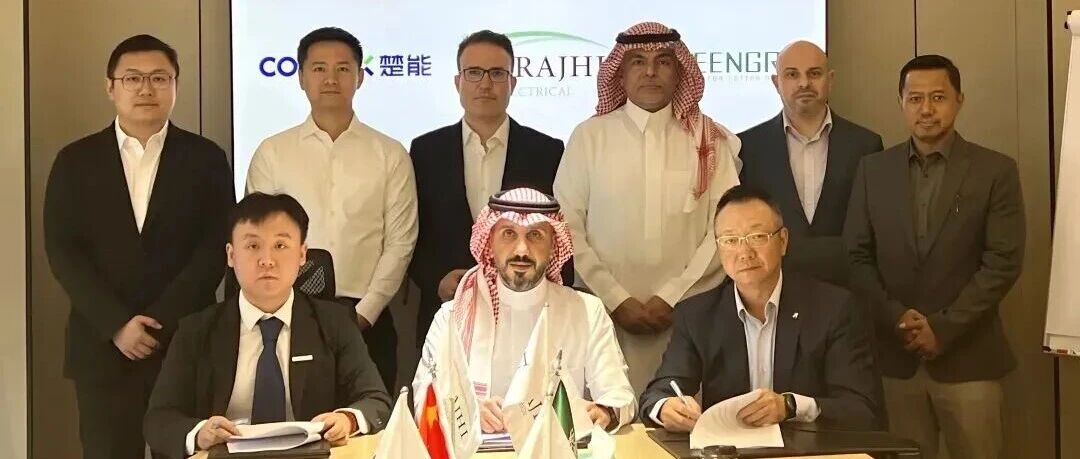
5.5GWh!楚能与沙特Al Rajhi、亿电通签署储能战略合作协议
中关村储能产业技术联盟· 2026-02-03 12:03
Core Viewpoint - The article highlights the significant progress made by Chuangneng New Energy in expanding its overseas market, particularly in Saudi Arabia, where it will supply a total of 5.5 GWh of energy storage products over the next three years [2][4]. Group 1: Partnership and Strategic Goals - Chuangneng New Energy has signed a strategic cooperation agreement with Al Rajhi Electrical and Shanghai Yidiantong (GREENGRID) to actively respond to Saudi Arabia's "Vision 2030" energy transformation strategy [4]. - As the first Chinese strategic partner in the energy storage sector for Al Rajhi Electrical, Chuangneng will leverage its R&D capabilities and large-scale manufacturing advantages to provide advanced energy storage products and comprehensive technical support for local factory construction in Saudi Arabia [4][5]. - Shanghai Yidiantong will act as a key strategic link and platform support for the partnership, participating deeply in the entire process of energy storage project implementation, from supply chain organization to local deployment [4][6]. Group 2: Company Background and Capabilities - Al Rajhi Electrical is a wholly-owned subsidiary of the diversified Al Rajhi Group in Saudi Arabia, benefiting from significant capital and strategic synergies due to its role as a major shareholder in ACWA POWER [5]. - The company has been focused on power and automation solutions since 2012, holding a leading position in industrial, commercial, and residential sectors with strong financial and operational capabilities [5]. - Shanghai Yidiantong specializes in smart grid and new energy industries, enhancing the international competitiveness of manufacturing enterprises through digital supply chain management and cross-border collaboration [6]. Group 3: Market Expansion and Future Outlook - Chuangneng has established a global service network covering R&D, production, sales, and service, providing customized, full-lifecycle product solutions and technical support tailored to different regional market needs [6]. - The partnership marks a crucial step for Chuangneng in expanding its presence in the Middle East market and deepening its overseas layout, indicating recognition of its technological strength and product competitiveness in mainstream markets [6]. - Chuangneng aims to use the Middle East as a strategic foothold to collaborate with international partners in building a green energy ecosystem, contributing to global energy transition and carbon neutrality goals [6].
太阳能发电装机规模今年有望首超煤电,“中国将取得里程碑式的进展”
Sou Hu Cai Jing· 2026-02-03 10:37
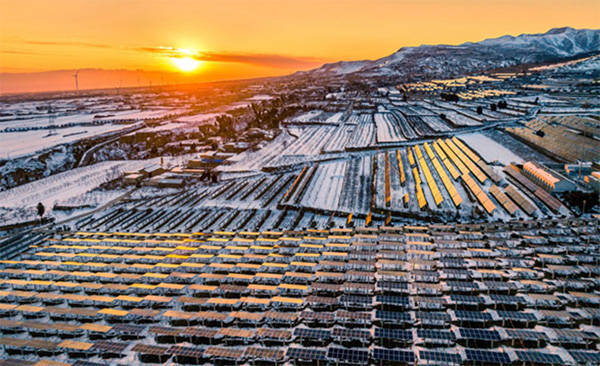
《报告》显示,我国全社会用电量规模在2025年实现两大突破:一是我国年度全社会用电量规模首次突 破10万亿千瓦时大关,达10.37万亿千瓦时;二是月度用电量规模首次突破1万亿千瓦时大关,7月我国 全社会用电量达到1.02万亿千瓦时,这也是全球范围内首次。 蓝色的太阳能光伏板铺满山西省运城市的山坡。IC Photo 更令人惊讶的是,美国《福布斯》杂志1日注意到,在电力需求上升的同时,中国碳排放却出现了下 降。 【文/观察者网 王一】2月2日,中国电力企业联合会发布的《2025—2026年度全国电力供需形势分析预 测报告》预计,2026年我国太阳能发电装机规模将首次超过煤电装机规模,年底风电和太阳能发电合计 装机规模将达到总发电装机的一半。 美国彭博社3日评价说,这标志着中国在构建更清洁的电力体系的长期进程中,取得了里程碑式的进 展。 报道指出,中国电力系统规模已超过美国的两倍,电价处于全球较低水平。而根据中国电力企业联合会 的说法,2026年全年,中国新增发电装机有望超过4亿千瓦,其中新增新能源发电装机有望超过3亿千 瓦。 数据显示,中国太阳能装机容量在2025年底已达约1200吉瓦,过去三年年均新增约270吉 ...

东方日升储能再度跻身BNEF Tier 1榜单 国际竞争力获权威认可
Zheng Quan Ri Bao Wang· 2026-02-03 09:49
Core Insights - Risen Energy has been recognized as a Tier 1 manufacturer in the latest Bloomberg New Energy Finance (BNEF) report for Q1 2026, highlighting its comprehensive strength in the energy storage sector [1][2] - The company has developed a full-stack renewable energy solution capability over 21 years, offering customized products across various categories including photovoltaic modules, inverters, energy storage systems, and smart energy management systems [1] - Risen Energy's Risen Cloud smart energy management platform provides remote operation and maintenance services, creating a full lifecycle value loop from green power generation to energy storage and smart operation [1] Global Expansion and Market Development - The company has established a global operational system with 10 production bases and 24 marketing service centers, covering key regions such as Europe, North America, Asia-Pacific, the Middle East, and South America [2] - Recent achievements in overseas market expansion include signing contracts in Saudi Arabia, Brazil, and Malaysia, enhancing local cooperation and market penetration [2] - In the domestic market, Risen Energy has formed deep strategic partnerships with several core clients, solidifying its development foundation in regions like East China, South China, and North China [2] Future Outlook - The recognition as a Tier 1 manufacturer reflects the industry's and market's acknowledgment of Risen Energy's technology research and development, project delivery, and brand influence [2] - The company plans to continue increasing its investment in technology research and development, focusing on optimizing and upgrading products and solutions to provide safer, more efficient, and customized energy solutions for global customers [2]

【银河家电】行业动态 2026.1丨内销开始提价,热泵、黑电海外表现突出
Xin Lang Cai Jing· 2026-02-03 06:33
Group 1 - The home appliance sector experienced a decline, with the SW home appliance index dropping by 0.68% as of January 28, 2026, and the current industry P/E ratio (TTM, excluding negative values) standing at 15.60 times [3][22] - Major home appliance companies have begun to raise prices due to increased costs from rising metal raw material prices and memory chips, alongside the reduction of national subsidies [3][22] - Midea implemented a tiered price increase strategy in early January, raising prices by 2% on January 3 and an additional 4% on January 5, with online retail prices for air conditioners increasing by 5.7% compared to December 2025 [3][22] Group 2 - National subsidies for home appliances are set to decline, but large appliances will continue to benefit from subsidies in 2026, including refrigerators, washing machines, televisions, air conditioners, computers, and water heaters [4][23] - The retail sales of home appliances and audio-visual equipment saw significant year-on-year declines in October, November, and December 2025, with decreases of 14.6%, 19.4%, and 18.7% respectively [4][23] - The production of domestic air conditioners in early 2026 is projected to decline by 14.8% in January-February and 5.7% in March compared to the same period last year [4][23] Group 3 - European countries are increasing the promotion of heat pumps, with exports reaching a historical high of 1.62 billion yuan in December 2025, marking a year-on-year increase of 21.7% [5][20] - The heat pump market in Europe is expected to improve, driven by the restoration or enhancement of subsidy policies, with a penetration rate of only 12% in 2024, indicating significant growth potential [5][24] - The promotion of heat pump heating is a key strategy for achieving carbon neutrality by 2050, which is expected to sustain the improvement of exports from China [5][24] Group 4 - TCL is set to acquire Sony's television business, forming a joint venture where TCL will hold 51% and Sony 49%, with the final agreement expected by the end of March 2026 [6][21] - TCL's adjusted net profit for 2025 is projected to be between 2.33 billion and 2.57 billion Hong Kong dollars, reflecting a year-on-year growth of 45-60% [6][21] - The merger is anticipated to increase TCL and Sony's combined market share to 16.7% by 2027, potentially surpassing Samsung's projected market share of 16.2% [6][21]