
科技自立自强

Search documents
平安证券(香港)港股晨报-20260114
Ping An Securities Hongkong· 2026-01-14 02:03
Market Overview - The Hong Kong stock market experienced fluctuations, with the Hang Seng Index closing at 23,831 points, down 145 points or 0.61% [1] - The market turnover decreased to 82.799 billion, with net inflows of 484 million from the Stock Connect [1] - The technology sector and AI applications are expected to be key themes for future performance in the Hong Kong stock market, with leading companies in these sectors likely to benefit from long-term growth opportunities [3] Company Performance - WuXi AppTec's stock rose by 8.3%, with an expected net profit of approximately 19.151 billion yuan for 2025, representing a year-on-year increase of 102.65% [1] - WuXi Biologics saw a stock increase of 5.9%, while Alibaba's stock rose by 3.6% [1] - The newly listed company, Zhaoyi Innovation, saw its stock price increase by over 37% on its first trading day [1] Investment Recommendations - The report suggests focusing on sectors supported by government policies, such as artificial intelligence, semiconductors, and industrial software, which are expected to drive new productivity [3] - It also highlights the potential in consumer sectors, particularly in sports apparel and non-essential services, driven by domestic demand expansion policies [3] - Companies with low valuations and high dividends in various sub-sectors, particularly state-owned enterprises, are recommended for investment [3] Stock Performance Highlights - The Hang Seng Index has shown a 36% increase over the past year, while the Hang Seng Technology Index has increased by 34% [16] - Notable stock performances include Alibaba with a 98% increase over the past year and WuXi Biologics with a 140% increase [16]
中国人民银行副行长邹澜:加速金融科技创新赋能 扎实做好金融“五篇大文章”
Jin Rong Shi Bao· 2026-01-14 00:16
党的二十届四中全会锚定"十五五"发展蓝图,将"加快高水平科技自立自强,引领发展新质生产力"镌刻 于强国建设、民族复兴的时代卷轴。在数字经济时代,科技作为金融高质量发展的重要引擎,既是金融 业务提质增效的"加速器",也是金融安全坚不可摧的"防火墙",更是构建中国特色现代金融体系的重要 组成部分。 近年来,金融业深入贯彻落实党中央决策部署,紧紧围绕做好金融"五篇大文章",加快推进数字化、智 能化转型,提高金融服务便利和竞争力,在自主可控、生态融合、数据激活、风险防控等方面,书写了 浓墨重彩的新篇章。持续加大金融科技投入与创新力度,加快建设自主可控安全高效的金融基础设施体 系,强化业务与技术的深度融合,加速释放数据要素价值,严守安全发展底线,不断以科技创新赋能金 融服务提质增效。 近期,新一年度金融科技发展奖结果正式公布,这不仅是对过往年份金融业技术攻关与创新应用的集中 检阅,更是在"十四五"收官之际,金融系统以科技为笔、以创新为墨,书写"五篇大文章"、擘画"数智 金融新生态"的生动答卷。循着这份答卷的脉络,《金融时报》记者专访了中国人民银行副行长邹澜, 系统回顾"十四五"期间中国金融科技发展所取得的重点成效,详解 ...
郭丽岩:持续增强和发挥超大规模市场优势
Jing Ji Ri Bao· 2026-01-14 00:04
Core Insights - The super-large market is a significant advantage for China's economic development and a strategic resource for international competition, serving as a stabilizer for economic operations and a source of new momentum [1] - The "14th Five-Year Plan" emphasizes that a strong domestic market is the strategic support for Chinese-style modernization, highlighting the breadth, depth, and resilience of the domestic market [2] - The super-large market can meet diverse and multi-level demands, enhancing supply-demand adaptability and balance, which is crucial for economic stability [3] Group 1 - The scale economy and cost advantages of the super-large market significantly influence specialized division of labor, fostering higher efficiency in supply chain networks [4] - The super-large market's dynamic advantages are not static; they enhance resource aggregation and integration in the short term while driving demand for upgraded production factors in the long term [5] - The market's vitality is reflected in the continuous trial and error of innovative enterprises, accelerating the commercialization of new technologies and products [6] Group 2 - The rapid development of mobile payments, e-commerce, and live streaming in China has created a unique commercial advantage, supported by vast data and application scenarios [7] - New fields such as digital economy, intelligent economy, and green economy present historical opportunities for leveraging the super-large market advantage to promote high-quality development [8] - To fully unleash market potential, comprehensive measures are needed to address challenges such as market segmentation and supply-demand imbalances [8] Group 3 - Strengthening regional coordinated development is essential to release multi-level market potential, focusing on high-quality development in key regions like Beijing-Tianjin-Hebei and the Yangtze River Delta [11] - Enhancing infrastructure and modern circulation systems will facilitate the formation of a strong domestic market with better structure and quality [11] - Promoting consumption upgrades and expanding economic growth space is vital, with a focus on increasing residents' income and improving consumption environments [10]
中信建投:中国经济将进入以新质生产力为主导的转型期
Xin Lang Cai Jing· 2026-01-13 23:39
Core Viewpoint - During the "14th Five-Year Plan" period, China's economy is expected to enter a transformation phase dominated by new quality productivity, with a downward shift in growth center and intensified external geopolitical competition [1] Group 1: Investment Focus Areas - Industrial investment will focus on four main lines: technology self-reliance driven by new quality productivity, green transformation during the carbon peak battle, the silver economy driven by population aging, and strategic resource layout under the coordination of development and security [1] - Non-ferrous metals are expected to maintain strong performance, while gold is viewed as a core safe-haven asset under the "de-dollarization" pricing logic; copper and aluminum will benefit from energy transition and supply constraints [1] Group 2: Asset Allocation Strategy - The asset allocation strategy suggests a dual-peak approach: defensive allocation in high-dividend assets (such as hydropower, telecom operators, and state-owned banks) to secure stable cash flow returns; offensive allocation in hard technology growth assets (such as semiconductor equipment, industrial software, and humanoid robots) to capture excess returns from domestic substitution and industrial upgrading [1]

六大部委释放四大关键信号,这些产业要飞
21世纪经济报道· 2026-01-13 13:35
Core Viewpoint - The article emphasizes the proactive measures taken by various Chinese government departments to ensure stable economic growth in 2026, marking the beginning of the "14th Five-Year Plan" period. Key policies focus on stabilizing growth, expanding domestic demand, supporting technological innovation, and maintaining stability in the real estate and stock markets [1][3]. Group 1: Economic Policy Measures - The National Development and Reform Commission (NDRC) and other ministries are implementing policies to strengthen economic monitoring, improve policy tools, and manage expectations to ensure a smooth start to 2026 [3]. - The fiscal policy for 2026 will be more proactive, with an expanded fiscal spending plan and optimized government bond tools to enhance financial efficiency [3]. - The People's Bank of China (PBOC) will continue a moderately loose monetary policy, focusing on high-quality economic development and reasonable price recovery, while maintaining liquidity and promoting balanced credit growth [3][4]. Group 2: GDP and Fiscal Projections - The GDP growth target for 2026 is expected to remain around 5%, with a fiscal deficit rate holding steady at 4% and an increase in special bonds to 4.8 trillion yuan [4]. - The broad deficit scale is projected to rise from 11.86 trillion yuan in 2025 to approximately 12.45 trillion yuan in 2026, with a corresponding increase in the broad deficit rate from 8.4% to 8.5% [4]. Group 3: Consumer and Investment Stimulus - The NDRC emphasizes the need for practical measures to boost consumption, including optimizing the trade-in policy for consumer goods and enhancing service consumption [7]. - Investment strategies will focus on stabilizing and increasing effective investment, particularly in new infrastructure and technology sectors, with significant government funding allocated for major projects [8][9]. Group 4: Emerging Industries Development - The Ministry of Industry and Information Technology aims to enhance technological innovation capabilities and support the growth of emerging industries such as integrated circuits, new materials, and biomedicine [11][12]. - The establishment of the National Venture Capital Guiding Fund, with an initial investment of 100 billion yuan, aims to attract further investment in key technology sectors [12]. Group 5: Real Estate and Stock Market Stability - The housing and urban-rural development meeting outlines strategies to stabilize the real estate market through targeted policies, including optimizing housing purchase restrictions and supporting demand for housing [15]. - The PBOC is focused on mitigating financial risks in key areas and has established mechanisms to provide liquidity support to non-bank institutions, enhancing market stability [16][17].


关键核心技术必须牢牢掌握在自己手中
Xin Jing Bao· 2026-01-13 08:10
Core Viewpoint - The article emphasizes the importance of developing key core technologies for China's economic high-quality development and national security, advocating for a shift from simple imitation to independent innovation in critical areas such as integrated circuits, advanced materials, and biomanufacturing [1][2]. Group 1: Importance of Independent Innovation - The "15th Five-Year Plan" period is crucial for China to advance towards an innovative nation, highlighting the fatal flaws of simple imitation, which fails to grasp core technologies and leads to a passive cycle of dependence [2][3]. - Over-reliance on imitation can result in a loss of vitality in the innovation system, trapping industries in the low-end of the value chain and exposing them to risks from external technology blockades [2][3]. Group 2: Strengthening Basic Research - A primary task is to enhance the supply of basic research, as the root of the "bottleneck" issue lies in weak foundational theories, with China's basic research funding at 6.91% of total R&D expenditure, significantly lower than the 12%-23% ratio in developed countries [3]. - The "15th Five-Year Plan" should establish a stable growth mechanism for basic research investment, optimize evaluation systems, and encourage exploration in foundational disciplines and cutting-edge fields [3][4]. Group 3: Original Innovation and New Standards - To solve the "bottleneck" problem, it is essential to pursue original innovation and explore new methods, with China making strides in carbon-based and quantum chips, as well as in the electric vehicle sector, where it leads globally in production and market share [4][5]. - Original innovation is seen as a fundamental path to creating new technological paradigms and industrial ecosystems, supporting self-reliance in technology [4][5]. Group 4: System Integration and Collaborative Innovation - Enhancing system integration innovation capabilities is necessary due to the interdisciplinary nature of modern technology, requiring a new type of national system to facilitate cross-departmental and cross-disciplinary collaboration [5][6]. - Establishing innovation consortia centered around leading enterprises can promote efficient allocation of innovation resources and improve the resilience of industrial ecosystems [5][6]. Group 5: Reforming the Innovation Ecosystem - Deepening reforms in the technology system is crucial to foster an environment that stimulates original innovation, with a focus on creating a technology innovation system led by enterprises and integrating market demands [6][7]. - The "15th Five-Year Plan" aims to enhance the overall effectiveness of the innovation system by breaking down institutional barriers that hinder technological innovation [6][7]. Group 6: Cultivating an Innovative Culture - Cultivating a culture that encourages exploration and tolerates failure is vital, with an emphasis on enhancing public scientific literacy and integrating science and technology education into schools [7]. - The article advocates for an open and confident approach to global innovation networks, promoting international cooperation while fostering domestic talent [7].
中国水利学会传达学习贯彻全国水利工作会议精神
Shui Li Bu Wang Zhan· 2026-01-13 07:49
Core Viewpoint - The meeting emphasizes the implementation of the national water conservancy work conference spirit, focusing on the strategic direction of water management as outlined by General Secretary Xi Jinping, and aims to set clear goals and tasks for the upcoming "15th Five-Year Plan" and 2026 water conservancy priorities [1] Group 1 - The meeting was chaired by Duan Hong, the Party Secretary and Secretary-General, and aimed to convey the spirit of the national water conservancy work conference [1] - The conference comprehensively implements the spirit of the 20th National Congress of the Communist Party of China and subsequent plenary sessions, reinforcing the importance of water conservation and systematic governance [1] - Minister Li Guoying's speech provided a high-level perspective, deep planning, clear objectives, and practical measures for the water conservancy work in 2026 and the "15th Five-Year Plan" [1] Group 2 - The meeting called for all staff to deeply study the spirit of the national water conservancy work conference and align with the requirements of the Party Central Committee and the Ministry's Party Group [1] - It emphasized the importance of Party leadership in serving industry development and planning for the innovative development of the society during the "15th Five-Year Plan" [1] - The goal is to contribute to high-level technological self-reliance and promote high-quality development in the water conservancy sector [1]
倾听中国科技事业奋进的足音
Jing Ji Ri Bao· 2026-01-13 07:03
Core Viewpoint - In 2025, China's technological advancements demonstrate a commitment to self-reliance and innovation, showcasing significant achievements across various sectors, including high-speed rail, AI, aerospace, and energy [1][2]. Group 1: Technological Breakthroughs - The CR450 train set a new benchmark in high-speed rail technology with a speed of 400 km/h, entering a commercial operation technology frontier [4]. - The National University of Defense Technology's maglev team achieved a world record by accelerating a ton-level test vehicle to 700 km/h in just 2 seconds [4]. - The Shenzhou-22 spacecraft completed China's first emergency manned space launch in 16 days, transforming "earth-space rescue" from science fiction into reality [4]. - China's first commercial space launch site in Hainan was operational within 32 months, demonstrating remarkable efficiency [4]. Group 2: Innovation Mechanisms - The CR450 project established a mechanism combining experimental exploration with iterative R&D, validating top-level indicators through real-world testing [5]. - The aerospace sector employs a rolling backup model for safety and a multi-system collaborative capability to enhance emergency preparedness [5]. - China is now leading in its own innovation paths rather than merely following others, redefining speed as a means to achieve remarkable outcomes [5]. Group 3: Resource and Energy Developments - China's lithium reserves increased from 6% to 16.5% of the global total, ranking second worldwide, which supports the development of high-tech industries like electric vehicles [6]. - The EAST project achieved a world record of 1 million degrees Celsius for 1066 seconds, advancing fusion energy research [6]. Group 4: Economic and Market Integration - In 2024, China's R&D expenditure exceeded 3.6 trillion yuan, maintaining the second position globally, with an R&D intensity of 2.69% [10]. - China ranked 10th in the global innovation index in 2025, marking the fastest improvement among major economies over the past decade [10]. - The number of effective invention patents surpassed 5 million, solidifying China's position as a leader in technological innovation [10]. Group 5: Collaborative Innovation - Over 570 industrial enterprises in China are among the global top 2500 R&D investors, with significant contributions from companies like Huawei and BYD [11]. - The number of specialized and innovative small and medium-sized enterprises exceeded 600,000, with 14,000 recognized as "little giants" contributing significantly to profits [11]. - The national technology contract transaction amount grew from 2.83 trillion yuan to 6.84 trillion yuan from 2020 to 2024, indicating a robust collaborative innovation mechanism [11]. Group 6: Global Cooperation and AI Development - China promotes open-source AI, with companies like DeepSeek leading the way in making AI technology accessible and affordable [16]. - Major Chinese cities are being developed as international technology innovation centers, enhancing China's global innovation influence [17]. - China's response to technology blockades has highlighted its resilience in self-innovation, particularly in the AI chip market [18].
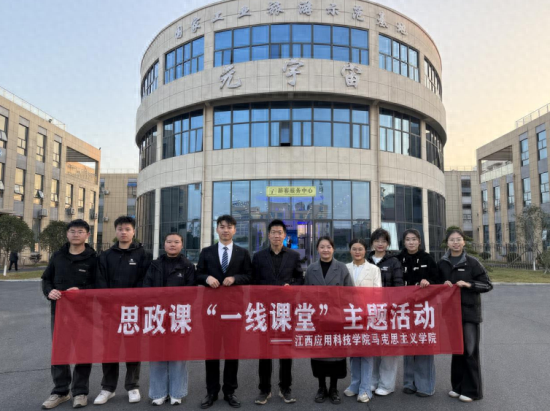
江西应用科技学院赴新余开展“一线课堂”教学实践活动
Xin Lang Cai Jing· 2026-01-13 06:21
Core Viewpoint - The Jiangxi University of Applied Science and Technology's Marxism College is innovating its ideological and political education by integrating classroom learning with real-world industry experiences, particularly in the low-altitude economy sector [1][5]. Group 1: Educational Innovation - The "one-line classroom" teaching practice aims to connect small classroom learning with the larger societal context, helping students understand national strategies and technological advancements [1][5]. - The initiative is part of a broader reform to enhance ideological education, merging industry development with the fundamental task of moral education [5]. Group 2: Practical Experience - Students visited the New Yu Low-altitude Economic Science and Technology Park, where they observed various applications of drone technology in sectors such as public safety and urban management [3]. - The immersive experience included demonstrations of drones in high-rise fire-fighting and logistics, showcasing the practical value of low-altitude technology in real-world scenarios [3]. Group 3: Impact on Students - The use of VR and digital technologies in the educational process allowed students to engage in high-risk simulations, enhancing their understanding of technological innovations in education [3]. - Students reported that the interactive and immersive learning approach made abstract concepts like "technological self-reliance" and "independent talent cultivation" more tangible and comprehensible [3].
中国银行发布客户培育计划 支持科技型企业发展
Jin Rong Shi Bao· 2026-01-13 01:41
Group 1 - The core initiative is the "Integrated Cultivation Plan" launched by the Bank of China, focusing on providing comprehensive financial services for technology enterprises throughout their lifecycle [1] - The plan allocates a total of 60 billion yuan, consisting of 10 billion yuan for equity investment and 50 billion yuan for credit funding, aimed at supporting high-potential technology companies [1] - The pilot program will be implemented in five cities: Beijing, Shanghai, Nanjing, Wuxi, Changzhou, Shenzhen, and Hangzhou, with the goal of nurturing at least 100 quality enterprises with key core technologies [1] Group 2 - The plan aims to transition financial services from a fragmented approach to a one-stop solution, facilitating the growth of enterprises from small to large [1] - It emphasizes the integration of financing, intelligence, and resource empowerment to address critical challenges faced by technology companies [1] - The Bank of China will adopt a "pilot first, gradual promotion" strategy to expand the program to other national technology innovation hubs as conditions permit [1]
