Agent

Search documents
WPS灵犀,一个完全不同的Agent样本
3 6 Ke· 2025-07-29 09:50
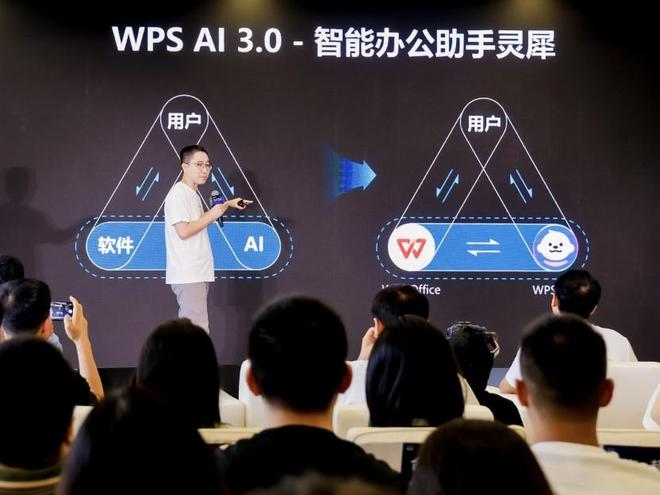
Core Insights - The next generation of AI software is referred to as Agentic Software, which emphasizes the integration of AI capabilities with user software to better meet user needs [2][4] - The focus has shifted from flashy AI products to practical solutions that address real user demands, as seen in the recent WAIC 2025 event [1][5] - Kingsoft Office has introduced WPS Lingxi, a product that allows for interactive, multi-turn dialogue with AI, enhancing user collaboration and document editing [5][6] Group 1 - The current state of AI software is characterized by two scenarios: one where AI capabilities are hidden within software, and another where users struggle to articulate their needs when interacting with AI [2] - WPS Lingxi represents a breakthrough in user interaction, allowing for real-time modifications and collaborative editing, which contrasts with traditional AI's one-way generation model [5][7] - The product's memory function enables personalized interactions, reducing the learning curve for users and allowing for more natural communication with AI [6][11] Group 2 - Kingsoft Office's approach focuses on "process reconstruction" rather than merely accelerating functions, aiming to address the most time-consuming aspects of user workflows [7][10] - The company leverages its 37 years of experience in office software to create products that are deeply rooted in actual user scenarios, rather than competing solely on technology [8][9] - The success of AI applications hinges on a deep understanding of user scenarios and strong engineering capabilities, which Kingsoft Office has demonstrated [10][11] Group 3 - The concept of Agentic Software is positioned as a service to employees rather than a replacement, emphasizing collaboration between AI and users [12] - Kingsoft Office's product development is seen as a culmination of decades of experience, resulting in practical solutions that effectively address user problems [12] - The evolution of AI products is viewed as a continuous process, with future iterations expected to enhance functionalities such as template and cover modifications in presentations [12]


X @Avi Chawla
Avi Chawla· 2025-07-29 06:30
You can now deploy any ML model, RAG, or Agent as an MCP server.And it takes just 10 lines of code.Here's a step-by-step breakdown (100% private): ...
计算机行业点评报告:从WAIC2025看国产AI的崛起
CHINA DRAGON SECURITIES· 2025-07-28 11:41
Investment Rating - The report maintains a "Recommended" investment rating for the computer industry [2][11]. Core Insights - The WAIC 2025 showcased significant advancements in domestic AI technology, indicating a shift from being a "follower" to a "leader" in the AI sector. This includes developments in domestic computing power, large models, and AI applications, which are expected to evolve in a synergistic manner [11]. - Huawei's unveiling of the Ascend 384 SuperNode at WAIC 2025 represents a major leap in domestic AI computing capabilities, with over 80 mainstream large models already adapted for this technology. This architecture is anticipated to enhance the competitiveness of domestic computing power [7][11]. - The launch of the new 321 B-MoE large model by Jieyue Xingchen is set to open a new round of competition in multi-modal models, emphasizing the trend of "open-source + extreme inference efficiency" in domestic large model iterations [7][11]. - Alibaba Cloud's Baolian platform, recognized at WAIC 2025, has integrated over 200 mainstream models and attracted more than 200,000 developers, indicating a rapid acceleration in the commercialization of domestic AI applications [7][11]. Summary by Sections Domestic Computing Power - The Ascend 384 SuperNode features a high-bandwidth, low-latency interconnection among 384 NPUs, addressing communication bottlenecks within clusters and enhancing performance for model training and inference [7]. - The performance of SGLang and DeepSeek on the CloudMatrix384 has surpassed their performance on NV H100 and H800, showcasing the potential of domestic computing architectures [7]. Large Models and AI Applications - The 321 B-MoE model is expected to achieve three times the inference efficiency of DeepSeek-R1 on domestic chips and a 70% throughput increase on NVIDIA Hopper, highlighting the competitive edge of domestic models [7]. - The trend of open-source large models combined with domestic chips is projected to accelerate the growth of AI applications in China [7]. Key Companies to Watch - The report suggests focusing on companies such as Hengwei Technology (603496.SH), Youke De-W (688158.SH), YunSai ZhiLian (600602.SH), and Data Port (603881.SH) for domestic computing power. For large models and AI applications, companies like Dingjie Zhizhi (300378.SZ), HanDe Information (300170.SZ), and SuoChen Technology (688507.SH) are highlighted [11].

硬核「吵」了30分钟:这场大模型圆桌,把AI行业的分歧说透了
机器之心· 2025-07-28 04:24
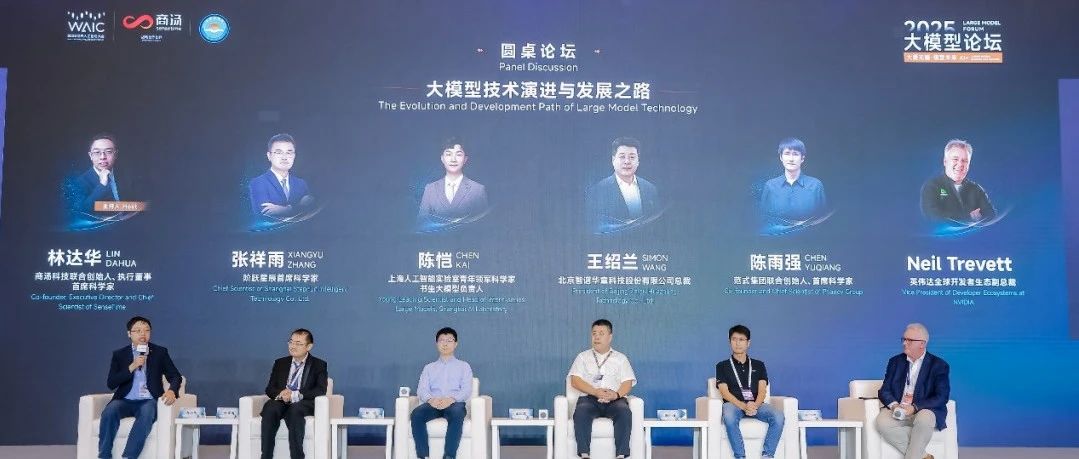
Core Viewpoint - The article discusses a heated debate among industry leaders at the WAIC 2025 forum regarding the evolution of large model technologies, focusing on training paradigms, model architectures, and data sources, highlighting a significant shift from pre-training to reinforcement learning as a dominant approach in AI development [2][10][68]. Group 1: Training Paradigms - The forum highlighted a paradigm shift in AI from a pre-training dominant model to one that emphasizes reinforcement learning, marking a significant evolution in AI technology [10][19]. - OpenAI's transition from pre-training to reinforcement learning is seen as a critical development, with experts suggesting that the pre-training era is nearing its end [19][20]. - The balance between pre-training and reinforcement learning is a key topic, with experts discussing the importance of pre-training in establishing a strong foundation for reinforcement learning [25][26]. Group 2: Model Architectures - The dominance of the Transformer architecture in AI has been evident since 2017, but its limitations are becoming apparent as model parameters increase and context windows expand [31][32]. - There are two main exploration paths in model architecture: optimizing existing Transformer architectures and developing entirely new paradigms, such as Mamba and RetNet, which aim to improve efficiency and performance [33][34]. - The future of model architecture may involve a return to RNN structures as the industry shifts towards agent-based applications that require models to interact autonomously with their environments [38]. Group 3: Data Sources - The article discusses the looming challenge of high-quality data scarcity, predicting that by 2028, existing data reserves may be fully utilized, potentially stalling the development of large models [41][42]. - Synthetic data is being explored as a solution to data scarcity, with companies like Anthropic and OpenAI utilizing model-generated data to supplement training [43][44]. - Concerns about the reliability of synthetic data are raised, emphasizing the need for validation mechanisms to ensure the quality of training data [45][50]. Group 4: Open Source vs. Closed Source - The ongoing debate between open-source and closed-source models is highlighted, with open-source models like DeepSeek gaining traction and challenging the dominance of closed-source models [60][61]. - Open-source initiatives are seen as a way to promote resource allocation efficiency and drive industry evolution, even if they do not always produce the highest-performing models [63][64]. - The future may see a hybrid model combining open-source and closed-source approaches, addressing challenges such as model fragmentation and misuse [66][67].

拆箱开源版Coze:Agent核心三件套大公开,48小时揽下9K Star
量子位· 2025-07-28 03:25
Core Viewpoint - The article discusses the recent open-source release of Coze's products, which aims to facilitate the development and deployment of AI agents, marking a significant step towards making agent technology more accessible and practical for developers [1][45]. Group 1: Open Source Products - Coze has released two new open-source products: Coze Studio and Coze Loop, alongside the previously released Eino framework, creating a comprehensive open-source ecosystem for agent development [2][5][32]. - Coze Studio is a low-code platform designed to simplify the creation of AI workflows, while Coze Loop focuses on the development, evaluation, and monitoring of agents [12][21][25]. - The open-source products are licensed under the Apache 2.0 license, allowing for commercial use and modifications without the requirement to open-source changes [7][57]. Group 2: Market Trends and Challenges - The article highlights the growing popularity of agents, transitioning from novelty items to practical tools, as evidenced by the increasing support from major companies and the emergence of various successful agent applications [3][46]. - Despite the enthusiasm, the widespread adoption of agents faces challenges, including inconsistent user experiences and high development barriers, which Coze aims to address through its open-source offerings [47][50]. Group 3: Development and Evaluation Capabilities - Coze Studio provides a complete workflow engine, allowing developers to easily create agents by dragging and dropping functional components, thus lowering the technical barrier for entry [16][19]. - Coze Loop offers a comprehensive solution for prompt development, evaluation, and monitoring, enabling developers to assess agent performance across multiple dimensions [25][30]. - Eino, the earlier released framework, provides a unified component abstraction and flexible orchestration capabilities, enhancing the development process for AI applications [36][39]. Group 4: Future Implications - The open-source initiative is expected to accelerate the deployment of agents across various industries, particularly in internal automation, small teams, and vertical sectors like healthcare and finance [43][42]. - Coze's open-source strategy is seen as a proactive move to capitalize on the impending explosion of agent technology, aiming to create a robust ecosystem that fosters collaboration and innovation among developers [45][56].

阿里国际凯夫:未来AI型组织里,桥梁型通才至关重要
虎嗅APP· 2025-07-26 08:50
Core Viewpoint - Alibaba International is focusing on AIGC (AI Generated Content) and Agent tools to enhance efficiency and reduce costs in e-commerce workflows, with a clear emphasis on practical contributions to business performance [3][4]. Group 1: AI Development and Impact - Alibaba International's AI model Ovis has seen a significant increase in usage, with daily calls exceeding 1 billion by mid-2025, up from over 100 million in Q4 2024 [4]. - The implementation of AI Agents has led to a 15% year-on-year reduction in refund costs and a 5% increase in advertising ROI [4]. - AI solutions from Alibaba International account for nearly 40% of the overall SEO efforts [4]. Group 2: Strategic Focus Areas - The company is prioritizing three main areas for AI application: improving material quality and conversion rates to drive higher GMV, automating processes to reduce costs, and enhancing productivity through AI-human collaboration [3][4]. - The assessment of AI initiatives is based on their actual contribution to business value, including metrics like conversion rates and revenue growth [7]. Group 3: Organizational Approach to AI - The company emphasizes the need for a bridge role within teams, combining business acumen and technical knowledge to ensure effective demand insights [9]. - There is a focus on developing differentiated technical capabilities to maintain a competitive edge, especially as AI tools become more prevalent [7][8]. Group 4: Talent Development and Challenges - The emergence of AI tools is reshaping the engineering landscape, posing challenges for young engineers who may find traditional coding roles diminished [10][12]. - The recruitment strategy is shifting towards hiring product managers with algorithmic knowledge and a bold mindset to foster innovation [13][14].


阿里第一批企业级 Agent,为什么落在了瓴羊?
晚点LatePost· 2025-07-24 11:10
Core Viewpoint - The article discusses the evolution of AI applications from tools to systems, emphasizing the efficiency and effectiveness of AI Agents in business operations, particularly in customer service and sales [2][3][5]. Group 1: AI Agent Development - The AI Agent is positioned as a key exploration area for AI applications by 2025, with advancements in model reasoning and memory capabilities allowing for deeper analysis of user needs [3][6]. - Alibaba's subsidiary Lingyang has been testing AI Agent applications for over a year, achieving over 60% reduction in processing time for refunds and significant efficiency improvements in overall operations [2][4]. Group 2: Market Position and Strategy - Lingyang has served over 50,000 enterprises across various industries, leveraging Alibaba's resources to provide differentiated services, with annual revenue in the tens of billions [4][5]. - The company aims to help businesses achieve data-driven growth through its Data as a Service (DaaS) model, focusing on comprehensive data capabilities rather than isolated efficiency improvements [9][19]. Group 3: Customer Service and Sales Applications - The newly launched customer service Agents, including "Super Customer Expert" and "Super Sales Expert," are designed to automate and enhance customer interactions, significantly improving efficiency [11][17]. - The automotive sales Agent can reduce lead processing time by 50% and improve conversion rates by approximately 20%, showcasing the effectiveness of AI in sales operations [17][18]. Group 4: Challenges and Solutions - The deployment of AI Agents faces challenges such as the lack of continuous data and technical talent, which Lingyang addresses by helping enterprises organize their private data [22][23]. - Lingyang's approach includes providing low-threshold solutions and ensuring compatibility with various platforms, enhancing the adaptability of their services across different industries [22][23].

微信支付宝,开打Agent
Hu Xiu· 2025-07-24 06:29
Group 1 - The core viewpoint of the article highlights the ongoing competition between Tencent and Alipay in the AI payment space, particularly focusing on the introduction of the Model Context Protocol (MCP) to facilitate easier payment integration for developers [1][4][12] - The MCP allows large models to call various external tools under a unified standard, enabling the creation of familiar agent products [3][12] - The rise of agents is seen as a transformative phase in the AI industry, with predictions that 2025 will be the year of agents, driven by advancements in reasoning models [5][9] Group 2 - Both Tencent and Alipay are vying for dominance in the AI payment entry point, which is viewed as a new battleground for application ecosystems [14][17] - The user base for online payment in China has grown from 854 million in 2020 to 1.029 billion in 2024, with WeChat and Alipay reaching approximately 1 billion and 900 million monthly active users, respectively [19] - The competition has intensified as both platforms have reached user growth saturation, prompting them to innovate payment methods like Alipay's "tap to pay" and WeChat's palm payment [20][21] Group 3 - Despite the potential of AI agents to create new payment channels, significant challenges remain in establishing a commercial closed-loop system [25][28] - The industry faces difficulties in attracting users to AI applications that are engaging and frequently used, with a prediction that 99% of AI startups may fail within a couple of years [26][27] - The integration of agents with existing applications raises questions about how to balance the convenience of agents with the revenue models of traditional applications, creating uncertainty in the evolution of the market [27][28]

Jinqiu Spotlight | 用户破1000万,造梦次元沈洽金:AI应用创业是踏浪而行,必须站上大模型的每一波浪潮
锦秋集· 2025-07-23 15:39
Core Insights - The article discusses the investment by Jinqiu Capital in Shenzhen IdeaFlow Technology Co., Ltd., which aims to create a new generation AI interactive content platform targeting young users [1][2] - The platform "Dream Dimension" has gained significant traction, with over 10 million users and an average daily interaction time exceeding 100 minutes, making it one of the most engaging AI content products [2][12] - The CEO emphasizes the importance of staying at the forefront of AI technology to convert the latest advancements into engaging user experiences [3][21] Group 1: Company Overview - Jinqiu Capital is focused on early-stage investments in general artificial intelligence, with a 12-year fund cycle [1] - IdeaFlow was founded in 2023 by Shen Qiajin, who has extensive experience in interactive content [2][6] - The platform "Dream Dimension" launched in February 2024 and has rapidly grown since its inception [12] Group 2: Product Features and User Engagement - "Dream Dimension" offers a variety of AI-generated content types, with interactive stories being the largest category [9][10] - The platform has attracted over 230,000 creators, generating more than 3,000 new works daily [13] - User-generated content has led to significant organic growth, with over 630 million views on platforms like Kuaishou [12] Group 3: Technological Advancements - The article highlights the rapid advancements in large model capabilities, particularly in reasoning and multi-modal interactions, which enhance user experience [7][17] - The integration of AI tools like "Agent" will simplify the content creation process, allowing for more complex and engaging interactions [19][21] - The company collaborates with leading model providers to implement cutting-edge AI technologies into their platform [18][22] Group 4: Future Directions - The focus for 2025 includes further development in multi-modal capabilities and enhancing the Agent's functionality to improve user engagement [16][18] - The company plans to expand its IP offerings and explore personalized virtual items based on user interactions [15][16] - The overarching goal is to evolve into a truly AI-native content platform that continuously adapts to technological advancements [22]

全球最强编程模型问世!阿里千问系列再放大招!成本优势碾压Claude 4
财联社· 2025-07-23 15:00
Core Viewpoint - Alibaba's latest AI model, Qwen3-Coder, demonstrates superior programming capabilities compared to GPT-4.1 and is on par with Claude 4, boosting investor confidence and leading to a stock price increase of over 2% [1] Group 1: Qwen3-Coder Model - Qwen3-Coder is the first code model in the Qwen series utilizing a mixture of experts (MoE) architecture, with a total of 480 billion parameters and the ability to activate 35 billion parameters [1] - The model supports a context length of 256K tokens, expandable to 1 million tokens, and has been pre-trained on 7.5 trillion data with a 70% code ratio [1] - Qwen3-Coder has set new records in agent capability evaluations, surpassing GPT-4.1, and achieved the best results in SWE-Bench assessments, comparable to Claude 4 [1][2] Group 2: Tool Support and Pricing - Qwen3-Coder can call multiple tools to solve complex programming tasks, significantly enhancing the efficiency of web development, AI search, and deep research applications [2] - The API for Qwen3-Coder is available on Alibaba Cloud, with pricing for input and output at 4 RMB and 16 RMB per million tokens, respectively, making it one-third the cost of Claude 4 [2] - Alibaba Cloud is offering a limited-time discount of up to 50% on context lengths from 128K to 1M tokens [2] Group 3: Open Source and Investment - Alibaba has released over 200 models in its open-source initiative, with the Qwen series surpassing 100,000 derivative models, making it the largest AI open-source model globally [3] - The company plans to invest over 380 billion RMB in cloud and AI hardware infrastructure over the next three years, exceeding the total investment of the past decade [3] Group 4: Financial Performance and Market Response - Alibaba Cloud's revenue growth accelerated from 3% to 18% in the first quarter of 2025, with total revenue reaching 118 billion RMB and an annual growth rate of 11% [4] - The stock price of Alibaba has increased by 50% since 2025, reflecting positive market sentiment towards the company's technological advancements and business transformation [4]