创新

Search documents
聚焦合规专业创新 推动北京辖区REITs市场高质量发展——北京证监局召开2025年辖区公募REITs监管工作会议
Zheng Quan Shi Bao Wang· 2025-11-11 02:33
Core Viewpoint - The Beijing Securities Regulatory Bureau held its first public REITs regulatory work meeting, summarizing the development achievements and current issues in the public REITs market, and outlining key tasks for the next phase [1][2]. Group 1: Market Development - Since the pilot program, the Beijing public REITs market has seen steady growth in scale, with a diverse range of asset types, enhancing market resilience and influence [1]. - As of October 2025, Beijing has listed 15 public REITs with a total fundraising scale of 38 billion yuan, covering seven asset types including rental housing and logistics [1]. - The listed products have shown overall stable operations, with a positive performance in the secondary market, creating a good market demonstration effect [1]. Group 2: Current Issues - The meeting reported four main issues in the current market, including the responsibilities of fund managers, operational management capabilities of certain projects, valuation, and information disclosure [1]. Group 3: Recommendations and Future Focus - Representatives from various fund management companies and original rights holders discussed topics such as operational collaboration, asset type expansion, fundraising mechanisms, and ecosystem construction [2]. - The meeting emphasized that 2025 is a critical year for the "14th Five-Year Plan" and urged all parties involved in REITs to focus on compliance, professionalism, and innovation [2]. - Key actions include enhancing compliance awareness, improving professional capabilities, and driving innovation to explore new asset types and develop a multi-tiered REITs market system [2]. Group 4: Collaborative Efforts - All market participants are encouraged to build a healthy ecosystem for the REITs market, with fund managers taking responsibility to effectively utilize public REITs to support high-quality economic development in the capital [3]. - Collaboration among all parties is essential to create a unique "capital brand" for the REITs market, emphasizing quality and sustainability [3]. - Strengthening regular communication with regulatory authorities is crucial to leverage Beijing's geographical and asset advantages for the distinctive development of its REITs market [3].


从“秀场”“考场”到“磁场”
Jin Rong Shi Bao· 2025-11-11 02:03
Group 1: Innovations in Low-altitude Travel - The first manned ducted flying vehicle showcased at the expo can reach a maximum altitude of 1000 meters, with a flight duration of approximately 20 minutes and a top speed of 80 km/h, capable of carrying 100 kg [1] - The flying vehicle features ground station-assisted control, allowing operators to perform simple operations for hovering, which enhances aerodynamic efficiency compared to traditional propeller designs [1] Group 2: Market Dynamics and Innovation - The expo has transformed from a platform for international procurement to a showcase for innovation, with companies eager to display their latest technological advancements [2] - The competitive and vibrant Chinese market is a significant driver for innovation, as companies believe that success in China can lead to global success [3] - The "Local for Local" strategy adopted by companies aims to leverage local resources to accelerate innovation and enhance consumer experiences [3] Group 3: Support for Small Enterprises - The "Innovation Incubation Zone" at the expo focuses on showcasing the latest achievements of small tech companies, providing them with a platform for commercialization [4] - The expo serves as a testing ground for foreign companies to assess their adaptability and innovation capabilities in the Chinese market [4] Group 4: Collaborative Innovation - The shift from merely importing advanced technologies to co-developing solutions that meet local clinical needs reflects a new approach in the industry [5] - The expo is now seen as a catalyst for accelerating the implementation of innovative solutions, with numerous new products and technologies launched [5]
第八届进博会丨开放合作共赢——进博会勾勒全球经济发展蓝图
Xin Hua Wang· 2025-11-11 00:23
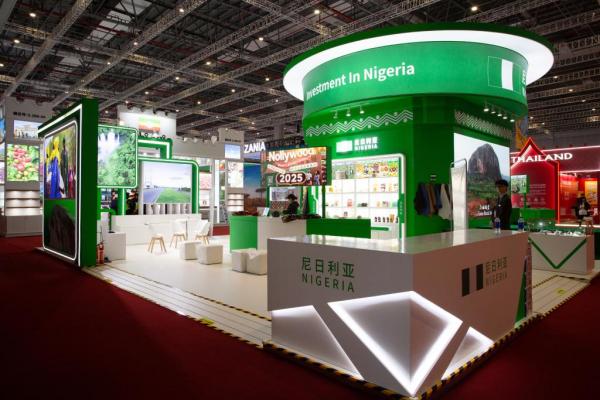
Group 1: Event Overview - The 8th China International Import Expo (CIIE) is held in Shanghai from November 5 to 10, with Nigeria as the first guest country [1] - The expo showcases 461 new products, technologies, and services, with an estimated 200+ global debuts [5] - The event has attracted 4,108 foreign enterprises, with exhibition space exceeding 430,000 square meters, setting a historical record [9] Group 2: Innovation and Technology - Philips presents nearly 50 innovative products, including a clinical multi-core MRI that can detect multiple disease metabolic pathways without radiation [2] - Schneider Electric and Sony China Research Institute unveil new technologies, contributing to the expo's role as a global technology innovation platform [5] - Medtronic has launched over 70 new products through the expo, emphasizing the transition from "importing" to "exporting" innovation [5] Group 3: Sustainability Initiatives - Japan Post Logistics introduces a series of diversified supply chain solutions, highlighting a "green solution" that uses alternative fuels to reduce emissions [6] - The 8th Hongqiao International Economic Forum releases the "World Open Report 2025," emphasizing the importance of carbon neutrality and green finance [6] - Companies like Johnson Controls and Procter & Gamble showcase their sustainable development goals and innovations at the expo [6] Group 4: Global Cooperation and Trade - The expo serves as a platform for global cooperation, with participation from 155 countries and regions, reinforcing the commitment to multilateral trade [9] - The cumulative intended transaction amount from the first seven expos exceeds $500 billion, indicating strong international interest [9] - The event highlights the importance of open cooperation and mutual benefits in the global economy [9]


在开放中谋发展、谋创新、谋共赢(和音)
Ren Min Ri Bao· 2025-11-10 22:41
Core Insights - The China International Import Expo (CIIE) has successfully showcased China's commitment to an open world economy and global development, with participation from 4,108 enterprises across 138 countries and regions, and a transaction intention amount exceeding $83.4 billion this year [1][2]. Group 1: Event Overview - The CIIE has grown significantly over the past eight years, becoming a key platform for international trade and cooperation, reflecting China's proactive market opening [2]. - The event featured 461 new products, technologies, and services, highlighting China's transformation into a global innovation hub [3]. Group 2: Economic Impact - The CIIE has demonstrated China's resilience in increasing its openness, with the country's openness index rising by 0.5% in 2024, contrasting with a global decline of 0.05% [2]. - Participation from enterprises in Belt and Road Initiative countries increased by 23.1%, and the number of exhibitors from least developed countries grew by 23.5% [4]. Group 3: Innovation and Collaboration - The expo has positioned China as not only a market but also a fertile ground for innovation and collaboration, attracting multinational companies to establish key innovation links within the country [3]. - The event has facilitated discussions on enhancing economic resilience and sustainable development for the Global South, emphasizing the importance of inclusive growth [4].
从可持续发展到创新引领,德企期待与中国市场高质量发展同频|欧洲企业在上海
Di Yi Cai Jing· 2025-11-10 08:34
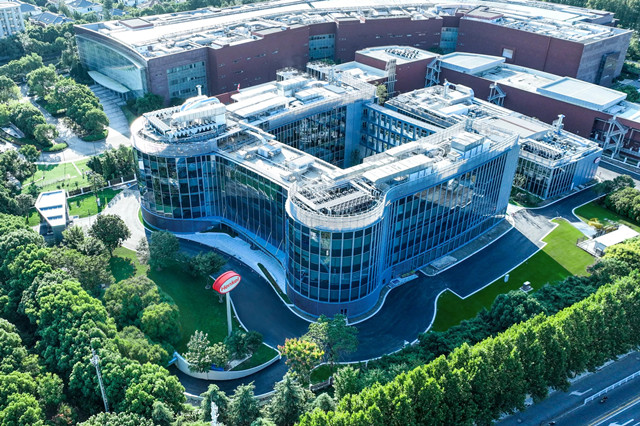
Group 1: Investment Trends - German companies are increasingly investing in Shanghai, with over 40% of nearly 6000 German enterprises operating in China based in the city, many of which have been established for over 15 years [5][6] - Henkel's adhesive technology innovation experience center in Shanghai has been inaugurated with an investment of approximately 500 million RMB, making it the second-largest innovation center globally outside of Germany [5] - The Chinese market is viewed as having long-term attractiveness and development potential, with 92% of German companies planning to continue operations in China [6] Group 2: Innovation and Sustainability - Henkel has showcased its innovative products and sustainable solutions at the China International Import Expo, emphasizing its commitment to the Chinese market and its alignment with local economic growth [4] - The company has developed advanced materials solutions for semiconductor packaging and electric vehicle battery packs, which enhance performance and reduce development cycles [4] - Henkel has also launched the first carbon footprint calculation standard for adhesive products in collaboration with local institutions, responding to the demand for green supply chains and low-carbon consumption [4] Group 3: Industry Insights - The technology and equipment exhibition area at the China International Import Expo has expanded to 65,000 square meters, featuring over 300 exhibitors, including more than 30 Fortune 500 companies [1] - The exhibition focuses on three core areas: technology, industry, and environmental protection, with five cutting-edge sections dedicated to digital industrial automation, low-carbon energy and environmental technology, integrated circuits, artificial intelligence, and new materials [1]
全球经济发展中的理念嬗变
Sou Hu Cai Jing· 2025-11-10 06:09
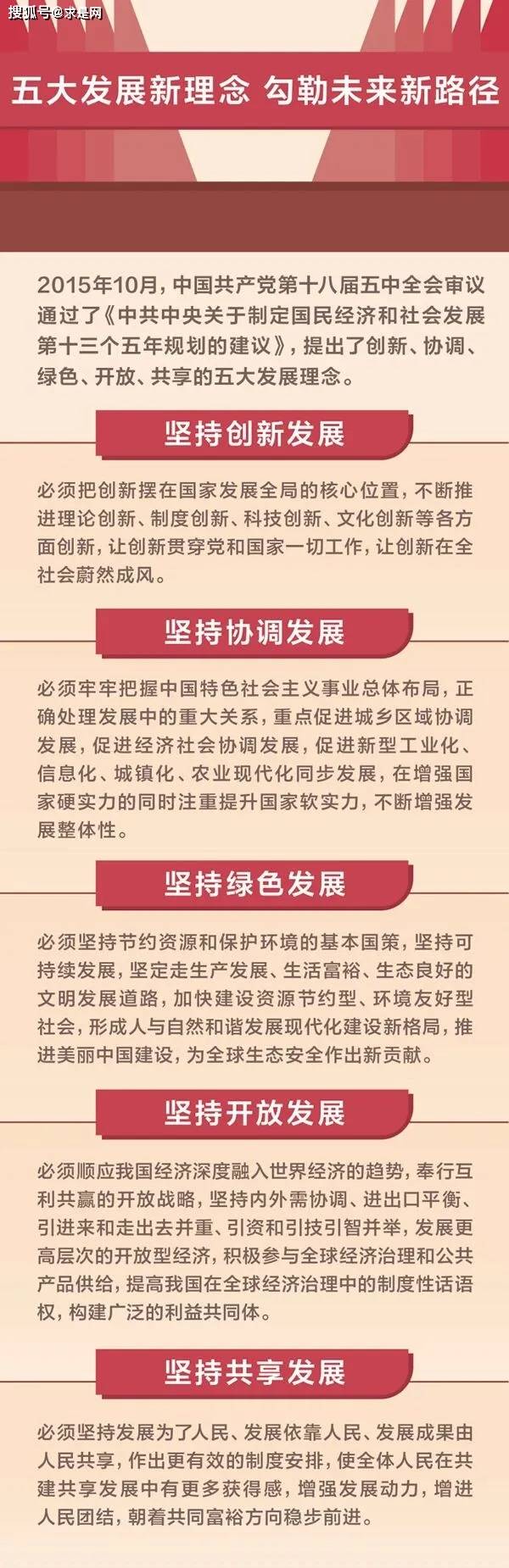
Core Viewpoint - The article discusses the evolution of development theories and practices across different historical contexts, emphasizing the need for innovative and adaptive approaches to economic development in response to changing global conditions [1][2][14][15]. Group 1: Historical Context of Development Theories - The transition to capitalism and industrialization in Western countries set a precedent for economic development, leading to the emergence of various economic theories that influenced global policies [1]. - Post-World War II, development economics emerged to address the urgent economic development needs of newly independent nations, drawing from Western industrialization experiences [2]. - Structuralism dominated development economics from the 1940s to the 1960s, advocating for government intervention and capital accumulation, but faced challenges in the 1970s leading to stagnation in developing countries [2]. Group 2: Shift to Neoliberalism - The rise of neoliberal economic theories in the 1980s, particularly the "Washington Consensus," promoted market liberalization and reduced government intervention, which ultimately led to significant failures in many developing nations [2]. - The period termed the "lost two decades" for developing countries highlighted the inadequacies of applying Western industrialization models to diverse economic contexts [2]. Group 3: New Development Concepts - The introduction of new development concepts by Xi Jinping emphasizes innovation, coordination, green development, openness, and sharing as essential for high-quality economic growth [14]. - These new concepts aim to address the contradictions and challenges faced by China in the context of rapid development and changing global dynamics, moving beyond traditional development paradigms [14][15]. - The new development philosophy is positioned as a solution to contemporary global issues such as economic inequality, environmental degradation, and the challenges of globalization [15].
青岛市前三季度新质生产力增势较好
Sou Hu Cai Jing· 2025-11-10 03:28
Core Insights - The development of new productive forces is an inherent requirement and important focus for promoting high-quality development [1] Group 1: Innovation and R&D - In the first three quarters, the amount spent by enterprises in Qingdao on R&D and technical services increased by 7.8% year-on-year, indicating a sustained increase in innovation efforts and enthusiasm [1] - The sales revenue of the scientific and technical service industry, which is a key area for integrating and transforming technological elements, grew by 9.7% year-on-year, continuing its rapid growth trend [1] Group 2: Emerging Industries - The sales revenue of high-tech industries and equipment manufacturing in Qingdao increased by 7.9% and 11.5% year-on-year, respectively, reflecting the robust growth of emerging industries [1] Group 3: Digital Economy - The sales revenue of core industries in the digital economy in Qingdao grew by 13.7% year-on-year, indicating rapid development of digital industrialization [1] - The amount spent by enterprises on digital technology increased by 17.3% year-on-year, demonstrating ongoing progress in the digital transformation of industries and the integration of the real economy with the digital economy [1]
X @外汇交易员
外汇交易员· 2025-11-10 03:07
高盛首席中国经济学家闪辉降中国2026与2027年GDP预期分别从4.3%和4.0%上调至4.8%与4.7%(2019年以来最大幅度的预期上调),理由是出口韧性强、中美贸易紧张局势缓和以及“十五五”规划带来的政策动力增强。闪辉表示,此次习特会表明,中国现在在贸易谈判中拥有了重要的筹码,尤其是在控制稀土出口方面,美国可能更难进一步加征关税。高盛还援引了中国近期召开的四中全会和“十五五”规划的成果,这些成果强调技术自主和产业竞争力。政策制定者旨在加大对高科技制造业和创新的投入,以此作为经济增长的驱动力,取代对房地产和基础设施的依赖。尽管这一战略可能迅速提振出口和企业利润,但闪辉警告称,提振家庭消费可能需要更长时间。高盛还指出,AI崛起有望在未来十年内将中国的长期增长潜力提升高达8%,从而有助于抵消人口结构和结构性不利因素。 ...
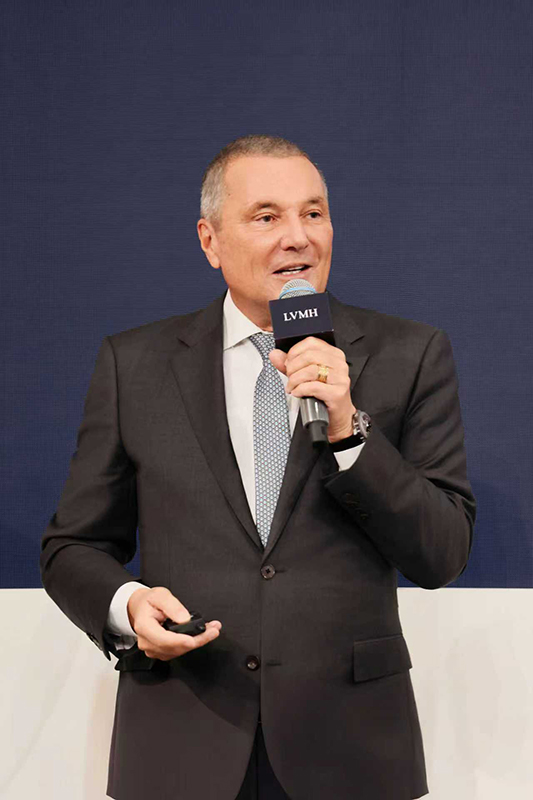
奢侈品牌CEO的进博内外:紧盯中国本土品牌借鉴创新力
Di Yi Cai Jing· 2025-11-09 01:16
Group 1 - The Chinese market has become a crucial part of brand strategy and a source of creativity for luxury brands [1][9] - Kering's CEO, Luca de Meo, emphasized the importance of collaboration and innovation in the luxury sector during his first visit to China [4][6] - LVMH's CEO, Bernard Arnault, and other executives are actively engaging with local brands to understand their appeal and strengthen connections with Chinese consumers [3][7] Group 2 - Luxury brands are increasing their investments in China despite challenges, with a focus on local market integration and resonance [3][6] - The growth of local brands like 山下有松 and 裘真 is seen as a positive signal for the luxury market, indicating a shift in consumer preferences [9] - Companies are adopting innovative practices from the Chinese market to enhance their global operations, recognizing China's role as a leader in market innovation [9]

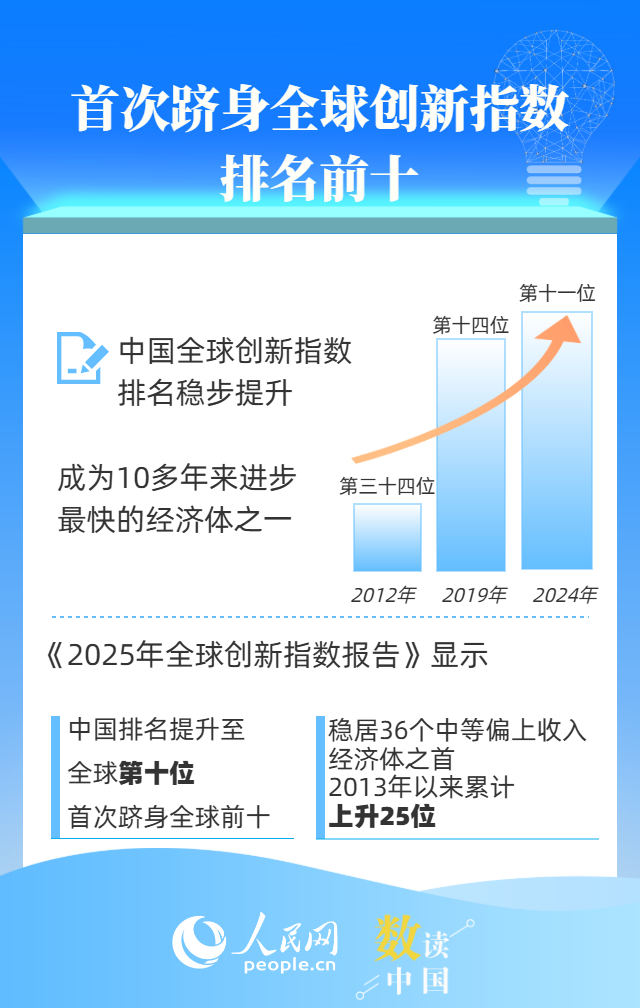
数读中国 一组数据看中国跑出创新“加速度”
Ren Min Wang· 2025-11-09 01:11
Group 1 - The core viewpoint of the news is that China has made significant progress in innovation, ranking 10th globally in the 2025 Global Innovation Index, marking its first entry into the top ten [1][2][3] - China's innovation index for 2024 reached 174.2, indicating a steady growth trend [1][3] - Since 2013, China has cumulatively risen 25 places in the global innovation index, showcasing its rapid advancement as one of the fastest-growing economies over the past decade [3] Group 2 - In 2024, China's innovation input index was 162.6, reflecting a 5.1% increase from the previous year, with basic research funding reaching 250.9 billion yuan, up 10.7% [6][7] - The proportion of research and experimental development funding reached 6.88%, with funding growth achieving a historical high of 1.8 percentage points [7] - China has 24 global top 100 innovation clusters, with Beijing ranked 4th and the Shenzhen-Hong Kong-Guangzhou cluster and the Shanghai-Suzhou cluster ranked 6th, marking a significant presence in global innovation [9] Group 3 - The innovation environment index for 2024 was 186.0, a 4.9% increase from the previous year, with the proportion of science and engineering graduates among the eligible population rising by 10.8% [10] - The number of enterprises benefiting from tax reduction policies reached 137,000, an increase of 14,000 from the previous year, reflecting an 11.1% growth [10] - The innovation output index for 2024 was 215.8, with the number of authorized invention patents reaching 1.045 million, a 13.5% increase from the previous year [11]