
失业率

Search documents
旧金山联储研究:关税推通胀先抑后扬 特朗普政策适用性存疑
Sou Hu Cai Jing· 2025-11-25 03:46
Core Insights - The latest research from the San Francisco Federal Reserve indicates that tariff increases have a "short-term cooling, long-term rebound" effect on inflation, suggesting that while inflation may temporarily decrease, it will eventually exceed levels without policy changes, accompanied by brief fluctuations in unemployment [1][3]. Group 1: Tariff Impact on Inflation - The study reveals that after a tariff increase, both consumers and businesses reduce spending due to tightened cost expectations, leading to a temporary slowdown in economic activity and a decrease in inflation [3][4]. - Specifically, a 1% increase in the average tariff rate typically results in a 10 basis point rise in unemployment after one year, with this effect dissipating in the following year [3][4]. - Initially, inflation may decrease by 10 basis points, but this cooling effect fades within the first year, followed by a cumulative increase of 10 basis points in inflation over the next two years, ultimately surpassing pre-policy intervention levels [3][4]. Group 2: Complexity of Tariff Effects - The research highlights the complexity of tariff impacts, noting that while tariffs raise prices at customs, companies may absorb costs by lowering profit margins or adjusting supply chains, and consumers may alter purchasing habits [4]. - The study emphasizes the unprecedented scale and scope of the trade war initiated by the Trump administration, with the weighted average tariff rate rising from 2.5% to 13.6%, necessitating cautious interpretation of the research findings [4]. - The current tariff policies have reportedly eroded real income growth for American households due to inflation, with core PCE inflation expected to rise by 0.8 percentage points as a result of these tariffs [4].


旧金山联储主席:担心难以应对就业市场突然恶化 支持美联储12月降息
智通财经网· 2025-11-25 02:46
戴利强调,仍坚信美联储能在不推升失业率的前提下将通胀率降回2%目标区间,若未能达成此目标将 构成政策失败。 美联储越来越多官员近期对进一步降息表达反对或担忧,认为通胀高企的原因包括受关税影响的商品, 以及国内服务业,担心若太快降息,而明年经济增长加快,将使美联储陷入两难。戴利则认为,美联储 不应因担忧日后可能需要逆转政策而延迟降息,而美联储官员间罕见的分歧,反映真实不确定性而非决 策失灵,若"此刻众人意见一致",央行反而会陷入群体思维的错误,"我们的职责并非达成共识"。 智通财经APP获悉,美国旧金山联储主席戴利(Mary Daly)表示,她支持在美联储12月会议上降息,因为 就业市场突然恶化的可能性比通胀骤升更高,且更难应对。她周一接受媒体采访时指出,劳动力市场现 已非常脆弱,"存在发生非线性变化的风险",不确定当局能否提前应对,相较之下,通胀爆发的风险较 低,因为关税驱动的成本上涨幅度低于今年较早时所预期。 有分析认为戴利言论意义重大,因其在公开场合鲜少偏离美联储主席鲍威尔的立场。戴利在2027年才在 联邦公开市场委员会(FOMC)有投票权。 ...
富格林:曝光虚假看清陷阱有效追损
Sou Hu Cai Jing· 2025-11-24 06:33
11月24日 资讯分享 上周五,现货黄金盘中跌超1%后一度转涨,但尾盘再度走弱,最终收跌0.28%,报4065.9美元/盎司,且 录得本月来首次周度下跌。 俄乌冲突—①美乌代表称日内瓦会谈"取得进展";乌发表声明:美方和平方案有望纳入乌核心利益关 切。②欧洲据悉针对28条提出反提案,核心内容包括:美国提供保护、乌克兰不以军事手段收复被占领 领土,领土谈判基于目前军事接触线、北约达成共识的前提下允许乌克兰加入。③消息人士:美乌正商 讨乌克兰总统本周访美事宜。④美财长:川普正向俄罗斯施压,要求其结束冲突;有信心俄乌和平进程 正在向前推进。⑤川普认为11.27是乌克兰接受和平协议条款的合适截止期限。 美联储官员密集发声—①威廉姆斯:仍认为近期存在降息空间。②柯林斯:仍认为有理由对12月降息持 谨慎态度,预计未来将进一步降息。③米兰:若我的投票成为关键一票,将支持降息25个基点。④洛 根:在通胀仍然偏高、劳动力市场大体平衡的情况下,美联储需要"暂时保持利率不变"。 数据—①美国11月密歇根大学现况指数终值创历史新低,标普全球制造业PMI初值为4个月新低,服务 业PMI初值为4个月新高。②美国10月CPI报告取消发布, ...
鲍威尔盟友重磅定调 美联储12月降息又成大概率事件了?
Jin Shi Shu Ju· 2025-11-24 04:39
Core Viewpoint - There is a significant shift in market expectations regarding the Federal Reserve's potential interest rate cut in December, driven by concerns over the labor market and recent statements from key officials [1][2]. Group 1: Economic Indicators - The unemployment rate rose to 4.4% in September, the highest level in nearly four years, indicating a deteriorating labor market [1]. - The labor market is showing signs of "low hiring, low firing," suggesting it may be at a critical point of worsening [1]. - Economists express concerns that the current economic situation exhibits stagflation characteristics, with high inflation and high unemployment coexisting [5]. Group 2: Federal Reserve Officials' Statements - New York Fed President John Williams, a close ally of Fed Chair Jerome Powell, publicly advocated for a rate cut, stating there is still room for further adjustments [2][3]. - The market's interpretation of Williams' comments led to a surge in the probability of a December rate cut from nearly 40% to over 70% [2]. - The alignment of views among influential Fed officials, including Powell, Williams, and Governor Waller, suggests a strong consensus for a new round of easing [2]. Group 3: Internal Disagreements - Despite the rising consensus for a rate cut, some Fed officials, like Boston Fed President Collins and Dallas Fed President Logan, expressed hesitance, citing inflation concerns [5]. - There are fundamental disagreements within the Fed regarding whether current policies are tight or loose, with some officials worried about the strong performance of capital markets [5][6]. - The conflicting phenomenon of a weak labor market alongside strong consumer spending remains a point of confusion for all Fed officials [6]. Group 4: Decision-Making Context - The upcoming Fed meeting will occur in a "data vacuum" due to the prolonged government shutdown, limiting access to the latest employment and inflation data [8]. - The concept of "insurance rate cuts" may be emphasized, suggesting that any rate cut would be a precautionary measure while the Fed observes economic reactions [8]. - Officials opposing the rate cut signal that the Fed is not cutting rates merely for the sake of it, which could prevent higher inflation expectations in the bond market [8].
美国9月失业率升至过去5年来最高水平——海外周报第115期
一瑜中的· 2025-11-23 15:56
Key Points - The article highlights the mixed signals in the economic data from the US, Eurozone, and Japan, indicating both recovery and challenges in different sectors [2][4][14] - US non-farm employment data exceeded expectations, while the unemployment rate rose to its highest level in over five years [13][45] - Eurozone's composite PMI remained stable, but manufacturing showed signs of contraction [14] - Japan's GDP contracted at an annualized rate of 1.8% in Q3, with core CPI showing an increasing trend [14] Group 1: Important Data Review - US September non-farm employment data was better than expected, with a growth of 119,000 jobs, while the unemployment rate unexpectedly rose to 4.4% [13] - October existing home sales in the US reached a new eight-month high, increasing by 1.2% from September [13] - November's S&P Global Manufacturing PMI in the US hit a four-month low at 51.9 [13] - Eurozone's November composite PMI was stable at 52.4, with service PMI at its best performance in a year and a half [14] - Japan's Q3 GDP contracted by 1.8% on an annualized basis, with core CPI rising by 3% in October [14] Group 2: Economic Activity Index - The WEI index in the US rose to 2.29, indicating a rebound in economic activity [5][17] - Germany's WAI index also increased to 0.13, suggesting a recovery in economic activity [5][17] Group 3: Demand - US retail sales showed a year-on-year increase of 6.1% for the week ending November 14, up from 5.9% the previous week [19] - Mortgage rates in the US rose to 6.26% for a 30-year fixed mortgage, with mortgage applications declining by 5.2% [23] Group 4: Prices - Commodity prices fell, with the RJ/CRB commodity price index at 295.58, down 2.2% from the previous week [30] - US gasoline prices increased to $2.94 per gallon, reflecting a rise of 0.4% from the previous week [37] Group 5: Financial Conditions - Financial conditions in the US and Eurozone tightened, with respective indices dropping to 0.267 and 1.028 [8][33] - Offshore dollar liquidity showed widening swap points for both the yen and euro against the dollar [36] Group 6: Employment - Initial jobless claims in the US decreased to 220,000, while continuing claims rose to 1.974 million [27]

降息悬念即将揭晓(国金宏观钟天)
雪涛宏观笔记· 2025-11-23 12:28
我们面对的是联储的"人造迷雾",强行制造降息悬念,增加预期弹性;已有数据完全足 以支撑12月再次降息的发生。 文:国金宏观宋雪涛/联系人钟天 在10月的FOMC中,鲍威尔将当前环境称之为"迷雾中开车,需小心行驶",并将市场预期向12月不降 息方向引导。自那之后,联储官员普遍转向鹰派,强调通胀的上行风险并支持12月暂停降息:12月降 息预期一度从完全定价跌至不足30%。 鲍威尔的本意或是引导市场定价预期的回摆,保持预期管理的有效性,但从结果来看有些玩脱了,至少 9月非农的数据指向了12月继续降息的必要性。 由于非官方的ADP小非农以及谘商会等数据在9-10月表现较差,此前市场对于9月非农的新增就业预 期并不高(约5万人左右水平);与此同时,在"供需双弱"的背景下,市场却并没有对失业率的上行形 成一致预期。换言之,此前6-8月失业率的再度上行并没有得到足够的重视,但这恰恰是9月非农报告 中最"扎眼"的部分。 哪怕9月新增就业再怎么超预期,也仅在11.9万人水平;考虑到6月与8月都是负增长,在如此大的波 动中,更无法得出非农已经"企稳"的结论。更何况,从三个月平均增长水平来看,与今年上半年都有 明显差距。 在劳动力 ...
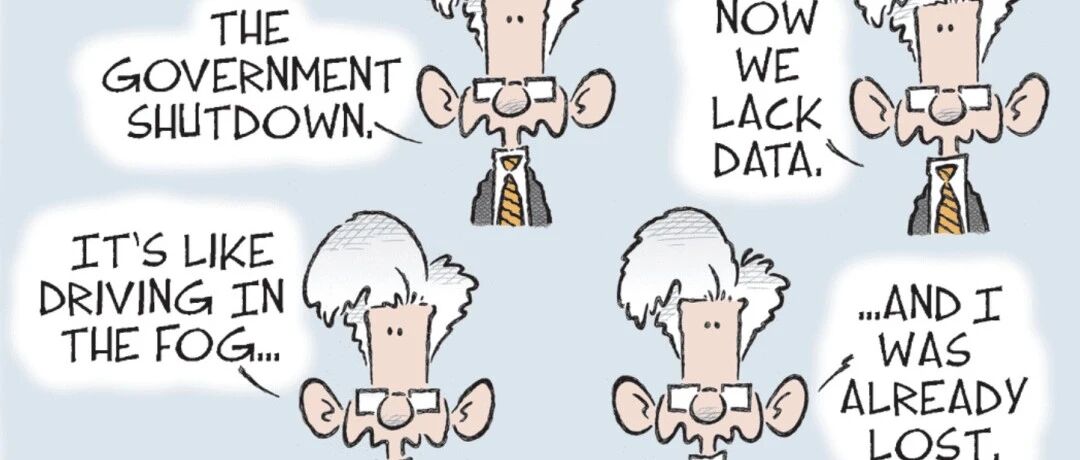
12月FOMC前的“人造迷雾”
SINOLINK SECURITIES· 2025-11-23 06:19
Group 1: Economic Indicators - The unemployment rate increased by 0.12 percentage points in September, rising from 4.32% in August to 4.44%, nearing the Fed's year-end forecast of 4.5%[12] - Non-farm payrolls showed a significant fluctuation, with September's job growth only at 119,000, indicating a potential underestimation of employment weakness[8] - The persistent rise in unemployment suggests that the labor supply is not as weak as previously thought, contradicting the low job growth figures seen in recent months[12] Group 2: Federal Reserve Policy Outlook - Following the October FOMC meeting, market expectations for a rate cut in December dropped to below 30%[5] - The current baseline scenario anticipates a rate cut in December, with potential quarterly cuts in the first half of next year, reaching a cycle endpoint of 3%-3.25%[30] - The Fed's balance sheet expansion is expected to be clarified as early as the March meeting next year, emphasizing the importance of maintaining liquidity for the U.S. economy[30] Group 3: Market Implications - If the Fed does not cut rates in December, there is a risk of further weakening in the real economy and increased volatility in U.S. stock markets, particularly in the AI narrative[29] - The divergence in monetary policy expectations may lead to one of the most fragmented FOMC decisions in history, reflecting political influences on the Fed's decisions[30] - The uncertainty surrounding Trump's policies could lead to greater market volatility and faster capital outflows from the dollar[31]
历史新低!美国突传重大利空!
天天基金网· 2025-11-23 03:10
Core Viewpoint - The article highlights a significant decline in consumer confidence in the U.S., with implications for the consumer sector and overall economic outlook [3][6]. Consumer Confidence - The final consumer confidence index for November dropped from 53.6 in October to 51, marking a historical low [3][6]. - The current conditions index fell by 7.5 points to 51.1, also a record low [3][6]. - Consumer assessments of personal financial situations have decreased by approximately 15%, with 47% of consumers citing high prices as a negative impact on their finances [6][10]. Stock Market Performance - The consumer sector in the U.S. stock market has faced significant sell-offs, with the essential consumer goods sector declining at three times the rate of the S&P 500 index since October [3][4]. - Non-essential consumer goods have also seen a 5.2% decline, making it one of the worst-performing sectors in the market during this period [4][6]. - If the market closes this week as projected, it will be the first time since 1990 that both essential and non-essential consumer sectors are the weakest among the 11 sectors of the S&P 500 [4][5]. Economic Implications - Consumer spending accounts for approximately 70% of the U.S. economy, making it a critical variable despite current market focus on companies like Nvidia [6]. - The article notes that consumer sentiment is deteriorating, with 69% of consumers expecting unemployment rates to rise, up from 64% in October [6][10]. - The disparity in financial health among different income groups is widening, with wealthier consumers maintaining spending while those without stock assets are experiencing worsening financial conditions [10].
历史新低!美国,突传重大利空!
Xin Lang Cai Jing· 2025-11-22 15:17
Group 1: Consumer Confidence and Economic Indicators - The final consumer confidence index for November dropped to 51 from 53.6 in October, marking a historical low for the current conditions index at 51.1, which fell by 7.5 points [1][3] - Consumers' assessment of their personal financial situation decreased by approximately 15%, with 47% of consumers mentioning high prices negatively impacting their finances, marking the fifth consecutive month of increase in this sentiment [3][4] - Expectations regarding the job market worsened, with 69% of consumers anticipating a rise in unemployment over the next year, up from 64% in October, more than double the 32% from November last year [3][4] Group 2: Market Performance of Consumer Sectors - The consumer sectors in the U.S. stock market have faced significant declines, with the essential consumer goods sector dropping three times more than the S&P 500 index since October, while the non-essential consumer goods sector fell by 5.2%, making them the worst-performing sectors [2][3] - If the market closes this week as projected, it will be the first time since 1990 that both non-essential and essential consumer goods sectors are the weakest among the 11 sectors of the S&P 500 [2][3] Group 3: Broader Economic Concerns - Consumer spending accounts for approximately 70% of the U.S. economy, indicating that consumer activity is a critical variable despite market focus on companies like Nvidia [3] - The ongoing government shutdown has disrupted food assistance and affected many federal employees' pay, contributing to consumer frustration regarding high prices and shrinking incomes [4][5] - The unemployment rate rose to 4.4% in September, the highest level since July 2020, with initial claims for unemployment insurance reaching a four-year high, indicating increasing difficulty for unemployed individuals to find work [4][5]
记者观察 | 美联储降息迷雾
Sou Hu Cai Jing· 2025-11-22 00:32
Core Viewpoint - The Federal Reserve's interest rate cut expectations experienced a dramatic reversal within a single day, influenced by key economic data and internal policy disagreements among Fed officials [1][3]. Group 1: Federal Reserve Rate Cut Expectations - On November 21, the probability of a 25 basis point rate cut in December dropped to 35.4%, but after comments from New York Fed President John Williams, it surged to approximately 70% [1][3]. - The fluctuations in rate cut expectations have led to volatility in financial markets, with significant impacts on stock indices and the strength of the US dollar [3]. Group 2: Employment Data Insights - The US Labor Department reported that September's non-farm payrolls increased by 119,000, significantly exceeding the expected 50,000, marking the strongest monthly gain since April [2]. - Despite the strong job growth, the unemployment rate rose to 4.4%, the highest in four years, and previous months' job growth figures were revised downwards, indicating potential concerns for the Fed [2]. Group 3: Inflation Concerns - Fed officials, including Chicago Fed President Austan Goolsbee, expressed caution regarding a potential rate cut in December, citing stagnation in inflation as a key concern [3]. - The internal divisions within the Fed are highlighted by the contrasting views on employment data and inflation, complicating the decision-making process [2][4]. Group 4: Economic Data Release Delays - Due to a prior government shutdown, the release of the October non-farm payroll report has been delayed, which may hinder the Fed's ability to make informed decisions during the December meeting [4]. - The upcoming release of previously delayed economic data could lead to further adjustments in market expectations [5].