
智慧农业

Search documents
龙井“茶园议事厅”民主协商开花结果
Hang Zhou Ri Bao· 2025-11-24 01:57
Core Points - The "Tea Garden Consultation Hall" in the core production area of West Lake Longjing tea has become a platform for implementing the spirit of the 20th Central Committee of the Communist Party, focusing on agricultural modernization and enhancing production capacity [1] - The dual leadership of the Party and innovative mechanisms like the "1525" consultation model have been established to integrate grassroots governance with industry development and cultural construction [1] - The village has actively engaged in democratic discussions to address local issues such as irrigation and tourism, fostering community involvement in governance [1] - The "Tea Garden Consultation Hall" has hosted various community service activities, enhancing governance efficiency and community engagement [1] Industry Development - The village committees, tea farmers, and business representatives are collaborating to develop a blueprint for the tea village, including the introduction of smart agricultural technologies and the promotion of tea culture tourism [2] - Measures to deepen the integration of tea and cultural tourism are being discussed to enhance the overall development of the tea industry [2]
全国供销合作社系统持续深化综合改革,提升服务能力—— 谱写供销合作事业高质量发展新篇章
Ren Min Ri Bao· 2025-11-23 22:17
Core Insights - The news highlights the significant advancements and contributions of the supply and marketing cooperatives in enhancing agricultural productivity, ensuring food security, and promoting rural development through innovative practices and technology integration [2][3][4][10]. Group 1: Agricultural Productivity - In Fujian's He Tian Town, the smart agriculture system has led to rice yields of 549.3 kg and 647.9 kg per mu for mature and fully mature fields, respectively, significantly surpassing conventional planting yields [1] - The supply and marketing cooperatives have established a robust agricultural input supply network, with the system's fertilizer supply accounting for approximately 70% of the national demand and 40% of the national potassium fertilizer imports [3] Group 2: Technological Integration - The transition from traditional farming to a technology-enabled "smart model" is underway, with cooperatives developing various agricultural social service models to meet the needs of small farmers and modern agricultural entities [4] - The system's agricultural social service scale is expected to exceed 300 million mu by 2024, with over 17,000 production service centers and more than 60,000 "crop hospitals" established [4] Group 3: Market Access and Logistics - The cooperatives are enhancing urban-rural circulation by organizing market activities that have significantly boosted sales for local farmers, with some achieving annual sales exceeding 3 million yuan [5] - A total of 693 cold chain logistics centers have been established in key agricultural production areas, with an expected cumulative cold storage capacity of 13 million tons by the end of the year [6] Group 4: Green Development and Recycling - The cooperatives have built a recycling network with over 46,000 collection points and more than 600 sorting centers, promoting the recycling of agricultural waste and contributing to environmental sustainability [7][8] - The system has recovered 4.1286 million tons of rural waste and 357,200 tons of agricultural film during the "14th Five-Year Plan" period, showcasing its commitment to green development [8] Group 5: Organizational Reform and Development - The "Thousand Counties Thousand Cooperatives Quality Improvement Action" has been launched to enhance the quality and efficiency of grassroots cooperatives and their service networks [9] - The total number of grassroots cooperatives has reached 37,000, with over 856,000 service outlets, indicating a solid foundation for further development [10]
广西南宁:智慧农业“椒”出丰收答卷
Zhong Guo Xin Wen Wang· 2025-11-23 04:20
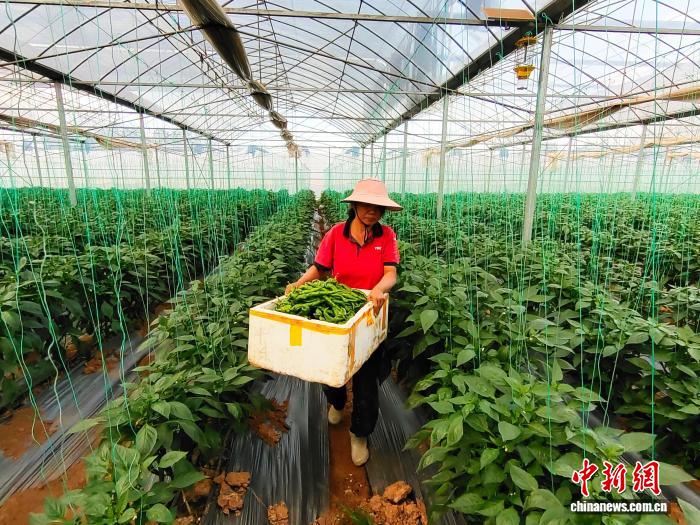
广西南宁:智慧农业"椒"出丰收答卷 图为工人在采收辣椒。中新网记者 黄艳梅 摄 图为当地现代设施蔬菜基地。中新网记者 黄艳梅 摄 图为当地现代设施蔬菜基地。中新网记者 黄艳梅 摄 图为工人将辣椒分拣装箱。中新网记者 黄艳梅 摄 来源:中国新闻网 编辑:熊思怡 图为辣椒挂满枝头。中新网记者 黄艳梅 摄 图为工人在采收辣椒。中新网记者 黄艳梅 摄 图为工人将辣椒分拣装箱。中新网记者 黄艳梅 摄 图为新鲜采摘的辣椒。中新网记者 黄艳梅 摄 图为技术人员在查看基地农业环境网络型传感器的运行情况。中新网记者 黄艳梅 摄 广告等商务合作,请点击这里 本文为转载内容,授权事宜请联系原著作权人 中新经纬版权所有,未经书面授权,任何单位及个人不得转载、摘编或以其它方式使用。 关注中新经纬微信公众号(微信搜索"中新经纬"或"jwview"),看更多精彩财经资讯。 ...


风云气象卫星:“天穹之眼”如何照亮美好生活
Ren Min Wang· 2025-11-22 01:41
Core Insights - The news highlights the significant advancements of China's Fengyun meteorological satellites, which now serve 133 countries and regions, showcasing China's transformation from a follower to a leader in meteorological technology [1] Group 1: Technological Advancements in Agriculture - The Fengyun satellite system enables real-time monitoring of crop conditions, allowing farmers to make informed decisions regarding irrigation and fertilization, thus transitioning traditional agriculture to smart agriculture [2] - The use of satellite-guided precision fertilization has reduced chemical fertilizer usage in Northeast China, while remote sensing has improved irrigation efficiency in arid regions [2] Group 2: Disaster Prevention and Response - The Fengyun-4 satellite has improved the monitoring and identification of severe weather events, reducing the time for disaster warnings to as little as 5 minutes and enhancing severe weather alerts by 40 minutes [3] - The satellite's rapid imaging capabilities allow for real-time emergency responses, playing a crucial role in disaster management and reporting [3] Group 3: Ecological Monitoring and Protection - Fengyun satellites serve as "space sentinels" for ecological protection, providing data for environmental assessments and monitoring changes in ecological conditions [4] - The satellite data supports initiatives like ecological red lines and tracking carbon neutrality goals, contributing to sustainable development [4] Group 4: Enhancing Public Services - The Fengyun-3 G satellite's precipitation measurement radar fills a gap in precipitation detection, providing accessible agricultural weather information to rural farmers and aiding livestock herders and fishermen [5] - These services exemplify the satellite's role in bridging the gap between advanced technology and everyday life, enhancing public welfare [5] Group 5: Space Weather Monitoring - Fengyun satellites also monitor space weather, providing critical data for major space missions and enhancing the safety of satellite navigation and aerospace operations [6] - The upcoming launch of the world's first space weather AI model, "Fengyu," is expected to significantly improve forecasting accuracy [6] Group 6: Global Contribution and Future Outlook - China is transitioning from a "follower" to a "contributor" in global meteorological governance, sharing Fengyun satellite data through the World Meteorological Organization [7] - The Fengyun-2 H satellite and Fengyun-4 A satellite are pivotal in providing meteorological support for regional and international initiatives, with a high satisfaction rate among international users [7] - Future developments in the next generation of Fengyun satellites are anticipated to further enhance China's capabilities in meteorological services and global cooperation [7]
亩均收益突破2700元!疏附甜菜喜迎丰收
Nan Fang Nong Cun Bao· 2025-11-21 15:04
Core Insights - The article highlights the successful harvest of sugar beets in Shufu County, with an average income exceeding 2,700 yuan per mu, indicating a significant agricultural achievement [1][30]. Group 1: Agricultural Efficiency - The use of advanced agricultural technology has led to a doubling of harvesting efficiency, with specialized harvesting machines reducing the time required for manual harvesting from half a month to less than two days [12][13]. - Smart agricultural practices, including precision planting and intelligent irrigation systems, have improved crop yield and quality, with expected yields surpassing 6 tons per mu and higher sugar content compared to previous years [23][22]. Group 2: Economic Impact - The financial benefits for farmers are substantial, with a projected income of over 800,000 yuan from 300 mu of sugar beets, based on a purchase price of 450 yuan per ton [30]. - The establishment of long-term purchase agreements with sugar factories ensures stable sales channels for farmers, alleviating concerns about market access [27][29]. Group 3: Industry Development - The article discusses the growth of the sugar beet industry in the Kashgar region, with a total expected production of 1.08 million tons, marking a significant milestone [46]. - The integration of a complete industrial chain, including sugar production and by-product development, has been facilitated by partnerships with various enterprises, enhancing the overall value of sugar beets [42][36].

人这一辈子,一定要去一趟秋收的北大荒!
Zhong Guo Xin Wen Wang· 2025-11-21 00:31
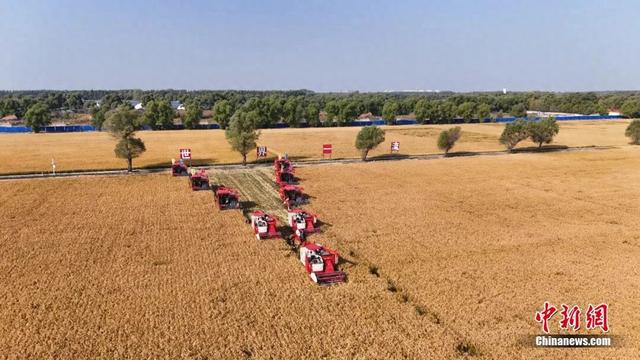
Core Viewpoint - The article highlights the agricultural achievements and technological advancements of the Beidahuang Group, emphasizing its role as a key player in China's food security and modern agriculture. Group 1: Agricultural Production - The Northeast black soil region, particularly in Heilongjiang Province, is one of the world's three major black soil areas, with a typical black soil cultivated area of 156 million mu [1] - Beidahuang Group has a stable cultivated area of 48.744 million mu, making it the core area of China's black soil region [1] - In 2024, the total sown area for grain crops is projected to be 46.389 million mu, with a total grain output of 45.76 billion jin, marking the 21st consecutive year of production exceeding 40 billion jin [15] Group 2: Technological Advancements - The use of smart agricultural technology is evident, with intelligent harvesting machines operating under smart navigation for precise rice harvesting [5] - The integration of big data, cloud computing, IoT, and AI is transforming traditional farming practices into modern, efficient agricultural methods [18][25] - The Beidahuang Group's advanced agricultural technology is being applied in practical farming, leading to significant increases in yield [25] Group 3: Historical Context and Development - The Beidahuang region, once an uninhabited wilderness, has been transformed into a vital agricultural area over the past 70 years, contributing significantly to national grain supply [29][59] - The development of this area involved the efforts of over 1 million people, including veterans and young graduates, who turned the barren land into a productive agricultural hub [36] Group 4: Future Outlook - The article suggests that the ongoing modernization and technological integration in agriculture will continue to enhance China's food security and agricultural productivity [54][66] - The Beidahuang Group is positioned as not only a major grain producer but also a testing ground for modern agricultural technologies, indicating a promising future for agricultural innovation in China [51]

2025年第45周:跨境出海周度市场观察
艾瑞咨询· 2025-11-21 00:07
Group 1: Low-altitude Economy in Guangdong - Guangdong's low-altitude economy is experiencing significant breakthroughs, with companies like XPeng and EHang achieving milestones in product launches and commercial operations [3][4] - The goal is to surpass a market scale of 300 billion yuan by 2026, supported by favorable policies and technological advancements [3] Group 2: Brand Integration for Overseas Markets - Chinese companies are shifting from merely selling products to building brand recognition through cultural integration in target markets [5] - Strategies for successful brand integration include local storytelling, leveraging local influencers, and aligning with cultural values [5] Group 3: Energy Storage Market Dynamics - Chinese energy storage companies saw overseas orders reach 186 GWh in the first half of 2025, a year-on-year increase of over 220% [6] - Major markets include the Middle East, Europe, and Australia, while challenges such as trade barriers and certification standards persist [6] Group 4: Smart Agriculture and Technology - Recent international agricultural exhibitions highlighted the role of smart machinery in enhancing agricultural productivity [7][8] - Chinese agricultural technology is gaining traction globally, with significant participation from international buyers [7] Group 5: Automotive Export Trends - From 2021 to 2024, China's automotive exports are projected to grow from 2.01 million to 5.86 million units, with a 21% year-on-year increase in the first three quarters of 2025 [9] - Chinese automakers are focusing on local production and brand acquisitions to expand their global market share [9] Group 6: Gaming Market Expansion - The global gaming market is expected to grow significantly, with mobile gaming projected to reach $342.2 billion by 2033 [10] - Russia is emerging as a key market for Chinese mobile games, with a notable presence in the top revenue-generating titles [10] Group 7: Robotics Market in South Korea - Chinese service robots, particularly in the cleaning sector, are gaining market share in South Korea, with companies like Roborock leading [11] - The collaboration between China and South Korea in AI and digital economy sectors presents significant growth opportunities [11] Group 8: Southeast Asia Consumer Trends - Southeast Asia's young population and economic growth are driving demand for Chinese products, particularly through e-commerce [12] - The region presents opportunities for Chinese companies to establish local manufacturing to mitigate risks [12] Group 9: Sports Industry Growth - The Asian sports industry is experiencing rapid growth, with a focus on high-quality development and digital innovation [13] - The 2025 Asian Sports Industry Summit aims to explore opportunities for collaboration and growth in the sector [13] Group 10: ByteDance's Global Strategy - ByteDance is shifting its strategy for overseas AI applications from technology showcase to user acquisition, particularly in Southeast Asia and the Middle East [14][15] - The company is leveraging its existing ecosystem while navigating regulatory challenges in Western markets [15] Group 11: Didi's Electric Vehicle Initiative - Didi has launched a fleet of 500 electric vehicles in Mexico, aiming to promote sustainable transportation in Latin America [16] - The company plans to expand its electric vehicle fleet significantly by 2030, contributing to reduced carbon emissions [16] Group 12: Meituan's Financial Performance - Meituan reported a revenue of 86.6 billion yuan in Q1, with a year-on-year growth of 18%, highlighting its robust overseas performance [17] - The company is focusing on sustainable growth through technological innovation and expansion into new markets [17] Group 13: Cainiao's Logistics Innovations - Cainiao is partnering with retail giants in Southeast Asia to enhance logistics efficiency through AI and automated systems [18][19] - The company aims to leverage its technology to improve supply chain operations and expand its market presence [19] Group 14: Li Auto's Market Strategy - Li Auto has opened its first retail center in Central Asia, focusing on a dealer authorization model to mitigate risks [20] - The company is prioritizing Central Asia for its expansion strategy while delaying plans for the European market [20] Group 15: TCL's Global Strategy - TCL reported a revenue of 14.346 billion yuan in the first three quarters of 2023, with a focus on high-quality growth and brand value [21] - The company is enhancing its global presence through sports marketing and increased R&D investment [21] Group 16: New Stone's Expansion in Autonomous Vehicles - New Stone has secured over $600 million in funding to accelerate its expansion in the autonomous vehicle market [22] - The company plans to deploy 5,000 autonomous vehicles in the UAE by next year, reflecting the industry's rapid growth [22] Group 17: Yushu Technology's IPO Progress - Yushu Technology is advancing its IPO process, with overseas business accounting for 50% of its revenue [23] - The company is focusing on expanding its market share in the robotics sector while enhancing its global strategy [23]

湖南江永供港蔬菜通道升级 五年出口增长超四成
Zhong Guo Xin Wen Wang· 2025-11-20 10:47
Core Insights - Hunan Jiangyong County has seen a significant increase in vegetable exports to Hong Kong, with a growth rate exceeding 40% over the past five years, rising from 1 billion to 1.438 billion yuan [1][3]. Group 1: Company Developments - Hunan Huiyou Agricultural Development Co., Ltd. signed a sales order worth 500 million yuan with Hong Kong Chuanghui Fruits and Vegetables, indicating strong demand for high-quality agricultural products in Hong Kong [1]. - The company has established a supply chain system that includes "direct sourcing from the origin + rapid cold chain," allowing fresh vegetables to reach the Hong Kong market within 7 hours [1][3]. Group 2: Industry Trends - Jiangyong County has focused on the vegetable industry, promoting the "vegetable basket" project for the Guangdong-Hong Kong-Macao Greater Bay Area and the "100 billion project" for vegetable exports [3]. - The county has developed a robust brand operation mechanism, with 2 new regional vegetable public brands and 22 agricultural enterprise brands, alongside 25 products certified as green food, organic agricultural products, and geographical indications [3]. Group 3: Agricultural Production - As of now, Jiangyong County has planted 293,900 acres of vegetables, primarily taro and ginger, with a total output of 678,900 tons, reflecting year-on-year increases of 2.07% and 4.98%, respectively [3]. - The county has established 28 production recognition bases for the "vegetable basket" project and 25 export registration bases in the Greater Bay Area [3].
新疆昌吉:智慧农业促发展
Ren Min Wang· 2025-11-20 01:40
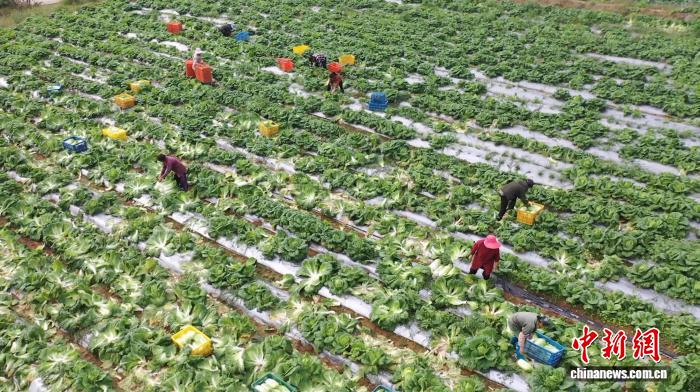
新疆昌吉:智慧农业促发展【5】 新疆昌吉:智慧农业促发展【6】 新疆昌吉:智慧农业促发展【7】 新疆昌吉:智慧农业促发展【8】 新疆昌吉:智慧农业促发展 新疆昌吉:智慧农业促发展【2】 新疆昌吉:智慧农业促发展【3】 新疆昌吉:智慧农业促发展【4】 ...
低空耕者:农业无人机重塑智慧农耕的新范式与未来图景,头豹词条报告系列
Tou Bao Yan Jiu Yuan· 2025-11-19 13:15
Investment Rating - The report rates the agricultural drone industry positively, indicating a strong growth potential with a projected market size increase from 250.7 billion RMB in 2024 to 325.54 billion RMB by 2029, reflecting a compound annual growth rate (CAGR) of 5.47% [42][45]. Core Insights - Agricultural drones are transforming smart farming practices, driven by technological advancements, policy support, and a concentrated market structure dominated by leading companies like DJI and XAG, which together hold 70%-80% of the global market share [5][20]. - The industry is characterized by a shift from traditional pest control applications to a broader range of functions, including precision seeding and monitoring, facilitated by advancements in AI and sensor technology [18][40]. - The market is expected to benefit from labor shortages in agriculture, increasing demand for precision management, and ongoing technological improvements [5][43]. Industry Overview - Agricultural drones are defined as unmanned aerial vehicles that operate without human pilots, utilizing remote control or autonomous systems for various agricultural tasks [6]. - The industry has seen significant growth from 231.2 billion RMB in 2020 to 250.7 billion RMB in 2024, with expectations of further expansion due to labor shortages and policy support [42][43]. Market Dynamics - The agricultural drone market is highly concentrated, with DJI and XAG leading the competition, which is characterized by a duopoly [20][52]. - The report highlights the importance of technological innovation, with companies investing heavily in R&D to enhance product capabilities and maintain competitive advantages [54][55]. Policy Support - Government policies are increasingly supportive of the agricultural drone sector, with subsidies reaching up to 40% for drone purchases, which is expected to further stimulate market growth [19][44]. - The "14th Five-Year Plan" emphasizes the development of smart agricultural machinery, providing a framework for the industry's future [45]. Technological Advancements - Continuous technological upgrades are expanding the application scenarios for agricultural drones, moving beyond pest control to include precision seeding and real-time monitoring [18][40]. - The integration of AI and advanced sensors is enhancing operational efficiency, with significant improvements in data collection and analysis capabilities [27][40]. Competitive Landscape - The competitive landscape is marked by a few dominant players, with DJI holding a significant market share and a strong patent portfolio, while XAG excels in precision spraying algorithms [20][53]. - New entrants are emerging, leveraging innovative technologies to carve out niche markets, indicating a dynamic competitive environment [56][57].