绿色经济

Search documents
“为绿色低碳转型注入持续动力”
人民网-国际频道 原创稿· 2025-10-23 03:01
Core Points - The China-ASEAN Trade and Investment Promotion Conference was held in Beijing, focusing on "Green Development and Building a Better Future" [1] - The conference aimed to deepen economic and trade cooperation between Beijing's sub-center and ASEAN countries through policy interpretation, project signing, and business matching [1] - The inclusion of a "Green Economy" chapter in the China-ASEAN Free Trade Area 3.0 provides institutional support for cooperation in green trade, investment, and standards [1] Group 1: Economic Cooperation - China has been ASEAN's largest trading partner for 16 consecutive years, with ASEAN being China's largest trading partner for five years [2] - From January to July this year, trade between China and ASEAN reached $597 billion, a year-on-year increase of 8.2%, accounting for 16.7% of China's total foreign trade during the same period [2] - The successful signing of three cross-border cooperation projects at the conference highlights the focus on green trade in agricultural products, cultural tourism integration, and smart energy monitoring [3] Group 2: Green Development Initiatives - Thailand's "30@30" policy aims for 30% of domestically produced vehicles to be electric by 2030, requiring deep participation from Chinese enterprises in technology transfer and talent training [1] - Myanmar is focusing on building a green energy infrastructure, leveraging its rich renewable resources, and seeks further cooperation with China in green technology transfer and joint research [2] - The conference reinforced Beijing's sub-center as a "China-ASEAN Green Cooperation Hub," emphasizing the need for collaboration in green industries, finance, and culture to address global climate change challenges [3]
“天涯共此时”约旦访华学者交流会举行
人民网-国际频道 原创稿· 2025-10-22 03:06
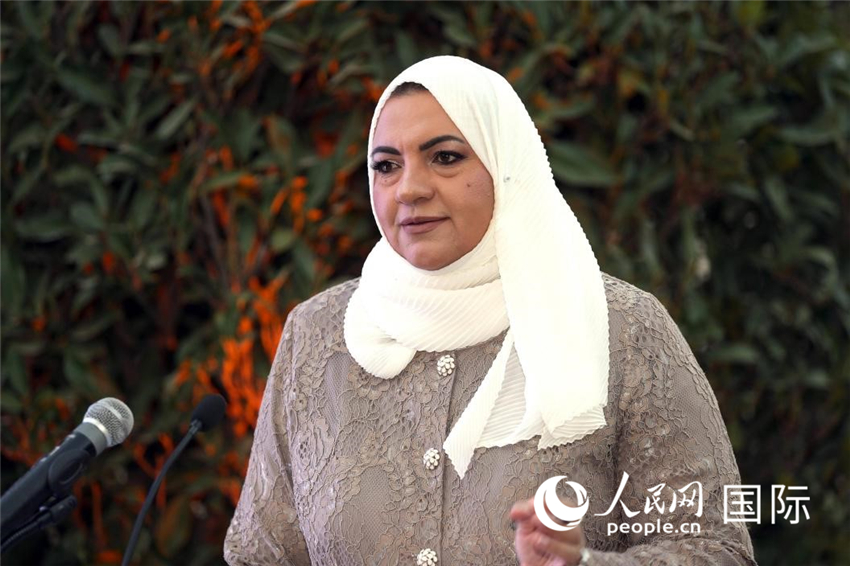
Group 1 - The "2025 'Together at the Same Time'" exchange event for Jordanian scholars visiting China was recently held at the Chinese Cultural Center in Amman, attended by over fifty representatives from various sectors in Jordan [1] - Zhao Xiaoqiang, the cultural counselor of the Chinese Embassy in Jordan, emphasized the long-standing friendly exchanges between China and Jordan, highlighting the deepening cooperation in culture, education, tourism, sports, and media [1] Group 2 - Lameen Hussein, a prominent cultural education consultant from Jordan, shared insights on China's practices in cultural heritage, smart tourism, green economy, and educational innovation, using examples from Shanghai and Yunnan [2] - Hussein expressed hope that Jordanian youth would gain a deeper understanding of Chinese culture to inspire their own value realization in education, entrepreneurship, and social innovation [2] - A themed photo exhibition titled "New Chapter of the Silk Road: Integration and Coexistence" was held concurrently, showcasing China's latest achievements in cultural heritage protection and sustainable development [2][5] Group 3 - The "Together at the Same Time" series is a cultural brand created by the Amman Chinese Cultural Center, aimed at enhancing mutual understanding and friendship between the peoples of China and Jordan through festive activities, artistic performances, and intellectual exchanges [5]

洪俊杰:百年变局加速演进与高水平对外开放
Jing Ji Ri Bao· 2025-10-22 00:03
Core Insights - The article emphasizes the profound changes in international cooperation and competition, highlighting that China's development is intertwined with global prosperity, advocating for a mutually beneficial open strategy to create new advantages for development [1][2]. Group 1: Global Changes and Trends - The current world is experiencing unprecedented changes, with a shift towards a more balanced international political and economic landscape, as emerging global South countries gain influence while traditional Western powers see a decline [2]. - The economic development paradigm is undergoing deep adjustments, driven by a new wave of technological revolution, particularly in artificial intelligence and renewable energy, reshaping global economic structures [3]. - Global governance faces severe challenges, with increasing unilateralism and protectionism, necessitating a deeper engagement between global South and North countries to address governance issues [4]. Group 2: High-Level Opening Strategy - High-level opening is essential for addressing development challenges and enhancing the ability to respond to global changes, emphasizing the need for quality development through international cooperation [5][6]. - Building a technology powerhouse through high-level opening is crucial, as it fosters innovation and collaboration in science and technology, enhancing China's capacity for high-quality development [6][7]. - High-level opening is also vital for reforming and improving global governance, promoting multilateral cooperation, and adapting international rules to be more just and equitable [7][8]. Group 3: Civilizational Exchange and Global Initiatives - High-level opening accelerates civilizational exchange, enhancing the flow of cultural elements and fostering mutual learning among different civilizations, which is essential for addressing global challenges [8][9]. - The article outlines four global initiatives proposed by China, focusing on development, security, civilization, and governance, aimed at addressing pressing global issues and promoting a community with a shared future for mankind [12][13].
百年变局加速演进与高水平对外开放
Jing Ji Ri Bao· 2025-10-21 22:03
Core Views - The world is undergoing unprecedented changes, leading to a complex international cooperation and competition landscape, where China's development is intertwined with global prosperity [1][2] Group 1: Global Trends and Changes - The international political landscape is shifting towards a more balanced power distribution, with emerging global South countries, including China, gaining influence [2] - A new economic development paradigm is emerging, driven by technological revolutions in AI and renewable energy, reshaping global economic structures [3] - Global governance faces severe challenges due to rising unilateralism and protectionism, necessitating deeper cooperation among nations [4] Group 2: China's Strategic Response - China aims to enhance its development capabilities through high-level openness, leveraging both domestic and international markets [5][6] - The country seeks to build a strong technological foundation by promoting international cooperation in science and technology [6] - China emphasizes the importance of reforming global governance to address the challenges posed by the changing international landscape [7] Group 3: Open Strategy and Global Cooperation - High-level openness is essential for China to engage in global governance reform and foster multilateral cooperation [7][12] - The country is committed to promoting its four global initiatives, which address development, security, civilization, and governance issues [13] - China aims to expand its influence in global governance by advocating for a more just and equitable international order [13]
中国地位不保?美国稀土技术革命性突破,或重塑全球稀土产业格局
Sou Hu Cai Jing· 2025-10-20 15:11
Core Insights - The discovery of a new method to extract rare earth elements from seaweed could revolutionize the global rare earth industry, potentially diminishing China's dominant position in this sector [1][7][15] Group 1: Technology and Methodology - Scientists have found that seaweed can concentrate rare earth elements from seawater by over a million times, making it a natural reservoir for these resources [5][10] - The extraction process involves grinding the seaweed into a paste, using acidic leaching agents to release the concentrated rare earth elements, achieving a recovery rate of approximately 50% [10][19] - This method is more efficient and environmentally friendly compared to traditional mining, as it eliminates high-energy drying steps and utilizes waste acid [10][13] Group 2: Economic and Strategic Implications - The ability to cultivate seaweed for rare earth extraction could enable coastal nations to achieve self-sufficiency in critical strategic resources, reducing reliance on single-export countries like China [7][15] - The emergence of seaweed-based rare earth extraction could lead to a more decentralized and secure global supply chain, mitigating geopolitical risks associated with resource monopolies [15][17] - If successful, this technology could foster new industrial clusters in coastal nations, altering the traditional rare earth supply chain dynamics [17][19] Group 3: Environmental and Sustainability Aspects - The seaweed extraction process promotes a "zero waste" model, as the residual biomass can be repurposed for biofuels, building materials, and biodegradable plastics [13][19] - Seaweed cultivation also contributes to carbon dioxide absorption, aiding in the fight against ocean acidification and supporting carbon neutrality goals [13][19] - This innovative approach aligns with the principles of sustainable development, demonstrating that technological advancements can coexist with ecological preservation [19]
2025我国经济社会发展内外部环境条件八大趋势
Sou Hu Cai Jing· 2025-10-20 12:53
External Environment Trends - The global political and economic landscape is experiencing deep adjustments, with increasing polarization and geopolitical conflicts, leading to a more complex international environment [2][19][20] - The rise of "global south" countries is weakening the US-led unipolar system, resulting in a shift towards a multipolar world where developing countries seek strategic autonomy [2][19][24] - The global governance system is undergoing reconstruction, with traditional multilateral institutions losing effectiveness and the emergence of "mini-lateralism" and flexible alliances [2][20][21] Technological Competition - The technology sector is becoming the core battleground for global competition, with increasing "techno-nationalism" leading to technology blockades and export controls, particularly against China [3][22][23] - China's long-term investment in technological innovation is expected to yield results, potentially entering a period of technological explosion, especially in green, digital, and AI sectors [3][22][23] Economic Growth and Trade - Global economic growth is projected to slow down, with an average annual growth rate of 3.1% over the next five years, lower than the previous five years [2][23][24] - Trade protectionism is on the rise, with global trade growth expected to average 3% annually, below the economic growth rate, indicating a significant adjustment in global trade dynamics [2][26][27] Investment Focus - Investment during the "15th Five-Year Plan" period will prioritize human-centered development, focusing on improving living standards and future industries [10][11] - Key investment areas include infrastructure for public health, elderly care, and digital transformation, with a strong emphasis on green and smart technologies [11][12][13] Financial Market Dynamics - The international financial market is characterized by divergence, with major economies adopting different monetary policies, leading to increased volatility in currency exchange rates [4][32][33] - The dominance of the US dollar is declining, with a growing trend towards a multi-currency system, where the euro and renminbi are gaining prominence [5][34] Consumer Trends - Domestic consumption is expected to grow steadily, with a shift towards more personalized and diversified consumer demands driven by technological advancements [7][8][9] - The aging population is creating a burgeoning silver economy, with significant growth in demand for elderly care products and services [9][10]
人民日报:“为全球自由区发展提供助力”
Ren Min Ri Bao· 2025-10-20 07:09
Core Insights - The 11th World Free Zone Organization Conference was held in Hainan, China, highlighting the potential of Hainan Free Trade Port as a significant gateway for China's opening-up strategy [1][2] - The conference emphasized the transformation of free zones from mere trade facilitators to resilient ecosystem builders, focusing on financial and logistical integration [1] Group 1: Conference Highlights - Over 70 countries and regions participated in the conference, showcasing the global interest in free zones as engines for economic growth and sustainable development [1] - The theme of the conference was "Free Zones: A Gateway to Global Prosperity, Trade, and Sustainable Innovation," reflecting the importance of institutional innovation and global cooperation [1][2] Group 2: International Cooperation and Agreements - Multiple cooperation agreements were reached, including a memorandum of understanding to promote cross-border data flow between representatives from Angola, Argentina, and Hainan's internet information industry park [2] - The World Trade Center Association plans to introduce more international brands to Hainan, aiming to establish it as a global hub for high-end consumer brands [2] Group 3: Future Prospects - Hainan's focus on green energy development and digital infrastructure was highlighted, with expectations for future collaborations in these sectors [2] - The conference concluded with the "21st Century Economic Special Zone Hainan Declaration," which aims to share China's special economic zone experiences and enhance global trade agreements [2]
德国历史学家克鲁斯曼答21:中国的崛起是全球发展的持久力量
2 1 Shi Ji Jing Ji Bao Dao· 2025-10-20 03:37
在乌维·克鲁斯曼看来,中国的崛起不是昙花一现,而是全球发展中一股持续的力量,中国仍然是全球 快速发展的经济体之一。过去,中国主要以制造业和出口驱动,现在则更注重创新与前沿技术的进步。 从人工智能到绿色能源,从绿色经济到数字经济,中国不断进行战略性投资,惠及自己的同时,也开辟 了新的合作领域。 乌维·克鲁斯曼尤其关注中国人工智能领域的进步。他对21世纪经济报道记者说:"人工智能及人工智能 在生产过程中的应用是中国向高质量发展转型后能为国际合作提供的重大机遇。关于人工智能怎样使用 及其效果如何,这对中国经济乃至世界经济的未来来说,都是一个至关重要的问题。" 谈及对全球贸易互利互惠造成威胁的关税战以及贸易保护政策时,乌维·克鲁斯曼表示,这不仅影响了 相关国家,还对全球经济增长造成了影响,要坚决抵制。他说:"现在进入了一个新的时代,一个更加 开放的全球一体化驱动的时代,我们要支持自由贸易主义的原则。作为欧洲人,我们也要和中国人,和 全球公民一起捍卫全球化,拥抱互惠互利的精神。" 0:00 南方财经 21世纪经济报道记者郑青亭、实习生陈颖 北京报道 近日,由中国人民大学主办,中国人民大学重阳金融研究院、全球领导力学院承 ...
“为全球自由区发展提供助力”
Ren Min Ri Bao· 2025-10-19 22:04
Core Insights - The 11th World Free Zone Organization Conference was held in Hainan, China, with over 70 countries and regions represented, highlighting the significance of free zones as engines for economic growth, industrial diversification, and sustainable development [1][2] - The theme of the conference was "Free Zones: A Gateway to Global Prosperity, Trade, and Sustainable Innovation," emphasizing Hainan's role as a modern free trade port and its potential for institutional innovation and global cooperation [1][2] Group 1 - The conference showcased Hainan's achievements in economic development and openness, featuring projects in green low-carbon initiatives, duty-free shopping, and cross-border e-commerce [1][2] - The World Free Zone Organization's president noted that modern free zones are evolving from mere trade facilitators to resilient frameworks that support the free flow of financial and logistical elements [1][2] Group 2 - Several cooperation agreements were reached during the conference, including a memorandum to promote cross-border data flow signed by representatives from Angola, Argentina, and Hainan's internet information industry park [2] - The conference concluded with the release of the "21st Century Economic Special Zone Hainan Declaration," which aims to share China's experience in special economic zone development and enhance global trade agreements [2]
构建全球再生新材料产业发展新高地 专访中国材料研究学会秘书长张增志
Sou Hu Cai Jing· 2025-10-19 15:29
Core Insights - The development of the green economy is a central theme in contemporary growth, with Wuzhou City emerging as a leader in the recycled new materials sector in China, indicating a strategic foresight for future development [3][5] - Wuzhou has achieved a processing capacity of 10 million tons in the recycled new materials industry, showcasing its significant industrial capabilities [3] Group 1: Industry Development - Wuzhou has deepened its focus on the recycled new materials industry for many years, characterized by a wide range of fields, distinct features, and substantial development potential [5] - The local government prioritizes the development of this industry as a key pillar, actively supporting it through policies, park construction, investment attraction, and talent recruitment [5] Group 2: Strategic Vision - The city aims to attract top talent and establish its own research and development centers and industrial demonstration bases to create a national and global industrial hub [6] - There is a strong belief that Wuzhou will evolve into a significant high-tech and green city with a major impact on the national landscape if it continues on its current trajectory [6]