
养老金融

Search documents
专访锁凌燕:老龄化加速,及早推动商业保险供给侧改革
Xin Lang Cai Jing· 2025-12-21 17:39
Core Viewpoint - The insurance industry is positioned to play a crucial role in enhancing pension finance and addressing the challenges posed by an aging population during the "14th Five-Year Plan" period, with a focus on collaborative efforts across the "three pillars" of pension finance [1][5]. Group 1: Pension Finance and Insurance Industry - In 2026, pension finance will become a core focus for the insurance industry, with policies and market forces working together to deepen the collaboration of the "three pillars" [1]. - The insurance sector is expected to fill gaps in basic social security through inclusive products and ecosystem services, while addressing longevity risks and capital preservation pressures with annuity schemes [1][5]. - The insurance industry must innovate product and service models to meet the diverse needs arising from aging and declining birth rates, focusing on lifelong annuity plans and comprehensive risk management solutions [5][6]. Group 2: Role of Insurance Funds - The value of insurance funds as "patient capital" will become more prominent, transitioning from "simple investors" to "professional practitioners" through enhanced long-term assessment mechanisms and in-depth industry research [2]. - The industry will leverage technology and ecosystem restructuring to address supply-demand mismatches, with AI applications expanding from single-point use to comprehensive product design and risk management [2][13]. - The insurance sector is encouraged to actively participate in the operation of basic pension funds and develop supplementary insurance products to strengthen the multi-tiered pension security system [7]. Group 3: Technological Integration and Innovation - The insurance industry faces challenges in balancing personalized consumer demands with standardized products, necessitating fundamental reforms in product design and service ecosystems [11]. - Advanced technologies like big data and AI can help the insurance sector better understand customer needs and optimize risk management, leading to more personalized services [12][13]. - The integration of AI in the insurance industry should be approached with caution, allowing for a trial-and-error space to address potential issues while fostering innovation [13][14].


《中国养老金融发展报告2025》发布 业界热议中国养老金融的过去与未来
Zheng Quan Ri Bao Wang· 2025-12-21 13:14
Core Insights - The recent forum on pension finance highlighted the progress and future directions of China's pension finance sector, emphasizing the importance of a multi-pillar pension system and the need for further development in the second and third pillars [1][2][3] Group 1: Event Overview - The forum titled "Reviewing Ten Years of Pension Finance Exploration" was held in Beijing, focusing on the achievements and future paths of pension finance in China [1] - The event was organized by Tsinghua University's Wudaokou School of Finance, with support from various financial institutions and industry associations [1] Group 2: Key Discussions - Zhang Xiaoyan, Vice Dean of Tsinghua University Wudaokou School of Finance, emphasized the importance of systematic research on pension system reforms and product design, which has provided valuable insights for policy-making and market strategies [1] - Dong Keyong, Secretary-General of the Tsinghua Wudaokou Pension Finance 50 Forum, stressed the need to deepen the conceptual framework and content structure of pension finance as part of a strategic decision by the central government [2] Group 3: Future Directions - Zhou Yanli, former Vice Chairman of the China Insurance Regulatory Commission, indicated that the 14th Five-Year Plan period will be crucial for establishing a multi-level, multi-pillar pension insurance system, highlighting the positive changes in the pension insurance framework [2] - The need for enhancing the coordination and long-term sustainability of the pension system was emphasized, along with the importance of increasing the appeal of the third pillar through personal pension accounts [2] Group 4: Industry Perspectives - Sun Chen, General Manager of Fidelity Fund, noted that China is at a critical juncture for pension system development, advocating for improved mechanisms and continuity in pension investments [3] - Industry experts believe there is significant potential for growth in China's pension finance sector, with ongoing challenges that require attention to detail in the existing frameworks [3] - Zhang Dong, Deputy Secretary-General of the Tsinghua Wudaokou Pension Finance 50 Forum, highlighted the need for policy incentives to encourage corporate participation in pension plans and the introduction of financial technology to enhance pension finance [3]
《中国养老金融发展报告2025》在京发布
Xin Hua Cai Jing· 2025-12-21 10:04
Core Viewpoint - The "14th Five-Year Plan" period is seen as a critical phase for the development of a multi-tiered pension insurance system in China, with a focus on enhancing the quality and inclusivity of pension insurance reforms [2][3]. Group 1: Key Directions for Pension Insurance Reform - The "14th Five-Year Plan" aims to implement a higher quality universal insurance plan, expanding coverage to new employment forms and ensuring stability and inclusivity [2]. - There is a need to coordinate the planning of national social security funds and accelerate the expansion of enterprise annuities while optimizing personal pension policies and services [2]. - Establishing a sound actuarial system tailored to China's context is essential, including regular information dissemination [2]. - The development of innovative smart social security systems is necessary to enhance service efficiency and improve fund management [2]. Group 2: Insights from Industry Leaders - The importance of a multi-pillar pension system is emphasized, with a focus on enhancing the connection and interaction between different pillars to ensure continuity in pension investments [6]. - The commercial insurance sector must prioritize real needs, particularly in providing risk protection for the elderly, while ensuring transparency and trust in products [7]. - The integration of technology and innovative financial practices is crucial for improving the efficiency of pension funds and better serving the economy [5][7]. Group 3: Research and Policy Development - The "China Pension Finance Development Report 2025" serves as a significant reference for policymakers and market participants, providing empirical insights into pension finance reforms [4][8]. - The report highlights the need for consensus on the structure of multi-pillar pension systems and the importance of enhancing the second and third pillars to support the basic role of the first pillar [4]. - The conference marks a pivotal moment for the Tsinghua Wudaokou Pension Finance Forum, summarizing ten years of pension finance policy and practice in China [8].
国开行山东分行授信3.63亿元助推山东养老事业高质量发展
Xin Lang Cai Jing· 2025-12-21 06:20
项目实施后,将对省内共计15万平方米的适老设施进行改造,新增8000张养老床位,形成"特殊需求集中保障、区域需求统筹覆盖、日常需求就近满足"的 养老服务体系,有效满足老年群体的居家养老需求,大幅提升山东省养老服务的专业化、智能化水平,同时,填补多个地市县域养老服务供给空白。 养老项目具有"小而散、盈利低、缺抵押"的特点,导致行业长期面临"融资难、融资贵"的发展瓶颈。为破解这一民生难题,国开行山东分行加大融资模式 创新力度,依托省属国企山东健康集团的资源整合优势,摒弃零散授信模式,将全省41个养老服务点的适老化改造整合为整体项目,以省级统筹的方式为 项目提供3.63亿元授信,并创新设计"20年贷款"的长周期融资方案,既一次性补齐防滑地面、智能医养设备等设施短板,又适配养老项目回报周期长的运 营特点。 转自:新华财经 近日,国家开发银行山东省分行(下称"国开行山东分行")以省级统筹模式为山东省三级养老体系建设项目提供3.63亿元授信,并实现首笔贷款发放1亿 元,为全省15地市22区县的养老服务升级注入政策性金融活水。 山东素有孝亲敬老的传统,老年群体普遍倾向"不离家、不离亲、不离群"的社区居家养老模式。该项目依托 ...

“十五五”首席观察|专访锁凌燕:老龄化加速,及早推动商业保险供给侧改革
Bei Jing Shang Bao· 2025-12-21 05:36
Core Viewpoint - The insurance industry is positioned to play a crucial role in enhancing pension finance and addressing the challenges posed by an aging population during the "14th Five-Year Plan" period, with a focus on collaborative efforts across the "three pillars" of pension finance [1][5]. Group 1: Pension Finance and Insurance Industry - In 2026, the insurance industry will focus on pension finance as a core area, with policies and market forces driving the collaboration of the "three pillars" from design to implementation [1]. - The insurance sector is expected to fill gaps in basic social security through inclusive products and services, while addressing longevity risks and capital preservation pressures with annuity schemes and cross-cycle risk management [1][5]. - The development of pension finance is seen as a strategic pillar for enhancing the long-term stability of the pension system and improving residents' welfare [5]. Group 2: Investment Strategies and Challenges - The value of insurance funds as "patient capital" will become more prominent, requiring a shift from being "simple investors" to "professional experts" through enhanced long-term assessment mechanisms and deep industry research [2][8]. - The insurance industry must address challenges such as low interest rates and the balance of risks and returns in technology investments while ensuring long-term investment stability and solvency [8][10]. - A focus on professional depth and risk management is essential for the insurance sector to transition from passive "value guardians" to active "value creators" [10]. Group 3: Product Innovation and Consumer Needs - The insurance industry faces a mismatch between personalized consumer demands and standardized products, necessitating fundamental reforms in product design and service ecosystems [12]. - Advanced technologies like big data and AI can help the insurance sector provide more personalized services and products by analyzing customer needs and optimizing risk management [13][14]. - The integration of insurance products with health management and long-term care services is crucial for reducing overall pension costs and enhancing the resilience of the pension finance system [6][14]. Group 4: Regulatory and Ethical Considerations - The insurance industry must balance technological innovation with compliance and ethical standards, particularly as AI applications evolve from single-point solutions to comprehensive empowerment across the value chain [14][15]. - There is a need for regulatory frameworks that not only correct errors but also allow for experimentation and innovation within the insurance sector [15].

金融赋能幸福养老:从产品提供者到生态构建者
Bei Jing Ri Bao Ke Hu Duan· 2025-12-20 23:12
Core Insights - The aging population and increased health awareness are driving demand for health management, medical care, and elderly services, making the development of the elderly finance sector a strategic priority [1] - Financial institutions are transitioning from being "single product providers" to "resource integrators" and "elderly ecosystem builders," utilizing emotional empowerment, technological assistance, and ecological layout to enhance elderly care [1][8] Emotional Empowerment - Shanghai Rural Commercial Bank's "Heart Home" project extends its services beyond financial offerings to include cultural and community activities, establishing over 1,000 service stations across Shanghai [2] - The project aims to address social connectivity issues among the elderly and enhance service warmth through community engagement and social activities [2] Health Management and Social Needs - Postal Savings Bank of China's Shanghai branch is creating a new paradigm in elderly finance by integrating health management and social needs through initiatives like "Postal Savings - Ctrip Friendship Club" [3] - The bank's activities encourage social interaction among the elderly, fostering community bonds and trust [3] Technological Empowerment in Care Services - Financial institutions are addressing challenges in elderly care services through credit support and technological empowerment, as highlighted by the implementation of a long-term care insurance management system by Shanghai's Love Nursing Station [4] - The system enhances service quality by providing real-time monitoring of elderly care and streamlining administrative processes [4] Information Technology in Elderly Care - Shanghai Hongri Puhua Nursing Home is implementing a smart elderly care system to improve management efficiency and enhance the quality of life for residents [6] - The system allows for comprehensive electronic management of resident information and care records, facilitating better service delivery [6] National Elderly Service Network - China Pacific Insurance has established a national elderly service network with the opening of new community projects in Beijing and Sanya, enhancing operational capabilities across 15 community projects [6][7] - The insurance sector is increasingly involved in the elderly care ecosystem, with various companies adopting different asset strategies to support the silver economy [7] Future of Elderly Finance - The elderly finance sector is expected to become a mainstream business for financial institutions in the next 10 to 20 years, necessitating a shift towards resource integration and the creation of a "financial + elderly care + medical" closed loop [8]


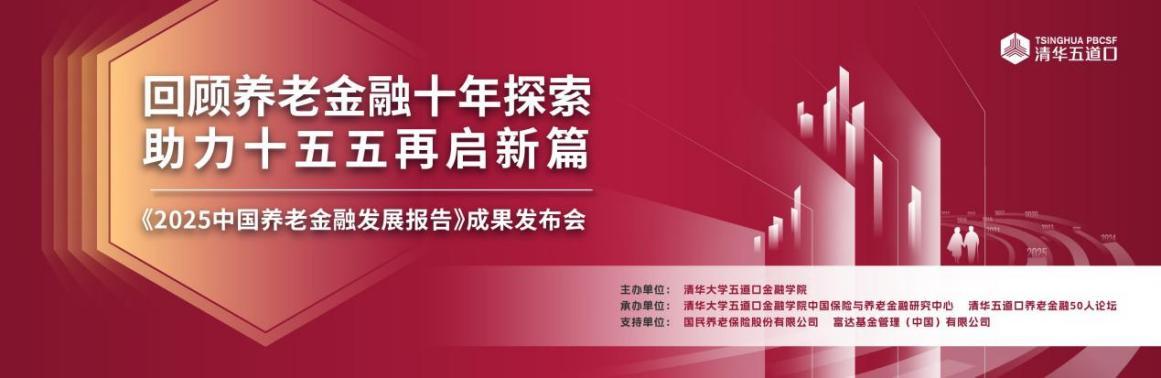
回顾养老金融十年探索 助力十五五再启新篇——《中国养老金融发展报告2025》成果发布会成功举办
Feng Huang Wang Cai Jing· 2025-12-20 14:05
Core Insights - The conference on the "China Pension Finance Development Report 2025" was successfully held, focusing on the past decade of pension finance exploration and the new directions for the 14th Five-Year Plan [2][25] - The event featured keynotes from prominent figures in the finance and insurance sectors, emphasizing the importance of policy innovation and practical exploration in pension finance [4][10] Group 1: Conference Overview - The conference was hosted by Tsinghua University’s Wudaokou School of Finance, with participation from various government departments and financial institutions, highlighting the collaborative effort in pension finance development [4][6] - Keynote speeches addressed the need for a multi-pillar pension system and the importance of enhancing the basic pension insurance system to adapt to demographic changes [8][12] Group 2: Keynote Highlights - Hu Xiaoyi emphasized the need for a high-quality universal insurance plan and the importance of integrating pension wealth planning with societal needs [10] - Zhou Yanli pointed out that the 14th Five-Year Plan period is crucial for establishing a multi-tiered pension insurance system, advocating for the expansion and enhancement of the second pillar [12] - Ding Zhijie highlighted the significance of improving the rural pension system and the role of pension insurance in enhancing consumer confidence and preventing elderly poverty [14] Group 3: Report Insights - The "China Pension Finance Development Report 2025" focuses on the optimization of the three pillars of pension systems and evaluates key initiatives like simplified enterprise annuity plans [25][26] - The report also analyzes international experiences, particularly Japan's pension system reforms, providing a comprehensive view of the current landscape and future directions for pension finance [25][28] Group 4: Future Directions - The conference underscored the need for continuous innovation in pension finance, with a focus on integrating technology and improving service delivery to meet the evolving needs of the aging population [15][19] - The discussions highlighted the importance of collaboration between financial institutions and pension service providers to create a sustainable and efficient pension finance ecosystem [21][23]
新银保时代提速,中荷人寿与华夏银行共建综合金融生态
Hua Xia Shi Bao· 2025-12-20 12:48
签约仪式上,华夏银行10家分行与中荷人寿10家分公司同步签署了合作协议,标志着双方合作从顶层战 略设计全面下沉至基层落地执行,确保协同效应贯通服务客户的"最后一公里"。 本报(chinatimes.net.cn)记者李明会 北京报道 12月19日,华夏银行与中荷人寿正式签署战略合作协议。华夏银行党委书记、董事长杨书剑在签约仪式 上表示,面向未来,双方将共建综合服务生态,充分发挥华夏银行在客户和渠道方面的优势,结合中荷 人寿在人身保障和养老服务领域的专业能力,为客户提供一站式全生命周期的综合金融服务方案。 中荷人寿党委书记李建营表示,未来,中荷人寿将充分利用在保险精算、健康管理、养老生态领域的专 业能力,持续深化与华夏银行的战略协同,特别是在私人银行客户、家庭财富规划、资产配置与风险管 理等领域提供更精准、更有温度的保险服务方案与增值服务,助力提升客户粘性与整体体验。 深化银保渠道布局 华夏银行与中荷人寿正式签署战略合作协议,标志着银保合作进入深度融合、共谋高质量发展的全新阶 段。 据介绍,双方将重点聚焦三大方向,共同打造"银行+保险"深度融合的服务新范式。一是共建综合服务 生态。依托华夏银行的客户基础与渠道, ...


福建:持续强化金融支持“科创兴闽”
Xin Hua She· 2025-12-20 10:46
为深入落实好金融"五篇大文章",近日中国人民银行福建省分行、福建省委金融办牵头,联合福建省发 改委、财政厅等部门,制定印发了《福建省金融"五篇大文章"工作方案》,提出福建省进一步深入落实 科技金融、绿色金融、普惠金融、养老金融、数字金融工作的18条具体举措。 方案还提出,切实提升科技金融服务质效,完善拓展投贷联动模式,力争"见投即贷"和"见贷即投";发 挥区域性股权市场作用,支持科技型企业股权融资交易。 (文章来源:新华社) 方案提出,加强对科技创新与战略性新兴产业金融支持,持续推进"科创兴闽 '银'领开篇"专项行动,深 入实施科技金融增量扩面降本、产品服务创新、专营机构建设三大工程,推动信贷规模稳中有增,力争 2025年到2027年科技相关产业贷款保持年均10%增速,制造业贷款占比较2024年进一步提升。 ...
福建出台《福建省金融“五篇大文章”工作方案》
Xin Lang Cai Jing· 2025-12-20 08:18
Core Viewpoint - The People's Bank of China Fujian Branch and the Fujian Provincial Financial Office have jointly developed a comprehensive work plan to implement the "Five Major Financial Articles" focusing on technology finance, green finance, inclusive finance, pension finance, and digital finance in Fujian Province, with specific measures outlined to enhance financial support across various sectors [1][16]. Group 1: Technology and Strategic Emerging Industries - The plan emphasizes the need to continuously promote the "Innovation in Fujian" initiative, aiming to increase credit scale while enhancing the quality of financial services [1][20]. - Specific actions include the establishment of specialized institutions, innovation in financial products, and the promotion of technology-related loans, targeting an annual growth rate of 10% for technology-related industry loans from 2025 to 2027 [5][20]. - The plan also aims to improve the knowledge property assessment and circulation system to activate the value of intellectual property as collateral [5][21]. Group 2: Green Finance - The initiative seeks to increase the supply of green and transition finance, with a focus on enhancing the proportion of green loans [2][22]. - Financial institutions are encouraged to innovate products related to environmental rights and to issue green financial bonds [2][22]. - The plan includes measures for improving environmental information disclosure and risk management, gradually reducing the carbon intensity of asset portfolios [8][23]. Group 3: Inclusive Finance - The work plan aims to enhance the inclusive financial system by utilizing monetary policy tools to support small and micro enterprises, particularly in rural areas [2][24]. - It emphasizes the importance of financial services for key employment groups and encourages banks to expand credit access for private enterprises [9][24]. - The plan also includes initiatives to improve financial services in the agricultural sector and support rural revitalization [10][25]. Group 4: Pension Finance - The plan outlines strategies to increase financial support for the elderly, including promoting the development of personal pension products and commercial insurance annuities [2][27]. - Financial institutions are encouraged to enhance their services in the elderly care sector and to provide tailored financial products for rural elderly populations [12][27]. Group 5: Digital Finance - The initiative calls for accelerating the digital transformation of financial institutions, enhancing digital infrastructure, and applying data-driven technologies to improve service quality [3][29]. - It aims to promote the use of digital currency and expects the transaction volume of digital RMB in Fujian to exceed 1 trillion yuan by the end of 2027 [3][29]. - The plan emphasizes the importance of data sharing and collaboration between government and financial institutions to better match financial supply with demand [3][29]. Group 6: Implementation and Support - The plan highlights the need for a coordinated local financial mechanism to ensure the effective implementation of the "Five Major Financial Articles" [3][30]. - It includes measures for policy support, risk management, and performance evaluation to enhance the effectiveness of financial institutions in executing the outlined strategies [3][30][31].