
生物多样性保护

Search documents
庐山植物园:长江之畔的绿色科学地标
Ren Min Ri Bao· 2025-07-10 02:08
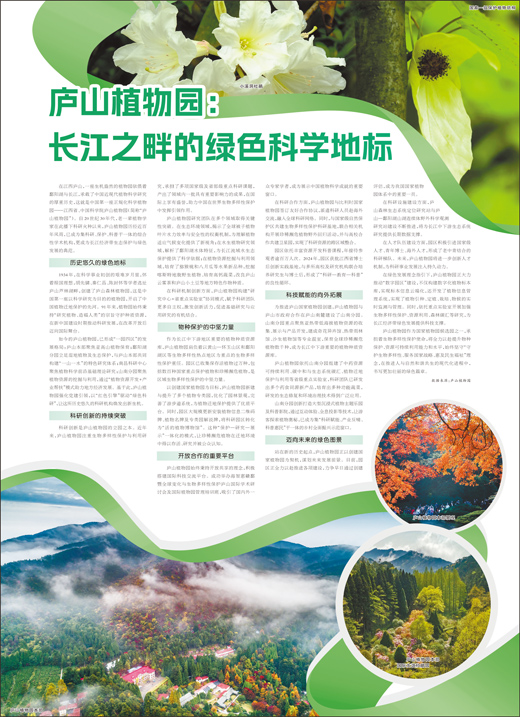
Core Viewpoint - The Lushan Botanical Garden, established in the 1930s, has evolved into a comprehensive academic institution focusing on research, conservation, and public education, serving as a model for ecological protection and green development in the Yangtze River Economic Belt [3][4][6]. Group 1: Historical Significance - The Lushan Botanical Garden is recognized as China's first formal scientific botanical garden, founded in 1934 by scholars with a vision for national service [4]. - Over its 91-year history, the garden has maintained its mission of "researching plants for the benefit of humanity," contributing to scientific development during the establishment of New China and expanding its influence internationally post-reform [4][5]. Group 2: Research and Innovation - The garden emphasizes biodiversity protection and has undertaken numerous national and provincial key research projects, producing influential results and gaining international recognition [6]. - Key breakthroughs include understanding the hydraulic efficiency of angiosperm leaves in relation to climate change, analyzing water characteristics of Poyang Lake for ecological protection, and developing new fruit varieties [6][7]. Group 3: Species Protection - The Lushan Botanical Garden serves as a vital plant genetic resource bank, preserving over 10,000 living plant species, including many national key protected and endangered species [7]. - The garden aims to create a national botanical garden, enhancing its facilities and optimizing its landscape to support plant conservation efforts [7][8]. Group 4: Open Collaboration - The garden promotes an open and shared philosophy, hosting international academic conferences and training programs, thus becoming a significant platform for showcasing China's achievements in plant science [8]. - Collaborations with international institutions and local nature reserves enhance biodiversity research and conservation efforts [8][9]. Group 5: Technological Expansion - The establishment of the South Garden focuses on subtropical low-altitude plant resources, featuring specialized greenhouses and preserving thousands of rare plants [9]. - The garden has developed several key laboratories and innovative projects, including immersive botanical theme parks that combine research, industry support, and public education [9][10]. Group 6: Future Development - The Lushan Botanical Garden is committed to becoming a key member of China's national botanical garden system, enhancing its research facilities and talent pool [10][11]. - The garden is advancing digital transformation initiatives, including a digital specimen database and real-time monitoring systems for plant management, supporting ecological research in the Yangtze River Economic Belt [10][11].

【省司法厅】部署推进野生鸟类保护工作
Shan Xi Ri Bao· 2025-07-09 23:51
Group 1 - The provincial judicial department is implementing comprehensive measures to enhance the protection of wild birds and strengthen biodiversity conservation [1] - Legislative proposals are being made to improve regulations and provide robust institutional support for wildlife protection [1] - There is an emphasis on increasing administrative law enforcement coordination and supervision among various departments to address issues related to wildlife protection [1] Group 2 - The provincial judicial department is collaborating with academic institutions to establish a judicial appraisal expert database for wildlife protection [2] - Public awareness campaigns are being prioritized to instill legal consciousness regarding wildlife protection among the community [2] - The department is encouraging the establishment of judicial appraisal institutions for environmental damage related to wild flora and fauna [2]
黑龙江伊春生物多样性保护实践带来哪些启示?
Zhong Guo Huan Jing Bao· 2025-07-08 03:04
Core Viewpoint - Yichun City in Heilongjiang Province is recognized for its rich biodiversity and plays a crucial role in ecological security and sustainable development, being referred to as the "green lung of northern China" [1] Group 1: Biodiversity Protection Practices - Yichun has made significant progress in biodiversity protection through a series of important measures, including strategic planning and policy integration [2] - The city has implemented local laws such as the "Yichun City Red Pine Protection Regulations" to ensure sustainable use and long-term protection of local biodiversity resources [2] - Yichun has established a comprehensive regulatory system and enhanced law enforcement effectiveness through initiatives like "Qingfeng Action" and "Fishing Administration Sword" to combat illegal activities threatening protected species [2] Group 2: Ecological Protection and Management - As a key ecological function area, Yichun has designated 15,000 square kilometers as ecological protection red lines, implementing zoning controls to minimize ecological disturbance [3] - The city has created 23 natural protected areas covering 671,000 hectares to manage critical habitats for rare and endangered species [3] - Yichun has developed a biodiversity protection network that connects terrestrial and aquatic migration corridors, enhancing ecosystem connectivity [3] Group 3: Technological Innovation in Biodiversity Monitoring - Yichun has integrated technology into biodiversity protection by collaborating with research institutions to establish monitoring bases and emergency response mechanisms [3] - The use of drones, infrared cameras, and AI technology in monitoring has enabled real-time tracking of ecological conditions and biodiversity status [3] Group 4: Community Engagement and Collaborative Governance - Yichun promotes public participation in biodiversity protection through events like "Yichun Ecological Day" and "Bird Love Week," fostering community involvement in ecological restoration [4] - The city has established mechanisms for community co-management and encourages volunteer participation in biodiversity protection efforts [4] Group 5: Lessons Learned for Biodiversity Protection - Yichun's experience highlights the importance of systematic legislation for biodiversity protection, emphasizing the need for coordinated efforts across various sectors [5] - The establishment of a scientific and orderly management and enforcement mechanism is crucial for effective biodiversity protection [6] - Cross-regional cooperation in biodiversity protection is essential, with a focus on building ecological corridors and joint monitoring initiatives [6]
努力把北京建设成天蓝水清森拥园簇秩序壮美的花园城市
Bei Jing Ri Bao Ke Hu Duan· 2025-07-07 20:14
Group 1 - The core focus is on the comprehensive construction of a beautiful Beijing and the promotion of garden city development, emphasizing ecological civilization and the integration of green spaces into urban planning [1][4] - The city aims to enhance public parks and green spaces, ensuring they meet the recreational needs of citizens while preserving historical and cultural heritage [1][3] - The development of the "Two Rivers and One Belt" waterfront economic zone is highlighted as a key initiative for ecological conservation and urban interaction [2] Group 2 - The construction of the Yonglu River Park, which incorporates various ecological elements, is set to open its second phase by September this year, focusing on biodiversity and community engagement [3][5] - The city plans to improve urban aesthetics and biodiversity through comprehensive greening and beautification efforts, including the creation of pocket parks and community gardens [4][5] - The integration of modern technology, such as big data and AI, into park management is emphasized to enhance visitor experiences and promote sustainable practices [5]
山东印发生物多样性保护战略与行动计划
Da Zhong Ri Bao· 2025-07-07 01:05
Core Points - The article discusses the "Shandong Province Biodiversity Conservation Strategy and Action Plan (2025-2030)" aimed at enhancing biodiversity protection and management in Shandong Province [2][3] - The plan sets a target for 2030 to significantly reduce major factors affecting biodiversity, effectively mitigate the loss and threats to biodiversity, and establish a basic spatial pattern for biodiversity protection [2][3] - The action plan outlines four priority areas: mainstreaming biodiversity, addressing threats to biodiversity loss, enhancing sustainable use and benefit-sharing, and modernizing biodiversity governance capabilities [3][4] Group 1: Overall Goals - By 2030, significant reductions in major factors affecting biodiversity are expected, with a basic spatial pattern for biodiversity protection established [2] - The plan aims for at least 4.5% of the province's land area to be designated as natural protected areas and a minimum of 20,600 square kilometers for ecological protection red lines [2] Group 2: Priority Areas - Mainstreaming biodiversity involves improving policy and regulatory frameworks, establishing long-term mechanisms, and enhancing public participation [3] - Addressing biodiversity loss includes measures for ecological space protection, ecosystem restoration, and sustainable resource use [3][4] - Sustainable use and benefit-sharing initiatives focus on enhancing the sustainable management of agricultural and forestry resources and exploring pathways for realizing the value of ecological products [4] - Modernizing biodiversity governance includes improving monitoring and evaluation methods, enhancing law enforcement, and fostering international cooperation [4]
碳汇交易借绿生金 生态资源变身“绿色银行” 为乡村振兴、产业发展注入新动能
Yang Shi Wang· 2025-07-06 03:46
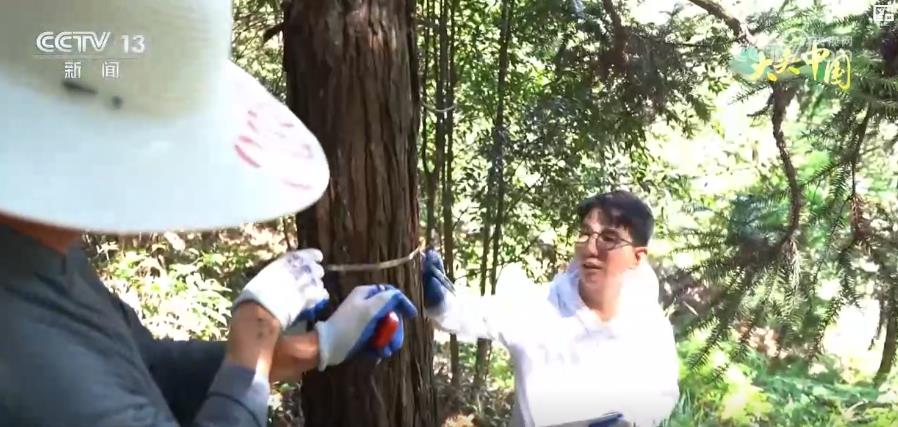
Core Insights - Fujian Ningde City, specifically Zhou Ning County, is recognized as a demonstration area for ecological civilization construction, leveraging its rich natural ecological resources for rural revitalization and industrial development through carbon storage and trading [1][5] Group 1: Carbon Trading and Ecological Benefits - The local forestry carbon sink project aims to convert forest carbon reserves into financial resources for rural revitalization, allowing local residents to benefit from ecological protection [5] - Zhou Ning County has approximately 82,000 hectares of forest land and a timber stock of over 4.88 million cubic meters, indicating significant potential for carbon sink development [5] Group 2: Technological Advancements in Monitoring - A smart monitoring platform for forest resources has been established, utilizing technologies such as video surveillance, drones, infrared cameras, and smart growth monitoring devices [7] - Drones conduct patrols four times daily over an area exceeding 1,800 acres, providing real-time data on forest conditions [7] Group 3: Biodiversity Conservation - The smart monitoring platform has successfully recorded sightings of rare wildlife species, including leopard cats and white pheasants, using infrared sensing technology and AI species recognition, contributing to biodiversity conservation efforts [9]
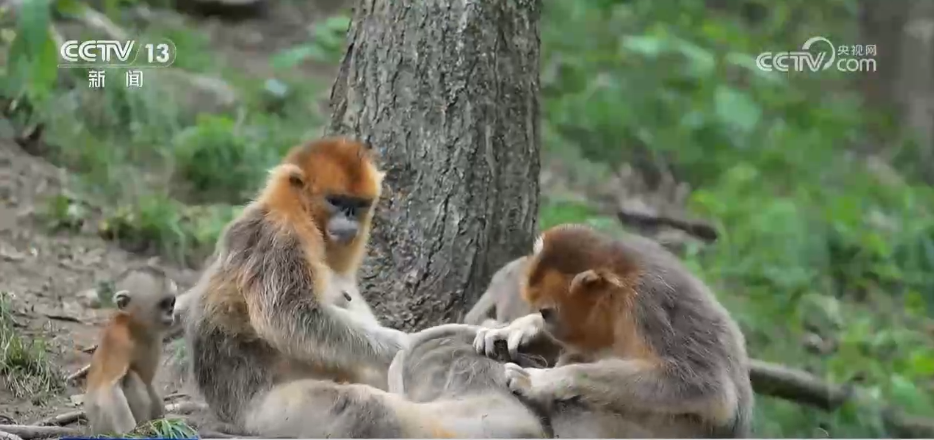
秦岭生态廊道守护生物多样“精彩” 勾勒人与自然和谐共生美好图景
Yang Shi Wang· 2025-06-30 08:30
Core Viewpoint - The population of Sichuan golden monkeys in the Qinling Mountains has reached a new peak in newborns this year, indicating a stable growth trend in their population [1][5]. Group 1: Population Growth and Monitoring - The research team from Northwest University has established two observation stations with 20 observation points to monitor the Sichuan golden monkey population [5]. - The latest statistics show that the population of a single group of Sichuan golden monkeys in the Zhouzhi National Nature Reserve has exceeded 340 individuals, making it the largest known group in the Qinling region and nationwide [5]. Group 2: Ecological Corridor and Biodiversity - The "monkey road" in the Qinling core area has become a migration corridor for wildlife, originally built for logging but now facilitating genetic exchange among various species [5][9]. - The Zhouzhi National Nature Reserve was established primarily for the protection of the Sichuan golden monkey and is a key area for ecological corridor construction [7]. - The ecological corridor has not only benefited the golden monkey population but has also attracted other rare species, such as giant pandas and leopards, enhancing biodiversity in the region [9][11]. Group 3: Human-Wildlife Harmony - The ecological corridor represents a significant project for ecological protection, showcasing a vision of harmonious coexistence between humans and wildlife [11].
2024年全省生态环境“成绩单”出炉江苏交出“经济生态双优”答卷
Xin Hua Ri Bao· 2025-06-27 23:15
Core Insights - Jiangsu Province is set to achieve a GDP growth of 5.8% in 2024, leading the nation while also meeting its major pollutant reduction targets ahead of schedule [1] - The province has maintained a public satisfaction rate of over 90% regarding its ecological environment for six consecutive years [1] Environmental Quality Improvement - In 2024, Jiangsu's ecological environment quality continues to improve, meeting national assessment targets [2] - The annual average concentration of PM2.5 and the ratio of days with good air quality have both improved year-on-year [2] - Surface water quality has remained at a high standard, with no monitoring points below Class V for three consecutive years [2] Water Ecological Protection - Jiangsu has implemented a comprehensive strategy for water ecological protection, focusing on the Yangtze River and other water bodies [3] - The province has achieved a total sewage treatment capacity of 9.923 million tons per day, with a rural sewage treatment rate of 93.7% [3] - The province has established a high-density automatic monitoring network for water quality [3] Pollution Control Initiatives - Jiangsu has developed action plans for the comprehensive management of water ecosystems, including pollution control and ecological restoration [4] - The province has successfully reduced total nitrogen and phosphorus discharges by 9,204 tons and 1,194 tons respectively since the beginning of the "14th Five-Year Plan" [4] Soil Quality Management - The overall soil quality in Jiangsu is reported to be good, with no monitored pollutants exceeding risk control values [5] - The province has completed inspections of 1,543 key regulatory units for soil pollution risks [5] Biodiversity Protection - Jiangsu has designated 22.49% of its land area for strict ecological protection, combining ecological red lines with controlled ecological spaces [6][7] - The province has conducted biodiversity baseline surveys using advanced technologies, completing investigations in all 95 counties [7] Hazardous Waste Management - Jiangsu's hazardous waste management focuses on collection, treatment, regulation, and enforcement [8] - The province has initiated measures to phase out older diesel vehicles and promote the use of new energy vehicles [9]
深入学习贯彻习近平生态文明思想 加快推进人与自然和谐共生的现代化
Xi An Ri Bao· 2025-06-27 02:11
Core Viewpoint - The meeting emphasized the importance of integrating ecological civilization into the development strategy, highlighting the need for a harmonious coexistence between humans and nature, guided by Xi Jinping's ecological civilization thought [1][2]. Group 1: Policy and Framework - The establishment of a comprehensive policy, standard, and regulatory framework for the integration of production, life, and ecology is essential [2]. - There is a focus on the scientific layout of urban functional spaces to promote the efficient and innovative use of resources [2]. Group 2: Environmental Protection Initiatives - The meeting underscored the commitment to protect the Qinling Mountains, with an emphasis on regular inspections and socialized protection efforts [2]. - Actions to protect wild flora and fauna, particularly wild birds, are prioritized to maintain biodiversity and ecological balance [2]. Group 3: Pollution Control and Ecological Restoration - A strong emphasis was placed on combating pollution, particularly in the context of improving air quality and ensuring the success of the "Blue Sky Defense War" [2]. - The need for comprehensive management of river and lake systems, along with ecological restoration projects, was highlighted [2]. Group 4: Green Development and Carbon Neutrality - The promotion of green and low-carbon transformation is a key focus, with initiatives like the "Double Carbon" action plan for Xi'an being implemented [2]. - The application of green technologies and the development of strong green competitiveness are essential for sustainable growth [2].
中德财政合作项目实施后,衡水湖何以频现“鸟浪”奇观?
Zhong Guo Xin Wen Wang· 2025-06-27 00:08
Core Insights - The "Hengshui Lake Wetland Protection and Restoration Project" is part of Sino-German financial cooperation aimed at biodiversity and natural resource protection, significantly improving the ecological environment and biodiversity in the region [1][2]. Group 1: Project Overview - The project was initiated under the Sino-German financial cooperation framework, utilizing €11.2 million in loans and €205,000 in grants from the German government, along with 8.55 million RMB in matching funds, with an implementation period from May 2016 to June 2022 [2]. - Key components of the project include water management and ecological restoration, wetland ecological management, monitoring and research, sustainable development education, and capacity building [2]. Group 2: Achievements and Impact - The project has significantly improved bird protection influence, habitat quality, and established a nature experience base, recognized as an excellent case for biodiversity protection by China's Ministry of Ecology and Environment in 2022 [3]. - The project has led to the establishment of a participatory management plan for the reserve, including biodiversity management frameworks and the first regional protection plan for the critically endangered Baikal teal [3][4]. - Water resource management has improved through the use of a water balance equation, enhancing wetland management levels [3]. - The biodiversity of the wetland has increased, with the number of bird species recorded rising from 323 in 2016 to 336 by June 2025, including nine newly recorded species of waterfowl [5]. Group 3: Innovative Conservation Practices - The project has implemented seasonal closure management for critical habitats of endangered species like the Baikal teal, allowing for more precise spatial and temporal management of conservation efforts [6]. - The Baikal teal population in Hengshui Lake has been recorded at 120 individuals, making it one of the few habitats in China with a significant population of this species [6]. Group 4: Education and Community Engagement - The project has established a sustainable development education center, attracting over 20,000 students annually for nature education activities [4][7]. - The integration of ecological education with tourism has led to over 3 million visitors to Hengshui Lake, creating a model for other regions to follow in combining conservation with sustainable use [7].