
碳达峰

Search documents
中新建电力集团发布城市级源网荷储成果 “兵团样本”实现从实践到模式输出关键跨越
Zheng Quan Shi Bao Wang· 2025-10-16 03:20
Core Viewpoint - The China New Construction Power Group successfully held a conference focusing on the construction of a new power system and the development of a green transformation ecosystem, aligning with the national "dual carbon" strategy [1][2]. Group 1: Company Overview - China New Construction Power Group is the controlling shareholder of Tianfu Energy (600509) and was established with a registered capital of 10 billion RMB, aiming to enhance the competitiveness of the power industry chain in the region [1]. - The company is a significant initiative by the regional government to implement national carbon peak and carbon neutrality strategies and to promote a new round of state-owned enterprise reforms [1]. Group 2: Achievements and Innovations - The conference marked a transition to a mature stage in the integration of source, network, load, and storage (source-network-load-storage) systems, providing a replicable model for energy production in line with the national "dual carbon" strategy [2]. - The overall report on the green transformation ecosystem presented by the company detailed how it integrates resources across various energy sectors, offering a path for collaborative optimization and green development in urban energy systems [2][3]. Group 3: Practical Applications - The conference showcased breakthroughs in several key areas, including smart energy integration, renewable energy planning, and the combination of photovoltaic technology with ecological restoration [3]. - Demonstrations of successful applications in energy supply reliability and economic efficiency were presented, highlighting the practical effectiveness of the "Bingtuan model" in energy, economy, and ecological collaboration [3].
国合会年会提六大政策建议 聚焦绿色需求、绿色消费等
2 1 Shi Ji Jing Ji Bao Dao· 2025-10-15 15:39
Core Insights - The article discusses the policy recommendations presented by the China Environment and Development International Cooperation Committee (CEDD) for the Chinese government, focusing on green transformation and sustainable development strategies for the upcoming "15th Five-Year Plan" period [1][2]. Group 1: Policy Recommendations Overview - The recommendations are categorized into six areas, comprising a total of 22 specific policy suggestions aimed at enhancing green demand, technological support, green consumption, supply chain finance, energy transition, and high-level openness [2][3]. Group 2: Green Demand Expansion - Accelerate the construction of a new power system, aiming to stop new coal power installations and achieve a renewable energy generation share of 33%-38% by 2030 [3]. - Improve industrial electrification, targeting an electrification rate exceeding 34% by the end of the "15th Five-Year Plan" [3]. - Establish a comprehensive carbon reduction mechanism, expanding the coverage of the carbon market to include industries like chemicals and aviation [3]. Group 3: Technological Support and Ecosystem - Enhance coordination between renewable energy development and ecological protection [5]. - Promote high-quality development of the blue economy, integrating sustainable marine energy into national and local development plans [5]. - Establish a proactive climate adaptation governance system to build climate-resilient socio-ecological systems [5]. Group 4: Sustainable Production and Consumption - Strengthen the top-level design of the circular economy, setting specific goals for resource productivity and recycling rates [6]. - Promote solid waste management in synergy with the circular economy, encouraging pilot projects for "waste-free cities" [6]. - Accelerate the cultivation of the recycled materials market through consumer incentives and digital technology integration [6]. Group 5: Supply Chain Finance for Low-Carbon Innovation - Drive green innovation in supply chains through the financing needs of leading enterprises [7]. - Encourage financial institutions to incorporate carbon emission indicators into their services [7]. - Promote debt replacement tools linked to the retirement of high-carbon assets to support low-carbon transitions [7]. Group 6: Just Transition in Traditional Energy Regions - Develop the coal triangle area as a national low-carbon transition demonstration zone, focusing on inclusive employment support [8]. - Establish zero-carbon trade zones centered on new energy systems and carbon removal technologies [8]. - Enhance diversified funding support for low-carbon and disruptive technology innovations [8]. Group 7: High-Level Openness and International Cooperation - Strengthen international cooperation mechanisms for green development, establishing a global green development initiative [9]. - Create a risk management system for overseas green financing [9]. - Participate constructively in building an international green financial system, increasing climate investment scales [9].
PM2.5四年再降近两成 北京交“十四五”生态高分答卷
Bei Jing Shang Bao· 2025-10-15 12:12
Core Points - Beijing has achieved significant improvements in air quality during the "14th Five-Year Plan" period, with PM2.5 annual average concentration decreasing from 38 µg/m³ in 2020 to 30.5 µg/m³ in 2024, a reduction of 19.7% [3][4] - The city has also seen a substantial increase in the number of good air quality days, reaching 290 in 2024, while heavy pollution days have decreased to just 2 [4] - Water quality has improved, with 87.2% of rivers classified as I-III grade, an increase of 23.4 percentage points since 2020 [4] Environmental Improvements - The ecological environment index (EI) for Beijing reached 71.4 in 2024, indicating a good ecological status [4] - The city recorded 7,121 species from 2020 to 2024, showcasing its rich biodiversity [4] - The number of parks in Beijing has reached 1,100, earning it the title of "City of a Thousand Gardens" [6] Energy Consumption and Efficiency - Beijing's energy consumption per unit of GDP has dropped to 0.163 tons of standard coal, making it the most efficient in the country [8] - Renewable energy consumption has increased to 17% of total energy use, a rise of 6.6 percentage points since 2020, with renewable energy generation capacity exceeding 3 million kW, a 42% increase [7][8] - The city has achieved a significant reduction in coal consumption, from 2,180 million tons in 2012 to 320,000 tons in 2024, with coal accounting for only 0.3% of total energy consumption [9] Future Goals - Moving into the "15th Five-Year Plan," Beijing aims to transition from energy consumption control to carbon emission control, focusing on green and low-carbon development [9][10] - The city plans to enhance the efficiency of data center energy use and increase the proportion of renewable energy in its energy mix [10] - Policies will support green and low-carbon projects, with over 80 million yuan allocated for 52 projects during the "14th Five-Year Plan" to promote industrial green transformation [10]

去年城网用户平均停电时间较1991年下降超97% 未来高比例新能源电力运行将考验电力可靠性管理
Mei Ri Jing Ji Xin Wen· 2025-10-15 06:29
电力可靠性是衡量一个国家电力安全稳定供应的重要指标。重庆大学教授谢开贵表示,进入本世纪以 来,国外大规模停电事件频发,影响超100万人的大停电发生100余次。美国和加拿大"8·14"大停电调查 报告的46条停电原因中,近30%与可靠性技术相关。因此,可靠性技术是减少停电的重要技术和管理手 段之一。 记者从论坛现场获悉,经过40年发展,我国已经构建覆盖发电、输变电、供电等电力生产主要环节的管 理体系。自1991年以来,城网用户供电可靠性水平实现了跨越式提升。2024年,城网用户平均停电时间 为1.99小时/户,相较于1991年下降了94.55小时/户,下降幅度超97%。 新型电力系统面临的可靠性挑战,也成为现场与会专家探讨的焦点。 《中国电力行业可靠性年度发展报告2025》指出,当前,构建新型电力系统正面临多重挑战,大电网交 直流混联运行、各电压等级源网荷储多向互动大幅提升系统复杂性,由于新能源波动特性叠加极端天 气、网络攻击等内外部不确定因素,存在引发连锁故障与大面积停电的风险。电力发展不均衡、可靠性 数据质量有待提升、可靠性管理体系尚待完善、关键指标作用发挥仍不充分,以及市场机制和电价机制 难以适应新型电力 ...
专访赖晓明:推进碳市场扩容,研究配额有偿分配|四中全会预热
2 1 Shi Ji Jing Ji Bao Dao· 2025-10-14 09:27
Core Viewpoint - The national carbon market in China has become the largest in the world, effectively managing over 60% of the country's carbon dioxide emissions, with significant growth in trading volume and market participation observed in 2023 [1][2]. Market Development - The national carbon market has been operational for four years, with a cumulative trading volume of 728 million tons and a total transaction value of 49.83 billion yuan as of September 30, 2025 [1]. - The trading volume in 2023 has increased by 40% compared to the same period last year, indicating a rise in market activity and participant engagement [4]. - The number of key emission units that have opened trading accounts has reached 1,277, contributing to a more diverse market structure [2][3]. Market Structure and Participants - The expansion of the carbon market to include industries such as steel, aluminum smelting, and building materials has diversified the market, enhancing the richness and variety of market participants [3]. - The quality of market participants has improved, with many companies establishing dedicated carbon asset management departments, leading to a more proactive approach to carbon management [4]. Local Market Dynamics - Local carbon markets, such as Shanghai's, are expected to continue playing a crucial role in supporting local carbon reduction goals and green development, despite a reduction in quota coverage due to the national market's expansion [5][7]. - Shanghai's carbon market has over 2,200 registered entities, including around 400 key emission enterprises, which contributes to its high trading activity [6]. Future Directions - The carbon market is set to transition towards a model of "paid allocation + total control" during the 14th Five-Year Plan, with a focus on policy coordination between industrial and carbon market policies [10]. - Plans are in place to include all major industrial emission sectors in the carbon market by 2027, with ongoing research into paid allocation mechanisms to enhance market efficiency [8][9].
为“大国重器”铸就钢筋铁骨 南钢股份高端材料助攻制造业升级
Zheng Quan Shi Bao Wang· 2025-10-14 09:10
Core Viewpoint - Nanjing Steel Co., Ltd. (Nanjing Steel) has evolved from a key player in Jiangsu's steel industry to a core member of CITIC Group's advanced materials sector, aligning its development with national strategies during the "14th Five-Year Plan" period [1][2]. Historical Development - Nanjing Steel was established in 1958 and became a significant contributor to Jiangsu's steel industry, marking the beginning of modern steel production in the region [2]. - The company was listed on the Shanghai Stock Exchange in 2000, initiating its capitalized development journey [1]. High-end Development - Nanjing Steel focuses on high-end manufacturing and import substitution, producing specialized steel products with advanced properties [2]. - The company has established a global innovation network, collaborating with 82 research institutions across 12 countries, and maintains a research and development investment ratio exceeding 3% for several years [3]. - Nanjing Steel's products have been recognized in various national projects, including supplying steel for major infrastructure like the "Aida Magic City" cruise ship and the Baihetan Hydropower Station [3][4]. Intelligent Transformation - The company aims to create a "smart enterprise" by digitizing all business processes and integrating industrial intelligence [6]. - Nanjing Steel has built a smart operation center that enhances efficiency and reduces costs through digital transformation [6][8]. Green Development - Nanjing Steel aspires to be a leader in global green steel production, achieving low emissions and being recognized as a national-level green factory [9][11]. - The company has set ambitious goals for carbon peak by 2030 and carbon neutrality by 2050, implementing various energy efficiency and renewable energy projects [9][11]. Financial Performance - Nanjing Steel has consistently maintained strong financial performance, with a return on equity (ROE) steadily increasing and cumulative cash dividends exceeding 136 billion yuan since its listing [11].

岳阳林纸股份有限公司 关于全资子公司诚通碳汇中标碳汇合作开发项目的公告
Zhong Guo Zheng Quan Bao - Zhong Zheng Wang· 2025-10-14 05:31
Core Viewpoint - The company has won a bid for a forestry carbon sink resource cooperation development project in Fuyuan County, Yunnan Province, which aligns with national carbon neutrality goals and is expected to positively impact its business performance and brand image [1][3]. Project Overview - The project covers approximately 2.544 million acres of forestry land in Fuyuan County, with the actual area subject to final approval and verification [1]. - The initial cooperation period for project revenue is set at 20 years, with the final duration to be determined by the signed contract [2]. - The project will be developed through a full-package cooperation model, where the developer bears the costs, and profits will be shared [2]. Impact on the Company - The project allows the company to leverage national goals of "3060" carbon peak and carbon neutrality, enhancing its position in the carbon trading market [3]. - As a state-owned enterprise's carbon asset management platform, the company is involved in setting national standards for forestry carbon sinks, which may enhance its market influence and brand image if the project is successfully implemented [3]. - The project will not affect the company's operational independence, and it will not create dependency on the project counterpart [4].

中国绿电新版图:风光无限好,电自海上来
Zhong Guo Fa Zhan Wang· 2025-10-14 02:15
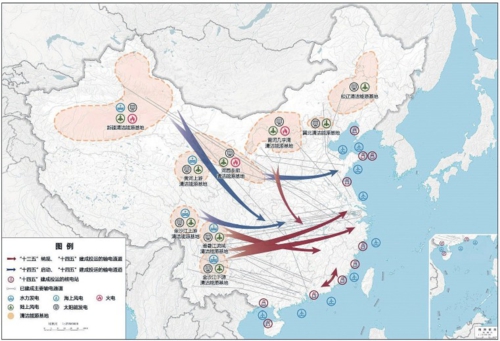
开栏的话 从七张示意图观察中国过去的五年。 2021 年 3 月,一份事关民族复兴和人民福祉的蓝图 —— 《中华人民共和国国民经济和社会发展第十四个五年规划和 2035 年远景目标纲要》正式发布。在这份逾 7 万字的重磅文件中,七张示意图以其独特视角,将宏大战略凝练为直观的空间布局,成为解码 " 十四 五 " 的七个关键切口。 近五年的时空跨越,图纸一步步成为现实。这七张示意图,每一张都是一扇窗口。通过清洁能源基地的 个案,看见整个国家的绿色转型;通过一片高标准农田的建设,看见国家粮食安全战略的落地;通过一 条城际铁路的开通,看见区域协调发展大格局的形成 …… 从本期开始,我们推出 " 决胜 ' 十四五 '· 七张图的故事 " 系列报道,正是要透过这七张图纸,理解中国的 发展改革,解读背后蕴含的国家战略和民生温度,从具象的 " 点 " 与 " 线 " 中,探寻中国发展实践 的 " 面 " 与 " 体 " ,完成一次从微观到宏观的观察。 中国发展改革报社记者 白雪 新疆戈壁滩上,巨型风电叶片正迎风转动,将动能转化为清洁电能;金沙江畔,三峡集团的水电站机组 轰鸣,江水奔涌间点亮长三角的万家灯火;东南沿海核电基地里 ...
我国新一轮国家自主贡献目标迭代升级 为全球气候治理注入强大动力
Jin Rong Shi Bao· 2025-10-14 02:12
Group 1: NDC Goals and Climate Ambitions - The new NDC targets announced by China aim for a 7% to 10% reduction in net greenhouse gas emissions by 2035 compared to peak levels, with non-fossil energy consumption exceeding 30% of total energy consumption [1][2] - The NDC goals reflect a shift from "phase-based reduction" to "systemic transformation" in China's climate governance strategy, marking a significant evolution in its approach [2][3] - The updated NDC includes a broader scope covering all greenhouse gases, moving from relative intensity targets to absolute total emission reduction metrics [3] Group 2: Implementation and Sectoral Changes - To achieve the non-fossil energy consumption target, an annual increase of 0.94 percentage points is required, necessitating a high proportion of renewable energy supply and electrification [4] - The national carbon market is set to expand, with major industries like steel, cement, and aluminum included by 2025, increasing the controlled carbon emissions from 5 billion tons to 8 billion tons [4][6] - Different industries will face varying costs for emission reductions, with sectors like steel and electricity having lower costs compared to aviation and shipping, which may incur significantly higher costs [7] Group 3: International Context and Challenges - The global progress on emission reductions is lagging, with the UN Secretary-General warning of risks to the 1.5°C temperature goal, highlighting the importance of China's NDC commitments in this context [8][9] - The EU aims to reduce greenhouse gas emissions by 66% to 72% by 2035 based on 1990 levels, although the final commitments are still pending [8] - The absence of the U.S. at the climate summit and its historical role as a major emitter complicates international climate cooperation, emphasizing the need for responsible leadership from countries like China [9]
我国新一轮国家自主贡献目标迭代升级
Jin Rong Shi Bao· 2025-10-14 01:09
Group 1: NDC Goals and Climate Commitments - The new NDC targets announced by China aim for a 7% to 10% reduction in net greenhouse gas emissions from peak levels by 2035, with non-fossil energy consumption exceeding 30% of total energy consumption [1][2] - The NDC goals represent a shift from "phase-based reduction" to "systematic transformation," indicating a comprehensive approach to climate governance [2][3] - The updated NDC includes a broader scope covering all greenhouse gases, a shift from relative intensity targets to absolute total emission targets, and an extended timeline that includes post-peak reduction phases [3] Group 2: Industry Implications and Actions - The transition to total emissions control means that more industries must actively engage in carbon reduction efforts, with a focus on systematic management across all economic sectors [5][6] - The national carbon market is set to expand, with plans to include major industrial sectors by 2027, increasing the number of monitored entities and the total carbon emissions under management [6] - Different industries will face varying costs for carbon reduction, with some sectors like steel and electricity having higher costs compared to others, necessitating a phased approach to implementation [7] Group 3: International Context and Challenges - The global progress on emission reductions is lagging, with significant gaps between national commitments and the efforts needed to meet climate goals, particularly in light of the U.S. withdrawal from the Paris Agreement [8][9] - China's NDC commitments are seen as crucial for setting a roadmap for carbon reduction in the next five years, especially given the challenges posed by the current international climate cooperation landscape [8][9]