高性能计算

Search documents
先进封装深度:应用领域、代表技术、市场空间、展望及公司(附26页PPT)
材料汇· 2025-07-07 14:23
Core Viewpoint - The advanced packaging market is expected to grow significantly, driven by trends in generative AI, high-performance computing (HPC), and the recovery of mobile and consumer markets, with a projected increase from $37.8 billion in 2023 to $69.5 billion by 2029, representing a compound annual growth rate (CAGR) of 12.9% [2][44]. Group 1: Overview of Advanced Packaging - Advanced packaging differs from traditional packaging in terms of equipment, materials, and technology, offering advantages such as miniaturization, lightweight, high density, low power consumption, and functional integration [6]. - The advanced packaging market in China has seen rapid growth, increasing from 42 billion yuan in 2019 to 79 billion yuan in 2023, with a projected market size of 134 billion yuan by 2029, reflecting a CAGR of 9% from 2024 to 2029 [8][10]. Group 2: Application Areas of Advanced Packaging - System-in-Package (SiP) is a key growth driver in the advanced packaging market, with the consumer electronics sector being the largest downstream application, accounting for 70% of SiP applications [14]. - High-Density Flip Chip (FC) packaging has significant growth potential in mobile and consumer markets, with the FC-CSP segment expected to exceed $10 billion by 2026 [17]. - The QFN/DFN packaging market is projected to grow from $13.65 billion in 2023 to $30.68 billion by 2032, with a CAGR of approximately 9.42% [22][24]. - MEMS packaging is also gaining attention, with a market size of around $2.7 billion in 2022 and a CAGR of 16.7% from 2016 to 2022 [25]. Group 3: Representative Technologies in Advanced Packaging - Wafer Level Chip Scale Packaging (WLCSP) is characterized by its ability to provide higher bandwidth, speed, and reliability, with a market size expected to grow from $18.45 billion in 2023 to $43.5 billion by 2032, reflecting a CAGR of around 10% [27][29]. - WLCSP is widely applied in various fields, including consumer electronics, automotive, telecommunications, and healthcare, driven by the rise of IoT devices and smart technologies [37]. Group 4: Market Space and Forecast - The advanced packaging market is projected to reach $80 billion by 2029, with a CAGR of 12.7%, driven by AI and HPC applications [68]. - Advanced packaging shipment volume is expected to increase from 70.9 billion units in 2023 to 97.6 billion units by 2029, with a CAGR of 5.5% [70]. - The total advanced packaging wafer output is anticipated to grow at a CAGR of 11.6% from 2023 to 2029, with 2.5D/3D packaging expected to see the highest growth rate of 32.1% [73]. Group 5: Related Companies in Advanced Packaging - Key players in the advanced packaging sector include companies like JCET, which focuses on sensor packaging and has established a leading position in the WLCSP market [50]. - Other notable companies include Taiwan Semiconductor Manufacturing Company (TSMC), which has developed advanced packaging technologies across various applications, and Huatian Technology, which specializes in advanced packaging solutions for automotive and consumer electronics [50].



CoreWeave(CRWV.US)拟以全股票收购Core Scientific(CORZ.US) 盘前下跌近3%
智通财经网· 2025-07-07 13:33
Core Viewpoint - CoreWeave has agreed to acquire Core Scientific in an all-stock transaction valued at approximately $9 billion, aimed at expanding its AI data center capabilities [1] Transaction Details - The acquisition values Core Scientific's stock at $20.40 per share, representing a 66% premium over the closing price on June 25, the day before negotiations began [1] - The transaction is expected to be completed by Q4 2025, pending regulatory approval [1] Strategic Implications - CoreWeave's CEO, Michael Intrator, stated that the acquisition will accelerate the company's strategy for scaling AI and high-performance computing workloads [1] - Core Scientific, a Bitcoin mining company, is leveraging the current AI boom to expand beyond cryptocurrency by utilizing its data center space and addressing power supply shortages [1] Historical Context - Last year, Core Scientific initiated its expansion by proposing a $1 billion acquisition of Core Scientific, along with a 12-year contract to provide approximately 200 megawatts of infrastructure for CoreWeave's operations [1] Market Reaction - As of the latest trading session, CoreWeave's stock fell nearly 3%, while Core Scientific's stock plummeted by 17% [2]


玻璃基板材料,新突破
半导体芯闻· 2025-07-07 09:49
如果您希望可以时常见面,欢迎标星收藏哦~ 来 源: 内容 编译 自 etnews 。 美国玻璃材料公司康宁开发出半导体基板专用玻璃。此举意在积极进军被称为下一代基板的玻璃基 板市场,预计将与德国竞争对手肖特展开激烈竞争。 据业内人士透露,康宁已完成半导体基板专用玻璃材料的开发,目前正在与国内外客户进行评估。 该公司主要向玻璃加工设备公司供应原型机,准备占领市场。据称, 这款名为"SG 3.3 Plus (+)"的新产品显著提高了热膨胀系数 (CTE) 和弹性模量。热膨胀系数是决 定半导体玻璃基板质量的关键因素,决定了玻璃与涂层或粘合剂等其他材料的粘合效果,而弹性模 量是指玻璃在受力时变形的程度。 国 内 玻 璃 加 工 企 业 相 关 人 士 评 价 道 : " 这 是 一 种 比 康 宁 现 有 产 品 更 适 合 半 导 体 玻 璃 基 板 的 材 料","将有助于提升半导体玻璃基板最终产品的性能"。 半导体玻璃基板比塑料材料(PCB)更薄、更平坦,因此可以实现微电路。因此,作为人工智能 ( AI ) 等 高 性 能 计 算 ( HPC ) 的 下 一 代 半 导 体 基 板 , 其 备 受 瞩 目 。 ...

高密度DTC硅电容量产上市——森丸电子发布系列芯片电容产品
3 6 Ke· 2025-07-04 05:31
Group 1 - Silicon capacitors represent a revolutionary breakthrough in passive electronic components, utilizing single-crystal silicon substrates and advanced semiconductor manufacturing techniques to achieve superior performance compared to traditional MLCCs [3][4] - Key advantages of silicon capacitors include exceptional capacitance stability, ultra-thin form factor (less than 50 microns), over 10 times higher capacitance density, and extremely low ESL and ESR, which ensure signal integrity and reduce power noise [3][4][5] - Traditional MLCCs face inherent limitations such as micro-cracking and high parasitic inductance due to their ceramic stacking process, while silicon capacitors eliminate these issues through their ordered atomic structure [3][4] Group 2 - The trend towards lightweight and thin electronic products drives capacitors to evolve towards "five highs and one small," emphasizing high capacitance, high frequency, high temperature resistance, high voltage resistance, high reliability, and miniaturization [6] - In high-frequency applications like 5G/6G communication, capacitors must exhibit higher Q values and self-resonant frequencies (SRF), with a focus on miniaturization to fit into compact modules [7] - Automotive electronics require a large number of capacitors with stringent reliability and temperature resistance specifications, particularly for applications like ADAS and electric powertrains [8] Group 3 - The demand for advanced power distribution networks (PDN) in high-performance computing (HPC) and AI data centers necessitates continuous innovation in capacitors with ultra-low ESL and high capacitance density to support high-power chips [9] - Senmaru Electronics has launched multiple silicon capacitor products that have achieved mass production, becoming the first domestic company to master the complete design and manufacturing chain for silicon capacitors [10] - The DTC silicon capacitor developed by Senmaru features high capacitance density and reliability, making it suitable for applications in RF circuits, power regulation, and optical communication [11][12]

报名中 | 聚焦接口与安全IP,这场技术研讨会不容错过!
半导体芯闻· 2025-07-03 10:02
Core Viewpoint - The semiconductor industry faces critical challenges in data transmission speed and security, driven by the explosive growth of AI, connected vehicles, 5G, and IoT, leading to increased demand for high-performance computing and low-power chips [1] Group 1: Industry Challenges and Innovations - The bottlenecks in memory bandwidth and data processing security are becoming increasingly prominent [1] - Interface IP and security IP technologies are identified as core drivers for breakthroughs in the industry, directly impacting chip performance, compatibility, and attack resistance [1] Group 2: Company Overview - Rambus, established in 1990, is a pioneer in the field of high-speed interface technology, redefining data transmission standards between memory and systems [1] - Rambus offers a robust product portfolio, including DDR memory interfaces, HBM3/4, and PCIe 5/6 solutions, significantly enhancing performance in data centers and edge computing [1] - The company also provides various security IP solutions, such as root of trust technology, security protocol engines, inline cryptographic engines, and post-quantum cryptography accelerators [1] Group 3: Upcoming Event - Rambus is hosting a technology seminar on July 9, 2025, in Beijing, focusing on AI and automotive sectors, featuring industry partners and technical experts [2][3] - The morning session will cover the latest interface and security IP solutions for AI and advanced applications, including quantum-safe encryption and various memory technologies [6] - The afternoon session will delve into automotive security solutions, addressing trends and challenges faced by hardware and software designers in smart connected vehicles [7]

混合键合,下一个焦点
3 6 Ke· 2025-06-30 10:29
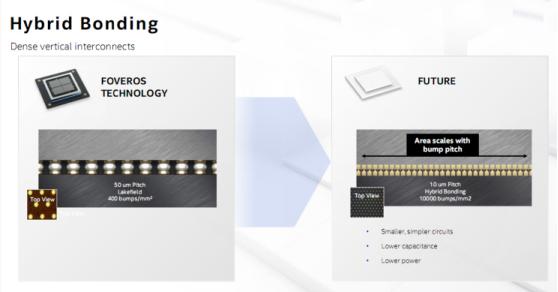
Group 1 - The core concept of hybrid bonding technology is gaining traction among major semiconductor companies like TSMC and Samsung, as it is seen as a key to advancing packaging technology for the next decade [2][4][10] - Hybrid bonding allows for high-density, high-performance interconnections between different chips, significantly improving signal transmission speed and reducing power consumption compared to traditional methods [5][11] - The technology is particularly relevant for high bandwidth memory (HBM) products, with leading manufacturers like SK Hynix, Samsung, and Micron planning to adopt hybrid bonding in their upcoming HBM5 products to meet increasing bandwidth demands [10][12] Group 2 - TSMC's SoIC technology utilizes hybrid bonding, achieving a 15-fold increase in chip connection density compared to traditional methods, which enhances performance and reduces size [14][15] - Intel has also entered the hybrid bonding space with its 3D Foveros technology, which significantly increases the number of interconnections per square millimeter, enhancing integration capabilities [19] - SK Hynix and Samsung are actively testing and planning to implement hybrid bonding in their next-generation HBM products, with Samsung emphasizing the need for this technology to meet height restrictions in memory packaging [20][22] Group 3 - The global hybrid bonding technology market is projected to grow from $123.49 million in 2023 to $618.42 million by 2030, with a compound annual growth rate (CAGR) of 24.7%, particularly strong in the Asia-Pacific region [22]


报名中 | 聚焦接口与安全IP,这场技术研讨会不容错过!
半导体芯闻· 2025-06-30 10:07
Core Viewpoint - The semiconductor industry faces critical challenges in data transmission speed and security, driven by the explosive growth of AI, connected vehicles, 5G, and IoT, leading to increased demand for high-performance computing and low-power chips [1] Group 1: Industry Challenges and Innovations - The bottlenecks in memory bandwidth and data processing security are becoming increasingly prominent [1] - Interface IP and security IP technologies are identified as core drivers for breakthroughs in the industry, directly impacting chip performance, compatibility, and attack resistance [1] - Rambus, established in 1990, is a pioneer in this field, redefining data transmission standards between memory and systems with innovative high-speed interface technologies [1] Group 2: Rambus Solutions - Rambus offers solutions such as DDR memory interfaces, HBM3/4, and PCIe 5/6, significantly enhancing performance limits in data centers and edge computing [1] - The company provides a range of security IP solutions, including root of trust technology, security protocol engines, inline cryptographic engines, and post-quantum cryptography accelerators [1] - These comprehensive security and interface IP solutions contribute to a robust product portfolio for Rambus [1] Group 3: Upcoming Event - Rambus will host a technology discussion on July 9, 2025, in Beijing, focusing on AI and automotive sectors, featuring industry partners and technical experts [2][3] - The morning session will cover the latest interface and security IP solutions for AI and advanced applications, including quantum-safe encryption and various memory technologies [6] - The afternoon session will delve into automotive safety solutions, addressing trends and challenges faced by hardware and software designers in smart connected vehicles [7]
3D芯片的挑战
半导体行业观察· 2025-06-29 01:51
Core Viewpoint - The article discusses the transformative potential of 3D IC technology in the semiconductor industry, highlighting its advantages in performance, power efficiency, and system integration, driven by the increasing demand for complex electronic systems in various applications [3][10][20]. Group 1: Evolution of 3D IC Technology - 3D IC technology integrates multiple silicon chips vertically, significantly improving performance and reducing power consumption compared to traditional 2D integration [1]. - The transition from 2D to 3D integration reflects the semiconductor industry's pursuit of higher performance and functionality, addressing the limitations of traditional methods [2][3]. - Key innovations such as advanced substrate integration tools and the development of TSV (Through-Silicon Via) technology have facilitated this evolution [4][5]. Group 2: Market Trends and Drivers - The global 3D IC market is experiencing unprecedented growth due to rising demand across various sectors, including AI, machine learning, and high-performance computing [3]. - Major market drivers include the need for advanced design and verification methods, as well as the challenges posed by thermal management in 3D IC designs [6][7]. Group 3: Advantages of 3D IC Technology - 3D IC technology significantly enhances system performance by reducing interconnect distances, leading to lower signal delays and improved timing characteristics [14]. - The technology also improves power efficiency by minimizing parasitic capacitance and resistance, which is crucial for battery-powered devices and data centers [15]. - The integration of high-bandwidth memory with processing units in data centers transforms system architecture, enabling faster processing of complex computations and big data analysis [16]. Group 4: Industry Applications and Future Impact - 3D IC technology is particularly transformative in AI and high-performance computing, addressing critical computational challenges that traditional semiconductor methods struggle to meet [16]. - The ability to mix different process nodes and technologies allows manufacturers to optimize cost-effectiveness while maintaining high performance standards [17]. - As 3D IC technology matures, its advantages will continue to expand, driving innovation across multiple industries and offering new possibilities for electronic system design [20].

报名中 | 2025 Rambus 北京设计研讨会
半导体行业观察· 2025-06-28 02:21
Core Viewpoint - The semiconductor industry faces critical challenges in data transmission speed and security, driven by the explosive growth of AI, connected vehicles, 5G, and IoT, leading to increased demand for high-performance computing and low-power chips [1] Group 1: Industry Challenges and Innovations - The bottlenecks in memory bandwidth and data processing security are becoming increasingly prominent [1] - Interface IP and security IP technologies are identified as core drivers for breakthroughs in the industry, directly impacting chip performance, compatibility, and attack resistance [1] Group 2: Company Overview - Rambus, established in 1990, is a pioneer in high-speed interface technology, redefining data transmission standards between memory and systems [1] - Rambus offers a robust product portfolio, including DDR memory interfaces, HBM3/4, and PCIe 5/6 solutions, significantly enhancing performance in data centers and edge computing [1] Group 3: Upcoming Event - Rambus will host a technology discussion on July 9, 2025, in Beijing, focusing on AI and automotive sectors, featuring industry partners and technical experts [2][3] - The event will cover the latest interface and security IP solutions for advanced applications, including quantum-safe encryption and various memory technologies [6] - The afternoon session will delve into automotive security solutions, addressing trends and challenges faced by hardware and software designers in smart connected vehicles [7]
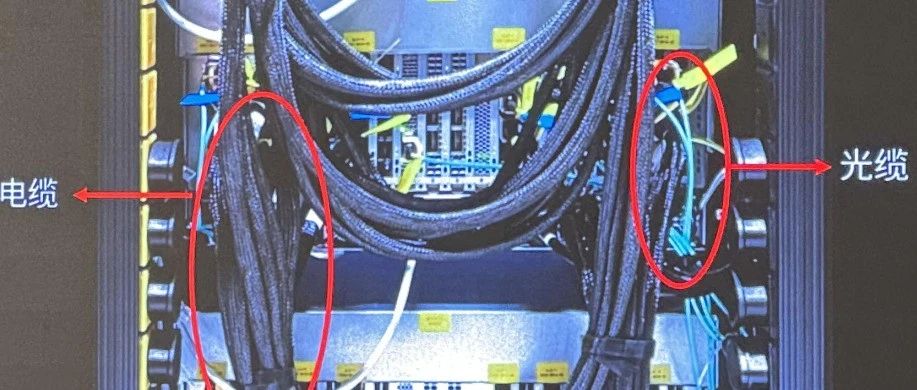
超节点的光互联和光交换
傅里叶的猫· 2025-06-27 08:37
Core Viewpoint - The article discusses the emergence of supernodes in high-performance computing, emphasizing their role in enhancing the efficiency of large-scale model training and inference through optical technology [1][2][21]. Group 1: Supernode Architecture and Performance - Supernodes provide a new solution for large-scale model training and inference, significantly improving efficiency by optimizing resource allocation and data transmission [1]. - The architecture of supernodes can be categorized into single-layer and two-layer designs, with single-layer architecture being the ultimate goal due to its lower latency and higher reliability [4][6]. - The demand for GPU power has surged with the exponential growth of model sizes, necessitating thousands of GPUs to work in tandem, which supernodes can facilitate [1][2]. Group 2: Challenges in Domestic Ecosystem - Domestic GPUs face significant performance gaps compared to international counterparts, requiring hundreds of domestic GPUs to match the power of a few high-end international GPUs [6][8]. - The implementation of supernodes in the domestic market is hindered by limitations in manufacturing processes, such as the 7nm technology [6]. Group 3: Development Paths for Supernodes - Two main development paths are proposed: increasing the power capacity of individual cabinets to accommodate more GPUs or increasing the number of cabinets while ensuring efficient interconnection [8][10]. - Optical interconnect technology is crucial for multi-cabinet scenarios, offering significant advantages over traditional copper cables in terms of transmission distance and flexibility [10][12]. Group 4: Optical Technology Advancements - The transition to higher integration optical products, such as Co-Packaged Optics (CPO), enhances system performance by reducing complexity and improving reliability [14][16]. - CPO technology can save 1/3 to 2/3 of power consumption, which is significant even though communication power is a smaller fraction of total GPU power [16][17]. Group 5: Reliability and Flexibility - The use of distributed optical switching technology enhances the flexibility and reliability of supernodes, allowing for dynamic topology adjustments in case of node failures [18][19]. - Optical interconnect technology simplifies the supply chain, making it more controllable compared to advanced process-dependent components [19][21]. Group 6: Future Outlook - With advancements in domestic GPU performance and the maturation of optical interconnect technology, the supernode ecosystem is expected to achieve significant breakthroughs, supporting the rapid development of artificial intelligence [21].