创新药研发

Search documents
医药IPO市场回暖?
Sou Hu Cai Jing· 2026-01-04 09:52
Group 1 - In 2025, the IPO activity of biopharmaceutical companies rebounded, with 21 companies successfully going public, including 18 on the Hong Kong Stock Exchange, raising approximately HKD 23.5 billion [2] - The Hong Kong biopharmaceutical sector saw a strong rebound in 2025, contrasting with 2022 when all 21 newly listed companies experienced a decline in share price [2] - In 2025, Heng Rui Medicine raised a record HKD 11.3 billion in a single IPO, showcasing its strong innovative drug development capabilities with 24 approved first-class innovative drugs and over 100 products in clinical development [2] Group 2 - Heng Rui Medicine's revenue for 2022, 2023, and 2024 was CNY 21.275 billion, CNY 22.820 billion, and CNY 27.985 billion respectively, with net profits of CNY 3.906 billion, CNY 4.302 billion, and CNY 6.337 billion, maintaining a gross margin of over 83% [3] - In the first three quarters of 2025, Heng Rui Medicine achieved revenue of CNY 23.188 billion, a year-on-year increase of 14.85%, and a net profit of CNY 5.751 billion, up 24.50% year-on-year, indicating strong performance [3] - Ying En Bio's stock surged over 110% on its first day of trading, focusing on innovative drugs for cancer and autoimmune diseases, with two core products entering the global antibody-drug conjugate (ADC) industry chain [3] Group 3 - In 2025, three companies, including Biobetter and Baiaosaitu, went public on the Sci-Tech Innovation Board and the main board, raising a total of CNY 5.466 billion [4] - Baiaosaitu's successful listing on the Sci-Tech Innovation Board marks a significant step in its capital market strategy, having previously listed on the Hong Kong Stock Exchange [4] - The biopharmaceutical sector is entering a new growth phase since 2020, with a more mature industrial foundation and a longer-lasting trend, as capital is increasingly willing to invest in truly innovative technologies with clinical value [4]

国产药在去年上市新药中占比超85%,今年产业政策如何扶持?
Di Yi Cai Jing· 2026-01-04 07:45
Core Insights - In 2025, China approved a record 76 innovative drugs, significantly surpassing the 48 approved in 2024, marking a historic high for the country [1][2] - The total value of innovative drug licensing transactions from China exceeded $130 billion in 2025, with over 150 transactions, also a record high [1][4] - Domestic innovative drugs accounted for over 85% of the newly approved drugs in 2025, indicating a strong growth in local pharmaceutical development [2][3] Group 1: Drug Approval and Market Dynamics - The National Medical Products Administration (NMPA) reported that 38 out of 47 chemical drugs approved in 2025 were domestically developed, representing 80.85% of the total [1] - Among the 23 biological products approved, 21 were domestic, accounting for 91.30% [1] - The number of innovative drugs in the pipeline in China represents approximately 30% of the global total, positioning China as the second-largest contributor worldwide [2] Group 2: International Recognition and Investment - The significant increase in licensing transactions reflects international recognition of the value of Chinese innovative drugs, with the total transaction amount doubling from the previous year [4] - The NMPA is committed to enhancing the approval process for urgently needed drugs, particularly those with new mechanisms and targets, to further stimulate innovation [5] - New policies encouraging foreign investment in the pharmaceutical sector signal China's openness to global capital in drug innovation [5] Group 3: Market Growth and Future Projections - The Chinese innovative drug market is projected to reach approximately 740 billion RMB in 2025, with an overall growth rate of about 35% [7] - By 2030, the market size is expected to exceed 2 trillion RMB, with a compound annual growth rate of 24.1% from 2024 to 2030 [7] - The introduction of the commercial insurance innovative drug directory is anticipated to enhance market access for high-priced innovative drugs, potentially increasing sales [6]
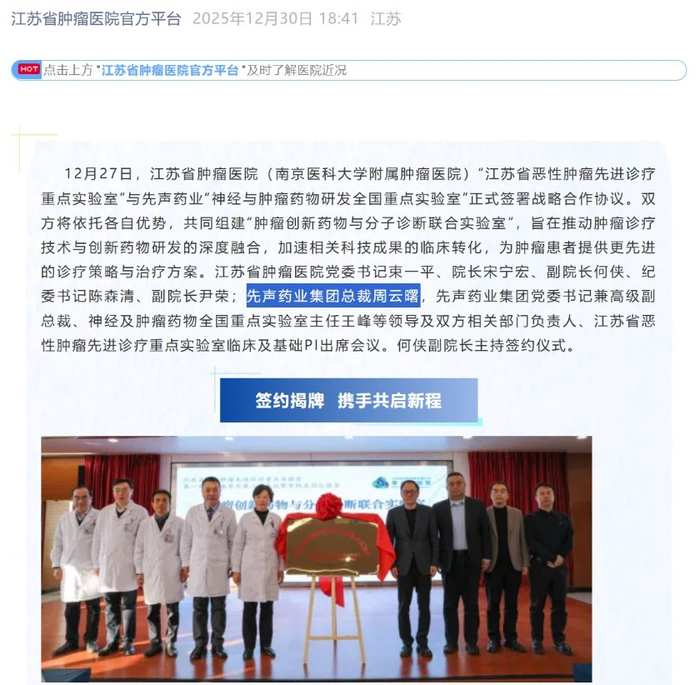
前恒瑞医药高管周云曙加入先声药业
Xin Lang Cai Jing· 2026-01-04 06:07
Group 1 - The core point of the article is the appointment of Zhou Yunshu, a former senior executive at Heng Rui Medicine, as the president of Xiansheng Pharmaceutical Group, although the company later clarified that this information is not entirely accurate and no formal internal appointment has been made yet [1][3] - Zhou Yunshu has a long history with Heng Rui Medicine, having joined the company in 1995 and serving in various leadership roles, including general manager and chairman [4] - Zhou resigned from his positions at Heng Rui Medicine in July 2021 due to health reasons, and he was later involved in an insider trading case, resulting in a fine from the China Securities Regulatory Commission [4] Group 2 - Xiansheng Pharmaceutical is a well-established domestic pharmaceutical company focusing on areas such as neuroscience, oncology, and autoimmune diseases, and is also undergoing a transformation towards innovation [4] - In the first half of 2025, Xiansheng Pharmaceutical reported revenues of 3.585 billion yuan and a net profit attributable to shareholders of 604 million yuan, representing year-on-year growth of 15.14% and 32.20%, respectively [4] - The company's innovative drug business generated revenue of 2.776 billion yuan, a year-on-year increase of 26%, accounting for 77.4% of total revenue [4] - In 2025, Xiansheng Pharmaceutical announced three business development transactions, including licensing agreements for several drug candidates with AbbVie and other companies [5]

华创医药投资观点&研究专题周周谈·第157期:2025年度医药业绩前瞻-20260104
Huachuang Securities· 2026-01-04 05:22
Investment Rating - The report maintains a "Recommended" rating for several companies in the healthcare sector, including Weili Medical, Zhend Medical, Aohua Endoscopy, and others [33]. Core Insights - The report highlights a shift in the innovative drug sector from quantity to quality, emphasizing the importance of differentiated products and internationalization for future profitability [11]. - The medical device sector is experiencing a recovery in bidding volumes, particularly in imaging equipment, and is expected to benefit from government subsidies for home medical devices [11][19]. - The life sciences service sector is showing signs of recovery, with increasing demand driven by both domestic and international markets [23]. - The pharmacy sector is poised for growth due to the acceleration of prescription outflow and an improving competitive landscape [24]. Summary by Sections Market Review - The report notes a 2.02% decline in the CITIC Medical Index, underperforming the CSI 300 Index by 1.44 percentage points, ranking 27th among 30 sectors [7]. Innovative Drugs - The innovative drug sector is expected to see a significant increase in the number of products launched, with projections of over 30 products by 2027, and a revenue share from innovative products expected to exceed 50% by 2025 [15]. Medical Devices - The report identifies a recovery in bidding for imaging devices and highlights the potential for domestic companies to increase market share through product upgrades and international expansion [19][20]. Life Sciences Services - The life sciences service sector is anticipated to benefit from a recovery in overseas demand and an increase in domestic industrial demand, with a focus on mergers and acquisitions to strengthen market positions [23]. Pharmacies - The pharmacy sector is expected to benefit from the acceleration of prescription outflow and an improved competitive landscape, with recommendations to focus on leading pharmacy chains [24]. Traditional Chinese Medicine - The report emphasizes the importance of basic medicines and state-owned enterprise reforms, suggesting a focus on companies like Kunming Pharmaceutical and Kangyuan Pharmaceutical [27]. Medical Services - The report recommends focusing on companies with national expansion capabilities in the medical services sector, particularly those in traditional Chinese medicine and ophthalmology [26]. Blood Products - The blood products sector is expected to see growth due to relaxed approval processes for plasma stations and an increase in product offerings [12].
创新高!去年我国批准创新药76个 对外授权破千亿美元
Xin Jing Bao· 2026-01-03 06:39
据央视新闻消息,记者今天从国家药监局获悉,2025年我国已批准上市的创新药达76个,大幅超过2024 年全年48个,创历史新高。此外,2025年我国创新药对外授权交易总金额超过1300亿美元,授权交易数 量超过150笔,同样创历史新高。 据了解,2025年国家药监局批准上市的76个创新药,包括47个化学药品、23个生物制品和6个中药。47 个化学药品中,38个为国产创新药,9个为进口创新药,国产创新药占比达80.85%;23个生物制品中, 21个为国产创新药,2个为进口创新药,国产创新药占比达91.30%。 国家药监局相关负责人介绍,具有全新治疗机制的首创新药(First-In-Class)研发最为困难。2025年我国 批准的首创新药为11个,其中4个是我国自主研发的。 国家药监局药品注册管理司副司长蓝恭涛:这些创新药在我国上市,使得我国患者可以更早地获得全球 生物医药创新最新成果的治疗,标志着我国生物医药领域实现了从跟跑到并跑、部分领跑的跨越,说明 我国已经成为全球生物医药创新领域的重要力量。 记者从国家药监局还获悉,2025年我国创新药对外授权交易总金额超过1300亿美元,授权交易数量超过 150笔,远超 ...
海思科(002653.SZ):获得创新药IND申请《受理通知书》
Ge Long Hui A P P· 2026-01-03 03:02
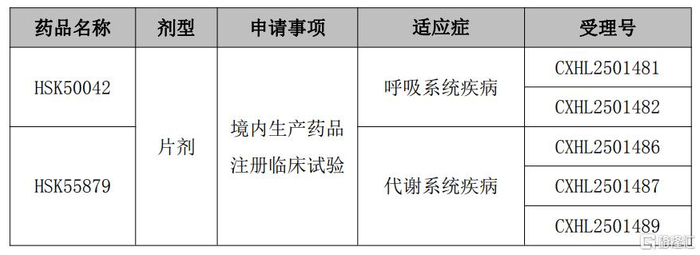
格隆汇12月30日丨海思科(002653.SZ)公布,子公司上海海思盛诺医药科技有限公司于近日收到国家药 品监督管理局下发的《受理通知书》,基本情况如下: HSK50042是公司自主研发的口服、强效、高选择性小分子抑制剂药物,拟用于呼吸系统疾病的治疗。 HSK55879片是公司自主研发的具有独立知识产权的口服小分子激动剂药物,拟用于代谢系统疾病的治 疗。 | 药品名称 | 剂型 | 申请事项 | 适应症 | 受理号 | | --- | --- | --- | --- | --- | | HSK50042 | 片剂 | 境内生产药品 | 呼吸系统疾病 | CXHL2501481 | | | | | | CXHL2501482 | | HSK55879 | | 注册临床试验 | 代谢系统疾病 | CXHL2501486 | | | | | | CXHL2501487 | | | | | | CXHL2501489 | ...

医保商保“双目录”大力支持创新 好药新药加速惠及百姓
Jing Ji Ri Bao· 2026-01-03 02:05
Core Insights - The new National Basic Medical Insurance, Maternity Insurance, and Work Injury Insurance Drug Catalog (2025) and the first Commercial Health Insurance Innovative Drug Catalog (2025) will be implemented nationwide starting January 1, 2026, adding 114 new drugs to the basic insurance catalog and 19 to the commercial insurance catalog [1][2]. Group 1: Drug Catalog Adjustments - The updated basic medical insurance catalog includes 114 new drugs, with significant representation from oncology (36 drugs), chronic diseases (12 drugs), anti-infectives (13 drugs), and rare diseases (10 drugs) [2]. - The total number of drugs in the national medical insurance catalog has increased to 3,253, comprising 1,857 Western medicines and 1,396 traditional Chinese medicines [2]. - The adjustment aims to address clinical treatment gaps and enhance drug accessibility for patients, particularly for previously hard-to-treat conditions like triple-negative breast cancer and pancreatic cancer [2][4]. Group 2: Policy Implementation - A combination of policies will ensure that newly added drugs are available in hospitals by February 2026, including the establishment of temporary green channels for procurement [3]. - Negotiated drugs will not be subject to administrative restrictions such as "one product, two regulations" or overall medical insurance caps, allowing for more flexible access [3]. Group 3: Support for Innovation - Among the new drugs, 50 are classified as first-class innovative drugs, with an overall success rate of 88%, up from 76% in 2024, indicating a shift towards strategic purchasing and value-based reimbursement [4]. - The inclusion of both domestic and foreign innovative products in the catalog reflects a commitment to enhancing drug accessibility and supporting pharmaceutical innovation [4]. Group 4: Commercial Health Insurance - The newly established commercial health insurance innovative drug catalog includes 19 drugs, focusing on high-innovation, clinically valuable treatments that complement the basic medical insurance offerings [7]. - The catalog features advanced therapies such as CAR-T cell treatments and drugs for rare diseases, which are expected to reduce patient financial burdens and enhance market attractiveness for pharmaceutical companies [7][8]. Group 5: Future Directions - The policy signals strong government support for independent innovation and aims to encourage pharmaceutical companies to invest more in original and differentiated research and development [8]. - The National Medical Insurance Administration plans to refine policies and strengthen management to ensure the effective implementation of the drug catalogs, enhancing public access to necessary medications [8].
东阳光药林凯:不盲目跟风,做更具创新性的事
2 1 Shi Ji Jing Ji Bao Dao· 2026-01-03 01:34
Core Insights - The Chinese innovative pharmaceutical industry is transitioning from scale expansion to value enhancement by the end of 2025, facing challenges such as crowded competition and homogeneity [1] - The focus should be on innovative approaches that address unmet clinical needs rather than following trends [1][3] Company Strategy - The company adopts a "two-pronged" strategy in innovative drug development, balancing traditional validated targets with high-value innovative products [3] - Current research focuses on three core areas: infectious diseases, metabolic diseases, and oncology, with a particular emphasis on unmet clinical needs [3][4] Market Trends - The trend of Chinese innovative drugs going global is increasing, driven by improved R&D capabilities and the need to cover costs for rare disease drugs [9] - Collaborations with international pharmaceutical companies are seen as a practical approach for domestic firms to navigate overseas markets [9][10] AI Integration - The company has developed an AI drug discovery platform that leverages over 20 years of laboratory data, enhancing the efficiency of drug development processes [5][6] - AI is expected to play a significant role in improving drug discovery and development efficiency, although it is not a substitute for human innovation [7][8] Clinical Development - The company is advancing its innovative drug, HEC585, for idiopathic pulmonary fibrosis (IPF), with promising Phase II clinical trial results showing significant improvements over existing treatments [4][5] - The drug's mechanism involves a comprehensive approach to fibrosis, and the company is actively seeking international partnerships for further development [5][10] Future Outlook - The company plans to balance short-term project outcomes with long-term AI research investments, aiming to create an automated laboratory environment [7] - The next five years are expected to see AI increasingly integrated into pharmaceutical R&D, enhancing efficiency and precision in various stages of drug development [8]

每周股票复盘:罗欣药业(002793)泰欣赞进院近2500家销售增140%
Sou Hu Cai Jing· 2026-01-02 20:21
Core Viewpoint - 罗欣药业 is strategically focusing on the pharmaceutical industry, with significant growth in its core innovative drug, 泰欣赞, and plans for further development in the digestive system field. Group 1: Company Performance - As of December 31, 2025, 罗欣药业's stock closed at 4.8 yuan, down 1.44% from the previous week, with a total market capitalization of 5.22 billion yuan, ranking 97th in the chemical pharmaceutical sector [1] - 泰欣赞's sales volume increased by nearly 140% year-on-year, with the number of hospitals using the drug approaching 2,500 [1][4] - The gross profit margin for the first three quarters reached 51.8%, and operating cash flow turned positive at 280 million yuan [4] Group 2: Product Development - 泰欣赞 has achieved full coverage in the medical insurance directory for its three indications: gastroesophageal reflux disease, duodenal ulcers, and eradication of Helicobacter pylori [1][4] - The drug's advantages over PPI include rapid onset, prolonged acid suppression, and effective control of nighttime acid breakthrough [1] - The company is advancing its research pipeline, with the injection drug LX22001 entering phase II clinical trials and the report for the phase III clinical study of 普卡那肽片 completed [1] Group 3: Strategic Initiatives - 罗欣药业 plans to raise up to 842.4 million yuan through a refinancing project aimed at funding innovative drug research, raw material drug expansion, and supplementing working capital [2][4] - The company is optimizing processes for potential centralized procurement products and building a product matrix that supports innovative drugs and differentiated generics [2] Group 4: Corporate Transactions - 罗欣药业's subsidiary, 山东罗欣, intends to transfer its 100% stake in 山东罗欣乐康制药有限公司 for a consideration of 62.5 million yuan, which will no longer be included in the consolidated financial statements post-transaction [2][4]

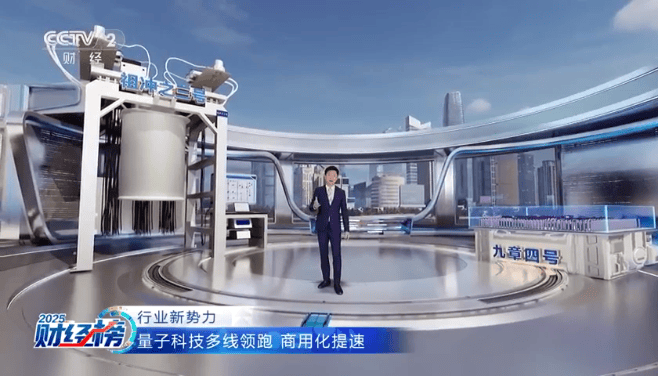
2025量子科技多线领跑 AI赋能千行百业
Sou Hu Cai Jing· 2025-12-31 16:23
Group 1: Quantum Technology - In 2025, China's quantum technology commercialization is accelerating, showcasing vast application prospects [3] - China's "Zuchongzhi 3" superconducting quantum computer is reportedly 10 trillion times faster than the world's fastest supercomputer for specific tasks, while "Jiuzhang 4" can solve problems in microseconds that would take supercomputers 10^42 years [3] - Over 30 countries have released quantum strategy plans with total investments exceeding $35 billion, and the number of related companies has surpassed 800, with financing exceeding $14.5 billion in the past decade [3] Group 2: Artificial Intelligence - AI has evolved from a reactive model to a proactive service model, enabling autonomous operations in factories and personalized services in daily life [5] - The AI industry in China is projected to exceed 1.2 trillion yuan by 2025 and is expected to surpass 1.8 trillion yuan by 2028, with over 15% of work decisions globally anticipated to be made by AI agents by 2028 [5] Group 3: Smart Glasses - Smart glasses are emerging as the next mainstream interactive terminal, with significant advancements in battery life, optical display, and integration with AI models [7] - In the first half of the year, over 2.4 million smart glasses with camera functions were shipped globally, with China capturing a 35.5% market share, leading the world [7] - The Chinese smart glasses market is expected to grow at a compound annual growth rate of 55.6% from 2024 to 2029, the highest globally [7] Group 4: New Energy Storage - New energy storage technologies are ensuring the stability and affordability of green electricity, acting as "super charging stations" for cities [9] - By the end of September, China's new energy storage capacity reached 103 million kilowatts, accounting for over 40% of the global total, making it the world leader [9] Group 5: Innovative Pharmaceuticals - China's innovative pharmaceuticals are advancing in research, application, and international expansion, with a focus on cancer and rare diseases [11] - The number of innovative drugs in development accounts for approximately 30% of the global total, with a record number of approvals and 50 innovative drugs included in the national medical insurance directory [11] - Total licensing agreements for innovative drugs have surpassed $100 billion, demonstrating China's capability in original technology and global recognition [11]