
反垄断

Search documents
一系列新规将陆续发布实施 涉及平台经济、食品安全等你我关心的问题
Yang Shi Wang· 2025-12-16 10:57
Group 1 - The market regulatory authority is set to introduce a series of new regulations aimed at standardizing platform economy, food safety, and anti-monopoly practices [1][3] - New regulations such as the "Live E-commerce Supervision Management Measures" and "Network Trading Platform Rules Supervision Management Measures" will be published soon to ensure orderly development and regulatory compliance [1] - To enhance food safety, two new regulations will be released: "Food Entrusted Production Supervision Management Measures" and "Food Safety Responsibility Supervision Regulations for Chain Enterprises" [3] Group 2 - The revised "Quality Supervision Management Measures for Fiber Products" will be published to better align with industry development and regulatory needs [5] - The market regulatory authority is working on a "first violation not punished" and "minor violation exempt from punishment" list, establishing rigid thresholds for these categories [6] - The upcoming second batch of exemption lists will add three new categories for first violations and four for minor violations, clarifying the boundaries for enforcement [8] Group 3 - The authority emphasizes a zero-tolerance policy for violations related to food safety and public safety, ensuring that penalties are enforced for serious offenses [10] - The goal is to provide a clear framework for both businesses and enforcement personnel, promoting a fair and transparent business environment [3][6]


携程受害者,开始反击
商业洞察· 2025-12-16 09:35
Core Viewpoint - The Yunnan Tourism Homestay Industry Association has initiated legal actions against Ctrip for alleged anti-competitive practices, marking the first time an industry association has publicly called for collective complaints against a major platform since the Anti-Monopoly Law took effect in 2008 [6][4]. Group 1: Legal Actions and Industry Response - The association has engaged legal advisors to collect evidence and analyze the situation, with plans to file collective complaints once sufficient evidence is gathered [4][10]. - This action represents a shift from individual grievances to a coordinated legal approach, indicating a serious escalation in the conflict between small businesses and Ctrip [12][33]. - Previous regulatory actions against Ctrip included discussions about pricing order maintenance, but the current initiative directly addresses issues like "choose one from two" practices [7][11]. Group 2: Ctrip's Financial Performance - Ctrip reported a revenue of 18.3 billion yuan for Q3 2025, a 16% year-on-year increase, with a net profit of 19.9 billion yuan, showcasing strong financial health despite the ongoing industry challenges [13][14]. - The company's gross profit margin remains above 80%, significantly outperforming other internet giants like Tencent and Alibaba [14][30]. - In contrast, the hotel industry in Beijing reported a 7.3% decline in revenue and a staggering 92.9% drop in profit, highlighting the disparity between Ctrip's success and the struggles of traditional hospitality businesses [16][18]. Group 3: Market Dynamics and Ctrip's Dominance - Ctrip holds a market share of approximately 56% in the OTA sector, and when including its affiliated platforms, its control exceeds 70% [22][23]. - The reliance of hotels on OTA channels is significant, with 63% of hotel orders coming from these platforms, indicating Ctrip's substantial influence over pricing and market rules [23][24]. - Ctrip's business model, characterized by low asset requirements and high commission rates, allows it to profit regardless of the financial health of its partner hotels [25][26]. Group 4: Implications for the Industry - The actions taken by the Yunnan association could set a precedent for other regional associations to follow, potentially leading to broader challenges against Ctrip's business practices [35][36]. - The situation poses a critical test for Ctrip, as it may face increased scrutiny and legal challenges from various industry stakeholders [36][37].


收购华纳遭搅局!奈飞(NLFX.US)紧急安抚多方:承诺影院发行及不裁员 合并无垄断风险
Zhi Tong Cai Jing· 2025-12-15 13:52
格雷格·彼得斯和泰德·萨兰多斯表示,他们承诺将在影院上映华纳兄弟探索的电影。此前有担忧认为, 奈飞会采用流媒体优先的模式,萨兰多斯也曾将去电影院观影描述为一种"过时"的体验。这两位联席首 席执行官在员工信中表示:"我们过去没有优先考虑影院放映,因为那并非奈飞的业务。当这笔交易完 成后,我们将进入这个业务领域。" 与此同时,外界担忧在已经受到流媒体平台和人工智能崛起影响的媒体行业中,奈飞收购华纳兄弟探索 的这笔巨额交易将导致裁员。对此,格雷格·彼得斯和泰德·萨兰多斯承诺,"不会有业务重叠或工作室关 闭"。他们表示:"这笔交易关乎增长。我们正在加强好莱坞最具标志性的工作室之一,支持就业,并确 保电影和电视制作拥有健康的未来。" 12月5日,奈飞宣布以827亿美元的企业价值收购华纳兄弟探索的电影和电视制作部门、HBO Max和 HBO业务。但随后,派拉蒙天舞对华纳兄弟探索发起敌意收购,拟以每股30美元的现金价格收购华纳 所有已发行股份,这意味着华纳兄弟探索的企业价值达到1084亿美元。派拉蒙方面称,与奈飞的方案相 比,此次要约对股东更有吸引力,也更有希望通过监管审查。派拉蒙还表示,其报价"相比奈飞提出的 对价,额外 ...


携程受害者,开始反击
Xin Lang Cai Jing· 2025-12-15 10:13
Core Viewpoint - The Yunnan Tourism Homestay Industry Association has initiated anti-monopoly actions against major online travel agencies (OTAs), specifically targeting Ctrip, marking a significant shift in industry dynamics [1][2][4]. Group 1: Anti-Monopoly Actions - The association has engaged legal advisors to collect evidence and prepare for collective complaints against Ctrip for alleged violations of the Anti-Monopoly Law [3][4]. - This is the first time since the Anti-Monopoly Law's enactment in 2008 that an industry association has publicly encouraged members to report large platform companies for potential violations [4][40]. - The focus of the association's actions includes issues like "choose one from two" practices, which have been a point of contention in previous discussions with regulatory bodies [6][8][42]. Group 2: Ctrip's Financial Performance - Ctrip reported a revenue of 18.3 billion yuan for Q3 2025, a 16% year-on-year increase, with a net profit of 19.9 billion yuan, showcasing strong operational profitability despite one-time investment gains [9][46]. - Ctrip's gross margin remains above 80%, significantly outperforming other internet giants like Tencent and Alibaba [10][46]. - The company's market share is projected to be around 56% in 2024, with its actual control in the OTA market exceeding 70% when including affiliated platforms [19][57]. Group 3: Industry Context - The hotel and travel sectors are facing significant financial challenges, with Beijing's accommodation industry reporting a 7.3% decline in revenue and a 92.9% drop in total profits in the first half of the year [12][48]. - Despite the struggles of traditional hospitality businesses, domestic tourism is thriving, with 4.998 billion trips taken by residents in the first three quarters of 2025, an 18% increase year-on-year [15][51]. - The disparity in financial performance between Ctrip and traditional hospitality businesses raises questions about the sustainability of the current business model in the OTA sector [32][67].
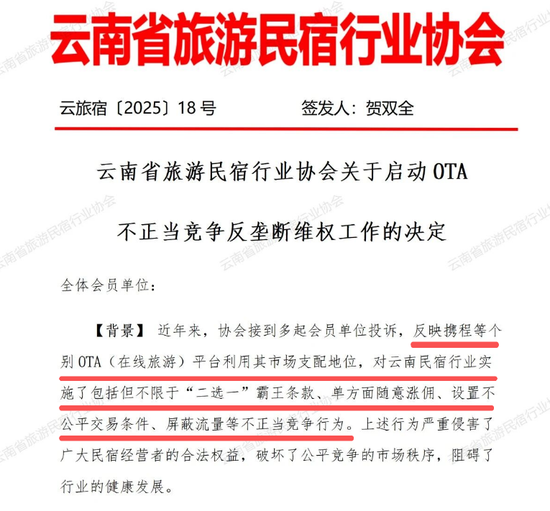
苹果也难逃“咖喱”攻击?印度开380亿巨额罚单,库克彻底懵圈了
Sou Hu Cai Jing· 2025-12-13 05:56
Core Viewpoint - Apple is facing significant challenges in India, including a massive $38 billion antitrust fine, as it attempts to diversify its manufacturing away from China and establish a stronger presence in the Indian market [1][2][6]. Group 1: Talent and Market Challenges - Apple is experiencing a "talent drain" with several executives leaving the company, compounding the difficulties faced by CEO Tim Cook [1]. - The company is shifting its production capacity from China to Southeast Asia, particularly India and Vietnam, in response to increasing competition and geopolitical tensions [1]. Group 2: Antitrust Fine and Legal Issues - Apple has been hit with a $38 billion fine in India for antitrust violations, which is unprecedented in scale and has raised questions about the basis for such a penalty [2][6]. - The fine is calculated based on Apple's global annual revenue rather than its local revenue in India, a change that was made by amending India's Competition Law [6][8]. Group 3: Market Dynamics and Future Implications - Other major smartphone manufacturers have faced similar challenges in India, often resulting in fines or frozen assets, indicating a pattern of difficulties for foreign companies operating in the market [4]. - By mid-2025, India is expected to manufacture 23.9 million iPhones, surpassing China as the largest exporter of iPhones to the U.S., with a 44% share of exports [10].


法庭文件披露马斯克起诉苹果和OpenAI深层原因
Sou Hu Cai Jing· 2025-12-13 00:23
Core Viewpoint - The lawsuit filed by Elon Musk's xAI against Apple and OpenAI has significant implications beyond the ranking of the Grok app in the App Store, as it aims to address the transformation of the X platform into a "super app" [1][3]. Group 1: Legal Proceedings - The case dates back to August 2025, when Musk initiated the lawsuit due to Grok's failure to reach the top of the App Store rankings after an update, alleging collusion between Apple and OpenAI [1]. - xAI is seeking critical evidence from a South Korean entity through international judicial assistance, with the court approving xAI's request under the Hague Evidence Convention [3]. Group 2: Strategic Objectives - Musk's ultimate goal after acquiring Twitter (now X) is to create the first "super app" in the West, which faces challenges attributed to Apple's ecosystem restrictions [3]. - xAI has requested financial and strategic documents from Kakao and Ant Group regarding the distribution of "super apps" in the App Store, aiming to demonstrate how Apple's policies limit their functionality [3]. Group 3: Antitrust Claims - xAI accuses Apple and OpenAI of forming an exclusive agreement not only to promote ChatGPT but also to suppress the survival of potential super apps like X, thereby maintaining Apple's smartphone monopoly and pricing power [4]. - The lawsuit presents a unique antitrust argument that super apps could enable users to switch seamlessly between different smartphone brands, potentially undermining the hardware barriers of the iPhone [3].
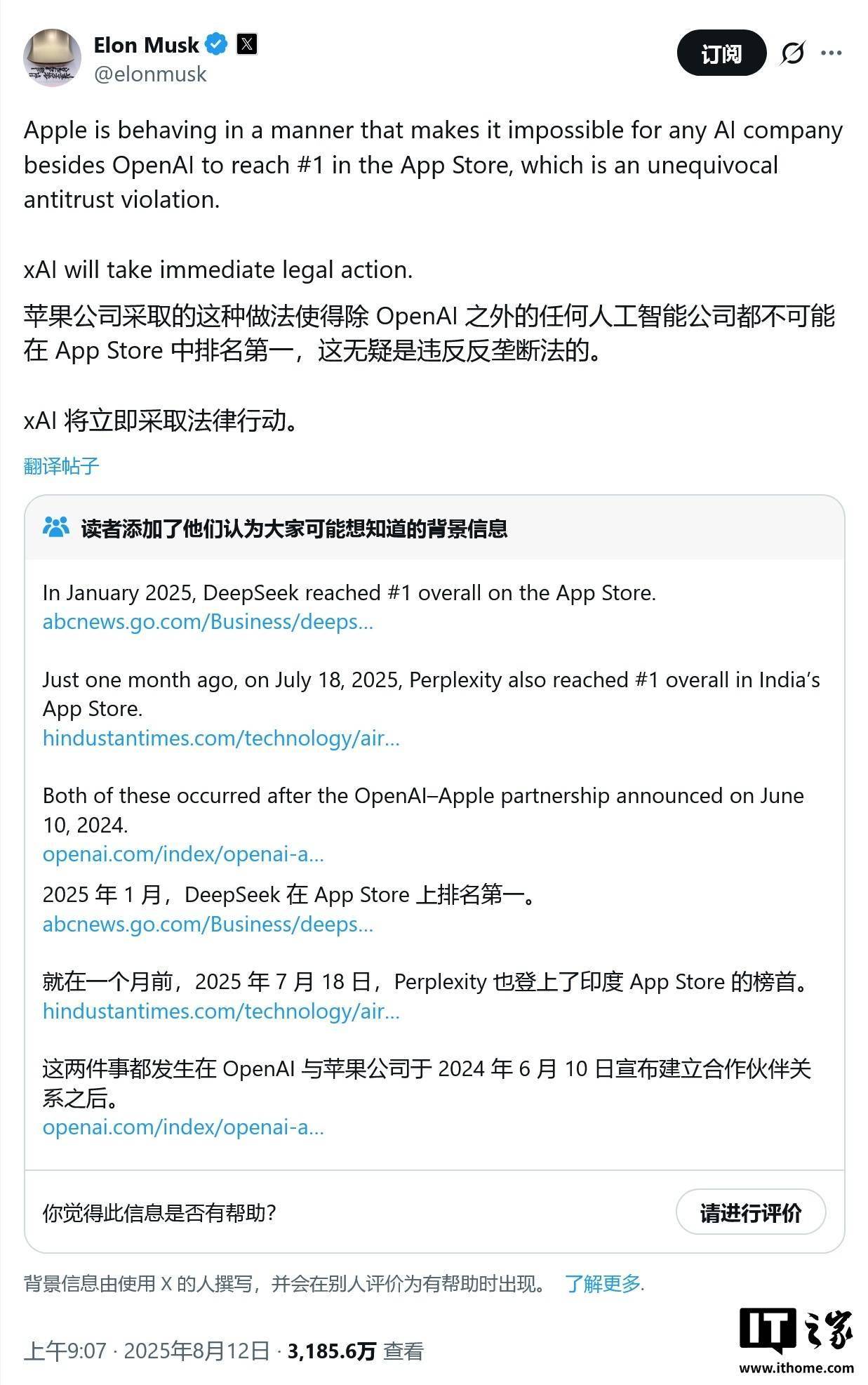
云南民宿协会直播回应对在线旅游平台启动反垄断维权工作:平台在挣整个行业的「血汗钱」
Xin Lang Ke Ji· 2025-12-12 23:21
Core Viewpoint - The Yunnan Provincial Tourism Homestay Industry Association has initiated collective legal action against online travel agencies (OTAs) like Ctrip for alleged abuse of market dominance, raising concerns about unfair competition practices in the homestay sector [1] Group 1: Allegations Against OTAs - The association has received multiple complaints from its members regarding OTAs using their market power to impose unfair practices, including "choose one from two" clauses, arbitrary commission increases, and unfair trading conditions [1] - These practices are said to severely infringe on the rights of homestay operators and disrupt fair market competition, hindering the healthy development of the industry [1] Group 2: Association's Response and Actions - The association's president, He Shuangquan, emphasized the need for fair competition and criticized the coercive practices of OTAs that force homestays to choose specific platforms [1] - The first step in their action plan involves collecting evidence from affected homestays to support a collective lawsuit to the market supervision authority [1] Group 3: Commission and Fee Concerns - He Shuangquan noted that while commissions typically range from 8% to 15%, some OTAs charge hidden fees that can lead to total commission rates as high as 30% to 40% [1] - This high fee structure raises questions about the actual market and profit space available for homestays, as platforms often earn more than the service providers themselves, leading to concerns about the sustainability of the business model [1]

云南民宿协会直播回应对在线旅游平台启动反垄断维权工作:平台在挣整个行业的“血汗钱”
Xin Lang Cai Jing· 2025-12-12 15:26
Core Viewpoint - The Yunnan Provincial Tourism Homestay Industry Association has initiated collective legal action against online travel platforms (OTAs) like Ctrip for alleged abuse of market dominance, raising concerns about unfair competition practices in the homestay industry [1][4]. Group 1: Allegations Against OTAs - The association has received multiple complaints from its members regarding OTAs using their market power to impose unfair practices, including "choose one from two" clauses, arbitrary commission increases, unfair trading conditions, and traffic blocking [1][4]. - These practices are said to severely infringe on the legitimate rights of homestay operators, disrupt fair market competition, and hinder the healthy development of the industry [1][4]. Group 2: Association's Response and Actions - The association's president, He Shuangquan, emphasized the need for fair competition and criticized the notion that platforms should dictate which apps users must use or force homestays to align with specific platforms [1][4]. - The first step in their action plan involves collecting evidence from affected homestays to support a collective lawsuit to be submitted to the market supervision administration [1][4]. Group 3: Commission and Fee Concerns - He Shuangquan noted that while commissions typically range from 8% to 15%, hidden platform fees can lead to total commission rates as high as 30% to 40%, raising questions about the market and profit space for homestays [1][4]. - The president pointed out that the revenue generated by homestays is often viewed as a source of income for the platforms, resulting in platforms earning more than the service providers themselves, which he described as "blood money" [1][4].

大疆与影石的供应链之战
经济观察报· 2025-12-12 13:54
Core Viewpoint - The article discusses the competitive tension between two companies, DJI and Insta360, highlighting the supply chain exclusivity and market strategies that have emerged as a result of their rivalry [2][5][30]. Supply Chain Exclusivity - Insta360's founder revealed that several core suppliers have faced pressure to not collaborate with Insta360, indicating a trend of exclusivity in the supply chain where suppliers must choose between working with DJI or Insta360 [2][8]. - The exclusivity has escalated, with suppliers being explicitly instructed to cease any cooperation with Insta360, impacting their ability to source critical components [9][10]. - The primary area affected by this exclusivity is the optical lens module sector, where suppliers are increasingly pressured to align with DJI due to its dominant market position [11][17]. Sales Channel Conflicts - The competition has extended to sales channels, with reports of physical store signs for Insta360 being forcibly removed due to pressure from DJI's distributors [4][19]. - A specific incident involved a store owner who invested significantly in renovations only to be informed of a ban on selling Insta360 products due to a "hidden directive" from DJI [24][25]. - The article notes that DJI has been actively working to secure exclusive sales agreements with retailers, limiting the presence of competing brands like Insta360 in key retail spaces [26][27]. Supplier Concerns - Suppliers are caught in a dilemma, as many rely heavily on DJI for revenue, with some reporting that losing DJI as a client could lead to significant revenue declines [14][15]. - The article highlights that while some suppliers are willing to support Insta360, they are cautious due to the potential financial repercussions of losing DJI's business [12][13]. - The competitive landscape is further complicated by the fact that many suppliers do not face capacity constraints, making the choice between DJI and Insta360 a strategic rather than a necessity-driven decision [15]. Market Dynamics and Responses - Insta360 has been proactive in developing alternative supply chain strategies to mitigate the impact of exclusivity, including diversifying its supplier base and fostering relationships with willing partners [30]. - The article suggests that the ongoing competition may ultimately drive innovation and growth within the industry, as companies adapt to the challenges posed by exclusivity [30][31]. - The legal implications of such exclusivity practices are also discussed, with experts weighing in on the potential antitrust concerns surrounding DJI's market behavior [31].


美股盘前丨美股指期货涨跌不一 博通美股盘前跌超6%
Di Yi Cai Jing· 2025-12-12 13:35
Company News - Tesla's U.S. sales in November fell to a nearly four-year low, with the low-cost models failing to reverse the decline [1] - Oracle's stock dropped 1% in pre-market trading, following a nearly 11% decline in the previous trading session [1] - Apple overturned some court orders in the Epic antitrust case [1] - Broadcom's stock fell over 6% in pre-market trading, as the company's earnings report revealed a backlog of $73 billion in AI product orders [1]