
平台经济

Search documents
更好维护新就业形态劳动者权益(金台锐评)
Ren Min Ri Bao· 2025-09-03 23:00
Group 1 - Recent initiatives by major platform companies, such as Meituan's decision to eliminate overtime fines for delivery riders by the end of 2025 and JD's provision of full social insurance for full-time delivery riders, highlight a growing emphasis on protecting the rights of new employment form workers [1] - The platform economy is thriving, with approximately 84 million individuals employed through internet platforms as delivery riders, drivers, and couriers, making them an essential part of social development [1] - Strengthening the rights protection of new employment form workers is both a new challenge and a necessary task for economic and social development [1] Group 2 - The flexible employment methods and loose organizational structures of new employment forms lead to complex labor disputes, with over 80,000 civil cases related to new employment forms adjudicated in 2024, covering issues like social insurance disputes and traffic accident liability [2] - Some companies attempt to evade labor relations by signing contracts that undermine workers' rights, while others prioritize delivery efficiency over safety, impacting workers' sense of security and hindering the healthy development of the platform economy [2] - Judicial rulings play a crucial role in guiding labor rights protection, with authoritative cases clarifying rules and establishing a "guiding standard" for protecting workers' rights [2] Group 3 - To better protect the rights of new employment form workers, it is essential to hold all parties accountable, including law enforcement and judicial departments, which should enhance the crackdown on rights violations and provide accessible legal services [3] - Platform companies must take on primary responsibility by optimizing platform rules and algorithms to ensure dignified labor for workers [3] - Community initiatives, such as setting up support stations, are being implemented to address urgent issues faced by new employment groups, facilitating their work and rest needs [3]
推动平台经济开拓更多新增量
2 1 Shi Ji Jing Ji Bao Dao· 2025-09-03 22:02
Group 1 - The core viewpoint of the articles highlights the impact of aggressive subsidy competition among major internet platforms on their profitability, with significant declines in net profits reported for Meituan, JD.com, and Alibaba in Q2 [1] - Meituan's net profit decreased by 89%, JD.com's net profit fell by 50.8%, and Alibaba's net profit dropped by 18%, resulting in a combined loss of over 20 billion yuan compared to the same period last year [1] - The competition in the e-commerce sector has intensified, with companies like Douyin and Kuaishou entering the market, leading to a zero-sum game where price competition diminishes long-term profitability and investment in innovation [1] Group 2 - Alibaba's Q2 financial report showed a 26% year-on-year increase in cloud business revenue, with AI-related product revenue growing for eight consecutive quarters, indicating a shift towards a technology-driven model [2] - JD.com announced a bid to acquire Ceconomy, the parent company of MediaMarkt and Saturn, marking a significant step in its global expansion strategy and enhancing its international market presence [2] - Didi's international business has expanded to 14 countries and regions, achieving a gross transaction value of 27.1 billion yuan, with a 27.7% year-on-year growth, indicating strong performance in the Latin American market [3]
2025四川平台经济产业链合作伙伴大会在成都举行
Sou Hu Cai Jing· 2025-09-03 04:31
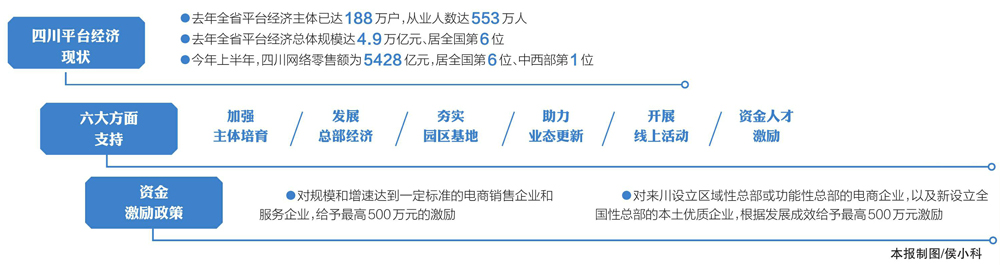
Core Insights - The 2025 Sichuan Platform Economy Industry Chain Partnership Conference was held in Chengdu, focusing on the development of platform economy in Sichuan, which has a strong foundation and significant growth potential [1][2] - Sichuan's platform economy, particularly e-commerce, has been identified as a key industry chain, with 1.88 million entities and 5.53 million employees, generating a total scale of 4.9 trillion yuan, ranking sixth nationally [1][2] - The conference aimed to showcase achievements, facilitate discussions, and connect resources to advance Sichuan's platform economy from "model innovation" to "ecosystem construction" [1] E-commerce Growth - Sichuan's e-commerce is leading in the central and western regions, with a network retail sales of 542.8 billion yuan in the first half of 2025, ranking sixth nationally and first in the central and western regions, with a year-on-year growth rate of 9.9% [2] - The network retail sales figures for Sichuan from 2023 to the first half of 2025 are 867.6 billion yuan, 954.88 billion yuan, and 542.8 billion yuan respectively, with service-oriented retail sales increasing from 43.2% to 46.2% [2] Policy Support - The Sichuan Provincial Department of Commerce and the Provincial Department of Finance are set to introduce supportive policies for high-quality development of the platform economy, focusing on six key areas including enterprise cultivation and online activities [4] - Incentives of up to 5 million yuan will be provided to e-commerce enterprises meeting certain standards and to those establishing regional or national headquarters in Sichuan [4] Industry Collaboration - Senior executives from major platforms like Vipshop, Taotian, Douyin, and JD.com gathered to discuss the development of Sichuan's "platform + industry" model, with an increase in the number of industry belts exceeding 100 in 2024 [5] - The conference emphasized the importance of deepening e-commerce's role in industry development and fostering digital talent [5] Future Goals - Sichuan aims to achieve a network retail sales target of over 1.1 trillion yuan by 2027, with the number of online businesses exceeding 2 million [6] - The platform economy is expected to drive the development of source factories and enhance market competitiveness through collaborative trade and industry upgrades [8] Technological Integration - The integration of technologies such as AI, cloud computing, and blockchain is enhancing the role of platform economy in driving industry development in Sichuan [7] - The example of Chengdu's women's shoe industry illustrates how live-streaming e-commerce has revitalized traditional manufacturing, with a GMV of over 4 billion yuan and significant growth in sales and orders [7]



从“模式创新”迈向“生态构建” 不断催生发展新模式新动能 四川重磅加码 助力平台经济进阶
Si Chuan Ri Bao· 2025-09-03 00:13
Core Insights - Sichuan is set to introduce policies to support the high-quality development of the platform economy, offering incentives up to 5 million yuan for e-commerce and service enterprises meeting specific criteria [2][3] - The platform economy is seen as a crucial link between urban and rural areas, contributing to domestic demand, employment stability, and public welfare [2] Group 1: Economic Development - The platform economy in Sichuan, focusing on e-commerce, is one of the key industrial chains, with 1.88 million entities and 5.53 million employees, generating a total scale of 4.9 trillion yuan, ranking 6th nationally [3] - In the first half of this year, Sichuan's online retail sales reached 542.8 billion yuan, placing it 6th in the country and 1st in the Midwest [3] - The province aims to enhance the platform economy by focusing on six areas: nurturing key players, developing headquarters economy, strengthening park bases, updating business formats, conducting online activities, and incentivizing talent and funding [3] Group 2: Project Initiatives - Six projects were signed at the conference, including a digital trading center for vegetables and a live-streaming e-commerce promotion project for Sichuan tea, aimed at enhancing the industrial chain's development momentum [4] Group 3: Technological Integration - The platform economy is increasingly leveraging technologies like AI, cloud computing, and blockchain to drive the development of various industries in Sichuan [5] - The live-streaming e-commerce sector is projected to exceed 100 billion yuan in retail sales by 2024, accounting for nearly 20% of e-commerce in the province [6] Group 4: Future Goals - By 2027, Sichuan aims to surpass 1.1 trillion yuan in online retail sales and increase the number of online merchants to over 2 million [7] - Chengdu is positioned as the main hub for platform economy development, attracting major e-commerce companies and facilitating efficient matching of platform resources with industrial demands [7]
四川平台经济主体已达188万户
Sou Hu Cai Jing· 2025-09-02 23:17
Core Insights - The 2025 Sichuan Platform Economy Industry Chain Partner Conference was held in Chengdu, highlighting the growth and potential of the platform economy in Sichuan, which has reached 1.88 million entities and a total scale of 4.9 trillion yuan, ranking sixth nationally [3][4][7] Economic Development - Sichuan's e-commerce sector is leading in the central and western regions, with a network retail sales of 542.8 billion yuan in the first half of 2025, marking a year-on-year growth of 9.9% [4][6] - The province aims to exceed 1.1 trillion yuan in network retail sales by 2027, with the number of online businesses surpassing 2 million [7] Policy Support - The Sichuan Provincial Department of Commerce plans to introduce supportive measures for high-quality development of the platform economy, focusing on six areas including talent incentives and funding support for e-commerce enterprises [5][6] - E-commerce companies meeting certain criteria may receive incentives of up to 5 million yuan [5] Industry Collaboration - Key executives from major platforms like JD.com and Douyin participated in the conference, discussing the development of the "platform + industry" model and the importance of digital talent cultivation [6][8] - The number of industrial belts with annual transaction volumes exceeding 100 million yuan in Sichuan has increased to 102, indicating a growing trend in digital consumption [6] Technological Integration - The integration of technologies such as AI and cloud computing is enhancing the role of platform economies in driving industrial upgrades and new business models [8][9] - The live-streaming e-commerce sector in Chengdu has seen significant growth, with a GMV of over 4 billion yuan for women's shoes, reflecting a shift from traditional manufacturing to brand development [8][9]

破解平台经济“内卷式”竞争,多项制度支撑正在建立
Di Yi Cai Jing· 2025-09-02 12:47
Core Viewpoint - The National Development and Reform Commission (NDRC) is accelerating the revision of pricing laws and establishing rules for pricing behavior on internet platforms to address issues such as below-cost dumping and false advertising, aiming to promote healthy development of the platform economy [1][2]. Group 1: Regulatory Framework - The NDRC, along with other relevant departments, has drafted the "Internet Platform Pricing Behavior Rules" to enhance the regulation of pricing behaviors in the platform economy, marking a significant step in improving the regulatory policy system [1][2]. - The rules aim to create a transparent and predictable pricing regulatory mechanism, balancing development and regulation while protecting the legal rights of both operators and consumers [2][3]. Group 2: Key Provisions of the Rules - The "Behavior Rules" consist of 30 articles focusing on aspects such as operators' pricing autonomy, pricing display behavior, competitive pricing behavior, consumer price rights protection, and supervision mechanisms [4]. - The rules emphasize the protection of operators' pricing autonomy, encouraging innovation in technology and business models to enhance product and service quality [5]. - Specific requirements for price marking, promotional activities, and the prohibition of unfair pricing practices such as price dumping and collusion are outlined to maintain market order [5][6]. Group 3: Implications for the Platform Economy - The rules are expected to guide operators towards lawful and compliant business practices, thereby fostering a more robust platform ecosystem and promoting the healthy development of the platform economy [6]. - The implementation of these rules is seen as a critical step towards normalizing pricing behaviors in the platform economy, ensuring that operators can operate within a legal framework while still pursuing innovation [6].
四川今日官宣平台经济启新:走好“生态构建”进阶之路
Mei Ri Jing Ji Xin Wen· 2025-09-02 03:48
Core Viewpoint - The "Sichuan Platform Economy Industry Chain Cooperation Partner Conference" aims to promote the development of platform economy in Sichuan, highlighting its potential as a key driver for economic growth and employment stability in the region [1][2]. Group 1: Economic Scale and Growth - Sichuan's platform economy has reached 4.9 trillion yuan, ranking 6th nationally, with 1.88 million entities and 5.53 million employees [1]. - The online retail sales in Sichuan are projected to reach 8.68 trillion yuan in 2023, 9.55 trillion yuan in 2024, and 5.43 trillion yuan in the first half of 2025, with a year-on-year growth rate of 9.9% [2]. - The service-oriented online retail sales proportion increased from 43.2% to 46.2%, contributing 60% to the growth [2]. Group 2: Policy Support and Incentives - The Sichuan government plans to introduce policies to support the high-quality development of the platform economy, including financial incentives of up to 5 million yuan for qualifying e-commerce enterprises [3]. - The government aims to establish a collaborative mechanism involving various provincial departments to enhance the platform economy's development [6]. Group 3: Industry Collaboration and Development - The conference featured discussions among executives from major platforms like JD.com, Taotian, and Douyin, focusing on the integration of platform and industry development [5]. - The number of industrial belts in Sichuan with annual transaction volumes exceeding 100 million yuan is expected to reach 102 by 2024, an increase of 4 from the previous year [5]. Group 4: Technological Integration and Innovation - The platform economy is increasingly leveraging technologies such as artificial intelligence and cloud computing to enhance its operational efficiency and market competitiveness [7]. - The rise of live-streaming e-commerce has significantly boosted sales in sectors like women's footwear, with a reported GMV of over 4 billion yuan [7]. Group 5: Future Outlook - Sichuan aims to achieve a network retail sales target of over 1.1 trillion yuan by 2027, with the number of online merchants exceeding 2 million [6]. - The integration of platform resources with industrial demands is expected to enhance market competitiveness and drive further economic growth in the region [9].

阿里狂飙17%,小摩强call!今年份额翻倍的恒生科技指数ETF(159742)涨超1%
Ge Long Hui A P P· 2025-09-01 03:56
Group 1 - Alibaba's strong performance led to a 17% increase in its stock price, positively impacting the Hang Seng Tech Index, which rose by 1.29% and has a year-to-date increase of 27.51% [1][2] - Alibaba's second-quarter results showed a significant increase in Taobao flash purchase user numbers, alleviating market concerns, and cloud business revenue grew by 26% year-on-year [1] - Alibaba announced plans to invest 380 billion yuan in AI over three years and is developing a new generation of AI chips compatible with Nvidia's CUDA ecosystem, with domestic companies handling manufacturing [1] Group 2 - SMIC plans to issue shares to acquire minority stakes in its subsidiary, SMIC North [2] - The positive earnings report from Alibaba prompted a reevaluation of the investment value of the Hang Seng Tech Index, highlighting the core role of internet giants in the AI industry's growth [2] - The Hang Seng Tech Index ETF has seen significant inflows, with 528 million yuan flowing in over the past ten days, and a year-to-date share increase of 102.3% to 4.224 billion shares [2] - The current PE (TTM) of the Hang Seng Tech Index is 21.23, which is below the historical average of 18.87%, indicating a potential undervaluation [2]
四川省平台经济产业链合作伙伴大会即将举行,筑强产贸协同“超级链接”
Mei Ri Jing Ji Xin Wen· 2025-09-01 03:19
如何让平台经济与实体经济深度融合、相互赋能?四川谋划以链式思维破题。平台经济(以电子商务为 主)已被纳入四川省"15+N"重点产业链之一。9月2日,一场以"平台链百业 一起向未来"为主题的高规 格会议——四川省平台经济产业链合作伙伴大会即将在成都召开,以会为媒、以展促联,带动更多合作 伙伴助力四川平台经济发展。 会上,四川将介绍四川平台经济产业链专项支持政策有关情况,并邀请京东、淘天、抖音、得物等头部 平台企业到场分享,链主齐聚、大咖云集,共同探讨四川平台经济的发展趋势和路径,推动平台经济进 一步发挥"超级链接"的作用。 平台经济已然成为四川带动现代产业发展和促进消费提质升级的重要推动力。第三方统计数据显示, 2025年1—7月,四川实现网络零售额6307.9亿元,同比增长10.3%,其中实物型网络零售额4335.3亿 元,同比增长9.9%,服务型网络零售额1972.6亿元,同比增长11.2%。 每经记者|杨弃非 每经编辑|刘艳美 平台经济,一头连着生产,一头拉着消费,正成为各地促进消费、推动经济高质量发展的重要抓手。 将发布平台经济产业链专项支持政策 今年7月,《四川省贯彻落实国家〈提振消费专项行动方案〉细 ...
刘宁到郑州市二七区调研时强调
Zheng Zhou Ri Bao· 2025-09-01 01:37
Group 1: Economic Development and Urban Renewal - The Asia Joy City is highlighted as a key commercial renovation project in the Erqi District, showcasing significant geographical advantages and historical cultural value [1] - The local government aims to enhance the commercial culture in Zhengzhou by integrating historical significance with modern trends, thereby injecting economic vitality and cultural charm into urban development [1] - The Henan Haiyi Cloud Business Group operates 1,100 live streaming rooms and has trained over 3,000 e-commerce talents, demonstrating a collaborative growth between enterprise development and regional economy [1] Group 2: Social Governance and Community Engagement - The "Party Building + Grid + Big Data" governance model is being implemented in the Kangqiao Huacheng community to enhance efficient governance capabilities [2] - Emphasis is placed on community involvement and cultural empowerment in social governance, with a focus on improving public service supply and addressing community issues [2] - The need for enhanced urban safety resilience and improved drainage capabilities is highlighted, with plans for infrastructure upgrades and flood control mechanisms [2][3] Group 3: Policy Implementation and Strategic Goals - The importance of aligning with the spirit of Xi Jinping's important speech during his visit to Henan is stressed, focusing on accelerating industrial transformation and urban renewal [3] - The local government is encouraged to utilize resources effectively and strengthen social governance to promote high-quality development [3] - Continuous efforts in improving work style and addressing persistent issues are emphasized to foster a productive environment for development [3]