
生成式AI

Search documents
半导体IP市场,变了
3 6 Ke· 2026-01-30 03:02
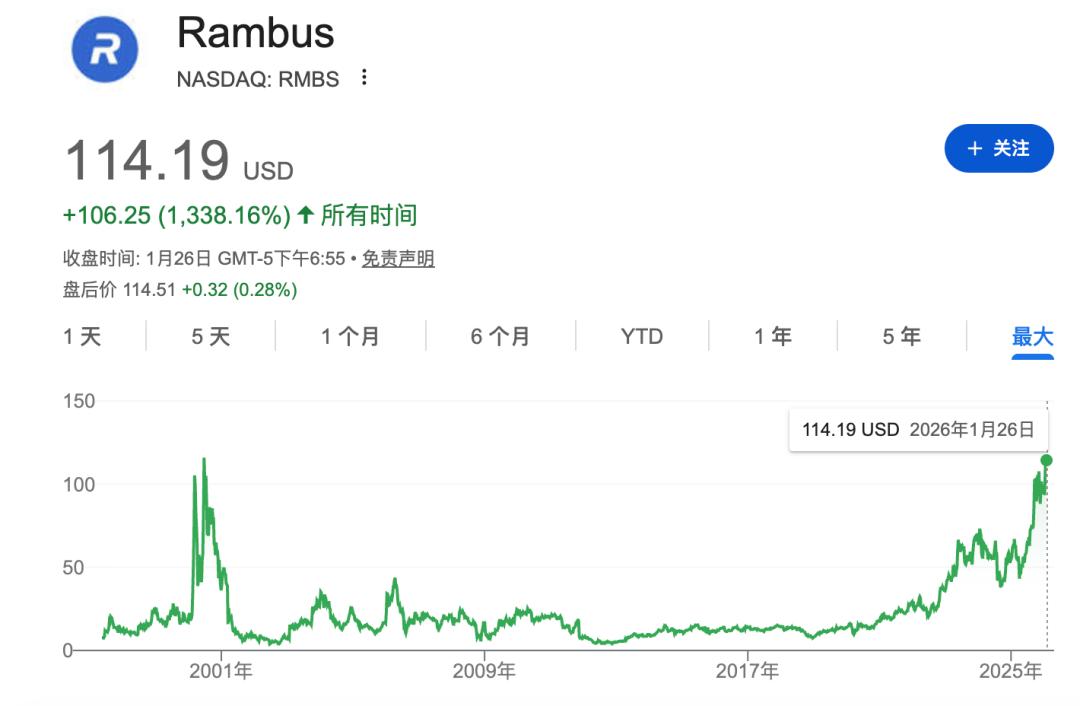
Core Insights - The semiconductor IP market is undergoing significant transformations driven by the rise of generative AI, with companies like Rambus, Synopsys, and Alphawave Semi experiencing drastic changes in their business models and market positions [1] Rambus' Transformation - Rambus has seen its stock price nearly double, reaching approximately $115–125, with a peak of $135, reflecting a nearly 100% increase over the past year due to heightened demand for its technology in the AI era [2][5] - Analysts have raised Rambus' target price to around $120–130, indicating a shift from a reliance on patent licensing to a more central role in AI and data center infrastructure [5] - Rambus has strategically adjusted its product line, selling some assets to focus on high-performance memory subsystems and security IP, which has contributed to its growth [5][6] Market Dynamics and Demand - The current challenge in AI computing is not the speed of GPUs but the data transfer capabilities, with Rambus' DDR5 RCD interface chips being essential for ensuring efficient data flow [6] - Rambus holds over 40% market share in the DDR5 RCD chip segment, which is critical as AI servers transition to DDR5 standards [6] - The company anticipates significant growth in the MRDIMM market, projecting to capture over 40% of this $600-700 million segment [7] Synopsys' Strategic Shift - Synopsys' decision to sell its ARC processor business reflects a shift towards AI-enhanced EDA tools and a focus on high-margin software solutions [8][9] - The sale allows Synopsys to concentrate on AI infrastructure, moving away from the competitive landscape of general-purpose CPU architectures [9][10] - The acquisition of Ansys strengthens Synopsys' capabilities in system-level simulation, positioning it to better serve clients like NVIDIA and Google [9] Alphawave Semi's Acquisition - Alphawave Semi, initially focused on IP supply, transitioned to a full SoC design capability and was acquired by Qualcomm, marking the end of its independent status [11][12] - The acquisition is strategic for Qualcomm as it seeks to enhance its position in high-performance computing and AI infrastructure, leveraging Alphawave's expertise in high-speed interconnect technology [12][13] - The disappearance of Alphawave as an independent entity highlights the increasing difficulty for mid-sized IP companies to survive in the competitive landscape dominated by larger players [13] Industry Trends - The semiconductor industry is witnessing a shift from a focus on CPU performance to the importance of data pathways and interconnect technologies, as AI systems require efficient data flow for optimal performance [14][15] - The market share of processor IP is declining, while interface IP is expected to grow significantly, potentially reaching over 25% of the IP market by 2026 [15][16] - The competitive focus is shifting towards interconnect and system-level capabilities, indicating a structural reorganization within the semiconductor IP market [16]

半导体IP市场,变了!
半导体行业观察· 2026-01-30 02:43
Core Insights - The semiconductor IP market has undergone significant changes due to the rise of generative AI, leading to a re-evaluation of companies within the industry [2] - Rambus has seen its stock price nearly double, becoming a crucial player in the AI server supply chain, while Synopsys divested its ARC processor business, and Alphawave Semi was acquired by Qualcomm [2][4][12] Group 1: Rambus' Transformation - Rambus has shifted from a "patent troll" reputation to a key player in high-speed interface technology, with its stock price reaching approximately $115–125, and peaking at $135, reflecting nearly 100% growth over the past year [4][6] - Analysts have raised Rambus' target price to around $120–130, recognizing its transition from a patent-dependent model to a core player in AI and data center infrastructure [6] - Key products driving Rambus' growth include DDR5 RCD interface chips, HBM4 controller IP, and MRDIMM, with the company holding over 40% market share in these segments [6][7] Group 2: Synopsys' Strategic Shift - Synopsys sold its ARC processor business to GlobalFoundries, marking a shift from general-purpose computing to focusing on AI-enhanced EDA tools and system-level simulation capabilities [8][10] - The decline in demand for traditional CPU IP, like ARC, is attributed to the rise of RISC-V architecture, which allows for customizable instruction sets without high licensing fees [9][10] - Synopsys aims to capitalize on AI infrastructure by investing in AI-enhanced EDA and merging with Ansys to strengthen its simulation capabilities [9][10] Group 3: Alphawave Semi's Acquisition - Alphawave Semi, initially focused on IP supply, transitioned to a full SoC design capability and was acquired by Qualcomm, ending its independent status [12][13] - The acquisition is strategic for Qualcomm as it seeks to enter the high-performance computing and AI data center markets, leveraging Alphawave's expertise in UCIe and high-speed interfaces [12][13] - The acquisition highlights the increasing difficulty for mid-sized IP companies to survive independently in the competitive landscape dominated by larger players [13] Group 4: Market Dynamics and Trends - The semiconductor IP market is experiencing a structural shift, with value moving from core processors to surrounding technologies such as interfaces and connectivity solutions [16][17] - The market share of processor IP has declined from 57.6% in 2017 to below 45% by 2025, while interface IP is expected to grow to over 25% of the market by 2026 [17] - The focus of competition is shifting towards interface, interconnect, and system-level capabilities, with interface IP segments growing at a compound annual growth rate (CAGR) exceeding 20% [17]

苹果电话会全文实录:更个性化Siri今年上线,存储涨价+3nm产能紧张成Q2毛利压力
美股IPO· 2026-01-30 02:19
Core Insights - Apple reported its best quarter ever with revenue of $143.8 billion, a 16% year-over-year increase, and iPhone revenue reaching $85.3 billion, up 23% year-over-year [11][23][31] - The company expects double-digit revenue growth in the next quarter but warns of potential constraints from 3nm chip production and rising memory prices affecting supply and margins [3][7][37] - Apple announced a partnership with Google to develop the next generation of Apple Foundation Models, enhancing the personalization of Siri, marking a significant shift in its AI strategy [6][73] Revenue Performance - Total revenue for the first fiscal quarter of 2026 was $143.8 billion, with product revenue at $113.7 billion, driven primarily by strong iPhone sales [23][24] - iPhone revenue reached $85.3 billion, setting a new record and contributing significantly to overall growth [31][32] - Service revenue hit $30 billion, a 14% increase year-over-year, with strong performance across various markets [25][34] Regional Performance - The Greater China region saw a remarkable 38% year-over-year revenue growth, dispelling concerns about weak demand in the market [5][42] - Apple achieved record iPhone sales in China, with significant upgrades and conversions from Android users [5][44] Product Highlights - The iPhone 17 series was highlighted as the strongest and most popular product line, with a customer satisfaction rate of 99% in the U.S. [4][31] - Mac revenue was $8.4 billion, showing a decline of 7% year-over-year, while iPad revenue was $8.6 billion, up 6% [13][32] - Wearables, home, and accessories generated $11.5 billion, a slight decline of 2% due to supply constraints on AirPods Pro 3 [14][33] Supply Chain and Cost Challenges - Apple is currently in a supply catch-up mode due to unprecedented demand for the iPhone, with supply constraints expected to persist into the next quarter [5][7] - The company warned of rising memory prices impacting margins, although the overall gross margin for Q1 was 48.2%, exceeding guidance [26][29][37] Future Outlook - For the March quarter, Apple expects revenue growth of 13% to 16%, factoring in supply constraints and rising memory prices [37] - The company anticipates maintaining a gross margin of 48% to 49% despite challenges [37][80]


消息称OpenAI计划今年第四季度IPO,目标抢在Anthropic之前
Jin Rong Jie· 2026-01-30 00:04
IT之家1月30日消息,今天早间,据《华尔街日报》援引知情人士消息称,OpenAI 正在加快推进上市准 备工作,计划最早在今年第四季度启动公开上市程序。在与主要竞争对手 Anthropic 的竞争不断升级之 际,公司上市节奏明显加快。 消息人士称,估值约 5000 亿美元(IT之家注:现汇率约合 3.48 万亿元人民币)的 OpenAI 已开始与多 家华尔街投行进行非正式接触,并持续扩充财务团队,为潜在 IPO 铺路。 与此同时,OpenAI 内部也对竞争对手 Anthropic 可能抢先上市感到紧迫。消息人士表示,Anthropic 已 向金融合作伙伴透露,愿意在今年年底前上市。Anthropic 近期收入快速增长,很大程度来自其爆红的 编程 AI 智能体 Claude Code,并正在推进新一轮融资,规模可能超过最初 100 亿美元目标。 报道认为,谁先上市,谁就更可能率先吸引公共市场资金,包括大量希望参与生成式 AI 浪潮的个人投 资者。 本文源自:IT之家 要在年底前完成一次成功上市,对 OpenAI 而言并不轻松。OpenAI 仍面临高速扩张带来的管理与运营 压力,公司近期频繁调整高层架构,同时核心 ...
腾讯研究院AI速递 20260130
腾讯研究院· 2026-01-29 16:01
Group 1: Generative AI Developments - MiniMax Music 2.5 has been released, achieving breakthroughs in paragraph-level control and high-fidelity sound, supporting 14 structural tags for precise emotional and instrumental configuration [1] - Skywork AI has launched the open-source video generation model SkyReels-V3, featuring capabilities such as image-to-video generation and audio-driven virtual avatars, surpassing mainstream models in consistency metrics [2] - Ant Group has open-sourced the interactive world model LingBot-World, designed for real-time control with stable generation for nearly 10 minutes and 16 FPS interaction [3] Group 2: Office Automation and AI Integration - Kimi K2.5 Agent has upgraded office capabilities, supporting intelligent formatting in Word, visual design in PDF, data analysis in Excel, and automatic PPT generation, significantly reducing task completion time [4] Group 3: Breakthroughs in Genomics - Google DeepMind's AlphaGenome has been featured on the cover of Nature, capable of processing 1 million base pairs of DNA sequences and predicting thousands of gene regulatory signals, achieving state-of-the-art performance in 22 out of 24 genomic trajectory prediction tasks [5] Group 4: Robotics and Automation - Figure has released Helix 02, a humanoid robot capable of performing complex tasks autonomously, with a valuation of $39 billion and plans to produce 100,000 units in four years [7] - Elon Musk announced the discontinuation of Model S and Model X to focus on humanoid robot production, projecting a future valuation of Tesla at $25 trillion [8] Group 5: Programming and AI Evolution - Andrej Karpathy predicts a split among programmers into two types by 2026, as workflows shift from manual coding to AI-assisted coding, leading to an expansion of capability boundaries [9] Group 6: AI Innovations and Community Engagement - The founders of "月之暗面" held an AMA session, discussing the advancements in Kimi K2.5 and the anticipated improvements in Kimi K3, emphasizing the importance of innovation under constraints [10]


速递|减重最高31.3%,英矽智能提名口服GIPR拮抗剂ISM0676为临床前候选化合物
GLP1减重宝典· 2026-01-29 15:39
Core Viewpoint - The article discusses the development of ISM0676, an oral small molecule antagonist targeting the glucose-dependent insulinotropic polypeptide receptor (GIPR), by the biotech company InSilico Medicine. This compound is positioned as a potential complement to existing GLP-1 therapies for obesity and related metabolic diseases, aiming to improve weight loss efficiency, body composition maintenance, and long-term sustainability [5][8]. Group 1: Clinical Development - ISM0676 has shown significant weight management effects in preclinical studies, achieving a weight reduction of approximately 10.4% relative to baseline in a 27-day treatment cycle. When combined with semaglutide, the weight loss effect was amplified to 31.3%, while the control group experienced a weight increase of about 3% [5]. - The weight loss primarily resulted from a reduction in fat tissue, with muscle mass being relatively preserved, providing a foundational reference for future studies on body composition [5]. Group 2: Mechanism and Drug Properties - GIP plays a crucial role in regulating insulin secretion, fat storage, bone metabolism, and central appetite control, making it a key signaling node in metabolic networks. InSilico Medicine is exploring GIPR antagonism as a complementary mechanism to GLP-1 receptor agonists, targeting common issues in current weight loss therapies such as efficacy plateau, muscle loss, and weight rebound after discontinuation [8]. - Preclinical evaluations indicate that ISM0676 possesses good metabolic stability, low risk of drug interactions, and a relatively controllable safety window, showing certain advantages at clinically predicted dosage levels. These attributes provide a basis for further advancement in the competitive landscape of small molecule oral weight loss drugs, although it remains in the early validation stage [8]. Group 3: Research and Development Efficiency - The design and optimization of ISM0676 were supported by InSilico Medicine's generative AI platform, Chemistry42, completing the process from project initiation to clinical candidate nomination in about 14 months, with fewer than 200 synthesized and tested molecules [10]. - The company aims to validate the replicability of its AI-driven drug discovery system in the cardiovascular and metabolic fields. However, whether this efficiency advantage can translate into improved success rates in clinical stages remains to be seen [10]. Group 4: Pipeline and Strategic Direction - ISM0676 is part of InSilico Medicine's ongoing expansion in cardiovascular and metabolic disease research, which also includes explorations into obesity-related type 2 diabetes and potential cardiovascular complications such as obesity-related heart failure [10]. - Overall, InSilico Medicine is attempting to find differentiated pathways through multi-target, small molecule, and combination therapy strategies, beyond the GLP-1 dominated weight loss treatment landscape [10].

美股异动丨Q4业绩超预期,ServiceNow仍一度跌超11%,创逾八年新低
Ge Long Hui A P P· 2026-01-29 14:55
Core Viewpoint - ServiceNow's stock experienced a significant decline, dropping over 11% to a low of $115.01, marking an eight-year low, despite reporting strong fourth-quarter subscription revenue growth and earnings that exceeded market expectations [1] Financial Performance - In Q4, ServiceNow's subscription revenue grew by 21% year-over-year to $3.47 billion [1] - The adjusted earnings per share (EPS) was reported at $0.92, surpassing market forecasts [1] - The number of customers with annual contract values exceeding $5 million increased from 553 to 603 compared to the previous quarter [1] Market Sentiment - Investor concerns are rising regarding the impact of generative AI on the industry, which may threaten ServiceNow's market position [1] - Analyst Matthew Hedberg from RBC Capital Markets noted that despite the financial results being in line with or better than expectations, the stock price decline was unexpected, indicating a significant divergence in market valuation logic for the software industry [1]

Caterpillar(CAT) - 2025 Q4 - Earnings Call Transcript
2026-01-29 14:32
Financial Data and Key Metrics Changes - Caterpillar achieved full year sales and revenues of $67.6 billion, the highest in its history, with a 4% year-over-year growth [6][10] - Adjusted operating profit margin for the full year was 17.2%, within the target range, and adjusted profit per share was $19.06 [6][11] - Fourth quarter sales and revenues reached $19.1 billion, an 18% increase compared to the previous year, with adjusted operating profit margin at 15.6% and adjusted profit per share at $5.16 [8][25] Business Line Data and Key Metrics Changes - Construction Industries' sales to users grew 11% in the fourth quarter, with total sales to users increasing by 15% year-over-year [9][30] - Resource Industries' sales decreased by 7% in the fourth quarter, consistent with expectations, primarily due to lower mining sales [9][31] - Power and Energy, the largest segment, saw a robust 37% growth in sales to users, driven by strong demand in Power Generation and Oil and Gas [10][32] Market Data and Key Metrics Changes - North America showed strong growth in non-residential and residential construction, contributing to the positive performance in Construction Industries [9][17] - EAME and Asia Pacific experienced slight declines in sales to users, while Latin America saw better-than-expected growth [9][17] - Resource Industries benefited from rising demand for copper and gold, with positive dynamics in heavy construction and quarry aggregates expected in 2026 [18] Company Strategy and Development Direction - Caterpillar's strategy focuses on profitable growth through commercial excellence, advanced technology leadership, and operational excellence [22][23] - The company aims to double Power Generation sales compared to 2024 by 2030, with significant investments in capacity expansion [14][22] - Caterpillar is committed to returning substantially all MP&E free cash flow to shareholders over time, maintaining its status as a Dividend Aristocrat [11][12] Management's Comments on Operating Environment and Future Outlook - Management expressed confidence in the strong backlog of $51 billion, which provides momentum for 2026, with expectations for sales growth across all primary segments [15][16] - The company anticipates a full year sales growth of around 5%-7% in 2026, supported by healthy end markets and positive price realization [15][37] - Management acknowledged the ongoing impact of tariffs but remains committed to managing costs and maintaining profitability [39][41] Other Important Information - Caterpillar generated robust MP&E free cash flow of $9.5 billion in 2025, allowing for significant shareholder returns through share repurchases and dividends [6][34] - The company ended the year with a record backlog, indicating strong demand and execution in its end markets [7][15] Q&A Session Summary Question: Can you comment on the order growth and backlog growth? - Management highlighted a record backlog of $51 billion, with strong order rates across all segments, particularly in Construction Industries and Power and Energy [54][56] Question: How do you view the capacity increase and potential overcapacity risks? - Management indicated that capacity planning is based on customer forecasts and emphasized the importance of maintaining supply to meet demand across various industries [60][64] Question: Can you clarify the sales guidance for 2026 in relation to backlog and retail growth? - Management explained that the sales guidance considers the expected increase in dealer inventory and the capacity constraints in Power and Energy, which may limit growth despite a strong backlog [70][71]

中科闻歌CEO罗引:AI 走向企业核心,绕不开“决策”
Sou Hu Cai Jing· 2026-01-29 06:55
Core Insights - The rapid evolution of generative AI over the past two years has profoundly impacted the global technology industry [2] - The industry is forming a new consensus that the value of AI is shifting from content generation to higher-value enterprise decision-making [3] - By 2027, Gartner predicts that 50% of business decisions will be assisted or automated by decision intelligence AI agents [3] Group 1: Decision Intelligence - The key challenge for enterprises is how to integrate AI into core decision-making processes [4] - Zhongke Wenge, founded by the Chinese Academy of Sciences, is focusing on decision intelligence rather than general large model development [5] - The CEO of Zhongke Wenge emphasizes that the core of enterprise AI lies in systematic reasoning and judgment capabilities, rather than just model parameter size [5][7] Group 2: AI's Role in Decision-Making - Current generative AI primarily operates at the "System 1" level, providing quick answers based on probabilities but often lacking logical coherence [5] - For AI to participate in critical decision-making, it must be safe, controllable, and truly understand industry logic [10] - Zhongke Wenge has developed its own large model, "Yayi," to address these needs while ensuring a clear methodology [10] Group 3: DOMA Framework - The DOMA (Data–Ontology–Models–Agents) framework has been proposed to systematically address how enterprises can use AI for decision-making [12] - The four layers of the DOMA framework include: - Data layer: Captures the current operational state through multi-source data governance [12] - Ontology layer: Structures decision logic by formalizing industry rules and causal relationships [12] - Models layer: Conducts reasoning within defined rules and logical boundaries [12] - Agents layer: Facilitates the execution of decisions through multi-agent collaboration [12] Group 4: Long-Term Strategy - Decision intelligence is a "heavy engineering" task that requires long-term industry engagement and iterative refinement of business logic [15] - Zhongke Wenge's decision intelligence systems have been successfully implemented in complex scenarios across finance, energy, media, and government [15] - The true value of AI lies in becoming an integral part of the organizational decision-making system, helping organizations form stable, explainable, and reviewable judgments in uncertain environments [15]

AI赋能人力资源管理找到企业内第一块AI“试验田”
智享会· 2026-01-29 05:42
Investment Rating - The report does not explicitly provide an investment rating for the industry Core Insights - AI technology is rapidly transforming the global industrial landscape, particularly in human resource management, by enhancing operational efficiency and enabling HR professionals to transition from basic execution roles to strategic decision-making roles [13][40] - Despite the potential of AI, there remains a significant gap between ideal applications and current realities, prompting the need for practical solutions to overcome barriers in AI adoption within HR [14] - The report emphasizes the importance of establishing AI pilot projects within enterprises to facilitate the integration of AI technologies into HR processes [29][31] Summary by Sections Industry Distribution - The report outlines various industry distributions, highlighting that manufacturing and financial sectors show a strong representation in AI adoption [32][33] Company Size Distribution - Companies with over 10,000 employees represent 26.75% of the sample, indicating a significant presence of large enterprises in the study [36] - Medium-sized enterprises (100-499 employees) account for 18.47%, while those with 1,000-2,499 employees make up 15.92% [36] Company Nature Distribution - Private enterprises constitute 46.50% of the sample, reflecting a high focus on the private economy [38] - Foreign-invested enterprises, including joint ventures, account for approximately 36.62% of the sample, indicating a high level of internationalization [38] AI Technology Trends - The report identifies key trends in AI technology development, including the rise of generative AI and the integration of AI into various business processes [9][40] - AI applications in HR are still in the exploratory phase, with many companies yet to fully realize the benefits of AI integration [47] AI Application Maturity - The maturity of AI applications in HR varies significantly across organizations, with larger companies showing a greater urgency to adopt AI technologies strategically [46][49] - Approximately 70.70% of companies have begun to strategically implement AI technologies [49] AI Investment and Returns - While quantifying AI returns remains challenging, the effectiveness and benefits of AI applications are widely recognized among enterprises [47] - The report suggests that as AI technology matures, the gap in AI capabilities among organizations is expected to narrow [47]