AI推理

Search documents
过去四周,AI推理爆了,GPU在燃烧,英伟达依旧供不应求
Hua Er Jie Jian Wen· 2025-04-27 10:38
Group 1 - Investor sentiment has deteriorated due to macroeconomic and supply chain risks, but demand for NVIDIA's GPUs has surged due to the significant need for inference chips driven by large language models (LLMs) [1] - Token generation has increased over five times since the beginning of the year, creating immense pressure on the ecosystem and driving a surge in investment to handle these workloads [1] - AI companies are experiencing explosive user growth, with many forced to compete for GPU resources to meet the massive demand for inference software [1] Group 2 - Morgan Stanley has lowered its target price for NVIDIA to $160 from $162, reflecting overall valuation declines in the peer group rather than changes in the company's fundamentals [2] - Despite strong demand, supply constraints for NVIDIA's Blackwell chips, particularly the GB200/300 models, are limiting the ability to meet the explosive growth in demand [2][4] - Morgan Stanley has raised its revenue forecast for fiscal year 2026 by 10.7% and adjusted earnings per share up by 11.9%, indicating that these figures may still be conservative [5]


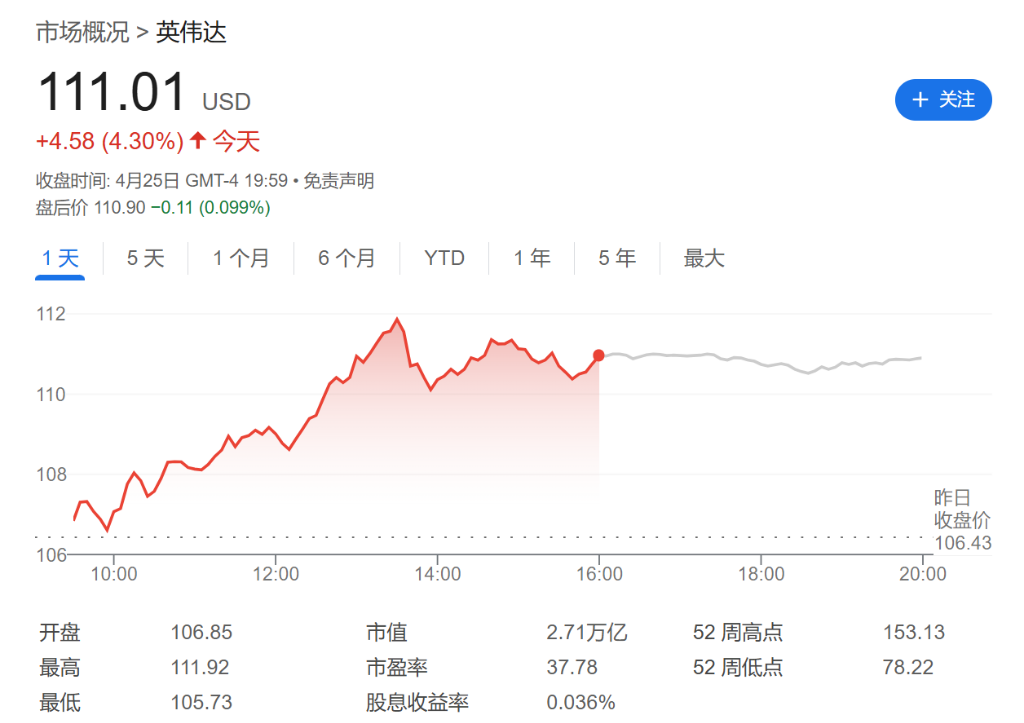
“AI消化期论”可笑!大摩上调英伟达(NVDA.US)2026 年业绩预期
智通财经网· 2025-04-25 13:38
智通财经APP获悉,摩根士丹利上调了对英伟达(NVDA.US)的 2026 年业绩预期,称人工智能处于消化 阶段的想法"很可笑"。 分析师约瑟夫·摩尔在给客户的报告中写道:"过去四周,尽管投资者情绪因宏观和供应链风险而恶化, 但在全球范围内,与大多数大语言模型相关的推理芯片短缺,GPU的核心需求却大幅上升。""尽管华尔 街对一系列非常现实的担忧感到焦虑,但硅谷的关注点已转向一个截然不同的挑战——自年初以来,生 成的token数量增长了5倍以上,这极大地挤压了生态系统,并推动了对处理这些工作负载的投资激 增。" 由于近期H20的限制,摩尔维持其对2026财年的预期不变,但将2027财年(2026自然年)的营收预期从之 前的2309亿美元上调至2555亿美元。基于数据中心业务的持续增长,他还将调整后的每股收益预期从之 前的5.37美元上调至6.01美元。 摩尔进一步指出,基于API公司Open Router以及"多种"专有渠道的检查,AI推理需求增长的趋势已变得 明显。他补充说,尽管情绪受到关税、贸易战和其他问题的影响,但这些并未体现在硬数据中。 此外,科技界近期有多条推文称AI需求出现"急剧加速",包括Open ...
内存压缩技术新突破,提高AI推理效率!
半导体芯闻· 2025-04-25 10:19
如果您希望可以时常见面,欢迎标星收藏哦~ 来源:内容编译自 eetimes ,谢谢。 ZeroPoint Technologies 和 Rebellions 旨在开发一种 AI 加速器,以降低 AI 推理的成本和功耗。 据称,ZeroPoint Technologies 的内存优化技术能够快速压缩数据、增加数据中心的内存容量并提 高每瓦的 AI 推理性能。 2025年4月,瑞典内存优化知识产权(IP)供应商ZeroPoint Technologies(以下简称ZeroPoint) 宣布与Rebellions建立战略合作伙伴关系,共同开发用于AI推理的下一代内存优化AI加速器。该 公司计划在 2026 年发布一款新产品,并声称"有望实现前所未有的代币/秒/瓦特性能水平"。 作为合作的一部分,两家公司将使用 ZeroPoint 的内存压缩、压缩和内存管理技术来增加基本模 型推理工作流程的内存带宽和容量。 ZeroPoint 首席执行官 Klas Moreau 声称其基于硬件的内存 优化引擎比现有的软件压缩方法快 1,000 倍。 ZeroPoint 的内存压缩 IP 价值主张 首先,压缩和解压缩。其次,压缩生成的 ...
海光信息(688041):2024年报和2025年一季报点评:业绩持续高增,技术突破驱动国产算力突围
Huachuang Securities· 2025-04-23 14:46
Investment Rating - The report maintains a "Recommended" investment rating for the company, with a target price of 177 yuan [2][10]. Core Insights - The company has demonstrated continuous high growth, with total revenue reaching 9.162 billion yuan in 2024, a year-on-year increase of 52.40%, and a net profit of 1.931 billion yuan, up 52.87% [2][10]. - In Q1 2025, the company reported total revenue of 2.4 billion yuan, reflecting a 50.76% year-on-year growth, and a net profit of 506 million yuan, which is a 75.33% increase [2][10]. - The company has a strong focus on R&D, with 3.446 billion yuan invested in 2024, accounting for 37.61% of total revenue, and a 22.63% increase compared to the previous year [10]. - The company is positioned to benefit from the growing demand for AI inference, with expectations of sustained high growth in performance due to the launch of its new product, ShenSan 3 [10]. Financial Performance Summary - **2024 Financials**: Total revenue of 9.162 billion yuan, net profit of 1.931 billion yuan, and a net profit margin of 29.7% [5][10]. - **2025 Projections**: Expected revenue of 13.738 billion yuan and net profit of 2.902 billion yuan, with growth rates of 49.9% and 50.3% respectively [5][10]. - **2026-2027 Forecasts**: Revenue is projected to reach 19.503 billion yuan in 2026 and 26.327 billion yuan in 2027, with net profits of 4.219 billion yuan and 5.724 billion yuan respectively [5][10]. Market Position and Strategy - The company has established a comprehensive ecosystem involving nearly 5,000 partners across the supply chain, enhancing its capabilities in chip design and industry applications [10]. - The domestic market for its products is expanding, driven by increasing demand for localized solutions in critical sectors such as finance, telecommunications, and transportation [10]. - The company’s CPU and DCU products are increasingly being adopted in data centers and computing platforms, supporting the integration of intelligent and numerical computing [10].

海外AI应用行业研究:AI应用周度跟踪:海外终端景气度显著回升,关注海外应用落地-20250413
SINOLINK SECURITIES· 2025-04-13 05:04
Investment Rating - The report does not explicitly state an investment rating for the industry Core Insights - Google has launched its seventh-generation TPU, Ironwood (TPU v7), which significantly enhances AI inference capabilities and energy efficiency, expected to be available in late 2025 [15][20] - The active usage of AI applications has shown a notable increase in China, with several applications experiencing over 25% growth [11] - The ongoing tariff disputes are creating significant uncertainty in the storage market, affecting pricing and demand [21] Summary by Sections Google Cloud Next Developments - Google introduced the Agent Development Kit (ADK) to simplify multi-agent system development and management [11] - The new Gemini 2.5 Flash model focuses on efficiency and is set to support local deployment in Q3 2025 [12] - The Vertex AI platform has been updated with new AI tools for video, image, voice, and music generation [12] TPU v7 Launch - Ironwood is designed primarily for AI inference workloads, optimized for large language models and other complex tasks [16] - The TPU v7 supports up to 9,216 chips in a liquid-cooled cluster, achieving a peak performance of 42.5 Exaflops [19] - The memory capacity has increased to 192GB per chip, significantly enhancing data processing capabilities [19] Market Trends - MediaTek has released the Dimensity 9400+ chip, which enhances AI processing capabilities in mobile devices [23][24] - Apple is expected to launch foldable devices in 2026, which may boost consumer interest in foldable technology [26][29] - The report highlights the limited room for hardware improvements in mobile devices compared to PCs, emphasizing the importance of efficiency in AI development [24]

大模型一体机塞进这款游戏卡,价格砍掉一个数量级
量子位· 2025-04-09 08:58
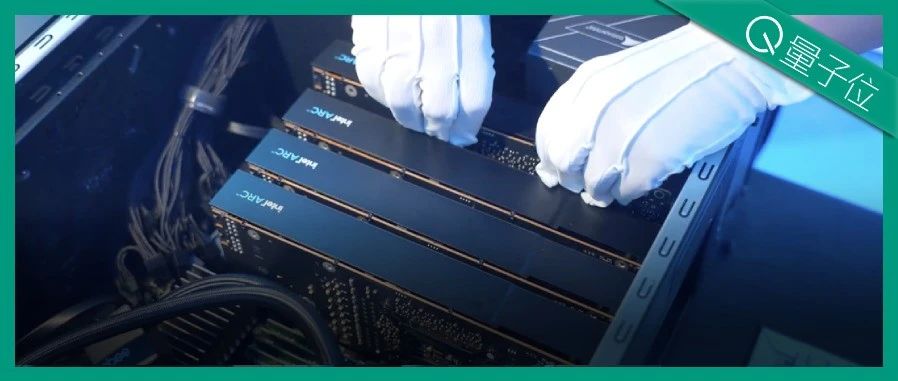
Core Viewpoint - The article discusses the rising trend of using Intel's Arc graphics cards in large model all-in-one machines, highlighting their cost-effectiveness compared to traditional NVIDIA cards, making them suitable for small to medium-sized teams [2][8][12]. Group 1: Performance Comparison - A comparison test conducted by Feizhi Cloud showed that an all-in-one machine equipped with four Intel Arc A770 graphics cards took approximately 50 minutes to complete a large task, while a machine with NVIDIA cards took about 30 minutes [6]. - The cost of four Intel Arc graphics cards is significantly lower than that of a single NVIDIA card, making the Intel option more appealing in terms of price-performance ratio [7][8]. Group 2: Market Adoption - The article notes that many companies are increasingly adopting Intel's combination of Arc graphics cards and Xeon W processors for their all-in-one systems, indicating a shift in the industry towards this more affordable solution [23][33]. - Companies like Chaoyun and Yunjian are developing various devices based on Intel's platform, including workstations and high-end all-in-one machines capable of running large models [28][32]. Group 3: Advantages of All-in-One Machines - All-in-one machines offer quick deployment and ease of use, allowing businesses to integrate large models into their operations without complex setup [36]. - The low startup costs associated with all-in-one machines enable companies to run large models initially and iterate over time, reducing financial risk [37]. - These machines simplify operations and maintenance by integrating hardware and software into a unified system, thus lowering management complexity and costs [40]. Group 4: Reliability and Flexibility - The all-in-one systems are designed for stability and reliability, ensuring consistent performance in complex environments, which is crucial for AI applications [41]. - Intel's GPU and CPU combination is adaptable to various applications, supporting a range of open-source models and providing diverse functionality for different business needs [43][44]. Group 5: Industry Impact - The article suggests that the trend of integrating AI models into various industries is akin to the evolution from mainframe computers to personal computers, with Intel aiming to replicate its past success in the AI domain [45][46].

AI芯片,需求如何?
半导体行业观察· 2025-04-05 02:35
Core Insights - The article discusses the emergence of GPU cloud providers outside of traditional giants like AWS, Microsoft Azure, and Google Cloud, highlighting a significant shift in AI infrastructure [1] - Parasail, founded by Mike Henry and Tim Harris, aims to connect enterprises with GPU computing resources, likening its service to that of a utility company [2] AI and Automation Context - Customers are seeking simplified and scalable solutions for deploying AI models, often overwhelmed by the rapid release of new open-source models [2] - Parasail leverages the growth of AI inference providers and on-demand GPU access, partnering with companies like CoreWeave and Lambda Labs to create a contract-free GPU capacity aggregation [2] Cost Advantages - Parasail claims that companies transitioning from OpenAI or Anthropic can save 15 to 30 times on costs, while savings compared to other open-source providers range from 2 to 5 times [3] - The company offers various Nvidia GPUs, with pricing ranging from $0.65 to $3.25 per hour [3] Deployment Network Challenges - Building a deployment network is complex due to the varying architectures of GPU clouds, which can differ in computation, storage, and networking [5] - Kubernetes can address many challenges, but its implementation varies across GPU clouds, complicating the orchestration process [6] Orchestration and Resilience - Henry emphasizes the importance of a resilient Kubernetes control plane that can manage multiple GPU clouds globally, allowing for efficient workload management [7] - The challenge of matching and optimizing workloads is significant due to the diversity of AI models and GPU configurations [8] Growth and Future Plans - Parasail has seen increasing demand, with its annual recurring revenue (ARR) exceeding seven figures, and plans to expand its team, particularly in engineering roles [8] - The company recognizes a paradox in the market where there is a perceived shortage of GPUs despite available capacity, indicating a need for better optimization and customer connection [9]

AI推理时代:边缘计算成竞争新焦点
Huan Qiu Wang· 2025-03-28 06:18
Core Insights - The competition in the AI large model sector is shifting towards AI inference, marking the beginning of the AI inference era, with edge computing emerging as a new battleground in this field [1][2]. AI Inference Era - Major tech companies have been active in the AI inference space since last year, with OpenAI launching the O1 inference model, Anthropic introducing the "Computer Use" agent feature, and DeepSeek's R1 inference model gaining global attention [2]. - NVIDIA showcased its first inference model and software at the GTC conference, indicating a clear shift in focus towards AI inference capabilities [2][4]. Demand for AI Inference - According to a Barclays report, the demand for AI inference computing is expected to rise rapidly, potentially accounting for over 70% of the total computing demand for general artificial intelligence, surpassing training computing needs by 4.5 times [4]. - NVIDIA's founder Jensen Huang predicts that the computational power required for inference could exceed last year's estimates by 100 times [4]. Challenges and Solutions in AI Model Deployment - Prior to DeepSeek's introduction, deploying and training AI large models faced challenges such as high capital requirements and the need for extensive computational resources, making it difficult for small and medium enterprises to develop their own ecosystems [4]. - DeepSeek's approach utilizes large-scale cross-node expert parallelism and reinforcement learning to reduce reliance on manual input and data deficiencies, while its open-source model significantly lowers deployment costs to the range of hundreds of calories per thousand calories [4]. Advantages of Edge Computing - AI inference requires low latency and proximity to end-users, making edge or edge cloud environments advantageous for running workloads [5]. - Edge computing enhances data interaction and AI inference efficiency while ensuring information security, as it is geographically closer to users [5][6]. Market Competition and Player Strategies - The AI inference market is rapidly evolving, with key competitors including AI hardware manufacturers, model developers, and AI service providers focusing on edge computing [7]. - Companies like Apple and Qualcomm are developing edge AI chips for applications in AI smartphones and robotics, while Intel and Alibaba Cloud are offering edge AI inference solutions to enhance speed and efficiency [7][8]. Case Study: Wangsu Technology - Wangsu Technology, a leading player in edge computing, has been exploring this field since 2011 and has established a comprehensive layout from resources to applications [8]. - With nearly 3,000 global nodes and abundant GPU resources, Wangsu can significantly improve model interaction efficiency by 2 to 3 times [8]. - The company's edge AI platform has been applied across various industries, including healthcare and media, demonstrating the potential for AI inference to drive innovation and efficiency [8].


【电子】英伟达GTC2025发布新一代GPU,推动全球AI基础设施建设——光大证券科技行业跟踪报告之五(刘凯/王之含)
光大证券研究· 2025-03-22 14:46
Core Viewpoint - NVIDIA's GTC 2025 conference highlighted advancements in AI technologies, particularly focusing on Agentic AI and its implications for global data center investments, which are projected to reach $1 trillion by 2028 [3]. Group 1: AI Development and Investment - Huang Renxun introduced a three-stage evolution of AI: Generative AI, Agentic AI, and Physical AI, positioning Agentic AI as a pivotal phase in AI technology development [3]. - The scaling law indicates that larger datasets and computational resources are essential for training more intelligent models, leading to significant investments in data centers [3]. Group 2: Product Launches and Innovations - The Blackwell Ultra chip, designed for AI inference, is set to be delivered in the second half of 2025, with a performance increase of 1.5 times compared to its predecessor [4]. - NVIDIA's Quantum-x CPO switch, featuring 115.2T capacity, is expected to launch in the second half of 2025, showcasing advanced optical switching technology [5]. - The introduction of the AI inference service software Dynamo aims to enhance the performance of Blackwell chips, alongside new services for enterprises to build AI agents [6].

软银收购Ampere Computing
半导体行业观察· 2025-03-20 01:19
Core Viewpoint - SoftBank has agreed to acquire Ampere Computing for $6.5 billion, indicating a strong belief in the potential of Ampere's chips to play a significant role in artificial intelligence and data centers [1][2]. Group 1: Acquisition Details - The acquisition reflects SoftBank's commitment to advancing AI technology, with CEO Masayoshi Son emphasizing the need for breakthrough computing capabilities [1]. - Ampere, founded eight years ago, specializes in data center chips based on Arm Holdings technology, which is widely used in smartphones [1]. - SoftBank plans to operate Ampere as a wholly-owned subsidiary [1]. Group 2: Market Context - The acquisition comes amid a surge in demand for chips that support AI applications like OpenAI's ChatGPT [2]. - SoftBank has announced several transactions aimed at increasing its influence in the AI sector, including a $500 billion investment plan to establish data centers in the U.S. [2]. - Oracle, a major investor and customer of Ampere, is involved in the "Star Gate" initiative alongside SoftBank and OpenAI [2]. Group 3: Competitive Landscape - Intel, AMD, and Arm design microprocessors that play a crucial role in AI, often working alongside GPUs from Nvidia [3]. - Nvidia is promoting Arm processors as alternatives to Intel and AMD chips for AI tasks, which could reshape the market [3]. - IDC predicts that the market for AI microprocessors will grow from $12.5 billion in 2025 to $33 billion by 2030 [3]. Group 4: Ampere's Position - Ampere's microprocessors target the general data center market, with a new chip named Aurora designed for AI inference applications [4]. - Major tech companies like Amazon, Google, and Microsoft are focusing on developing their own Arm-based microprocessors, although Oracle continues to support Ampere [4][5]. - Oracle holds a 29% stake in Ampere, with an investment value of $1.5 billion after accounting for losses [4].