
消费者权益保护

Search documents
兴业银行重庆两江新区支行开展消费者权益保护宣传活动
Zhong Guo Jin Rong Xin Xi Wang· 2025-06-04 12:21
Core Viewpoint - The article highlights the efforts of Industrial Bank's Chongqing Liangjiang New Area branch in promoting consumer rights protection through various activities aimed at enhancing financial literacy and risk prevention among consumers [1]. Group 1: Consumer Rights Protection Activities - The branch organized a series of diverse consumer rights protection promotional activities, including in-branch education, community services, and corporate visits, to create a harmonious financial consumption environment [1]. - A dedicated financial knowledge promotion area was set up in the branch, focusing on educating elderly customers about financial safety, particularly through a special lecture titled "Silver Guard" that addresses illegal fundraising and telecom fraud [1]. Group 2: Community Engagement - The branch engaged with the Jinshan Street Jin Yu community by combining financial education with convenient services, such as distributing promotional materials and providing free haircuts, to foster closer ties with residents [2]. - The "Financial + Public Welfare" service model was implemented to enhance community outreach and support [2]. Group 3: Corporate Services - The branch's customer managers conducted "knowledge delivery" activities at local enterprises, focusing on educating employees and new citizens about consumer rights violations, including illegal insurance claims and improper debt collection practices [2]. - Interactive Q&A sessions were held to address employees' concerns regarding investment risks and loan traps, thereby improving the practical applicability of financial knowledge [2]. Group 4: Future Initiatives - The branch plans to continue deepening its financial knowledge dissemination efforts through regular education, digital communication, and scenario-based services, fulfilling its social responsibility as a financial institution [2].

消费者陷APP“自动续费”陷阱,商家被判全额返还扣款
Nan Fang Du Shi Bao· 2025-06-04 08:28
Core Viewpoint - The court ruled that online operators must obtain explicit consent from consumers before providing automatic renewal services, and cannot use hidden methods to present automatic renewal as a default option [1][6]. Group 1: Case Background - A consumer, Tang, was charged 29.9 yuan for automatic renewal without prior notification after initially paying 0.3 yuan for a 24-hour trial membership [2]. - Tang discovered the automatic charges only after seven months and sought a refund, claiming the company had hidden the automatic renewal terms [2][3]. - The company used small gray font to indicate automatic renewal, which was deemed insufficient for consumer awareness [3]. Group 2: Court Ruling - The court found that the company violated Tang's right to know and his right to choose by not providing clear and prominent notifications about the automatic renewal [3][4]. - The ruling mandated the company to refund the total amount of 239.2 yuan to Tang [4]. Group 3: Legal Implications - The new Consumer Rights Protection Law, effective July 1, 2024, requires operators to prominently inform consumers about automatic renewals before service acceptance and prior to renewal dates [5]. - The court emphasized that "significant notice" must be clear enough to attract consumer attention, and the current notification method used by the company was inadequate [6]. Group 4: Recommendations and Industry Impact - The court issued judicial suggestions to the involved platform, recommending explicit consent for automatic renewals and strict adherence to notification obligations [7]. - Experts noted that subscription models must prioritize consumer rights to ensure transparency and fairness, which can enhance long-term business success and consumer trust [8].
湖南人保寿险夯实基础管理水平,全面提升消保工作质效
Chang Sha Wan Bao· 2025-06-04 00:05
登录新浪财经APP 搜索【信披】查看更多考评等级 曹开阳 赵泽龙 胡腾宇 2024年,中国人民人寿保险股份有限公司湖南省分公司(下称"湖南人保寿险")全年共计提供20万次理赔服 务,累计赔付金额达人民币2.75亿元,索赔支付平均时效为1.16天;客户获赔率99.70%,线上化处理率 99.47%。该公司通过线上理赔、快速理赔等方式,不断优化服务流程,持续提升客户满意度。 加强披露管理 维护消费者合法权益 湖南人保寿险扎实开展集中教育宣传活动,积极参加"3·15宣传周""金融教育宣传月"等各项金融知识宣传活动。 活动围绕"诚信文化+力办实事+特色活动"创新金融教育形式,开展柜面消保专区焕新、"高管讲消保"等特色活 动,提升消费者的参与感,同时创新尝试"金融教育+力办实事""消保+健康运动"等形式,全面开展"担当新使 命,消保县域行"活动,深入县域为广大消费者科普消保知识。此外,组织"金融教育友氧鲜气跑·娄底站"等特色 活动,进一步扩大宣传范围和影响力。 根据信息披露管理要求,湖南人保寿险在售前、售中、售后全流程披露产品和服务的关键信息,内容涵盖产品 和服务性质、风险、收费情况、合同主要条款。使用通俗易懂的语言, ...


筑牢消费者权益保护之堤
Jin Rong Shi Bao· 2025-05-28 01:46
Group 1 - The core viewpoint emphasizes the importance of consumer rights protection as a foundation for a healthy consumption ecosystem and sustainable economic development [2] - Various consumer protection committees across cities are issuing consumption tips for the upcoming Dragon Boat Festival, urging consumers to avoid traps and make rational purchasing decisions [1] - The Chinese Consumers Association has highlighted issues of excessive packaging and overpriced rice dumplings, advocating for simplified consumption and rejection of overpriced products [1] Group 2 - The implementation of the Consumer Rights Protection Law in July 2024 aims to enhance consumer rights protection and establish a collaborative governance system involving businesses, consumers, and government oversight [2] - The "Three-Year Action Plan for Optimizing the Consumption Environment" (2025-2027) outlines five key actions to improve consumption quality, order, rights protection, and environment [2] - There is a need for government departments to clarify their responsibilities in consumer rights protection and establish a cross-departmental regulatory mechanism to enhance data sharing and enforcement [3] Group 3 - The industry is encouraged to leverage technology such as big data and artificial intelligence to create intelligent market monitoring platforms to detect unfair competition and new monopolistic behaviors [3] - A comprehensive consumer rights protection system should be established, including broadening channels for rights protection and simplifying processes to reduce consumer costs [3] - Consumer education is essential to enhance awareness and capability in protecting rights, enabling consumers to better defend their legal interests against infringements [3]
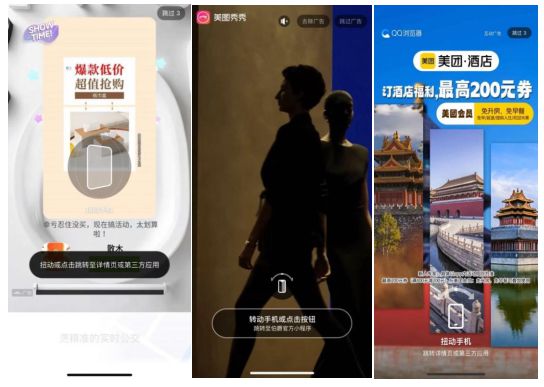
手机一晃就进广告?关不掉的APP“摇一摇”,背后藏着这些秘密
Huan Qiu Wang Zi Xun· 2025-05-25 04:45
Core Viewpoint - Recent complaints have emerged regarding mobile apps that trigger unwanted advertisements through motion sensitivity, leading users to unintended e-commerce platforms or payment interfaces, raising concerns about user experience and consumer rights [1][3][9]. Group 1: User Experience Issues - Many apps have adjusted their motion sensors to be overly sensitive, causing users to be redirected to e-commerce pages with minimal movement, such as walking or adjusting their seating position [1][3]. - Users have reported frequent and frustrating experiences with these "shake to jump" ads, often leading to accidental payments due to features like facial recognition payment systems [5][8]. - Complaints about these issues have surged on consumer complaint platforms, indicating widespread dissatisfaction among users [8][13]. Group 2: Legal and Regulatory Concerns - Legal experts suggest that the design of these jump ads may mislead consumers, potentially invalidating the contract due to lack of genuine consent when payments are triggered without clear confirmation [8][16]. - The Internet Advertising Management Measures stipulate that advertisements must not disrupt normal user experience and should provide clear options to close ads [12][13]. - The use of physical actions, such as shaking the phone, as a form of consent is deemed problematic and may violate consumer rights and personal information protection laws [16][17]. Group 3: Industry Insights - The low cost of "shake to jump" advertising is appealing to businesses, as it allows for high exposure rates with minimal investment, despite low conversion rates [11][12]. - Companies may prioritize visibility over user satisfaction, believing that increased exposure will eventually lead to higher sales, even if it generates user annoyance [11][12]. - The prevalence of these ads raises questions about the ethical implications of using such aggressive marketing tactics in the digital space [12][16].
吃串串买单222根,自己数仅119根,商家凭什么要求消费者“理解”?
Xin Lang Cai Jing· 2025-05-19 05:27
极目新闻评论员 屈旌 近日,有网友发视频称吃串串遇签子收费比实际吃出多一倍,评论中也有顾客反映签子多了,多收钱的 问题。 当事人表示,店家在小程序识别后,在收银台手动输入签子数,输入的是222根,自己拍照识别和人工 数后都是119根,之后商家退还了差价。 对此,涉事门店工作人员表示,都是小事情,大家应该相互理解一下,为啥非搞3倍赔偿,他们平时数 的都是对的,会找数签软件客服反馈。(5月18日荔枝新闻) 相关新闻视频 "吃串串"有自己特别的计价方式,一般是顾客就餐完毕后,按照剩下的签子来计数,依据签子数量和单 价付款,这种计价模式建立在双方信任的基础之上,很多时候,商家数了是多少就是多少,价格没有太 离谱的话,很多消费者也不会再去复核一遍。 但像这个商家这样,算出的签子数量竟比实际高出一倍左右,实在是有点夸张了。如此大的数量差距, 几乎可以说是"肉眼可见",绝非一句"误差"可以搪塞。这难免让人怀疑,商家此前是否也经常在签字数 量上玩花招,多收顾客的钱。这种行为不仅损害了消费者的经济利益,更严重破坏了消费者对商家的信 任,让就餐体验变得很糟糕。 根据相关法律规定,消费者享有公平交易的权利,有权获得质量保障、价格合 ...

预付式消费不能透支信任
Jing Ji Ri Bao· 2025-05-18 21:55
Group 1 - Prepaid consumption has become popular in various sectors such as fitness, education, and beauty services, offering convenience and discounts to consumers, but it also carries risks like service reduction, refund difficulties, and business closures [1] - The implementation of the Supreme People's Court's interpretation on civil disputes related to prepaid consumption aims to address consumer rights violations, including issues like "running away with funds" and "unfair contract terms," thereby enhancing consumer protection [1] - Strengthening regulatory and enforcement measures is essential, including the establishment of a monitoring platform for prepaid consumption that utilizes big data and cloud computing to oversee business operations in real-time [1] Group 2 - A healthy market ecosystem requires collective efforts from society, including the establishment of a blacklist sharing mechanism by industry associations and regular credit ratings for businesses to guide consumer choices [2] - Introducing third-party safeguarding mechanisms, such as a prepaid fund custody system, is crucial to ensure the safety of consumer funds, along with encouraging businesses to purchase prepaid consumption insurance for consumer protection [2] - Enhancing consumer awareness and education about prepaid consumption risks is vital, necessitating a multi-channel approach to cultivate public risk awareness [2]
【法治之眼】 游客购票无法使用第三方平台须担责
Zheng Quan Shi Bao· 2025-05-15 19:26
Core Viewpoint - The article highlights issues with third-party platforms selling tickets for tourist attractions, where consumers face problems such as tickets being marked as used without being utilized, unclear refund policies, and unresponsive customer service, leading to financial losses for tourists [1][2]. Group 1: Issues Faced by Consumers - Many consumers report that tickets purchased through third-party platforms are often unusable, resulting in significant disruptions to their travel plans and financial losses [1]. - Tourists are increasingly turning to third-party platforms when official tickets are sold out, but they encounter problems such as tickets being invalidated without use and difficulties in obtaining refunds [1][2]. - Third-party platforms often deflect responsibility, blaming either the consumers for being late or the sellers for individual actions, which exacerbates the situation for tourists [1][2]. Group 2: Legal and Regulatory Aspects - Legal experts indicate that third-party platforms cannot evade responsibility, as they are liable under the E-commerce Law if they fail to take necessary actions against sellers who infringe on consumer rights [1][2]. - Tourists are encouraged to take legal action against third-party platforms for failing to address complaints, as this can compel platforms to fulfill their responsibilities [2][3]. - Regulatory authorities are urged to take proactive measures against negligent platforms, including imposing fines ranging from 20,000 to 100,000 yuan, and potentially suspending operations for severe violations [2]. Group 3: Recommendations for Tourists and Attractions - Many tourist attractions have begun to clarify that they do not authorize any third-party platforms to sell tickets, advising consumers to purchase directly from official channels to avoid pitfalls [2]. - Attractions are also encouraged to consider legal action against third-party platforms that misrepresent their services [2][3].
小米消金高度重视消保宣传工作 为提振消费贡献消保力量
Sou Hu Cai Jing· 2025-05-15 04:12
Core Viewpoint - The revitalization of consumption is a key task for economic development, with policies like the "Special Action Plan for Boosting Consumption" reflecting the government's commitment to stimulate consumer activity [1] Group 1: Consumer Rights Protection - Consumer rights protection is essential not only for safeguarding livelihoods but also for boosting consumer confidence and promoting sustained consumption growth [1] - Xiaomi Consumer Finance emphasizes consumer rights protection through diverse initiatives aimed at educating the public on financial knowledge and enhancing consumer protection literacy [1][3] - The company integrates consumer rights protection requirements into all business processes, establishing a collaborative mechanism that involves product, business, operations, and risk management [3] Group 2: Financial Education and Complaint Handling - Xiaomi Consumer Finance conducts various financial education activities to improve consumer financial literacy and fraud awareness [3] - The company has strengthened its complaint handling mechanisms, creating standardized processes for product design, business control, collection management, and dispute resolution, resulting in a noticeable increase in complaint resolution rates [3] Group 3: Digital Risk Management - The company is enhancing its internal risk management systems through the development of a digital risk control framework, leveraging technology to safeguard users' financial consumption [3] - Xiaomi Consumer Finance has developed a decision engine and approval system, establishing an automated decision-making process for C-end customers, which improves user experience [3] Group 4: Commitment to Economic Development - By effectively protecting consumer rights and addressing consumption pain points, the company aims to enable consumers to "consume, dare to consume, and be willing to consume," thereby driving economic growth [4] - Xiaomi Consumer Finance is committed to enhancing the quality and effectiveness of its consumer protection efforts, contributing to high-quality economic development [4]

江西启动网络市场监管专项行动 整治直播带货乱象等问题
Zhong Guo Xin Wen Wang· 2025-05-13 15:24
Core Viewpoint - Jiangxi Province has launched a special action plan for network market regulation aimed at addressing issues such as live-streaming sales chaos and ensuring the healthy development of the online economy [1][2] Group 1: Regulatory Focus Areas - The action plan emphasizes the need for e-commerce platforms to strictly verify the qualifications of merchants entering the platform [1] - Increased regulatory enforcement on the quality and safety of ten categories of consumer goods, including food, pharmaceuticals, and electronics [1] - A crackdown on unfair competition practices such as false advertising, fake reviews, and illegal promotions [1] Group 2: Key Tasks in the Action Plan - A focus on eliminating the sale of prohibited and restricted items, including illegal wildlife products and counterfeit certificates, through frequent monitoring and enforcement [2] - Addressing the issue of "ghost" food delivery services by cleaning up businesses without physical stores or necessary licenses [2] - Regulating live-streaming sales by targeting practices like price inflation followed by discounts and false product claims [2] - Ensuring fair competition during promotional events by monitoring and combating deceptive practices [2]