
电动化转型

Search documents
全球首发!宁王新技术公布,多家中国电池公司亮相慕尼黑车展
Shang Hai Zheng Quan Bao· 2025-09-07 23:25
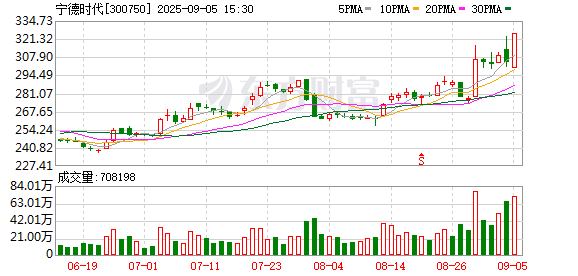
Core Viewpoint - CATL launched the NP3.0 technology platform, the highest safety level in the battery field, and introduced the Shunxing Pro lithium iron phosphate battery at the Munich Auto Show, responding to the urgent demand for electrification in the European market [1][3][5] Group 1: NP3.0 Technology Platform - The NP3.0 technology platform integrates eight core technologies, creating a "safety triangle" for power battery systems, enhancing safety and performance [5] - In extreme thermal runaway scenarios, NP3.0 can quickly block heat diffusion between cells and maintain stable power output for over one hour, supporting safe vehicle evacuation [5] - The technology ensures no open flames or smoke during thermal runaway, preventing secondary accidents and enhancing driving safety [5] Group 2: Shunxing Pro Battery Features - The Shunxing Pro battery offers a range of 758 kilometers (WLTP) with a lifespan of 12 years or 1 million kilometers, setting a new record for passenger vehicle battery longevity [6] - The battery has a degradation rate of only 9% after 200,000 kilometers, making it highly suitable for long-term leasing models in Europe [6] - The Shunxing Pro supercharging version achieves a range of 683 kilometers (WLTP) and can charge 478 kilometers in just 10 minutes, making it the fastest lithium iron phosphate battery in the European market [10] Group 3: Market Position and Strategy - CATL has established partnerships with over 90% of mainstream automakers in Europe and has production bases in Germany, Hungary, and Spain [10] - The company has captured nearly half of the European market share in the past five years, starting from zero [13] - CATL's Hungarian factory, once completed, will have a production capacity of 100 GWh, making it the largest in Europe [13]


全球首发!宁德时代,大消息
Shang Hai Zheng Quan Bao· 2025-09-07 23:04
Core Viewpoint - CATL has launched the NP3.0 technology platform, the highest safety level in the battery field, to meet the urgent demand for electrification in the European market and accelerate the global transition to green transportation [2][3][5]. Group 1: NP3.0 Technology Platform - The NP3.0 technology platform integrates eight core technologies, including flame-retardant electrolytes and high-pressure active cooling technology, creating a "safety triangle" for power battery systems [6]. - In extreme thermal runaway scenarios, NP3.0 can quickly block heat propagation between cells and maintain stable power output for over one hour, allowing safe vehicle evacuation [6]. - The technology ensures no open flames or smoke during thermal runaway, enhancing driving safety and stability in all scenarios [6]. Group 2: Shenhxing Pro Battery - The Shenhxing Pro battery, equipped with NP3.0 technology, features a system grouping efficiency of 76% and meets diverse performance demands in safety, range, fast charging, and lifespan [7]. - The long-life version of the Shenhxing Pro battery offers a range of 758 kilometers (WLTP) and a lifespan of 12 years or 1 million kilometers, setting a new record for passenger vehicle battery lifespan [7]. - The battery has a degradation rate of only 9% after 200,000 kilometers, making it highly suitable for long-term leasing models in the European market [7]. Group 3: Market Position and Strategy - CATL has established partnerships with over 90% of mainstream automakers in Europe and is building production bases in Germany, Hungary, and Spain [11]. - The company has captured nearly half of the European market share in the past five years, starting from zero [15]. - CATL's Hungarian factory, once completed, will have a production capacity of 100 GWh, making it the largest in Europe [15].

长安汽车高管:未来35%的用户仍选燃油车
第一财经· 2025-09-07 12:34
Core Viewpoint - Despite the rapid development of new energy vehicles (NEVs), at least 35% of users are expected to continue choosing fuel vehicles in the future, indicating a balanced development path for Changan Automobile between fuel and new energy vehicles [2][3]. Group 1: Market Insights - Changan Automobile's Executive Vice President Yang Dayong stated that the current number of private charging piles in China is only 12.49 million as of July, which makes fuel vehicles a more practical choice for many families without charging facilities [2]. - The anticipated sales structure in the future market is projected to be 35% fuel vehicles and 65% new energy vehicles [2]. Group 2: Strategic Developments - Changan Automobile plans to achieve an annual production and sales target of 5 million vehicles by 2030, with new energy vehicles accounting for over 60% of this total [3]. - In the first half of this year, Changan Automobile's total sales reached 1.355 million vehicles, with new energy vehicles contributing 450,000 units, representing 33.21% of total sales [3]. Group 3: Product Launches - The fourth-generation model of the "Yidong" under the Changan "Yinli" series was launched with three configurations, starting at an official price of 87,900 yuan. This model has sold 1.9 million units globally over 13 years [2]. - There are plans to potentially introduce a new energy version of the fourth-generation Yidong in the long term to expand the product matrix [2].

蔚来技术输出迈凯伦,中国电动化技术授权潮起
高工锂电· 2025-09-07 10:55
Core Viewpoint - The article discusses the strategic shift of Chinese electric vehicle (EV) companies from technology importation to technology exportation, exemplified by NIO's collaboration with McLaren and XPeng's partnership with Volkswagen [5][7]. Group 1: NIO and McLaren Collaboration - NIO's chairman Li Bin confirmed a technology partnership with McLaren, with technology service revenue reaching several hundred million yuan in Q2 [3][4]. - NIO will develop power batteries based on 4680 cylindrical batteries for McLaren's hybrid models, with small-scale production expected in 2026 [4]. - The collaboration is facilitated by CYVN Holdings, which invested approximately $3.3 billion in NIO, acquiring a 20.1% stake [6]. Group 2: XPeng and Volkswagen Partnership - XPeng has achieved stable technology service revenue, with Q2 service and other income at 1.39 billion yuan, a 7.6% year-on-year increase, primarily from its collaboration with Volkswagen [8]. - The partnership has been upgraded, expanding the application of the jointly developed regional control electronic architecture (CEA) to include fuel and hybrid models starting in 2027 [8]. Group 3: Technology Authorization Models - The article highlights the differences between technology authorization models for battery companies and vehicle manufacturers, with NIO-McLaren and XPeng-Volkswagen representing a "mentor-mentee" relationship [9]. - Technology authorization is seen as a key method for Chinese battery companies to serve global markets, particularly in the context of lithium iron phosphate battery technology [9][10]. - Despite challenges posed by the "Inflation Reduction Act" in the U.S., the technology authorization model continues to show resilience and opportunities in global markets [12][15]. Group 4: Global Market Trends - European automakers are accelerating their electrification efforts, collaborating with battery companies to build cost-competitive supply chains [10]. - Fiat Chrysler is exploring local production based on lithium iron phosphate technology in partnership with CATL to address market stagnation and high costs [10]. - Companies like Honeycomb Energy are considering light-asset models for battery capacity in Europe, indicating a strategic shift towards partnerships rather than large-scale investments [11][12]. Group 5: Development of Cylindrical Batteries - The collaboration between NIO and McLaren focuses on cylindrical batteries, which are gaining attention for their application potential in high-end models [17]. - Major automakers like Mercedes-Benz and BMW are investing in cylindrical battery technology, with Mercedes-Benz procuring 157.5 GWh of 46 series cylindrical batteries for their models [18]. - Chinese battery companies are leading the maturation of cylindrical battery technology, with companies like EVE Energy achieving significant production milestones [20][21].

长安汽车高管:未来35%的用户仍选燃油车
Di Yi Cai Jing· 2025-09-07 10:43
Group 1 - The core viewpoint presented by Yang Dayong, the Executive Vice President of Changan Automobile, is that it is unrealistic to expect "everyone to adapt to new energy vehicles" as at least 35% of users will continue to choose fuel vehicles in the future [1] - Changan Automobile is committed to a dual development path focusing on both fuel and new energy vehicles, as indicated by Yang's management of both the "Inertia" series of fuel vehicles and the "Origin" brand of new energy vehicles [1] - As of July 2023, there are only 12.49 million private charging piles in China, which suggests that for many households without charging facilities, fuel vehicles remain a practical choice [1] Group 2 - Changan Automobile plans to achieve an annual production and sales target of 5 million vehicles by 2030, with new energy vehicles accounting for over 60% of this total [2] - In the first half of this year, Changan Automobile's total sales reached 1.355 million vehicles, with new energy vehicles accounting for 450,000 units, representing 33.21% of total sales [2] - The fourth generation of the "Yidong" model was launched with an official starting price of 87,900 yuan, and it has sold 1.9 million units globally over 13 years [1]
合资新能源车渗透率尚不足10%,金标大众迎来关键一年
第一财经· 2025-09-06 07:29
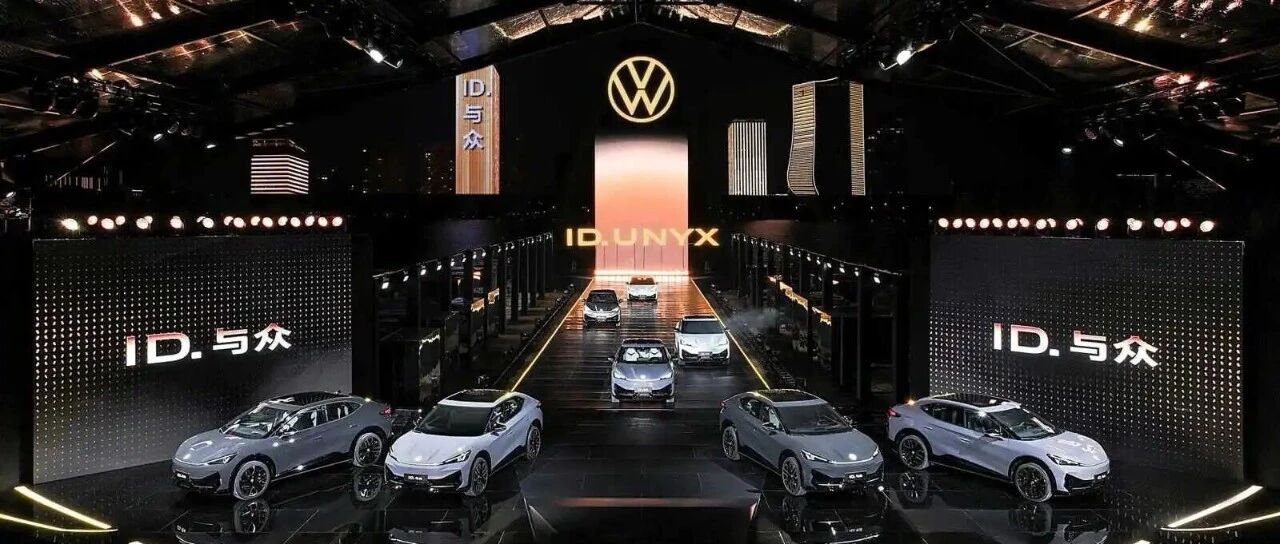
Group 1 - The core viewpoint of the articles emphasizes the urgency for automakers, particularly joint ventures like Volkswagen Anhui, to accelerate their electric vehicle (EV) strategies as the window for electrification narrows [2][4]. - Volkswagen Anhui has launched two key models, the ID. EVO concept car and the Junzhong 06, which are central to their national exhibition and represent a shift in branding with a golden VW logo to distinguish from other joint ventures [2][3]. - The penetration rate of new energy vehicles (NEVs) in the Chinese market has surpassed 50%, yet mainstream joint venture brands have a penetration rate of less than 10%, indicating significant room for growth for Volkswagen's electric offerings [2][4]. Group 2 - By 2030, Volkswagen aims for 60% of its sales to come from pure electric vehicles, with Volkswagen Anhui's product lineup playing a crucial role in achieving this target [2]. - The report from CITIC Securities highlights 2025 as a pivotal year for advanced driving technology, with strong domestic brands expected to leverage mature electrification and cost-effective smart technology to capture market share from joint ventures [3]. - The joint venture's future hinges on localizing R&D and collaborating with Chinese companies to meet the high demand for smart features, as foreign brands plan to launch new intelligent vehicles by 2026 [3][4].
合资新能源车渗透率尚不足10%,金标大众迎来关键一年
Di Yi Cai Jing· 2025-09-06 02:06
Group 1 - 2026 is a critical year for Volkswagen's market foundation, with a focus on electric transformation and strategic implementation in Anhui [1][3] - Volkswagen Anhui has launched two key models, the ID. EVO concept car and the Junzhong 06, which are part of a nationwide exhibition [1][2] - The penetration rate of new energy vehicles in the Chinese market has surpassed 50%, but mainstream joint venture brands have less than 10% penetration [1] Group 2 - By 2030, Volkswagen aims for electric vehicle sales to account for 60% of its total sales, with Volkswagen Anhui's product lineup playing a significant role [1] - The joint venture companies of Volkswagen in China include FAW-Volkswagen, SAIC-Volkswagen, and Volkswagen Anhui, with the latter being the only one controlled by German Volkswagen [1] - The report from CITIC Securities indicates that 2025 will be a pivotal year for intelligent driving technology, with strong domestic brands expected to gain market share through mature electrification and cost-effective intelligence [2] Group 3 - Joint venture car manufacturers face three potential paths: steadfast transformation and localization, collaboration with Chinese companies to fill gaps, or exiting the Chinese market [3] - The speed of strategic advancement in Volkswagen Anhui will directly influence the brand's ability to establish a foothold in the competitive new energy market in China [3] - Volkswagen Anhui plans to launch three new models in 2026, including two sedans and one SUV, targeting A and B segments [2]
一代中年男人的“梦中情车”,退了
凤凰网财经· 2025-09-05 12:28
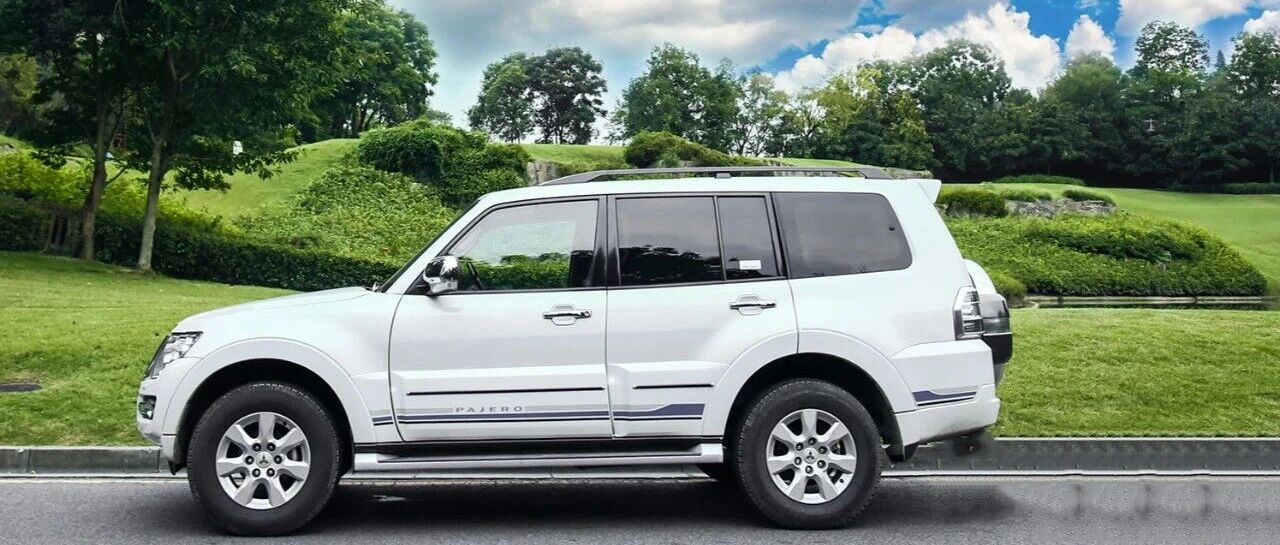
Core Viewpoint - Mitsubishi Motors is set to officially exit the Chinese market by 2025, primarily due to ongoing losses at GAC Mitsubishi and a slow response to the electrification transition [1][15][16]. Group 1: Historical Context - Mitsubishi Motors began its journey in China in the 1980s, with the establishment of Shenyang Aerospace Mitsubishi in 1997 marking a significant turning point, as its 4G6 engine series became crucial for many early domestic brands [3][4]. - At its peak, Mitsubishi engines powered 30% of domestic vehicles, earning it the title of "father of domestic cars" [4][6]. - The Pajero, a legendary off-road vehicle, became a symbol of Mitsubishi's success, achieving multiple Dakar Rally championships and high market share in the 1990s [6][10]. Group 2: Decline and Challenges - The decline of Mitsubishi's reputation in China began with a brake line incident in 2000, leading to a series of product stagnations and failures to innovate [9][10]. - From 2016 onwards, Mitsubishi struggled with product updates, with models like the 2018 Outlander lagging behind competitors in technology [9][10]. - The company's sales in China plummeted, with GAC Mitsubishi's net assets dropping to negative 1.415 billion yuan by mid-2023, leading to the closure of its operations [16][18]. Group 3: Market Dynamics - The rapid rise of electric vehicles in China, with penetration rates soaring from 5% in 2018 to over 50% by mid-2025, left Mitsubishi behind due to its rigid decision-making processes [10][17]. - Despite attempts to pivot towards electric vehicles, Mitsubishi's first pure electric model, the Atto 3, launched in 2022, failed to gain traction, with monthly sales remaining in the double digits [15][16]. - The exit of Mitsubishi reflects broader trends of foreign automakers struggling in the Chinese market, with brands like Jeep and Acura also ceasing operations [19][20]. Group 4: Future Outlook - Mitsubishi plans to shift its focus to the U.S. market, collaborating with Nissan to produce SUVs, while its former manufacturing facilities in China are being repurposed by domestic brands for R&D [18][22]. - The automotive landscape in China is evolving rapidly, with domestic brands like BYD and Geely outperforming traditional players, indicating a significant shift in market dynamics [20][21].
一汽奥迪“换将”:郭永锋接棒李凤刚 后者仅在任22个月
Xi Niu Cai Jing· 2025-09-05 07:45
Core Insights - A personnel change at FAW Audi has been announced, with Guo Yongfeng replacing Li Fenggang as the Executive Vice President of FAW Audi Sales Co., Ltd. starting September 1, 2025 [2] - Li Fenggang's tenure lasted only about 22 months, which is notably short given the typical four-year term [2] - Guo Yongfeng has a background in digital transformation and sales at FAW-Volkswagen, having previously led initiatives that helped achieve significant sales milestones in the electric vehicle segment [2] Sales Performance - FAW Audi's sales performance has been disappointing, with a total of 611,000 new cars sold in 2024, representing a year-on-year decline of 12.5% [2] - In the first half of 2025, FAW Audi sold 287,600 vehicles, down 10.2% year-on-year, trailing behind competitors BMW and Mercedes-Benz [2] Electric Vehicle Transition - FAW Audi's transition to electric vehicles has been slow, with over 90% of sales still reliant on fuel vehicles, highlighting a significant gap compared to BMW and Mercedes-Benz in terms of electric vehicle sales proportion [3] - The overall financial performance of Audi has also been underwhelming, with a net profit of only €1.346 billion in the first half of the year, a decrease of 37.5% year-on-year, leading to a downward revision of the annual revenue forecast [3] Strategic Initiatives - FAW Audi is actively seeking change by accelerating the launch of electric vehicle products, such as the Q6L e-tron family and A5L, which were launched on August 7 [3] - The company has introduced a "fusion direct sales" model, combining the advantages of the dealer system and brand direct sales to provide a "one-stop experience" for customers [3] - Guo Yongfeng's appointment is viewed as an opportunity for FAW Audi to overcome its challenges and potentially revitalize sales in a competitive market [3]

连续6个月销量超2万辆,悦达起亚公布8月销量达20974辆
Zhong Guo Qi Che Bao Wang· 2025-09-05 07:15
Sales Performance - Yueda Kia reported a sales volume of 20,974 vehicles in August 2025, marking six consecutive months of monthly sales exceeding 20,000 units [1] - Cumulative sales from January to August reached 165,036 vehicles, representing a year-on-year growth of 7% [1] - In August, the company produced 20,000 vehicles, with a total production of 163,270 vehicles from January to August, reflecting a year-on-year increase of 9.5% [1] Product Strategy - Yueda Kia adheres to the commitment of "In China, For China," focusing on product strategy optimization, brand image enhancement, and channel system renewal to strengthen its core competitiveness in the Chinese market [3] - The company is actively promoting electrification and accelerating the layout of new energy products while renewing classic fuel models to meet diverse market demands [3] - The 2026 Kia Carnival has been launched, offering spacious interiors, safety features, advanced technology, and a smooth driving experience [3][5] Export and Global Presence - Since 2018, Yueda Kia has exported over 477,000 vehicles, generating sales of $5.13 billion, with products reaching 89 countries including Australia, New Zealand, and Mexico [9] - The company has also exported over 440,000 engines, with sales exceeding $1.06 billion, contributing to a balanced development strategy of domestic and international sales [9] Corporate Social Responsibility - Yueda Kia has invested over 56 million yuan in the Kia Home public welfare project over 16 years, involving 2,360 student volunteers and improving various community facilities [11] - The company has been recognized as one of the "Top 50 Public Welfare Projects" by the Chinese Academy of Social Sciences and awarded for its impactful charity initiatives [11] Brand Development - Yueda Kia became the main sponsor of the Jiangsu Provincial Urban Football League in Yancheng, enhancing its local brand influence through various events and community engagement [11] - The company organized fan support activities and showcased its global star products at local sports events, further promoting the Kia brand [11] Future Outlook - Yueda Kia aims to continue its commitment to "In China, For China," focusing on electrification and intelligent transformation while expanding its product matrix and service quality [12]
