
智能体

Search documents
潘云鹤,最新发声!
证券时报· 2025-09-27 08:53
Core Insights - The article discusses the future of AI and its impact on platform economy, emphasizing the transition to a 2.0 era driven by AI applications in various sectors [2] - It highlights the importance of addressing the "hallucination" problem in large models, which can lead to significant issues in engineering and technology applications [3][4] - The evolution of embodied intelligence and its potential to expand the industry space through the integration of various intelligent systems is also a key focus [6] Group 1: AI and Platform Economy - AI+ is expected to initiate a new wave in platform economy, transitioning it to a technology service-oriented model [2] - Since 2017, China has outlined five directions for AI development, including big data intelligence and human-machine hybrid intelligence [2] Group 2: Challenges in AI Development - The "hallucination" issue in large models arises from statistical probability-driven "reasonable guesses," which can result in content that is inconsistent with facts or logic [3] - Solutions to mitigate hallucination include training specialized large models with domain-specific data and reconstructing the development path of large models [4] Group 3: Embodied Intelligence - The concept of embodied intelligence is expected to generalize and deepen, with intelligent systems evolving into broader intelligent terminals [6] - The integration of various intelligent systems, such as robots and drones, is anticipated to significantly expand the industry scale [6]

AI购物管家“张大妈”突围战:巨头竞逐之下,值得买科技的商业化路在何方?
Mei Ri Jing Ji Xin Wen· 2025-09-26 14:53
Core Insights - AI is transforming the shopping experience from "assisted decision-making" to "autonomous execution" with the launch of the "Zhang Dama" app by Zhidao Technology [1] - The app aims to automate various consumer scenarios, including product recommendations and price comparisons, using advanced technologies [1][3] - Major competitors like Meituan and JD.com are also developing their AI assistants, indicating a growing competitive landscape in the AI + consumption sector [1][4] Company Overview - Zhidao Technology's "Zhang Dama" app was publicly tested in September after an initial Android version was released in May [1][3] - The app focuses on cross-platform capabilities, allowing users to execute tasks like price protection and flight bookings [3][5] - The user base for "Zhang Dama" primarily comes from the main Zhidao platform, with high engagement metrics indicating strong user retention [3] Market Competition - JD.com and Meituan have launched their AI applications, "Jingxi" and "Xiao Mei," respectively, which aim to enhance user experience in shopping and local services [4][5] - The competition is intensifying as these companies leverage their large user bases and platform resources [5] Strategic Positioning - Zhidao Technology believes its cross-platform capabilities and deep task execution potential differentiate it from competitors [5][6] - The company aims to address user needs that single-platform agents cannot fulfill, such as finding the lowest prices across multiple platforms [6] Commercialization Challenges - The "Zhang Dama" app is still in the exploration phase for monetization, with insights from international markets suggesting potential subscription models for AI agents [6][7] - The company is focused on enhancing user value before pursuing broader industry and platform value [7] Technological Development - The app utilizes "cloud phone" technology, which presents various challenges in task execution and user interaction [7][8] - Building user trust is crucial, and the company plans to achieve this through consistent performance and industry trends [8] Collaborative Efforts - Zhidao Technology has signed a strategic partnership with Huawei to leverage each other's strengths in cloud services and marketing [8] - The company is committed to high investment in AI, with over 50% of its R&D budget allocated to this area [8]

9.26黄金突跌40美金横盘 多空大战
Sou Hu Cai Jing· 2025-09-26 07:22
Group 1 - Gold prices faced a significant drop of over $70, followed by a rebound that did not sustain, leading to a sudden decline of $40, indicating a period of high-level consolidation and a tug-of-war between bulls and bears [1][4] - The market is currently fluctuating within a $30 range, with a bearish trend as prices fell below $3740, suggesting ongoing adjustments [5] - Key support levels are identified at $3717 and $3684, while resistance levels are at $3761 and $3790, indicating potential trading opportunities for both long and short positions [6][9] Group 2 - Recent economic data from the U.S. showed unexpected results, particularly a significant upward revision of Q2 GDP, which contrasted with the previous quarter's negative growth, leading to a stronger dollar and downward pressure on gold [10] - The upcoming release of the U.S. PCE data for August is crucial as it directly impacts inflation and will test the Federal Reserve's decision-making regarding interest rate cuts [11] - The performance of the U.S. consumer confidence index is also anticipated, as it serves as an important indicator of economic health and may influence both the stock market and gold prices [11]

智能体,大厂的第二曲线
3 6 Ke· 2025-09-25 23:40
Core Insights - The rise of AI agents is transforming various scenarios, acting as AI assistants and automating processes without user awareness [1] - Major tech companies are competing to commercialize AI agents, focusing on practical applications rather than just concepts [1][2] - The Chinese enterprise AI agent application market is projected to exceed $27 billion by 2028, indicating significant growth potential [1] Group 1: Value of AI Agents - The true value of AI agents lies in their ability to execute tasks rather than just respond to queries [2][8] - AI agents are evolving from simple conversational models to tools that can deliver real business outcomes [2][8] - Companies like Tencent and Alibaba are developing frameworks and tools that enhance the practical capabilities of AI agents [4][6] Group 2: Market Dynamics - The competition among major players is shifting from dialogue capabilities to the execution and delivery of real-world tasks [8][9] - The deployment of AI agents is seen as a way to create "invisible teams" that can handle repetitive and standardized tasks [10][13] - The market is witnessing a trend where companies prefer to pay based on business outcomes rather than just functionalities, with 66% of Chinese enterprises favoring this model [19][21] Group 3: Commercialization and Business Models - The transition from buying functionalities to purchasing tasks signifies a shift in how AI agents are perceived and monetized [19][24] - Companies are focusing on creating a commercial ecosystem around AI agents, emphasizing the importance of task standardization and repeatability [21][22] - The ultimate goal for companies is to integrate AI agents into their revenue streams, making them a sustainable part of their business operations [23][24]



AI智能家庭(AI2H)研究报告(1)
Sou Hu Cai Jing· 2025-09-25 16:56
Core Insights - The report on AI Smart Home (AI2H) highlights the integration of artificial intelligence into home environments, emphasizing a shift from passive responses to proactive services, creating a dynamic intelligent ecosystem [1][7][8] - Major telecommunications operators in China and abroad are actively developing AI2H strategies, with domestic operators launching initiatives like "Mobile Love Home," "Beautiful Home," and "AI All-in-One," while international players like SKT and Deutsche Telekom are exploring AI home services [1][7][8] Group 1: AI Empowerment in Home Services - AI is transforming home services by enabling personalized and proactive experiences through intelligent agents, digital humans, and home robots [12][20] - Intelligent agents serve as the "smart brain" of the home, providing personalized entertainment and health management, thus enhancing the overall living experience [13][15] - Digital humans act as emotional companions, offering interaction and support, particularly for the elderly and children, thereby enriching family dynamics [16][17][20] Group 2: AI Smart Home Concept and Industry Practices - AI2H represents a new paradigm in home services, focusing on human-centered design and proactive service delivery across various life scenarios [20][21] - The industry faces challenges such as fragmented ecosystems and insufficient service depth, which AI2H aims to address by leveraging telecommunications' strengths in connectivity and service integration [21][22] Group 3: Key Elements of AI Smart Home - The AI2H framework consists of five core elements: business content, cloud platforms, intelligent agents, network capabilities, and user-facing AI terminals, all of which are essential for delivering a cohesive smart home experience [33] - The evolution of home broadband services is shifting towards enhancing existing user value through AI-driven lifestyle services, marking a significant transition in the telecommunications industry [32][33] Group 4: Future Outlook for AI Smart Home - The report anticipates that AI2H will drive significant growth in the telecommunications sector by extending value chains and enhancing user engagement through integrated smart home solutions [26][32] - As AI technologies continue to advance, the demand for customized and intelligent home services is expected to rise, prompting operators to innovate and adapt their offerings [32][33]

6G终端有了时间表,AI扮演什么角色?
第一财经· 2025-09-25 14:58
Core Viewpoint - Qualcomm is the first global tech company to provide a clear timeline for 6G pre-commercial terminal launch, expected in 2028, indicating its ambition beyond mobile chips and into AI integration across various devices [3][4]. Group 1: AI Integration in Chip Design - Qualcomm is focusing on integrating AI capabilities directly into chip design, enhancing the performance of NPU and GPU to address the challenges of AI in small devices [3][6]. - The latest Snapdragon 8 Gen 2 features a 20% performance increase in CPU, a 23% increase in GPU performance, and a 37% enhancement in NPU performance, laying the groundwork for advanced AI applications on devices [6][7]. Group 2: Future Applications and Market Predictions - Qualcomm predicts that robots and various wearable smart glasses will potentially match or exceed the scale of smartphone applications in the future, emphasizing the need for strong edge computing capabilities [9][10]. - The automotive sector is highlighted as a prime application for edge AI, necessitating local processing for safety and responsiveness [9][10]. Group 3: Evolution of Intelligent Agents - The shift from mobile-centric to intelligent agent-centric systems is anticipated, with intelligent agents expected to possess advanced contextual understanding and proactive problem-solving capabilities [10][11]. - Domestic smartphone manufacturers are actively developing intelligent agents, with various companies integrating AI capabilities into their operating systems to enhance user experience [12].


Kimi测试全新Agent模式OK Computer
Bei Jing Shang Bao· 2025-09-25 14:11
Core Insights - The article discusses the launch of a gray test for the new Agent model called OK Computer by Kimi, which continues the "model as Agent" concept [1] - The Kimi K2 model has been trained end-to-end to enhance the capabilities of the agent and tool utilization [1] - Users can issue requests, and Kimi can operate its virtual computer to perform complex tasks such as multi-functional website development, massive data analysis, image and video generation, and high-quality PPT creation [1] - Users who have previously tipped Kimi will receive the first batch of experience qualifications [1]
智能体崛起:运营商竞逐下一代数字入口
2 1 Shi Ji Jing Ji Bao Dao· 2025-09-25 12:18
Core Insights - The era of intelligent agents is emerging, with significant potential for development and widespread deployment across various industries [1][3][5] - The future will see a shift from traditional apps to agent-centric services, with predictions that by 2030, the number of agents will surpass that of traditional apps [1][5] - The evolution of intelligent agents is moving towards autonomous collaboration, with a focus on multi-agent cooperation [2][6] Industry Developments - Major telecom operators like China Telecom, China Unicom, and China Mobile are actively developing intelligent agents, with China Telecom creating over 80 industry models and 30 intelligent agents for digital transformation [3][5] - China Unicom is establishing a national AI application pilot base in the medical field and has open-sourced its "Yuanjing Wanwu" intelligent agent development platform [3][5] - The integration of silicon-based and carbon-based innovations is accelerating, leading to a proliferation of intelligent agents that will serve individuals [3] Technical Challenges - Current challenges in intelligent agent technology include high error rates and issues with inter-agent communication [2][7] - The need for effective task allocation and coordination among multiple agents is critical, as well as ensuring result consistency and managing communication overhead [7][8] - Future improvements in intelligent agents will focus on enhancing accuracy and efficiency in handling complex tasks, with a projected doubling of task completion capabilities every seven months [7][8] Support Requirements - Successful multi-agent collaboration requires robust technical architecture, standardized communication protocols, and sufficient computational resources [8] - The establishment of unified communication protocols, such as MCP and A2A, is essential for facilitating information exchange and collaboration among agents [8]
6G终端有了时间表,AI扮演什么角色?
Di Yi Cai Jing· 2025-09-25 11:44
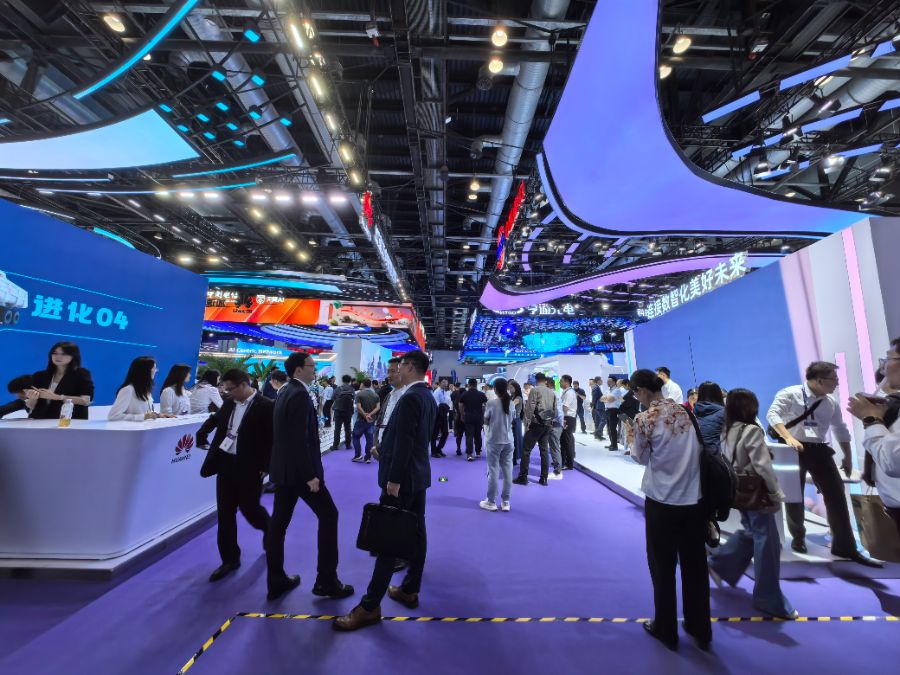
Core Insights - Qualcomm is the first global tech company to provide a clear timeline for 6G pre-commercial terminal launch, expected in 2028 [1] - The rise of AI is expected to elevate various "edge" devices, including smartphones, PCs, wearables, and robots, into potential blockbuster products [1] - Qualcomm aims to enhance AI capabilities in smart terminals by integrating NPU and GPU technologies during the chip design phase [1] Group 1: AI Integration in Chip Design - Qualcomm showcased its self-developed Oryon architecture at the Snapdragon Summit, emphasizing its superior SoC capabilities for AI processing and energy efficiency [2] - The self-developed Oryon architecture allows Qualcomm to reduce dependency on other companies, particularly in licensing fees and long-term development [2] Group 2: Performance Enhancements - The fifth-generation Snapdragon 8 flagship chip, utilizing 3nm process technology, has achieved a 20% performance increase in CPU, 23% in GPU, and 37% in NPU for AI applications [3] - Major smartphone brands like Honor, Xiaomi, Vivo, and OPPO plan to adopt the fifth-generation Snapdragon 8 in their flagship products [3] Group 3: AI Applications and Collaborations - Qualcomm and Honor are collaborating on developing edge AI model solutions to enhance user experience in applications like image recognition and color extraction [4] - The partnership aims to create GPU-NPU heterogeneous AI technologies to improve gaming graphics through AI learning [4] Group 4: Future AI Applications - Qualcomm predicts that robots and various wearable smart glasses could become as prevalent as smartphones in the future [6] - The automotive sector is identified as a prime application area for edge AI due to its need for local processing capabilities [6] Group 5: Evolution of Intelligent Agents - The future will shift from mobile-centric to intelligent agent-centric systems, requiring advanced understanding and decision-making capabilities [7] - 6G is expected to support real-time collaboration between edge devices and the cloud, enhancing AI-native applications [7] Group 6: Competitive Landscape - Domestic smartphone manufacturers are developing specific AI applications, with Honor's intelligent agent supporting over 200 vertical scenarios and 3000 general scenarios [8] - Other brands like OPPO, Vivo, and Xiaomi are also enhancing their AI capabilities, integrating them with their operating systems [8] Group 7: Challenges and Requirements - The development of AI intelligent agents necessitates advancements in both hardware AI chip capabilities and software interaction methods [9] - Companies must focus on personalized services through AI while addressing cost and technical challenges in their solutions [9]
AI加速金融普惠 构建信任:京东科技公布3大智能体应用成果
Jing Ji Guan Cha Wang· 2025-09-25 10:08
Core Insights - The article highlights the advancements in AI-driven financial services by JD Technology, focusing on three main intelligent agents: AI Wealth Manager "Jing Xiaobei," shopping assistant "JoyGlance," and inclusive credit assessment for small and micro enterprises [1][2][3] Group 1: AI Wealth Management - "Jing Xiaobei" has undergone a personalization upgrade, allowing for friend-like conversations with users, moving beyond simple Q&A to a more engaging dialogue [2] - The new "user memory system" enables "Jing Xiaobei" to remember user needs and provide proactive, intelligent, and professional services in investment opportunity insights and research strategy analysis [2] - Future plans include transforming the interaction interface into a central hub for various financial services, including bill payments, expense tracking, and investment management [2] Group 2: Shopping Experience - "JoyGlance" is introduced as an industry-first shopping assistant that supports cross-protocol and multi-device interactions, enabling a "see and buy" experience [2] - The assistant enhances the interaction potential of smart wearable devices, providing an immersive shopping experience where users can purchase items simply by looking at them [2] - "JoyGlance" employs a dual security system of voice and voiceprint recognition, offering a higher security level than traditional password and fingerprint payments [2] Group 3: Financing for Small and Micro Enterprises - JD Technology has developed an inclusive credit assessment intelligent agent that analyzes vast amounts of unstructured data, improving the coverage of risk indicators for previously hard-to-rate enterprises [3] - The intelligent agent can identify and assess the value of various movable collateral, expanding the range of acceptable collateral types and providing standardized valuation services for traditionally hard-to-evaluate goods [3] - The collaboration of multiple financial risk control intelligent agents has resulted in a 15% increase in the number of small and micro enterprises served and a 5% increase in average loan amounts [3]