个性化

Search documents
匹克深陷降薪传闻,但许志华仍想坚持“长期主义”
Guan Cha Zhe Wang· 2025-09-18 09:57
Core Viewpoint - The recent salary cuts at Peak, a former leading Chinese sports brand, have drawn significant media attention, highlighting the company's struggles in a competitive market and the challenges it faces in the basketball category [1][2]. Company Performance - Peak's chairman acknowledged salary reductions of up to 50% for high-salary positions and loss-making departments, indicating financial pressure [1]. - The company has not publicly disclosed its operational status since going private in 2016, making it difficult to assess its current performance accurately [1]. - In 2015, Peak's revenue was 3.11 billion yuan, significantly lower than competitors like Anta, Li Ning, and Xtep, which reported revenues exceeding 5 billion yuan [2]. Market Challenges - The disappearance of channel profits has led to intense competition across both online and offline sales channels, with no clear advantages remaining [1][3]. - Peak's CEO admitted that the company is facing substantial pressure due to a downturn in the basketball segment and the overall competitive landscape [1][3]. Strategic Initiatives - Since 2018, Peak has attempted to embrace e-commerce, including live streaming on platforms like Douyin and Tmall [3]. - The company is focusing on enhancing its direct retail management and distribution systems to tap into the potential of first- and second-tier markets [3]. Product Development - Peak has introduced innovative technologies, such as the "Taiji" midsole, which has received positive market feedback and has become a significant product line, surpassing basketball shoes in sales [4][5]. - The company is expanding into various product categories, including outdoor gear, badminton rackets, and sports watches, with the latter achieving significant sales [6]. Long-term Vision - Peak aims to establish a strong foothold through competitive pricing while investing time in technological advancements [8]. - The company is exploring opportunities for international expansion, with overseas revenue consistently accounting for about 20% of total income [6]. Industry Context - The domestic sports brand market has seen substantial growth, with competitors like Anta and Xtep achieving significant revenue milestones [9]. - Despite setting a target of over 10 billion yuan in revenue, Peak has yet to publicly report progress towards this goal, indicating a lack of a clear growth strategy [9]. Philosophical Approach - The CEO emphasizes a "long-termism" and "deep cultivation" strategy, advocating for sustained investment in specific areas to build brand recognition over time [10].
财说丨营收利润双降、研发砍半,名雕股份的家装困局如何破?
Xin Lang Cai Jing· 2025-09-05 00:13
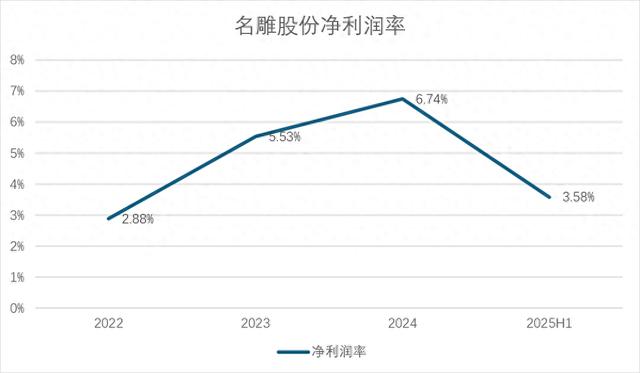
Core Viewpoint - The company Mingdiao Co., Ltd. (002830.SZ) is experiencing significant financial challenges despite a mild recovery in the home decoration industry, with notable declines in revenue and profit margins [1][2][14]. Financial Performance - For the first half of 2025, the company reported total revenue of 267 million yuan, a year-on-year decrease of 8.93%, and a net profit of 7.68 million yuan, down 11.95% [1]. - In 2024, the company had total revenue of 674 million yuan, a decline of 14.07%, while net profit increased by 4.08% to 40.68 million yuan, primarily due to cost-cutting and non-recurring gains [2]. - The company's gross margin fell to 30.7% in the first half of 2025, a decrease of nearly 1 percentage point, while net margin dropped from 3.77% to 3.58%, indicating weakened pricing power and ineffective cost control [3]. Operational Challenges - Accounts receivable surged by 349.26% to 3.38 million yuan, raising concerns about longer collection cycles and increased credit risk [6]. - Inventory levels reached 18.72 million yuan, an 82% increase, with inventory turnover days rising from 11 to 19 days, indicating potential issues with product sales and liquidity [7]. Market Dependency - Over 90% of the company's revenue is concentrated in the Pearl River Delta region, with more than 50% coming from Shenzhen alone, making it vulnerable to regional economic fluctuations [8][10]. - The company has attempted to expand into other cities like Changsha, but these efforts have yielded minimal results, contributing to ongoing regional risk exposure [10]. R&D and Innovation - The company has significantly reduced its R&D investment, with expenses dropping from 7.53 million yuan in 2023 to 4.59 million yuan in 2024, a decline of 39.13%, and further down to 1.53 million yuan in the first half of 2025 [11][13]. - The reduction in R&D personnel from 57 to 18 represents a 68.42% decrease, which could hinder the company's ability to innovate and meet evolving consumer demands [11][13]. Industry Context - Despite a general recovery in the home decoration industry, with a 0.92% increase in sales for large-scale home furnishing markets, Mingdiao's performance indicates internal issues rather than external market conditions [14]. - Analysts suggest that the company needs to diversify its market presence, reinvest in R&D, and improve credit policies to alleviate liquidity pressures and enhance competitiveness [14].

预见2025:《2025年中国汽车座椅行业全景图谱》(附市场现状和发展趋势等)
Qian Zhan Wang· 2025-09-03 02:18
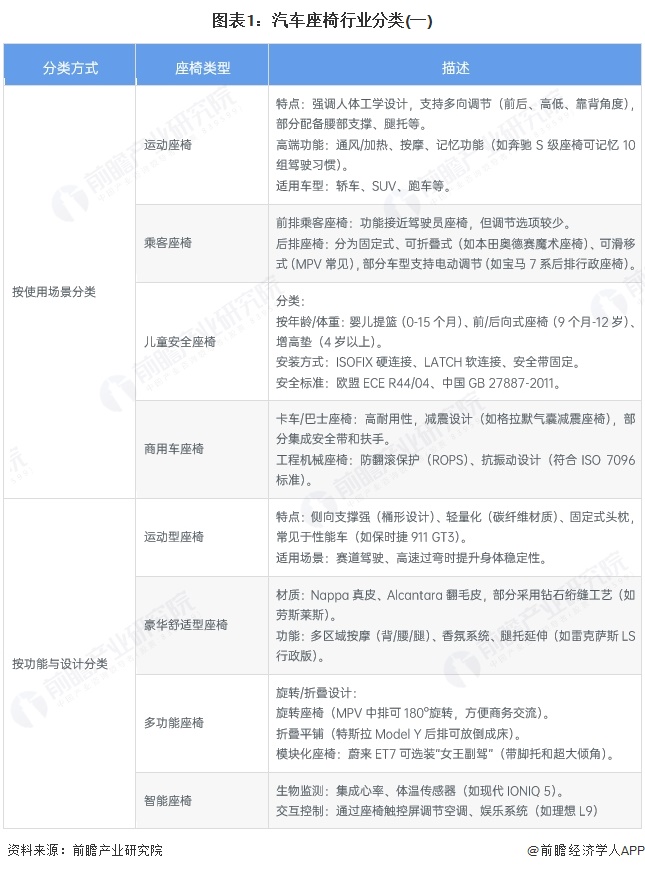
Industry Overview - The automotive seat is a core component of vehicle interiors, providing comfort and safety for passengers. It consists of various parts including seat cushions, backrests, side supports, and headrests [1] - The automotive seat industry in China has evolved through four stages: initial stage with simple structures, technological development with mechanization, rapid development with smart and personalized features, and transformation focusing on safety, comfort, lightweight, and intelligence [8][11] Market Size and Growth - The estimated market size for passenger car seats in China for 2024 is approximately 109.91 billion yuan, while the market size for commercial vehicle seats is around 15.33 billion yuan, leading to a total market size of approximately 125.34 billion yuan [23] - The automotive seat industry is projected to reach a market size of about 174.6 billion yuan by 2030, with an average annual growth rate of 5.4% [34] Competitive Landscape - Major players in the automotive seat assembly market include companies like Lear, Faurecia, Adient, and Yanfeng, with significant market shares [7][26] - The market is characterized by a high concentration of a few large enterprises, but domestic companies are increasingly gaining market share due to the rise of new energy vehicles and smart seat technologies [30][33] Technological Trends - The industry is moving towards innovations in smart, lightweight, and environmentally friendly materials, with a focus on personalized designs to meet consumer demands [30][33] - Key technological advancements include the integration of sensors for automatic adjustments, health monitoring, and the use of lightweight materials like carbon fiber and aluminum [33] Policy Environment - Current policies in China emphasize safety, lightweight design, intelligence, and green recycling, with standards being upgraded to enhance safety features and promote the use of new materials [14][15] - Regulations are set to increase the recycling rate of materials to 95% by 2030, encouraging the adoption of sustainable practices in the automotive seat industry [14] Consumer Preferences - Consumers prioritize leather seats and are increasingly interested in features such as adjustable backrests, seat height adjustments, ventilation, heating, and memory functions [21]


以“油电同进+个性化”筑牢市场竞争力 上汽大众携全新凌渡 L GTS亮相成都车展
Zheng Quan Ri Bao Wang· 2025-08-31 14:13
Core Insights - The 2025 Chengdu Auto Show showcases SAIC Volkswagen's commitment to both fuel and electric vehicles, highlighting the launch of the new Lingdu LGTS as a key move in the fuel vehicle market [1][6] - The company emphasizes a dual strategy of "oil and electricity advancing together," planning to release six new energy products by 2026 while continuing to enhance fuel vehicle capabilities [4][6] Product Launch and Features - The new Lingdu LGTS, priced from 139,900 yuan, targets young consumers as an affordable high-performance option, featuring a 2.0T engine with 162 kW power and 350 N m torque, achieving 0-100 km/h in 6.98 seconds [2][3] - The vehicle includes advanced technology such as the Qualcomm 8155 chip, a floating central control screen, and L2-level driver assistance, balancing driving pleasure with safety [2][3] Market Strategy - SAIC Volkswagen is entering the fuel vehicle modification market, offering official customization options and a 1 million yuan modification fund to cater to the younger demographic, which has a nearly 50% female representation [3] - The Pro family of vehicles, including models like the Tuquan L Pro and Passat Pro, aims to elevate the intelligence of fuel vehicles, integrating advanced features and enhancing user experience [4][6] R&D and Service Transformation - The company has optimized its R&D cycle from 36-48 months to under 24 months while maintaining rigorous safety testing protocols, ensuring each product undergoes over 600,000 km of testing [5] - A shift from a sales-focused approach to a service-oriented model has been implemented, with a new digital marketing department enhancing direct communication with users and improving service capabilities among dealers [5]

麦克保罗瓷砖亮相2025广州设计周成为空间美学的焦点
Jin Tou Wang· 2025-08-26 07:16
Core Insights - The 2025 Guangzhou Design Week highlighted the integration of tiles with overall spatial aesthetics, emphasizing lifestyle presentation over mere product display [1] - The trend towards personalized tiles, referred to as "Statement Tiles," is gaining traction among international designers, with McPaul Tiles showcasing products that align with this movement [1][2] - McPaul Tiles is recognized for its robust production capacity and digital supply chain, enabling efficient delivery and consistent quality across large residential and urban renewal projects [2] Group 1 - The focus of the event was on the transformation of tiles from "hard decoration materials" to "spatial language," showcasing combinations of large-format tiles with custom furniture and eco-friendly materials [1] - McPaul Tiles' new product series includes large stone-patterned tiles for visual completeness, retro glazed tiles appealing to younger consumers, and environmentally certified materials, which are crucial for developers [1][2] - The overall atmosphere at McPaul's exhibition, themed "Space as Art," created an elegant experience that demonstrated the versatility of tiles in various settings [2] Group 2 - The home furnishing industry in 2025 is accelerating towards personalization, sustainability, and high-end quality, with McPaul Tiles responding effectively through product strength, design capability, and delivery efficiency [3] - The trends presented at the design week are expected to influence the home decoration market, with McPaul Tiles offering solutions that cater to the desires of young families and those seeking comfort and quality [2][3] - McPaul Tiles is positioned to become a significant contributor to enhancing living experiences in future residential scenarios [3]
“这趟旅行,给我留下深刻的文化记忆”
Ren Min Ri Bao· 2025-08-25 07:43
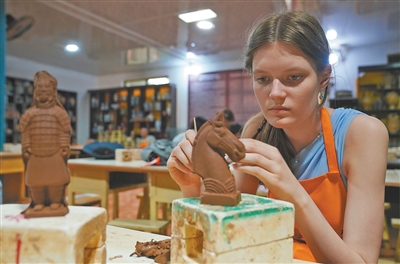
Core Insights - The article highlights the increasing popularity of personalized and immersive travel experiences among foreign tourists in Xi'an, particularly at the Terracotta Army site [4][6][7] - The introduction of a cross-border service platform has significantly enhanced the convenience for international visitors, allowing them to book tickets and services in multiple currencies and languages [4][6] Group 1: Tourism Growth - The "Terracotta Army Museum Cross-Border Integration Service Platform" launched last year has served over 100,000 foreign tourists and generated 370,000 related orders in transportation and accommodation [4][6] - As of July this year, over 135,000 foreign visitors entered Xi'an, marking a 124% year-on-year increase, with over 100,000 entering under various visa facilitation policies, a 290% increase [7] Group 2: Cultural Experience - Tourists are increasingly interested in hands-on cultural experiences, such as making their own terracotta figurines, which deepens their understanding of Chinese culture [6][7] - The craftsmanship behind the terracotta warriors is emphasized, showcasing the intricate skills required to create each piece, which resonates with the tourists' appreciation for meticulous craftsmanship [6][7] Group 3: Technological Integration - The use of VR and AR technologies at the site has enhanced the visitor experience, allowing tourists to engage with the historical context of the Terracotta Army in a more interactive manner [4][5] - The platform supports real-time translation in 36 languages, making it accessible to a broader audience [4]
领导者必读:Meta CEO扎克伯格的AI宣言有何启示?
Sou Hu Cai Jing· 2025-08-19 09:57
Core Insights - The AI competition among companies like OpenAI, Google, Anthropic, Perplexity, and Meta is intensifying, with Meta's recent revenue exceeding expectations and a significant recruitment push [2] - Mark Zuckerberg's new AI vision aims to create personalized "super intelligence" for everyone, distinguishing Meta's approach from competitors focused on enterprise-level AI [3][4] Group 1: Leadership Insights - Zuckerberg's AI manifesto serves as a blueprint for modern organizational development, emphasizing personalization and empowerment as essential cultural pillars for high-performance organizations [3][4] - The manifesto suggests that future-leading companies will not merely integrate AI into existing workflows but will redesign their operational methods to embed personalization and empowerment into their core DNA [3][5] Group 2: Personalization as Competitive Advantage - Meta's vision for AI emphasizes context-aware systems that adapt to individual preferences and workflows, contrasting with traditional rigid workplace structures [5] - Organizations aiming for situational awareness should continuously assess employee needs and adjust systems and processes to optimize performance and growth [5][6] Group 3: Empowerment as a Leadership Necessity - Zuckerberg envisions AI enhancing human capabilities rather than replacing them, advocating for workplace systems that enable decisive action without bureaucratic delays [6][7] - True empowerment requires a clear decision-making structure, open communication channels, and a culture that trusts employees to lead in their roles [7] Group 4: Leadership Pitfalls - Many organizations still operate under outdated paradigms, introducing new tools without altering underlying operational logic, which leads to inefficiencies and reduced morale [8] - The disconnect between innovation rhetoric and practical implementation can result in lost productivity and missed opportunities, highlighting the need for genuine integration of personalization and empowerment into organizational frameworks [8][10] Group 5: Future Organizational Culture - The core message of Zuckerberg's manifesto is to create adaptable, empowering systems that continuously optimize over time, which is crucial for shaping the next generation of organizational culture [8][9] - Successful organizations in the next decade will not only deploy new tools but will also understand the importance of restructuring their operational methods to foster a culture that adapts to individual needs [8][10]


业界人士话中国零售业创新发展:数字化、个性化、国际化
Zhong Guo Xin Wen Wang· 2025-08-17 14:48
Group 1 - The 2025 China Retail High-Quality Development Conference was held in Nanchang, focusing on new opportunities and paths for high-quality development in the retail industry [1] - The retail industry in China is undergoing a critical transformation, with technological innovations such as AI, big data, and IoT reshaping retail formats [1] - The integration of online and offline retail models is becoming mainstream, necessitating accelerated digital transformation and innovation in business models [1] Group 2 - Consumers are demanding higher convenience, personalization, and experiential shopping, making unique and immersive shopping experiences key to attracting customers and building brand loyalty [1] - The Chinese Ministry of Commerce and six other departments have issued a plan outlining five main tasks to enhance retail innovation: scenario-based transformation, quality supply, digital empowerment, diversified innovation, and supply chain enhancement [1] - The internationalization of China's retail industry is progressing, with a focus on aligning with international standards such as CPTPP and DEPA to develop competitive retail brands and service standards [2]
研判2025!中国收获机械行业市场销售情况、智能化水平及企业竞争格局分析:销量恢复增长态势,智能化水平迅速提升[图]
Chan Ye Xin Xi Wang· 2025-08-14 01:12
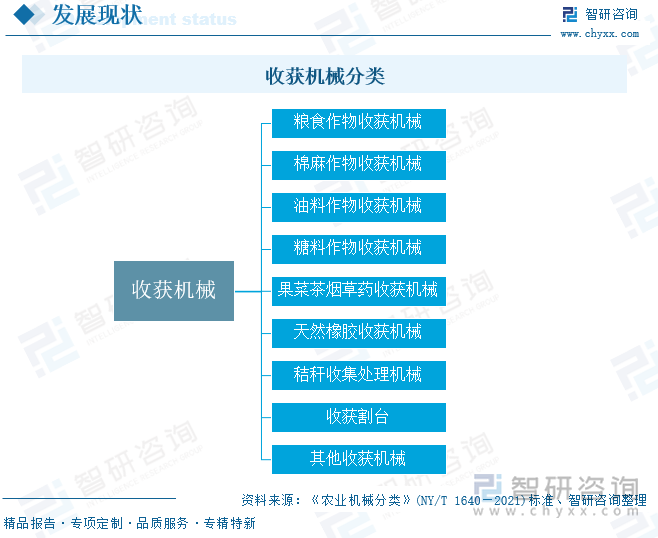
Industry Overview - Harvest machinery refers to equipment used for harvesting various crops, including grain, cotton, oilseeds, and fruits [1][2] - The market for harvest machinery in China is expected to recover in 2024, with sales projected to reach 127,800 units, a year-on-year increase of 27.9% [7][11] - The market size for the harvest machinery industry in China is anticipated to be 18.2 billion yuan in 2024, returning to the level of 2021 [11] Sales Performance - The decline in sales in 2023 was attributed to the inventory depletion of National III equipment and the upgrade to National IV standards, which increased end-user costs [7][9] - The main products in the harvest machinery sector include grain harvesters, with projected sales of 97,400 units in 2024, including 65,300 tracked harvesters and 32,100 wheeled harvesters [9] Technological Advancements - The rapid development of artificial intelligence and the Internet of Things is driving the shift towards smart and automated harvest machinery [13][25] - The penetration rate of smart technology in harvest machinery is expected to rise from 2.5% in 2020 to 24.8% in 2024 [13] Market Structure - The harvest machinery industry in China has a large number of enterprises, with leading companies holding significant market shares [15][19] - In the wheeled grain harvester segment, the top five companies account for nearly 85% of the market share, while in the tracked grain harvester segment, the concentration is even higher at 96.8% [15][19] Development Trends - The harvest machinery industry is undergoing a transformation towards smart, large-scale, and personalized equipment [25] - The trend towards larger machinery is driven by the increasing scale and intensification of agricultural production, which enhances efficiency and reduces costs [25]
2025年中国磁控健身车行业发展背景、产业链、市场规模、重点企业及发展趋势研判:“全民健身”浪潮下,磁控健身车消费需求旺盛[图]
Chan Ye Xin Xi Wang· 2025-08-04 06:33
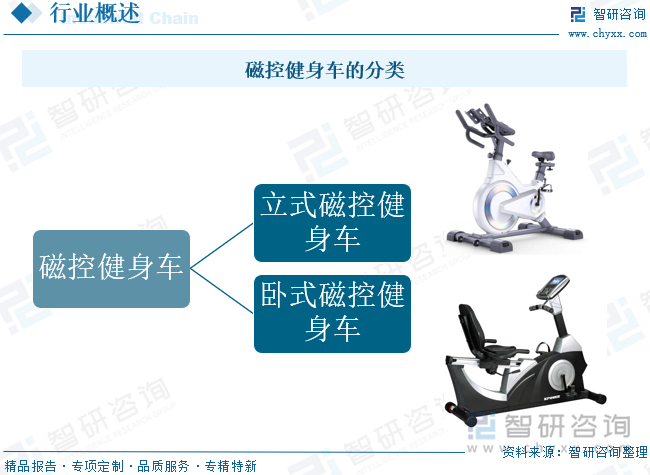
Core Viewpoint - The magnetic control exercise bike industry in China is experiencing significant growth, driven by increasing health awareness, rising disposable income, and advancements in technology, with the market size projected to grow from 348 million yuan in 2017 to 755 million yuan in 2024, reflecting a compound annual growth rate (CAGR) of 11.7% [1][14]. Industry Overview - Magnetic control exercise bikes are popular indoor aerobic exercise equipment, suitable for both home and commercial gyms, characterized by their durability and efficiency [3][14]. - The industry is witnessing a shift in consumer demand towards more specialized, safe, convenient, and intelligent products due to improved living standards and the influence of the internet [1][14]. Industry Development Background - The magnetic control exercise bike industry is at a crucial growth phase, supported by urbanization, rising income levels, and a growing health-conscious consumer base [5]. - The total scale of the national sports industry has reached approximately 3.89 trillion yuan, indicating a robust market environment for fitness equipment [5]. Industry Development History - The magnetic control exercise bike was first introduced in the 1980s, with significant technological advancements leading to improved performance and user experience [7]. - The integration of electronic features and smart technology has transformed the industry, enhancing data monitoring and user engagement [7]. Industry Chain - The industry chain includes upstream raw material suppliers (metals, plastics, electronics), midstream manufacturers, and downstream sales channels (e-commerce and physical stores) [9]. Current Industry Status - The fitness equipment market in China is expanding, with the market size projected to grow from 38.79 billion yuan in 2017 to 79.96 billion yuan in 2024, at a CAGR of 10.89% [13]. - Magnetic control exercise bikes are a core category within this expanding market, benefiting from the overall growth of fitness equipment [13]. Competitive Landscape and Key Companies - Major international brands dominate the high-end market, while domestic brands like Impulse, Shuhua, and Jinling are gaining market share through innovation and smart product offerings [17]. - Companies such as Qingdao Impulse Health Technology Co., Ltd. and Shuhua Sports Co., Ltd. are leading players in the domestic market, focusing on diverse product lines and strong sales networks [19][21]. Industry Development Trends - The industry is moving towards increased smart technology integration, with features like real-time monitoring and AI-driven training adjustments becoming standard [23]. - Personalization of fitness solutions is expected to grow, with products designed to meet individual user needs through data analysis and customizable components [24]. - The magnetic control exercise bike is evolving into a core component of a social fitness ecosystem, incorporating virtual reality and social interaction features to enhance user engagement [25].