
人工智能技术

Search documents
两部门发文促进电网高质量发展
Ke Ji Ri Bao· 2026-01-04 10:48
Core Viewpoint - The "Guiding Opinions" issued by the National Development and Reform Commission and the National Energy Administration aim to systematically clarify the overall thinking and tasks for the development of the power grid in the near future, accelerating the construction of a new type of power grid platform that integrates main, distribution, and micro grids, thereby promoting high-quality development of the power grid [1][2][3] Group 1: Development Goals - By 2030, a new type of power grid platform will be initially established, with the capacity for "West-to-East Power Transmission" exceeding 420 million kilowatts, and the ability to accommodate distributed renewable energy reaching 900 million kilowatts [1] - The share of renewable energy generation is expected to reach around 30%, with support for over 40 million charging infrastructure units [1] - By 2035, the development of main, distribution, and micro grids will be fully coordinated, enhancing the safety governance mechanisms across all levels of the power grid [1] Group 2: Planning and Construction - The "Guiding Opinions" emphasize unified planning and construction of power grids, promoting the coordinated development of main, distribution, and micro grids, and enhancing the structure of the main grid [2] - It calls for orderly advancement of cross-provincial and cross-regional transmission channel planning and construction, as well as increased investment in power grids [2] Group 3: Technological Innovation - The "Guiding Opinions" require strengthening key technological breakthroughs for the power grid, focusing on stability analysis and control technologies for new power systems, and promoting the integration of artificial intelligence and digital technologies into power grid operations [2] - It aims to enhance the flexibility and adaptability of power dispatching, transitioning the control model from a focus on the main grid to a collaborative approach involving main, distribution, and micro grids [2]
国家发展改革委 国家能源局关于促进电网高质量发展的指导意见(全文)
Xin Lang Cai Jing· 2025-12-31 07:49
Overall Requirements - The guidance emphasizes the importance of the power grid as a core component in building a new power system to support green and low-carbon energy transitions, ensuring reliable electricity supply, and meeting high-quality electricity demands from the public [1][17] - By 2030, a new power grid platform will be established, enhancing resource optimization and supporting a significant increase in renewable energy generation [2][19] - By 2035, the integration of main, distribution, and smart microgrids will be fully realized, with improved safety governance mechanisms and digitalization of grid facilities [3][19] New Power Grid Platform Functionality - The new power grid will serve as a hub for a high-penetration renewable energy system, supporting the construction of a unified national electricity market [4][20] - The grid will enhance public infrastructure attributes, ensuring equitable access and improving service levels for diverse electricity needs [4][20] Unified Planning and Construction of Grids - A unified planning approach will be adopted to develop main, distribution, and smart microgrids, ensuring safety and supporting the national electricity market [5][21] - The construction of cross-provincial and cross-regional transmission channels will be prioritized to facilitate the delivery of clean energy [5][21] Enhancing Power Dispatch Systems - A new power dispatch system will be established to improve flexibility and adaptability in managing high proportions of renewable energy [8][25] - The dispatch management system will evolve to accommodate various grid forms and operational modes, promoting collaboration among different grid levels [8][25] Strengthening Safety Governance - A comprehensive safety governance framework will be developed, defining responsibilities across the power supply chain and enhancing monitoring and assessment mechanisms [9][26] - Risk identification and management capabilities will be strengthened, incorporating lessons from international power outages [9][26] Promoting Technological Advancements - Key technological breakthroughs will be pursued to support the new power grid platform, focusing on stability analysis and control technologies [11][27] - The integration of artificial intelligence and digital technologies will be promoted to enhance grid operations and services [11][27] Supporting Public Welfare - Efforts will be made to improve electricity service capabilities in urban and rural areas, addressing supply reliability and enhancing infrastructure [12][29] - A high-quality charging infrastructure system will be developed to support the integration of electric vehicles and charging stations [12][29] Regulatory and Management Enhancements - The planning and management mechanisms for the power grid will be optimized to ensure effective oversight and coordination among different grid operators [14][31] - Regulatory frameworks will be established to ensure fair pricing and efficient operation of the grid [14][31] Organizational Support - Responsibilities will be clearly defined among various stakeholders, including government agencies and grid enterprises, to ensure effective implementation of the guidance [16][33] - A supportive environment will be fostered for the development of the new power grid platform, including legal and regulatory reforms [16][33]
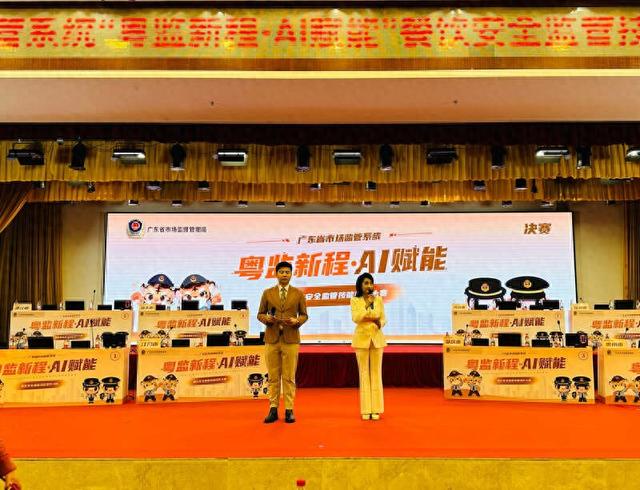
骑手来“抢麦”!广东开展餐饮安全监管技能提升大赛
Xin Lang Cai Jing· 2025-12-26 15:56
Core Insights - The "Yuejian New Journey: AI Empowerment" food safety supervision skills competition recently concluded in Guangzhou, focusing on the innovative application of artificial intelligence in food safety regulation [1][3] - The competition involved collaboration among regulatory bodies, schools, platforms, and delivery personnel across 21 cities in Guangdong Province [1][3] Group 1: Competition Structure - The competition lasted over two months and utilized a "three-stage progressive" format, including a rapid-fire quiz segment where eight finalist teams competed [3] - The Shenzhen Market Supervision Bureau team won the gold medal in the team category [3] - The event emphasized the integration of AI technology in food safety regulation, with questions focusing on school food safety and online food delivery [3] Group 2: Team Composition and Evaluation - Teams were formed by regulatory personnel, school principals, food delivery platform managers, and delivery personnel, competing in a format that combined theoretical competition, random inspections, and on-site training [3] - The preliminary round focused on theoretical knowledge and initial exploration of AI technology, while the semi-finals involved cross-regional practical inspections [3] - The finals tested comprehensive abilities, emphasizing the use of AI for identification and data analysis, addressing new challenges in the rapidly evolving food service industry [3] Group 3: Future Directions - The competition was co-hosted by the Guangdong Provincial Market Supervision Administration, the Guangdong Provincial Department of Education, and the Guangdong Provincial Department of Human Resources and Social Security [4] - The Guangdong Provincial Market Supervision Administration plans to continue promoting the use of AI technology in regulatory scenarios, encouraging innovative regulatory methods to enhance smart supervision [4] - The goal is to transition from "traditional regulation" to "smart regulation," fostering a multi-party governance model involving regulators, schools, platforms, and delivery personnel [4]

每周四天工作制,配得上一线城市打工人
36氪· 2025-12-25 13:43
Core Viewpoint - The article advocates for Shanghai to be a pilot city for a four-day workweek to alleviate pressure on workers, supported by empirical research showing increased productivity and employee satisfaction from such a model [4][6][25]. Group 1: Research Findings - A study published in "Nature Human Behaviour" demonstrated the feasibility of a four-day workweek, involving over 140 companies across various sectors in multiple countries, with positive outcomes including faster task completion and improved efficiency [6]. - The trial showed that employees' average output did not decline, and many companies expressed a desire to maintain the four-day workweek after the trial [6]. Group 2: Economic Context - Shanghai ranks first in per capita disposable income in China at 88,366 yuan for 2024, yet faces high living costs, ranking 23rd globally in cost of living [10][11]. - Despite high nominal income, Shanghai residents exhibit frugal consumption patterns, with retail sales growth lagging significantly behind national averages [13][14]. Group 3: Income and Taxation Issues - The conversion rate of wealth created to disposable income in Shanghai is low, with only 42.9% of GDP translating into disposable income, compared to higher rates in other provinces [15][18]. - High taxation rates and significant contributions to central government finances result in a substantial outflow of funds from the local economy, exacerbating the financial strain on residents [22][23]. Group 4: Proposed Solutions - To address the economic challenges faced by workers, the article suggests implementing a four-day workweek in Shanghai, which could lead to increased local consumption and improved quality of life [25][26].

千里科技发布公告 奔驰正式入股深化智能化合作
Mei Ri Jing Ji Xin Wen· 2025-12-24 10:30
Core Viewpoint - Qianli Technology (601777.SH) announced that Mercedes-Benz (Shanghai) Digital Technology Co., Ltd. has completed the equity transfer registration, acquiring a 3.00% stake in the company through a share transfer agreement at a price of 9.87 RMB per share [1] Group 1: Equity Transfer Details - Mercedes-Benz Digital Technology acquired 135,633,002 shares of Qianli Technology, making it the fifth largest shareholder [1] - The transaction has received compliance confirmation from the Shanghai Stock Exchange and will obtain a securities transfer registration confirmation from China Securities Depository and Clearing Corporation Limited by December 2025 [1] - The transfer date was recorded as December 23, 2025 [1] Group 2: Strategic Cooperation - Mercedes-Benz has reached a long-term strategic cooperation agreement with Qianli Technology, focusing on areas such as artificial intelligence technology, intelligent driving, and smart cockpits [1] - Mercedes-Benz may appoint a director to participate in the board affairs of Qianli Technology [1]

每周四天工作制,配得上一线城市打工人
Sou Hu Cai Jing· 2025-12-23 07:56
Core Viewpoint - Shanghai should take the lead in piloting a four-day workweek to alleviate pressure on workers and potentially boost local consumption [2][10]. Group 1: Feasibility of Four-Day Workweek - A study published in July 2023 in the journal "Nature Human Behaviour" demonstrated the feasibility of a four-day workweek, involving over 140 companies across various sectors in multiple countries [4]. - The results showed that employee productivity did not decline; in fact, many companies reported faster task completion, indicating improved efficiency [4]. - The pilot program has been ongoing for nearly a decade, with Singapore set to implement a nationwide four-day workweek in December 2024, marking it as the first country in Asia to do so [5]. Group 2: Economic Context in Shanghai - Shanghai residents have high disposable income, with an average of 88,366 yuan in 2024, ranking first in China; however, the high cost of living significantly impacts their financial well-being [6]. - Shanghai's cost of living index is 89.08, compared to Wuhan's 51.71, indicating that living expenses in Shanghai are substantially higher [7]. - Despite high nominal income, Shanghai's consumer spending growth has lagged behind the national average, with a mere 4.6% increase from 2020 to 2024, contrasting sharply with the national growth of 23.8% [7]. Group 3: Income and Taxation Issues - The conversion rate of wealth to disposable income in Shanghai is low, with only 42.9% of GDP translating into disposable income, compared to the national average of 56.6% [8]. - High taxation rates in Shanghai lead to significant outflows of funds, with residents contributing 6.3万元 per capita in taxes, which is 71.5% of their disposable income [10]. - The imbalance in tax distribution exacerbates local economic challenges, necessitating a shift in approach to reduce labor demands on workers [9][10].

报告显示:我国电力科技创新呈全面突破态势
Ke Ji Ri Bao· 2025-12-23 03:09
Core Insights - The report indicates that China's energy and electricity sector is experiencing significant breakthroughs in technological innovation, deep integration, and leading development trends [1] Investment and R&D - China's major power companies are increasing their R&D investment, with an average intensity of 2.82% in 2024, surpassing the national average of 2.68% [1] - Total investment in technological innovation reached 198.32 billion yuan, a year-on-year increase of 9.16%, with grid companies investing 51.28 billion yuan, generation companies 104.23 billion yuan, and construction companies 42.81 billion yuan [1] - The total number of research personnel in major power companies reached 237,073 in 2024, indicating an improvement in the quality of the technology talent pool [1] Achievements and Innovations - The power sector achieved notable results, winning 4 gold and 6 silver awards at the 25th Patent Awards in 2024, and accumulating 91 national science and technology awards from 2017 to 2024 [2] - The number of invention patent authorizations in major power companies reached 35,413 in 2024, reflecting a year-on-year growth of 13.5% [2] - The quality of scientific papers in the power sector is improving, with a strengthening of basic research capabilities [2] Technological Advancements - Thermal power generation is rapidly transitioning to high-efficiency, flexible, and low-carbon technologies, with breakthroughs in key technologies such as ultra-supercritical circulating fluidized bed boilers and large-scale carbon capture [2] - Hydropower and pumped storage technologies remain leading, with successful development of high-end equipment like 500 MW impact units and 700-meter high stability pumped storage units [2] - Wind power generation is trending towards larger and smarter units, with a 26 MW offshore wind turbine leading globally [2] - Photovoltaic cell conversion efficiency has repeatedly set world records, and advanced nuclear technologies like "Hualong One" and "Guohe One" are making steady progress [2] Grid and Storage Innovations - The grid sector has achieved significant results in ultra-high voltage and artificial intelligence technologies, establishing a foundation for new power systems [3] - New energy storage technologies are rapidly evolving, with developments in grid-type storage, long-duration storage, and solid-state batteries moving towards large-scale applications [3] - The deployment of energy sector "super brains" like the Dawa and Guangming power models has been initiated [3]
中电联报告显示:我国电力科技创新呈全面突破态势
Ke Ji Ri Bao· 2025-12-23 03:02
Core Viewpoint - The "China Electric Power Industry Technology Innovation Annual Development Report 2025" indicates that technological innovation in China's energy and power sector is experiencing significant breakthroughs, deep integration, and leading development trends [1]. Investment and R&D - China's major power enterprises have increased their R&D investment intensity to an average of 2.82% in 2024, surpassing the national average of 2.68% [1]. - Total funding for technological innovation in the power sector reached 198.32 billion yuan, a year-on-year increase of 9.16% [1]. - The breakdown of funding includes 51.28 billion yuan from grid companies, 104.23 billion yuan from generation companies, and 42.81 billion yuan from power construction companies [1]. - The total number of research personnel in major power enterprises reached 237,073 in 2024, indicating an improvement in the quality of the technology talent pool [1]. Achievements in Innovation - The power industry received four gold and six silver awards at the 25th Patent Awards in 2024, and a total of 91 national science and technology awards from 2017 to 2024 [2]. - The number of invention patents authorized in major power enterprises reached 35,413 in 2024, reflecting a year-on-year growth of 13.5% [2]. - The quality of scientific papers in the power sector has improved, and the strength of basic research has gradually increased [2]. Technological Advancements - The transition of thermal power generation towards high efficiency, flexibility, and low carbon has accelerated, with significant breakthroughs in key technologies such as ultra-supercritical circulating fluidized bed boilers and large-scale carbon capture [2]. - Hydropower and pumped storage technologies continue to lead, with successful development of high-end equipment like 500 MW impact units and 700-meter high stability pumped storage units [2]. - Wind turbine technology is trending towards larger and smarter designs, with a 26 MW offshore wind turbine leading globally [2]. - Photovoltaic cell conversion efficiency has repeatedly set world records, and advancements in nuclear energy technologies such as the "Hualong One" and "Guohe One" are progressing steadily [2]. Grid and Storage Innovations - Significant achievements in the grid sector include advancements in ultra-high voltage technology, artificial intelligence, and the development of major results with independent intellectual property rights [3]. - New energy storage technologies are rapidly iterating and moving towards large-scale applications, including grid-type storage and solid-state batteries [3]. - The deployment of energy power sector "super brains" like the Dawa and Guangming power models has been initiated [3].
中电联报告显示——我国电力科技创新呈全面突破态势
Ke Ji Ri Bao· 2025-12-23 01:17
Core Viewpoint - The "2025 Annual Development Report on Technological Innovation in China's Electric Power Industry" indicates that technological innovation in China's energy and electricity sector is experiencing significant breakthroughs, deep integration, and leading development trends [1] Investment and R&D - China's major electric power enterprises are increasing their R&D investment, with an average R&D expenditure intensity of 2.82% in 2024, surpassing the national average of 2.68% [1] - Total investment in technological innovation reached 198.32 billion yuan, a year-on-year increase of 9.16%, with grid enterprises investing 51.28 billion yuan, generation enterprises 104.23 billion yuan, and construction enterprises 42.81 billion yuan [1] - The total number of research personnel in major electric power enterprises reached 237,073 in 2024, indicating an improvement in the quality of the technology talent pool [1] Achievements in Innovation - The electric power industry received 4 gold and 6 silver awards at the 25th Patent Awards in 2024, and a total of 91 national science and technology awards from 2017 to 2024 [2] - The number of invention patent authorizations in major electric power enterprises reached 35,413 in 2024, reflecting a year-on-year growth of 13.5% [2] - The quality of scientific papers in the electric power sector is improving, and the strength of basic research is gradually increasing [2] Technological Advancements - The transition of thermal power generation towards high efficiency, flexibility, and low carbon is accelerating, with significant breakthroughs in key technologies such as ultra-supercritical circulating fluidized bed boilers and large-scale carbon capture [2] - Hydropower and pumped storage technologies remain leading, with successful development of high-end equipment like 500 MW impact units and 700-meter high stability pumped storage units [2] - Wind power generation is trending towards larger and smarter units, with a 26 MW offshore wind turbine leading globally [2] - Photovoltaic cell conversion efficiency has repeatedly set world records, and advanced nuclear technologies like "Hualong One" and "Guohe One" are making steady progress [2] Grid and Storage Innovations - The grid sector has achieved significant results in ultra-high voltage and artificial intelligence technologies, establishing a foundation for new power systems with proprietary intellectual property [3] - New energy storage technologies are rapidly iterating and moving towards large-scale applications, including grid-type storage and solid-state batteries [3] - The deployment of energy power models like "Super Brain" and "Guangming Power" is underway [3]
中电联:我国电力科技创新呈全面突破态势
Ke Ji Ri Bao· 2025-12-23 01:01
Core Insights - The report indicates that China's energy and electricity sector is experiencing significant breakthroughs in technological innovation, deep integration, and leading development trends [1] Investment and R&D - In 2024, major power companies in China are expected to have an average R&D expenditure intensity of 2.82%, surpassing the national average of 2.68% [1] - Total investment in technological innovation reached 198.32 billion yuan, a year-on-year increase of 9.16%, with grid companies investing 51.28 billion yuan, generation companies 104.23 billion yuan, and construction companies 42.81 billion yuan [1] - The total number of research personnel in major power companies is projected to reach 237,073, indicating an improvement in the quality of the technology talent pool [1] Achievements in Innovation - The power sector received four gold and six silver awards at the 25th National Patent Awards in 2024, and from 2017 to 2024, it accumulated 91 National Science and Technology Awards [2] - The number of invention patents authorized in 2024 reached 35,413, reflecting a year-on-year growth of 13.5% [2] - The quality of scientific papers in the power sector has improved, and foundational research capabilities are strengthening [2] Technological Advancements - The transition of thermal power generation towards high efficiency, flexibility, and low carbon has accelerated, with significant breakthroughs in key technologies such as ultra-supercritical circulating fluidized bed boilers and large-scale carbon capture [2] - Hydropower and pumped storage technologies continue to lead, with successful development of high-end equipment like 500 MW impulse units and 700-meter high stability pumped storage units [2] - Wind power generation is trending towards larger and smarter units, with a 26 MW offshore wind turbine leading globally [2] - Photovoltaic cell conversion efficiency has repeatedly set world records, and advanced nuclear technologies like "Hualong One" and "Guohe One" are making steady progress [2] Grid and Storage Innovations - In the grid sector, significant achievements have been made in ultra-high voltage and artificial intelligence technologies, establishing a foundation for new power systems [3] - New energy storage technologies are rapidly evolving, with grid-type storage, long-duration storage, and solid-state batteries moving towards large-scale applications [3] - The deployment of energy sector "super brains" like the Watt and Bright Power models has been initiated [3]