
人机融合

Search documents
数字蚂力周芸:客服是电商下一个增长入口
3 6 Ke· 2025-08-19 10:46
Core Insights - Ant Group's digital service platform, Digital Mali, aims to become a "growth partner" for e-commerce businesses by integrating AI with human resources to enhance customer service efficiency and quality [5][10][11] - The traditional e-commerce growth model, based on traffic and conversion rates, is evolving as brands shift focus to refined operations of existing users, particularly through customer service [3][4] - The AI-driven customer service model has shown promising results, with over 26 million service requests handled during the 618 shopping festival, achieving a high customer satisfaction rate of 94% [4][10] E-commerce Growth Dynamics - The classic model of "traffic × conversion rate" is becoming less effective as the traffic dividend peaks, prompting brands to explore new growth avenues [3] - Customer service, often overlooked, is emerging as a critical touchpoint for driving growth, with brands now prioritizing service quality, response speed, and cost control [3][7] AI and Human Integration - Digital Mali's AI cloud customer service solution combines AI technology with a flexible human workforce, allowing businesses to scale customer service resources according to demand without incurring excessive costs [10][11] - The integration of AI agents is expected to increase customer satisfaction by 20% and is projected to grow by 400% by 2025 [6] Customer Service as a Growth Engine - Effective customer service can lead to a 10% increase in Gross Merchandise Volume (GMV) for e-commerce businesses, highlighting its importance as a growth driver [10][12] - Digital Mali's approach emphasizes the need for human involvement in customer service to enhance emotional connection and decision-making support for users [7][10] Market Position and Strategy - Digital Mali has partnered with nearly 100 leading brands, providing a flexible workforce solution that meets the fluctuating demands of e-commerce during peak periods [11][12] - The recently launched "Double 11 Service Guarantee Plan" offers performance-based commitments, ensuring service quality and customer satisfaction [12][23] Future of Customer Service - The shift towards AI-driven customer service is not just about efficiency but also about maintaining a human touch, which is essential for building trust and loyalty with consumers [18][23] - Digital Mali's model is adaptable across various industries, indicating that the principles of effective customer service can be applied beyond e-commerce [24]


数字蚂力周芸:客服是电商下一个增长入口
36氪· 2025-08-19 10:36
Core Viewpoint - The article discusses how Ant Group's digital service platform, Digital Mali, is transforming customer service into a growth engine for e-commerce businesses by integrating AI with human resources, thereby enhancing service quality and efficiency while reducing costs [5][16][18]. Group 1: E-commerce Growth Dynamics - The traditional growth model of "traffic × conversion rate" is becoming less effective as the traffic dividend peaks, prompting brands to focus on refined operations of existing users [3][4]. - Customer service, often overlooked, is emerging as a critical touchpoint for brands to drive growth, with challenges in service quality, response speed, and cost control forming a "triple constraint" [3][4][11]. - The AI-driven customer service model is gaining traction, with 89 leading brands reporting over 26 million service requests during promotional periods, achieving a high average satisfaction rate of 94% [4][12]. Group 2: AI and Human Integration - The integration of AI and distributed human resources in customer service is seen as a key solution to balance efficiency and quality, with predictions of a 400% increase in AI-driven customer interactions by 2025 [9][16]. - Digital Mali's AI cloud customer service solution aims to match enterprise needs with labor supply intelligently, addressing the challenges of service efficiency and quality [16][18]. - The human element remains crucial in customer service, as emotional connection and professional insight are necessary to extract growth value from customer interactions [11][21]. Group 3: Impact on Business Metrics - Digital Mali claims that its services can lead to approximately a 10% increase in GMV for e-commerce businesses, emphasizing the importance of personalized service and customer engagement [12][17]. - The company has established a talent pool of nearly 530,000 certified individuals, with over 280,000 specifically in e-commerce, enabling flexible staffing solutions during peak periods [17][18]. - The "Double 11 Service Guarantee Plan" introduced by Digital Mali aims to address e-commerce pain points with performance-based commitments, enhancing trust and long-term partnerships with clients [18][19]. Group 4: Broader Implications for Employment - The AI cloud customer service model promotes inclusivity and accessibility in employment, allowing individuals from remote areas to participate in the workforce while enhancing their skills [27][31]. - The focus on human-AI collaboration is seen as a way to create a more inclusive job market, breaking down geographical barriers and providing stable employment opportunities [27][32]. - The article highlights that the future of customer service lies in combining technology with human empathy, ensuring that service quality is not compromised in the pursuit of efficiency [26][35].


美国将有两家公司研发脑机接口 OpenAI VS 马斯克 谁能赢?
Sou Hu Cai Jing· 2025-08-13 04:32
Core Insights - A competitive landscape is emerging in the brain-computer interface (BCI) sector, primarily between OpenAI's Merge Labs and Elon Musk's Neuralink, which may redefine human-machine interaction [1] Group 1: Technology Vision - Merge Labs and Neuralink represent different strategic approaches in the BCI field, with OpenAI's Sam Altman advocating for high-bandwidth interfaces that emphasize deep integration of AI and human thought, while Musk's Neuralink focuses on practical medical applications for paralyzed patients [3] - Neuralink has gained a first-mover advantage through animal testing and the first human implant, while Merge Labs is still in the fundraising phase and needs to catch up technologically [3] Group 2: Capital and Resource Dynamics - OpenAI is pushing Merge Labs with an $850 million valuation to replicate Neuralink's capital success, which raised $650 million at a $9 billion valuation, supported by firms like Sequoia Capital [4] - Altman's "light asset" strategy contrasts with Musk's hands-on approach, as Altman participates as a co-founder without daily operational involvement, while Musk is heavily invested in Neuralink [4] Group 3: Industry Dynamics and Ethical Considerations - The rivalry between Altman and Musk reflects broader debates over AI ethics and commercialization, with Musk advocating for strict regulation and Altman favoring open exploration [5] - The potential for ethical controversies arises if Merge Labs achieves aggressive features like "consciousness uploading," while Neuralink risks losing its disruptive potential if it remains focused solely on medical applications [5] Group 4: Future Competitive Landscape - In the short term, Neuralink holds an advantage due to clinical progress, but Merge Labs could leverage OpenAI's AI algorithms to make breakthroughs in non-invasive or high-bandwidth interfaces [6] - Ultimately, the competition may hinge not just on technology but on the ability to balance innovation with ethics, with Musk's conservative approach suited for regulatory challenges and Altman's aggressive exploration potentially opening broader consumer markets [6] Group 5: Industry Implications - This competition signifies a critical transition for BCI technology from laboratory research to commercial viability, indicating that the era of human-machine connectivity is accelerating regardless of which company prevails [7]
未来战场:AI赋能无人作战新范式
Tianfeng Securities· 2025-08-07 14:15
Industry Rating - The report maintains an investment rating of "Outperform" for the industry [1]. Core Insights - The future battlefield will be centered around data, algorithms, and computing power, with fully AI-enabled human-machine integrated forces being essential for gaining the upper hand in future conflicts [2][8]. - The global military drone market is experiencing rapid growth, projected to exceed $50 billion by 2032, with a compound annual growth rate (CAGR) of 13.15% from 2024 to 2032, driven by advancements in AI-enabled drone technology [2][45]. Summary by Sections Military AI and Drone Technology - The integration of AI and unmanned technologies is transforming modern warfare, as evidenced by the significant potential demonstrated in the Russia-Ukraine conflict [3]. - Companies like Palantir and Anduril Industries are leading the charge in military AI innovation, with plans to form a commercial consortium to capture a larger share of the $850 billion annual U.S. defense budget [3][39]. - The military drone market is expected to grow from $16.07 billion in 2024 to $47.16 billion by 2032, with North America being the largest market [45][44]. Unmanned Combat Operations - Unmanned combat operations are categorized into reconnaissance, harassment, precision strikes, saturation attacks, and support enhancements, marking a shift towards a drone-centric combat paradigm [29]. - The report highlights the effectiveness of drones in the Russia-Ukraine conflict, where drones accounted for 42.47% of vehicle strikes, surpassing traditional artillery [33]. AI-Driven Decision Making - The concept of "human-machine integration" is crucial, where human commanders will still play a central role in decision-making, while machines will assist through data processing and real-time analysis [7]. - AI technologies are enhancing military capabilities by providing real-time data processing and autonomous decision-making, significantly improving operational efficiency [8][39]. Key Companies to Watch - The report suggests focusing on key players in military AI chips and data analytics, including KST, Fudan Microelectronics, and others [4]. - Companies like Palantir and Anduril are highlighted for their innovative approaches in AI and unmanned systems, with significant contracts and partnerships in the defense sector [85][97].
热门赛道丨电子皮肤打通人机融合的感知接口
创业邦· 2025-07-09 00:04
Industry Definition - Electronic skin (E-skin) is a flexible electronic system that simulates human skin's sensory functions, capable of sensing pressure, temperature, humidity, strain, and chemical substances [3] - It consists of flexible sensors, conductive materials, and microelectronic circuits, aiming to achieve "skin-like touch" in robotics, biomedical applications, and wearable devices [3] Key Features and Materials - E-skin features flexibility, stretchability, and sensitivity, allowing it to mimic human touch and perception [5] - Flexible sensors can accurately capture minute changes in pressure, temperature, and tactile sensations through integrated micro-sensor arrays [5] - Common materials used include silicone rubber, polymer composites, and nanocomposites, which maintain stable electronic performance even when bent or stretched [5][8] Sensor Types and Applications - The main types of flexible tactile sensors include resistive, capacitive, and piezoelectric sensors, each with unique characteristics and applications [7] - Applications span across wearable health monitoring, humanoid robots, smart prosthetics, virtual reality systems, and flexible displays [11] Industry Chain and Trends - The electronic skin industry chain includes upstream material development, midstream manufacturing, and downstream application integration [11] - The industry is transitioning from laboratory research to commercialization, with a focus on domestic material localization, multifunctional system integration, and cost-effective manufacturing [11] Financing Trends - The number of financing events in the electronic skin sector fluctuated significantly, with a peak of 13-14 events from 2020 to 2022, dropping to 4 in 2023, before recovering to 10 and 12 in 2024 and 2025 respectively [12] Company Highlights - Nengsida, established in 2013, specializes in flexible micro-nano sensing technology and has developed various types of flexible sensors, achieving mass production capabilities [15][16] - Moxian Technology, founded in 2021, focuses on flexible pressure sensor solutions, capable of detecting a wide range of pressures from 3.5 grams to 500 kPa [19][20] - Pashini, founded in 2021, has developed a multi-dimensional tactile product system for robots, significantly reducing sensor costs and enhancing functionality [24][25] Recent Innovations - Xiamen University developed a bionic electronic skin inspired by electric eels, enabling continuous perception from proximity to contact, with potential applications in medical rehabilitation and virtual reality [29] - A new type of electronic skin developed by an international research team can self-repair within 10 seconds, maintaining over 80% functionality after damage, suitable for extreme environments [30]

中国坐拥“工业维生素”,钼矿储量震惊世界!芯片军工全靠它
Sou Hu Cai Jing· 2025-07-07 02:46
Core Insights - Molybdenum, a metal 65 times rarer than lithium, is crucial for various industrial applications and is predominantly found in China, which holds 38.7% of the world's molybdenum reserves [1][3]. Industry Overview - Molybdenum has a high melting point of 2620°C and is essential in enhancing the strength of steel alloys, with just 0.15% addition increasing strength by 30% [3]. - The metal is used in high-temperature applications, such as rocket engines, and in medical imaging technologies, showcasing its versatility [3][5]. Market Dynamics - The price of molybdenum surged to over 3200 yuan per ton in 2023, nearly tripling in six years, driven by a 19% drop in Chilean production and a 9.5% increase in Chinese output [5]. - China's implementation of export controls starting next year is expected to create urgency among international buyers, potentially leading to a 40% price increase [5]. Technological Advancements - Recent breakthroughs in chip technology using molybdenum disulfide have led to the development of flexible chips with significantly lower power consumption compared to silicon chips, paving the way for advanced applications in human-machine integration [5][7]. - Chinese engineers are innovating in the production of molybdenum thin films for flexible displays, indicating a shift towards high-tech applications of this metal [7].

帮主郑重:马斯克脑机接口放大招!7人受试者将意念控机器人
Sou Hu Cai Jing· 2025-06-29 01:39
Core Insights - Neuralink has made significant advancements in brain-machine interface technology, with 7 human subjects currently using their devices for an average of 50 hours per week, with some reaching up to 100 hours [1][3] - The company recently raised $650 million from top-tier investors, indicating strong market interest in the brain-machine interface sector [3] - Neuralink's "blind vision" plan aims to enable blind individuals to perceive images through their brains by 2026, potentially revolutionizing medical and sensory technology [4] Investment Perspective - The brain-machine interface sector is gaining momentum, with companies like Neuralink attracting substantial investment, leading to significant stock price increases in related companies [3] - The industry is still in its early stages, with challenges such as the lack of standardization in upstream devices and the need for advancements in chips and algorithms [3] - Long-term commercialization of applications, such as treatments for conditions like ALS, may take 5 to 10 years [3] Ethical and Regulatory Considerations - The ambition of merging human consciousness with machines raises ethical and legal questions, particularly regarding data privacy and potential misuse of technology [5] - Monitoring the speed of technological iterations and regulatory developments will be crucial for the industry's growth [5]


脑机接口“上海方案”呼之欲出 瞄准至今无人攻克的难题 “2.0版”将于今年底或明年初发布
Jie Fang Ri Bao· 2025-06-15 01:58
Core Insights - The first invasive brain-computer interface (BCI) clinical trial in China is transforming the life of its subject, allowing him to control games using his thoughts, achieving efficiency comparable to that of a typical user with a touchpad [1] - China has become the second country globally, after the United States, to conduct invasive BCI clinical trials, with several metrics surpassing those of Neuralink, founded by Elon Musk [1][2] - The research is a collaboration between the Shanghai Institute of Neuroscience and Fudan University Huashan Hospital, contributing to Shanghai's goal of becoming a global technology innovation hub [1] Technology Comparison - The Shanghai BCI technology features ultra-thin and flexible electrodes, measuring only 1/5 to 1/7 the size of those used by Neuralink, significantly reducing damage to brain tissue [2] - The implanted device is the smallest globally, with a diameter of 26mm and a thickness of less than 6mm, which is half the size of Neuralink's product [2] Surgical Procedure - The surgical procedure for the invasive BCI is less invasive than Neuralink's, requiring only a small groove in the skull rather than penetrating it, making it more patient-friendly [3] Research and Development - The BCI research is led by young scientists who have returned to China, highlighting the importance of domestic talent in advancing this technology [4][5] - The Shanghai Institute has established a micro-nano electronic processing platform, enabling precise fabrication of BCI devices and accelerating research progress [6] Future Developments - The next version of the BCI system, expected by the end of this year or early next year, will feature 256 information transmission channels, four times the current capacity, and a smaller size [7] - Future applications aim to enhance motor control for paralyzed patients and potentially restore speech for those with language impairments [7] Industry Vision - The BCI technology is seen as a foundational technology for human enhancement and human-machine integration, with aspirations for consumer-level applications in the future [8] - Shanghai's "Future Industry Cultivation Action Plan" aims to establish a global innovation hub for BCI products by 2030, reflecting a clear vision for the industry's growth [8]
为什么硅谷顶级风投开始抛弃模型,转身投“AI硬件”?
3 6 Ke· 2025-05-30 12:43
Core Insights - The global technology sector is undergoing a transformation focused on AI hardware, shifting from algorithm competition to hardware development that enables AI functionality [1] - Major companies like Google and OpenAI are making significant strides in AI hardware, with Google showcasing advanced smart glasses and OpenAI acquiring a hardware company to enhance its capabilities [4][5] - Investment trends in Silicon Valley are shifting towards supporting hardware that can facilitate AI, with top venture capital firms backing innovative devices that redefine human-computer interaction [2][21] Group 1: AI Hardware Developments - Google announced a new AI hardware product, a smart glasses prototype that integrates its Gemini AI model and AndroidXR system, featuring advanced capabilities like real-time translation and environmental awareness [4] - OpenAI completed a $6.5 billion acquisition of the AI hardware company io, which focuses on developing "AI-native" hardware, marking OpenAI's largest acquisition to date [5][6] - The smart glasses from Google utilize low-power components for enhanced performance, achieving over 12 hours of battery life and supporting natural voice interaction [4] Group 2: Investment Trends - Venture capital firms like Sequoia Capital and IDG Capital are investing in startups that create innovative AI hardware, such as Brilliant Labs' AI glasses and Sightful's "no-display" laptop [2] - The investment landscape is evolving, with a focus on hardware that can support AI capabilities rather than just algorithm improvements [1][21] Group 3: Future Trends in AI Hardware - Predictions for 2025 indicate three major trends in AI hardware: a shift from tools to biological extensions, an explosion of vertical hardware tailored for specific applications, and a dual spiral of technology and business reshaping industry power dynamics [22][23] - The global market for AI wearable devices is expected to grow at a compound annual growth rate of 30.3%, surpassing $120.7 billion by 2028 [23]



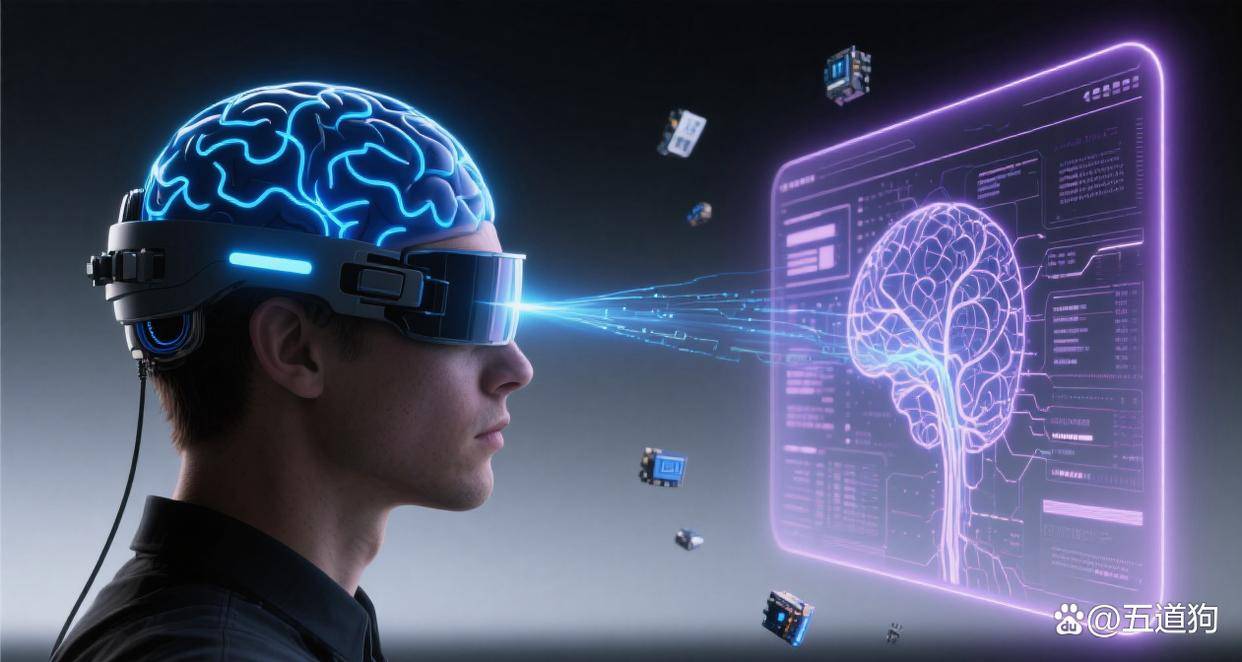
那些被身体囚禁的灵魂,终于等来了“越狱”密钥
3 6 Ke· 2025-05-30 12:19
Group 1 - Neuralink, founded by Elon Musk, secured $600 million in funding, setting a record for brain-computer interface financing globally [1] - The FDA granted Neuralink's device "breakthrough medical device" designation, indicating positive recognition for its clinical application prospects [1] - The brain-computer interface (BCI) technology aims to allow direct control of computers and devices through thought, potentially impacting millions of people in the future [2][3] Group 2 - The concept of brain-computer interfaces was introduced in 1973, with significant advancements made since the establishment of Neuralink in 2016 [2] - The industry is witnessing an influx of participants, including companies like BrainCo, Biorobotics, and others, focusing on invasive BCIs for central nervous system diseases [2][4] - By 2025, invasive BCIs are expected to achieve significant breakthroughs, transitioning from laboratory research to clinical trials [2][4] Group 3 - In 2023, several hospitals in China reported a surge in clinical trials for wireless implanted BCIs, with successful surgeries conducted on patients with various conditions [4][12] - Companies like MicroLink and Step Medical are developing flexible electrodes that enhance the safety and efficacy of BCI systems [8][9] - The development of flexible electrodes is crucial for minimizing damage to brain tissue and improving signal quality [7][8] Group 4 - The global market for BCIs in serious medical applications is estimated to be between $15 billion and $85 billion [10] - Investment in the BCI sector is increasing, with significant funding rounds reported in early 2023, indicating a growing interest in the commercialization of this technology [10][19] - The Chinese government is actively working on regulatory frameworks for BCI medical devices, which is expected to facilitate faster clinical applications [14][20] Group 5 - The clinical applications of BCIs are primarily focused on motor control, sensory restoration, and neural modulation [15] - Companies are exploring various use cases, including helping paralyzed patients regain control over their movements and improving communication for those with speech impairments [11][15] - The industry is still in the early stages of development, with many technologies remaining in experimental phases [17][18]