
全球气候治理

Search documents
国际观察丨COP30凝聚全球共识 应对气候变化迈入新阶段
Xin Hua She· 2025-11-24 00:40
Core Points - The COP30 conference concluded successfully, emphasizing the global consensus on the Paris Agreement and the irreversible trend towards green transformation [1][3][4] Group 1: Conference Outcomes - COP30 adopted the significant political document titled "Global Mobilization for Collaborative Action on Climate Change Challenges," addressing key issues such as climate change mitigation, adaptation, financing, and international cooperation [3] - Developed countries are urged to double their adaptation funding to developing nations by 2025 compared to 2019 levels, with a further doubling by 2035 [3] - For the first time, trade issues were included in the conference outcomes, highlighting the need to avoid unilateral actions that create unfair trade discrimination against developing countries [3][4] Group 2: Global Support and Reactions - The outcomes received support from various parties, including the Alliance of Small Island States, which acknowledged the progress made despite imperfections [4] - The representative of the least developed countries expressed satisfaction with the commitment to increase adaptation funding for developing nations by 2035, emphasizing support for vulnerable populations [4] Group 3: Political Context and Implications - This conference marked the first absence of the U.S. federal government since the inception of the UN climate change conferences in 1995, reflecting a significant shift in global climate diplomacy [3][8] - The conference showcased a strong political will among parties to unite against climate change, indicating a global trend towards low-emission and climate-resilient societies [7][8] Group 4: China's Role - China played a pivotal role in advocating for the interests of developing countries, emphasizing the principle of common but differentiated responsibilities and opposing unilateral measures [9] - The country has signed numerous cooperation agreements with developing nations, implementing over 300 capacity-building projects to support climate change initiatives [9][10]


COP30闭幕,气候投融资加速全球协作
2 1 Shi Ji Jing Ji Bao Dao· 2025-11-23 11:40
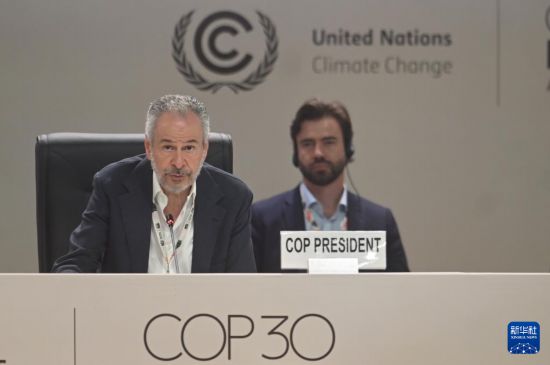
今年恰逢《巴黎协定》达成10周年,全球气候治理迈入关键发展阶段。当前,全球气候治理多边进程仍 然面临诸如资金、技术等问题的挑战。 据央视新闻消息,当地时间11月22日,《联合国气候变化框架公约》第三十次缔约方大会(COP30)在 巴西北部城市贝伦闭幕。在闭幕全体会议上,COP30主席安德烈·科雷亚·多拉戈宣布大会通过新的有关 气候行动的总体协议——《全球动员:团结协作应对气候变化挑战》,呼吁各国"主动"应对气候变化, 加速气候行动。 协议指出,到2035年之前,富裕国家应将其提供的资金增加两倍,以帮助其他国家应对全球气候变化。 协议还指出,不断增加的贸易壁垒对清洁能源技术使用造成了一定限制,气候机构应分析如何使国际贸 易与气候行动保持一致。 (图源:COP30 Raimundo Pacco 摄) 大会期间,围绕气候投融资等话题,我国相关代表也在中国角展开了讨论。近日,由生态环境部应对气 候变化司指导,中国节能环保集团有限公司和中国环境科学学会共同主办,生态环境部环境规划院等单 位参与的COP30中国角气候投融资边会在巴西贝伦举办。 COP30中国代表团团长、生态环境部副部长李高在会上强调,生态环境部积极推动构 ...
和音:共同推动全球气候治理行稳致远
Ren Min Ri Bao· 2025-11-23 11:10
COP30期间,中国发挥积极建设性作用,与各方一道支持主席国巴西推动大会取得成功,致力于在坚持 多边主义、聚焦行动落实的基础上,为下一个10年的全球气候治理指明方向、创造条件。中方举办 了"中国角"系列边会,主题包括中国碳达峰碳中和之路、中国能源转型与新能源发展等,为全球气候治 理提供中国经验参考。COP30主席多拉戈称赞,"中国提出的解决方案惠及所有人,而不仅仅是中国自 身。" 人与自然和谐共生是中国式现代化的鲜明特点。中国将碳达峰碳中和作为国家战略,构建了全球最系统 完备的碳减排政策体系,建成了全球最大、发展最快的可再生能源体系,是世界能耗强度下降最快的国 家之一。中国的绿色发展正不断为世界增添新绿意。 在应对气候变化领域,中国是多边主义的坚定拥护者、国际合作的积极推动者、低碳技术的主要贡献 者、绿色转型的重要引领者。中国始终积极落实《联合国气候变化框架公约》及其《巴黎协定》,落实 2030年国家自主贡献取得显著成效,提前完成风电、太阳能发电总装机容量和森林蓄积量等目标。截至 2025年10月底,中国已与43个发展中国家签署55份气候变化南南合作谅解备忘录。中国已向《联合国气 候变化框架公约》秘书处提交了 ...
共同推动全球气候治理行稳致远(和音)
Ren Min Ri Bao· 2025-11-22 21:49
在应对气候变化领域,中国是多边主义的坚定拥护者、国际合作的积极推动者、低碳技术的主要贡献 者、绿色转型的重要引领者。中国始终积极落实《联合国气候变化框架公约》及其《巴黎协定》,落实 2030年国家自主贡献取得显著成效,提前完成风电、太阳能发电总装机容量和森林蓄积量等目标。截至 2025年10月底,中国已与43个发展中国家签署55份气候变化南南合作谅解备忘录。中国已向《联合国气 候变化框架公约》秘书处提交了2035年国家自主贡献目标,历史性地扩展到全经济范围、包括所有温室 气体。"中国在全球能源转型中的影响力不断提升""为全球特别是发展中国家应对气候变化作出了重要 贡献""激励其他国家共同追求更可持续的未来"……国际社会普遍认为,中国以负责任大国的担当和务 实举措成为全球气候治理领域的关键引领者。 气候变化是全球性挑战,需要各方共同努力。中共二十届四中全会审议通过"十五五"规划建议,对建设 美丽中国作出重要部署。中国将加快经济社会发展全面绿色转型,为应对气候变化作出更大贡献。发达 国家也应承担历史责任,带头率先大幅减排,为发展中国家提供资金技术和能力建设支持。期待各方在 COP30达成新的共识,维护气候多边进程 ...
COP30进入加时阶段 大会主席呼吁各方尽快达成共识
Xin Hua She· 2025-11-22 05:52
Core Points - The COP30 conference in Belem, Brazil, has entered an extended phase as key issues remain unresolved among parties [2][5] - The conference chair, Dolago, emphasized the need for cooperation and unity among parties to reach consensus on core issues and uphold the achievements of the Paris Agreement [2][5] - The withdrawal of the United States from the Paris Agreement poses significant challenges to the agenda of the current conference [5] - This year marks the tenth anniversary of the Paris Agreement, with high expectations for COP30 to provide direction for global climate governance in the next decade [5] - A major agenda item is to achieve the climate financing goals set at COP29, which include raising at least $300 billion annually from developed countries and $1.3 trillion globally by 2035 to support climate actions in developing countries [5]
巴西演绎“雨林外交”奏鸣曲
Jing Ji Ri Bao· 2025-11-21 22:43
Core Points - Brazil is hosting the 30th United Nations Climate Change Conference (COP30) in Belém, symbolizing a shift towards climate diplomacy and aiming to break the deadlock in global climate discussions [1] - The Brazilian government has transformed its climate agenda into a national strategic priority, moving from a history of deforestation criticism to becoming a representative of climate action [1][2] - Lula's administration has launched a three-pronged strategy for "rainforest diplomacy" to promote sustainable development and re-establish Brazil's position on the international stage [2] Group 1: Climate Governance Strategy - Lula's government has restarted the Amazon Fund with an investment of 10.4 billion Brazilian Reais (approximately 2 billion USD), integrating climate goals into national development plans [3] - The "New Industrial Plan" aims to promote electric vehicles, battery industries, and bioenergy, positioning green transformation at the core of re-industrialization [3] - By 2024, renewable energy is projected to account for 88.2% of Brazil's electricity structure, with continuous growth in clean energy sources [3] Group 2: International Collaboration - Brazil submitted a report at COP29 aiming for a 59% to 67% reduction in greenhouse gas emissions by 2035 compared to 2005 levels, with a notable 11.08% decrease in deforestation in the Amazon region from 2024 to 2025 [4] - Brazil is uniting global southern countries to form a "Rainforest OPEC," enhancing collective bargaining power for climate negotiations [4] - Cooperation with China is pivotal, focusing on electric vehicles, photovoltaics, and battery industries, aligning with China's strengths in clean energy technology [5][6] Group 3: Innovative Cooperation Platforms - Brazil is initiating various thematic alliances to address financing and technology bottlenecks in energy transition, including a global biofuel alliance and a global clean energy alliance [6] - The establishment of a "Carbon Emission Trading Market Open Alliance" aims to create a transparent global carbon market, turning climate action into economic opportunities [7] - Brazil's "Multi-level Governance Acceleration Solutions Plan" seeks to integrate climate plans from 100 countries by 2028, expanding to 120 by 2030, demonstrating a commitment to multi-level climate governance [7] Group 4: Challenges and Resilience - Despite the ambitious climate agenda, Brazil faces ongoing challenges in balancing economic development with environmental protection, and the scale of the Amazon Fund may not meet the actual needs for rainforest conservation [8] - The global south is increasingly asserting itself as a constructive force in climate governance, emphasizing active participation and cooperation in addressing climate challenges [8]
“共同追求更可持续的未来”(外媒看中国)
Ren Min Ri Bao· 2025-11-21 22:12
Group 1 - The core viewpoint of the articles emphasizes China's significant role in global climate governance and its commitment to achieving substantial reductions in greenhouse gas emissions by 2035, with a focus on a comprehensive green transition across the economy [1][4][6] - China has established itself as a leader in renewable energy, boasting the largest and fastest-growing renewable energy system globally, and is the largest market for new energy vehicles [2][4][5] - The development of a clean energy industry network in the Tibetan Plateau showcases China's efforts to leverage its geographical advantages for low-cost renewable energy production [3][4] Group 2 - China's new round of national contributions aims for a 7%-10% reduction in greenhouse gas emissions from peak levels by 2035, with non-fossil energy consumption reaching over 30% of total energy consumption [4][6] - The collaboration between China and African nations in renewable energy projects, such as solar and wind, supports Africa's energy transition and sustainable development [2][5] - China's commitment to multilateralism in addressing climate change is highlighted, with initiatives like the South-South Cooperation Fund and infrastructure projects under the Belt and Road Initiative [6][7]
全球气候治理的共识,越来越弱了?
虎嗅APP· 2025-11-21 09:31
Core Viewpoint - The article discusses the outcomes and challenges of COP30, highlighting the shift from setting climate goals to implementing them effectively, with a focus on the role of Brazil and the implications of geopolitical dynamics on global climate governance [2][7][12]. Group 1: COP30 Outcomes - COP30 revealed that the global temperature increase has been reduced to a range of 1.9-2.6°C due to the implementation of the "Nationally Determined Contributions" (NDCs) established by the Paris Agreement, contrasting with earlier predictions of over 4°C [2]. - Brazil, as the host country, has set a precedent by announcing its new NDC for 2024, aiming for a 2035 reduction target anchored to achieving carbon neutrality by 2050 [5][7]. - The conference emphasized the need for practical cooperation and the acceleration of low-carbon transitions, marking a shift in focus from goal-setting to implementation [7][12]. Group 2: Challenges in Climate Governance - There is a significant lag in the submission of new NDCs by countries, with nearly half yet to submit, indicating a lack of momentum in global climate governance [3][4]. - Geopolitical divisions, economic uncertainties, and funding shortages are major obstacles, with developed countries and developing nations experiencing distrust over climate financing [6][12]. - The Trump administration's withdrawal from the Paris Agreement and subsequent funding cuts have exacerbated these challenges, with an estimated $11 billion in climate funding affected [6][12]. Group 3: Trade and Climate Policy - The inclusion of "unilateral trade measures" as a formal agenda item was proposed by developing countries, reflecting the need for affordable low-carbon products and their smooth circulation globally [10]. - The article highlights the increasing discussions around trade policies in relation to climate action, as countries seek to avoid "green protectionism" while ensuring equitable and efficient global green transitions [10][11]. Group 4: Brazil's Role in Climate Action - Brazil's proactive stance in climate governance is evident through its reactivation of the Amazon Rainforest protection plans, which have led to a significant reduction in deforestation rates [12][13]. - The choice of location for COP30 in the Amazon region underscores the connection between climate change and ecosystem protection, emphasizing the urgency of addressing environmental degradation [11][12]. Group 5: China's Influence in Climate Governance - China has transitioned from a passive participant to a key player in global climate governance, with significant achievements in low-carbon product exports, reaching $121 billion in the first half of 2025 [15][16]. - The country is also shifting from being a follower in technology application to a leader in innovation, contributing to global low-carbon supply chains and supporting developing nations in their climate efforts [16][20].

绿色文明的践行者:非洲经济学家在COP30点赞中国经验丨世界观
Zhong Guo Xin Wen Wang· 2025-11-21 09:07
在马拉维,洪水、干旱等极端天气已成为影响该国发展的因素之一。姆朱马指出,全球都在承受气候变 化的冲击,但对像马拉维这样的极端贫困国家而言,每一次灾害都是对基本生存的直接威胁。"极端贫 困让我们没有能力独自保护自然资源,更无法支撑经济发展。" 而中国,给予了以马拉维为代表的一批遭受气候冲击国家充分的支持。姆朱马表示,中国在生态文明、 生物多样性保护和土地修复等方面并未止步于口号,而是将成果清晰转化为现实。 绿色文明的践行者:非洲经济学家在COP30点赞中国经验丨世界观 0:00 视频:马拉维政府经济学家:携手应对气候挑战,中国是值得信赖的伙伴丨世界观 来源:中国新闻网 中新网北京11月21日电(记者 陈天浩)在茂密的亚马孙雨林深处,世界试图寻找一个共同的答案。极端气 候现象愈发频繁,"全球南方"发展受限,而国际政治格局又处在剧烈重塑之中。《联合国气候变化框架 公约》第三十次缔约方大会(COP30)选择在巴西北部贝伦举办,不仅是一次应对气候变化大会,更像是 一次对"人类与自然关系"的重新审视。 马拉维财政部首席经济学家安德烈亚·姆朱马(Andrea Mjuma)日前在COP30现场接受了中新网专访,从非 洲国家代 ...
记者手记|从巴黎到贝伦 感受气候谈判“冷”和“热”
Xin Hua She· 2025-11-21 06:22
Core Viewpoint - The ongoing COP30 in Belem, Brazil, highlights the contrasting climate negotiation dynamics compared to the historic COP21 in Paris ten years ago, emphasizing the urgent need for global cooperation in addressing climate change despite rising tensions and differing national interests [1][2][3]. Group 1: Climate Negotiation Dynamics - The COP30 is taking place in Belem, a city symbolizing the Amazon rainforest's role as a carbon sink and frontline in combating deforestation and climate change [1]. - The negotiations are marked by significant disagreements among countries regarding climate financing, fossil fuels, and the North-South divide, reflecting a cooling of global cooperation [2][3]. - The absence of a high-level U.S. delegation at COP30 indicates a weakening political support for the Paris Agreement among Western nations, with concerns also expressed by Europe and Canada [2][3]. Group 2: Global South vs. Global North - Developed countries, historically the main contributors to climate issues, are urged to take the lead in emissions reduction and support developing nations with funding and technology [3]. - In contrast, developing countries are making steady progress in energy transition despite facing significant financial and technological challenges [3][4]. Group 3: Renewable Energy and Global Trends - Over the past decade, there has been a profound transformation in global energy structures, with renewable energy becoming a dominant trend [4]. - China has played a crucial role in this transition, providing 70% of the world's wind power equipment and 80% of solar photovoltaic components, significantly reducing global costs for wind and solar energy [4]. Group 4: Optimism for Future Cooperation - Despite challenges posed by unilateralism and geopolitical tensions, there remains optimism among international leaders regarding the potential for collaborative efforts to address climate crises [5]. - The next decade of global climate governance will depend on political will and the sincerity of international cooperation [5].