
双向投资

Search documents
“投资中国”和“中国投资”热度高 第25届投洽会看跨国投资新趋势
Yang Shi Xin Wen Ke Hu Duan· 2025-09-10 09:49
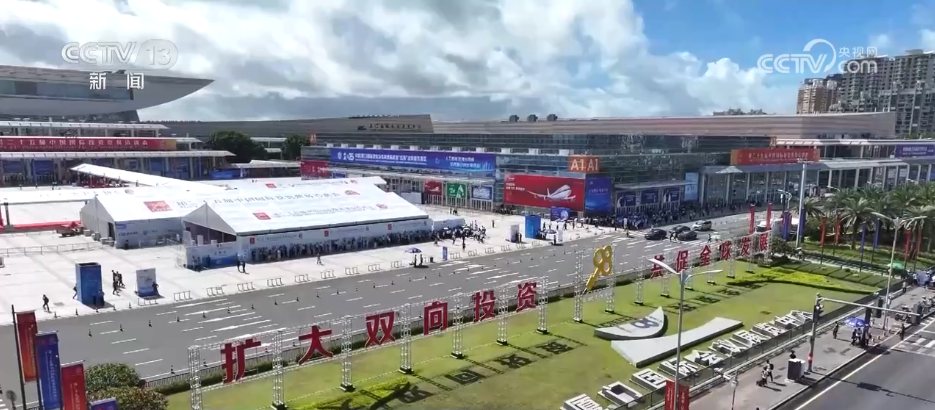
Group 1 - The 25th China International Investment and Trade Fair is being held in Xiamen, Fujian, focusing on expanding bilateral investment opportunities, attracting representatives from over 120 countries and regions [1] - The UK is the guest country this year, with over 100 companies participating, showcasing their latest products and services, and expressing a strong interest in collaborating with Chinese partners [1] - There is a notable emphasis on capital and industry integration at this year's fair, with many international investment institutions participating and a special financial capital zone established to enhance bilateral investment [1] Group 2 - China's outbound investment is becoming more active and diverse, with infrastructure, green development, and new energy cooperation emerging as hot areas for investment [2] - A dialogue between private enterprises and Fortune 500 companies at the fair highlighted the potential for collaboration, emphasizing the complementary advantages of flexible private enterprises and the strong technical capabilities of large multinational corporations [3][4] - Companies like Saudi Aramco have established multiple joint ventures in China, with total investments exceeding 240 billion RMB, and are optimistic about future opportunities in digital technology and other new investment areas [6] Group 3 - Yihai Kerry, a multinational company in agricultural processing and food production, has invested approximately 100 billion RMB in China, with recent investments surpassing the total of the previous 30 years [7] - The company is focusing on consumer demand for healthier diets and has established R&D centers in China, along with innovative food industry park models to integrate the supply chain [7]
从投洽会看跨国投资新动向 “投资中国”和“中国投资”热度高
Yang Shi Wang· 2025-09-10 07:46
Group 1 - The 25th China International Investment and Trade Fair is being held in Xiamen, Fujian, focusing on expanding bilateral investment opportunities with participation from over 120 countries and regions [1] - The UK is the guest country this year, with over 100 companies showcasing their products and services, emphasizing the potential for collaboration with Chinese partners [3] - The fair highlights the importance of capital and industry integration, featuring a financial capital zone to enhance bilateral investment [5] Group 2 - There is a growing trend of Chinese outbound investment, particularly in infrastructure, green development, and new energy cooperation [5] - A significant project presented by Uzbekistan aims to attract Chinese investment for the construction of a new Tashkent, covering over 20,000 hectares [7] - Turkish representatives noted increasing interest from Chinese investors in manufacturing and green development sectors, including solar energy and electric vehicle production [7] Group 3 - The fair includes over 70 thematic activities focusing on hot topics in bilateral investment, with a notable dialogue between private enterprises and Fortune 500 companies [8] - Discussions at the event highlighted the complementary advantages of private enterprises and multinational corporations, emphasizing collaboration for mutual benefit [10] - Representatives from both private and foreign enterprises expressed the potential for close cooperation across various chains, including industrial, supply, innovation, and capital chains [12]

报告:中国对新西兰投资体现长期合作价值
Xin Hua Wang· 2025-08-30 09:30
Core Insights - The report by the New Zealand-China Relationship Promotion Committee highlights the long-term cooperative value of Chinese investments in New Zealand's dairy industry [1] - From 2014 to 2024, China's cumulative foreign direct investment (FDI) in New Zealand increased by 106%, outpacing the overall growth rate of New Zealand's FDI stock [1] - The dairy sector is identified as a representative industry for Chinese investment, showcasing the value of the long-term partnership between the two countries [1] Investment Diversification - The report uses the pet food and game development industries as examples to illustrate the increasing diversification of Chinese investments in New Zealand [1] - It emphasizes that Chinese investments are responding quickly to consumer demand [1] - The report suggests that China should focus on investing in areas where it has industrial advantages, such as renewable energy, advanced transportation, clean technology, and food production [1] Business Presence - Currently, at least 60 New Zealand companies have established business operations in China [1] - The chairman of the New Zealand-China Relationship Promotion Committee, McKinnon, states that increasing bilateral investment will help establish a long-term cooperative relationship between the two countries [1] - New Zealand is actively seeking to attract investment to drive growth, and leveraging its stable bilateral relationship with China is seen as a reasonable strategy [1]
陈晓东:高水平开放推动全产业链创新
Jing Ji Ri Bao· 2025-08-19 00:02
Core Viewpoint - The article emphasizes the importance of bilateral investment as a key strategy for enhancing China's industrial chain innovation capabilities and overall competitiveness in the context of global industrial competition and supply chain adjustments [1][2][3]. Group 1: Bilateral Investment and Innovation - Bilateral investment can facilitate technology transfer through intermediate products, allowing local downstream companies to innovate based on advanced technologies from foreign direct investment (FDI) enterprises [2]. - FDI enterprises often impose production standards on local suppliers, which encourages upstream companies in the host country to innovate to meet these standards [2]. - As the host country's innovation capacity improves, its scale of outward direct investment (ODI) will gradually expand, creating a reciprocal effect on technology and innovation [2][3]. Group 2: Competitive Dynamics and Market Integration - Bilateral investment generates competitive incentives among local companies, pushing them to innovate in order to meet the stringent requirements of FDI enterprises [3]. - Increased domestic competition and enhanced innovation capabilities lead companies to seek overseas opportunities through ODI, thereby integrating into global value chains [3]. - The article notes that the recent trends show a balanced growth in both FDI and ODI in China, which is crucial for attracting global resources and enhancing the domestic and international market linkage [3]. Group 3: Policy Recommendations for High-Quality Development - The article suggests promoting high-quality coordinated development of bilateral investment through institutional openness, aligning with international trade rules, and leveraging successful experiences from free trade zones [4]. - It advocates for differentiated industrial policies based on the characteristics of the industrial chain, including establishing support funds for technology-dependent industries and optimizing the structure of ODI [4]. - The article emphasizes the need to enhance the transmission mechanism between bilateral investment and industrial chain innovation through fiscal incentives and support for R&D initiatives [5][6].
高水平开放推动全产业链创新
Sou Hu Cai Jing· 2025-08-18 21:09
Core Viewpoint - The article emphasizes the importance of bilateral investment as a key strategy for enhancing China's industrial chain innovation capabilities and overall competitiveness in the context of global supply chain adjustments and competition among major powers [1][3]. Group 1: Bilateral Investment and Innovation - Bilateral investment can lead to technology transfer effects through intermediate products, where foreign direct investment (FDI) firms provide advanced intermediate products that enhance innovation in local downstream companies [2]. - The competition for becoming suppliers to foreign direct investment firms drives local upstream companies to innovate in order to meet stringent production standards set by these firms [2][3]. - As local innovation capabilities improve, the scale of outward direct investment from these countries will gradually expand, creating a cycle of innovation and investment [2]. Group 2: Competitive Dynamics and Market Integration - Bilateral investment fosters competitive incentives among local companies, as they strive to meet the technological standards imposed by foreign firms, leading to increased domestic competition and innovation [3]. - The article notes that the recent trend shows a balanced growth in both foreign direct investment and outward direct investment from China, indicating a healthy investment environment [3]. Group 3: Policy Recommendations for High-Quality Development - The article suggests promoting high-quality bilateral investment through institutional openness, aligning with international trade rules, and leveraging successful experiences from free trade zones [4]. - It advocates for differentiated industrial policies based on the characteristics of various industrial chains, including the establishment of support funds for technology-dependent industries [4]. - The need to enhance the transmission mechanism between bilateral investment and industrial chain innovation is highlighted, including tax incentives and support for global R&D centers [5]. Group 4: Digital Transformation in Manufacturing - The article stresses the importance of accelerating the digital transformation of the manufacturing sector, proposing targeted support policies for different types of enterprises [5]. - It emphasizes the need for domestic substitution of digital products and services, encouraging companies to prioritize the use of local digital solutions [5].
我市推出深化与金砖国家经贸合作措施
Hang Zhou Ri Bao· 2025-07-22 02:37
Group 1 - The core viewpoint of the news is the introduction of measures by Hangzhou to support the establishment of a special economic zone for BRICS countries, enhancing economic and trade cooperation with these nations [1][2]. - The BRICS Special Economic Zone China Cooperation Center was officially established in Hangzhou in March this year, serving as a high-level platform for cooperation among BRICS countries [2]. - The measures include promoting bilateral investment, supporting the establishment of overseas economic and trade cooperation parks in BRICS countries, and encouraging participation in infrastructure projects [2][3]. Group 2 - Hangzhou aims to improve customs clearance efficiency for imports and exports to BRICS countries, exploring return supervision processes for cross-border e-commerce [3]. - The city is also developing a cross-border e-commerce export consolidation center and a dedicated green channel for importing fresh products from BRICS countries [3]. - From January to May, exports to BRICS countries increased by 17% year-on-year, with total import and export volume reaching 93.597 billion yuan, highlighting the growing importance of the BRICS market for Hangzhou's foreign trade [3].
累计在辽设立企业超1.3万家,香港携手辽宁“掘金”
Shang Wu Bu Wang Zhan· 2025-06-12 15:16
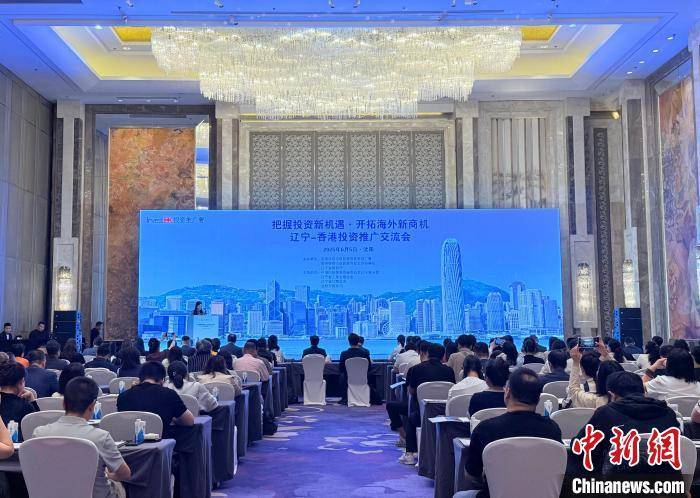
Group 1 - The Liaoning-Hong Kong Investment Promotion Exchange Conference was held in Shenyang on June 5, focusing on enhancing economic and trade cooperation between Liaoning and Hong Kong, encouraging enterprises to leverage advantages and platforms for mutual investment opportunities [1][2] - Hong Kong is the largest source of foreign investment for Liaoning, with over 13,000 foreign enterprises established in Liaoning and actual foreign investment accounting for 46.3% of the total in the province [2] - The total import and export volume between Liaoning and Hong Kong exceeded 16 billion yuan last year, marking a year-on-year increase of 25.9% [2] Group 2 - The event featured discussions on Hong Kong's business advantages, investment opportunities, talent policies, and financial services, aimed at encouraging Liaoning enterprises to expand into international markets [2] - Companies such as Neusoft Group, Xinhua Technology International Limited, and Sunshine Energy Holdings Limited shared their experiences of developing in Hong Kong during the conference [2]
辽宁—香港投资推广交流会助辽企借港出海
Sou Hu Cai Jing· 2025-06-05 10:33
Group 1 - The "Liaoning-Hong Kong Investment Promotion Exchange Conference" was held in Shenyang on June 5, aiming to help Liaoning enterprises leverage Hong Kong for overseas expansion and promote mutual cooperation [2][3][5] - Hong Kong is the largest source of foreign investment for Liaoning, with over 13,000 foreign enterprises established in Liaoning by April 2025, accounting for 46.3% of the province's total foreign investment [5] - There are over 300 Liaoning enterprises investing in Hong Kong, with a registered investment amount exceeding $7.5 billion [5] Group 2 - The event was co-hosted by the Hong Kong Special Administrative Region Government's Invest Hong Kong, the Beijing Office of the Hong Kong Government, and the Liaoning Provincial Department of Commerce [3][5] - The Assistant Director of Invest Hong Kong emphasized the strong performance of mainland enterprises listed in Hong Kong, with 20 companies from Liaoning across various sectors including manufacturing, energy, finance, and healthcare [3][5] - The Liaoning Provincial Department of Commerce expressed the intention to expand trade in machinery, agricultural products, and consumer goods, and to encourage Hong Kong enterprises to invest in advanced manufacturing, new energy, and digital economy sectors in Liaoning [3][5]
德国加大外资吸引力度
Ren Min Ri Bao· 2025-05-21 21:59
Group 1 - The report by the German Federal Foreign Trade and Investment Agency indicates that in 2024, there will be 1,724 foreign direct investment projects in Germany, with a total investment amount of €23.2 billion [1] - Chinese enterprises maintain a stable investment scale in Germany, ranking third after the United States and Switzerland [1] - Foreign enterprises' investments in Germany are significantly focused on key strategic industries, with digitalization, energy and raw materials, electronic products, and automation accounting for 48% of the total foreign investment in 2024 [1] Group 2 - Germany is a major destination for Chinese enterprise investments within the EU, with 31 projects in the renewable energy sector last year, and significant investments also in electronic products, automation, transportation, and logistics [2] - Market and sales projects account for 41% of Chinese investments in Germany, while production and R&D projects make up 26% [2] - The trend of strong investment from Chinese enterprises is not only present in Germany but also globally, focusing on emerging sectors such as renewable energy, battery supply chains, automotive, medical technology, and robotics [2]
中国(新疆)—东盟经贸交流会在乌鲁木齐举办
Zhong Guo Xin Wen Wang· 2025-05-20 15:33
Group 1 - The China (Xinjiang) - ASEAN Economic and Trade Exchange Conference was held in Urumqi, focusing on enhancing cooperation between ASEAN countries and Xinjiang across various sectors [1][2] - In 2024, the total import and export volume between Xinjiang and ASEAN member countries increased by over 191% year-on-year, significantly outpacing other major markets [1] - Representatives from ASEAN countries expressed interest in establishing business associations in Xinjiang to promote bilateral investment, highlighting Xinjiang's competitive advantages in logistics, energy, mining, and modern agriculture [1][2] Group 2 - Japanese enterprises are interested in Xinjiang as a "new market" due to its rich resources and diverse culture, contrasting with their previous investments concentrated in coastal cities [2] - Korean representatives noted the significant development potential in western China, including Xinjiang, and emphasized the need for greater awareness among Korean businesses [2] - The conference facilitated in-depth discussions on practical cooperation in advanced manufacturing, new energy, and modern agriculture, with a focus on Xinjiang's "ten major industrial clusters" and the industrial advantages of ASEAN countries [2]