外贸多元化

Search documents
国家统计局:今年以来我国货物进出口持续增长
Sou Hu Cai Jing· 2025-08-15 03:35
Core Viewpoint - China's goods import and export maintained strong resilience and vitality in July 2023, with a total import and export value increasing by 6.7% year-on-year, reflecting the effectiveness of policies aimed at expanding high-level openness and promoting diversified foreign trade [1] Group 1: Import and Export Performance - In July, China's goods export value increased by 8% year-on-year, accelerating by 0.8 percentage points compared to the previous month, marking two consecutive months of acceleration [1] - The goods import value in July rose by 4.8% year-on-year, accelerating by 2.4 percentage points from the previous month, also showing two consecutive months of recovery [1] Group 2: Factors Supporting Export Growth - The diversification of foreign trade continues to show results, with exports to ASEAN, the EU, and countries involved in the Belt and Road Initiative increasing by 14.8%, 8.2%, and 11.7% respectively from January to July [1] - The competitiveness of export products has improved, with a 9.3% year-on-year increase in the export value of electromechanical products, and a 21.8% increase in integrated circuit exports from January to July [2] - The vitality of foreign trade enterprises remains strong, with private enterprises' exports growing by 8.7% year-on-year, outpacing the overall export growth rate [2]
稳出口政策“组合拳”发力 外贸展现较强韧性
Jin Rong Shi Bao· 2025-08-08 07:59
今年以来,我国外贸保持平稳增长,彰显出强大韧性和国际竞争力。据海关总署统计,2025年前5 个月,我国货物贸易进出口总值17.94万亿元,同比(下同)增长2.5%。5月份,我国货物贸易进出口总 值3.81万亿元,增长2.7%。其中,出口2.28万亿元,增长6.3%;进口1.53万亿元,下降2.1%。 记者注意到,在地方层面,各地纷纷出台创新举措,为企业发展注入信心。5月份以来,福建、湖 北等地深化"福品销全球""千企百展出海拓市场"等活动,加大新兴市场境外展会补助力度,鼓励外贸企 业"走出去";深圳推出金融助力稳外贸相关措施,推出多款创新金融产品;天津整合政府、协会、机 构、企业四方资源,搭建企业"一站式"出海服务基地,为企业提供融入新市场的全程服务。这些举措与 国家层面的稳外贸政策相互配合、协同发力,共同护航外贸企业发展。 数据显示,以美元计价,5月份我国出口额增长4.8%,其中对美出口下降34.5%。业内专家认为,5 月份出口同比增速回落,符合市场预期。"主要源于高关税影响下,5月份对美出口降幅扩大。与此同 时,近期美国关税政策下,外需整体呈现走弱态势。此外,去年同期出口基数偏高,也在下拉今年5月 份出口 ...
上半年我国社会物流总额超170万亿元 同比增长5.6%
Yang Guang Wang· 2025-07-30 01:17
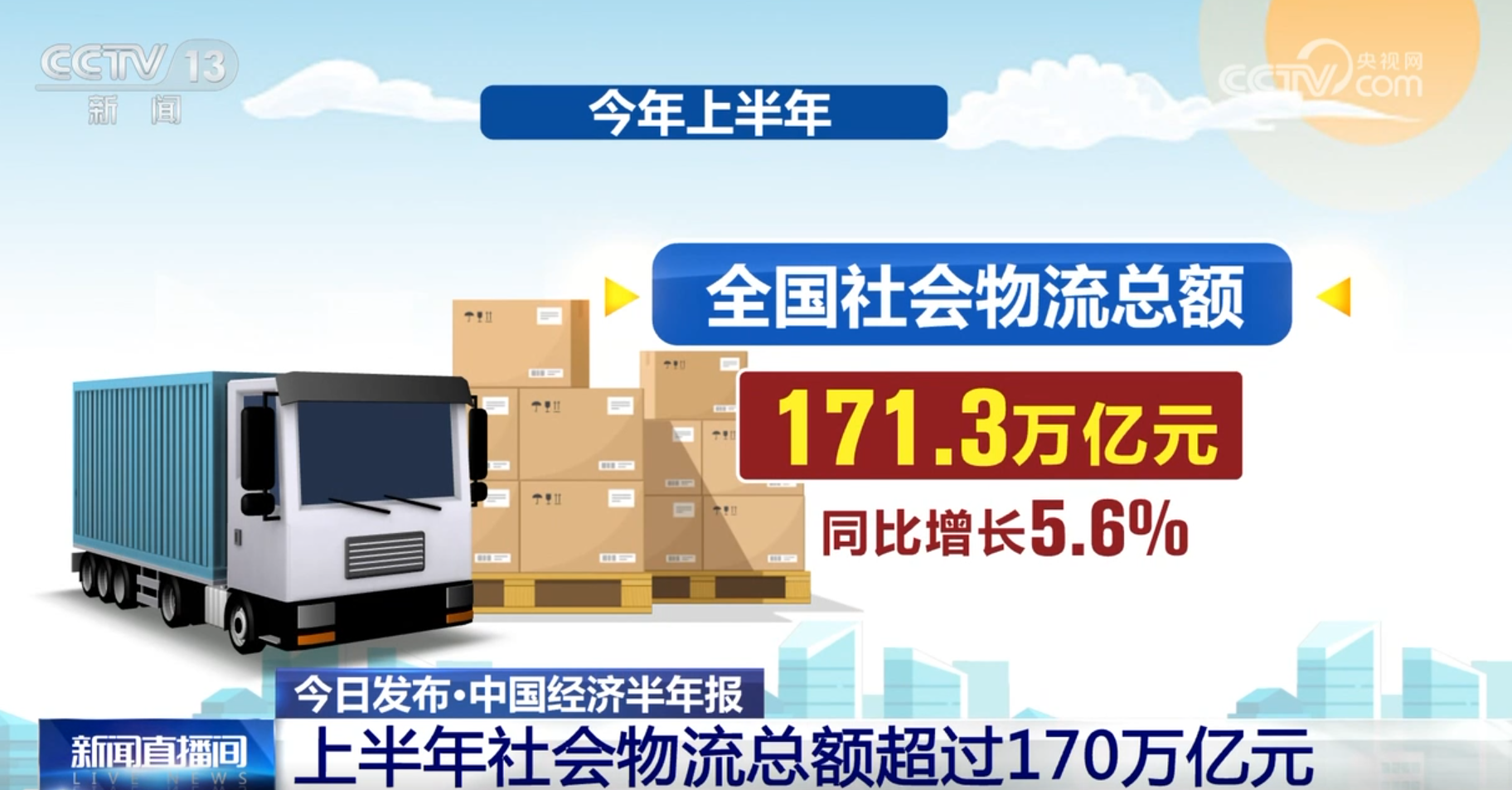
Core Insights - The total social logistics volume in China reached 171.3 trillion yuan in the first half of the year, marking a year-on-year growth of 5.6%, indicating a stable and progressive development in the logistics industry [1] - The logistics volume of industrial products grew by 5.8% year-on-year, contributing 85% to the overall growth of social logistics, which supports the stability of the industrial economy and the smooth operation of supply chains [1] - The logistics demand in the equipment manufacturing sector increased by 10.9%, while the high-tech manufacturing sector saw a 9.7% rise, highlighting these areas as significant growth drivers for logistics demand [1] - The logistics volume for 3D printing equipment and industrial robots exceeded a 20% year-on-year increase, reflecting strong demand in these advanced manufacturing sectors [1] - The import logistics volume of major commodities such as crude oil and iron ore has shown recovery, aided by policies promoting domestic demand and consumption [1] - The logistics volume for consumer goods increased by 6.1% year-on-year, with notable growth in logistics demand for electronic products and travel-related consumption [1] Sector Performance - The logistics volume for renewable resources grew by 17% year-on-year, with an acceleration of 1.2 percentage points compared to the first quarter [2] - There is a developing synergy in logistics across sectors such as automotive and home appliances, with logistics volumes for products like cars, tablets, smartphones, and washing machines all exceeding 10% growth [2]
上半年我国物流行业“稳中有进+质效双升” 成为国民经济稳中向好“强支撑”
Yang Shi Wang· 2025-07-29 08:33
Core Viewpoint - The logistics industry in China is showing stable growth and improved quality and efficiency, with a total social logistics volume of 171.3 trillion yuan in the first half of the year, reflecting a year-on-year growth of 5.6% [1][3]. Logistics Industry Performance - The total social logistics volume reached 171.3 trillion yuan, with a growth rate of 5.6%, which is 0.3 percentage points higher than the GDP growth rate during the same period, indicating strong support from logistics demand for economic development [1]. - The logistics of industrial products grew by 5.8%, contributing 85% to the total social logistics growth, providing solid support for the stability of the industrial economy and the smooth operation of supply chains [5]. Emerging Industries and Digital Economy - The integration of the digital economy with the real economy has led to strong growth in logistics demand from emerging industries, with logistics demand in the equipment manufacturing sector increasing by 10.9% and high-tech manufacturing by 9.7% [5]. - The logistics volume related to 3D printing equipment and industrial robots saw a year-on-year increase of over 20% [5]. Foreign Trade and Import Logistics - With high-level opening up and diversification of foreign trade, the decline in import logistics volume has narrowed in the second quarter, with a recovery in the logistics volume of major commodities like crude oil and iron ore [7]. - The import of integrated circuits increased by 8.9%, with a growth rate improvement of 0.5 percentage points compared to the first five months of the year [7]. Consumer Logistics - Driven by various policies to expand domestic demand and promote consumption, the consumer market has become more active, with logistics volume for goods transported to units and residents growing by 6.1% in the first half of the year [9]. - Notable growth in logistics demand is observed in consumer goods related to trade-in programs, electronics, and travel, indicating a significant increase in consumer demand [11]. Recycling and Related Sectors - The logistics volume for renewable resources grew by 17%, with an acceleration of 1.2 percentage points compared to the first quarter [13]. - There is a dynamic trend forming in sectors such as automobiles and home appliances, with logistics volume for products like cars, tablets, smartphones, and washing machines all achieving growth rates exceeding 10% [13].

11.7%、5000亿元、8.4万人次……多维数据释放积极信号 中国经济向稳向好
Yang Shi Wang· 2025-07-20 07:07
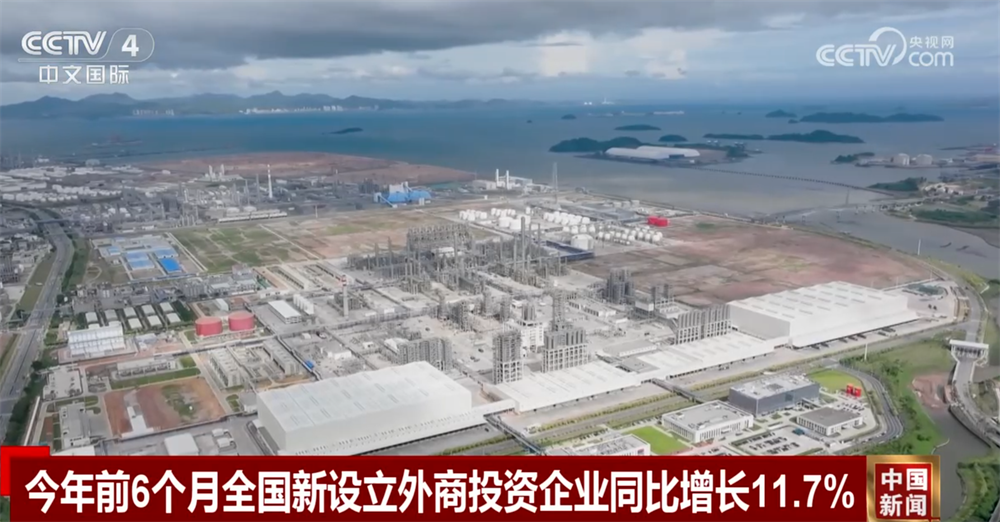
Group 1: Foreign Investment - In the first half of the year, 30,014 new foreign-invested enterprises were established in China, representing a year-on-year increase of 11.7% [1] - The actual utilized foreign capital amounted to 423.23 billion RMB, with significant growth in investments from ASEAN (8.8%), Switzerland (68.6%), Japan (59.1%), and the UK (37.6%) [1] Group 2: Water Conservancy Investment - A total of 532.9 billion RMB was invested in water conservancy construction in the first half of the year, with 34,400 projects implemented and 18,800 new projects started [5] - Social capital participation in water conservancy construction reached 81.92 billion RMB, marking a year-on-year increase of 35.9% [5] Group 3: Trade and Export Growth - The Guangdong-Hong Kong-Macao Greater Bay Area's import and export volume reached 4.38 trillion RMB in the first half of the year, showing a year-on-year growth of 4.3% [6][8] - Exports of "new three types" products increased by 28.7% [6] Group 4: Tourism and Inbound Travel - Since July 1, over 84,000 inbound travelers have been processed at Shanghai's cruise port, with inbound tourism increasing by 38.5% year-on-year, totaling 4.248 million visitors in the first half of the year [9] - The sales of tax refund goods for outbound tourists grew by 85% [9] Group 5: Infrastructure Development - The Yarlung Tsangpo River downstream hydropower project has commenced, with a total investment of approximately 1.2 trillion RMB for the construction of five hydropower stations [11] Group 6: Trade Facilitation Activities - The Ministry of Commerce organized 11 trade matching events in the first half of the year, achieving an intended transaction amount of approximately 48 billion RMB, covering over ten industries including home appliances and medical equipment [15]
浙江上半年出口首破两万亿元 外贸规模创新高
Zhong Guo Xin Wen Wang· 2025-07-18 16:45
Core Insights - Zhejiang's goods trade import and export reached 2.73 trillion yuan in the first half of the year, a year-on-year increase of 6.6% [1] - Exports surpassed 2 trillion yuan for the first time, reaching 2.07 trillion yuan, with a year-on-year growth of 9.1%, contributing 19.8% to national export growth, ranking first in the country [1] Trade Development Strategies - Zhejiang implemented a "stabilize, expand, and optimize" strategy to support steady foreign trade growth amid external risks [1] - The province launched the "Thousand Teams, Ten Thousand Enterprises to Expand Markets and Compete for Orders" initiative, releasing three batches of 150 provincial-level business exhibition directories, with over 80% focused on emerging markets [1] - A total of 2,124 delegations were organized to participate in overseas exhibitions and trade negotiations, involving 10,388 enterprises and resulting in over 77 billion yuan in intended orders [1] Market Expansion - Zhejiang's exports to the EU, ASEAN, Latin America, the Middle East, and Africa increased by 12.1%, 16.9%, 13.1%, 12.1%, and 11.5% respectively [1] - The province hosted events like "Zhejiang Chain Global - Join Hands to Go Abroad" and the "Trade Bridge" procurement matching session to facilitate precise supply-demand matching between foreign trade enterprises and multinational procurement companies [1] E-commerce and Logistics Initiatives - Zhejiang cultivated 41 new provincial-level cross-border e-commerce export brands and established 24 provincial-level cross-border e-commerce industrial parks [2] - The province introduced the "Overseas Warehouse Action Plan" to promote overseas smart logistics platforms and assist enterprises in exploring new business models like cross-border e-commerce [2] - Initiatives such as "Foreign Trade Professional Services Entering Parks and Enterprises" were launched to gather financial, logistics, and policy resources to support stable foreign trade development [2] Future Directions - Zhejiang plans to encourage local governments to implement stronger policies to support enterprises in participating in key exhibitions and expanding into emerging markets like ASEAN, the Middle East, Latin America, and Africa [2] - The province aims to leverage export-to-domestic sales platforms and promote the development of cross-border e-commerce to continuously foster new growth points in foreign trade [2]
对美出口下降但整体在增,商务部部长再提“西方不亮东方亮”
Nan Fang Du Shi Bao· 2025-07-18 08:49
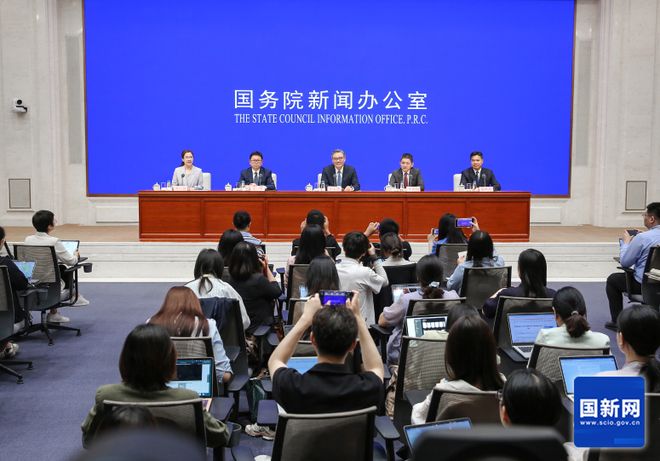
Group 1 - The core focus of the press conference was on the achievements of high-quality development in commerce during the "14th Five-Year Plan" period [3] - There is a significant change in China's foreign trade pattern, with exports to the US decreasing by 9.9% in the first half of the year, while overall exports increased by 7.2% [4][5] - The proportion of exports to the US has dropped from 17.4% in 2020 to 14.7% in 2024, indicating a diversification in trade [4] Group 2 - China is now the second-largest import market globally, with imports from mainland China and Hong Kong accounting for approximately 13.3% of global imports, nearly equivalent to the US's 13.6% [5] - Despite a significant increase in overall exports, there remains a long-term trade deficit in services, with the US being the largest source of this deficit [5] Group 3 - The relationship between China and the US in terms of trade has been tumultuous since 2018, characterized by unilateral actions and tariffs imposed by the US [9] - The essence of China-US economic relations is mutual benefit and cooperation, with both countries relying on each other for trade and investment opportunities [10] - Disagreements and friction in trade are normal, and dialogue and negotiation are emphasized as the best ways to resolve issues [11] Group 4 - China's stance is to firmly protect its national interests and uphold international fairness and justice, emphasizing that trade wars yield no winners [12] - Looking ahead, China expresses a willingness to work with the US based on mutual respect and cooperation to stabilize and sustain the economic relationship [12]
魏建国:外贸多元化格局加速形成,未来高端制造业应从出口产品向提供解决方案发力
Mei Ri Jing Ji Xin Wen· 2025-07-15 11:06
Core Insights - China's foreign trade in the first half of 2025 reached 21.79 trillion yuan, marking a year-on-year growth of 2.9% [1] - The diversification of China's foreign trade markets is accelerating, with significant contributions from emerging markets [2][8] Trade Performance - In the first half of the year, China's export scale surpassed 13 trillion yuan for the first time in history [3] - Exports to ASEAN increased by 14.3% and to Africa by 23%, significantly outpacing the overall export growth rate [6][11] Market Dynamics - The trend of "grabbing exports" was noted, particularly due to the uncertainty surrounding U.S. tariffs, prompting early exports to avoid higher costs [5] - The cross-border e-commerce sector emerged as a strong performer, with over 120,000 entities involved, and is expected to continue growing rapidly [6][15] Future Outlook - A stable recovery in foreign trade is anticipated for the second half of the year, supported by policy effects and market transformations [7] - The overall trade pattern is expected to show a "front low, back high" trend, with 2025 potentially being a "big year" for foreign trade [7] Market Diversification - The shift towards a more diversified trade structure is becoming a norm, reducing reliance on the U.S. market [11] - Trade with Belt and Road Initiative countries accounted for 51.8% of total trade, indicating a significant shift in trade dynamics [13] Emerging Market Trends - The global value chain is transitioning from a traditional "Euro-American circle" to an "Asia-Africa-Euro-American consumption circle" [12] - The increasing reliance of countries like Vietnam and Mexico on Chinese supply chains is noted, driven by digital trade and cross-border e-commerce [14] Private Sector Growth - The number of foreign trade enterprises exceeded 628,000, with private enterprises leading in exports, accounting for nearly 60% of total trade [15] - Private companies are increasingly moving from OEM to brand development, particularly in high-end manufacturing sectors [15][17] High-End Manufacturing - Exports of high-end equipment grew over 20%, driven by technological upgrades and global supply chain shifts [17] - The future of high-end manufacturing is expected to focus on providing comprehensive solutions rather than just product sales [17]

多向赋能,中国外贸竞争力稳增
Zhong Guo Chan Ye Jing Ji Xin Xi Wang· 2025-07-03 00:19
Group 1: Global Trade Environment - The global manufacturing PMI new export orders index fell below the growth line for two consecutive months, indicating a contraction in trade due to rising protectionism and uncertainty [1] - Despite these challenges, China's foreign trade maintained steady growth in the first five months of the year, with a total import and export value of 17.94 trillion yuan, a year-on-year increase of 2.5% [1] Group 2: China's Foreign Trade Strategy - China is committed to expanding high-level opening-up and diversifying its trade partnerships, as evidenced by recent agreements with African nations and the completion of the China-ASEAN Free Trade Area 3.0 negotiations [2][3] - Chinese foreign trade enterprises are increasingly shifting from a "single-polar dependence" to a "multi-polar resonance" strategy to mitigate risks [3] Group 3: Product Structure and Competitiveness - In the first five months, China's exports of electromechanical products grew by 9.3%, with integrated circuit exports increasing by 18.9%, reflecting a shift from scale advantages to technological advantages in the global supply chain [4] - The growth in high-tech product exports, which rose by 7.4%, indicates an ongoing optimization of China's export structure, with green technology products gradually replacing traditional low-value goods [4] Group 4: R&D Investment and Innovation - China's robust growth in high-tech product exports is closely linked to increased R&D investment, which is projected to reach 2.68% of GDP in 2024, surpassing the EU average [5] - This innovation investment is transforming into tangible export competitiveness, with technology-intensive products becoming a new engine for foreign trade growth [5] Group 5: Trade Facilitation and Support - China's foreign trade policies have become more precise and pragmatic, providing support through financial assistance, customs facilitation, and market expansion [6] - Measures include expanding export credit insurance coverage and enhancing cross-border trade facilitation, which have boosted the confidence of foreign trade enterprises [6] Group 6: Market Potential and Economic Stability - China's vast market potential continues to be released, with policies aimed at stabilizing the economy and foreign trade showing positive effects [7] - The fundamental outlook for China's foreign trade remains optimistic, with confidence to face various risks and challenges [7]
杭州1-5月经济韧性生长
Hang Zhou Ri Bao· 2025-06-25 02:46
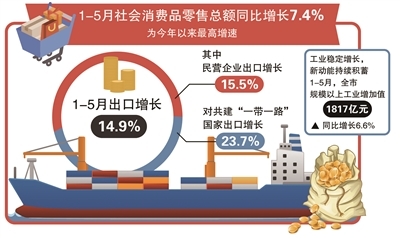
Economic Overview - Hangzhou's economy shows strong resilience and vitality amid complex international conditions and transformation pressures, with consumption policies driving demand recovery and robust industrial support [2] - The city's social retail sales grew by 7.4% year-on-year in the first five months, marking the highest growth rate this year, outperforming the provincial average of 7.2% [2] Consumption Recovery - The recovery in consumption is closely linked to national efforts to boost consumer spending, with 162 billion yuan allocated for consumption incentives in the first two batches and an additional 138 billion yuan planned for the third and fourth quarters [3] - Hangzhou has implemented various consumption promotion activities, including a food festival and expanding the "old-for-new" policy, which is expected to enhance consumer willingness and capability [3] Foreign Trade Performance - Hangzhou's exports reached 251.7 billion yuan in the first five months, growing by 14.9%, with private enterprises contributing significantly to this growth [4] - Exports to countries involved in the Belt and Road Initiative increased by 23.7%, indicating the effectiveness of diversified foreign trade strategies [4] Investment Trends - Fixed asset investment in Hangzhou saw a slight increase of 0.2%, with industrial investment growing by 8.5%, reflecting strong confidence among technology-intensive enterprises [5] Industrial Growth - The industrial sector in Hangzhou demonstrated stable recovery, with a 6.6% year-on-year increase in industrial added value, amounting to 181.7 billion yuan [6] - Strategic emerging industries outperformed the overall industrial growth, with a remarkable 8.7% increase in added value, particularly in integrated circuits and industrial robots, which saw production growth of 24.2% and 131.1%, respectively [7] Service Sector Recovery - The service sector also showed steady recovery, with a 7.5% increase in revenue for the first four months, particularly in digital economy and high-tech services, which grew by 11.7% and 10.2%, respectively [8]