
就业市场疲软

Search documents
Payroll Growth Very Modest In August— Fed Likely To Reduce Interest Rates This Month
Forbes· 2025-09-05 14:00
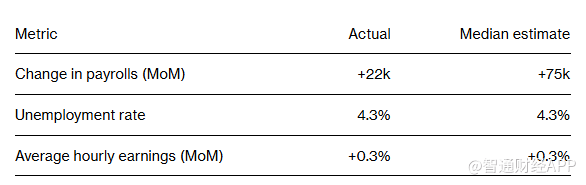
Group 1 - The number of payroll jobs grew by only 22,000 in August, significantly below the expected increase of 75,000, indicating a softening labor market [2][5] - Most sectors showed mild contractions in payrolls, with notable growth only in health care (up 31,000), social assistance (up 16,000), and leisure/hospitality (up 28,000) [3] - Federal employment dropped by 15,000 last month, with a total decline of nearly 100,000 since January, and further declines are anticipated as government workers transition from severance pay to unemployment [4] Group 2 - Revisions for previous months showed a decline of 13,000 jobs in June and an increase of 79,000 in July, with the average payroll growth over the past three months at 29,000, the smallest since the pandemic began [5] - Unemployment ticked up to 4.3 percent, with a modest increase in job losers by 32,000, indicating waning confidence among workers in finding jobs quickly [6] - The labor force has been shrinking since January, primarily due to the departure of immigrants, while employers are facing softening consumer spending and declining new investments [7] Group 3 - The report increases the likelihood of the Federal Reserve reducing interest rates in September, despite ongoing inflation concerns, as the Personal Consumption Expenditure index has risen by about 3 percent this year [8] - The balance of concerns has shifted towards the softening job market outweighing the risks of higher prices, although future trends remain uncertain [9]


美国8月非农“大爆冷” 巩固美联储9月降息预期
Zhi Tong Cai Jing· 2025-09-05 13:37
Group 1 - The core viewpoint of the articles indicates a significant slowdown in U.S. job growth, with the unemployment rate rising to its highest level since 2021, raising concerns about a potential worsening labor market [1][2][3] - In August, non-farm payrolls increased by only 22,000, far below the expected 75,000, while the unemployment rate rose to 4.3% [2][3] - Job growth has been concentrated in healthcare, leisure, and hospitality, while sectors such as information, finance, manufacturing, federal government, and business services saw substantial job losses [2][3] Group 2 - The average job growth over the past three months is only 29,000, marking the weakest employment growth phase since the pandemic began, with job additions consistently below 100,000 for four consecutive months [3] - The disappointing employment report has increased expectations for a Federal Reserve interest rate cut in September, with a 98% probability of a 25 basis point cut anticipated [4] - The yield on the two-year U.S. Treasury note fell to 3.5%, and the ten-year note yield dropped to 4.1%, both reaching five-month lows, indicating a market reaction to the employment data [3]
美国8月非农大暴冷,6月更被下修至负值!黄金刷新历史新高
Jin Shi Shu Ju· 2025-09-05 12:55
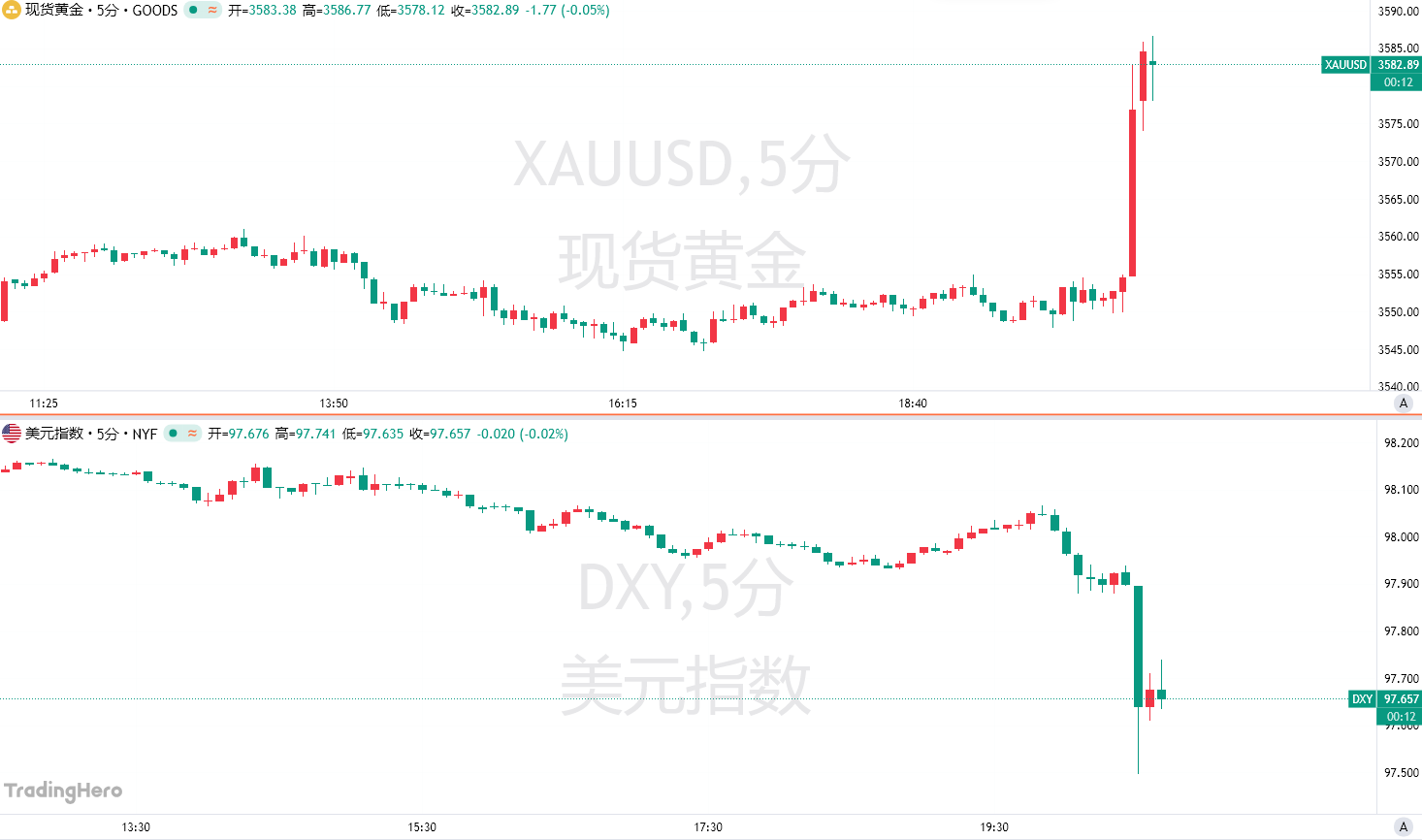
Group 1 - The U.S. job growth significantly slowed in August, with non-farm payrolls increasing by only 22,000, far below the market expectation of 75,000 [1] - The unemployment rate rose slightly to 4.3%, the highest level since the end of 2021 [1] - Average hourly earnings increased by 0.3% month-over-month and 3.7% year-over-year, aligning with market expectations [1] Group 2 - The average job growth over the past three months was only 29,000, marking the weakest employment growth since the pandemic began [3] - The private sector added 54,000 jobs in the previous month, while initial jobless claims reached 237,000, the highest since June [3] - The education and healthcare sectors were the largest job creators, adding 46,000 jobs, while durable goods and business services sectors lost 19,000 and 17,000 jobs, respectively [3] Group 3 - Market reactions indicate increased bets on the Federal Reserve starting rapid interest rate cuts, with expectations for a rate cut in September [3][4] - The transition of job growth from the public to the private sector may require lower interest rates, with predictions of a series of rate cuts to follow [4] - Historical trends suggest that while initial market reactions may be positive due to potential dovish Fed policies, significant declines in yields could indicate economic slowdown, which is negative for the stock market [4]
GTC泽汇资本:黄金创纪录新高的多重推力
Sou Hu Cai Jing· 2025-09-04 14:23
Core Viewpoint - Recent surge in gold prices to historical highs driven by weakening labor market and strong expectations for Federal Reserve's monetary easing [1] Group 1: Labor Market Weakness - Latest JOLTS data shows job vacancies declining more than expected, with job seekers outnumbering available positions for the first time in over four years, indicating structural cooling in the labor market [2] - This trend suggests a shift towards a weaker labor market, raising concerns about the economic outlook [2] Group 2: Policy Outlook Supporting Gold - Weak labor market has led to a near certainty that the Federal Reserve will cut rates by 25 basis points in September, with futures indicating a 98% probability of a rate cut [3] - High certainty of monetary easing reduces the opportunity cost of holding non-yielding assets, providing strong upward momentum for gold [3] - Market participants are closely monitoring upcoming unemployment claims, ADP employment report, and non-farm payroll data, although short-term data may cause fluctuations, the overall trend supports expectations for easing policies [3] Group 3: Safe-Haven Demand Amid Uncertainty - Broader political and economic uncertainties are enhancing gold's appeal as a safe-haven asset, with concerns over the Federal Reserve's independence and potential trade policy risks providing additional support [4] - The ongoing rise in gold prices reflects not only short-term economic data reactions but also a long-term structural uncertainty driving demand from both institutional and retail investors [4] Group 4: Multiple Factors Supporting Gold Outlook - The intersection of a deteriorating labor market, almost certain monetary easing, and rising political and economic risks creates an unprecedented favorable environment for gold [5] - In the current complex economic and policy landscape, precious metals are expected to maintain a significant role in diversified investment portfolios, particularly as the labor market continues to decline and policies remain accommodative, with gold likely to sustain high levels or even trend upwards [5]
美联储降息箭在弦上!非农即将一锤定音?
Jin Shi Shu Ju· 2025-09-01 03:03
Group 1 - The core viewpoint is that a surprisingly strong U.S. employment report may be the only factor preventing the Federal Reserve from cutting interest rates in the near future, but this possibility is considered very slim [1] - The U.S. job market has significantly cooled since the trade war initiated by the Trump administration, with an average of only 35,000 new jobs added per month from May to July, marking the lowest three-month increase since the pandemic began in 2020 [1] - Wall Street's expectations for the August job market are pessimistic, with forecasts predicting only 75,000 new jobs and an increase in the unemployment rate from 4.2% to 4.3%, reaching a near four-year high [1] Group 2 - The Federal Reserve Chairman Powell indicated that the deterioration of the labor market is sufficient to support a recent interest rate cut, emphasizing that "downside risks to the labor market are rising" [1] - The market's expectation for a rate cut in September has surged to 90% following Powell's remarks, which were interpreted as dovish signals [1] - Recent employment reports from the U.S. government have frequently undergone significant revisions, with the initial report for May and June showing 291,000 new jobs, later revised down to only 33,000, a staggering adjustment of 88.6% [1] Group 3 - The upcoming quarterly employment and wage survey may lead to a downward adjustment of employment growth data for the period from April 2024 to March 2025, with Wall Street predicting an overestimation of up to 800,000 jobs [2] - The Federal Reserve faces a dual mandate of controlling inflation and promoting employment, with the core CPI rising 3.1% year-over-year in July, still above the 2% target [2] - The best-case scenario for financial markets would be a moderate increase in employment numbers with a slight rise in the unemployment rate, indicating that the economy is not in recession while justifying a rate cut by the Federal Reserve [2] Group 4 - Investors are trying to determine when "bad news is good news" and when "bad news is just bad news" as the Federal Reserve is likely to cut rates in September [3] - The distinction lies in understanding why the Federal Reserve would cut rates and what the implications of such cuts would be for the economy and markets [3]
年内降息三次?美联储,突发重磅信号!
Sou Hu Cai Jing· 2025-08-10 10:35
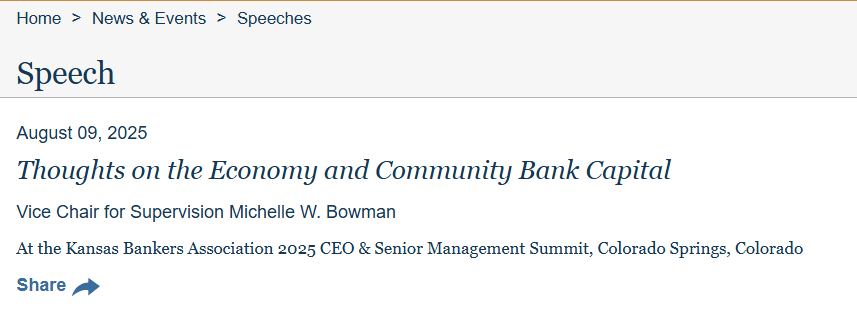
Group 1 - The core viewpoint of the articles indicates that Federal Reserve Vice Chair Michelle Bowman supports three interest rate cuts within the year, emphasizing the need for action due to recent weak labor market data [1][3] - Bowman advocates for initiating rate cuts at the September meeting to prevent further deterioration in the labor market and to reduce the likelihood of needing larger policy adjustments later [3][4] - San Francisco Fed President Mary Daly also noted the proximity of rate cuts, suggesting two 25 basis point cuts this year, with a focus on whether to cut in September and December [3][4] Group 2 - Goldman Sachs predicts that the Federal Reserve will begin three consecutive 25 basis point cuts starting in September, with a potential for a 50 basis point cut if unemployment rises further [3][4] - The Federal Reserve has maintained the federal funds rate target range at 4.25% to 4.50% for the fifth consecutive meeting, with Bowman and another governor voting against this decision, advocating for a 25 basis point cut [3][4] - Recent labor market data shows a significant underperformance, with July non-farm payrolls increasing by only 73,000, well below the expected 100,000, and previous months' data being revised downwards [4][5] Group 3 - Inflation data indicates stability, with the June Personal Consumption Expenditures (PCE) price index rising 0.3% month-over-month and 2.6% year-over-year, slightly higher than May [5] - The core PCE price index also rose 0.3% month-over-month and 2.8% year-over-year, aligning with market expectations [5] - Upcoming key economic data releases, including July CPI and PPI, are anticipated to provide important insights for the Federal Reserve's monetary policy adjustments [6]
高盛宏观交易团队:“9月降息50基点”应是基准情形,市场低估了这种可能性
美股IPO· 2025-08-07 05:12
Core Viewpoint - The report from Goldman Sachs indicates that recent economic data has contradicted Powell's hawkish statements, suggesting a significant weakening in the labor market, which paves the way for the Federal Reserve to adopt a more aggressive easing policy [1][2]. Labor Market Weakness - The non-farm payroll data released last week shows that the U.S. job market has "clearly turned," prompting the Fed to consider larger rate cuts at the September meeting [2][6]. - Employment growth has been at its lowest level in the past three months, particularly in the private sector, with GDP growth rate declining by approximately 100 basis points compared to the same period last year [4]. - The unemployment rate is gradually rising, and there is a significant divergence between the Labor Market Discrepancy Index (LMD) and the unemployment rate, indicating that the latter may underestimate the actual weakness in the labor market [5]. Rate Cut Expectations - The market is currently pricing in a 22 basis point cut for the Fed's September meeting, but Goldman Sachs expects a consensus around a 50 basis point cut instead of the widely anticipated 25 basis points [3][6]. - The report suggests that if inflation does not accelerate, the Fed could implement a 50 basis point cut or even larger [6][9]. - The expectation for a 50 basis point cut is becoming a benchmark in the market, as the evidence of labor market weakness mounts [8]. Broader Economic Implications - The report emphasizes that while a full economic downturn is not anticipated, it is "extremely clear" that policy rates should not remain at current levels [10]. - The rising unemployment rate among Black Americans and the rapid decline of the diffusion index are highlighted as indicators of a painful job market [7].

高盛宏观交易团队:“9月降息50基点”应是基准情形,市场低估了这种可能性
Hua Er Jie Jian Wen· 2025-08-07 03:52
Core Viewpoint - Goldman Sachs anticipates that the Federal Reserve will implement a 50 basis point rate cut in September, contrary to the widely expected 25 basis points [1] Group 1: Employment Market Signals - The employment market has clearly turned, with recent data indicating a significant decline in job creation, particularly in the private sector [2] - The U.S. economy has seen the lowest job additions in the past three months, with GDP growth rate declining by approximately 100 basis points year-over-year [2] - The unemployment rate is gradually rising, and the labor market disparity index suggests that the actual labor market conditions are worse than indicated by the unemployment rate [2] Group 2: Rate Cut Expectations - The market currently prices in a 22 basis point rate cut for the September meeting, but Goldman Sachs believes that a 50 basis point cut should be the new benchmark expectation [3] - If inflation does not show significant improvement, the Federal Reserve may consider a 50 basis point cut, with potential for cuts of 75-100 basis points if inflation remains subdued [3] - The consensus among Fed members is expected to shift towards acknowledging substantial weakness in the employment market [3]

美国上周初请失业金人数大致稳定 经济学家担心存在潜在的疲软问题
Sou Hu Cai Jing· 2025-07-31 13:10
来源:格隆汇APP 格隆汇7月31日|美国劳工部周四公布,上周美国初请失业救济人数趋于稳定,令人放心。截至7月26日 的一周,初次申请失业救济人数为218,000人,而前一周为217,000人。续请失业救济人数为195万人,与 前一周持平。昨晚,美联储连续第五次会议维持利率不变,美联储主席鲍威尔在新闻发布会上说,就业 市场稳定,表明不急于通过降息来转向更宽松的货币政策立场。然而,一些经济学家担心的是就业市场 的疲软隐藏在强劲的表象之下。尽管失业率仍然不高,但许多工人报告说找工作时间长,很难找到机 会。 ...
荷兰国际:英国央行面临就业疲软与物价上涨双重压力
news flash· 2025-07-24 11:50
Core Viewpoint - The Bank of England is facing dual pressures from a weak labor market and rising inflation, complicating its policy decisions [1] Group 1: Employment Market - Recent business surveys indicate a decline in employment numbers within the UK services sector, attributed to recent minimum wage increases and rising labor costs [1] - The trend of declining employment is significant as it reflects broader economic challenges [1] Group 2: Inflation Trends - The surveys also reveal a resurgence in input price inflation, suggesting that inflationary pressures are re-emerging in the economy [1] - The critical question remains whether higher inflation or lower hiring is more significant for the economy [1] Group 3: Policy Implications - The dual pressures of weak employment and rising inflation will pose a difficult decision for the Bank of England in its upcoming policy meeting in August [1] - Despite the challenges, there is a belief that a rate cut remains a more likely option for the Bank of England [1]