技术自主

Search documents
从技术自主到生态飞轮:当鸿蒙5跨过「千万大关」
3 6 Ke· 2025-08-18 10:07
Core Insights - HarmonyOS 5 has surpassed 10 million device installations, marking a significant milestone in establishing a new operating system ecosystem that breaks the dominance of iOS and Android [4][6][9] - The achievement reflects a shift towards a self-sustaining ecosystem where developers are motivated to invest and users have compelling reasons to choose HarmonyOS [3][6][29] Group 1: Milestone Achievement - The announcement of over 10 million installations of HarmonyOS 5 is a critical turning point, indicating the system's entry into a positive feedback loop of ecosystem development [4][6][9] - This milestone is supported by the collaboration of 8 million developers and a vast user base, showcasing the resilience and growth of the Harmony ecosystem [4][9][15] Group 2: Technical and Development Challenges - Transitioning to HarmonyOS 5 involves significant technical challenges, including the need for developers to adapt applications to a completely new architecture, which includes a self-developed kernel and file system [9][10][12] - The development process has required substantial investment, with hundreds of billions allocated over six years and a workforce of over 10,000 annually [12][19] Group 3: Ecosystem Building - HarmonyOS aims to create a robust ecosystem by addressing the "chicken or egg" dilemma of user and developer engagement, leveraging its growing device base to attract developers [17][29] - The strategy includes providing extensive support and resources for developers, such as migration tools and financial incentives, to facilitate the adaptation of popular applications like WeChat and Taobao [18][21][24] Group 4: Market Position and Future Outlook - With the recent success, HarmonyOS is positioned to challenge the existing operating system market dominated by foreign tech giants, aiming to establish a unique identity in the era of interconnected devices [13][26][28] - The growth of HarmonyOS is expected to continue, with plans for further integration across various device types, enhancing user experience and expanding its market presence [15][26][29]


俄媒:西方“芯片铁幕”挡不住中国技术进步
Huan Qiu Wang Zi Xun· 2025-08-17 22:54
Group 1 - The article discusses the concept of a "chip iron curtain," indicating a new form of isolation created by sanctions and bureaucratic measures rather than physical barriers [1][2] - Western capitals are implementing regulations against China, reflecting a fear of losing control over globalization [1][2] - The U.S. decision to pause the ban on NVIDIA's H20 chip exports to China signifies an acknowledgment of its own vulnerabilities [1][2] Group 2 - The speed of regulatory barriers being erected exceeds the understanding of their consequences, with U.S. lawmakers proposing sanctions while companies negotiate privately with China [2] - The impact of U.S. bans is harming Western companies, with NVIDIA facing losses in the billions and ASML seeking new clients [2] - China's response involves a proactive strategy focused on self-sufficiency, aiming for over 70% autonomy in its semiconductor and industrial software sectors by 2028 [2] Group 3 - Russia serves as a testing ground for Western pressure on China, with China learning from this experience to accelerate its internal integration [3] - The article suggests that the "chip iron curtain" symbolizes the decline of an empire fearful of its own sunset, as Asia builds its supply chains and new rules [3] - As the U.S. debates regulations, China is actively expanding its manufacturing capabilities, indicating a shift in the future economic landscape towards the East [3]
印度首颗芯片,即将推出
半导体芯闻· 2025-08-15 10:29
Group 1 - The Indian Prime Minister Narendra Modi announced that the first domestically produced semiconductor chip will enter the market by the end of the year, highlighting the government's commitment to technological self-sufficiency amid global tariff pressures [2] - The Indian federal cabinet recently approved four new semiconductor manufacturing projects under the Semiconductor Mission plan, with a total investment of approximately 46 billion Indian Rupees [2] - Major global players, including American chip manufacturers Intel and Lockheed Martin, are among the investors in these semiconductor initiatives [2] Group 2 - Six additional semiconductor factories are under construction in states such as Gujarat, Assam, and Uttar Pradesh, with the facilities expected to soon produce India's first "Make in India" chip [2] - These initiatives are a response to the 50% tariff imposed by former U.S. President Donald Trump on Indian imports, which includes a 25% tariff due to India's purchase of Russian oil [2]
光刻胶IPO遇冷,监管戳破真相:半导体材料之困与破局之道
材料汇· 2025-08-01 13:02
Core Viewpoint - The article discusses the challenges faced by semiconductor material companies, particularly in the context of IPO applications being delayed or halted, highlighting the tension between capital enthusiasm and the high technical barriers in the industry [2][3][4]. Group 1: Capital Frenzy and Semiconductor Material IPOs - The semiconductor materials sector is currently a hot spot for investment, with over 10 companies filing for IPOs in 2023, focusing on critical areas like photoresists and electronic specialty gases [4]. - Despite the vibrant market, regulatory scrutiny has intensified, with a clear focus on the authenticity of core technologies, production capabilities, and the feasibility of domestic substitution [4][5]. - Companies are facing challenges in transitioning from laboratory samples to mass production, with regulatory bodies questioning the economic viability and sustainability of their technologies [5][6]. Group 2: Photoresists as a Technical Dilemma - Photoresists play a crucial role in chip manufacturing, acting as the blueprint for circuit patterns, and their performance directly impacts chip yield and feature size [9][11]. - The technical complexity of photoresists is significant, with advancements tied closely to the evolution of chip manufacturing processes, creating steep technical curves [12][13]. - Domestic companies are struggling to achieve stable mass production of advanced photoresists, particularly in the ArF and EUV categories, where only a few have made progress [12][13][18]. Group 3: Technical Challenges and Capital Relations - The technical challenges faced by companies like 恒坤新材 are indicative of broader issues in the semiconductor materials industry, including long R&D cycles, high investment requirements, and significant technical barriers [29][30]. - The relationship between capital and technology is complex, with capital needing to shift from a short-term profit focus to a long-term investment perspective to support sustainable growth in the sector [32][33]. - Regulatory bodies are now demanding more substantial proof of technological capabilities and sustainable business models, moving away from mere narratives of domestic substitution [34][36]. Group 4: Path Forward for Semiconductor Materials - The semiconductor materials industry requires a collaborative ecosystem that integrates technology patience, capital foresight, and industry cooperation to overcome current challenges [38][39]. - Companies must embrace a long-term R&D philosophy, focusing on foundational materials science and rigorous quality control to ensure successful commercialization of advanced materials [40][41]. - Government support is essential in creating a favorable environment for the development of the semiconductor materials sector, including financial incentives and robust intellectual property protections [51][52].
“同盟优先”影响自主,美“AI紧箍咒”令韩国担忧
Huan Qiu Shi Bao· 2025-07-31 22:49
Group 1 - The core point of the news is the announcement of a trade agreement between the U.S. and South Korea, where South Korea is set to invest several hundred billion dollars in sectors like semiconductors, raising concerns within the South Korean tech industry [1] - The U.S. AI action plan aims to promote "full-stack AI" solutions, including high-performance GPUs and software, which may marginalize South Korea's AI ecosystem in the international arena [1][3] - South Korea is the second country after the EU to implement comprehensive AI legislation, with the "Artificial Intelligence Basic Law" set to take effect in 2026, indicating a strong governmental push towards AI self-sufficiency [2] Group 2 - The report from the Korea Software Industry Association (KOSA) warns that the U.S. strategy could reinforce its dominance in global AI standards, posing structural challenges to South Korea's technological autonomy [3] - Concerns are raised that if South Korean AI products are built around U.S. standards, startups may be limited to developing applications for foreign ecosystems, hindering their ability to compete at the platform level [3] - The South Korean government plans to strengthen its domestic AI ecosystem by investing in core resources such as computing power, data, and talent, while also advancing the selection of "national representative AI" teams [4]
中国科技龙头崛起正当时 Global X中国核心科技ETF聚焦七大科技赛道
Zhi Tong Cai Jing· 2025-07-31 04:03
Group 1 - The Global X China Core Technology ETF has officially launched on the Hong Kong Stock Exchange, providing investors with a tool to diversify risks in technology stock investments, focusing on seven high-growth technology sectors and 30 leading Chinese technology companies [1] - The ETF tracks the Future Asset China Technology 30 Index, which includes the top 30 companies in China with potential global competitiveness, with an average market capitalization of $65 billion [1] - The top five sectors represented in the ETF are biotechnology (22%), semiconductors (17%), consumer electronics (17%), electric vehicles (15%), and batteries (9%) [1] Group 2 - China's manufacturing sector has rapidly expanded, now accounting for 30% of global manufacturing, ranking first in the world, with high-tech manufacturing growth outpacing traditional manufacturing [2] - In 2024, China's total R&D expenditure reached 3.6 trillion RMB, a year-on-year increase of 8.3%, maintaining its position as the second-largest globally [2] - Key industries such as semiconductors, renewable energy, and artificial intelligence are national strategic priorities, with domestic companies achieving technological independence and gaining a foothold in global markets [2] Group 3 - The rise of China's technology industry is expected to continue, with upgrades in high-end manufacturing, increased R&D investment, and deeper globalization [3] - The core technology sectors defined by the ETF are crucial for China's self-reliance in high-end technology, including biotechnology, semiconductors, electric vehicles, batteries, medical technology, robotics, consumer electronics, solar energy, and software [3] - The investment strategy of the Global X China Core Technology ETF focuses on 30 leading domestic companies, characterized by broad growth prospects, high R&D spending ratios, and attractive valuation advantages [3]
博时市场点评6月24日:沪指站上3400点,创业板涨超2%
Xin Lang Ji Jin· 2025-06-24 08:23
Market Overview - The three major indices in the A-share market rose over 1%, with the Shanghai Composite Index surpassing 3400 points and the ChiNext Index increasing by over 2% [1][3] - The trading volume in the A-share market exceeded 1.4 trillion yuan, indicating a significant increase in market activity [1][3] Geopolitical Impact - The announcement of a ceasefire between Iran and Israel has reduced expectations for further escalation of conflict, leading to an increase in global risk appetite [1][3] - The upcoming 80th anniversary military parade in China on September 3 is expected to showcase domestically produced military equipment, highlighting advancements in national defense and technology autonomy [2][3] Economic Indicators - China's economic growth remains stable, with strong consumer growth despite a slowdown in investment and industrial production [1][2] - The market is expected to experience fluctuations, with a preference for technology and dividend stocks in investment strategies [1][3] Market Performance - On June 24, the A-share market saw significant gains, with the Shanghai Composite Index closing at 3420.57 points, up 1.15%, and the ChiNext Index closing at 2064.13 points, up 2.30% [4] - Among the sectors, power equipment, non-bank financials, and retail saw the highest gains, while oil and coal sectors experienced declines [4] Fund Flow - The market turnover reached 14,483.99 billion yuan, showing an increase from the previous trading day [5] - The margin trading balance reported at 18,169.01 billion yuan, also reflecting an upward trend [5]

财经:考验A股!中美经贸磋商机制启动,美股指数创百日收盘新高
Sou Hu Cai Jing· 2025-06-10 23:57
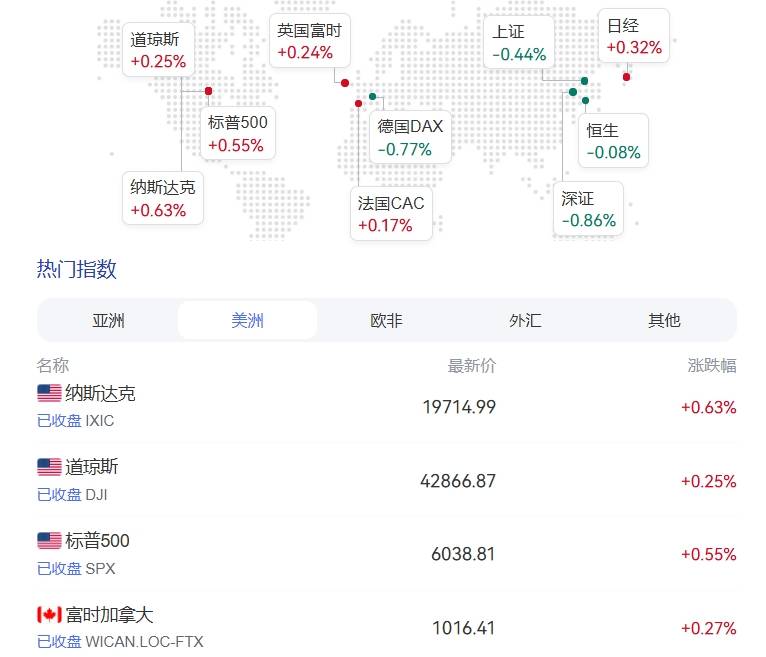
Group 1 - The first meeting of the China-US economic and trade consultation mechanism took place in London from June 9 to 10, leading to a significant drop in A-shares while US stocks rose [1] - US stock indices reached new closing highs, with the Nasdaq up 0.63%, S&P 500 up 0.55%, and Dow Jones up 0.25%, marking the highest closing levels in at least three months [1] - The trade negotiations encountered a deadlock, with the US proposing a "lithography machine for rare earths" condition, which was firmly rejected by China, indicating a deeper logic of global industrial chain restructuring [1] Group 2 - China has made decisive breakthroughs in technological autonomy, with the domestic production rate of the SSB500 series lithography machine reaching 82% and the development of a 0.5-nanometer magnetic levitation drive system breaking foreign monopolies [2] - The advancements in core components such as optical systems and dual workpiece tables demonstrate China's capability for self-control, diminishing the US's leverage in negotiations [2] - The current negotiation dynamics suggest that China holds the initiative, and the dual defense of "resource control + technological breakthroughs" positions China favorably in the ongoing trade discussions [2]
从大清福建船政到美国“白宫造船办公室”:船舶工业的战略逻辑与历史启示
Sou Hu Cai Jing· 2025-05-26 18:49
Group 1: Core Insights - The latest 2025 map of Chinese shipyards has been updated, featuring over 600 shipyards, with a promotional offer for the 2026 bilingual version [2] - The historical significance of Fujian Shipbuilding is highlighted as a response to foreign threats, establishing a comprehensive industrial base that contributed to the formation of China's modern navy [2][6] - The Chinese shipbuilding industry has grown to dominate global shipbuilding, accounting for 50% of the world's merchant ship output in the 21st century [2] Group 2: Strategic Importance of Shipbuilding - The shipbuilding industry is crucial for employment, national defense, and industrial chain security, serving as a vital pillar of national development [4] - The establishment of the Fujian Shipbuilding Bureau in 1866 marked a significant milestone in China's modernization, fostering talent and laying the groundwork for the modern navy and industrial system [6][9] - The shipbuilding sector has a multiplier effect on various industries, with significant job creation linked to production output [6] Group 3: Historical Lessons and Future Directions - Historical lessons from Fujian Shipbuilding emphasize the need for a balance between government support and market vitality to avoid dependency on single revenue sources [9] - Recommendations for future development include policy coordination, ecological restructuring towards green and intelligent transformation, and maintaining strategic focus amidst global challenges [8] - The comparison with the U.S. shipbuilding industry highlights the need for a balanced approach between protectionist policies and technological innovation to revitalize the sector [12][13]
从集成供应链分析:中国进口的美国商品正被他国替代
Sou Hu Cai Jing· 2025-05-07 13:09
Core Viewpoint - The international trade landscape is undergoing significant changes, particularly in the context of U.S.-China trade relations, where U.S. goods are increasingly being replaced by products from other countries [2] Group 1: Current Replacement Status - China's reliance on U.S. soybeans has decreased from 60% in 2017 to 35% in 2023, with a notable purchase of 2.4 million tons of Brazilian soybeans in April 2025 [3] - The cost advantage of Brazilian soybeans, which are 15% cheaper than U.S. soybeans due to zero tariffs compared to a 27.5% punitive tariff on U.S. soybeans, has strengthened Brazil's position in the Chinese market [3][7] - In the semiconductor industry, U.S. chip imports to China have plummeted due to a 125% tariff, prompting China to diversify its supply chain by sourcing chips from Germany and Japan [4] - China's LNG imports from the U.S. fell by 62% in early 2025, as China sought alternative suppliers like Russia and Australia due to tariffs imposed during trade tensions [5] Group 2: Reasons Behind the Changes - Cost and tariff factors are critical in procurement decisions, with Brazilian soybeans benefiting from lower production costs and favorable tariff conditions compared to U.S. soybeans [7][8] - The shift in procurement strategies has led to logistical adjustments, with increased shipping capacity allocated to routes from Brazil to China [8] - Technological self-sufficiency and supply chain diversification are key strategies for China, which has increased its chip self-sufficiency rate to 36% by 2021 and reduced reliance on U.S. chips [9][10] - Geopolitical factors have influenced energy trade, with China strengthening ties with Russia for natural gas supplies, enhancing energy security [11][12] Group 3: Impact on U.S. and Global Supply Chains - The decline in U.S. export market share has led to significant challenges for American farmers and energy companies, with reduced sales and profits [16] - For China, diversifying import sources has improved supply chain security and reduced dependence on U.S. products, while fostering the growth of domestic brands [16] - The shift in trade dynamics has created opportunities for countries like Brazil and Russia, enhancing their economic development and market positions [17] Group 4: Future Trends and Outlook - The trend of replacing U.S. imports is expected to continue, particularly in agriculture, as Brazil enhances its supply capabilities [18] - In the energy sector, China's demand for clean energy will grow, presenting challenges for U.S. energy exports [19] - China's focus on technological innovation and collaboration with other regions will further reduce reliance on U.S. high-tech products [19]