
教育科技人才一体化

Search documents
以教育科技人才一体化发展推动农业现代化(专题深思)
Ren Min Ri Bao· 2025-11-09 22:20
Core Viewpoint - The modernization of agriculture is essential for the overall modernization of China, emphasizing the importance of technology and talent in achieving agricultural strength [1][2][3]. Group 1: Agricultural Modernization - Agricultural modernization is a fundamental requirement for high-quality development, with a focus on integrating new technologies into traditional agricultural practices [1][2]. - The Chinese government has made significant achievements in agricultural technology, particularly in key areas such as seeds, arable land, and agricultural machinery [2][3]. - Despite advancements, there remains a gap between China's agricultural technology progress and the world's leading levels, indicating areas for improvement [2]. Group 2: Education, Technology, and Talent - Education, technology, and talent are the core elements for accelerating the construction of a strong agricultural nation [3][4]. - A unified approach to education, technology, and talent development is necessary to overcome systemic barriers and enhance agricultural innovation [3]. - Higher education institutions play a crucial role in integrating education, technology, and talent to support agricultural modernization [4]. Group 3: Technological Innovation - The path to agricultural modernization requires a focus on technological self-reliance and innovation, addressing challenges in agricultural technology and key components [5][6]. - Collaborative efforts among universities, research institutions, and enterprises are essential to foster innovation and achieve breakthroughs in agricultural technology [5]. - Establishing platforms for the transformation of agricultural technology achievements is vital for promoting industrialization and collaboration across the agricultural sector [5]. Group 4: Talent Development - Talent is a dynamic factor in building a strong agricultural nation, necessitating the cultivation of skilled individuals who understand technology and management [6][7]. - A flexible talent recruitment mechanism is needed to attract and retain agricultural professionals, particularly in strategic scientific roles [6]. - Encouraging the return of skilled individuals to rural areas can invigorate local agricultural development and contribute to comprehensive rural revitalization [7].
首善标准筑人才高地 协同之力绘发展新篇
Bei Jing Ri Bao Ke Hu Duan· 2025-10-27 22:09
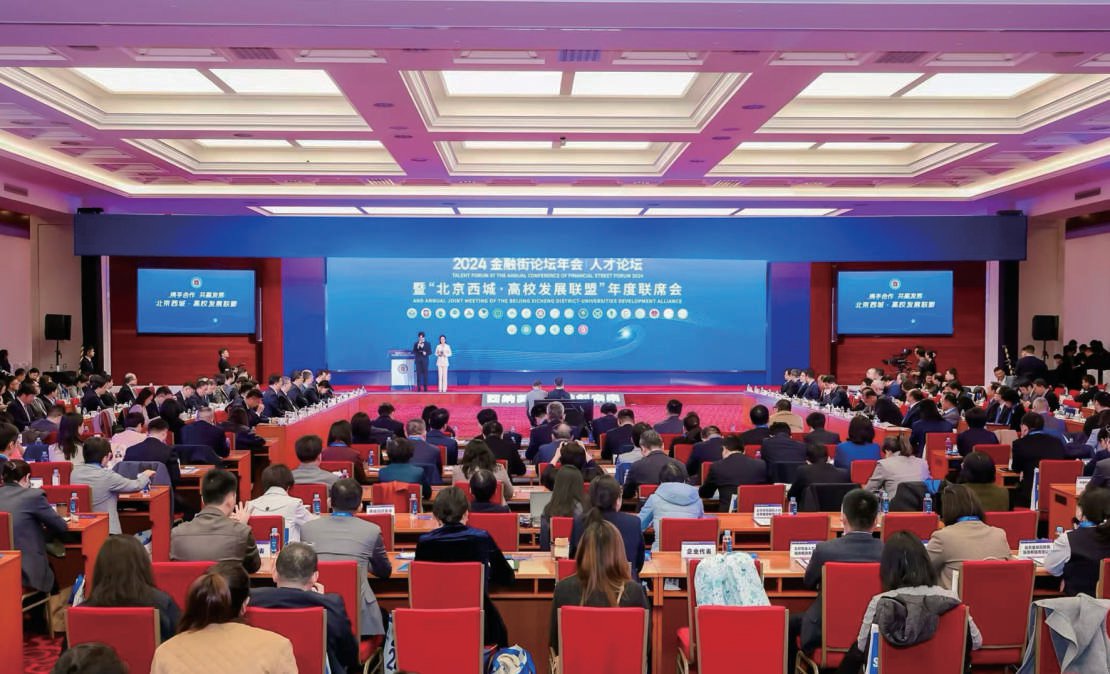
Core Insights - The article emphasizes the importance of education, technology, and talent as foundational elements for building a modern socialist country, highlighting the role of talent in driving high-quality regional development in Xicheng District, Beijing [1] Talent Development Strategy - Xicheng District has surpassed a total talent pool of 1.05 million, with a significant focus on industries such as finance, technology, and culture, which collectively account for 520,000 professionals, showcasing a robust and well-structured talent base [1] - The district implements a comprehensive talent policy system characterized by competitive measures to attract and retain talent, focusing on a "classification guidance, institutional support, and solid guarantees" framework [6][7] Policy Initiatives - The district has introduced several key documents, including the "Implementation Opinions on Strengthening Talent Work" and the "Xirong Plan," which allocates 100 million yuan annually to enhance high-quality development through talent acquisition [7] - A new policy framework, termed "12+10," has been established to promote integrated development across education, technology, and talent, aiming to break down institutional barriers and enhance collaborative innovation [8] Collaborative Platforms - Xicheng District has formed the "Beijing Xicheng University Development Alliance," collaborating with 25 universities to enhance intellectual exchange, internships, and result transformation, resulting in over 150 cooperative achievements [10] - The district is actively engaging in "central-local cooperation" initiatives to create a new model for industry-talent integration, facilitating resource sharing and talent development through various collaborative projects [11] International Engagement - The district is enhancing its global talent pool by hosting international forums and establishing partnerships with overseas talent centers, aiming to attract high-end talent and innovation resources [12] Service Ecosystem - A comprehensive talent service system is being developed to provide a full lifecycle of support for talent, ensuring a conducive environment for professionals to thrive [13][14] - The district is implementing a "talent + industry" service model, establishing a three-tiered talent service mechanism to provide precise support for key enterprises and professionals [15][16] Future Outlook - Xicheng District aims to continuously optimize its talent policies and platforms, enhancing its attractiveness and competitiveness as a destination for top talent and innovative enterprises [17]

第三届教育强国与健康人生学术会议在北职大召开
Bei Jing Shang Bao· 2025-10-18 11:49
Core Viewpoint - The third academic conference on "Building a Strong Education Nation and Healthy Life" was held, focusing on the integration of education, technology, and talent in the context of artificial intelligence [1] Group 1: Conference Overview - The conference was organized by the China Life Science Society's Education and Health Working Committee and Beijing University of Science and Technology, with over 200 experts and scholars participating [1] - The theme of the conference was "Promoting the Integration of Education, Technology, and Talent to Establish a New Framework for Moral Education" [1] Group 2: Key Proposals - The conference released the "Yizhuang Declaration," which includes four core propositions: 1. Promote the integration of education, technology, and talent as the core path to create a new ecosystem for moral education [1] 2. Strengthen the role of technology as an engine to inject intelligent momentum into moral education [1] 3. Highlight the critical role of talent as a key link to support the long-term development of moral education [1] 4. Firmly pursue the collaborative path of the three elements as an inevitable choice for shaping a new pattern of educational development [1] Group 3: Impact and Future Directions - Participants agreed that the successful hosting of the conference clarified the path for deepening the integration of education, technology, and talent in the education sector [1] - The conference aims to inject strong momentum into the vision of building a strong education nation and promoting healthy lives [1]
这个西北小城何以走出28位院士(科技视点)
Ren Min Ri Bao· 2025-10-12 22:10
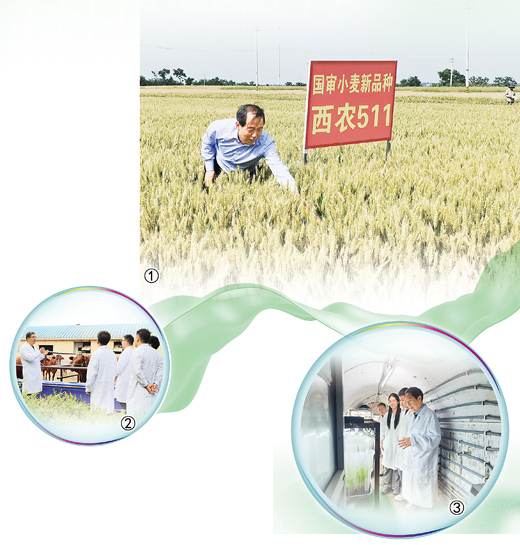
Core Insights - The article emphasizes the integration of education, technology, and talent as foundational elements for China's modernization, particularly in the agricultural sector [2][12] - Yangling, as the first national-level agricultural high-tech industrial demonstration zone, showcases significant advancements in agricultural research and innovation [3][4] Group 1: Agricultural Research and Development - Yangling is home to key educational institutions like Northwest A&F University and has over 100 provincial and ministerial research platforms, contributing to a robust agricultural research environment [3][4] - The region has produced impactful agricultural technologies, such as the "Xinan 511" wheat variety, which has been promoted over 40 million acres since its approval in 2018 [5] - The "Three Rui" apple varieties have been cultivated and promoted across more than 1 million acres, demonstrating successful agricultural innovation [6][7] Group 2: Integration of Education and Industry - The collaboration between educational institutions and local enterprises is highlighted as a driving force for innovation, with faculty members taking on roles in companies to enhance practical research applications [13][14] - The establishment of agricultural technology innovation centers and joint research platforms has led to significant advancements in crop breeding and agricultural practices [13][14] Group 3: Future Directions and Innovations - The future agricultural research institute aims to become a center for new agricultural productivity, focusing on drought-resistant crops and integrating artificial intelligence into agricultural practices [15] - Yangling plans to establish 50 demonstration bases for agricultural technology transfer by the end of 2024, enhancing the commercialization of research outcomes [14]
启动一体化政策项目,昌平已为千余青年人才发放政策奖补
Xin Jing Bao· 2025-09-20 14:42
Group 1 - The Changping District launched the "2025 Education and Technology Talent Integration Policy Project" focusing on attracting and integrating talent through four main areas: talent attraction, Changpu Project, youth innovation demonstration, and integrated development [1] - The district initiated four policy projects in collaboration with 15 universities and new research institutions, including Tsinghua University and Peking University, to enhance education and technology talent integration [1] - A joint training program for master's and doctoral students was launched with 13 universities, alongside the implementation of the "Technology Vice President" talent attraction policy, which introduced 57 high-level talents from 23 institutions to lead core technology projects with 57 leading tech companies [1] Group 2 - Changping District has introduced 11 policy measures to create a youth talent innovation and entrepreneurship ecosystem, resulting in 1,155 young talents benefiting from policy subsidies and a 46% year-on-year increase in new enterprises established by young talents [2] - The "Changpu Project" has launched a special track for youth talent competitions, recognizing 41 talents, and the U35 Seedling Support Plan has provided foundational support to 15 young talents [2] - Initiatives include training programs for 100 master's and doctoral students, internships for 1,000 university students, and outreach for 10,000 college students to engage with Changping, alongside the HICOOL Youth Entrepreneurship Dream Plan [2]
“智启”亮相、校地合作签约等,海淀启动教育强国首善先行区建设
Xin Jing Bao· 2025-09-15 02:31
Core Insights - The Haidian District of Beijing has unveiled a comprehensive education policy aimed at integrating education, technology, and talent development over the next three years, with a focus on building a high-quality education system [1][2] Group 1: Policy Framework - The conference introduced the "1+5" policy framework, which includes the "Haidian District Action Plan for Building a Strong Education Nation (2025-2027)" and five supporting documents, outlining a systematic approach to educational development [2][3] - By 2027, Haidian aims to establish a high-quality education system characterized by vertical and horizontal integration, accessibility, and intelligent empowerment [2][3] Group 2: Key Tasks and Initiatives - Ten key tasks have been identified, including enhancing vocational education, creating a "15-minute learning service circle," and implementing a comprehensive night school program for lifelong learning [3][4] - The plan emphasizes the integration of higher education institutions with primary and secondary schools, ensuring that each school is supported by at least one university and a technology enterprise [4][5] Group 3: AI and Technology Integration - The "Zhiyi" intelligent platform was launched, designed to facilitate educational digital transformation through features that support learning, teaching, and management [7][8] - The establishment of the Artificial Intelligence Education Alliance, involving major tech companies and educational institutions, aims to deepen the application of AI in education and foster collaborative research [7][8] Group 4: Infrastructure and Curriculum Development - The "Zhiyi Science and Technology Empowerment Education Action Plan (2025-2027)" outlines plans to build 100 AI laboratories in primary and secondary schools and develop a tiered curriculum integrating AI with science education [8] - The initiative includes personalized learning models and aims for 100% coverage of pilot schools within three years, promoting innovative teaching methods such as "AI + flipped classroom" [8]
郭永航开展教育工作调研并召开座谈会,向全市广大教师和教育工作者致以节日问候
Guang Zhou Ri Bao· 2025-09-11 01:39
Core Viewpoint - The article emphasizes the importance of education in supporting the modernization of Guangzhou and highlights the commitment of local authorities to enhance the quality of education and teacher development [2][3]. Group 1: Education Development - The recent achievements in Guangzhou's education sector were acknowledged, with a focus on building a high-quality education system and accelerating educational modernization [3]. - The local government aims to construct a strong education city, enhancing the integration of science, education, and talent to support the modernization of Guangzhou [3]. Group 2: Teacher and Student Development - Teachers are encouraged to embody the mission of nurturing talent for the country and to focus on moral education, integrating Xi Jinping's thoughts into their teaching [3]. - There is a call for teachers to continuously improve their professional knowledge and teaching methods to meet the evolving needs of students [3]. Group 3: Vocational Education - The importance of vocational education was highlighted, with a focus on aligning educational programs with the "12218" modern industrial system of Guangzhou to cultivate skilled professionals [4]. - The initiative to elevate vocational colleges to undergraduate status is seen as a new starting point for enhancing vocational education [4].
海南印发实施意见构建“1248”体系架构 加快建设新时代教育强省
Hai Nan Ri Bao· 2025-09-02 01:13
Core Viewpoint - The implementation opinions aim to accelerate the construction of a strong education province in Hainan, aligning with the needs of the Hainan Free Trade Port and proposing a "1248" system framework for high-quality education development [1][2]. Group 1: Education Development Framework - The "1248" system framework includes two platforms: "International Education Innovation Island" and "Smart Education Island," focusing on creating a new high ground for educational openness, a new benchmark for digital education, and a new engine for comprehensive educational reform [1][2]. - The goal is to establish a high-quality education system that supports and leads the development of the Hainan Free Trade Port by 2035, with major educational indicators ranking among the top in the country [1]. Group 2: Specific Measures and Goals - The implementation opinions outline comprehensive plans for basic education, higher education, and vocational education, proposing 40 specific measures across 10 areas to enhance educational reform and innovation [2]. - Key initiatives include establishing a monitoring system for school-age population changes, optimizing higher education structures to meet the needs of the Free Trade Port, and strengthening vocational education to align with key industries [2]. - The plan emphasizes the integration of artificial intelligence in education and aims to attract world-class educational resources, including top overseas universities to establish campuses in Hainan [2]. Group 3: Governance and Accountability - Local party committees and governments are tasked with the primary responsibility for educational development, ensuring that policies and objectives for building a strong education province are effectively implemented [3]. - A regular tracking and evaluation mechanism will be established to promote collective efforts across society in advancing the education province initiative [3].
探寻|闯出自主创新“之江新路”
Ke Ji Ri Bao· 2025-08-25 09:22
Core Viewpoint - The article emphasizes the significant progress made in Zhejiang's innovation capabilities over the past 19 years, driven by a commitment to self-innovation and technological advancement, as initiated by Xi Jinping's vision in 2006 [2][4][12]. Group 1: Innovation Development - In 2006, Xi Jinping set a goal for Zhejiang to become an innovative province within 15 years, focusing on transforming the economic development model [4]. - By 2020, Zhejiang had established itself as an innovative province, with industrial R&D expenses reaching 372.04 billion yuan in 2024, a 5.5% increase year-on-year [6]. - The added value of high-tech industries in Zhejiang reached 1.5508 trillion yuan in 2024, growing by 8.3% compared to the previous year [6]. Group 2: Talent and Research Institutions - Zhejiang has established 117 provincial-level new research institutions by the end of 2024, which play a crucial role in cultivating strategic technological forces and driving innovation [8]. - The province has focused on integrating education and technology, with a talent pool exceeding 15 million and a research personnel ratio of 165.3 per 10,000 laborers in 2024 [10]. - The establishment of the Zhejiang University Interdisciplinary Research Institute in 2023 aims to foster cross-disciplinary research and innovation [9]. Group 3: Industry and Enterprise Innovation - Zhejiang has 47,500 national high-tech enterprises and 1,801 specialized "little giant" companies, ranking third in the country [11]. - The province has seen the emergence of numerous technology-driven companies, including Wanxiang Group, Alibaba, and Hikvision, contributing to high-quality development [11]. - The integration of technology and industry has led to significant advancements in fields such as artificial intelligence and new materials, positioning Zhejiang as a key player in international competition [11].
临平区打造国际化创新生态新高地
Hang Zhou Ri Bao· 2025-08-14 03:05
Group 1 - The core viewpoint of the collaboration between Linping District and Hong Kong City University is to establish the Hong Kong City University Hangzhou Innovation Research Institute, focusing on talent cultivation, achievement transformation, and industry incubation [1][2] - The research institute will create incubation bases in key industrial areas such as energy materials, biomedicine, and artificial intelligence, providing comprehensive services including financing and supply chain connections for resident enterprises [1] - A 100 million yuan achievement transformation fund will be jointly established to support outstanding startups introduced through various platforms, aiming to enhance the local manufacturing industry [1][2] Group 2 - Linping District will implement a "dual approach" in talent cultivation, offering local youth opportunities to participate in innovation and entrepreneurship training programs, including the first practical-based entrepreneurship education program in Hong Kong [2] - Hong Kong City University will encourage its high-level talents, such as doctoral students and postdoctoral researchers, to work and start businesses in Linping, thereby strengthening the local talent pool [2] - The collaboration is seen as a significant step for Linping District to deepen technological innovation and promote high-quality development, contributing to the creation of a more vibrant innovation city in Hangzhou [2]